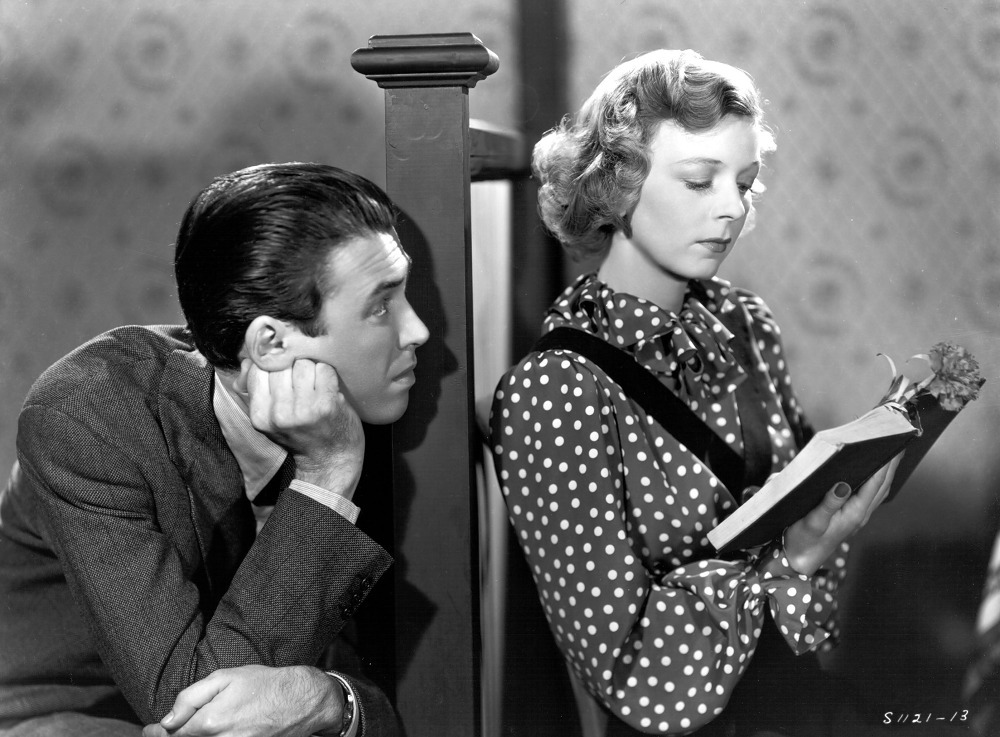
Brad reviews THE SHOP AROUND THE CORNER (1940), starring James Stewart and Margaret Sullavan!


Set in Budapest, Hungary, we meet Alfred Kralik (James Stewart), the dependable head clerk at a retail establishment named Matuschek and Company. In walks Klara Novak (Margaret Sullavan), an attractive young lady who’s desperately in need of a job, so Mr. Matuschek (Frank Morgan) hires her as a new salesgirl. Alfred and Klara immediately take a disliking to each other and give each other quite a hard time at work. As we get to know Alfred and Klara, we find out that each of them is involved in a treasured “pen-pal” relationship with a mysterious someone who truly seems to understand their heart and soul. Wouldn’t you know it, even though they get on each other’s last nerves at the shop, Alfred and Klara are each other’s secret pen-pal! While navigating unexpected drama at work, mainly involving Mr. Matuschek, his wife, and a duplicitous employee, Alfred eventually discovers that Klara is his mystery correspondent without her knowing it. As he tries to reconcile the actions of the lady he knows from work with the heart of the person who wrote those letters, Alfred decides to show Klara who he really is to see if they can fall in love in real life!

THE SHOP AROUND THE CORNER is one of my very favorite romantic comedies, and I’d guess the lead performance of James Stewart is probably the main reason. He’s just perfect in the role of Alfred Kralik… earnest, proud, awkward, vulnerable, and above all else, decent. Stewart’s ability to portray characters with believable decency separate him as one of the all-time greats and that quality is well on display here. Margaret Sullavan, as Klara Novak, matches him perfectly. Known to have a good relationship off screen as well, the chemistry between Stewart and Sullavan is off the charts and their scenes together are quite powerful. Mostly known by me for his performance as the Wizard of Oz, Frank Morgan is also incredible as Mr. Matuschek, at times jealous, volatile, and ultimately benevolent.

Director Ernst Lubitsch, known for his “Lubitsch touch,” has made a movie that has stood the test of time because of its core of emotional truth. Even though it was made well before the days of social media or online dating, THE SHOP AROUND THE CORNER understands just how differently we present ourselves when writing (or online, or on social media), compared to how we actually behave in person. Maybe it’s because THE SHOP AROUND THE CORNER was made in 1940, but I love the way its time-tested story idea is used for comedy and sweet romance, without becoming cynical. That lack of cynicism leaves room not only for comedy and romance but also a genuine compassion for its characters as they deal with the very real emotions of loneliness, pride, jealousy, and fear.

All in all, THE SHOP AROUND THE CORNER may be 85 years old, but its tender and romantic payoff set on Christmas Eve still gets me every time. As far as I’m concerned, this is about as close to perfect as a romantic comedy can get!  

(Author’s note: I’m also a fan of the 1998 remake, YOU’VE GOT MAIL, starring Tom Hanks and Meg Ryan, but I rate it below Lubitsch’s film.)
4 Shots From 4 1934 Films


4 Or More Shots From 4 Or More Films is just what it says it is, 4 shots from 4 of our favorite films. As opposed to the reviews and recaps that we usually post, 4 Shots From 4 Films lets the visuals do the talking!

Today, we pay tribute to a classic year in film.  It’s time for….

4 Shots From 4 1934 Films

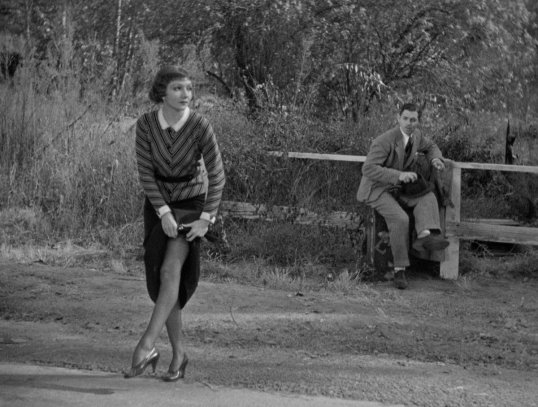
It Happened One Night (1934, dir by Frank Capra, DP: Joseph Walker)

The Scarlet Empress (1934, dir by Josef von Sternberg, DP: Bert Glennon)

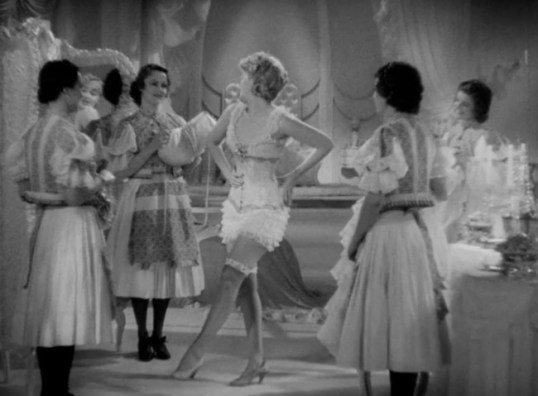
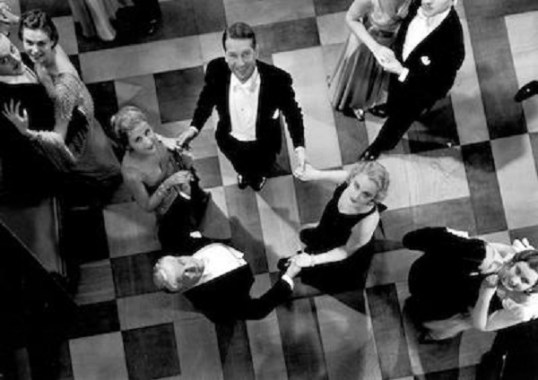
The Merry Widow (1934, dir by Ernst Lubitsch, DP: Oliver T. Marsh)

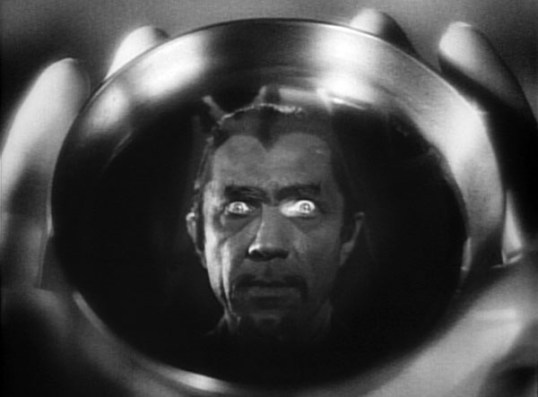
The Black Cat (1934, dir by Edgar G. Ulmer, DP: John J. Mescall)

4 Shots From 4 Films: Special 1932 Edition


4 Shots From 4 Films is just what it says it is, 4 shots from 4 of our favorite films. As opposed to the reviews and recaps that we usually post, 4 Shots From 4 Films lets the visuals do the talking!

Today, we take a look at a classic cinematic year.  It’s time for….

4 Shots From 4 1932 Films

The Blood of a Poet (1932, dir by Jean Cocteau, DP: Georges Piranal)

Shanghai Express (1932, dir by Josef von Sternberg, DP: Lee Garmes and James Wong Howe)

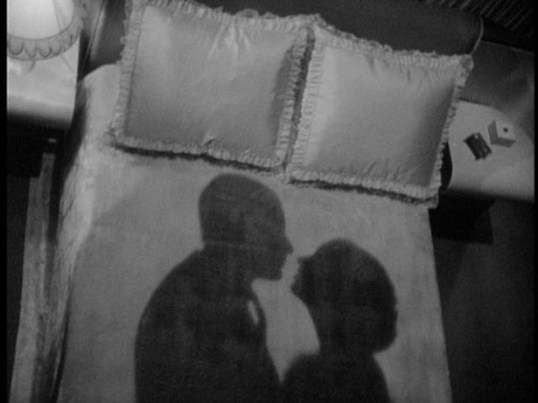
Trouble In Paradise (1932, dir by Ernst Lubitsch, DP: Victor Milner)

Vampyr (1932, dir by Carl Theodor Dreyer, DP: Rudolph Mate)

4 Shots From 4 Bela Lugosi Films


4 Shots From 4 Films is just what it says it is, 4 shots from 4 of our favorite films. As opposed to the reviews and recaps that we usually post, 4 Shots From 4 Films lets the visuals do the talking.

139 years ago on this date, Bela Lugosi was born in Hungary.  Today, we honor his memory with….

4 Shots From 4 Bela Lugosi Films

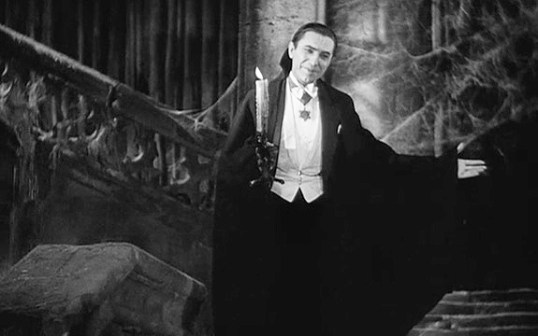
Dracula (1931, dir by Tod Browning, DP; Karl Freund)

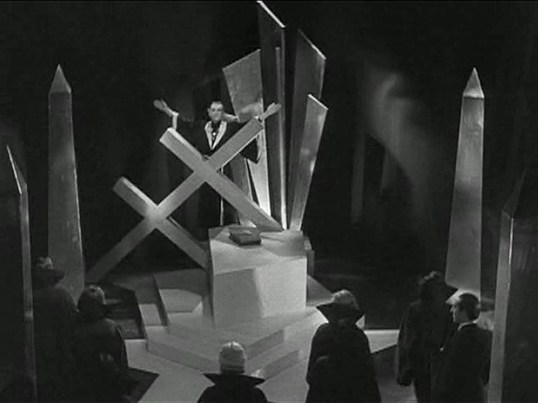
White Zombie (1932, dir by Vincent Halperin, DP: Arthur Martinelli)

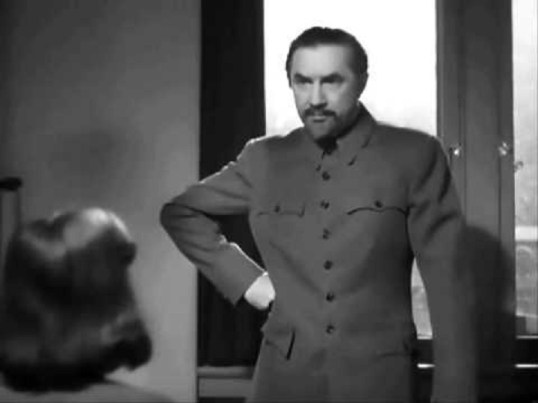
Ninotchka (1939, dir by Ernst Lubitsch, DP: William H. Daniels)

Bride of The Monster (1955, dir by Ed Wood, DP: Ted Allan and William H. Thompson)


4 Shots From 4 Films: Special Ernst Lubitsch Edition


4 (or more) Shots From 4 (or more) Films is just what it says it is, 4 (or more) shots from 4 (or more) of our favorite films. As opposed to the reviews and recaps that we usually post, 4 (or more) Shots From 4 (or more) Films lets the visuals do the talking.

129 years ago today, Ernst Lubitsch was born in Germany.  It was in Germany where he first started his directorial career, directing his first silent film in 1918.  He came to Hollywood in 1922 and continued to work as a director up until he suffered a sudden and fatal heart attack in 1947.  Lubitsch was famed for the “Lubitsch touch,” which could roughly be translated into the fact that he made sophisticated, sexually-charged comedies for adults.  During the Depression, he provided audiences with an escape from the drudgery of everyday life.  Lubitsch brought the comedy of manners to Hollywood and his influence is still felt to this day.

In honor of Ernst Lubitsch’s career and cinematic legacy, here are….

4 Shots From 4 Ernst Lubitsch Films

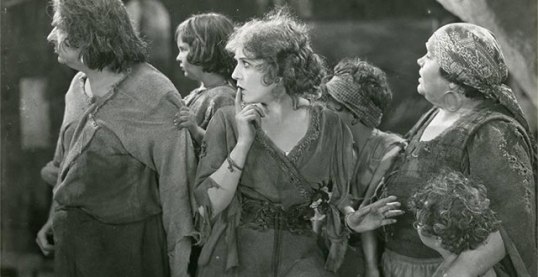
Rosita (1923, dir by Ernst Lubitsch, DP: Charles Rosher)

One Hour With You (1931, dir by Ernst Lubitsch, DP: Victor Milner)

Trouble In Paradise (1932, dir by Ernst Lubitsch, DP: Victor Milner)

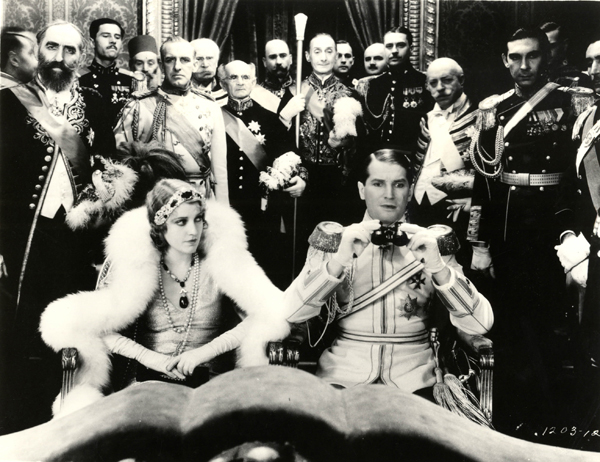
The Merry Widow (1934, dir by Ernst Lubitsch, DP: Oliver T. Marsh)

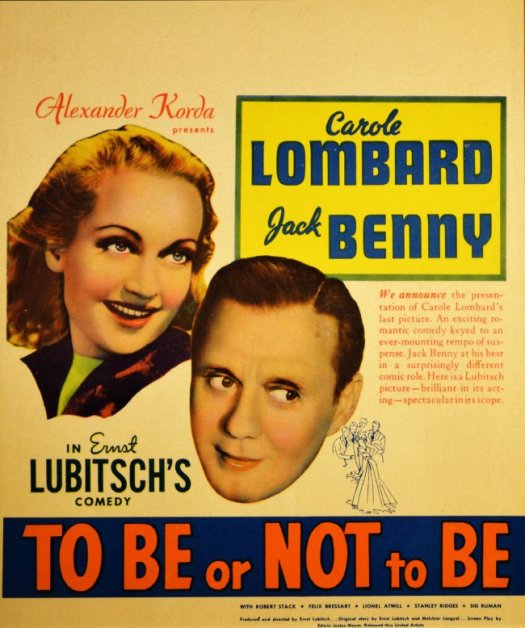
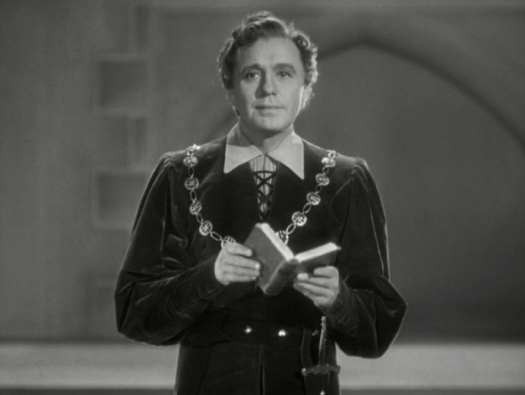
Polish Ham: Jack Benny in TO BE OR NOT TO BE (United Artists 1942)


gary loggins's avatarcracked rear viewer

Comedian Jack Benny got a lot of mileage (and a lot of laughs) making fun of his movie career, especially THE HORN BLOWS AT MIDNIGHT . While that film isn’t half as bad as Jack claimed it was, even better was Ernst Lubitsch’s TO BE OR NOT TO BE, a topical (at the time) tale of a band of Polish actors taking on the invading Nazis during WWII. Jack’s got his best film foil here, the marvelous Carole Lombard, and the movie’s got that wonderful “Lubitsch Touch”, a blend of sophistication and sparkling wit evidenced in classic films ranging from THE MERRY WIDOW and DESIGN FOR LIVING to NINOTCHKA and HEAVEN CAN WAIT.

Benny plays Joseph Tura, the self-proclaimed “greatest actor in the world”, and Lombard is his bantering wife Maria. Together, they lead a troupe of actors in Warsaw in a production of “Hamlet”, but every time Tura begins…

View original post 546 more words

The Fabulous Forties #35: That Uncertain Feeling (dir by Ernst Lubitsch)


That_Uncertain_Feeling

The 35th film in Mill Creek’s Fabulous Forties box set was — wait a minute?  I’m on my 35th Fabulous Forties review?  Let’s see — there’s 50 films in the box set so that means that I only have 15 more of these to write and I’ll be done!  And then I can move onto the Nifty Fifties, the Sensation Sixties, the Swinging Seventies, and the Excellent Eighties!  YAY!

Anyway, where was I?

Oh yeah, the 35th film.

First released in 1941, That Uncertain Feeling is a movie about sophisticated people doing silly things.  Socialite Jill Baker (Merle Oberon) gets the hiccups whenever she gets nervous or irritated.  Her trendy friends suggest that she try the new big thing: seeing a psychoanalyst!  At first, Jill is reluctant but eventually, she gives in to the pressures of high society and she goes to visit Dr. Vengard (Alan Mowbray).  Dr. Vengard tells her that her hiccups are a result of her marriage to Larry (Melvyn Douglas) and suggests that the best way to cure them would be to get a divorce.

At first, Jill is horrified at the suggestion.  Whatever will people think if she gets a divorce!?  However, Larry is kind of a condescending jerk.  (Or, at least, he comes across as being a jerk when viewed by 2016 standards.  By 1941 standards, I imagine he’s supposed to be quite reasonable.)  And Jill happens to meet another one of Vengard’s patients, an outspoken pianist named Alexander Sebastian (Burgess Meredith).

Soon, Jill is not only contemplating getting a divorce from Larry but perhaps marrying the eccentric Sebastian as well!  When Larry realizes that Jill is dissatisfied with their marriage and that she is attracted to Sebastian, he gives her a divorce.  He even pretends to be an abusive husband so that she can file for divorce on grounds of cruelty.  (It’s funnier than it sounds.)  Jill and Sebastian get engaged but, once Larry starts to date again, Jill realizes that she’s not quite over her ex…

I was really excited when I saw that The Uncertain Feeling was an Ernst Lubitsch film.  Lubitsch directed some of my favorite Golden Age comedies, films like Ninotchka and Heaven Can Wait.  But That Uncertain Feeling is not quite up to the standard of the other Lubitsch films that I’ve seen.  As played by Burgess Meredith, Sebastian never comes across as being a realistic rival to Larry.  The character is so cartoonishly eccentric that it becomes impossible to see what Jill sees in him.  At the same time, Larry comes across as being such a chauvinist that it’s far easier to understand why Jill would divorce him than why she would ever want to take him back.  The end result is a rare Lubitsch misfire.

However, as long as we’re talking about Lubitsch, make sure to see The Smiling Lieutenant if you get the chance.  Now, that’s a good Lubitsch film…

(And be sure to follow it up with The Love Parade...)

Cleaning Out The DVR #33: Heaven Can Wait (dir by Ernst Lubitsch)


(For those following at home, Lisa is attempting to clean out her DVR by watching and reviewing 38 films by the end of today!!!!!  Will she make it?  Keep following the site to find out!)

Heavencwaitposter

The 1943 film Heaven Can Wait opens with a 70 year-old man named Henry Van Cleve (Don Ameche) stepping into an opulent drawing room and having a conversation with a refined but menacing man known as His Excellency (Laird Cregar).  From their conversation, it quickly becomes obvious that Henry has recently died and His Excellency is in charge of Hell.  Most people who come to see His Excellency do so because they want to argue that they do not belong in Hell and they usually end up falling through a convenient trap door.  However, Henry is there to argue that, after living an enjoyable but dissolute life, he belongs in Hell.

Henry tells the story of his life.  He tells how he was born into great wealth and influenced by his down-to-Earth grandfather (Charles Coburn).  As a young man, he spent most of his time chasing after showgirls bur eventually, he met the beautiful and kind-hearted Martha (Gene Tierney).  He immediately fell in love with Martha but, unfortunately for him, she was engaged to his cousin (Allyn Joslyn).  Henry, however, used his considerable charm to convince her to elope with him.

(It helps, of course, that Henry’s cousin was totally and completely obnoxious, in the way that rival suitors often are in films like this.)

And, for 25 years, Henry was happy with Martha.  It took him a while to settle down and, at one point, Martha even left him as a result of his affairs.  However, they always got back together and Henry eventually did settle down, even going so far as to prevent his son from running off with a showgirl of his own.  It was only after Martha herself died that Henry, who always felt he didn’t deserve her love, returned to his old ways.

And, Henry argues, it’s because he was unworthy of his wife that he deserves to spend an eternity in Hell.  Does His Excellency agree?

Well, it would certainly be a depressing movie if he did.

One of the great things about TCM’s 31 Days of Oscar is that it gave me a chance to discover several films from director Ernst Lubitsch, films like The Smiling Lieutenant, The Love Parade, Ninotchka, and Heaven Can Wait.  Of those four Lubitsch films, Heaven Can Wait is probably the least substantial but it’s still an undeniably entertaining and nicely romantic film.  This is one of those films that you watch because the sets look wonderful, the costumes are to die for, and the performers are all pleasant to watch.  It’s pure entertainment, a crowd-pleaser in the best sense of the word.

In fact, tt was such a crowd-pleaser that it was nominated for best picture of the year.  However, it lost to the ultimate crowd-pleaser, Casablanca.

Cleaning Out The DVR #32: Ninotchka (dir by Ernst Lubitsch)


(For those following at home, Lisa is attempting to clean out her DVR by watching and reviewing 38 films by the end of today!!!!!  Will she make it?  Keep following the site to find out!)

Film_ninotchka

Oh my God, I love this movie!

First released in 1939, Ninotchka is many things.  It’s a love story.  It’s a comedy.  It’s a story of international intrigue.  It’s a political satire.  It’s a celebration of freedom.  And, perhaps most importantly, it’s a showcase for one of the greatest actresses of all time, the one and only Greta Garbo!

But you know what?  As great as Garbo is, she’s not the only worthy performer in this film.  Melvyn Douglas plays Garbo’s love interest and his performance is full of charm and class.  And guess who plays the main villain?  BELA LUGOSI!  That’s right — this was one of Lugosi’s few roles that did not require him to play a variation on his famous Dracula.  And, even if he doesn’t have a lot of scenes, Lugosi does a pretty good job in Ninotchka.  It’s interesting to see Lugosi playing an all-too real monster for once.

Ninotchka opens in Paris.  Three Russians are in town and they’re trying to sell some jewelry that was confiscated by the government during the revolution of 1917.  That’s right — they’re communists!  When they first show up in Paris, they make a big deal about hating the decadence of capitalism.  But then they meet Count Leon d’Algout (Melvyn Douglas), who proceeds to introduce them to the wonders of the free market.  Soon, the three of them are holed up in their luxurious hotel, ordering room service and having a nonstop party.

(Leon, incidentally, is working for the original owner of the jewelry.  The jewelry, as you’ve probably guessed, is what Hitchock would have called a macguffin.)

Once it becomes obvious that the first three Russians have been corrupted by western society, Ninotchka (Greta Garbo) is sent to bring them back to Moscow.  Ninotchka is a “special envoy” and, from the minute that she meets Leon, it’s obvious that she’s going to be a lot more difficult to corrupt.  For all of Leon’s charm, he cannot get Ninotchka to smile or drop her “all Marxist business” attitude.

Of course. from the minute that she first appears, we all know that Ninotchka is eventually going to loosen up and come to love both the west and Melvyn Douglas.  But what makes Garbo’s performance truly special is that we like and sympathize with Ninotchka even before she embraces decadence.  Even when Ninotchka is reciting Marxist-Leninist dogma, there’s a playfulness to the way Garbo delivers the lines.

That’s one reason why it’s so much fun to watch as Ninotchka (and Garbo) starts to actually relax and enjoy both Paris and life.  Wisely, the film doesn’t suggest that Paris has changed Ninotchka.  Instead, it merely shows that being in Paris and getting to know Leon has finally allowed her to act like the person that she was all along.

(Before her appearance in Ninotchka, Garbo was known for playing very dramatic roles.  Not only is this film about Ninotchka learning to enjoy herself.  It’s also about Garbo proving that she could play comedy just as well as she could play melodrama.)

Of course, eventually, Ninotchka and the three Russians are forced to return to Moscow and director Ernst Lubitsch does a wonderful job contrasting the glamour of freedom-loving Paris with the drabness of life under communism.  Just when it looks like Ninotchka is going to be forced to spend the rest of her life in her depressing apartment and missing the luxury of being able to wear silk stockings, her boss (Lugosi) tells her that she is being assigned somewhere else.  Ninotchka doesn’t want the assignment but, as Lugosi explains, the revolution doesn’t care what the individual wants.

Will Ninotchka and her friends ever find their way back to freedom and Leon?  Or will she remain trapped in the bureaucracy?  You’ll have to watch the film to find out!

I really liked Ninotchka.  Even 77 years after it was first released, it remains a wonderfully romantic and sweet-natured little comedy.  If you haven’t seen it, you definitely should!

Ninotchka was one of the many great films to be nominated for best picture of 1939.  However, the Oscar went to another famously romantic film, Gone With The Wind.

Lisa Reviews An Oscar Nominee: The Love Parade (dir by Ernst Lubitsch)


Love_Parade

Recently, as a part of TCM’s 31 Days of Oscar, I watched the 1929 musical The Love Parade.

Now, I have to admit that this was one of those movies that I started watching with a lot of pre-conceived notions.  While I happen to enjoy movies from all eras, I sometimes have a hard time adjusting to the style of the films that were made in the early days of the sound era.  Often times, it’s obvious that these films were made by directors and actors who were still struggling to make the transition from silent to sound cinema.  As a result, it’s not uncommon for films of this era to come across as being stiff and stagey.

But I needn’t have worried.  While The Love Parade does have its occasionally stagey moments, it actually holds up remarkably well.  For a film that was made 89 years ago, The Love Parade is still a lot of fun and surprisingly entertaining.  It helps, of course, that The Love Parade was made before the adoption of the infamous Production Code and, as such, it’s allowed to show off a racy sense of humor that keeps the film from feeling too dated.

As for the film itself, it deals with Queen Louise (Jeanette MacDonald), the young ruler of the European kingdom of Sylvania.  Despite the fact that Louise is a capable ruler, her subjects worry that she has yet to get married.  When her advisors inform her that she is running the risk of never marrying, Louise dismisses their concerns in a very Pre-Code way.  She lifts up her skirt, shows off her left leg, and says that there’s only one other leg as perfect as her left leg.  She then extends her right leg.  Since I basically do the same thing every single day, that was the moment when I realized that she might be the Queen and I might just be an outspoken redhead but I could still totally relate to Louise.

After showing off her legs, Louise deals with the issue of Count Alfred (Maurice Chevalier), a diplomat at Sylvania’s Paris embassy.  Apparently, Alfred ended up having an affair with every woman at the embassy (including the ambassador’s wife) and he has been recalled to Sylvania.  After reading the details of his sexual exploits, Louise decided that she has to meet Alfred for herself.

(And again, we’re reminded that this is a Pre-Code film.)

Alfred and Louise meet, fall in love, and marry.  However, Alfred has a hard time dealing with the fact that, as Queen, Louise has all the power in their marriage.  Even his attempts to draw up an economic plan are dismissed by the Queen’s advisors.  Feeling emasculated, Alfred sings a song called Nobody’s Using It Now.

Three guess what “it” is.

Can this marriage be saved?  Louise’s maid (Lillian Roth) and Alfred’s servant (Lupino Lane) are determined to make sure that it can be!

If the plot description and my review of The Love Parade sounds in any way similar to my review of The Smiling Lieutenant, that’s because both films were directed by Ernst Lubitsch.  In fact, The Love Parade was Lubitsch’s first sound film and, in many ways, his assured direction here played a huge role in helping Hollywood make the transition from the silents to the talkies.  Both Jeanette MacDonald and Maurice Chevalier give assured (and sexy) performances that hold up well today and the film’s opulent sets and costumes remain a visual delight.  The end result feels like a wonderfully entertaining fairy tale.

The Love Parade was nominated for best picture but it lost to the far more grim All Quiet On The Western Front.  But, regardless of what awards it won or did not win, The Love Parade is a delightful little film that works both as a historical document and a terrifically entertaining musical comedy.