October True Crime: Looking for Mr. Goodbar (dir by Richard Brooks)


In 1977’s Looking for Mr. Goodbar, Diane Keaton plays Theresa Dunn.

A neurotic and single woman who has never emotionally recovered from her childhood struggle with scoliosis, Theresa is trying to find herself in the wild and promiscuous world of the 1970s.  After losing her virginity to a condescending college professor (Alan Feinstein), Diane goes on to have relationships with a needy social worker (William Atherton) and an hyperactive petty criminal (Richard Gere).  During the day, she teaches deaf children and she’s good at her job.  She even manages to win over the distrustful brother (Levar Burton) of one of her students.  At night, she hits the bars.  She buys drugs from the neighborhood dealer (Julius Harris).  She tries to read the book that she always carries with her.  (Some nights, it’s The Godfather and other nights, it’s something else.)  She picks up strange men and takes them to her roach-infested apartment.  One of those men, Gary (Tom Berenger), turns out to both be a bit insecure about his masculinity and also totally insane….

Looking for Mr. Goodbar is an adaptation of a novel that was inspired by the real-life murder of a New York school teacher named Roseann Quinn.  The book was best seller and, just as he had with a previous best-selling true crime novel, director Richard Brooks bought the rights and both wrote and directed the film.  Diane Keaton, who at that point was best-known for playing Kay Adams in The Godfather and for appearing in Woody Allen’s comedies, took on the demanding role of Theresa and, whatever one may think of the film itself, it can’t be denied that Keaton gives a brave performance as the self-destructive Theresa.  In fact, I would say it’s one of Keaton’s best performances, outside of her work with Woody Allen and The Godfather Part II.  If she had been played by a lesser actress, Roseann could have been unbearable.  As played by Diane Keaton, though, she’s everyone’s best friend who just need some time to find herself.  The viewer worries about her and wants to protect her as soon as they see her, making her ultimate fate all the more tragic.

As for film itself, I’ve watched Looking For Mr. Goodbar a few times and I’m always a little bit surprised by how bad the movie actually is.  The film actually gets off to a strong start.  The scenes between Theresa and the professor make for a sensitive portrait of a repressed young woman finally getting in touch with her sexuality and, in the process, discovering that she deserves better than the man she’s with.  But once Theresa moves into her apartment and starts hitting the bars at night, the film takes on a hectoring and moralistic tone that leaves the viewer feeling as if the film is blaming Theresa for the tragedy that’s waiting for her at the end of the story.  Diane Keaton and Tuesday Weld (who plays her sister) both give excellent performances but everyone else in the film either does too much or too little.  This is especially true of Richard Gere, who is very hyperactive but still strangely insubstantial in his role.  (Whenever Richard Gere appears on screen, one gets the feeling that they could just walk right through him.)  A scene where Gere jumps around the apartment is meant to be disturbing but it’s more likely to inspire laughter than chills.

It’s an overly long film and the moments in which Theresa has dark, sexually-charged fantasies are never quite as powerful as the film obviously meant for them to be.  (Brian Dennehy makes his film debut as a doctor who kisses Theresa’s breast during one of her fantasies.)  As opposed to the empathy that he brought to In Cold Blood, one gets the feeling that director Richard Brooks didn’t like anyone in this movie and that he was more interested in Theresa as a cautionary tale than as a human being.  With this film, Brooks seemed to be standing athwart the Sexual Revolution and shouting, “Stop!”  That said, the film’s final moments are genuinely disturbing and difficult to watch.  It’s the one moment where Brooks’s lack of subtlety pays off.  Those last minutes are about as horrific as anything you could expect to see.

As for Roseann Quinn, her killer was eventually arrested.  John Wayne Wilson hung himself in prison, 5 months after murdering her.

Retro Television Review: Fallen Angel (dir by Robert Michael Lewis)


Welcome to Retro Television Reviews, a feature where we review some of our favorite and least favorite shows of the past!  On Sundays, I will be reviewing the made-for-television movies that used to be a primetime mainstay.  Today’s film is 1981’s Fallen Angel!  It  can be viewed on Tubi.

Jennifer Phillips (Dana Hill) is 12 years old and struggling to find her place in the world.  Sometimes, she wants to be a gymnast.  Sometimes, she wants to be an actress.  She misses her late father.  She has a difficult time communicating with her mother, an often-exhausted waitress named Sherry (Melinda Dillon).  She is definitely not happy that Sherry is dating the well-meaning but rather dorky Frank Dawson (Ronny Cox).  Jennifer wants to watch an awards show.  Frank changes the channel to a baseball game.  That pretty much sums up their relationship.

One night, Jennifer escapes the unhappiness of her home life by going to an arcade.  That’s where she is approached by Howard Nichols (Richard Masur), a seemingly friendly older man who takes her picture and then tells her that she’s just as beautiful as Farrah Fawcett and Olivia Newton-John.  Jennifer replies that she doesn’t think that she should talk to Howard because he’s a stranger.  Howard tells her that’s very smart of her and then explains that he coaches the local girls softball team and that he thinks Jennifer would make a great shortstop.

You can probably guess where this is going and you’re absolutely right.  Soon, Jennifer is spending all of her time with Howard, who tells her that he understands what she’s going through even if her parents don’t.  Howard’s an amateur photographer and he’s constantly asking Jennifer to pose for him.  He tells Jennifer that she probably shouldn’t tell any adults about their “special friendship” because they just wouldn’t understand.  He even buys Jennifer a puppy, one that he threatens to take back to the pound whenever it appears that Jennifer is trying to step away from him.  

Howard is not only a pedophile but he also works for a pornography ring and, as Jennifer soon finds out, he’s actually got several young people living with him and posing for pictures.  Jennifer’s mother eventually becomes concerned about what Jennifer is doing when she leaves the house and she even comes to suspect that friendly old Howard is not quite as friendly as he pretends to be.  But is it too late?

Yikes!  I watched this film on Tubi and I cringed through the whole thing.  Of course, that’s the reaction that Fallen Angel was going for.  This is a film that was made to encourage parents to maybe be a little concerned about with whom their children are spending their free time.  Jennifer is fortunate that her mom eventually figures out what is going on but, as the film makes clear, a lot of victims are not so lucky.  This film is pure paranoia fuel but in the best way possible.  There are some things that every parent should be paranoid about and the adult who only spends time with people 20 years younger than him is definitely one of those things.  The film is well-made, well-written, and well-acted.  Richard Masur, with his friendly manner and his manipulate tone, will give you nightmares.

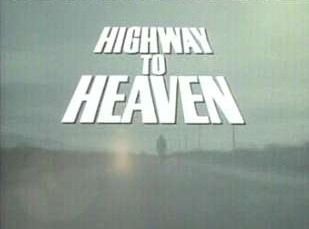
Retro Television Reviews: Fantasy Island 2.16 “Photographs/Royal Flush”


Welcome to Retro Television Reviews, a feature where we review some of our favorite and least favorite shows of the past!  On Tuesdays, I will be reviewing the original Fantasy Island, which ran on ABC from 1977 to 1986.  The entire show is currently streaming on Tubi!

Smiles, everyone, smiles!  Especially you, Tattoo!

Episode 2.16 “Photographs/Royal Flush”

(Dir by Cliff Bole, originally aired on January 27th, 1979)

After announcing the arrival of the plane, Tattoo informs Mr. Roarke that he is reading a book on hypnotism.

“Ah, it’s hypnotism now,” Roarke replies, “To what end?”

Tattoo looks at a passing native girl as the cameraman gives the viewers a close-up of her sarong-covered behind.

Okay, 1979.  We see ya.

The less interesting of this week’s two fantasies involves the Fantasy Island poker tournament.  (Fantasy Island reminds a bit of Hell’s Kitchen, in that there’s always some weird theme night.)  Johnny Court (John Rubinstein) is an up-and-coming player whose fantasy is to play against the greatest poker player of all time, Victor Holly (John McIntire).  Johnny has borrowed a good deal of money from a group of gangsters in order to enter the tournament so, if Johnny doesn’t win, guess who is getting his fingers broken?

Complicating matters is that Victor travels with his daughter, Emily (Ronne Troup).  It doesn’t take long for Johnny to realize that Emily is helping Victor cheat but Johnny has also fallen in love with Emily.  To save his own life, he has to defeat Emily’s father but, if he does so, that’ll mean Victor will no longer have the money necessary to support his daughter.

This fantasy wasn’t terrible but it wasn’t particularly interesting either.  Rubinstein, McIntire, and Troup all gave good performances but the poker scenes were a bit draggy.  Perhaps it would have been more interesting to me if I was a poker player myself.  But I prefer craps, just because you get to jump up and down before rolling the dice.

The second fantasy was a bit more intruding.  Nancy Weston (Michele Lee) is photographer who has just returned from a trip to Europe and Asia, where she took many pictures.  When she got the pictures developed, she discovered that a mysterious girl appeared in almost all of the pictures, even though it would have been impossible for the girl to have followed her all the way from Stonehenge to Thailand without Nancy noticing.  Nancy’s fantasy is to know who the girl is and why she’s following her.

The girl shows up on Fantasy Island.  Her name is Allison (Elizabeth Cheshire) and, as Roarke explains, Allison is not only the daughter of a powerful psychic but she also has the power to speak to the dead as well.  And it turns out that one of the dead has a message for Nancy….

This fantasy was really well-done and nicely creepy.  At heart, it was a pretty basic ghost story but Michele Lee and Elizabeth Cheshire both gave good performances and some of the imagery — particularly of a white horse running in slow motion through a green field — was surprisingly effective.

All in all, one mild but well-acted fantasy and one memorably creepy fantasy came together and added up to one good episode of Fantasy Island!  These are the type of episodes that we fantasize about.

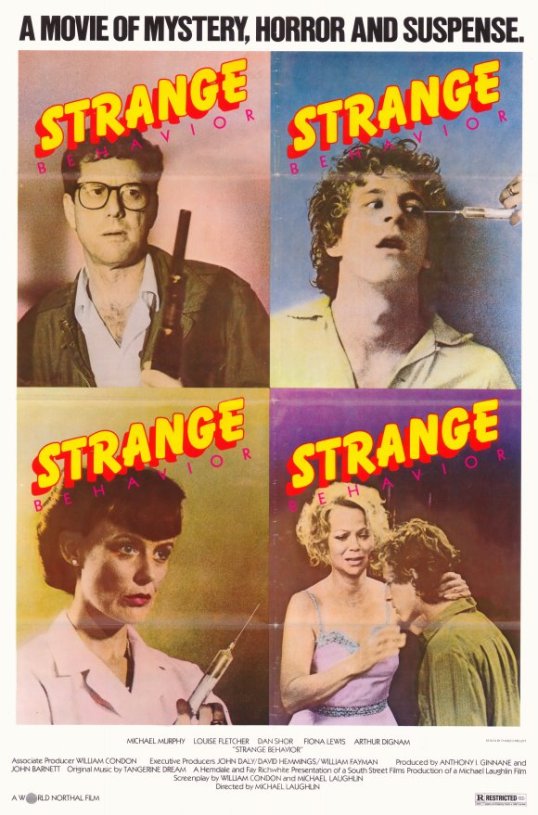
Horror Film Review: Strange Behavior (a.k.a. Dead Kids) (dir by Michael Laughlin)


I want to tell you about one of my favorite horror films.  It’s a strange one and I think you might like it.

It’s a movie from 1981.  It was filmed in New Zealand, even though it takes place in a small town in the American midwest.  It was directed by Michael Laughlin and the screenplay was written by Bill Condon, who has since become a director of some note.  This was Condon’s first screenplay.  In Australia and Europe, this movie is known as Dead Kids.  In America, the title was changed to Strange Behavior.

Here, watch the trailer:

It’s a pretty good trailer, actually.  That said, as good as the trailer may be, it doesn’t even come close to revealing just what an odd film Strange Behavior actually is.  If David Lynch had followed up The Elephant Man by directing a slasher movie, chances are the end result would have looked something like Strange Behavior.

Here’s another scene that I want you watch.  It’s kind of a long scene, clocking in at 7 minutes.  But I want you to watch it because, in many ways, this scene is the epitome of Strange Behavior:

http://www.youtube.com/watch?v=F0eAlUD93K4

Strange Behavior is perhaps the only 80s slasher film to feature a totally random and totally choreographed dance number.  It comes out of nowhere but, in the world that this film creates, it somehow feels totally appropriate.  Of course, the nun is going to announce that she’s not wearing any underwear and then pretend to stab a guy in the back.  Of course, the cowboy’s going to throw up and then want to go out to his car with his date.  And of course, a bunch of people in costume are going to end up dancing to Lightnin’ Strikes.  In Strange Behavior, the strangest behavior is the only behavior that makes sense.

As for the film itself, it’s a mix of small town melodrama, slasher horror, and gentle satire.  Teenagers are being murdered by other teenagers and no one is sure why.  The chief of police, John Brady (played by character actor Michael Murphy, who gives a quietly authoritative performance that counters some of the weirdness of the rest of the movie), is trying to solve the crimes while trying to cope with the mysterious death of his wife.  His son, Pete (Dan Shor), is going to the local college, where classes are taught by a professor (Arthur Dignam) who died years ago but who filmed a few lectures before passing.  To make extra money, Pete does what many of the local teenagers do — he volunteers for medical experiments.  Researcher Gwen Parkinson (Fiona Lewis) oversees the experiments, handing out pills and occasionally administering a hypodermic needle to the eyes of a test subject.  Gwen is always cool, calm, and collected.  When one irate father draws a gun on her, Gwen quips, “I can’t stop you.  I don’t have a gun.”

But there’s more to this movie than just medical experiments and murder.  Strange Behavior is full of wonderfully eccentric supporting characters.  Other than John, there’s really nobody normal to be found in either the town or the movie.  Pete’s best friend, Oliver (Marc McClure), is cute and dorky.   Barbara (Louise Fletcher) just wants to marry John and live in a town where dead bodies don’t turn up in the middle of corn fields, propped up like scarecrows.  John’s best friend and fellow cop, Donovan (Charles Lane), has been around forever and has a great, no-nonsense approach to even the strangest of things.  When it becomes obvious that John is not going to be able to solve the murders on his own, big city cop Shea (Scott Brady) shows up and wanders ineffectually through the movie, spitting out hard-boiled dialogue like a refugee from a 1930s gangster flick.  And finally, receptionist Caroline (Dey Young) sits at her desk in the clinic, gossiping about the patients and smoking cigarette after cigarette.  Caroline is probably the smartest person in the movie.  As an administrative assistant, I appreciated that.

It’s an odd little movie, which is why I love it.  Laughlin, Condon, and the entire cast created a world where everything is just a little off-center.  It makes for terrifically entertaining and weird movie, one that works as both satire and straight horror.

Strange Behavior is a film that deserves to much better known than it currently is so my advice is go watch it and then tell you friends to watch it too.