When renowned radio psychiatrist George Matlin (Charles Grodin) has a nervous breakdown, he takes a trip to Europe with his wife (Mary Gross) to both recover and also work on his marriage. (Matlin’s breakdown was the result of an extramarital affair.) Needing someone to host Dr. Matlin’s radio show, his producers call Dr. Lawrence Baird (David Clennon), who oversees a mental facility in Chicago. They assume that Dr. Baird is just dumb enough that they won’t have to worry about him overshadowing Dr. Matlin while he’s guest-hosting. However, when they call, Dr. Baird is out of his office and the phone is answered by John Burns (Dan Aykroyd), a con artist who has been pretending to be insane so that he can avoid serving time in prison. Pretending to be Baird, Burns accepts their offer and then escapes from the asylum and heads to Beverly Hills. The real Dr. Baird, not knowing about the offer, goes on vacation in Europe. Though Burns had originally only been planning on doing the radio job long enough to get paid enough money to head to Mexico, he soon becomes a celebrity with his non-nonsense, blunt advice.
There’s a lot of talented people in TheCouchTrip, including Walter Matthau as a former priest-turned-kleptomaniac and Aykryod’s wife, Donna Dixon, as Matlin’s colleague and Burns’s eventual love interest. Director Michael Ritchie was responsible for some of the best films of the 70s and radio psychiatry is certainly a ripe subject for satire. Why, then does, The Couch Trip fall flat? Some of it is because the movie never seems to know if it wants to be wacky farce or a dramedy about a criminal who finds a new life helping people. The other big problem is that the talented Dan Aykroyd is miscast as the type of unapologetic smartass that Bill Murray could play in his sleep. (In a version where Murray played John Burns, Aykroyd would have been perfect casting as George Matlin.)
Aykroyd was one of the most talented members of the original Not Ready For Prime Time Players. (His impersonations of Nixon and Jimmy Carter were second-to-none.) Sadly, Hollywood has never figured out what to do with his off-center talent. The Couch Trip is a prime example of that.
Welcome to Retro Television Reviews, a feature where we review some of our favorite and least favorite shows of the past! On Wednesdays, I will be reviewing the original Love Boat, which aired on ABC from 1977 to 1986! The series can be streamed on Paramount Plus!
This week, we start season 5 of The Love Boat!
Episode 5.1 and 5.2 “The Expedition/Julie’s Wedding/The Mongala/Julie’s Replacement/The Three R’s/The Professor’s Wife”
(Dir by Roger Duchowny, originally aired on October 10th, 1981)
The fifth season of The Love Boat opens with a two-hour spectacular. Our Love Boat crew is in Australia, where they will be guiding The Sea Princess on a voyage through the South Pacific. It’s a bit odd to start off a season of The Love Boat on a different boat but I guess the plan was to show off all the different ships that sailed for Princess Cruise Lines. This episode was actually shot on the boat during a cruise. It’s interesting to see how different the Sea Princess is from the show’s usual location. It has nicer hallways than the Pacific Princess and a much larger lobby. However, I prefer the relative privacy of the Pacific Princess’s multi-level dining room to the wide open space provided by the Sea Princess.
Captain Stubing, Gopher, Isaac, and Doc are shocked when Julie does not board the ship. She’s been on vacation with her boyfriend, Tony (Anthony Andrews), for the last few months. Tony lives in Australia so, really, it shouldn’t be too hard for Julie to make it to the ship. Instead, a substitute cruise director named Yvonne (Delvene Delaney) shows up. Doc and Gopher are happy because it gives them a new co-worker to lust after. Captain Stubing is upset because Julie has sent them all a letter in which she explains that she will be marrying Tony and retiring to the animal habitat where he works. She asks Stubing to give her away and she invites Vicki to be a bridesmaid. Gopher, Isaac, and Doc will be ushers.
Doc is briefly distracted from chasing Yvonne when he spots Barbara Carroll (Michelle Phillips) boarding the boat. However, Barbara has eyes for Ralph Sutton (Patrick Duffy), a rancher who is blind without his glasses. Unfortunately, that means that he can’t read the love letter that Barbara wrote him. Because she wants Ralph for herself, Connie Walker (Jennilee Harrison) lies about what the letter says. *GASP* (Don’t worry, it all works out.)
Meanwhile, an expedition headed by shady Deke Donner (Jose Ferrer) goes to an island and captures a hairy man (Patrick Ward) who they believe is the Mongola, a.k.a., the missing link! (Wait, what?) They hide the ape-man in the ship’s cargo area (huh?) and try to keep anyone else from learning that they’re transporting a living thing. Everyone acts like he’s a caveman but it’s kind of obvious that the Mongola is just a confused guy with a beard. Dr. Jill McGraw (Donna Dixon) falls in love with the Mongola, much to the consternation of her colleague, Dr. Barry Mason (Gary Frank). Meanwhile, Deke’s old friend, Prof. Milo Ender (Harry Morgan), is stunned to discover that the Mongola has a vaccination scar. Milo’s wife, Vivian (Katherine Helmond), encourages Milo to keep the secret to himself so that they can at least make some money off of the Mongola. (Like, seriously, what the Hell is even going on with this story?) Milo agrees, though it doesn’t seem to occur to him that, if he could notice the vaccination scar, then pretty much anyone could notice the vaccination scar. Eventually, the Mongola gets loose from his cage and jumps overboard. “He’s shark food,” Deke says. (What in the name of God is going on here?) However, the Mongola apparently survives because the police are waiting to arrest Deke as soon as the ship docks in Australia.
But what about the wedding!? you’re saying. Well, the wedding doesn’t happen. It nearly happens. Julie shows up at the church. However, Tony finds out that he’s going to die in a month or two so he leaves Julie at the altar. Julie flies back to Los Angeles with the rest of the Love Boat crew.
Seriously, this is the most morbid episode of The Love Boat that I’ve ever seen.
Still, morbid or not, it’s an entertainingly weird episode and the Australian and New Zealand scenery is lovely to look at. (As with all of the two-hour episodes of The Love Boat, there’s a lot of travelogue padding.) There’s something oddly appealing about seeing the usual Love Boat shenanigans mixed in with a story about the Missing Link and Julie discovering that the love of her life is terminally ill. I mean, the song isn’t lying. The Love Boat really does promise something for everyone.
I mean, in the end, we all know that Julie couldn’t get married because then she’d have to leave the show and that wouldn’t happen until Lauren Tewes’s cocaine use became a problem during the seventh season. Tony could either cheat on her or he could die. (Better he die than do what almost every man does at his bachelor party.) The episode ends with Tony still alive so I guess the show’s writer were leaving their options open. Maybe Tony will make a miraculous recovery, who knows?
Myself, I’m just happy that the crew is back together. It’s time to set sail …. again!
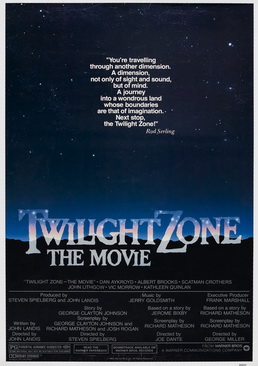
1983’s Twilight Zone: The Movie is meant to be a tribute to the classic original anthology series. It features four “episodes” and two wrap-around segments, with Burgess Meredith providing opening and closing narration. Each segment is directed by a different director, which probably seemed like a good idea at the time.
Unfortunately, Twilight Zone: The Movie is a bit of a mess. One of the episodes is brilliant. Another one is good up until the final few minutes. Another one is forgettable. And then finally, one of them is next too impossible to objectively watch because of a real-life tragedy.
With a film that varies as wildly in tone and quality as Twilight Zone: The Movie, the only way to really review it is to take a segment at a time:
Something Scary (dir by John Landis)
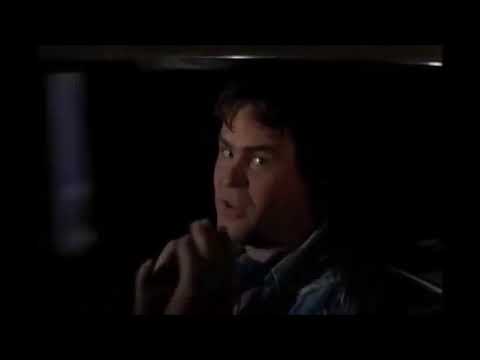
Albert Brooks and Dan Aykroyd drive through the desert and discuss the old Twilight Zone TV series. Brooks claims that the show was scary. Aykoyd asks if Brooks wants to see something really scary. This is short but fun. It’s tone doesn’t really go along with the rest of the movie but …. oh well. It made me jump.
Time Out (dir by John Landis)
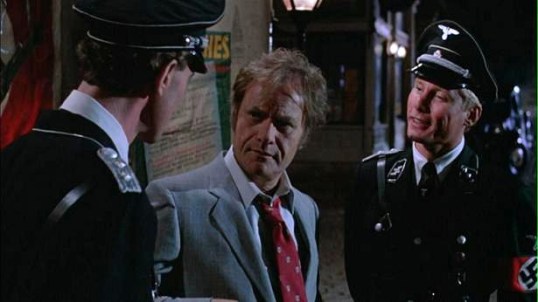
Vic Morrow plays a racist named Bill Connor who, upon leaving his local bar, finds himself transported to Nazi-occupied France, the deep South, and eventually Vietnam.
How you react to this story will probably depend on how much you know about its backstory. If you don’t know anything about the filming of this sequence, you’ll probably just think it’s a bit heavy-handed and, at times, unintentionally offensive. Twilight Zone often explored themes of prejudice but Time Out just seems to be using racism as a gimmick.
If you do know the story of what happened while this segment was being filmed, it’s difficult to watch. Actor Vic Morrow was killed during filming. His death was the result of a preventable accident that occurred during a scene that was to involve Morrow saving two Vietnamese children from a helicopter attack. The helicopter crashed, killing not only Morrow but the children as well. It was later determined that not only were safety protocols ignored but that Landis had hired the children illegally and was paying them under the table so that he could get around the regulations governing how many hours child actors could work. It’s a tragic story and one that will not leave you as a fan of John Landis’s, regardless of how much you like An American Werewolf in London and Animal House.
Nothing about the segment feels as if it was worth anyone dying for and, to be honest, I’m kind of amazed that it was even included in the finished film.
Kick The Can (dir by Steven Spielberg)
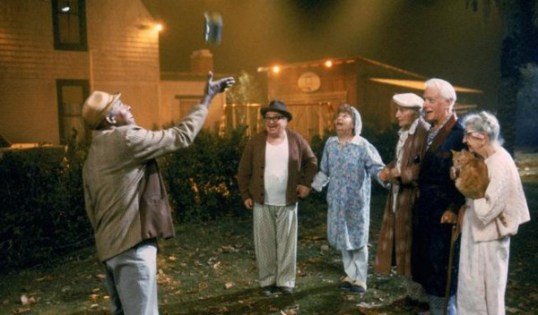
An old man named Mr. Bloom (Scatman Crothers) shows up at Sunnyvale Retirement Home and encourages the residents to play a game of kick the can. Everyone except for Mr. Conroy (Bill Quinn) eventually agrees to take part and, just as in the episode of the Twilight Zone that this segment is based on, everyone becomes young.
However, while the television show ended with the newly young residents all running off and leaving behind the one person who refused to play the game, the movie ends with everyone, with the exception of one man who apparently became a teenager istead of a kid, deciding that they would rather be old and just think young. That really doesn’t make any damn sense but okay.
This segment is unabashedly sentimental and clearly calculated to brings tears to the eyes to the viewers. The problem is that it’s so calculated that you end up resenting both Mr. Bloom and all the old people. One gets the feeling that this segment is more about how we wish old people than how they actually are. It’s very earnest and very Spielbergian but it doesn’t feel much like an episode of The Twilight Zone.
It’s A Good Life (dir by Joe Dante)
A teacher (Kathleen Quinlan) meets a young boy (Jeremy Licht) who has tremendous and frightening powers.
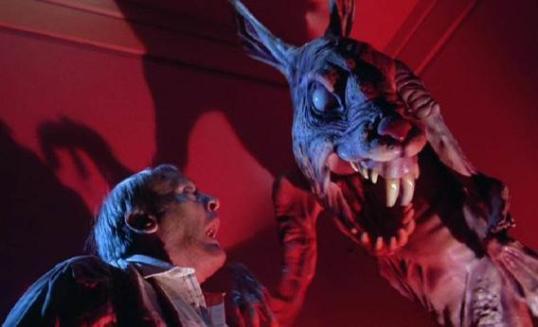
This is a remake of the classic Twilight Zone episode, It’s A Good Life, with the difference being that young Anthony is not holding an entire town hostage but instead just his family. This segment was directed by Joe Dante, who turns the segment into a cartoon, both figuratively and, at one point, literally. That’s not necessarily a complaint. It’s certainly improvement over Spielberg’s sentimental approach to the material. Dante also finds roles for genre vets like Kevin McCarthy, William Schallert, and Dick Miller and he provides some memorably over-the-top visuals.
The main problem with this segment is the ending, in which Anthony suddenly reveals that he’s not really that bad and just wants to be treated normally, which doesn’t make much sense. I mean, if you want to be treated normally, maybe don’t zap your sister in a cartoon. The teacher agrees to teach Anthony how to be a normal boy and again, what the Hell? The original It’s A Good Life worked because, like any child, Anthony had no conception of how adults felt about him. In the movie version, he’s suddenly wracked with guilt and it’s far less effective. It feels like a cop out.
Still, up until that ending, It’s A Good Life worked well as a satire of the perfect American family.
Nightmare at 20,000 Feet (dir by George Miller)
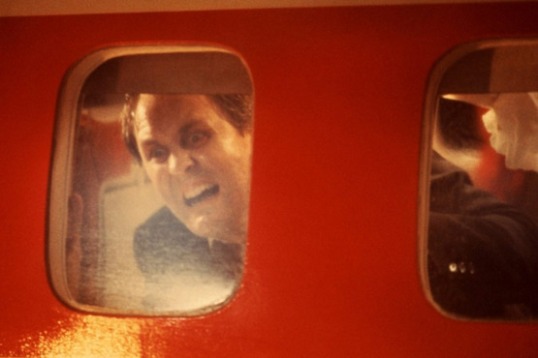
In this remake of Nightmare at 20,000 Feet, John Lithgow steps into the role that was originally played by William Shatner. He plays a man who, while attempting to conquer his fear of flying, sees a gremlin on the wing of his airplane. Unfortunately, he can’t get anyone else on the plane to believe him.
Nightmare at 20,000 Feet is the best of the four main segments. It’s also the one that sticks closest to its source material. Director George Miller (yes, of Mad Max fame) doesn’t try to improve on the material because he seems to understand that it works perfectly the way it is. John Lithgow is also perfectly cast in the lead role, perfectly capturing his increasing desperation. The one change that Miller does make is that, as opposed in the TV show, the gremlin actually seems to be taunting John Lithgow at time and it works wonderfully. Not only is Lithgow trying to save the plane, he’s also trying to defeat a bully.
Something Scarier (dir by John Landis)
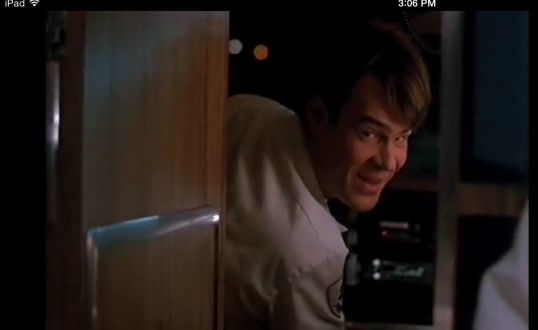
Dan Aykroyd’s back as an ambulance driver, still asking his passenger if he wants to see something really scary. It’s an okay ending but it does kind of lessen the impact of Nightmare at 20,000 Feet.
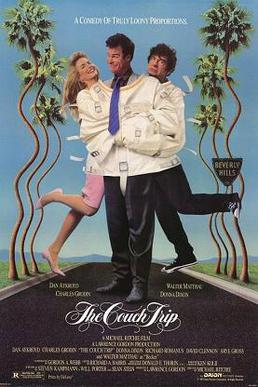 When renowned radio psychiatrist George Matlin (Charles Grodin) has a nervous breakdown, he takes a trip to Europe with his wife (Mary Gross) to both recover and also work on his marriage. (Matlin’s breakdown was the result of an extramarital affair.) Needing someone to host Dr. Matlin’s radio show, his producers call Dr. Lawrence Baird (David Clennon), who oversees a mental facility in Chicago. They assume that Dr. Baird is just dumb enough that they won’t have to worry about him overshadowing Dr. Matlin while he’s guest-hosting. However, when they call, Dr. Baird is out of his office and the phone is answered by John Burns (Dan Aykroyd), a con artist who has been pretending to be insane so that he can avoid serving time in prison. Pretending to be Baird, Burns accepts their offer and then escapes from the asylum and heads to Beverly Hills. The real Dr. Baird, not knowing about the offer, goes on vacation in Europe. Though Burns had originally only been planning on doing the radio job long enough to get paid enough money to head to Mexico, he soon becomes a celebrity with his non-nonsense, blunt advice.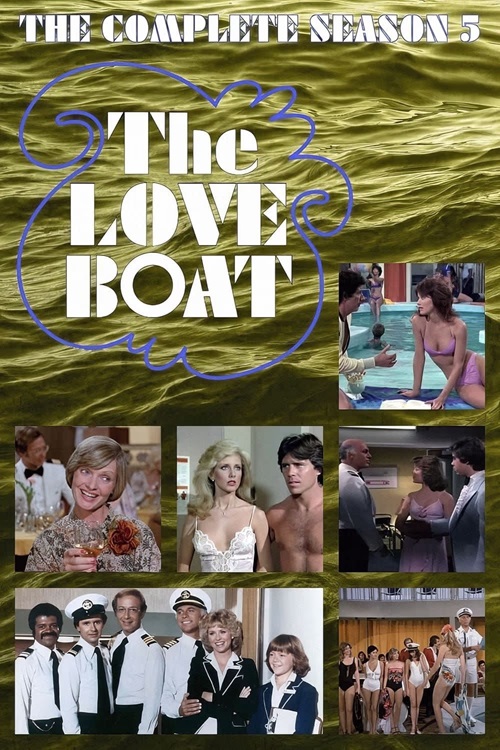
 Through the Shattered Lens