
Nosferatu the vampyre is back! Well, maybe. It’s complicated,
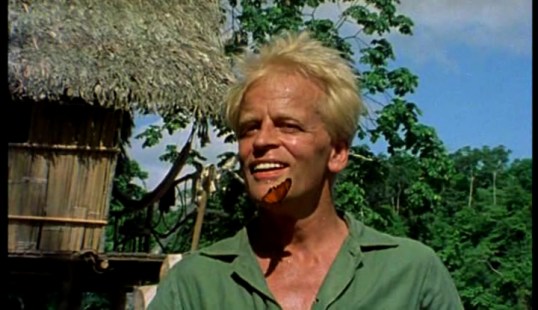
This Italian production from 1988 was originally envisioned as being a semi-official sequel to Werner Herzog’s Nosferatu, which was itself a remake of F.W. Murnau’s silent classic. The idea was that Klaus Kinski would reprise his role and this time, his feral version of Dracula would haunt Venice. Kinski agreed, initially, to reprise his role. However, after arriving on the set, Kinski lived up to his infamous reputation for being difficult. He announced that he would, under no circumstances, don the famous make-up that he wore in Nosferatu. And while Kinski was undoubtedly a good actor who was capable of giving performances that kept him employed despite reportedly being insane, Nosferatu without the makeup is not really Nosferatu. He’s just another vampire.
Still, Kinski was a big enough star that he got his way about the makeup. He also attempted to get his way during the first day of filming, when he refused to take any direction from director Mario Ciaino. When Ciaino attempted to figure out why Kinski was being so difficult, Kinski declared that he had been promised, by producer Augusto Caminito, that he would be allowed to direct the film. This led to Mario Ciaino quitting during the first day of production. Producer Caminito took over as a director, though apparently Kinski did end up directing several of his own scenes. Reportedly, other scenes were directed by Luigi Cozzi.
However, Kinski didn’t stop with getting the director replaced. He also demanded that nearly the entire cast be replaced as well. Kinski, in fact, was such a terror on the set that it was common for members of the crew to refuse to work with him, which perhaps explains why Kinski seems to spend so much of this film wandering around Venice by himself.
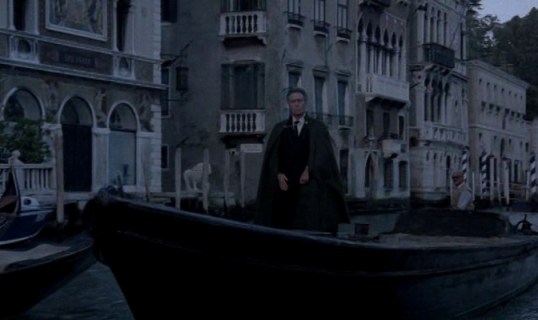
As for the film itself — well, yes, it’s exactly as big of a mess as it sounds like it would be. Kinski plays a vampire who may or may not be Dracula. Actually, very few of the traditional vampire rules seem to apply to him. He wanders around in the daylight. He looks at his reflection in a mirror. He does, however, drink a lot of blood so I guess some things never change. Because he refused to wear the vampire makeup or shave his head, Kinski spends the entire film looking like the aging lead singer of a 70s prog rock band. At the same time, it must be said that Kinski actually does give a fairly good performance. He’s a vampire who is desperate to find someone pure of heart who can end his ennui-stricken life. Kinski’s screen presence is undeniably powerful and he looks appropriately miserable.
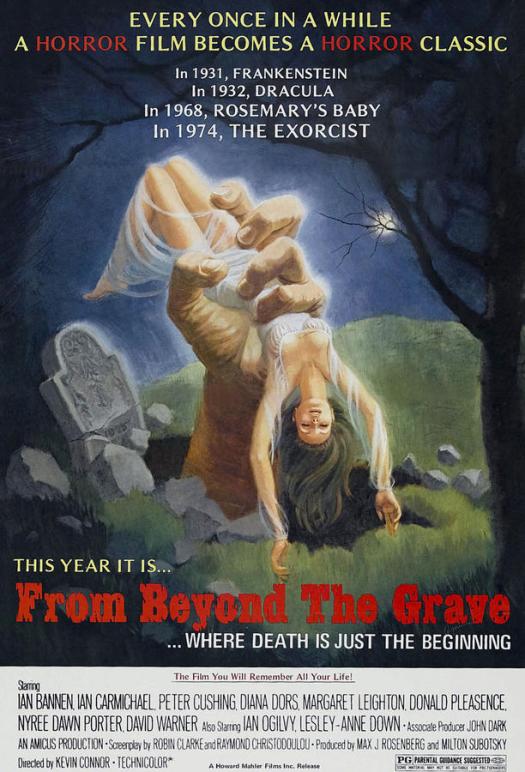
Christopher Plummer has the Van Helsing role and Donald Pleasence plays a priest who always seems to be somewhat nervous. (In other words, a typical role for Donald Pleasence.) Plummer is in Venice because, back in the 18th century, it was the last place that Kinski’s vampire was seen. This leads to several confusing flashbacks, all of which are somewhat randomly sprinkled throughout the film.
There’s not really any story beyond Kinski walking around with a stricken-look on his face but, oddly, the film kind of works. Despite all of the directors who worked on it, the film is often visually stunning. I think it’s the power of Venice. No other city has quite the same atmosphere as Venice and it turns out to be the perfect location for a film about an ennui-stricken vampire.
(I know that when I visited Venice the summer after I graduated high school, I often found myself thinking about vampires. That’s just the type of city it is.)
Anyway, the film will be best appreciated by Italian horror enthusiasts and Kinski completists. Others will probably be bored out of their mind. If you just want to see a good horror film set in Venice, I recommend Don’t Look Now.


 In the Amazon, natives are dying of a mysterious disease. Could it have anything to do with a German war criminal named Wolfgang (played by Robert Vaughn) who is living in a cave that is decorated with a Nazi flag? A scientist (Victor Melleney) and his daughter, Anna (Sarah Maur Thorp), are determined to find out. They hire a tough explorer, John Hamilton (Michael Dudikoff), to lead them up the river but John does not do a very good job because the scientist ends up dead and Anna ends up kidnapped.
 Sometimes, the story behind a movie is more interesting than the movie itself.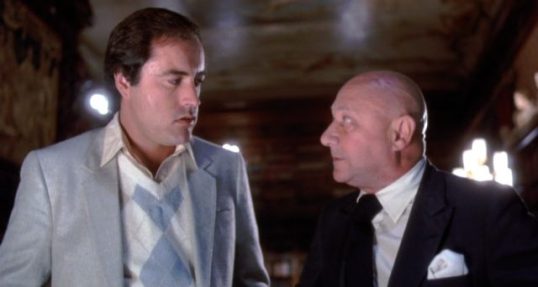





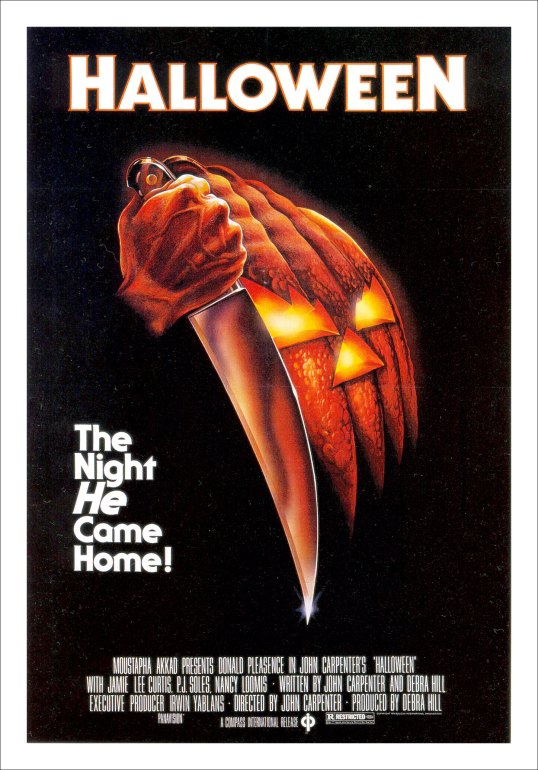
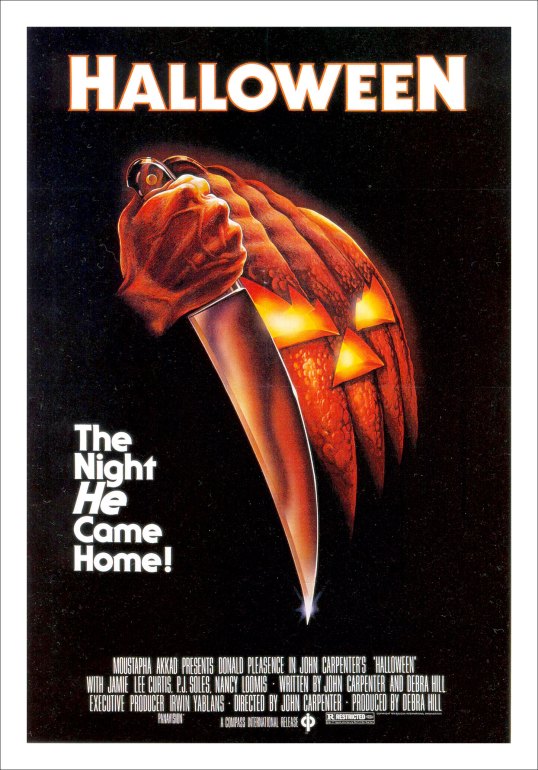
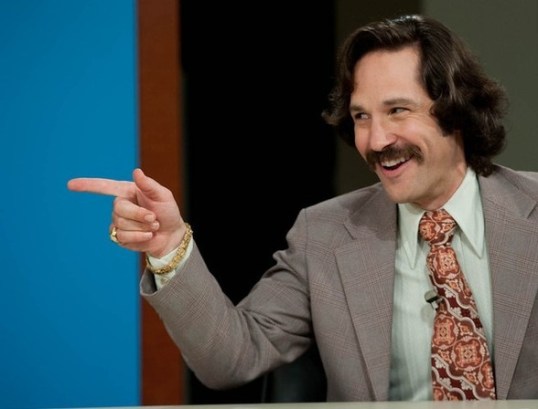
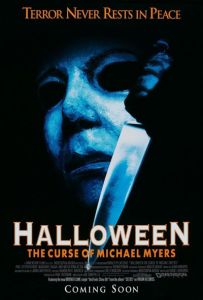 Long before he was either Ant-Man or Judd Apatow’s favorite leading man, Paul Rudd was just another young actor looking for his first break. He got it in 1995 when he was cast in the latest entry in the Halloween franchise. Though Clueless was released first, the man who would be Brian Fantana got his introducing credit for Halloween: The Curse of Michael Myers. (He’s credited as Paul Stephen Rudd.)
 Donald Pleasence is back as Dr. Sam Loomis but it is not a happy return. This was Pleasence’s final film and, in his few scenes, it is obvious that he was not in good health and his famous voice had been reduced to a hoarse rasp. Pleasence died shortly after filming his scenes, which meant that he wasn’t available for the reshoots that Miramax demanded after the first cut of the film tested badly. Add that to the fact that director Joe Chapelle reportedly had not seen any of the previous Halloweens, did not find the Loomis character to be interesting, and cut him out of several scenes and Dr. Loomis is barely in The Curse of Michael Myers.
 Why does the Cult want the baby? Why do birds suddenly appear whenever you are near? There is no explanation, it’s just something that happens.
 In 1978, Michael “escapes” from Smith’s Grove and tries to kill Laurie. Both he and Dr. Loomis get blown up at the hospital.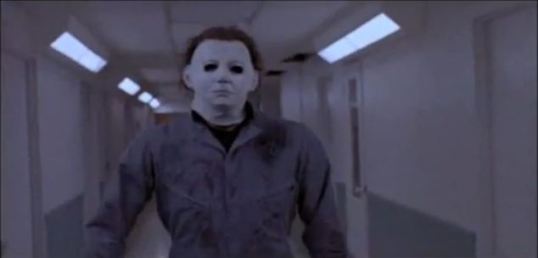
 Through the Shattered Lens