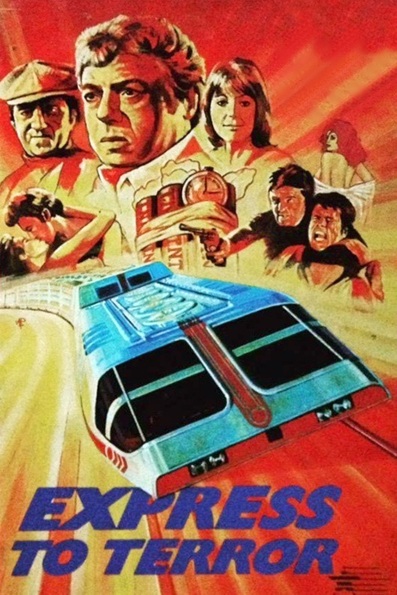
Icarus File No. 24: Express to Terror (dir by Dan Curtis)


The year was 1979 and Fred Silverman, the president of NBC, had an idea.

How about a television series in which each week’s episode would depict a different group of passengers going on a trip?  The passengers would all be dealing with their own stories, some of which would be dramatic and some of which would be humorous.  With any luck, some of them might even fall in love over the course of their journey!

To keep the audience interested, the show would also feature a cast of regular characters, the crew.  Edward Andrews would play the captain, a sensible and by-the-book type.  Robert Alda played Doc, the doctor who was also a bon vivant.  Patrick Collins was the goofy purser.  Nita Talbot played Rose, the perky director of entertainment.  Michael DeLano was the bartender who always had the best advice for the passengers….

Does this sound familiar?

If you think that it sounds like Fred Silverman just ripped off The Love Boat …. well, you’re wrong.  The Love Boat took place on a boat.  Supertrain took place on a train.

At the time that Supertrain went into production, it was the most expensive television production of all time.  Before the pilot film was even shot, NBC had spent ten million dollars on the Supertrain sets.  Not only was a fake train built but two models were also constructed for the shots of the train moving through the countryside.  At the time, the assumption was that the costs would be easily covered by the money that NBC stood to make from broadcasting the 1980 Summer Olympics.  Unfortunately, Jimmy Carter decided that the U.S. would be boycotting the Olympics as a way to protest Russia’s invasion of Afghanistan.  The only thing that kept NBC from going bankrupt was that the BBC was apparently run by someone even more incompetent than Fred Silverman.  The BBC paid $25,oo per episode for the rights to air Supertrain in the UK.  Supertrain proved to be such a disaster that the BBC never actually aired the episodes that they had purchased.

1979’s Express to Terror was the pilot to Supertrain.  (It was later released in some territories as a stand-alone film.)  Directed by horror impresario Dan Curtis (who was also brought in to produce the series), Express to Terror opens with an apparently drunk Keenan Wynn playing the role of railway baron Winfield Root.   Winfield loudly announces to a group of nervous investors that he has created ” an atom-powered steam turbine machine capable of crossing this country in 36 hours!”  A few months later, Supertrain sets off from New York to Los Angeles.

The main thing that one notices about the train is that it’s incredibly tacky.  For all the money that Winfield Root (not to mention NBC) poured into the thing, it looks awful.  The cabins are bland and also seem to be constantly shaking as the train rumbles over its tracks.  Whereas The Love Boat featured glorious shots of passengers enjoying themselves on an open-air deck, Express to Terror features a lot of shots of passengers trying to squeeze their way through narrow and crowded hallways.  There’s a disco car, which sounds like fun but actually looks like a prom being held in a locker room.  There’s a swimming pool but you can’t really lay out by it because it’s on a train.  Winfield is among the passengers and he continually refers to the train as being “Supertrain” in conversation, which just sounds dumb.  “The next person who stops Supertrain,” he announces “will be walking to L.A!”

The main drama features Steve Lawrence as Mike Post, a Hollywood agent with a gambling problem who thinks that someone on the train is trying to kill him.  Actually, the assassin is after a different Mike Post (Don Stroud) but that Mike Post is a criminal who, after entering the witness protection program, changed his name to Jack Fisk.  The criminal Post is hoping that the agent Post will be killed by mistake.  The criminal Mike Post has a girlfriend named Cindy (Char Fontane) who falls in love with the agent Mike Post.  Fred Williamson appears as a football player-turned-assassin.  George Hamilton plays a Hollywood executive.  Don Meredith is the alcoholic best friend of the agent Mike Post.  Stella Stevens is on the train as a diva.  So is Vicki Lawrence, playing a naive innocent.

Express to Terror tries to mix comedy and drama but it doesn’t really work because the “Good” Mike Post doesn’t really seem to be worth all the trouble.  Steve Lawrence gives a mind-numbingly bad performance in the role and, as a result, “Good” Mike Post really isn’t any more sympathetic than “Bad” Mike Post.  The main problem is that “Good” Mike Post comes across as being a coward and there’s only so much time that you can watch a coward act cowardly before you lose sympathy for him.  Being scared is one thing.  Being so dumb that accidentally gets your fingerprints on a knife that’s just been used to kill a man is another thing.

As for the members of the crew — the captain, the doctor, the bartender, and such, they take a back seat to the drama of the two Mike Posts.  It’s a bit odd because no one on the train — not even Winfield Root — seems to be that upset by the fact that one of their passengers is murdered while the train is going through a tunnel.  You would think that everyone would be worried about the future of Supertrain at that point.  A murder is not good for publicity but Winfield Root is oddly unconcerned about it.  I swear, light rail people are almost as heartless as bicyclists!

Of course, the worst thing about Express to Terror is that it promises terror but it doesn’t deliver.  When I see a the word “terror” in a film directed by Dan Curtis, I expect a little terror!  Other than Steve Lawrence’s overacting, there really wasn’t anything particularly terrifying about Express to Terror.

As for Supertrain, it ran for nine episodes and was promptly canceled.  Fred Silverman left NBC and spent the rest of his career as an independent producer.  Supertrain’s tracks got too close to the sun and they nearly took down a network.

Previous Icarus Files:

  1. Cloud Atlas
  2. Maximum Overdrive
  3. Glass
  4. Captive State
  5. Mother!
  6. The Man Who Killed Don Quixote
  7. Last Days
  8. Plan 9 From Outer Space
  9. The Last Movie
  10. 88
  11. The Bonfire of the Vanities
  12. Birdemic
  13. Birdemic 2: The Resurrection 
  14. Last Exit To Brooklyn
  15. Glen or Glenda
  16. The Assassination of Trotsky
  17. Che!
  18. Brewster McCloud
  19. American Traitor: The Trial of Axis Sally
  20. Tough Guys Don’t Dance
  21. Reach Me
  22. Revolution
  23. The Last Tycoon

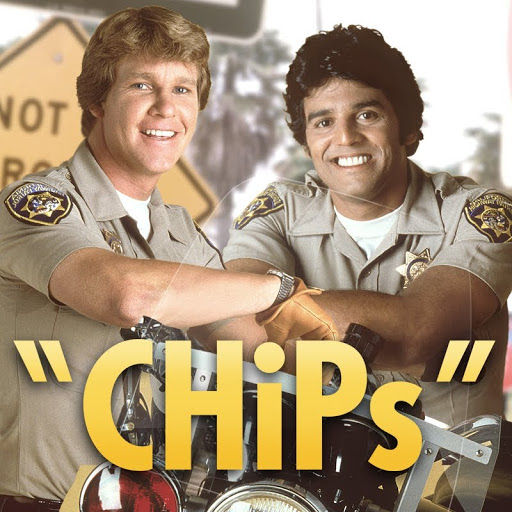
Late Night Retro Television Review: CHiPs 4.9 “Crash Course”


Welcome to Late Night Retro Television Reviews, a feature where we review some of our favorite and least favorite shows of the past!  On Mondays, I will be reviewing CHiPs, which ran on NBC from 1977 to 1983.  The entire show is currently streaming on Prime!

A recently released thief and a bank error are no match for the smiley charisma of Erik Estrada!

Episode 4.9 “Crash Course”

(Dir by Phil Bondelli, originally aired on January 4th, 1981)

Former getaway driver Sonny Matson (Don Stroud) has just been released from prison and he’s fallen back into his old habits.  Everyday, he steals a different car and then robs a different business.  His crimes are getting progressively more bold and Baker is determined to catch him.

Meanwhile, Ponch notices that he has an extra $4,000 in his bank account.  Trying to do the right thing, Ponch reports the discrepancy.  The bank accidentally drains all the money from his account.  With his checks bouncing all over town, Ponch tries to get the bank fix their error.  Good luck with that, Ponch!  Luckily, when one of Sonny’s associates tries to rob the bank, it gives Ponch a chance to play the hero….

It’s The Ponch Show!  Baker may be the one with a personal stake in capturing Sonny but Ponch is the one with big grin and the majority of this episode’s screentime.  Whether he’s thwarting a bank robbery or recruiting all of his co-workers to help him find proof of the bank’s error, Ponch dominates.  Poor Baker.

The best thing about this episode was Don Stroud’s performance as Sonny Matson.  Stroud played a lot of low-level criminals over the course of his career.  With his quick but unfriendly smile, his paranoid eyes, and his cocky attitude, Stroud is actually rather intimidating as Sonny.  Whenever Stroud is onscreen, CHiPs actually feels a little bit dangerous!  That this episode was memorable was largely due to Don Stroud and the hideous 70s decor of Ponch’s bank.  Tacky and dangerous, that’s our CHiPs!

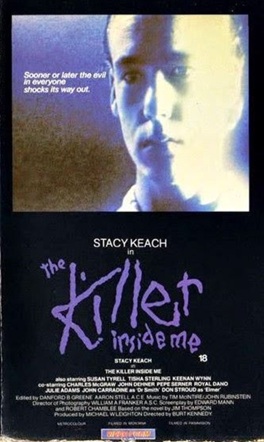
The Killer Inside Me (1976, directed by Burt Kennedy)


Today is Stacy Keach’s 84th birthday.

Stacy Keach has always been an underappreciated actor.  Despite his obvious talent and his ability to play both heroes and villains, he’s never really gotten the film roles that he’s deserved and he’s mostly made his mark on stage and on television.  There have been a few good films that made use of Keach’s talents.  I’ve always appreciated his performance as Frank James in Walter Hill’s The Long Riders.  He was a morally ambiguous Doc Holliday in Doc.  He played a boxer in John Huston’s Fat City.  Horror fans will always remember him for Road Games. The Ninth Configuration featured a rare starring role for Keach but it was treated poorly by its studio.  He was chilling as a white supremacist in American History X.  For the most part, though, Keach’s film career has been made up of stuff like Class of 1999.  For all of his talent, he seems destined to be remembered mostly for playing Mike Hammer in a television series and a few made-for-TV movies.  It’s too bad because Keach had the talent to bring certain character to life in a way that few other actors can.

The Killer Inside Me features one of Keach’s best performances.  Based on a pulp novel by Jim Thompson, The Killer Inside Me stars Stacy Keach as Lou Ford.  Lou is a small town deputy.  Everyone thinks that he’s a good, decent man.  He’s dating the local school teacher (Tisha Sterling).  The sheriff (John Dehner) trusts him.  Lou seems to be an expert at settling conflicts between neighbors.  What everyone doesn’t know is that Lou is actually a psycho killer who is having a sado-masochistic affair with a local prostitute (Susan Tyrrell) and who has zero qualms about punching the life out of someone.  When Lou finds out that Tyrrell is also involved with the son of a local businessman, it sets Lou on a crime and killing spree.  Lou thinks he’s a genius but his main strength is that no one can imagine Lou Ford doing the terrible things that he does.

Burt Kennedy was an outstanding director of westerns and straight-forward action movies but he appears to have struggled with The Killer Inside Me’s morally ambiguous tone.  The end result is not a great film but it does feature a great performance from Stacy Keach.  In both his performance and his narration, Keach captures both the arrogance and the detachment from normal society that defines Lou Ford’s character.  He also shows how Ford coolly manipulates the people around him.  Keach is believable and compelling whether he’s playing the fool or if he’s committing cold-blooded murder and he also subtly shows that Lou is not as smart as he thinks he is.  Though Keach dominates the film, The Killer Inside Me also features good performances from a gallery of 70s character actors, including John Carradine, Keenan Wynn, Don Stroud, Charles McGraw, and Royal Dano.

This version of The Killer Inside Me didn’t do much at the box office.  The movie was remade in 2010, with Casey Affleck miscast as Lou Ford.  That version didn’t do much at the box office either.  The secret to recreating the book’s mix of social satire and pulp action has proven elusive to filmmakers but at least we’ve got Stacy Keach’s performance as Lou Ford to appreciate.

Film Review: Joe Kidd (dir by John Sturges)


1972’s Joe Kidd opens with the title character (played by Clint Eastwood) in jail.  Joe is a New Mexico rancher and apparently, someone with a long history of getting in trouble with the law.  This time, he’s been arrested for poaching and disturbing the peace.  Given a choice between a fine and ten days in jail, Joe goes for the ten days.  Cowardly Sheriff Mitchell (Gregory Walcott) says he’s going to put Joe to work.  Joe Kidd snarls in response.

However, that’s before Luis Chama (John Saxon), a Mexican revolutionary, raids the courthouse and demands that all of his people’s ancestral land be returned to them.  Local landowner Frank Harlan (Robert Duvall) forms a posse to track Chama down.  Joe says that he has nothing against Chama but that changes once he discovers that Chama raided his ranch and beat up one of his ranchhands.  Joe joins the posse but he soon discovers that Harlan and his men are sadists who are more interested in killing Mexicans than actually capturing Chama.

I was actually pretty excited about watching Joe Kidd.  Clint Eastwood, Robert Duvall, and John Saxon, three of my favorite actors in the same movie!  How couldn’t I be excited?  Unfortunately, neither Duvall nor Saxon are at their best in this film.  Frank Harlan is a one-dimensional villain and Duvall doesn’t make much of an effort to bring any sort of unexpected nuance to the character.  Duvall doesn’t give a bad performance but it’s hard not to feel that Harlan is a character who could have been played by any forty-something actor.  It feels like waste to cast such a good actor in such a thin role.  (Add to that, I prefer Duvall when he plays a good guy as opposed to when he plays a bad guy.)  As for Saxon, this is probably one of his worst performances but his character is also rather underwritten and the film can’t seem to decide if it wants the viewer to be on his side or not.  Saxon delivers his lines in an exaggerated Mexican accent that makes it difficult to take Louis Chama seriously.  Gregory Sierra would have made a good Louis Chama but Saxon just seems miscast.

Fortunately, Clint Eastwood is always a badass, even in an uneven film like this.  Eastwood is at his best in the early scenes, when he’s grouchy and hungover and annoyed at finding himself in the jail.  He is believably outraged by Harlan’s tactics and, in typical Eastwood fashion, he delivers every pithy one-liner with just enough style to keep things interesting.  That said, Eastwood is let down by a script that never really makes it clear why Joe Kidd stays with the posse once it becomes clear that he’s traveling with a bunch of sociopaths.  Joe’s motivations are never really clear.  In the end, he seems like he goes through a lot of trouble to protect his farmland and get revenge for one of his ranch hands (who is just beaten up), just to then desert it all once all the shooting is over.

That said, Joe Kidd is a gorgeous film to look at and Joe makes creative use of a steam engine.  This isn’t the film to show anyone who isn’t already an Eastwood fan.  But, for those of us who are already fans of Clint, it’s enjoyable to watch him snarl, even if it is in a lesser film.

I review COOGAN’S BLUFF (1968) – starring Clint Eastwood!


Here at The Shattered Lens, we’re looking forward to celebrating the birthday of Clint Eastwood on May 31st. In anticipation, I decided to revisit COOGAN’S BLUFF (1968). 

Clint Eastwood is Coogan, a tough as nails deputy sheriff from Arizona, who’s ordered by his boss, Sheriff McCrea (Tom Tully) to go to New York City and bring back the escaped killer James Ringerman (Don Stroud). When he gets to New York, he’s informed by Lieutenant McElroy (Lee J. Cobb) that Ringerman has overdosed on LSD while in the state’s custody, he’s now in the Bellevue Hospital, and he will not be released to Coogan until the state Supreme Court says so. Stuck in the Big Apple with nothing to do but flirt with probation officer Julie Roth (Susan Clark), Coogan decides to take matters into his own hands and get Ringerman out of the hospital early. He bluffs the attendants at the hospital into turning Ringerman over to him so he can catch the first plane back to Arizona. It seems like a good plan until he’s ambushed by Ringerman’s girlfriend Linny (Tisha Sterling) and his friend Pushie (David Doyle), he gets conked on the head, and he loses both his gun and his prisoner. Now, in trouble with Lieutenant McElroy and Sheriff McCrea, Coogan is ordered back home to Arizona. Determined to get Ringerman at any cost, Coogan stays in the city and leaves a trail of broken hearts and bruised bodies on his way to capturing his man! 

Made in 1968 after Eastwood’s string of excellent spaghetti westerns with Sergio Leone, COOGAN’S BLUFF may be set in contemporary times, but Coogan still seems to be a product of the old west. A big part of the fun is watching him interact with the people of New York City, where everyone is trying to take advantage of him, whether it be the cab driver, the hotel clerk, or the hooker down the hall. When he finally gets to the police station, he sees a building that’s completely overrun with criminals and crazies. He soon finds that Lieutenant McElroy follows the law down to the letter, while he treats the law as more of a set of suggestions on his way to getting the bad guys. This leads to endless frustration and almost gets Coogan arrested multiple times throughout the film as he doesn’t want to deal with all the red tape. One thing that doesn’t change whether Coogan is in Arizona or New York is his success with the ladies. They all swoon and he more than willingly obliges. The only problem for his prospect of true love is the fact that getting his guy always comes first, and he’ll use that sex appeal to get whatever information he needs. One of the main action scenes in this film, the bar fight, is set up ironically when the woman he’s “using” turns the tables and instead sets him up to be pummeled. 

COOGAN’S BLUFF is Eastwood’s first film with director Don Siegel, with whom he’d make DIRTY HARRY a few years later. You can definitely see the genesis of Harry Callahan in Walt Coogan, a man who does whatever it takes to stop criminals, is quick with a whip, and usually pisses off his superiors along the way. In some ways, you could say that Walt Coogan set the mold for the hero of cop films for the next couple of decades! It also has that sense of humor that would be a mark of Eastwood’s cop films. This one includes a funny thread that runs throughout where every person he meets assumes he’s from Texas because he wears a cowboy hat, and he always corrects them that he’s from Arizona. I get this as I always make sure people know that I’m from Arkansas! 

Overall, I really enjoy COOGAN’S BLUFF due mainly to Clint Eastwood’s excellent performance in the lead role. It was a great start to his “post Leone” career and would influence action movie heroes from that point forward. 

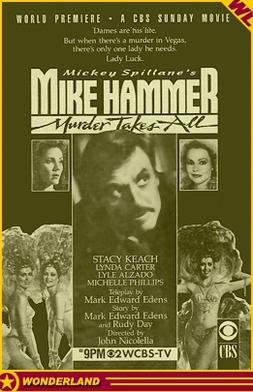
Mike Hammer: Murder Takes All (1989, directed by John Nicollela)


Entertainer Johnny Roman (Ed Winter, best-known as the crazed Colonel Flagg on M*A*S*H) sends an invitation to New York P.I. Mike Hammer (Stacy Keach), asking him to come to Vegas for a job.  Hammer refuses.  Vegas is not for him.  He’s pure New York.  So, someone has Hammer abducted and thrown out of an airplane over Vegas.  Luckily, they gave Hammer a parachute.  Unluckily, for them, Hammer is now in Las Vegas and he’s pissed off.

Johnny, who says he had nothing to do with the kidnapping and just wants Hammer to help him deal with a singer who has been stealing from him, is killed by an explosive device while hosting a telethon.  Everyone suspects Hammer.  When the singer that Hammer was supposed to investigate also turns up dead, Hammer is again suspected.  Hammer has to clear his name while dealing with guest stars ranging from Lynda Carter to Michelle Phillips to Jim Carrey.

Stacy Keach was Mike Hammer for most of the 80s, playing Mickey Spillane’s notorious detective in a television series and in several made-for-TV movies, like this one.  Television was an awkward fit for Mike Hammer, or at least Hammer the way he was imagined in the books.  Mike Hammer was written to be a killer with his own brand of justice.  He was not written to be a nice person.  Instead, he was the brutal but intelligent warrior that you hoped would be on your side.  The television version of Mike Hammer was considered to be violent for the era but the show still toned down Hammer’s signature brutality.  Keach’s Hammer still killed people but he no longer gloated about it.  Stacy Keach, with his trademark intensity, was a good pick for Mike Hammer, even if the show’s scripts often let him down.

This movie is hamstrung by the fact that it was made-for-TV.  Hammer is not happy about being in Las Vegas but he can’t go off on the city in the same way that he would have in one of Mickey Spillane’s novels.  Keach still gives a good and tough performance as Hammer, getting as close to the character as anyone could under the restrictions of 80s network television.  The mystery is interesting, though Hammer doesn’t really solve it as much as he just waits until all the other suspects have been killed.  The main attraction of this one is the amount of guest stars who show up.  Lynda Carter is a great femme fatale and it’s always good to see Michelle Phillips, even in a small role.  Jim Carrey, in his pre-In Living Color days, plays an accountant and does okay with a serious role.

Who could play Mike Hammer today?  It’s hard to say.  There aren’t many believably tough actors around anymore and even those who do seem like they could hold their own in a fight don’t have the gritty world-weariness that the character requires.  (Just try to imagine Dwayne Johnson reenacting the end of I, the Jury.)  A few years ago, I would have said Frank Grillo.  In the 90s, Bruce Willis would have been the perfect Hammer.  Today, though, Mike Hammer’s time may finally have passed.

Retro Television Review: Fantasy Island 6.6 “The Beautiful Skeptic/The Last Platoon”


Welcome to Retro Television Reviews, a feature where we review some of our favorite and least favorite shows of the past!  On Tuesdays, I will be reviewing the original Fantasy Island, which ran on ABC from 1977 to 1984.  Unfortunately, the show has been removed from most streaming sites.  Fortunately, I’ve got nearly every episode on my DVR.

This week, someone tries to expose Fantasy Island!

Episode 6.6 “The Beautiful Skeptic/The Last Platoon”

(Dir by Ricard Montalban, originally aired on November 27th, 1982)

Your eyes do not deceive you.  This episode was directed by Mr. Roarke himself, Ricardo Montalban!

The main fantasy deals with Jack Oberstar (Gary Frank), who wants to go back to World War II so that he can find proof that his brother, Ken (Steve Kanaly), was killed in action and did not, as the army claims, desert and become a black market smuggler.  After the customary warnings from Mr. Roarke, Jack finds himself serving alongside his brother in France.  Jack not only gets to bond with his brother but he also discovers that it was the evil Galloway (Don Stroud) who stole his brother’s identity and went on to become a criminal.  Ken did die heroically but, without his dog tags, he was misidentified.  No sooner does Jack learn all this then he finds himself back in the present.  Jack is happy to know the truth but he regrets not having returned with proof.

However, Mr. Roarke reveals that, while Jack was having his fantasy, a career criminal died while serving a life sentence in France.   By checking his fingerprints, the authorities discovered that the criminal was Galloway, who was long believed to have died in World War II.  Jack realizes that he can now argue that Galloway stole Ken’s identity!  He’s happy, even if he doesn’t have his definite proof.  Myself, I started thinking about how different the world must have been in the days before DNA testing.  Today, Jack presumably wouldn’t even have to go Fantasy Island to prove that the body buried in “Galloway’s” grave was actually his brother.

As for the other storyline, it features Connie Stevens as journalist Christine Connelly, who is determined to prove that Mr. Roarke is a fake.  She tells Roarke that she interviewed eleven former guests and all of them were happy with how their fantasies went.  Christine argues that there’s no such thing as “eleven satisfied customers,” which is a weird way to put it.

Christine brings along two people who have fantasies.  Jay (Jimmie “JJ” Walker) wants to win a weight-lifting competition, despite being Jimmie “JJ” Walker.  Luckily, Roarke has some magic chalk dust that allows Jay to do just that.  (You have to feel bad for everyone who actually wasted their time training for the competition.)  Frank (Herb Edelman ) wants to be reunited with his estranged wife, Connie (Ruta Lee).  This actually proves somewhat difficult, as Connie really doesn’t want to see Frank.  But it turns out that this is because Connie thinks that Frank is having an affair with Christine.  I’m not sure that Roarke reunited Connie and Frank is really greater proof than Jimmie Walker winning a strongman competition but the important thing is that Christine learns to be less of a cynic and to open her mind to the magic of Fantasy Island.

This was not a bad trip to the Island.  Much as Mr. Roarke did with the Island, Ricardo Montalban kept the episode moving quickly and efficiently.  It’s interesting that Fantasy Island started out as this place that was shrouded in mystery but, by the sixth season, it was apparently well-known enough to attract the attention of tabloid television.  In the end, Mr. Roarke proved his good intentions and protected the Island.  Good for him!


Sudden Death (1977, directed by Eddie Romero)


Ed Neilson (Ken Metcalf) is a business executive who just wants to spend the weekend grilling with his family but then a bunch of gunmen show up and, in a surprisingly violent sequence that even shows children being shot in slow motion, massacre his entire family.

Ed barely survives and begs his old friend, a former CIA agent named Duke Smith (Robert Conrad), to find out who murdered his family.  Duke would rather hang out on the beach with his wife (Aline Samson) and daughter (Nancy Conrad) and he refuses to help Ed.  But then Ed gets blown up in his car and Duke and his former partner (Felton Perry) come out of retirement to get justice.  Duke’s investigation leads to a corrupt businessman (Thayer David), a murderous government official (John Ashley, who also produced), and a ruthless hitman (Don Stroud).

Filmed in The Philippines and directed by Eddie Romero, Sudden Death is a violent and brutal thriller with a twisty the plot that is nearly impossible to follow.  It seems like a lot of killing for no particular reason.  The thing that sets Sudden Death apart from other action films is its willingness to violently kill off anyone, regardless of age, gender, or relative innocence.  The 70s was a decade known for downbeat endings but, even by the standards of that decade, Sudden Death‘s ending is shockingly abrupt and bleak.  In the lead role, Robert Conrad shows off the ruthless intensity that made him the most feared of all of the coaches on Battle of the Network Stars.

Originally, the sidekick role was offered to Jim Kelly.  When Kelly dropped out, the role was given to the far more laid back Felton Perry.  I think if Kelly had stayed with the film, it would probably be a cult classic today.  Instead, it’s an obscurity that reminds us of how bleak even exploitation films were in the 70s.

Retro Television Reviews: Fantasy Island 4.4 “Don Quixote/The Sex Goddess”


Welcome to Retro Television Reviews, a feature where we review some of our favorite and least favorite shows of the past!  On Tuesdays, I will be reviewing the original Fantasy Island, which ran on ABC from 1977 to 1986.  Almost the entire show is currently streaming is on Youtube, Daily Motion, and a few other sites.

This week’s journey to Fantasy Island is oddly unpleasant.

Episode 4.4 “Don Quixote/The Sex Goddess”

(Dir by Michael Vejar, originally aired on November 15th, 1980)

As always, this episode opens with “the plane, the plane” landing at Fantasy Island and Mr. Roarke and Tattoo heading out to meet their guests.  Unfortunately, as has been the case since the since the third season, Mr. Roarke and Tattoo no longer share any sort of playful banter before meeting the guests.  In fact, Roarke often seems to refuse to even look at Tattoo while speaking to him.  It’s awkward to watch because the dislike between Ricardo Montalban and Heve Villechaize is obvious whenever they share a scene.  It’s something that is easy to joke about while talking about the show but it’s far more unpleasant to actually witness.

Of course, this entire episode is rather unpleasant, which is a shame because Fantasy Island‘s greatest strength as a show was that watching it was usually a pleasant and undemanding way to spend an hour.

Take, for instance, the fantasy of Helen Hendrix (Phyllis Davis).  Helen’s fantasy is to become a “sex goddess.”  Tattoo expresses disbelief that the pretty but far from glamorous Helen could ever be a sex goddess but Roarke reminds Tattoo that, on Fantasy Island, all things are possible.  Roarke then says that Helen doesn’t realize that her fantasy could be a “a very dangerous fantasy.”

Well, Mr. Roarke, if it’s so dangerous, why did you agree to allow her to come to the Island?  In the past, Mr. Roarke has mentioned turning down many requests for fantasies.  He is apparently the final judge on whether or not someone will get their fantasy.  (Even when Tattoo granted a fantasy to someone who Roarke previously turned down, it was suggested that it was all a part of Roarke’s master plan.)  If the fantasy is so dangerous, why give it to Helen?  What is Mr. Roarke’s legal liability if someone gets killed while experiencing their fantasy?

Anyway, Mr. Roarke gives Helen a blue potion and when she drinks it, she becomes a blonde, starts wearing makeup, and gets a dress that’s far more flattering and low-cut than the borderline Amish outfit she was wearing when she first arrived at the Island.  She is now an internationally famous sex goddess, which unfortunately leads to her being kidnapped by three men (Michael Callan, Edd Byrnes, and Don Stroud) and held hostage on a neighboring island.  Eventually, Helen realizes that she’s going to have flirt her way out of captivity, which leads to a smitten Don Stroud helping her to escape.  Or, at least, he does until the potion wears off and Helen goes back being a brunette.  Stroud is shocked but, before he can strangle her, Roarke shows up and whisks Helen back to the Island.

Seriously, what a thoroughly unpleasant fantasy.  Helen comes to the island because she wants to know what it’s like to be famous and sexy and Roarke essentially allows her to be kidnapped by three men who apparently are planning on trafficking her.  Indeed, Roarke seems to suggest that this is Helen’s fault for wanting to be attractive in the first place.  Personally, I think Helen should sue Fantasy Island for all its worth.

As for the other fantasy, Paul Williams plays an eccentric Texas banker named Donald Quick.  His fantasy is to be Don Quixote.  (That’s a weird fantasy but whatever.)  Soon, Donald and his lawyer (David Doyle) are riding their donkeys across Fantasy Island while dressed up like conquistadors.  Donald saves a woman from a motorcycle gang and you have to wonder just what exactly a motorcycle gang is doing on Fantasy Island.  He saves another woman (Mary Louis Weller) from her louse of a boyfriend (Robert F. Lyons) and then he jousts with a Cadillac.  It’s silly but at least Donald finds love and David Doyle gets a few funny lines over how much he wants to sue Fantasy Island.

Honestly, this episode could have been saved if the two fantasies had intersected.  If Donald and his lawyer had turned up to battle the kidnappers and save Helen, this actually would have been an okay episode and the lawyer could have helped Helen file a lawsuit against Roarke.  But instead, the fantasies stay separate and the whole thing just feels icky.  Seriously, Mr. Roarke was not on top of his game of this week.  It might be time to give Tattoo more responsibility.

October Hacks: Sweet Sixteen (dir by Jim Sotos)


1983’s Sweet Sixteen takes place in a small town in Texas.

Sherriff Dan Burke (Bo Hopkins) does his best to try to maintain the peace but it’s not always easy.  Not when a good majority of the town is prejudiced against the Native Americans living on a nearby reservation.  There’s a major archeological dig happening on the reservation, headed up by Dr. John Morgan (Patrick Macnee), but the town doesn’t care about any of the artifacts that Dr. Morgan and his team might discover.  They’re too busy harassing local activist Jason Longshadow (Don Shanks) for stepping into the wrong bar.

However, a distraction from all of the casual racism has arrived in the form of Dr. Morgan’s daughter, Melissa (Aleisa Shirley).  Soon, it seems like every teenage boy and young man in town is lusting after Melissa.  Melissa, for her part, is only fifteen years old and is struggling to deal with all of the attention.  Sometimes, she enjoys the attention.  Sometimes, she just wants to be left alone.  (Believe me, as someone who had adults hitting on her when she was 13, I could relate.)  Melissa’s birthday is coming up and her mother (Susan Strasberg) is planning on throwing a big party and inviting the whole town to come over and celebrate.  Sheriff Burke thinks it’s a great idea.  “This town could use something to celebrate.”

The only problem is that any boy who so much as looks at Melissa ends up getting brutally murdered.  When an old Native American man named Greyfeather (Henry Wilcoxin) is spotted near the scene of one of the crimes, the local redneck blame him for the murders and tragedy ensues.  Sheriff Burke has to find the real murderer and, whether he likes it or not, he’s going to get some help from his kids, Hank (Steve Antin) and Marci (Dana Kimmel).

Hank and Marci really are this film’s secret weapons.  In the past, I’ve been pretty critical of Dana Kimmel’s performance in Friday the 13th Part 3 and her insistence that her character be re-written to reflect her own religious beliefs and desire to be a good role model.  However, Kimmel is really likable (and perhaps more appropriately cast) as the fiercely intelligent but still relatively innocent Marci, who reads murder mysteries and is totally excited about the prospect of getting to solve a real murder.  Hank is perhaps a bit less enthusiastic about about crime-solving than Marci but he still helps out his sister because she’s his sister.  Awwwwww!

Sweet Sixteen is a bit of an untraditional slasher film, one that is as concerned with social issues as is it was stalking and slashing teenagers.  Perhaps that explains why it has a slightly better cast than the typical 80s slasher, with veteran actors like Patrick McNee, Susan Stasberg, and Bo Hopkins acting opposite equally capable but younger actors like Kimmel, Antin, and Aleisa Shirley.  It’s also a surprisingly likable slasher film, due to the Dana Kimmel and Steve Antin’s engaging lead performances.  Honestly, I think it’s kind of a shame that there weren’t a series of films featuring Marci and Hank solving crimes.  Dana Kimmel and Steve Antin make quite a team in this above average slasher.