14 Days of Paranoia #6: The Player (dir by Robert Altman)


1992’s The Player tells the story of Griffin Mill (Tim Robbins).

It’s not easy being Griffin Mill.  From the outside, of course, it looks like he has the perfect life.  He’s a studio executive with a nice house in Hollywood.  He’s young.  He’s up-and-coming.  Some people, especially Griffin, suspect that he’ll be the president of the studio some day.  By day, he sits in his office and listens to pitches from respected screenwriters like Buck Henry.  (Henry has a great idea for The Graduate II!)  During the afternoon, he might attends dailies and watch endless takes of actors like Scott Glenn and Lily Tomlin arguing with each other.  Or he might go to lunch and take a minute to say hello to Burt Reynolds.  (“Asshole,” Burt says as Griffin walks away.)  At night, he might go to a nice party in a big mansion and mingle with actors who are both young and old.  He might even run into and share some sharp words with Malcolm McDowell.

But Griffin’s life isn’t as easy as it seems.  He’s constantly worried about his position in the studio, knowing that one box office failure could end his career.  He fears that a new executive named Larry Levy (Peter Gallagher) is after his job.  Two new screenwriters (Richard E. Grant and Dean Stockwell) keep bugging him to produce their downbeat, no-stars anti-capitol punishment film.  His girlfriend (Cynthia Stevenson) wants to make good movies that mean something.  Even worse, someone is sending Griffin threatening notes.

It doesn’t take long for Griffin to decide that the notes are coming from a screenwriter named Dave Kahane (Vincent D’Onofrio).  Griffin’s attempt to arrange a meeting with Dave at a bar so that Griffin can offer him a production deal instead leads to Griffin murdering Dave in a parking lot.  While the other writers in Hollywood mourn Dave’s death, Griffin starts a relationship with Dave’s artist girlfriend (Great Scacchi) and tried to hide his guilt from two investigating detectives (Whoopi Goldberg and Lyle Lovett).  Worst of all, the notes keep coming.  The writer, whomever they may be, is now not only threatening Griffin but also seems to know what Griffin did.

After spend more than a decade in the industry wilderness, Robert Altman made a critical and commercial comeback with The Player.  It’s a satire of Hollywood but it’s also a celebration of the film industry, featuring 60 celebrities cameoing as themselves.  Everyone, it seems, wanted to appear in a movie that portrayed studio execs as being sociopathic and screenwriters as being whiny and kind of annoying.  The Player both loves and ridicules Hollywood and the often anonymous men who run the industry.  Largely motivated by greed and self-preservation, Griffin may not love movies but he certainly loves controlling what the public sees.  In the end, only one character in The Player sticks to her values and her ideals and, by the end of the movie, she’s out of a job.  At the same time, Griffin has a social life that those in the audience can’t help but envy.  He can’t step out of his office without running into someone famous.

The Player is one Altman’s most entertaining films, with the camera continually tracking from one location to another and giving as a vision of Hollywood that feels very much alive.  Tim Robbins gives one of his best performances as Griffin Mill and Altman surrounds him with a great supporting cast.  I especially liked Fred Ward as the studio’s head of security.  With The Player, Altman mixes melodrama with a sharp and sometimes bizarre comedy, with dialogue so snappy that the film is as much a joy to listen to as to watch.  That said, the real attraction of the film is spotting all of the celebrity cameos.  (That and cheering when Bruce Willis saves Julia Roberts from certain death.)  Altman was a director who often used his films to explore eccentric communities.  With The Player, he opened up his own home.

Previous entries in 2025’s 14 Days Of Paranoia:
  1. The Fourth Wall (1969)
  2. Extreme Justice (1993)
  3. The Lincoln Conspiracy (1977)
  4. Conspiracy (2007)
  5. Bloodknot (1995)

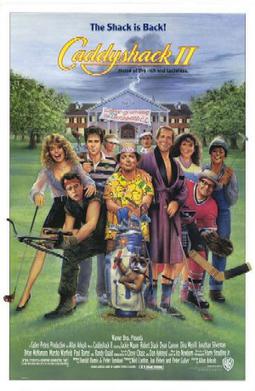
Caddyshack II (1988, directed by Allan Arkush)


Welcome back to Bushwood Country Club!  The Gopher is still stealing balls and burrowing through the course.  Ty Webb (Chevy Chase) is still the majority shareholder of the club, even though he now only plays golf inside of his mansion.  And that’s it!

Only the Gopher and Chevy Chase returned for Caddyshack II.  Ted Knight died before the movie went into production.  Bill Murray didn’t want to recreate his role from the first movie.  Rodney Dangerfield was involved in developing the movie but then dropped out after two million had already been spent in pre-production.  Chevy Chase was paid seven figures to return and he later called it one of the biggest mistakes of his career.  Only the Gopher didn’t complain.

With hardly anyone from the first film willing to come back for a second round, Caddyshack II features comedian Jackie Mason as Jack Hartounian, a real estate developer whose daughter, Kate (Jessica Lundy), wants to be a part of the WASPy Bushwood social set.  When Chandler Young (Robert Stack) keeps the plain-spoken Jack from being given a membership, Jack teams up with his old friend Ty and buys Bushwood.  He turns Bushwood into an amusement park called Jackie’s Wacky Golf.  Kate tells Jack that he’s ruined everything and turned Bushwood into Coney Island.  Chandler hires survivalist Tom Everett (Dan Aykroyd) to kill Jack and then agrees to play Jack in a round of golf.  The winner wins Bushwood.

A bust with both audiences and critics, Caddyshack II is one of the worst sequels ever made.  Why would you do a sequel to Caddyshack that features almost nothing that made the first film so entertaining?  Jackie Mason was a great comedian and writer but he wasn’t much of an actor and he makes a poor replacement for Rodney Dangerfield.  The film really loses me when Chandler Young literally pays money to have Jackie murdered.  It’s just a step too far.  Not even Ted Knight tried to kill Rodney Dangerfield and Dangerfield was a lot more obnoxious than Jackie Mason ever was.  Not even the dancing Gopher can generate much laughs and Kate’s right.  Jackie’s Wacky Golf really is a terrible place.

There are some interesting actors and actresses in the supporting cast.  The lovely Dyan Cannon plays Jack’s love interest and is one of the few good things about the movie, despite having no chemistry with Mason.  Randy Quaid gives a manic performance as Jack’s lawyer, a role that was originally meant for Sam Kinison.  Jonathan Silverman is the good caddy who falls for Jack’s daughter while Chynna Phillips is Chandler’s snobby daughter who befriends Kate and tells her she should change her last name to Hart.  Dan Aykroyd delivers all of his lines in a high-pitched voice that isn’t funny but which becomes very annoying.

The slobs win again.  The snobs are defeated and the Gopher dances with noticeably less enthusiasm.  There has never been a Caddyshack 3.

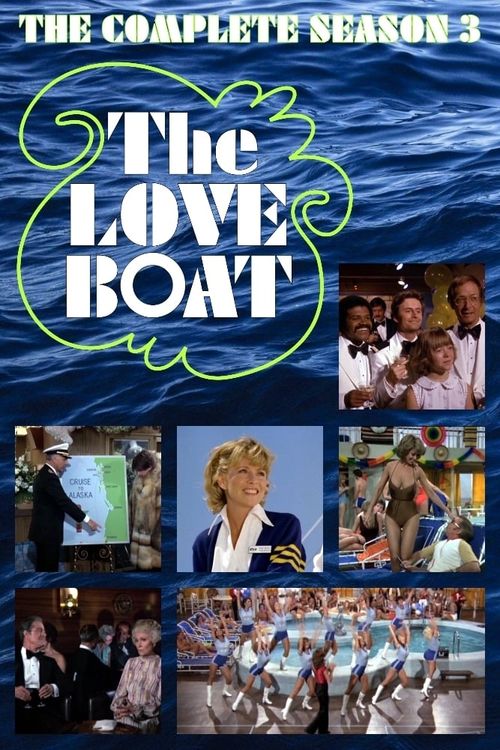
Retro Television Reviews: The Love Boat 3.10 and 3.11: “The Love Lamp Is Lit/Critical Success/Rent a Family/Take My Boyfriend, Please/The Man in Her Life”


Welcome to Retro Television Reviews, a feature where we review some of our favorite and least favorite shows of the past!  On Wednesdays, I will be reviewing the original Love Boat, which aired on ABC from 1977 to 1986!  The series can be streamed on Paramount Plus!

This week, it’s a double length episode of The Love Boat as the Dallas Cowboy Cheerleaders take over the cruise!

Episodes 3.10 and 3.11 “The Love Lamp Is Lit/Critical Success/Rent a Family/Take My Boyfriend, Please/The Man in Her Life”

(Dir by Roger Duchowny, originally aired on November 10th, 1979)

This episode features the first time that Jill Whelan (as Vicki) is included in the opening credits and what an episode to be included in!  It’s time for a special charity cruise of the Love Boat!  In order to raise money for an orphanage in Mexico, the Dallas Cowboys Cheerleaders will be performing on the boat!

I don’t really follow football but I do know that both the Cowboys and their cheerleaders were really popular back in the 70s and 80s.  (Living in Texas, I’ve become very good at sympathetically nodding whenever anyone starts talking about frustrated they are with the Cowboys.)  Still, the idea of the cheerleaders performing on a cruise ship for a charity drive seems a little off.  I mean, shouldn’t they be cheering at a football game?  As I always do when it come to things involving cheerleaders, I asked my sister Erin if any of this made sense to her.  Erin suggested that I not worry about it because it’s The Love Boat.  And really, she has a point.  The Dallas Cowboy Cheerleaders marching onto the boat in full uniform and practicing their routines by the pool makes about as much sense as 11 year-old Vicki suddenly living on a cruise ship.  With The Love Boat, you just have to kind of go with it.

The Cheerleaders play themselves, with three of them getting storylines of their own and I will say that they all came across as being likable and natural in their performances.  I always kind of dread any episode that features celebrities playing themselves because just because someone is famous, that doesn’t mean they’re going to be a good actor.  (I still remember all of those stiff basketball player cameos on Hang Time.)  But the cheerleaders all do a good job, even if none of them are given particularly challenging roles.

Stacy (Tami Barber), for instance, is shocked when Mark Scott (Stephen Shortridge) boards the cruise.  Mark was someone who pursued her in Dallas but she wanted nothing to do with him.  However, on the boat, Mark shows that he’s a nice guy underneath his smooth exterior.  He even choreographs a new routine for the charity performance.  Good for him!

Wendy Ames (Gaye Carter) boards the boat with her mother, Helen (Dina Merrill) and Helen’s boyfriend, Bill (William Windom).  Helen gets jealous of the amount of time that Wendy and Bill are spending together and, when she sees the two of them looking at wedding rings, she decides that they’re having an affair!  No, Helen — Bill wants to marry you!  This whole storyline was silly, to be honest.  Helen just came across as being unnaturally paranoid.

Lisa (Kim Kilway) meets and falls for Paul (Bill Daily), who is the newest vice president of the greeting card company that is sponsoring the cruise.  Paul loves Lisa to but he has a problem.  He’s traveling with his fake family!  Why does Paul have a fake family?  Apparently, Paul’s boss (John Hillerman) only hires family men.  (That sounds like a lawsuit in the making.)  Paul recruited a fake wife (Roz Kelly), mother (Patsy Kelly), and son (Jackie Earle Haley, who appears to be having a lot of fun playing bratty) to pretend to be his family.  The truth comes out, of course.  Fortunately, Lisa is remarkably forgiving and Paul avoids getting fired by promising to marry and start a family with Lisa as quickly as possible.  Again, this all sounds like the beginning of Supreme Court case.

Among the non-cheerleaders, Lou (Larry Linville) and Nora (Gunilla Hutton) are two jewel thieves who board the boat so that they can find some diamonds they hid the last time they took a cruise.  They hid the diamonds in a lamp and it turns out that the lamp is now in the possession of a member of the crew.  This leads to Nora flirting with Gopher, Isaac, and Doc and then quickly abandoning them once it becomes clear that they don’t have the lamp.  (These scenes were fun, largely because of Gunilla Hutton’s comedic timing.)  Finally, Lou and Nora get the diamonds but they have a change of heart and, along with declaring their love for each other, Lou and Nora also donate the $500,000 that they’re going to make from selling the diamonds to the orphanage!  Yay!  Assuming that Lou and Nora don’t get arrested while trying to fence the stolen merchandise, the orphanage will greatly benefit.

Meanwhile, an acerbic theatrical critic (Douglas Fairbanks, Jr.) tries to get an actress (Ginger Rogers) to agree to appear in his new play.  In the end, they realize they’re in love and Ginger Rogers sings Love Will Keep Us Together.

There was a lot going on in this episode but it was enjoyably silly in the way that the best episodes of The Love Boat usually are.  It was excessive and ridiculous, but fun.  On The Love Boat could you get Jackie Earle Haley mocking his fake father while Ginger Rogers sang a song.  This was an enjoyable episode and it did Dallas proud.

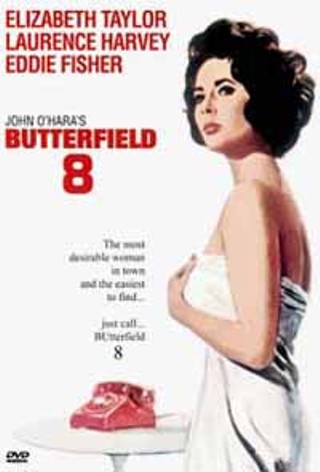
Cleaning Out The DVR: BUtterfield 8 (dir by Daniel Mann)


“Mama, face it,” Gloria Wandrous (Elizabeth Taylor) announces in the 1960 film, BUtterfield 8, “I was the slut of all time!”

Personally, I think Gloria is being a little bit too hard on herself. Certainly the film suggests, in its 1960 way, that she’s promiscuous and that she only sleeps with men for money but that doesn’t necessarily make her the slut of all time. For one thing, I would think that the slut of all time would have more options than just a wimpy pianist played by Eddie Fisher or a depressing, self-absorbed businessman played by Laurence Harvey.

“I still say it stinks,” Elizabeth Taylor said, almost immediately after winning her first Oscar for her performance in BUtterfield 8 and she’s kind of right. BUtterfield 8 is not a particularly good film, though not quite as bad as Taylor seemed to believe it to be.

Taylor won the Oscar after suffering a near fatal bout of pneumonia and having to undergo a tracheotomy. Along with saying that the film stunk, Taylor also often said that she only won her first Oscar because she nearly died. That may or may not be true but the thing is, Taylor’s the best thing in this overwritten and overheated mess of a movie. She certainly gives a better and more sympathetic performance than Laurence Harvey, who is cast as her married lover, Wilson Liggett. We’re meant to sympathize with Ligget but Harvey plays him as if he’s in a permanently sour mood and, after just a few minutes of listening to him bitch about every little thing, the viewer will get sick of him. It’s hard to really see what Gloria Wandrous sees in this whiny alcoholic.

Then again, the only other option that the film gives Gloria is Steve Carpenter, the pianist played by Eddie Fisher. Steve can’t decide if he’s in love with his boring girlfriend, Norma (Susan Oliver) or if he’s in love with Gloria. However, Steve has no problem letting Gloria borrow one of Norma’s dresses so that she can wear it when she goes home to visit her mother and I have to say that if I was Norma, Steve would be finding a new bed to sleep in after that. Gloria tells Steve that he needs to decide who he’s in love with but Steve jut can’t do it. Of course, in real life, Eddie Fisher left Debbie Reynolds so that he could marry Elizabeth Taylor. (A year or so later, Taylor left Fisher so that she could marry Richard Burton.)

BUtterfield 8 is one of those films that was undoubtedly considered to be daring when it was first released, seeing as how it acknowledged that people had sex without getting married first. (GASP!) Of course, though the film acknowledges that people have sex, it still makes sure to let us know that no one’s happy afterwards and that promiscuity eventually leads to death. (I mean, BUtterfield 8 may have taken risks but it still knew better than to defy the production code.) Seen today, the entire film is rather tame, talky, and slow but the star power of Elizabeth Taylor still comes through. The film opens with a lengthy sequence of Gloria getting ready for her day and, as you watch it and, more importantly, as you watch Elizabeth Taylor, you find yourself thinking that this is what a movie star is supposed to be. She dominates the film and she manages to credibly deliver even the most overheated pieces of dialogue. (Just try to imagine Jennifer Lawrence delivering the “slut of all time” line and you’ll immediately understand the difference between the movie stars of the past and the movie stars of the present. Of course, you could also say the same thing about trying to imagine a young Elizabeth Taylor in Silver Linings Playbook or The Hunger Games.) In fact, one could argue that Taylor’s performance is almost too good for the material. The film, in its 1960 way, suggests that Gloria would be better off if she just settled down but it’s impossible to imagine Taylor’s Gloria Wandrous settling for the stiffs played by Laurence Harvey and Eddie Fisher.

Though Elizabeth Taylor was correct about BUtterfield 8‘s overall quality, it’s still a good example of what star power can do for an otherwise mediocre film.

The Land Down Under: THE SUNDOWNERS (Warner Brothers 1960)


gary loggins's avatarcracked rear viewer

G’day, mates! Let’s take a trek through the wilds of 1920’s Australian outback with  , Robert Mitchum Deborah Kerr, and a herd of bouncing sheep in THE SUNDOWNERS. Fred Zinnemann, generally associated with serious, tense dramas like HIGH NOON and FROM HERE TO ETERNITY, lends a lighter touch than usual to this sprawling, almost John Ford-esque tale of an itinerant sheep drover and his family, and the wife who longs to settle into a home of her own.

Mitchum plays Paddy Carmody, a stubborn Irishman who has to keep moving, unable and unwilling to be tied to one place. He’s a wanderer with a fondness for booze and gambling, and Big Bob is perfect for the part. Mitchum’s penchant for dialects make his Aussie accent more than believable, and his facial expressions, especially during the sheep-shearing contest, are priceless. Deborah Kerr is his equal as wife Ida, the tough Earth Mother who’s loyal to Paddy…

View original post 322 more words

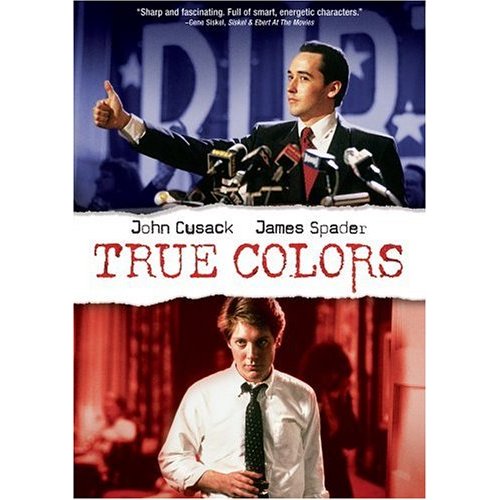
Embracing the Melodrama #39: True Colors (dir by Herbert Ross)


True Colors

For the past 9 days, I’ve been posting chronological reviews of 54 of the most (and least) memorable melodramas ever filmed.  I started with a film from 1916 and yesterday, I completed the 80s.  Today, we start in on the 90s with the 1991 political drama True Colors.

True Colors tells the story of two ambitious law students.  Tim Gerritty (James Spader) is a wealthy idealist who wants to work at the Justice Department so he can uncover and prosecute political corruption.  His roommate and eventual best friend is Peter Burton (John Cusack).  Although Peter initially lies about his background, it’s eventually revealed that he comes from a poor family and the result of growing up in poverty has left Peter with an obsessive desire for revenge on everyone who has ever looked down on him.  And how is Peter planning on getting that revenge?  By marrying the daughter of Sen. James Stiles (Richard Widmark) and eventually running for a seat in the U.S. House.  Despite the fact that Tim happens to be in love with Sen. Stiles’s daughter as well, he still supports his friend Peter and even agrees to be his best man.  However, as Peter gets closer and closer to achieving his goals, Tim starts to reconsider their friendship….

There’s a scene about halfway through True Colors, in which Peter Burton attempts to blackmail Sen. Stiles into supporting his political career.  Stiles agrees but then angrily adds, “God help you when the people find out.  They always do, you know.”  I was naturally waiting for Peter to come up with a properly sarcastic response but instead, Peter simply looks down at the ground, properly chastened.  It’s a jarringly false note and, unfortunately, everything that comes after this scene feels equally false.  The film, which starts out as such a strong portrait of what happens with friendship comes into conflict with ambition, ends up turning into a painfully predictable political diatribe, the type of thing that makes the portrait of politics in The Adjustment Bureau seem subtle and nuanced by comparison.  When Tim decided to betray Peter, it should be a moment full of moral ambiguity.  Instead, we’re expected to ignore their long friendship and just be happy that Tim is willing to do the right thing and protect the integrity of the American political process.

And, who knows?  Maybe that’s the way people viewed politics back in the early 90s.  But for audiences today, it all feels really naive and simplistic.

But, if you can manage to look past the film’s weak’s script, you can enjoy the acting.  John Cusack is wonderfully intense as Peter, making the character compelling even when the screenplay lets him down.  Watching him in True Colors is like watching the performance that he should have given in The Butler.  James Spader is sympathetic as Tim and, like Cusack, his performance almost allows him to overcome a script that doesn’t seem to realize that Tim is essentially a self-righteous jerk.  And finally, there’s Mandy Patikin who has a lot of fun playing the local crime boss who sponsors Peter’s career and who, in one memorable (if out-of-place ) scene beats up a shark that’s jumped up on the desk of his yacht.

Much like High Stakes, True Colors is one of those obscure films that occasionally pops up on cable, usually late at night and usually serving as filler between showings of better-known films.  Keep an eye out for it, if just for the chance to enjoy the performances.