10 Oscar Snubs From the 1980s


Ah, the 80s! Ronald Reagan was president. America was strong. Russia was weak. The economy was booming. The music was wonderful. Many great movies were released, though most of them were not nominated for any Oscars. This is the decade that tends to drive most Oscar fanatics batty. So many good films that went unnominated. So many good performers that were overlooked.  Let’s dive on in!

1980: The Shining Is Totally Ignored

Admittedly, The Shining was not immediately embraced by critics when it was first released.  Stephen King is still whining about the movie and once he went as far as to joke about being happy that he outlived Stanley Kubrick.  (Not cool, Steve.)  Well, none of that matters.  The Shining should have been nominated across the board.  “Come and play with us, Danny …. AT THE OSCARS!”

1981: Harrison Ford Is Not Nominated For Best Actor For Raiders of the Lost Ark

Raiders received a lot of nominations.  Steven Spielberg was nominated for Best Director.  The film itself was nominated for Best Picture.  (It lost to Chariots of Fire.)  But the man who helped to hold the film together, Harrison Ford, was not nominated for his performance as Indiana Jones.  Despite totally changing the way that people looked at archeologists and also making glasses sexy, Harrison Ford was overlooked.  I think this was yet another case of the Academy taking a reliable actor for granted.

1982: Brian Dennehy Is Not Nominated For Best Supporting Actor For First Blood

First Blood didn’t receive any Oscar nominations, not even in the technical categories.  Personally, I think you could argue that the film, which was much more than just an action film, deserved to be considered for everything from Best Actor to Best Director to Best Picture.  But, in the end, if anyone was truly snubbed, it was Brian Dennehy.  Dennehy turned Will Teasle into a classic villain.  Wisely, neither the film nor Dennehy made the mistake of portraying Sheriff Teasle as being evil.  Instead, he was just a very stubborn man who couldn’t admit that he made a mistake in the way he treated John Rambo.  Dennehy gave an excellent performance that elevated the entire film.

1984: Once Upon A Time In America Is Totally Ignored

It’s not a huge shock that Once Upon A Time In America didn’t receive any Oscar nominations.  Warner Bros. took Sergio Leone’s gangster epic and recut it before giving it a wide release in America.  Among other things, scenes were rearranged so that they played out in chronological order, the studio took 90 minutes off of the run time, and the film’s surrealistic and challenging ending was altered.  Leone disowned the Warner Bros. edit of the film.  Unfortunately, in 1984, most people only saw the edited version of Once Upon A Time In America and Leone was so disillusioned by the experience that he would never direct another film.  (That said, even the edited version featured Ennio Morricone’s haunting score, which certainly deserved not just a nomination but also the Oscar.)  The original cut of Once Upon A Time In America is one of the greatest gangster films ever made, though one gets the feeling that it might have still been too violent, thematically dark, and narratively complex for the tastes of the Academy in 1984.  At a time when the Academy was going out of its way to honor good-for-you films like Gandhi, it’s probable that a film featuring Robert De Niro floating through time in an Opium-induced haze might have been a bridge too far.

1985: The Breakfast Club Is Totally Ignored

Not even a nomination for Best Screenplay!  It’s a shame.  I’m going to guess that the Academy assumed that The Breakfast Club was just another teen flick.  Personally, if nothing else, I would have given the film the Oscar for Best Original Song.  Seriously, don’t you forget about me.

1986: Alan Ruck Is Not Nominated For Best Supporting Actor For Ferris Bueller’s Day Off

Poor Cameron!

1986: Blue Velvet Is Not Nominated For Best Picture

Considering the type of films that the Academy typically nominated in the 80s, it’s something of a shock that David Lynch even managed to get a Best Director nomination for a film as surreal and subversive as Blue Velvet.  Unfortunately, that was the only recognition that the Academy was willing to give to the film.  It can also be argued that Kyle MacLachlan, Laura Dern, Isabella Rossellini, and Dean Stockwell were overlooked by the Academy.  Dennis Hopper did receive a Supporting Actor nomination in 1986, though it was for Hoosiers and not Blue Velvet.

1987: R. Lee Ermey Is Not Nominated For Best Supporting Actor For Full Metal Jacket

One of the biggest misconceptions about Full Metal Jacket is that R. Lee Ermey was just playing himself.  While Ermey was a former drill instructor and he did improvise the majority of his lines (which made him unique among actors who have appeared in Kubrick films), Ermey specifically set out to play Sgt. Hartmann as being a bad drill instructor, one who pushed his recruits too hard, forgot the importance of building them back up, and was so busy being a bully that he failed to notice that Pvt. Pyle had gone off the deep end.  Because Ermey was, by most accounts, a good drill instructor, he knew how to portray a bad one and the end result was an award-worthy performance.

1988: Die Hard Is Not Nominated For Best Picture, Actor, Supporting Actor, or Director

Die Hard did receive some technical nominations but, when you consider how influential the film would go on to be, it’s hard not to feel that it deserved more.  Almost every action movie villain owes a debt to Alan Rickman’s performance as Hans Gruber.  And Bruce Willis …. well, all I can say is that people really took Bruce for granted.

1989: Do The Right Thing Is Not Nominated For Best Picture

Indeed, it would take another 30 years for a film directed by Spike Lee to finally be nominated for Best Picture.

Agree?  Disagree?  Do you have an Oscar snub that you think is even worse than the 10 listed here?  Let us know in the comments!

Up next: It’s the 90s!

Holiday Film Review: Die Hard (dir by John McTiernan)


Yes, Die Hard is a Christmas movie.

And, in an alternative universe, it was a Frank Sinatra movie.

Released into theaters in 1988, Die Hard was based on a novel called Nothing Lasts ForeverNothing Lasts Forever told roughly the same story as Die Hard, with one of the big exceptions being that the cop fighting the terrorists was not the youngish and quippy John McClane but instead was a weary, aging and retired detective named Joe Leland.  Leland previously appeared in another novel called The Detective.  In 1968, The Detective was turned into a film and the role of Leland was played by Frank Sinatra.  As a part of his contract, Sinatra had the right to play Leland in any sequels to The Detective.  When Die Hard was in pre-production, Sinatra could have demanded that the film be a Joe Leland film and that he be allowed to star in it.  Fortunately, Sinatra did not do that and Joe Leland was instead transformed into John McClane.  And, after the role was was turned down by Arnold Schwarzenegger, Sylvester Stallone, Clint Eastwood, Nick Nolte, Mel Gibson, Don Johnson, Harrison Ford, Burt Reynolds, Paul Newman, James Caan, Al Pacino, and Richard Dean Anderson, popular television actor Bruce Willis finally received the role.

Seriously, just consider that.  Bruce Willis was not only not the first choice for John McClane but even Richard Dean Anderson was offered the role before the filmmakers finally went with Willis.  It’s hard to imagine anyone else starring in Die Hard because, to most of us, Bruce Willis is John McClane.  Growing up and watching Die Hard on television every Christmas, it was very easy to assume that Willis probably spent all of his spare time fighting terrorists and coming up with snarky quips.  Definitely, it’s difficult to imagine Stallone and Schwarzenegger in the role.  What made McClane such a compelling hero was that he wasn’t superhuman.  He was just a blue collar guy who hurt his feet, got tired, and had his moments of frustration just like everyone else.  He was the relatable action hero.  It didn’t matter how many stories that one heard about Bruce Willis having an ego or occasionally being difficult to work with.  Bruce Willis was John McClane and, after everything that McClane had been though, he had every right to occasionally be difficult.

You’ll notice that I haven’t really discussed the plot of Die Hard because …. well, everyone knows that plot.  I mean, this is one of those films that has such a permanent place in pop cultural history that even people who somehow haven’t seen the film still know what it’s about.  John McClane is an NYPD cop who flies to Los Angeles to see his estranged wife, Holly, for Christmas.  Holly (Bonnie Bedelia) works for the Nakatomi Corporation.  During the company’s Christmas party, terrorists led by Hans Gruber (Alan Rickman) take over the skyscraper.  The terrorists claim to be politically-motivated but, actually, they just want to break into the building’s vault and make off with a lot of money.  McClane makes his way through the unfinished skyscraper, killing the terrorists one-by-one.  He only has two allies.  Al Powell (Reginald VelJohnson) is an LAPD sergeant who is outside the building and who communicates with McClane via radio.  Argyle (De’Veroux White) is the friendly limo driver who spends almost the entire siege oblivious in the parking garage.  (The first time I ever watched Die Hard, I was so worried something bad would happen to Argyle.)

McClane has a lot of enemies and not all of them are terrorists.  The Deputy Chief of the LAPD (Paul Gleason) thinks that McClane is making the situation worse.  Two FBI agent, both named Johnson (and played by Robert Davi and Grand L. Bush), seem to view the entire siege as being a game with the older Johnson talking about how much it reminds him of Vietnam.  A reporter (William Atherton) makes the situation worse with his on-the-spot reports.  Meanwhile, there’s Harry Ellis (Hart Bochner).  A coke-addled executive, Ellis actually thinks that he’s helping McClane by trying to negotiate with Gruber.  I know that some people can’t stand Ellis but I always feel sorry for him.  In his way, he was trying to help and you could tell that he was so proud of himself for not telling Gruber that McClane was in Los Angeles to see Holly.

Needless to say, there’s a lot of action in Die Hard.  A lot of people die.  One thing that I appreciate the movie is that the bad guys get as upset over their friends and family being killed as McClane gets over Holly being threatening.  No one in the film is one-dimensional and even the bad guys have their own distinct personalities.  Theo (Clarence Gilyard) gets so excited about the idea of opening the vault that you can’t help but relate.  Karl (Alexander Godonuv) appears to be nearly indestructible.  Hans Gruber may be totally evil but he has a quick wit and there’s something intriguing about how confident he is.  Alan Rickman, famously, was not happy that his first role led to him being typecast as an international villain and one can’t blame him.  Still, almost every action movie villain who has followed has owed something to Alan Rickman.  Just as it’s difficult to imagine anyone other than Bruce Willis as John McClane, it’s impossible to imagine anyone other than Alan Rickman as Hans Gruber.

(That said, I’m sure there’s another alternate universe out there, right next to the Sinatra universe, where Blade Runner was not as troubled a production as it was and, as a result, Die Hard was made with Ridley Scott directing, Harrison Ford starring as McClane, and Rutger Hauer playing Hans.)

For all of the action, there’s also a lot of moments that make me laugh out loud and I’m not just talking about McClane’s one liners.  The two FBI agents don’t get much screentime but Davi and Bush make the most of what they have.  Paul Gleason is wonderfully deadpan as the clueless Chief Robinson.  Even Rickman gets his share of laughs.  “I read about them in Time Magazine” indeed.

Die Hard is a Christmas tradition with my family and a lot of other families as well.  Does Die Hard count as a Christmas movie?  I would say yes.  The terrorists may not respect the holiday but John McClane does.  No one ruins McClane’s Christmas!

4 Shots From 4 Christmas Films: The Godfather, Lethal Weapon, Die Hard, Die Hard 2


4 Shots From 4 Films is just what it says it is, 4 shots from 4 of our favorite films. As opposed to the reviews and recaps that we usually post, 4 Shots From 4 Films lets the visuals do the talking.

Merry Christmas!

Let’s get today started with….

4 Shots From 4 Christmas Films

The Godfather (1972, dir by Francis Ford Coppola)

Lethal Weapon (1987, dir by Richard Donner)

Die Hard (1988, dir by John McTiernan)

Die Hard 2 (1990, dir by Renny Harlin)

Holidays Scenes That I Love: Hans and McClane Get To Know Each Other In Die Hard


For the past week, we’ve been sharing some of our favorite holiday scenes!  Myself, I shared two scenes from It’s A Wonderful Life and Miracle on 34th Street.  However, I just recently realized that we hadn’t shared any scenes from a film that has, particularly in this year, emerged as a holiday favorite!

So, without further ado, enjoy this scene from Die Hard!

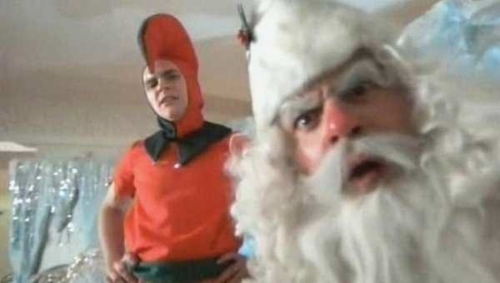
4 Shots From 4 Holiday Films: A Christmas Story, Brazil, Die Hard, Christmas Vacation


4 Shots From 4 Films is just what it says it is, 4 shots from 4 of our favorite films. As opposed to the reviews and recaps that we usually post, 4 Shots From 4 Films is all about letting the visuals do the talking.

4 Shots From 4 Holiday Films

A Christmas Story (1983, dir by Bob Clark)

A Christmas Story (1983, dir by Bob Clark)

Brazil (1985, dir by Terry Gilliam)

Brazil (1985, dir by Terry Gilliam)

Die Hard (1988, dir by John McTiernan)

Die Hard (1988, dir by John McTiernan)

National Lampoon's Christmas Vacation (1989, dir by Jeremiah Chechik)

National Lampoon’s Christmas Vacation (1989, dir by Jeremiah Chechik)

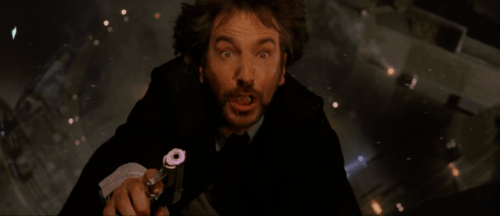
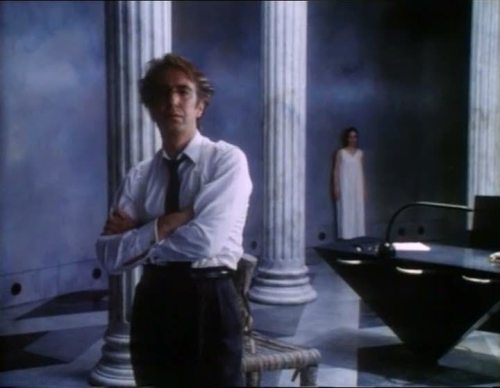
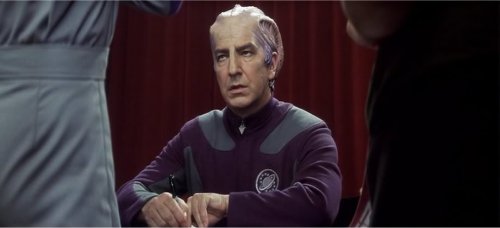
4 Shots From 4 Films — In Memory of Alan Rickman


4 Shots From 4 Films

Die Hard (1988, directed by John McTiernan)

Die Hard (1988, directed by John McTiernan)

Closet Land (1991, directed by Radha Bharadwaj)

Closet Land (1991, directed by Radha Bharadwaj)

Galaxy Quest (1999, directed by Dean Parisot)

Galaxy Quest (1999, directed by Dean Parisot)

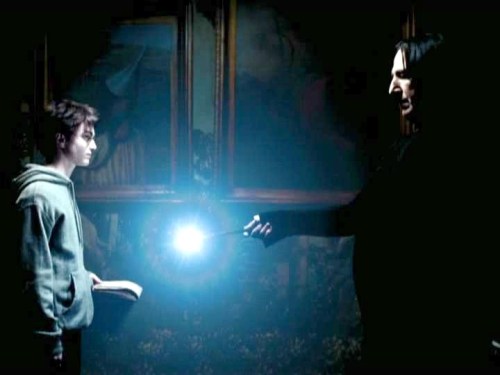
Harry Potter and the Prisoner of Azbakan (2004, directed by Alfonso Cuaron)

Harry Potter and the Prisoner of Azbakan (2004, directed by Alfonso Cuaron)

Rest in peace, the great Alan Rickman.

Quickie Review: Olympus Has Fallen (dir. by Antoine Fuqua)


OlympusHasFallen

“The most protected building on Earth has fallen.”

Die Hard has become it’s very own subgenre of action films since it was first released in 1988. It was a simple enough story that combined the “one against many” type of story with the “siege tale”. It was a perfect combination that has since been copied, imitated, but truly never duplicated to the highest level of success the original film had upon release. There’s been a few films that added their own unique take on this action film template. There was “Die Hard on a boat” with the underappreciated Under Siege. Then we have Air Force One which was “Die Hard on a plane”. The latest action film to try and put a new spin on the Willias-McTiernan classic is Antoine Fuqua’s latest film, Olympus Has Fallen.

The film pretty much takes what worked with the three films before it that’s been mentioned above and combines them to make a film. We have a lone, highly skilled operative in the form of Secret Service Agent Mike Banning in the role that made Bruce Willis famous and, for a time, resuscitated Steven Seagal’s career. Then we have the Presidential angle but instead of Air Force One it’s the White House this time around. The plot of the film is simple enough that even a person not well-versed in film could follow it. A group of dedicated and highly-trained North Korean terrorists do a surprise attack on the White House as the President of the United States and his South Korean counterpart try to find a way to defuse a situation that’s been growing in the DMZ between the two Koreas. It’s now up to Agent Banning, on his own, to try and stop whatever plans the terrorists have brewing with the President as hostage while also dealing with an inept group of higher-ups trying to deal with it far from the action.

Olympus Has Fallen doesn’t break new ground with the way it’s story unfolds and it’s characters develop. The film was pretty much beat-for-beat and scene for scene lifted from the three other films mentioned above. The characters may be different and the circumstances they find themselves in somewhat different, but the screenwriters played everything safe except the action sequences part of the film. It’s these action scenes which brings Olympus Has Fallen to a new level of violent artistry that the previously mentioned films never reached.

To say that this film was violent would be an understatement. Where other films of this type a certain cartoonish tone to it’s violence this time around Fuqua goes for a much more serious and, at times, disturbingly difficult to watch level of violence to make the film stand out from the rest of it’s kind. The assault on the White House itself and the surrounding area has less a look of a fun action film and more of a war film. People die in droves and it doesn’t matter whether they’re Secret Service, police, terrorists or innocent civilians. All were fair game in this film.

Even the action once we get to Banning playing the Willis role looked more brutal than what Willis and even Seagal ever got to do. Gerard Butler may not have had the charisma and wit of Willis in the same role, but he convincingly played his role as more Jack Bauer than Officer McClane. Butler as Banning was all business and efficiency while Willis as McClane was more the witty, smartass who just keeps finding himself in the wrong place at the wrong time.

Olympus Has Fallen won’t be hailed as one of the best films of 2013. It won’t even be talked about as one of the top action films this year, but despite the story being a derivative of every Die Hard and it’s clones before it the film does succeed in being a very enjoyable piece of popcorn flick. It was full of tension and big action setpieces (though the CG effects looked very cheap at times) that Fuqua has gradually become known for. The characters in the film were just a step above being one-dimensional and the story itself becomes less eye-rolling and more worrisome considering the real tensions coming out of the Korean Peninsula at this very moment.

One thing I’m sure of is that of the two “Die Hard-in-the-White-House” films this year (there’s the bigger-budgeted White House Down later this summer from Roland Emmerich) I have a feeling that Olympus Has Fallen might be the more fun. It’s probably going to be the more violent of the two and that’s an assumption I’m willing to make without even seeing how Emmerich’s film turns out.