
The TARDIS materializes in Victorian-era London. Accompanying the Fourth Doctor (Tom Baker) is his new companion, Leela (Louise Jameson). After returning Sarah Jane Smith to her own time (more or less) and saving the Time Lords from being destroyed by the Master, the Doctor meet Leela on an unnamed planet in the far future. Though Leela, with her short animal-skin outfit and her very large knife, seemed like a savage, she was actually the descendant of a group of Earth astronauts who had crashed on the planet centuries before. Leela insisted on traveling with the Doctor and the Doctor reluctantly decided to try to civilize Leela or, at the very least, get her to stop carrying that big knife around with her.

Hence, the trip to London. The Doctor wants her to see where her ancestors came from. The Doctor’s plan is to take her to the Palace Theater, owned by Henry Gordon Jago (Christopher Benjamin), so that they can see a performance by the magician Li Hi’sen Chang (John Bennett). Instead, they end up getting caught up in a series of murders that involving Chang, a giant rat in the London sewers, a miniature killer named Mr. Sin (Deep Roy) who snorts like a pig, and a 51st century war criminal named Magnus Greel (Michael Spice).

The Talons of Weng-Chiang is not only one of the best of the Fourth Doctor’s adventures but it’s also one of the best Doctor Who serials ever. Victoria London, with its foggy streets and its collection of eccentric rogues, proves to be a perfect fit for Tom Baker’s Doctor, allowing Baker to try out the Sherlock Holmes persona that he would later use when he played the great detective himself in a BBC production of Hound of the Baskervilles. Louise Jameson is also a delight in this story, with Leela’s naturally independent nature befuddling all of the very proper Victorians that she comes into contact with. Louise Jameson had the unenviable task of trying to follow in the footsteps of the beloved Elisabeth Sladen. (The show’s writers helped out by making Leela the opposite of Sarah Jane is almost every way.) Supposedly, Tom Baker had not wanted a new companion and initially treated Louise Jameson very coldly, though he eventually warmed up to her. With her performance in this serial, Louise Jameson proved that she definitely deserved to be a part of the Doctor’s adventures.

Of course, for many, the real highlight of this serial is the chemistry between Henry Gordon Jago and Professor Lightfoot (Trevor Baxter), the coroner who has been investigating a number of strange murders in London. The blustery Jago and the reserved Lightfoot are almost as important to defeating Magnus Greel than the Doctor and Leela and the scenes in which they become an unlikely detective team are so enjoyable that it’s not a surprise that the BBC considered giving them a series of their own. (From 2010 to 2017, the pair did star in an audio drama, one that imagined them investigating other mysteries and even teaming up with other Doctors.) Of course, when I first saw The Talons of Weng-Chiang, I was just happy that Jago and Lightfoot managed to survive all six chapters. After you watch enough Doctor Who, you learn not to get to attached to any of the supporting characters. That Jago and Lightfoot did not fall victim to Mr. Sin was cause for celebration.

The Talons of Weng-Chiang actually has a pretty interesting story, one that justified its 6-episode length. Magnus Greel is one of the great Doctor Who villains, a time traveling war criminal who pretended to be a God. For the most part, Michael Spice was convincing as Greel, though his over-the-top delivery of a threat to “rip your flesh,” is one of the serial’s few unintentionally funny moments. Another false step was the “giant rat,” which was clearly a normal-sized rat shot on a miniature set. The rat looked bored. When the rat has to interact with the Doctor and Leela, it becomes a giant rat dummy that looks very little like the normal rat. And finally, a stuntman had to do a few scenes inside a rat costume. All of the rat stuff doesn’t do much other than leave you wondering whether the story really needed a giant rat at all. Of course, it’s really not Doctor Who if there isn’t at least one notable case of special effects failure.

The rat aside, there is another thing that has to be discussed when it comes to The Talons of Weng-Chiang. When I was a kid, I didn’t really notice it because I was too busy enjoying the action set pieces, Tom Baker’s tongue-in-check performance, the Jago/Lightfoot team-up, and everything about Louise Jameson. Rewatching The Talons of Weng-Chiang as an adult, the thing I immediately noticed was that, for an episode that featured a lot of Chinese characters (the majority of whom were not presented in a particularly positive light), there weren’t many Chinese actors in the cast. The most prominent Chinese character was played by John Bennett, in full yellowface. Reading about the production of the serial, I was not surprised to see that one of the inspirations was Sax Rohmer’s notoriously racist Fu Manchu novels. While The Talons of Weng-Chiang may not be as flat-out racist as Rohmer’s novels, it still has its share of negative racial stereotypes. (Of course, the story’s main villain is not Chinese. Magnus Greel is described as being “the butcher of Brisbane,” make of that what you will.) The Talons of Weng-Chiang is well-acted, well-directed, and well-written and there’s no way it would be made today, at least not in the same way that it was made in the 70s. I’m not saying that’s a bad thing or a good thing. It just a reminder of how much things have changed since 1977.

The final serial of the 14th season, The Talons of Weng-Chiang was a triumph and also proof that the Doctor could still have worthwhile adventures, even if he was no longer traveling with Sarah Jane.

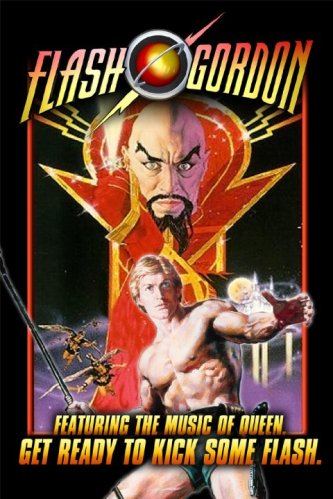 Life on the planet Mongo is not easy. Aided by Darth Vader wannabe Klytus (Peter Wyngarde) and the sadistic General Kala (Mariangela Melato), the evil Emperor Ming (Max Von Sydow) rules with an iron fist. All of the citizens are heavily taxed and kept in a state of perpetual war in order to keep them from joining together and rebelling. Those who attempt to defy Ming are executed.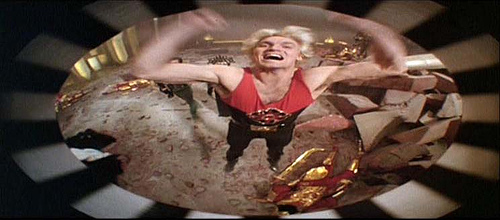

 Through the Shattered Lens