Retro Television Review: Homicide: Life on the Street 4.6 “Hate Crimes”


Welcome to Retro Television Reviews, a feature where we review some of our favorite and least favorite shows of the past!  On Sundays, Lisa will be reviewing Homicide: Life On The Street, which aired from 1993 to 1999, on NBC!  It  can be viewed on Peacock.
This week, Lewis solves a cold case.

Episode 4.6 “Hate Crimes”

(Dir by Peter Weller, originally aired on November 17th, 1995)

On the eve of Thanksgiving, a young man is killed outside of a gay night club.  Bayliss and Pembleton are investigating.  All of the witnesses say that the man was jumped by a group of skinheads.  While Pembleton, as usual, is set on capturing the guilty party, Bayliss is uncomfortable about the what he assumes to have been the victim’s identity.

Bayliss is a homophobe?  Really?

I guess this development doesn’t come totally out-of-nowhere.  There was an earlier episode where Bayliss was clearly uncomfortable dealing with an S&M-themed murder so he does have a history of getting weirded out by anything that goes against what he considers to be the straight and the conventional.  At the same time, it’s kind of hard to feel that Bayliss is often just whatever the writers need him to be at the moment.  For this episode, Pembleton needed a homophobe to deal with.  And, since Felton and Bolander are no longer on the show, the job fell to Bayliss, even though Bayliss — even at his most awkward and uncomfortable — has never been presented as being prejudiced before. For me, it’s hard not to feel that the episode would have been even more interesting if it was Pembleton — self-righteous, faith-struggling, Jesuit-trained Pembleton — was uncomfortable with the victim’s identity and if, for once, Bayliss could have been the tolerant one.  Pembleton’s a great character but occasionally, it’s hard not to feel that he’s almost too flawless.

That said, this storyline features a brilliant twist.  When Pembleton and Bayliss talk to the victim’s father (the great Terry O’Quinn), they ask him if he knew that his son was gay.  The father gets angry at them, says that if his son was gay then he deserved to die, and then kicks them out of the house.  Later, Bayliss and Pembleton learn that the victim was not gay.  Instead, the skinheads assumed he was gay and attacked him because he was outside of the nightclub.  Bayliss and Pembleton return to the victim’s father and tells him that his son wasn’t gay.  Only then does the victim’s father start to cry.  For him, his son was not worthy shedding a tear over until he was assured that his son wasn’t gay.  Of course, the father doesn’t realize that his prejudice is the same prejudice held by the skinheads who killed his son.  He’s stunned to hear his son was killed due to a mistake but it doesn’t occur to him that he rejected his son because he made the same mistake.

While that was going on, Lewis defied Howard and solved the Erica Chilton case.  (During the previous season, Howard was given the Chilton case after Crosetti committed suicide.  The since-departed Felton lost a key piece of evidence.)  When Erica Chilton’s daughter was brought to the office because she had been having dreams about her mother’s death, Lewis and Kellerman were the two detectives that talked to her.  Howard was not happy about this, saying that Lewis should have let her handle the interrogation.  Lewis. who has not been happy about Howard getting promoted to sergeant, told her to back off and to stop criticizing his former partner.  While the two of them were arguing, Kellerman got the little girl to remember that the murderer was wearing a monogrammed shirt and that his initials with “T.M.”  At the time of her murder, Erica was engaged to Tom Marans (Dean Winters).

Howard demanded that Lewis tell her before he interrogated Marans so that she could be in the Box.  So, of course, after Lewis and Kellerman tricked Tom into coming down to the station by telling him they needed him to look over some new evidence, Lewis proceeded to interrogate Tom without Howard being there.  With help of a new voice analysis machine, Lewis was able to get Tom to confess without much effort.  Lewis was also able to get a date with the voice analyst, Debbie Haskell (Allison Smith).  Sgt. Howard, meanwhile, got very, very pissed off.

Finally, Brodie (Max Perlich) — the cameraman who helped Lewis and Kellerman out a few episodes ago — got a new job when he was hired to help the Homicide Department film crime scenes.  I’m kind of amazed that they didn’t already have someone to do that.

This was a good episode, even if Bayliss’s homophobia did feel a bit forced.  While Andre Braugher and Kyle Secor were as great as always, I have to say that Clark Johnson really stole this episode as the cocky and rebellious Meldrick Lewis.  Howard is absolutely right about Lewis not treating her with the respect that she deserves.  At the same time, Lewis did finally solve the Chilton case.  So, maybe they’re even.

Probably not.


Retro Television Review: Homicide: Life On The Street 3.9 “Nothing Personal”


Welcome to Retro Television Reviews, a feature where we review some of our favorite and least favorite shows of the past!  On Sundays, I will be reviewing Homicide: Life On The Street, which aired from 1993 to 1999, on NBC!  It  can be viewed on Peacock.

This week, Felton again proves himself to be the most incompetent cop in Baltimore.

Episode 3.9 “Nothing Personal”

(Dir by Timothy Van Patten, originally aired on April 21st, 1995)

Woe be anyone whose murder is investigating by Detective Beau Felton.

Felton (played by Daniel Baldwin) shambles his way through this episode, his hair a greasy mess and his eyes bloodshot.  The episode takes place over the course of several days and Felton doesn’t change his clothes once.  Just looking at him, one can smell the pungent mix of sweat, cigarettes, and booze.  Felton is searching for his wife and his son.  In this episode, his mother-in-law tells him that his wife is planning on coming home, just for her to change her mind at the last moment.  On the one hand, I do feel a bit bad for Felton, even if he was an absolutely terrible husband.  On the other hand, he’s got an important job and, right now, he sucks at it.  His decision to go back to Megan Russert’s place after he talks to his mother-in-law definitely does not make him in any way extra sympathetic.

Poor Kay!  She has been just been assigned the Chilton murder, which was one of Crosetti’s unsolved cases and now her 100% clearance rate is threatened.  The case is considered to be unsolvable.  Someone strangled Erica Chilton.  Her husband (Dean Winters) gives Kay and Felton a stack of letters that were sent by Erica’s secret lover.  Alcoholic Felton loses the letters.  The episode ends with Kay reluctantly accepting that she might never solve the case.  Personally, I think Kay should consider that the victim’s husband is played by Dean Winters.  With the exception of Law & Order: SVU, I have never seen Dean Winters appear on a show like this without eventually turning out to be the murderer and the fact that he had a huge stack of letters from Erica’s boyfriend would give him a motive.  See, Kay?  I solved your case for you!

Meanwhile, Giardello goes out to lunch with Megan Russert and one of her friends.  Russert wants to set them up.  Giardello is interested but Russert’s friend isn’t.  Giardello, in a wonderfully performed moment (all hail Yaphet Kotto), tells Russert that he feels that light-skinned black women always reject him because he’s “too black.”  Russert says that’s ridiculous, just for Giardello to reply that, as a “white woman,” she wouldn’t understand.  Giardello spends the rest of the episode depressed.  It’s always interesting whenever Giardello, who is usually so imposing, let’s down his guard a bit and reveals his emotions.  Kotto always did a great job playing Giardello, regardless of whether Giardello was ordering Pembleton to work with Bayliss or just trying to avoid doing his laundry with Munch.

Speaking of Munch, the Waterfront Bar continues to be a headache.  Lewis, Bayliss, and Munch have finally purchased their bar but it turns out that the former owner is not allowed to leave behind any of the liquor that she previously had at the bar.  So, the three partners are going to have to pay for all their liquor themselves.  The Waterfront Bar storyline has been dragged out a bit but it is a storyline that shows just how difficult it is to start a business in an overregulated state.  So, it appeals to be my libertarian side.

There were a lot of good moments in this episode, even if I am getting a bit tired of Felton and his incompetence.  One thing that I’ve really enjoyed about this season is how much Kay and Russert seem to sincerely dislike each other.  This episode featured Russet calling Kay out for obsessing over her perfect clearance rate and Kay’s barely pent up irritation was entertaining to watch.  Still, I do find myself wondering why Russet is always at the station, even though her shift is over.  Seriously, Russert, spend some time with your child and tell Felton to get off your damn couch!  There’s murders that need to be solved.


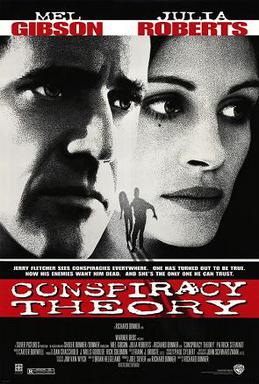
Conspiracy Theory (1997, directed by Richard Donner)


Jerry (Mel Gibson) is the taxi driver that most people would dread getting stuck with.  He’s obsessed with conspiracies, ranting and raving as he drives his passengers around New York City.  The moon landing was fake, he says.  The New World Order is real.  Fluoridation in mind control.  Freemasons control the world.  Black helicopters patrol the skies.  Implausibly, Justice Department lawyer Alice Sutton (Julia Roberts) enjoys listening to Jerry’s paranoid monologues but she finds them to be a lot less amusing when they turn out to be true.  Soon, she and Jerry are being pursued by Dr. Jonas (Patrick Stewart), the head of MK-Ultra and the man who bred Jerry to eventually become an assassin.

Conspiracy Theory has a good premise and a great Mel Gibson performance and Patrick Stewart is entertaining as the main bad guy.  Though it really is just a slightly above average 90s action film, Conspiracy Theory is still a movie that seems prophetic.  Many of Jerry’s theories were obscure and not well-known when the movie was first released, nearly 30 years ago.  Today, a lot of them have been popularized by social media and podcasts.  Conspiracies have gone mainstream.  Jerry would love listening to Joe Rogan today.  In fact, Jerry would probably have a podcast of his own.  Because the movie was released in 1997, a lot of the things that Jerry talks about feel quaint and almost old-fashioned when you compare them to what Jerry would be ranting about today.  Compared to today’s anti-vaxxers and 9-11 truthers, Jerry’s fear of the black helicopters seems harmless.  Or, at least, it does until the black helicopters suddenly show up in the middle of a chase scene, nearly invisible in the night sky.

Conspiracy Theory can’t really hold up to Richard Donner’s best films.  There aren’t as many memorable lines as in Lethal Weapon and it never finds the same balance between kitsch and art that Donner was able to find with both The Omen and Superman.  Donner still gets some good moments, like the opening montage where Jerry scares the Hell out of a yuppie passenger played by Alex McArthur.  I wish Conspiracy Theory had followed its premise through to its natural conclusion instead of having Jerry suddenly turn into what was then a typical Mel Gibson action hero.  (Today, of course, it would probably be much easier for audiences to accept the idea of Gibson playing a mentally ill, paranoid conspiracy theorist.)  Overall, though, both the movie and the theories hold your interest.


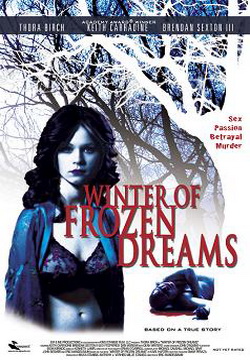
October True Crime: Winter of Frozen Dreams (dir by Eric Mandlebaum)


The 2009 film, Winter of Frozen Dreams, opens with a young woman named Barbara Hoffman (Thora Birch) in a Wisconsin courtroom in 1980.  She is on trial, having been accused of committing two murders.  The jury reads their verdict and the film flashes back three years to show us how how Barbara ended up in that courtroom.

It’s a bit of an odd way to open the film, one that robs the story of any suspense.  The story of Barbara Hoffman is a true one but, unlike other true crime stories, it’s not a commonly known one.  I had not heard of Barbara Hoffman until I watched this film and, after the film ended, I immediately went to Google to make sure that the film was actually telling the truth when it claimed to be based on a true story.  Barbara Hoffman and her trial apparently were a big deal in 1980.  (Her trial was the the first murder trial to ever be televised.)  But it is now so obscure that it doesn’t even have a Wikipedia entry.

As seen in the film, Barbara Hoffman was a genius.  She had a 145 IQ and was the valedictorian of her high school class.  She went to college to study chemistry and was doing quite well academically.  However, when she got a job answering the phones in a massage parlor, she realized that she could make a lot more money as a sex worker than as a chemist.  She dropped out of college before starting her final semester and went to work for a pimp named Ken Curtis (Dean Winters).

Barbara was engaged to two different men.  One was Harry Berge (Dan Moran), who has a taste for bondage and being ritually humiliated.  At first, his co-workers thought he was kidding when he started introducing the much younger Barbara as being his fiancée but Harry actually signed over all of his property to her and allowed Barbara to take out a life insurance policy on him.

It was Barbara’s other fiancé, a mild-mannered video clerk named Jerry Davies (Brendan Sexton III), who Barbara called on Christmas to tell him that she had discovered Harry’s dead and battered body in her bathroom.  Convinced that Harry had been murdered by Ken, Jerry helped Barbara to hide the body in the Wisconsin snow.  Of course, even while Jerry was helping Barbara cover up Harry’s death, Barbara was taking out a considerable life insurance policy on him.

After Jerry has an attack of conscience and leads the police to the body, it falls to the pipe-smoking Detective Lulling (Keith Carradine) and his partner (Leo Fitzpatrick) to figure out who was responsible for Harry’s murder.  Lulling’s instinct is to suspect Barbara but everyone else seems to think that either Ken or Jerry is the more obvious suspect.  After all, Barbara’s a genius.  Why would she kill someone?

It’s an interesting story, though Winter of Frozen Dreams is never quite as compelling as one might wish.  Some of that is because, despite her genius IQ, Barbara herself never becomes that interesting of a character and Thora Birch never seems to be that invested in her performance.  She delivers her lines in a rather flat manner, never really showing the charisma necessary to be convincing as a real-life femme fatale.  That said, you do feel sorry for the two men, especially Brendon Sexton III.  And Keith Carradine and Leo Fitzpatrick make for an amusing detective team.  I almost wish the two of them had starred in their own series, where they traveled the Pacific Northwest and solved small town murders.

Of course, the biggest problem with this movie is that it opens with the verdict so we already know what’s going to happen.  We know who is going to die and we know what’s going to happen to Barbara as a result.  There’s zero suspense as to how things are going to work out.  It’s an error on the part of the filmmakers and an unfortunate one.

18 Days of Paranoia #16: Lost Girls (dir by Liz Garbus)


Lost Girls tells the true and infuriating story of Mari Gilbert and her search for her oldest daughter, Shannan.

Mari Gilbert is a single mother who is works as a waitress and struggles to give her children the best life that she can.  She’s still haunted by a decision that she made years ago to temporarily put her three daughters into foster care.  Though she eventually reclaimed two of her daughters, her eldest — Shannan — has basically been on her own since she was sixteen.  Shannan, who is now 24, visits her mother and her sisters on a semi-regular basis.  Despite the fact that Shannan claims that she’s just a waitress (like her mother), Shannan always seems to have a lot of money on her.  Mari has her suspicions about what Shannan’s doing to make that money but she keeps them to herself.

Then, one day in May, Shannan disappears.  Mari can’t get the police to take her seriously when she says her oldest daughter has vanished.  They say that Shannan left on her own and will probably return at some point.  They dismiss Mari’s concerns, telling her that her daughter was a prostitute and therefore, by their logic, unreliable.  Even when Mari gets strange phone calls from a doctor who lives in a gated community in Long Island, the police refuse to take her seriously.

However, Mari then discovers that Shannan called 911 the night that she disappeared.  Despite the fact that Shannan sounded panicked, the police waited an hour before responding to her call and, by the time they arrived, Shannan had disappeared.  It’s only when Mari goes to the media that the police actually start to search the area of Long Island where Shannan disappeared.  The police discover the bodies of several sex workers, all murdered by the same unknown killer.

However, they still don’t find Shannan’s body.  Though Mari and her daughter, Sherre (Thomasin McKenzie), are convinced that Shannan is one of the killer’s victims, the police continue to insist that Shannan probably just ran off on her own.  In fact, the local police commissioner (Gabriel Byrne) finds himself being pressured to do something about Mari because her now constant presence on TV is making the entire community look bad.

Meanwhile, Mari finds herself caught up in a personal feud between two men who live in the gated community, an amateur investigator (Kevin Corrigan) and a shady doctor (Reed Birney) who has a history of making inappropriate phone calls….

Lost Girls is an interesting but frustrating film.  Some of that is because the story on which the film is based did not have a happy ending.  The Long Island serial killer has never been identified or captured.  The most obvious suspect was never charged with anything and subsequently moved down to Florida.  Mari never got justice for Shannan and, sadly, was eventually murdered by her youngest daughter.  (The murder is acknowledged via a title card but it is not actually depicted in the film.)  As a result, the film itself doesn’t really offer up any of the payoff that you would normally expect to get after devoting 90 minutes of your life to it.  It’s frustrating but, at the same time, its understandable.

Amy Ryan gives a great performance as Mari.  That shouldn’t shock anyone.  She makes you feel Mari’s pain, fury, and guilt.  To its credit, the film does shy away from the fact that Mari often looked the other way when it came to how exactly Shannan was making the money that she regularly sent back to her family and Amy Ryan perfectly captures Mari’s struggle to not only get justice for her daughter but also to forgive herself.  Unfortunately, the film is a bit less convincing when it deals with the police and the suspects.  The film, for instance, can’t seem to decide whether or not Gabriel Byrne’s character is indifferent, incompetent, or just overwhelmed by a bad situation.  By that same token, the doctor and his neighbor both seem oddly underwritten and underplayed.  Obviously, the film can’t just come out and accuse a real, living person of murder (especially when that person hasn’t been charged with anything) but it still makes for a frustrating viewing experience.

Where Lost Girls succeeds is at creating a properly ominous atmosphere.  Every scene seems to be filled with dread and, from the minute that Mari starts her investigation, you feel nervous for her.  She’s taking a true journey into the heart of darkness.  The film leaves you angry that the police refused to search for Shannan.  Sex workers are regularly preyed upon and, because of what they do for a living, society often looks the other way.  That’s how you end up with killers like The Green River Killer and the Long Island serial killer.  They don’t get away with their crimes because they’re clever.  They get away with it because, far too often, society refuses to care about their victims.  Lost Girls is an imperfect film but its heart is in the right place and its message is an important one.

Other Entries In The 18 Days Of Paranoia:

  1. The Flight That Disappeared
  2. The Humanity Bureau
  3. The Private Files of J. Edgar Hoover
  4. The Falcon and the Snowman
  5. New World Order
  6. Scandal Sheet
  7. Cuban Rebel Girls
  8. The French Connection II
  9. Blunt: The Fourth Man 
  10. The Quiller Memorandum
  11. Betrayed
  12. Best Seller
  13. They Call Me Mister Tibbs
  14. The Organization
  15. Marie: A True Story

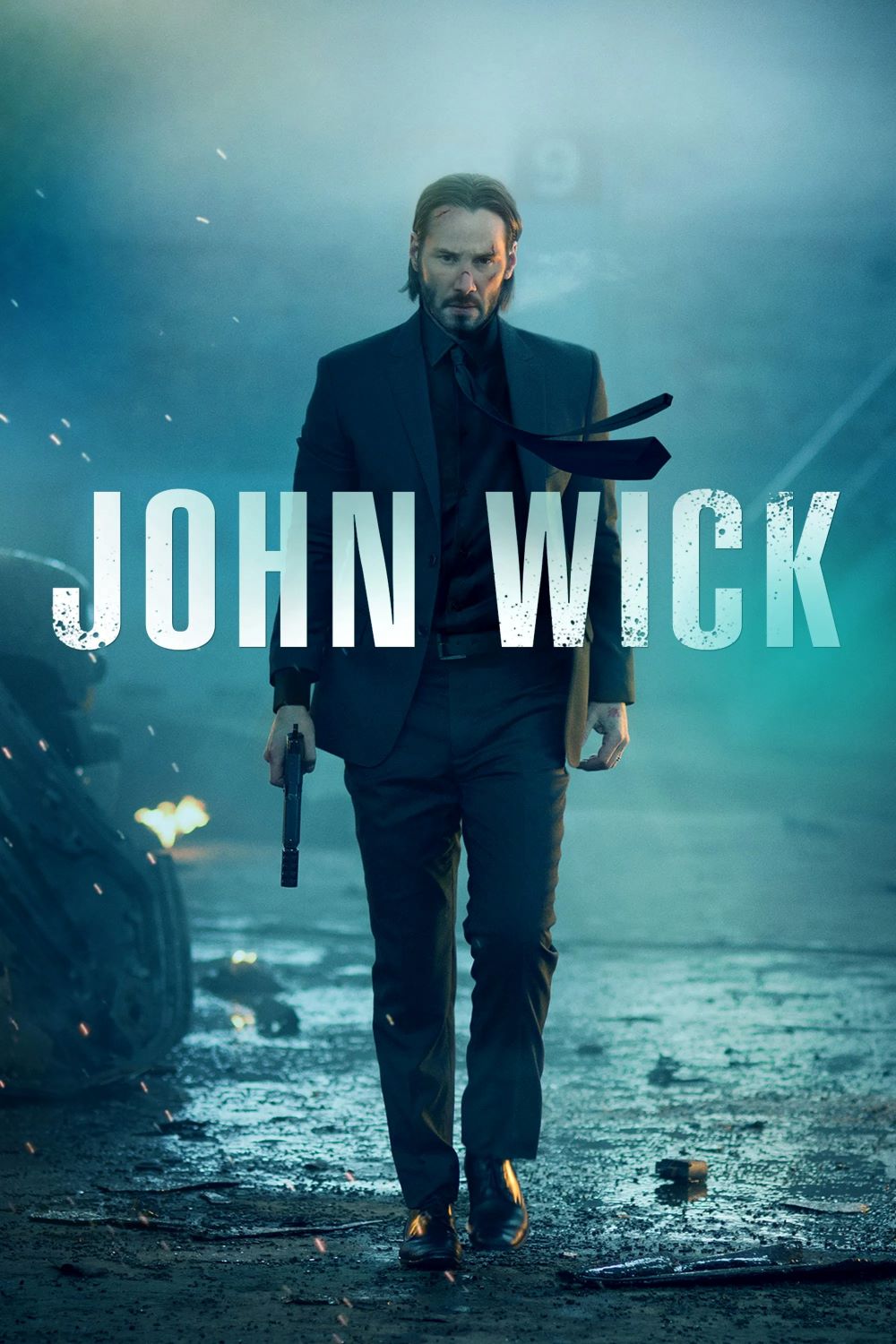
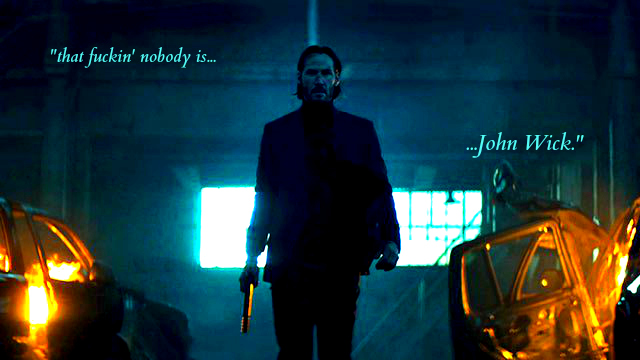
Scenes I Love: John Wick


JohnWickBabaYaga

“John wasn’t exactly the boogeyman. He’s the one you sent to kill the fucking boogeyman.” — Viggo Tarasov

To finish off the trifecta of all things John Wick I would like to share one of my favorite scenes from this excellent film. The scene arrives once the introductory session showing the title character’s domestic life away from the world of assassins, gun molls and erudite crime lords.

Most films that uses exposition to explain a certain plot point or describe a character tend to fall flat and forced. It stops whatever momentum a film’s narrative has gained. It becomes the tool of a lazy writer and in the hands of an average to bad director it’d turn out to be a scene killer.

This particular scene from John Wick falls under exposition done right. We see the Russian crime lord Viggo relating to his idiot son his disappointment at what he’d done to John Wick. Of course, the son doesn’t know who this John Wick fella is, but good ol’ Dad was more than willing to tell him a sort of bedtime story that describes John Wick in epic and mythical terms.

It’s a scene that builds up the title character through anecdotal examples. This is a crime lord who rules all he surveys, but the notion that his son has started a chain of events involving John Wick terrifies him. The fact that the son tries to put up a brave front to fix the problem gets a reaction that was one of the funniest bits in the entire film.

John Wick is a film that perfectly shows that a film doesn’t have to be overly complex in it’s plot. Even the simplest narrative of a man out for revenge could be turned into a full on romp of entertaining mayhem.

Trailer: John Wick


hr_John_Wick_2

I usually have a good idea of upcoming action films once they’ve been announced into production, but I have to admit that Keanu Reeve’s upcoming action film, John Wick, has been quite the ninja. I’ve not heard one thing about this project until I came across the just released trailer earlier today.

The trailer itself pretty much lays out what looks like a basic premise for the film. The title character seems to be some sort of retired badass who is brought out of it to get his revenge on the idiots who killed his cute little dog (given to him by his dying wife) during a home invasion robbery.

I know there are many whose brain starts to wander and/or seize up whenever they hear the name Keanu Reeves. I, fortunately, am not one of those people and I actually think that Reeves has been much-maligned throughout his career. For one thing he does seem to handle action scenes pretty well and this trailer for John Wick just continues to reinforce that thought.

John Wick will be setting wrongs right and bringing killer of dogs their just due this October 24, 2014.