Film Review: Safari 3000 (1982, dir. Harry Hurwitz)


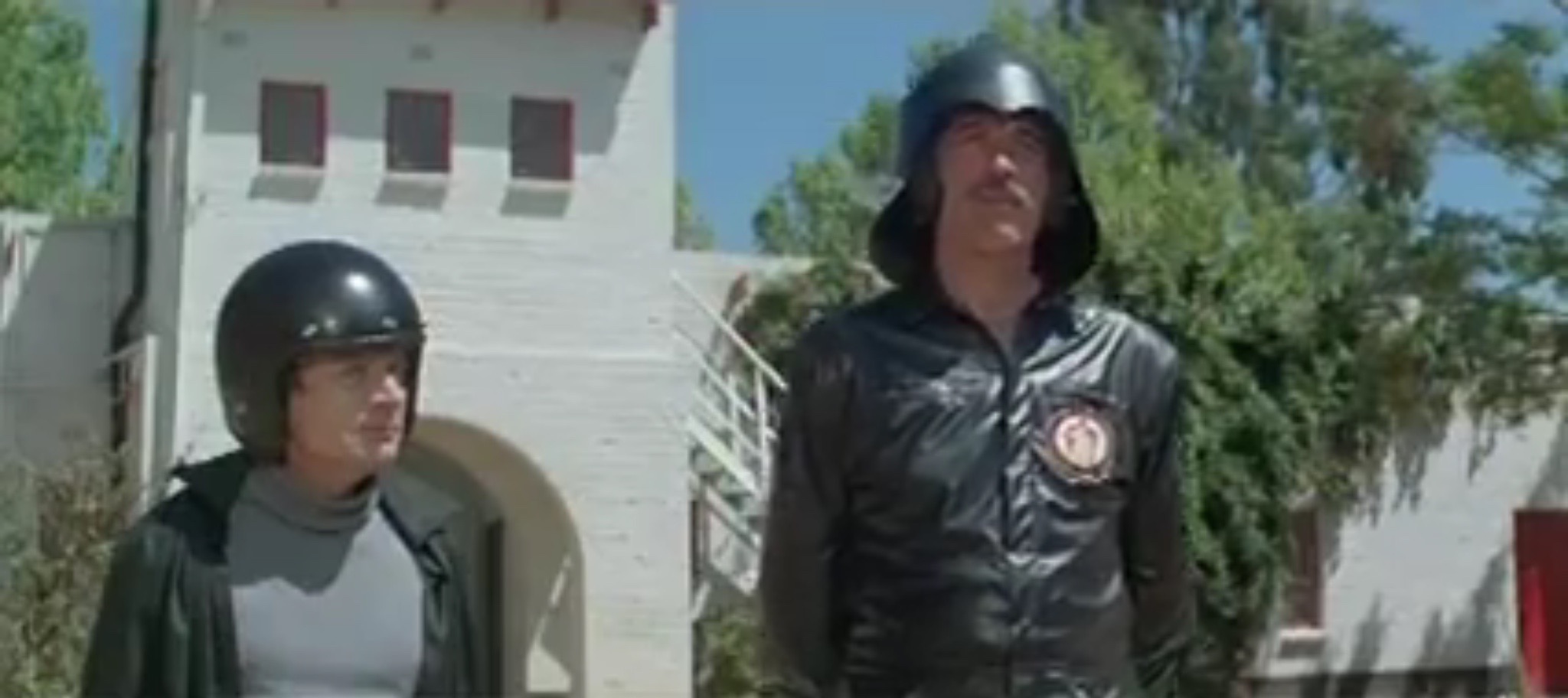
Christopher Lee and Mini-Me

Christopher Lee and Mini-Me

Ever seen that episode of AVGN for Darkwing Duck on the TurboGrafx-16? It starts off with the Nerd going through numerous games that you know are bad just by the title. Moon Ranger, Kid Niki, Dudes With Attitude, Deathbots, and Mad Max for the NES. They’re clearly bad games, but there just isn’t enough material to work with for a proper episode of the show. Safari 3000 is the cinematic equivalent to those reject games. However, since I suffered through it, now you must hear about it. And yes, I borrowed that sentence from Necessary Roughness (1991).

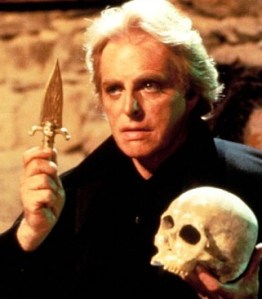
As you can see from the picture above, Christopher Lee is in this with a mustache, leather outfit, and a Darth Vader helmet. Why the Darth Vader helmet? I have no clue. Why does this little guy follow him around? No clue, but he does jump off a building near the beginning of the film. Why? I found out there is a movie called Pterodactyl Woman from Beverly Hills (1997) today so I don’t even know how we still exist, let alone why he jumps off the building.

So what is Safari 3000 about? There’s some sort of race in Africa and several teams are going to compete. Christopher Lee and the little guy…wait, of course, it’s a reference to The Man With The Golden Gun (1974)! That’s also why his name is Count Borgia in order to reference the Hammer Dracula films.

Well, there are other teams. I saw one that is clearly supposed to be two Japanese guys, and another made up of Italians. There are also two ladies who are listed as the American Housewives team in the credits. I’d find it offensive, but it’s an apt description because at the beginning of the race they say that while their husbands go to Vegas, they go to race cars.

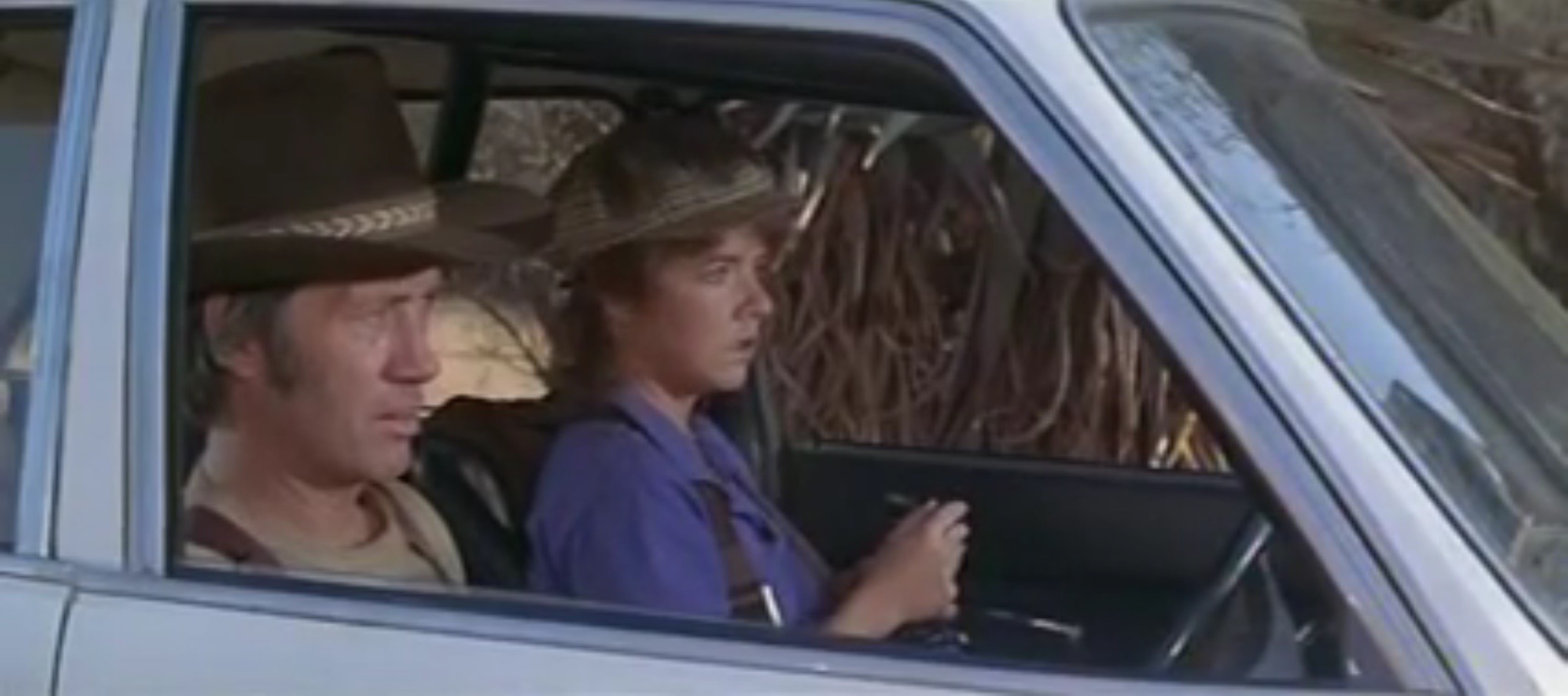
David Carradine and Stockard Channing

David Carradine and Stockard Channing

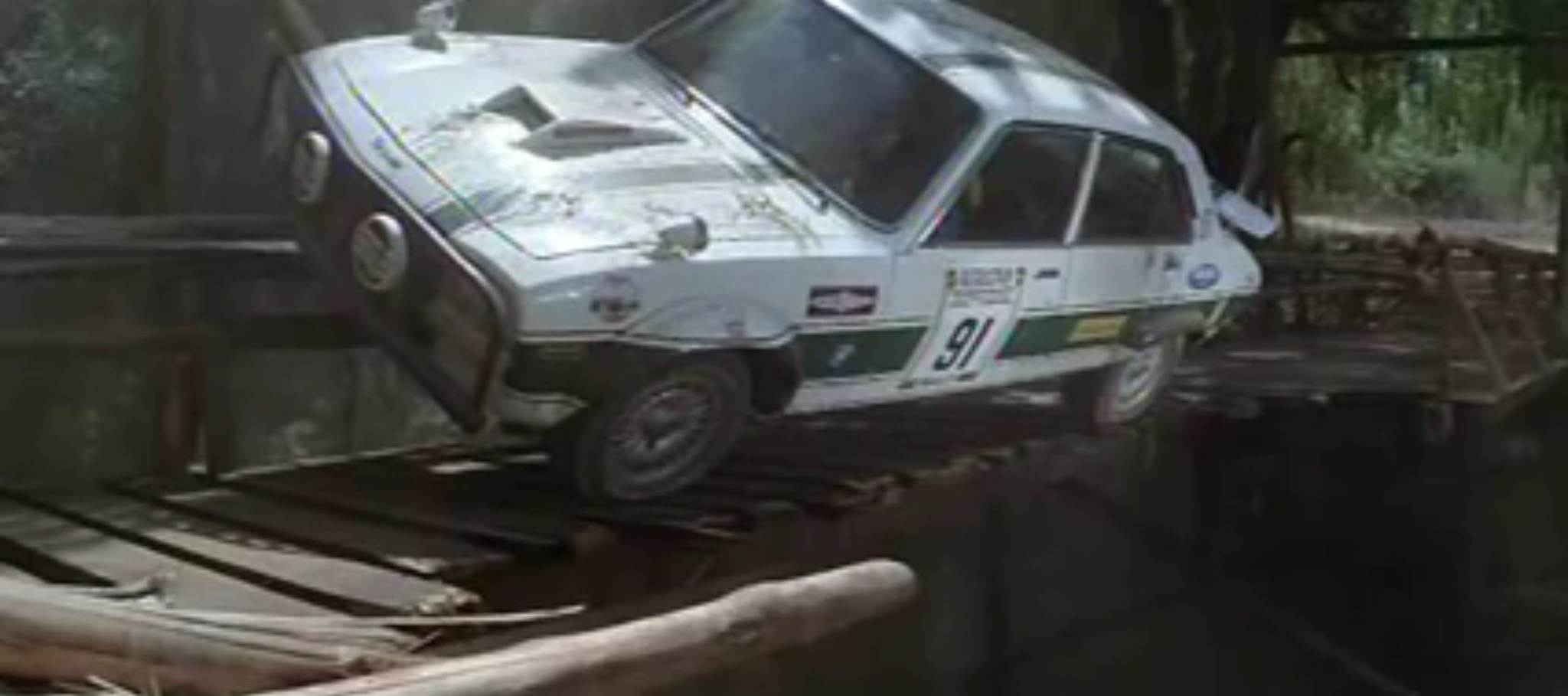
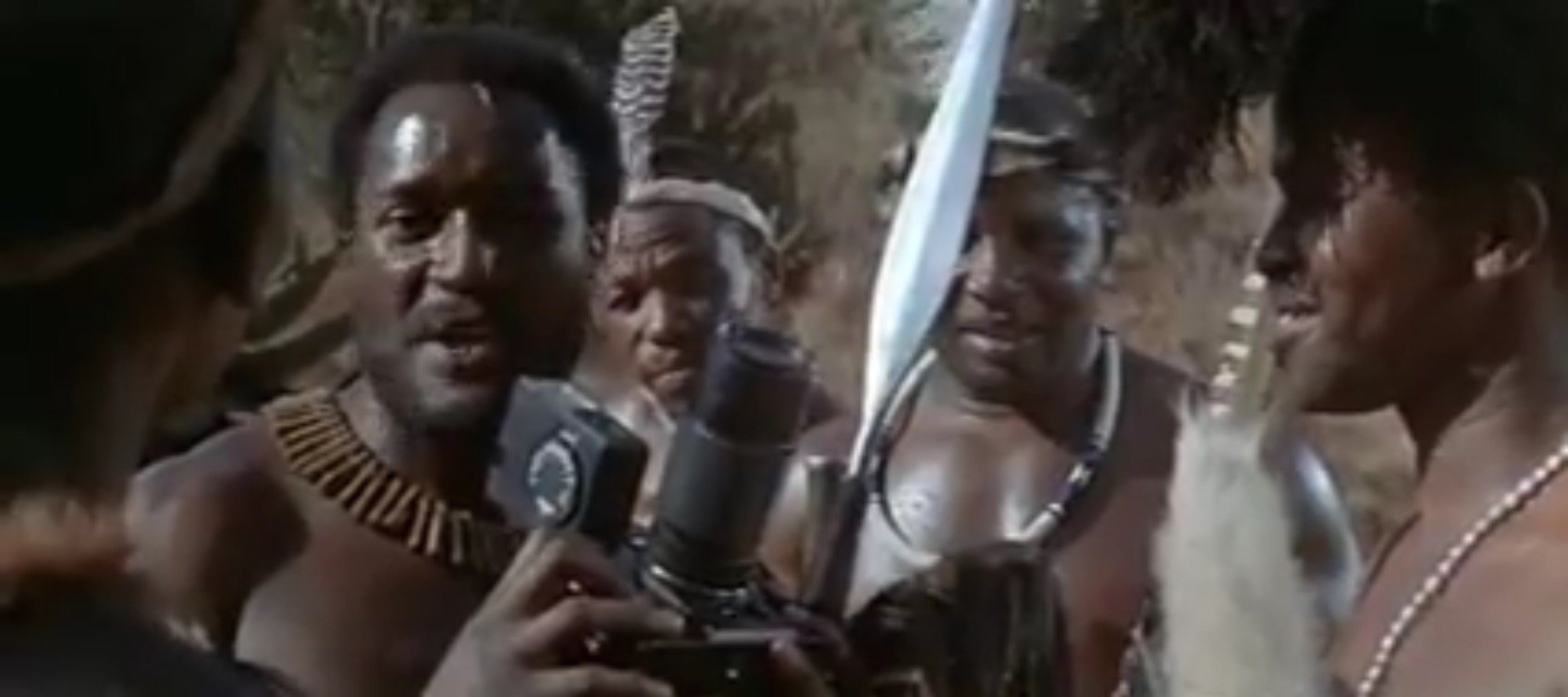
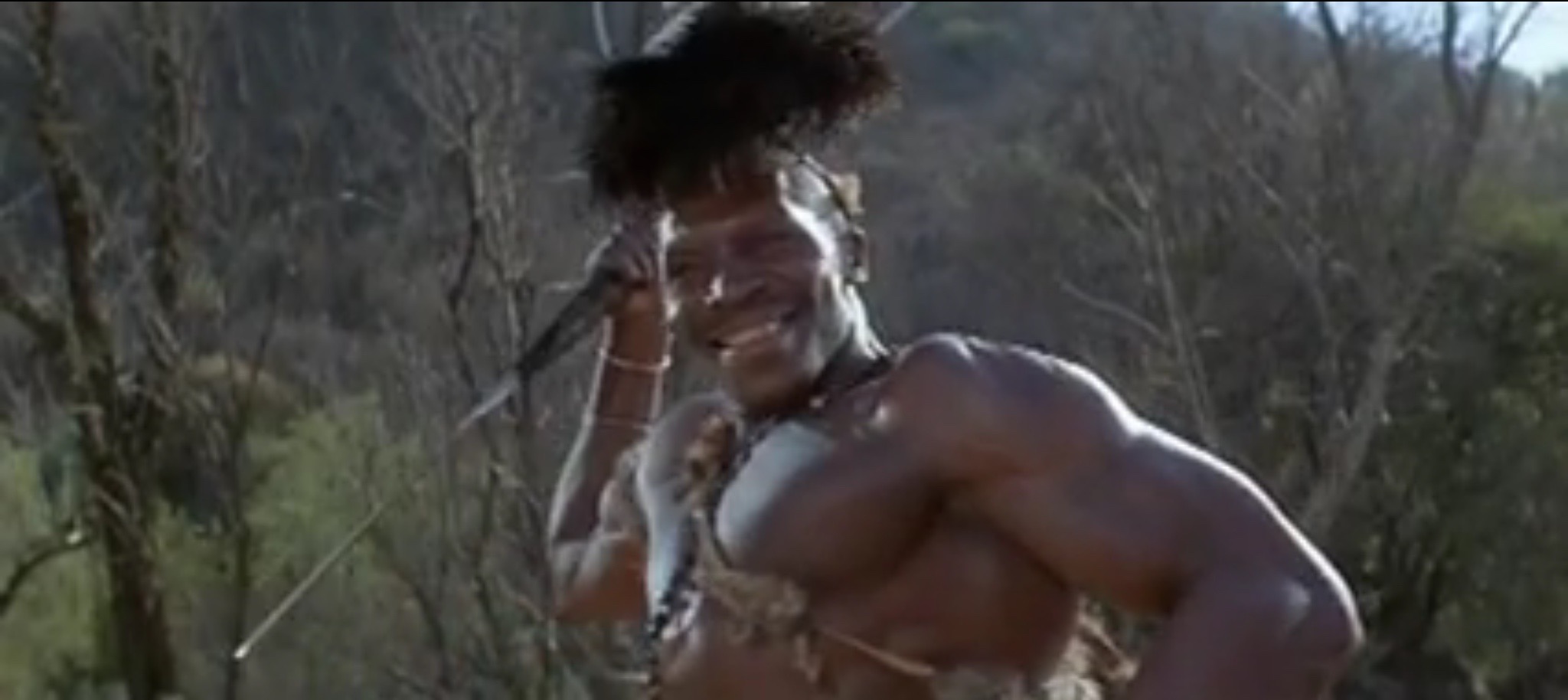
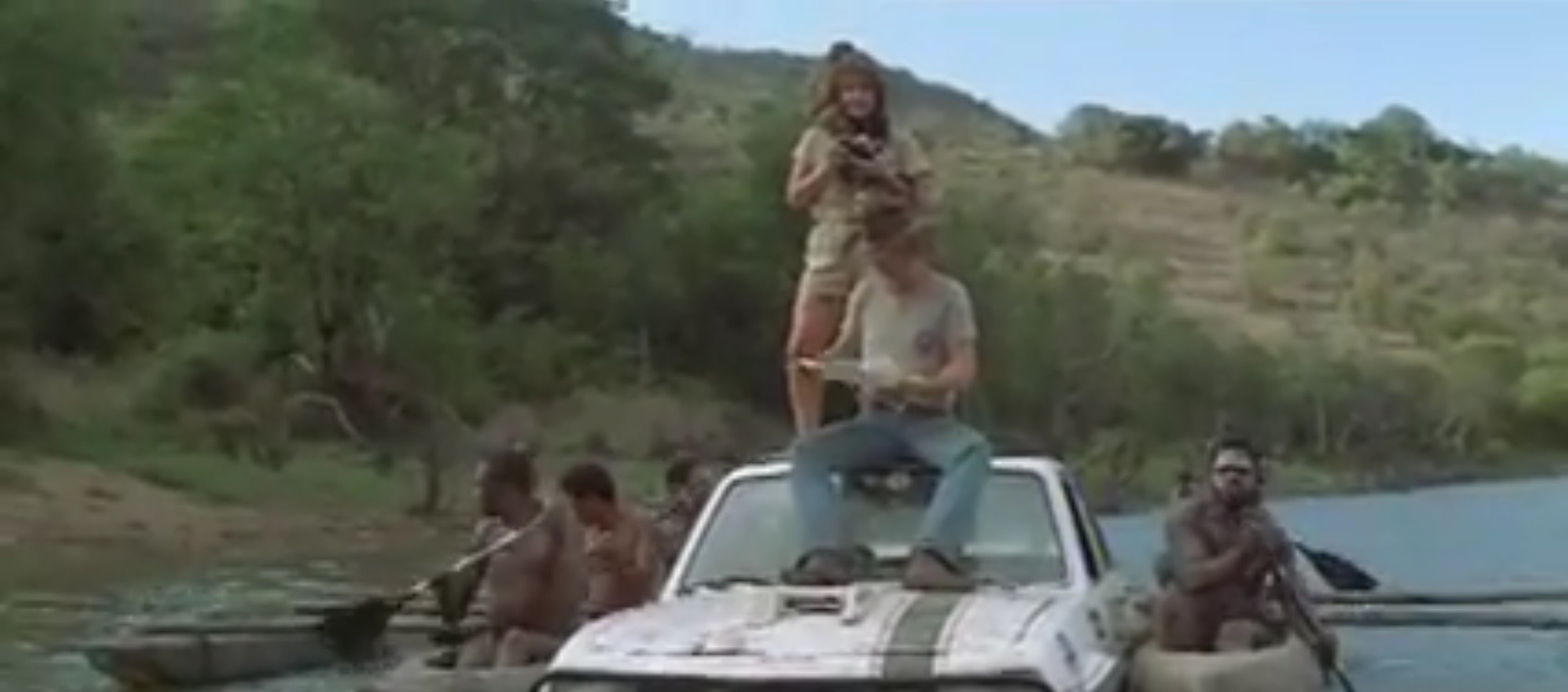
This movie gets to the race pretty quickly, which is good. Channing convinces her superior at Playboy to let her go to cover this race with Carradine as her driver. What follows is promising with some laughs. They get across a partially broken bridge with a little trick driving. A local African guy gets angry at them, pretends to be unable to speak English, then leaves them alone when they give him a fancy camera. Then he promptly turns around, perfectly describes the camera to his buddies, and takes a shot of of his friend.

Trick Driving

Camera!

Camera!

Smile!

Smile!

However, after that it just gets boring. The main problem is that there isn’t enough cutting between the different racers to get us excited or keep us engaged. Nor does enough happen to Channing and Carradine for us to feel them bond the way the movie wants us to believe they do.

In the end, you get a few laughs. You get to see some wildlife. Then the movie ends and you move on. In my case, to the next movie.

Winning, one way or another

Embracing the Melodrama Part II #39: Maybe I’ll Come Home In The Spring (dir by Joseph Sargent)


maybeWay back in January, I was looking for something to have playing on TV in the background while I cleaned the house.  I went from station to station until I finally came across a movie that I had never seen before.  It featured a  young-looking Sally Field wandering through a house that was full of stuffy-looking old people.  She stepped out of the house and dived, fully clothed, into a swimming pool.  Everyone in the house was shocked.  Then, one abrupt jump cut later, a bearded David Carradine was hijacking an ice cream truck…

“What the Hell is this?” I wondered.  Checking on the guide, I discovered that I was watching Maybe I’ll Come Home In The Spring, a made-for-television film from 1971.  I put off the cleaning for thirty minutes so that I could watch the rest of the film.

(And, if you know how obsessive compulsive I am about keeping the house clean, then you know what a big deal that was for me.)

After watching the rest of the film on television, I rewatched Maybe I’ll Come Home In The Spring on YouTube.  And I decided that I so wanted to recommend this film that I ended up launching Embracing the Melodrama Part II specifically so I’d have an excuse to write about Maybe I’ll Come Home In The Spring.

Sally Field, who was 25 when this film was first broadcast but looked and sounded much younger, plays Dennie Miller.  After being raised in the oppressively conformist atmosphere of the suburbs, Dennie ran away from home and spent a year with her hippie boyfriend, Flack (David Carradine).  As we learn from several flashbacks that are almost randomly spread out across the film, Dennie’s life with Flack largely amounted to panhandling and trying to avoid the police.  Finally getting tired of living with the controlling Flack, Dennie waited until Flack was busy panhandling and then hitched a ride with a leering truck driver.

Arriving back home after being gone for a year, Dennie is welcomed back by both her father (Jackie Cooper) and her mother (Eleanor Parker).  However, Dennie finds it difficult to readjust to her parent’s conformist life style.  Meanwhile, her emotionally distant parents are uncomfortable with talking to Dennie about the previous year and instead, cho0se to act as if she never left.  Dennie’s younger sister, Susie (Lane Bradbury), both looks up to and resents Dennie.   Susie got used to a life without Dennie and now that Dennie has returned, Susie is forced back into the role of being the kid sister.

Meanwhile, Flack isn’t prepared to let Dennie go.  Fully committed to both the idea of living a life separate from conventional society and to his own self-image as being the ultimate counter-cultural alpha male, Flack travels across California, intent on tracking Dennie down and convincing her to once again leave with him.

I loved Maybe I’ll Come Home In The Spring.  While it is undeniably dated (as any 1971 film about hippies would be), it also touches on a lot of themes and issues that never go out of date.  Whether it was the complicated relationship between Dennie and Susie or Dennie’s discovery that, as a result of her year spent on her own, all of her parent’s friends now view her as being somehow “damaged,” there is so much about Maybe I’ll Come Home In The Spring that rings painfully true.

And while Maybe I’ll Come Home In The Spring does not hesitate to point out the hypocrisy of Dennie’s parents and their friends, it’s equally critical of Flack and his countercultural posturing.  In the end, you come to realize that Flack and Dennie’s father are actually two sides of the same coin.  They’re both convinced that their way is the only way and that they — and they alone — know what is best for Dennie.  In the end, Maybe I’ll Come Home In The Spring is less about mainstream vs. hippie and more about Dennie’s struggle to be an independent woman in a world that doesn’t value or appreciate female independence.

Maybe I’ll Come Home In The Spring is a good film and guess what?  You can watch it below!

Lisa Reviews An Oscar Nominee: Bound for Glory (dir by Hal Ashby)


Bound_for_glory_Poster

One of my favorite online film reviewers is Mitch Lovell of the Video Vacuum.  The thing I like about Mitch is that he doesn’t worry about how many Oscars a film has been nominated for or whether or not a film’s politics are currently in fashion.  Unlike a lot of online reviewers, he doesn’t worry about whether or not he’s going against the “accepted” views of the critical establishment.  Instead, he’ll watch a film and tell you exactly how he felt about it.

For example, Mitch Lovell’s review of the otherwise critically acclaimed 1976 best picture nominee Bound for Glory can be summed up in three words: “boring as fuck.”  Every other online review that I’ve found for Bound for Glory offers up polite but rarely inspiring praise for this rather lengthy film about the folk singer Woody Guthrie.  Most of those reviews do acknowledge that the film moves at its own pace but we are told that we will be rewarded for being patient.  If the review was written after 2010, you can be sure that the reviewer will be sure to say that Bound for Glory reminds us of why labor unions are still important and need to be protected from the Tea Party.  (The idea apparently being that, if a film has the right politics, it doesn’t have to actually be all that interesting.)  It’s all rather predictable and that’s why we’re lucky to have reviewers like Mitch Lovell around.  Whether you agree with him or not, it’s good to have a reviewer who will go against the conventional wisdom.

I recently watched Bound for Glory as a part of TCM’s 31 Days of Oscars and, to a large extent, I have to agree with Mitch Lovell’s review.  This is a movie that is not only long but which moves slowly as well.  It’s not that the film has a deliberate pace.  It’s just slow!  (If you want to see a film that makes good use of a deliberate pace, check out Barry Lyndon.)  David Carradine plays Woody Guthrie, a sign painter who, during the Great Depression, abandons his family in Texas and, by hopping trains, makes his way to California.  He works with fruit pickers.  He tries to convince his fellow workers to form a union.  He gets beat up a lot.

And he plays his guitar.

If there’s anything that remains consistent about Bound for Glory, it’s that Woody is always playing his guitar and that every time he starts to play, something terrible either has happened or does happen.  There’s a huge dust storm.  Woody plays his guitar.  A fight breaks out at a union meeting.  Woody plays his guitar.  A bunch of hoboes on a train get beat up.  Woody plays his guitar.  Woody shows up at a textile mill and starts to play his guitar.  He gets beaten up by a bunch of thugs.  Woody impresses Pauline (Gail Strickland) by playing his guitar and soon, he’s cheating on his wife.  Woody partners up with another folk singer, Ozark Blue (Ronny Cox), and they get their own radio show where Woody plays guitar.  Woody promptly gets fired.

It quickly became apparent to me that Woody Guthrie’s guitar was cursed.  Whenever he played it, poor people ended up getting oppressed.

In many ways, Bound for Glory is a prototypical example of what it means to be an acclaimed-at-its-time-but-subsequently-forgotten best picture nominee.  It’s a big epic film that tells a fictionalized account of a real person’s life story.  Woody Guthrie is best known for writing This Land Is Your Land, which is a song that I mostly associate with pretentious super bowl commercials.  As Bound for Glory details, Woody was also a union organizer and political activist but what’s odd is that the film keeps the exact details of what he believed rather vague.  We’re given the general idea of what Woody believed but we’re not given any specifics.  As a result, Woody just comes across like another part-time social protestor as opposed to being a true political thinker (much less a revolutionary).

On a positive note, Bound for Glory is impressive to look at.  The film’s cinematographer was the famous Haskell Wexler (who also directed Medium Cool, a film that was as upfront about its politics as Bound for Glory is vague) and Wexler captures some hauntingly beautiful images of the American wilderness.  The scene where a gigantic wall of dust crashes down onto a small Texas town is especially memorable.

Otherwise, though, Bound for Glory is pretty much a snoozefest.  It was nominated for best picture of 1976 and, when you compare it to fellow nominees like All The President’s Men, Network, Taxi Driver, and even RockyBound for Glory does feel a bit out of place.

Then when you consider some of the other films that came out in ’76 — Carrie,  Face to FaceThe Front, God Told Me To, Logan’s Run, The Man Who Fell To Earth, Marathon Man, The Omen, The Outlaw Josey Wales, Lipstick, Robin and Marian, The Sailor Who Fell From Grace With The Sea, and The Town That Dreaded Sundown — the nomination of Bound for Glory feels like even more of a mistake.

Oh well.

Occasionally, the Academy gets it wrong.

Shocking, I know.

Film Review: Jodorowsky’s Dune (dir by Frank Pavich)


Jodorowsky's_Dune_poster

I have to admit that I’m always a little bit cynical whenever I hear various film fans bemoaning films that were never made.  These are the films that were nearly made but ended up being abandoned because the production company ran out of money or maybe a lead actor died or maybe the studio refused to release it or else they released it in a heavily edited form.  There’s a certain tendency among hipsters to decide that any movie that they will never be able to see would automatically have been the greatest film ever.  It’s rare that anyone ever suggests that maybe it’s for the best that Stanley Kubrick never made his version of Napoleon or that maybe Ridley Scott’s version of I Am Legend would have been just as bad as the version that starred Will Smith or even that the footage that we have of Orson Welles’s unfinished The Other Side of The Wind doesn’t look that impressive.

In fact, some day, I want to see a documentary about an abandoned film where everyone says, “Oh my God, I’m glad that movie never got made.  It would have sucked!”

However, that documentary is never going to be made.  The great thing about praising a film that was never made was that you don’t have to worry about anyone watching the film and then going, “You have no idea what you’re talking about!”

For instance, I recently watched an excellent documentary called Jodorowsky’s Dune.  This film tells the story of how the iconoclastic director Alejandro Jodorowsky attempted to make a film out of the science fiction novel Dune in the mid-70s.  During the documentary, Jodorowsky explains that his version of the story would, in many ways, be different from the book.  Since I’ve never read the book nor have I seen any of the various adaptations that actually were eventually produced, I can’t say whether Jodorowsky’s changes would have been an improvement.  For that matter, I can’t say whether or not Jodorowsky’s film would have been great or if it would have been a legendary misfire.  I’ve seen El Topo and The Holy Mountain so I’m pretty sure that his version of Dune would have been uniquely his own.  But there’s no way for me — or anyone else for that matter — to say whether or not the film would have been any good because, after assembling an intriguing cast (Orson Welles, Mick Jagger, Salvador Dali, and David Carradine) and recruiting several talented artists and technicians (H.R. Giger, Dan O’Bannon, Chris Foss, and Moebius), Jodorowsky was never able to make his film. The Hollywood studios took one look at Jodorowsky’s vision and said, “There’s no way were paying for that.”

However, the documentary goes on to make a very intriguing argument that Jodorowsky’s Dune may be the most influential film never made.  Many of the people who collaborated with Jodorowsky would go on to work on other science fiction films and, when they did, they brought with them many of the ideas and concepts that were originally developed for Dune.  The documentary not only suggests that this might be true but also offers up some pretty compelling evidence, showing us how everything from Raiders of the Lost Ark to Prometheus has featured scenes that originally appeared in Jodorowsky’s Dune storyboards.

I may not be totally convinced that Jodorowsky’s Dune would have been the greatest film ever made but I love this documentary.  The majority of it is spent just listening as Jodorowsky, alternating between English and Spanish, tells us the story of what he hoped to do with Dune and how, ultimately, he could not do it.  Jordorowsky’s love of film and art is obvious with each word that he says.  Whether he’s talking about meeting Salvador Dali or passionately advocating for creativity and imagination, Alejandro Jodorowsky is never less than charming and inspiring.

If you love movies, you’ll love Jodorowsky’s Dune.  If you don’t love movies, Jodorowsky’s Dune will change your mind.

Lisa Marie’s Grindhouse Trailers: The Supersized Richard Lynch Edition!


On June 20th, it was announced that the body of veteran character actor Richard Lynch had been found at his home.  Richard Lynch was never a household name but, if you’re a fan of exploitation and grindhouse cinema, you’ve probably seen him at least a few times.  He was the tall, blonde actor with the scarred face who was alway either killing people or having them killed.  Richard Lynch was one of those actors who, as soon as he showed up on-screen, you knew he was the bad guy. 

As an actor, Lynch always brought something special to even the simplest of his roles.  He was always the villain who you knew would probably easily kill the hero if the two of them ever met in the real world.  He was so good at being bad that you often couldn’t help but root for him. 

I first became aware of Richard Lynch when I bought a movie called Premonition on DVD.  This atmospheric 1976 film featured Richard Lynch in the role of a villainous yet oddly sympathetic carnival clown-turned-kidnapper.  When Lynch was on-screen, I literally could not look away.  Even better, the DVD included an interview with the now white-haired Richard Lynch in which he discussed his career.  Imagine my surprise to discover that this rather creepy and scary-looking actor was actually a very articulate and witty man.

A few days after I saw Premonition, I watched another 1976 film on DVD.  This one was Larry Cohen’s Gold Told Me To and, to my surprise, it also featured Richard Lynch. This time, he was cast as an alien messiah who inspired all sorts of mayhem in New York City.  From that moment on, Richard Lynch was one of my favorite of the old exploitation actors. 

After Richard Lynch’s body was found, there were several news stories that mentioned his passing.  Almost all of those stories repeated the story that Lynch’s distinctive facial scars were the result of him setting himself on fire as the result of bad LSD trip in 1967.  A few mentioned that he was a longtime friend of Al Pacino’s.  Most of them took a rather dismissive attitude towards the majority of Lynch’s films.

Over at the A.V. Club, a respectful article was posted and it was quickly followed by a bunch of snarky comments from the usual gang of toadsuckers, the majority of whom didn’t seem to know who Richard Lynch was (presumably because he never guest starred on Arrested Development).

In fact, it seemed like the only place that Richard Lynch got the proper amount of respect was on twitter.  And that’s a shame because an actor like Richard Lynch deserved a lot more.

The sad thing is that actors like Richard Lynch are rarely appreciated because elitist (and wannabe elitist) filmgoers and critics are rarely willing to admit that it does take a certain amount of talent to be an effective and memorable villain.  As an actor, Richard Lynch appeared in some good films and he also appeared in a lot of very bad films but he always gave a good performance.  Unlike so many other actors, he never used subpar material as an excuse to give a subpar performance.  Regardless of the films he found himself in, he always gave it his best and that’s why this super-sized edition of Lisa Marie’s Favorite Grindhouse and Exploitation Trailers is dedicated to Richard Lynch.

1) God Told Me To (1976)

Arguably, this film from director Larry Cohen was the best movie that Richard Lynch ever appeared in.  Though he doesn’t get a lot of screen time in either the film or the trailer, he easily dominates both, if just for the fact that Lynch plays the God of the title.

2) Deathsport (1978)

Richard Lynch vs. David Carradine.

3) The Sword and The Sorcerer (1982)

Though I haven’t seen it, this film is a favorite of many of my fellow contributors here at the Shattered Lens.

4) Cut and Run (1985)

This film was directed by Ruggero Deodato and apparently, it gained a certain amount of fame after it was banned in several countries.  I’ve seen it on DVD and all I can say is that this is one of the most misleading trailers ever made.  However, this film also features one of Richard Lynch’s most intimidating performances.

5) Savage Dawn (1985)

For some reason, I doubt that the character being played by Richard Lynch is a real priest.

6) Invasion USA (1985)

Judging from the response to Richard Lynch’s death on twitter, this Chuck Norris movie might be the film that he’s best known for.

7) The Barbarians (1987)

This film, which appears to feature Richard Lynch in full villain mode, was also directed by Ruggero Deodato.

8) Bad Dreams (1988)

Richard Lynch is all sorts of creepy in this trailer.  Knowing about his own true life story makes this trailer all the more odd to watch.

9) Trancers 2 (1992)

Helen Hunt’s in this?

10) Werewolf (1996)

This one looks like fun, to be honest.

11) Wedding Slashers (2006)

“Til death do us part…”

12) Mil Mascaras Vs. The Aztec Mummy (2006)

Finally, let’s finish things up with the trailer for this Mexican film in which Richard Lynch was cast as the President of the United States.

Richard Lynch, R.I.P.

6 Trailers For Your Oscar Hangover


Now that the Oscars are over with, it’s time for another installment of Lisa Marie’s Favorite Grindhouse and Exploitation Trailers.

1) The Sicilian Connections (1972)

Since we’re coming down off the Oscars, I’ll start this latest edition off with the trailer for The Sicilian Connection, an Italian rip-off of 1971 best picture winner, The French Connection.  I haven’t seen the actual movie but I love the music that plays in the background of this trailer.

2) Dirty Gang (1977)

This is another Italian crime flick.  This trailer is worth it to just see that wonderful credit “Tomas Milian as Trash.”

3) Trouble Man (1972)

Tomas Milian may have been Trash but Robert Hooks was Trouble.

4) Q: The Winged Serpent (1982)

I’m so happy to include this trailer because I think Arleigh will love it.  David Carradine and Richard Roundtree fight a prehistoric something-or-an0ther.  Michael Moriarty’s in this which can only mean that this is a Larry Cohen film.

5) Dawn of the Mummy (1980)

“Egypt…a nice place to visit but would you want to die there?”  Not surprisingly, this is an Italian film that was released in the wake of Dawn of the Dead and Zombi 2.

6) The Crippled Masters (1979)

I kinda feel that this trailer runs a little bit long but then again, I’m not big into Kung Fu films that don’t star Uma Thurman.  Still, this is one of those pure grindhouse trailers that has to be seen to be believed.