October Positivity: Holyman Undercover (dir by David A.R. White)


In 2010’s Holyman Undercover, David A.R. White plays Roy.  Roy is an 18 year-old Amish dude from Kansas.  It’s time for him to experience Rumspringa, a period in which he can live life amongst “the English” and decide whether or not he wants to commit to being Amish.  Roy decides to go Los Angeles so he can track down his uncle and work with him as a missionary.

Roy struggles in Los Angeles.  Giving money to one homeless man leads to him nearly getting mugged.  When he meets his uncle, he discovers that Brian (also played by David A.R. White) is now a struggling actor who has a taste for cocaine.  (Brian claims that he’s a holyman working undercover.)  Accompanying Brian to an audition leads to Roy getting cast as Satan on a primetime soap opera.  His wife is played by vapid supermodel Tiffany Towers (Jennifer Lyons).  Meanwhile, the show’s producer is a former country girl named Annie (Andrea Logan White) and soon, Roy is having fantasies about Annie dressing up like an Amish woman and dancing in a field with him.  However, the head of the network (Fred Willard) wants Roy to date Tiffany because it’ll be good publicity for the show.

Throughout it all, Roy remains innocent and confused about the modern world.  He’s never watched television.  He doesn’t know how to use a phone.  He doesn’t understand what a credit card is.  He’s earnest and honest to a fault and, even after Tiffany makes out with him, he continues to insist that he only has eyes for Annie.

Of course, in reality, I imagine that the typical Amish person knows how to use a phone.  I imagine that they probably also know what a television is and they probably even understand that you’re expected to pay your credit card debt.  The Amish may choose to reject a good deal of the modern world but that doesn’t mean that they don’t know what the modern world is.  But this film isn’t meant to be a realistic portrayal of the Amish or of Hollywood or of really anything.

Indeed, I’m not really sure what to make of this film.  It’s faith-based and it ends with Roy delivering a simple message about loving others but the film’s humor is often rather mean-spirited and there’s several jokes that are more than a little racist and homophobic.  (Japanese tourists take pictures while shouting, “Godzilla!”  When Brian ends up in jail, his cellmate is a hulking black man who says his name is Beef because “it’s what’s for dinner.”)  David A.R. White is not bad as Roy but his performance as Brian is incredibly shrill and there’s really no reason, beyond ego, for director White to have cast himself in both roles.

Probably the best thing that one can say about the film is that the name actors — Fred Willard, Clint Howard, Edie McClurg, and Staci Keanan — all manage to survive with their dignity intact.  Indeed, the highlight of the film is, believe it or not, John Schneider earnestly playing himself as the actor who replaces Roy as Satan and who then promptly launches a presidential campaign.  “The country’s going to Hell anyway!” he says, with just the right amount of self-awareness.

Interestingly enough, the film does end with one particularly prophetic scene, as Roy and Annie leave Hollywood to produce an Amish dating show.  Tiffany moves with them to the farm and a group of Amish men compete for her hand in marriage.  Farmer Wants A Wife, anyone?

October Positivity: Marriage Retreat (dir by David Christiaan)


In 2011’s Marriage Retreat, Jeff Fahey and Victoria Jackson play marriage counselors.

Seriously, that’s bring to mind some wonderful images, doesn’t it?  I would pay money for a film where Jeff Fahey plays a Dr. Phil-type psychiatrist who has his own television show where he yells at his guests and tell them that they’re not worth his time.  Fahey would totally knock that role out of the park.  As for Victoria Jackson, her eccentric screen persona would seem to make her the perfect companion for Fahey.  Fahey is known for intensity.  Jackson is known for being in her own private world.  They’re a good combination!

And Fahey and Jackson are the best things about Marriage Retreat.  Admittedly, Victoria Jackson doesn’t really get to do too much but she has a few good scenes with Fahey.  Fahey, for his part, dominates the entire film.  Marriage Retreat may be a lightweight and ultimately rather light-headed comedy but Fahey doesn’t give a lightweight performance.  Fahey delivers all of his lines with that hard-driving intensity of his and, when someone complains about being married, Fahey’s glare tells you all you need to know.  If the film’s message was that being a bad husband results in dealing with the wrath of Fahey, many husbands would immediately shape up.

Unfortunately, the rest of the film doesn’t really live up to the performances of either Fahey and Jackson.  The majority of the film deals with three boring couples who all go on a marriage retreat.  They stay at what appears to be a summer camp and they discuss why their marriages are falling apart.

For instance, Mark (David A.R. White) says that he’s not ready to be a father and he’s come up with all sorts of financial excuses to justify not starting a family.  Do you think Jeff Fahey’s going to let him get away with that?  No way!  Plus, Mark’s wife (Andrea Logan White) is already pregnant so Mark better stop whining and step up.

Bobby Castle (Tommy Blaze) was a successful businessman but then he blew all of his money in some unwise investments.  Now, Bobby is addicted to gambling online and his wife (Caroline Choi) is thinking of leaving him.  Bobby is such a degenerate gambler (to quote Joe Pesci in Casino) that he even finds a way to get online at the camp so that he can continue to play poker on the Internet.  The man needs help!

And finally, James Harlow (Matthew Florida) needs to grow up, especially since he’s about to become a father…. wait, a minute, I thought that was Mark’s problem.  Well, no matter.  Grow up, James!

The men are all immature and Jeff Fahey calls them out on it while Victoria Jackson tells the wives that they need to remember that God made them second and their job is to support their husbands …. wait, what?  Oh, wait — this is another faith-based movie about marriage.  The recurring theme in these films is that, no matter how much the husband screws up, it’s still ultimately the fault of the wife for not being understanding and supportive.  Yeah, okay, then.  There’s a difference between being supportive and being a doormat.

Anyway, the problem with this film is that I didn’t really care about the married couples.  But I did enjoy watching Jeff Fahey do his thing.

October Positivity: Hidden Secrets (by Carey Scott)


2006’s Hidden Secrets takes place over the course of one very long weekend.

The death of their friend Chris has reunited a group of acquaintances, who gather for the funeral and then end up staying with Chris’s sister, Sherry (Tracy Melchior), for the weekend.  The men gather on her roof and hammer tiles.  The women …. well, for the most part, the women are just portrayed as being catty and judgmental.

For instance, Rhonda (Autumn Paul), who is married to Christian book author Harold (Gregg Brinkley), is offended that Gary (John Schneider) is doing stem cell research and is a Jewish agnostic who spends most of his time challenging Rhonda’s super-strict interpretation of the Bible.  Interestingly enough, considering that this is a Pureflix film, Rhonda is not portrayed in a positive light and Gary usually gets the better of her in their arguments.  Rhonda even apologizes at the end for being so judgmental.  Of course, since this is a Pureflix film, Gary still ends up converting.

Pastor Jeremy (David A.R. White) is dating reporter Rachel (Staci Keanan).  Rachel suspects that Jeremy is still in love with his ex-girlfriend, Sherry.  Rachel is correct.  You have to feel bad for Rachel, who certainly deserved better than she got in this movie.  Jeremy and Rachel end up sharing a bed at Sherry’s house, which freaks Jeremy out because he’s all about abstinence.

Michael (Corin Nemec) is a gay Christian who practices celibacy and whose main function seems to be to offer people advice.

Anthony (Sean Sedgwick) is a rough and tumble guy who shows up with his latest girlfriend, Sally (Rachael Lampa), and who takes her out dancing for her birthday, even though Rhonda says that Christians shouldn’t dance.

The film follows these characters over the weekend, basically doing a Big Chill sort of thing.  Rhonda judges everyone.  Gary is sarcastic.  Jeremy is torn between Sherry and Rachel.  The night of dancing for Sally’s birthday turns into an extended scene where Anthony, Jeremy, and Harold take to the stage and perform a song. It all wraps up with everyone confessing their fears during a church service and I have to admit that I felt sorry for all the people at the church who probably didn’t have the slightest idea why one group of people suddenly hijacked the service to discuss their own problems.

As far as PureFlix films go, this one was well-made and it actually did have some potential.  No one was completely right and no one was completely wrong.  The main message seemed to be accept and love one another.   That said, it also had some fairly serious flaws.  John Schneider doesn’t give a bad performance but he was still miscast as a Jewish abortionist.  I love Corin Nemec and he gave one of the better performances in Hidden Secrets but the film used his character to promote the destructive “ex-gay” movement and it’s difficult not to be bothered by that.  And finally, the resolution of Sherry/Jeremy/Rachel love triangle left me feeling that Jeremy was essentially a terrible, self-absorbed person.  I don’t think that was what the film was going for but, regardless….

Hidden Secrets is an uneven film, to say the least.  At its best, it made me miss some of my old friends.  It’s been a while since we’ve all gotten together.  Hopefully, when we next see each other, it won’t be at another funeral.

October Positivity: Nothing Is Impossible (dir by Matt Shapira)


With apologies to Brad Crain, I’ve never been a basketball fan.

I’m not really a team sports fan in general but basketball truly gets on my nerves.  My main issue, of course, is that all the squeaky shoes make it difficult for me to watch a game.  The constant squeaking is headache-inducing.  My other problem with basketball is that people who like basketball tend to really, really, really like it, to the extent that they can’t handle the fact that some of us don’t really care.  Finally, I get tired of being expected to pay attention to whatever it is the coaches say after the game.  How many times have I come online to see breathless stories about a basketball coach giving his thoughts on current events?  Like seriously, who cares?  Why would I care what a coach thinks about tariffs?  Why are we even asking basketball coaches for their opinions?  Aren’t basketball coaches just supposed to yell at people until they get kicked out of the game?  I’ve seen Hoosiers, which I will acknowledge is a very good movie despite my feelings about the game.  Gene Hackman was constantly getting kicked off the court and everyone loved him for it.  Temper tantrums, that’s what we need from basketball coaches.  We don’t need to know your thoughts on the cost of bread.

What’s the point of all this?  Before I talk about 2022’s Nothing Is Impossible, I thought you deserved to know my own bias against the game.  Nothing is Impossible is a movie that loves basketball.

Nothing is impossible?  Try telling that to former basketball-star-turned-high-school-janitor Scott Beck (David A.R. White).  Scott, we’re told, could have been a star in the NBA but it didn’t pan out.  Instead, Scott works as a janitor and volunteers as an assistant high school coach.  While NBA players and their coaches are answering questions about who they voted for in the last election, Scott is looking after his alcoholic father and regretting the fact that he left Ryan Aikins (Nadja Bjorlin) at the altar.

Ryan is now the owner of a basketball team and, when the team announces that it will be holding live tryouts for anyone who wants to try to make the team, Scott finds himself tempted to try to achieve his dream of playing in the NBA.  Can Scott do it?  Can he still compete at a competitive level?  Actually, could he ever compete at a competitive level?  Listen, I know this is a PureFlix film and David A.R. White can probably appear in any one of their films that he wants to because he’s one of the founders of the company but White is never particularly convincing as someone who could make a professional basketball team.  He’s not particularly tall.  He doesn’t come across as being particularly athletic.  He’s middle-aged.  Nothing is impossible the title tells us but the idea of an unathletic, middle-aged, 5’10 white guy dunking on a bunch of NBA superstars truly tests that claim.

The important thing, of course, is that Scott and Ryan discover that they’re still in love and White and Bjorlin manage to generate enough romantic chemistry to make a believable couple.  The other important thing is that Steven Bauer shows up as a heartless executive.  It’s always nice to see Bauer destroying dreams.  Otherwise, the film did not change my opinion about basketball.

Seriously, those shoes are just too damn squeaky….

October Positivity: Jerusalem Countdown (dir by Harold Cronk)


2011’s Jerusalem Countdown opens with the world on the verge of destruction.  Israel and a nuclear-armed Iran are negotiating in Washington and not everyone wants the two countries to be at peace.

In Chicago, Daniel (Carey Scott) watches the news of the summit and then looks out his window as his unfriendly and glowering neighbor comes and goes from his house.  Daniel worries that his neighbor is up to something.  He could be a member of a terrorist cell!  Daniel’s wife (Jaci Velasquez) tells him to stop worrying about things that he can’t control but that’s easier said than done.

FBI agent Eve (Anna Zielinski) is approached by her father (Stacy Keach), a former intelligence agent who warns her that the end times are approaching.

Another intelligence agent, Shane Daughtery (David A.R. White) is contacted by a burned-out arms dealer (Lee Majors), who informs him that a group of terrorists are planning on setting off a series of bombs and plunging the world into war.  The arms dealer is assassinated by a man who keeps reciting passages from the Book of Revelations.  Meanwhile, CIA bigwig Jack Thompson (a seriously miscast Randy Travis) continually tells Shane that he can’t share too much information with him because it’s all classified….

Jerusalem Countdown is a faith-based film that also tries to be an action film.  In fact, I would say that far more emphasis is put on action than on faith.  Until the final few minutes of the film, there’s really not much focus put on religion, other than Daniel briefly praying when he finds himself trapped in the neighbor’s house and a scene where a librarian scolds Shane and Eve for not knowing about the Ten Commandments.  One major commandments, by the way, is Thou Shalt Not Kill but Shane and Eve manage to kill quite a few people in this film.  Of course, they were all bad people and Shane and Eve are trying to keep the world from being plunged into a world war so I’m willing to cut them some slack.

The cast, as you may have noticed, has a number of familiar faces in it.  It’s largely a nostalgia cast, the type that’s designed to make people over the age of 60 say, “Lee Majors is in this!”  With the exception of Randy Travis, none of the “stars” have a particularly large role.  One gets the feeling that Stacy Keach filmed his scenes in a handful of hours, collected his paycheck, and then got out of there.  It’s amazing to me that Eric Roberts is somehow not in this film.

As for the film itself, it’s competently made and David A.R. White is one of the better actors amongst the Pureflix regulars.  (White has even managed to maintain a semblance of dignity through five God’s Not Dead films.)  That said, the film itself moves a bit slowly and the low-budget keeps the action from being as memorable as it could be.  There’s a cool helicopter crash but otherwise, it’s never as exciting as it obviously wants to be and there’s a lot — and I do mean A LOT — of filler-type scenes of people talking on their phones while driving from one location to another.  The plot itself feels a bit muddled and there’s a lot of loose ends left dangling, as if the film was meant to be a set up for a sequel that never came.

January Positivity: Mercy Streets (dir by Jon Gunn)


2000’s Mercy Streets is a strange film.

Two twin brothers, John and Jeremiah, grew up in a series of terrible group homes.  One night, John fell off a bridge and Jeremiah failed to rescue him from the water below.  Jeremiah was convinced that John drowned.  Wracked with guilt, Jeremiah turned his life around.  He became an upstanding citizen and, as an adult, he’s an Episcopal deacon who is just a few weeks away from being ordained.  His girlfriend (Cynthia Watros) loves him but can tell that he’s not always open with her about his past and his emotions.

What Jeremiah doesn’t know is that John did not drown.  He survived and grew up to be a career criminal.  Having spent the last few years in jail, he tracks down his mentor, Rome (Eric Roberts), as soon as he’s released.  (That’s right!  This is an Eric Roberts film!)  Rome wants John to help him out with a scheme involving counterfeit money.  John decides to grab the money and run.  When Rome can’t catch John, he decides to abduct Jeremiah instead.

Meanwhile, John takes over Jeremiah’s life.  Pretending to be his brother, John fixes Jeremiah’s relationship with his girlfriend and he even proves to be better at delivering sermons than Jeremiah, despite the fact that John is not religious at all.  While Jeremiah gets a crash course in how to be a counterfeiter, John learns how to be an upstanding member of society.

Of course, it doesn’t last.  Jeremiah eventually escapes from Rome and finds himself on the streets, where he struggles to not fall into the same criminal lifestyle that previously captured his brother.  Fortunately, Jeremiah runs into a priest named Tom (Stacy Keach), who offers some good advice.  Meanwhile, John learns about the importance of forgiveness and redemption and discovers that Jeremiah has spent his entire life mourning the brother who he thought was dead.

Mercy Streets is an odd mix of religion and action.  On the one hand, the film features David A.R. White playing two brothers who feel like they could have walked out of one of his wholesome Pureflix  movies.  (White, while being a decent actor, is not exactly the most believable hardened criminal that I’ve ever seen.)  On the other hand, you’ve got Eric Roberts teaching Jeremiah how to be a criminal and basically taking over the entire film whenever he’s onscreen.  (The scene where Rome teaches Jeremiah how to pass fake money is surprisingly well-acted and directed.)  The movie runs into the same problem that plagued many a DeMille production.  The heroes may all be Godly but the sinners appear to be having more fun.  That said, this film at least reminds us of what a good actor Eric Roberts can be when he’s got a decent role.

Previous Eric Roberts Films That We Have Reviewed:

  1. Star 80 (1983)
  2. Blood Red (1989)
  3. The Ambulance (1990)
  4. The Lost Capone (1990)
  5. Love, Cheat, & Steal (1993)
  6. Love Is A Gun (1994)
  7. Sensation (1994)
  8. Dark Angel (1996)
  9. Doctor Who (1996)
  10. Most Wanted (1997)
  11. Wolves of Wall Street (2002)
  12. Mr. Brightside (2004)
  13. Six: The Mark Unleased (2004)
  14. Hey You (2006)
  15. In The Blink of an Eye (2009)
  16. Enemies Among Us (2010)
  17. The Expendables (2010) 
  18. Sharktopus (2010)
  19. The Dead Want Women (2012)
  20. Deadline (2012)
  21. The Mark (2012)
  22. Miss Atomic Bomb (2012)
  23. Bonnie And Clyde: Justified (2013)
  24. Lovelace (2013)
  25. The Mark: Redemption (2013)
  26. Self-Storage (2013)
  27. This Is Our Time (2013)
  28. Inherent Vice (2014)
  29. Road to the Open (2014)
  30. Rumors of War (2014)
  31. Amityville Death House (2015)
  32. A Fatal Obsession (2015)
  33. Stalked By My Doctor (2015)
  34. Enemy Within (2016)
  35. Joker’s Poltergeist (2016)
  36. Prayer Never Fails (2016)
  37. Stalked By My Doctor: The Return (2016)
  38. The Wrong Roommate (2016)
  39. Dark Image (2017)
  40. Black Wake (2018)
  41. Stalked By My Doctor: Patient’s Revenge (2018)
  42. Clinton Island (2019)
  43. Monster Island (2019)
  44. The Savant (2019)
  45. Seven Deadly Sins (2019)
  46. Stalked By My Doctor: A Sleepwalker’s Nightmare (2019)
  47. The Wrong Mommy (2019)
  48. Exodus of a Prodigal Son (2020)
  49. Free Lunch Express (2020)
  50. Her Deadly Groom (2020)
  51. Top Gunner (2020)
  52. Deadly Nightshade (2021)
  53. Just What The Doctor Ordered (2021)
  54. Killer Advice (2021)
  55. The Poltergeist Diaries (2021)
  56. The Rebels of PT-218 (2021)
  57. A Town Called Parable (2021)
  58. Bleach (2022)
  59. My Dinner With Eric (2022)
  60. Aftermath (2024)
  61. The Wrong Life Coach (2024)

The Film’s of 2024: God’s Not Dead: In God We Trust (dir by Vance Null)


It can be easy to forget just what a big splash God’s Not Dead made when it was released back in 2014.  Today, it’s taken for granted that every year, at least one faith-based movie will be released to terrible reviews and then “shock” everyone by opening up strong at the box office.  However, in 2014, God’s Not Dead was the film that started the whole trend, along with sparking the ongoing debate about whether or not Hollywood has the slightest idea what most Americans want to see.

That’s not to say, of course, that God’s Not Dead was a good film.  It’s not.  It’s a ludicrously simplistic and smug film that, over the course of its overly long run time, promotes the idea that the only reason atheists exist is because they’re either bitter, evil, or both.  (For the record, if a professor truly threatened to fail a paying student solely because of his religious beliefs, the end result would probably be a lawsuit.)  The idea that someone could sincerely disagree with the film’s heroes or even believe differently than them without having an ulterior motive is not one that is entertained in the God’s Not Dead universe.  Indeed, perhaps the most interesting thing about the God’s Not Dead films is that they are just as heavy-handed and often just as condescending as the secular films being churned out by the major studios.

God’s Not Dead has, to date, spawned four sequels.  The second was enjoyably campy and featured an earnest performance from Melissa Joan Hart.  The third, which is the the closest that the franchise has gotten to actually making a good film, was surprisingly even-handed, or at least as even-handed as a film in this franchise can be.  The fourth was way too talky but, because it came out during the COVID lockdowns, its condemnation of government overreach reflected the way that a lot of people were feeling at the time.  Somewhat inevitably, the fifth film finds Reverend David Hill (David A.R. White) running for Congress again the villain from the second film, dastardly atheist Peter Kane (Ray Wise).

The film opens with the death of an incumbent congressman.  His opponent, Peter Kane, tells the press that the congressman was a good man and then proceeds to gloat about his death in private.  Kane is an ultra-liberal atheist.  Usually, the villains in the God’s Not Dead universe have a dead relative to help explain why they’ve lost their faith but Kane is just evil.  (In God’s Not Dead 2, Kane specifically put Melissa Joan Hart on trial for expressing her Christian beliefs and then chortles, “We are going to prove God is dead!”)  With Kane on the verge of being elected to Congress by default, Rep. Daryl Smith (Isaiah Washington) suggests that David Hill, who went viral for denouncing Congress in the fourth film, should be the party’s new nominee.

After some hesitation, Hill agrees.  However, he drives his campaign manager, Lottie Joy (Samaire Armstrong), crazy by basing his campaign on his religious beliefs.  Of course, if you didn’t want a candidate to talk about his religious beliefs in a campaign, why would you nominate a pastor whose fame is totally based on those beliefs?  Add to that, Hill is running for a Congressional seat in Arkansas.  I have family in Arkansas.  Growing up, I occasionally lived in Arkansas.  Sure, there are liberals in Arkansas and there are atheists in Arkansas.  But none of them are going to get elected to Congress anytime soon.  Arkansas is probably one of the few states where Hill’s faith-based campaign wouldn’t be considered controversial.

(That Mike Huckabee has a cameo as himself should be all the reminder that viewers need that Arkansas is not at all hesitant about electing pastors to higher office.)

It’s heavy-handed and cartoonish, which is probably to be expected.  Unfortunately, it’s also rather boring, with not even Ray Wise’s villainy providing much entertainment value.  Outside of arguing that atheists are evil and that separation of church and state is just a catch phrase, the film argues that money is a divisive force in politics and that politicians shouldn’t be bought.  Wow, really!?  It’s a film about politics that has little fresh insight to offer.  David Hill goes from being a media-savvy pastor to being an innocent naïf who is shocked to discover that politics is a dirty business.  God’s Not Dead: In God We Trust makes Billy Jack Goes To Washington seem like a hard-hitting portrayal of American politics.

I will give this franchise some credit for maintaining a surprising sense of continuity.  As I mentioned earlier, Ray Wise returns as the character that he played in the second film.  Paul Kwo is back as Hill’s associate pastor.  Dean Cain returns as the amoral businessman from the first film.  You have to imagine that Kevin Sorbo is kicking himself for allowing his smug professor character to die in the first film.  What’s funny is that the college student who kicked off the franchise by refusing to sign a piece of paper declaring God to be dead has pretty much vanished from the films.  Whatever happened to that kid?

In the end, we all know where this is going.  The next film will undoubtedly feature David Hill running for president.  2028 is right around the corner.

October Positivity: The Wager (dir by Judson Pearce Morgan)


In 2007’s The Wager, Randy Travis plays Michael Steele, an Oscar-nominated actor who….

Stop laughing, that’s not nice.

Okay, I’ll be the first to admit that Randy Travis is not exactly the first person that I would cast as an Oscar-nominated actor.  And, I’ll also be the first to admit that having Randy Travis act in this film makes it even harder to believe him as someone who could someday be nominated for an Oscar.  A lot of country music stars have tried their hand at acting and most of them have been able to survive on the basis of their own authenticity.  But there’s nothing authentic about Travis’s performance here.  Even when he picks up a guitar and sings a song about the difficulties that he’s facing, he’s not convincing.  In this, it’s not so much that Travis is a stiff actor as he just seems to evaporate whenever he’s on screen.

As for the film, Michael Steele is an actor who is known for his strong faith and his refusal to do sex scenes.  When a director (Bronson Pinchot) throws a fit over Steele’s refusal to shoot once such scene, Steele says that he’ll do the scene but only if it’s followed by a scene in which his co-star has to deal with being a single mother.  OUCH!  Michael Steele seems like he’s fun at parties….

(Apparently, it doesn’t occur to Michael that his character could wear a condom.)

Wait a minute.  This guy has the same name as that jackass who is always on the news talking about how he’s a Republican who thinks everyone should vote for the Democrats.  I wonder if that’s intentional.  Anyway….

Michael Steele’s career has had its up and downs.  His recent divorce from Annie (Nancy Stafford) has damaged his family friendly image.  But his Oscar nomination and the fact that he’s expected to win has once again made the world’s most popular star.  But then — scandal!  A tabloid photographer snaps a picture of Michael talking to a young actress at his house.  In the background, a little kid watches.  Now, the kid is a part of the Big Brother program and Michael was just trying to help the younger woman with her career but it doesn’t matter.  Soon, Michael finds himself being portrayed as being some sort of pervert.  When he punches a photographer, he finds himself getting arrested — RIGHT IN FRONT OF HIS CHURCH!

Now, as you may have guessed, this is yet another retelling of the story of Job, with Michael having his faith tested by one disaster after another.  He doesn’t lose his faith and, as a result, he wins both an Oscar and he also becomes a hero when he rescues the kid from the Big Brother program from his abusive stepfather.  Anyone who thinks that God wouldn’t have a hand in who wins an Oscar obviously did not listen to Will Smith’s acceptance speech.

The Wager is a film that would probably not be made today.  Today, you’re not likely to see a socially conservative, faith-based film where a successful actor is wrongly accused of being a pervert.  Then again, you also probably wouldn’t see a politically liberal film in which a successful white male actor was wrong accused of being an abuser, not in today’s cultural climate.  On both the Left and the Right, attitudes towards Hollywood have changed.  Beyond the film’s political and cultural subtext, its portrait of the Oscars as being the most important event of the year also feels rather old-fashioned.  I imagine it felt old-fashioned in 2007 as well….

Then again, this is a film in which Randy Travis plays the best actor of his generation so perhaps it’s best not to take any of it too seriously.  The miscasting of Travis pretty much sabotages the movie from the start but, on the positive side, Bronon Pinchot is amusing as a bitchy director and Jude Ciccolella has a few good scenes as Michael’s supportive agent.  Give those men an Oscar!

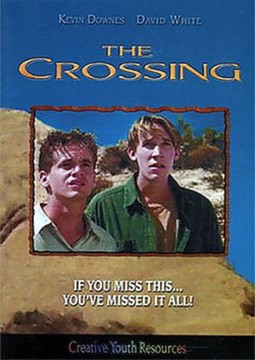
October Positivity: The Crossing (dir by John Schmidt)


The 1994 film, The Crossing, tells the story of two teenage friends.  Jason (Kevin Downes) and Matt (David A.R. White) used to be cheerful juvenile delinquents.  But now, Matt is dying of what appears to be leukemia and Jason …. well, Jason’s in denial.  Jason does not want to admit that his best friend is going to die.  But then his best friend does die and Jason really doesn’t have any choice to admit it.  But then, at Matt’s funeral, Matt suddenly shows up and starts talking to Jason.

That’s right …. MATT’S BACK!

Unfortunately, Matt’s only back for a little bit and only Jason can see him.  Having died, Matt has not only witnessed Heaven but also discovered that it’s really difficult to get in.  He takes Matt to a heavenly court where they watch as another one of their friends is condemned to Hell by a sympathetic but firm-handed judge.  Matt also visits the big computer room where all of the records are kept.  He’s given a big dot-matrix printout that lists all of his sins.  There’s a lot of them!

However, Jason tells Matt that there’s still hope for him and then invites him to come check out Heaven.  They just have to walk over a wooden cross that is used as bridge between Purgatory and Heaven.  Underneath the bridge is Hell and no one wants to go down there.  However, no sooner have Matt and Jason crossed over than Jason notices that his mother is following them!  And she can’t see the bridge!  Uh-oh!

The Crossing is an early example of the Christian scare film, where the main message is that, if you displease God, you’ll go to Hell and suffer for all eternity.  Obviously, that’s a very cinematic message and these films always seem to spend a good deal of time in trying to find new ways to visualize Hell.  That said, I’ve always felt like that message was a bit counter-productive.  Instead of emphasizing what Jesus preached and what the Church is supposed to stand for (even if it rarely lives up to its own standards), these films instead seem to say, “Convert or we’ll punish you forever.”  People will do a lot of things under the threat of eternal pain and damnation but I’m a bit skeptical as to how sincere any of those actions will be.  Indeed, many evangelical films seem to take a bit too much pleasure in imagining people being condemned to Hell.  There’s definitely an element of, “You think you’re so smart but we’ll get the last laugh!” to these films.  That’s not exactly the best attitude.

That said, The Crossing is slicky produced and it gets a lot of mileage out of its low budget.  The scene in the computer room actually had a few intentional laughs as Matt marveled at how business-like and matter-of-fact all the record keepers were.  They were just doing their jobs with an attitude that said, “We’ve seen things you can’t even imagine.”  Who wouldn’t want that job?  Still, one has to wonder why Matt got to go see all of this and change his life but his friend who was condemned to Hell didn’t.  That doesn’t seem quite fair.

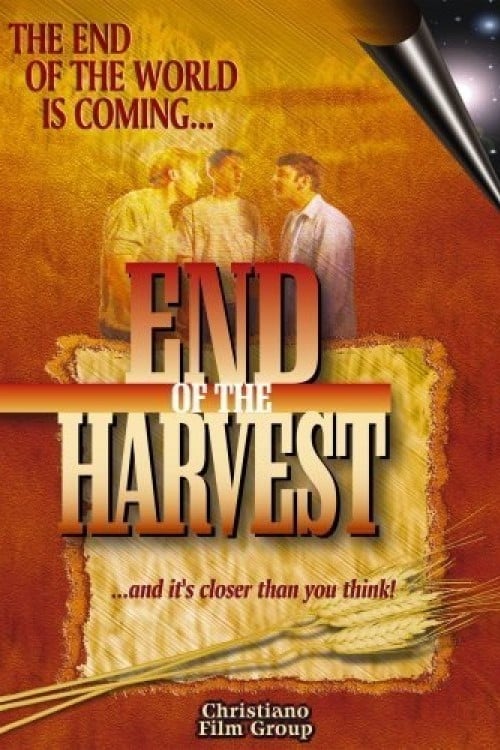
October Positivity: End of the Harvest (dir by Rich Christiano)


This 1995 film takes place on a college campus that is ruled over by the worst possible people …. THE PHILOSOPHY CLUB!

Okay, that might be an exaggeration.  It’s a big campus and undoubtedly, most of the students are just doing their own thing and don’t particularly care about any of the clubs or any of the Greek organizations or any of that stuff.  That said, it does seem like a surprisingly large amount of people are interested in the weekly Philosophy Club debates, despite the fact that the Philosophy Club itself seems to only have three members.

After seeing his religious friend get totally trampled while trying to debate the existence of God, Scott (Brad Heller) decides that it’s time to take a stand.  Scott used to be a wild frat boy and he even lost his license due to a DUI.  But now, he’s super Christian and he’s totally excited because he found a 50 year-old thesis about when the Bible says the world is going to end.  Scott challenges the Philosophy Club to a debate and soon, flyers are being put up all over campus.

The only problem is that Scott isn’t ready for the debate.  The Philosophy Club has uncovered the secrets of Scott’s dark past and, after they harass him on campus and start calling his ex-girlfriends, Scott starts to feel that he won’t be able to make his case.  He begs Matt (David A.R. White) for help but Matt says that it’s pointless to try to debate anything in front of the Philosophy Club.  The Philosophy Club doesn’t care about anything but Marx and Nietzsche.  Matt not only thinks that the debate will be a waste of time but he also thinks that it will actually drive people away from religion.

Of course, Matt has another reasons for not wanting to talk about the end of the world.  He’s been having odd dreams, in which he’s standing in a wheat field and watching an old farmer using a scythe to bring in the last harvest….

There have been several faith-base films that have been set on campus and they all have the same basic plot.  A religious person goes to college and has their faith tested by people who were raised differently and who insist that science or philosophy can serve as a substitute for religion.  It always seems to lead to a classroom debate and the religious student usually wins because all of the arguments have been slanted to their side.  Of course, it’s not just Christian films that do this.  If there’s one thing that Christians and atheists share in common, it’s an almost total ignorance about how the other side views the world and the questions of existence.  Anti-Christian films always fall back on the stereotype of the fanatical parents who refuse to allow their children to leave the house.  Christian films, on the other hand, always seem to feature an atheist who is angry at God.  End of the Harvest doesn’t go quite as far into those stereotypes as some other Christian films do but it’s still hard not to notice that the bizarrely smug members of the Philosophy Club are left speechless by some pretty basic arguments.  It’s the fantasy that both atheists and Christians tend to indulge in, the one where you come up with the pithy one-liner that no one can refute.  Christians always want to know how you can be angry at a God you don’t believe in.  Atheists always want to know, if God created everything, who created God.  In the real world, both arguments can be easily refuted but, in the movies, they’re always game changers.

End of the Harvest is a fairly standard religion-on-campus film.  It’s not going to convert anyone.  That said, the scenes of Matt standing in that wheat field have a nicely surreal feel to them.  In those scenes, it really does feel like the end is coming.