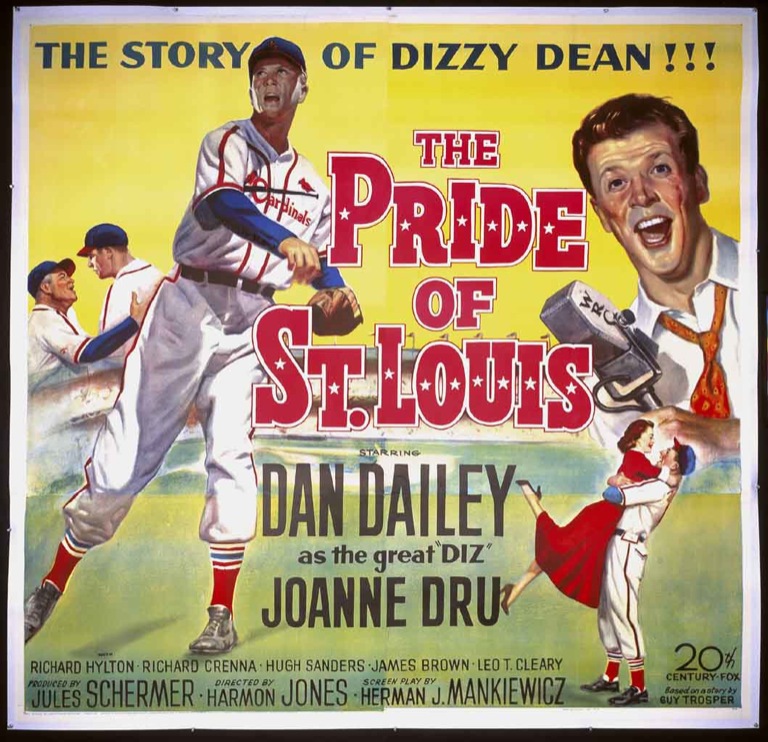
The Unnominated #16: The Mortal Storm (dir by Frank Borzage)


Though the Academy of Motion Picture Arts and Sciences claim that the Oscars honor the best of the year, we all know that there are always worthy films and performances that end up getting overlooked.  Sometimes, it’s because the competition too fierce.  Sometimes, it’s because the film itself was too controversial.  Often, it’s just a case of a film’s quality not being fully recognized until years after its initial released.  This series of reviews takes a look at the films and performances that should have been nominated but were, for whatever reason, overlooked.  These are the Unnominated.

Oh, how this movie made me cry!

Released in 1940, at a time when war was spreading across Europe, Asia, and Africa but the United States was still officially neutral, The Mortal Storm opens on January 30th, 1933.  In the mountains of Germany, near the Austrian border, Professor Viktor Roth (Frank Morgan) is celebrating his 60th birthday.  He starts the day being applauded by his students at the local college.  In the evening, he returns home for a celebration with his family, including wife (Irene Rich), his daughter Freya (Margaret Sullivan), his son Rudi (Gene Reynolds), and his two stepsons, Otto (Robert Stack) and Erich von Rohn (William T. Orr).  Also present are Freya’s fiancé, Fritz (Robert Young) and one of Roth’s students, a pacifist named Martin Breitner (James Stewart).  It’s a joyous occasion and the film takes its time introducing us to Prof. Roth and his extended family.  At first, everyone seems very kind.  They seem like people who most viewers would want to spend time with or live next to….

But then, the family’s maid excitedly enters the room and announces that it’s just been announced that Adolf Hitler is the new chancellor of Germany.  Otto and Erich are overjoyed and head out to celebrate with the other members of the Nazi Youth Leage.  Martin is less happy and excuses himself to return home.  Roth and his wife worry about what this means for people who do not agree with Hitler’s beliefs.  Freya says that they shouldn’t talk politics.  It is jokingly mentioned that Hitler has taken away Roth’s special day but Roth’s young son Rudi says that he’s learned in school that the needs of the individual will never be more important than the needs of the state.  If Hitler wants to take away your day, it’s your duty to give it up or face the consequences.

Based on a 1937 novel, The Mortal Storm was not the first Hollywood production to take a stand against Hitler and the Nazis but it was one of the best.  I say this despite the fact that the film only hints at the fact that Prof. Roth is Jewish, something that was made very clear in the book.  (In the movie, Roth and his wife worry what will happen to “Non-Aryans” and “freethinkers.”)  That said, the film perfectly captures how quickly and insidiously the authoritarian impulse can spread.  The town, which once seemed so friendly, becomes a very dark place as the students at the university put on their swastika armbands and start to hunt down anyone who dissents from the party line.  When Roth says that, as a scientist, he does not believe one race can be genetically superior to another, his students walk out on him.  A local teacher is beaten when he fails to return to the Nazi salute.  When Martin refuses to join the Party, Otto and Erich turn against him despite being lifelong friends.  When Martina and Freya flee for the border, Fritz pursues them.  And even after Prof. Roth is sent to a concentration camp, Otto and Erich continue to follow the orders of Hull (Dan Dailey), the sinister Youth Party Leader.

It’s a powerful film, one that remains just as relevant today as it was when it was first released.  Hull and Erich’s fanaticism would, today, find a welcome home on social media.  The scenes in which the townspeople eagerly threaten to report their former friends and neighbors for failing to salute or show proper enthusiasm for the government have far too many modern day equivalents for me to even begin to list them all.  This film was also the last the James Stewart made with frequent co-star Margaret Sullivan and they both give great performances.  (All-American Jimmy Stewart might seem a strange choice to play a German farmer but he is never less that convincing as Martin, one of the few people in the town not to surrender his principles and beliefs to the crowd.)  The film’s final moments, with the camera panning around the empty Roth home, brought very real tears to my eyes.

Despite being a powerful film, The Mortal Storm was not nominated for a single Oscar.  (Jimmy Stewart did win his only Oscar that year but it was for The Philadelphia Story.)  It’s temping to assume that, at a time when America was still divided about how to react to the war in Europe and when many Americans still remembered the trauma of the first World War, The Mortal Storm was too explicitly political and anti-Nazi to get a nomination but, the same year, The Great Dictator was nominated for Best Picture.  It seems more likely that, in those days when the studios ruled supreme, MGM decided to puts it weight behind The Philadelphia Story rather than The Mortal Storm.

That said, The Mortal Storm was definitely worthy of being nominated, for Picture, Director, Screenplay, Actress (Margaret Sullivan), Actor (Stewart), Supporting Actor (Frank Morgan and Robert Stack), and Supporting Actress (Irene Rich and, in the role of Stewart’s mother, Maria Ouspenskaya).  The film may not have been nominated but it remains a powerful and important work of art.
Previous entries in The Unnominated:
  1. Auto Focus 
  2. Star 80
  3. Monty Python and The Holy Grail
  4. Johnny Got His Gun
  5. Saint Jack
  6. Office Space
  7. Play Misty For Me
  8. The Long Riders
  9. Mean Streets
  10. The Long Goodbye
  11. The General
  12. Tombstone
  13. Heat
  14. Kansas City Bomber
  15. Touch of Evil

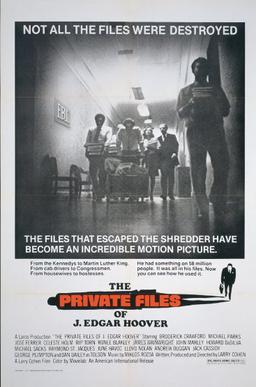
18 Days of Paranoia #3: The Private Files of J. Edgar Hoover (dir by Larry Cohen)


The 1977 film, The Private Files of J. Edgar Hoover, opens in 1972.

J. Edgar Hoover, the much-feared and long-serving director of the FBI, has just been found dead at his home and it seems like the entire city of Washington, D.C. is scrambling.  Not only are people jockeying for Hoover’s job but they’re also wondering what might be found in his secret files.  As quickly becomes apparent, Hoover had a file on everyone.  While Presidents lauded him and the press portrayed him as hero, Hoover spent nearly 50 years building up a surveillance state.  Hoover said it was to fight criminals and subversives but mostly, it was just to hold onto his own power.  Even President Nixon is heard, in the Oval Office, ordering his men to get those files.

Hoover may have known everyone’s secrets but, the film suggests, very few people knew his.  The film is narrated by a former FBI agent named Dwight Webb (Rip Torn).  Dwight talks about how he was kicked out of the FBI because it was discovered that he not only smoked but that he was having an adulterous affair with a secretary.  “You know how Hoover was about that sex stuff,” he says, his tone suggesting that there’s more to the story than just Hoover being a bit of a puritan.

We flash back to the 1920s.  We see a young Hoover (James Wainwright) as a part of the infamous Palmer Raids, an early effort by the Justice Department to track down and deport communist subversives.  Though Hoover disagrees with the legality of the Palmer Raids, he still plays his part and that loyalty is enough to eventually get him appointed, at the age of 29, to be the head of the agency that would eventually become the FBI.  Hoover may start out as a relatively idealistic man but it doesn’t take long for the fame and the power to go to his head.

Hoover (now played by Broderick Crawford) serves a number of Presidents, each one worse the one who proceeded him.  Franklin Delano Roosevelt (Howard Da Silva) is an avuncular despot while the Kennedy brothers (William Jordan as John and Michael Parks as Bobby) are two rich brats who think that they can control Hoover but who soon discover that Hoover is far more clever than they realize.  Hoover finds himself a man out-of-place in the 60s and the 70s,  Suddenly, he’s no longer everyone’s hero and people are starting to view the FBI as being not a force for law enforcement but instead an instrument of oppression.

Through it all, Hoover remains an enigma.  He demands a lot of from his agents but he resents them if they’re too successful.  Melvin Purvis (Michael Sacks) might find fame for leading the manhunt that took down Dillinger but he’s driven to suicide by Hoover’s cruel treatment.  Unlike Clint Eastwood’s film about Hoover, The Private Files of J. Edgar Hoover suggests that Hoover was not gay but that instead, that he was so repressed that he was essentially asexual.  When one woman throws herself at him, he accuses her of being a subversive and demands to know how anyone could find him attractive.  He’s closest to his mother and when she dies, he shuts off his emotions.  His own power, for better and worse, becomes the one thing that he loves.  He’s married to the FBI and he often behaves like an abusive spouse.

The Private Files of J. Edgar Hoover is an interesting film.  It’s an attempt to do a huge American epic on a less than epic budget.  At the start of the film, the low budget is undeniably distracting.  The 1920s are essentially represented by a back lot and two old cars.  The scenes of the FBI dealing with gangsters like Dillinger and Creepy Karpis feel awkward and slapdash.  But, as the film’s timeline gets closer to what was then the modern era, the film’s story tightens up and so does Larry Cohen’s direction.  (One get the feeling that Cohen was, perhaps understandably, more interested in the Hoover of the 60s and the 70s than the Hoover of the 20s and 30s.  There’s a sharpness to the second half of the movie that is just missing from the first half.)  Broderick Crawford gives a chilling performance as a man who is determined to hold onto his power, just for the sake of having it.  The scenes were Hoover and Bobby Kennedy snap at each other have a charge that’s missing from the first half of the film.  Michael Parks does a great job portraying RFK as basically being a spoiled jerk while Crawford seems to relish the chance to play up the resentful, bitter old man aspects of Hoover’s personality.  The film ultimately suggests that whether the audience previously admired RFK or whether they previously admired Hoover, they were all essentially duped.

Though the film never quite overcomes the limits of its low budget, it works well as a secret history of the United States.  In 1977, it undoubtedly took guts to make a film that portrayed Roosevelt and Kennedy as being as bad as Nixon and Johnson.  (It would probably even take guts today.  One need only rewatch something like The Butler or Hyde Park on Hudson to see the ludicrous lengths Hollywood will go to idealize presidents like Kennedy and dictators like FDR.)  While this film certainly doesn’t defend J. Edgar Hoover’s excesses, it often suggests that the president he served under were just as bad, if not even worse.  In the end, it becomes a portrait of not only how power corrupts but also why things don’t change, regardless of who is nominally in charge.  In the end the film’s villain is not J. Edgar Hoover.  Instead, the film’s villain is the system that created and then enabled him.  The man may be dead but the system remains.

Previous entries in the 18 Days of Paranoia:

  1. The Flight That Disappeared
  2. The Humanity Bureau


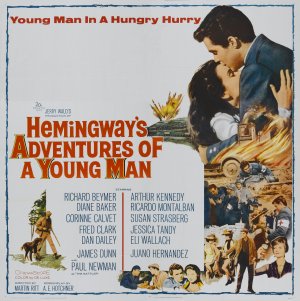
Lisa Cleans Out Her DVR: Hemingway’s Adventures Of A Young Man (dir by Martin Ritt)


(Lisa is currently in the process of cleaning out her DVR!  It’s going to take a while.  She recorded this 1962 literary adaptation off of FXM on January 30th!)

Hemingway’s Adventures Of A Young Man is one of those films that you just know was made specifically to win Oscars.  It’s a big prestige production, complete with a historical setting, an epic scope and big, all-star cast.  That most of those stars appear in relatively small roles was undoubtedly meant to evidence of the film’s importance.

“Look!” the film seems to shout at times, “This is such an important film that even Paul Newman was willing to stop by for a day’s work!”

The film is based on ten short stories by Ernest Hemingway and, loosely, A Farewell to Arms.  The stories all dealt with the early life of Nick Adams, who was a literary stand-in for Hemingway.  Since the Nick Adams stories were autobiographical (and, for that matter, so was A Farewell to Arms), the film can also be viewed as biopic.  Richard Beymer (who, a year earlier, had starred in West Side Story and who is currently playing Ben Horne on Twin Peaks) may be playing Nick Adams but the film leaves little doubt that he was actually meant to be playing Ernest Hemingway.

The film opens with Nick hunting with his father, Dr. Harold Adams (Arthur Kennedy).  He is present when his father travels to an Indian camp and helps to deliver a baby.  He respects his father but Nick wants to see the world and the film follows him as he explores America, working odd jobs and meeting colorful characters along the way.  Paul Newman shows up as a punch-drunk boxer and proceeds to overact to such an extent that he reminded me of Eric Roberts appearing in a Lifetime film.  Nick meets rich men, poor men, and everything in between.  He works as a journalist.  He works as a porter.  Eventually, when World War I breaks out, Nick enlists in the Italian army and the film turns into the 100th adaptation of A Farewell to Arms.

And really, I think it would have been an enjoyable film if it had been directed by someone like Otto Preminger, George Stevens, or maybe even Elia Kazan.  These are directors who would have embraced both the pulpy potential of the Nick Adams stories and the soapy melodrama of the war scenes.  A showman like Preminger would have had no fear of going totally and completely over the top and that’s the approach that this material needed.  Instead, Hemingway’s Adventures Of A Young Man was directed, in a painfully earnest style, by Martin Ritt.  Ritt tries to imitate Hemingway’s famously understated style with his understated direction but, cinematically, it’s just not very interesting.  Ritt portrays everything very seriously and very literally and, in the end, his direction is more than a little dull.

Sadly, the same can be said for Richard Beymer’s performance in the lead role.  Beymer comes across as being the nice guy who everyone says you should marry because he’ll be able to get a good and stable job and he’ll probably never go to jail.  Two months ago, when I watched and reviewed Twin Peaks, I really loved Beymer’s performance as Ben Horne.  He just seemed to be having so much fun being bad.  Unfortunately, in Hemingway’s Adventures Of A Young Man, he never seemed to be having any fun at all.  No wonder he temporarily put his film career on hold so that he could fully devote himself to working as a civil rights activist.

In the end, this is a movie that’s a lot more fun to look at than to actually watch.  Visually, the film is frequently quite pretty in an early 1960s prestige movie so sort of way.  And there are some good performances.  Eli Wallach, Ricardo Montalban, Susan Strasberg, Arthur Kennedy — there’s a whole host of performers doing memorable supporting work.  Unfortunately, even with all that in mind, this well-intentioned film largely falls flat.

Wild Pitch: THE PRIDE OF ST. LOUIS (20th Century-Fox 1952)


gary loggins's avatarcracked rear viewer

diz1

Jerome Herman “Dizzy” Dean, ace pitcher of the St. Louis Cardinals’ famed “Gashouse Gang” in the 1930’s, gets the Hollywood biopic treatment in this pleasant little film. The malaprop prone Dizzy was one of the game’s greats before an unfortunate injury, leading to him becoming a well-loved broadcaster. The film sticks fairly close to the facts, as Dean was a colorful enough character to need little embellishment.

diz4

THE PRIDE OF ST. LOUIS follows Dean’s career as he’s discovered pitching in his Arkansas hometown, through the minors, and finally to big league success with the Cardinals. Along the way he woos and wins the love of his life, Patricia. Soon his brother Paul joins the team, and the pair become as well-known for their off-field antics as for their pitching prowess.

The movie takes a turn when Dizzy is injured during an All Star Game and tries to come back too soon. His arm is ruined, but Dizzy can’t…

View original post 516 more words