Retro Television Review: Fantasy Island 6.16 “Return To The Cotton Club/No Friends Like Old Friends”


Welcome to Retro Television Reviews, a feature where we review some of our favorite and least favorite shows of the past!  On Tuesdays, I will be reviewing the original Fantasy Island, which ran on ABC from 1977 to 1984.  Unfortunately, the show has been removed from most streaming sites.  Fortunately, I’ve got nearly every episode on my DVR.
This week, we’re traveling in time!

Episode 6.16 “Return to the Cotton Club/No Friends Like Old Friends”

(Dir by Don Weis, originally aired on February 26th, 1983)

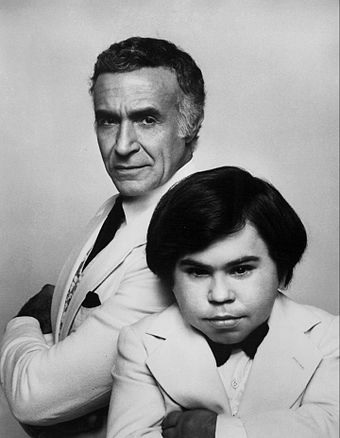
Aspiring singer Charlie Whelan (Lou Rawls) wants to go back to a time where all that mattered was talent.  As he tells Roarke and Tattoo, it’s all about image and connections now.  Charlie wants to go back to the Cotton Club, the famous New York club where blacks were allowed to perform on stage while gangsters sat in the audience.  Roarke sends Charlie back in time and soon, Charlie is at the Cotton Club.  He meets Dutch Schultz (J.D. Cannon).  He befriends the club’s manager, Gus Kelly (Yaphet Kotto).  He falls for another singer, Linda (Berlinda Tolbert).

The first thing I noticed about this fantasy is that The Cotton Club looked really cheap.  It looked like an old VIP lounge in an airport.  It was kind of tacky.  The other thing I noticed is that the fantasy wasn’t historically accurate.  The Cotton Club was not owned by Dutch Schultz.  In fact, Schultz had little to do with The Cotton Club.  The gangster who owned the Cotton Club was Owney Madden, an Irish gangster who eventually left New York City for Hot Springs, Arkansas.  In the show’s defense, the man who Charlie knew as Dutch Schultz was eventually revealed to be another guest who was having a fantasy of his own.  I’ve always had mixed feelings about Roarke’s habit of combining fantasies.  I feel like a guest should only have to pay half-price if their fantasy is going to mixed up with somebody else’s.

As for this fantasy, it was okay.  Lou Rawls certainly gave a better performance here than he ever did on Baywatch Nights.  And Yaphet Kotto was a charming as ever, even if his role was, again, not historically accurate.  (The Cotton Club may have hired black performers but otherwise, it was heavily segregated.)  I like almost anything involving 1930s gangsters.  I can’t help it.  They had style.

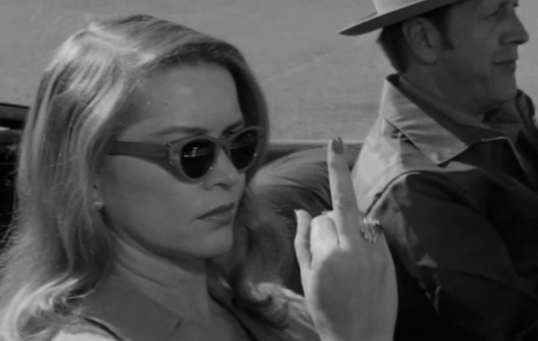
As for the other fantasy, Doreen Murphy (Markie Post) wants to have a reunion with her friends from college.  Doreen asks Roarke to make her rich and beautiful so that she can shame all of the people who never believed in her.  Roarke gives her a magic necklace that changes her from being a brunette to being a blonde.  That’s all it takes!  One of Doreen’s friends is Liz (Cybill Shepherd).  Liz is married to the unfaithful Al (Lyle Waggoner), who takes an interest in Doreen.  Doreen learns a lesson about true beauty being more than just an appearance.  She also learns that people don’t dislike her as much as they dislike her bitter attitude.  Doreen gives the necklace to Liz so that Liz can get her cheating husband back.  Good, I guess.

This was an uneven trip to the Island.  Neither story was particularly compelling.  The Cotton Club fantasy at least had Yaphet Kotto.  Otherwise, this was a forgettable trip.  The writers really didn’t even seem to be trying to come up with anything unexpected or surprising.  At least the Island continues to look lovely.
Embracing The Melodrama: The Client List (dir by Eric Laneuville)


In 2010’s The Client List, Jennifer Love Hewitt stars as Samantha Horton.

Samantha’s a former beauty queen whose mother (Cybill Shepherd) always hoped would go on to win Miss Texas and then maybe appear in movies and on television.  Instead, Samantha got knocked up by her boyfriend, Rex (Teddy Sears).  Rex was a football star at UT so marrying him didn’t seem like it would be a dead-in but then Rex blew out his knee.  Now, they’re living in small town Texas, they’ve got three children, and they’ve got a bank threatening to foreclose on their home.  When Samantha and Rex head down to the bank, their loan officer spends the entire time staring at Samantha’s chest while Samantha reveals that she has a photographic memory.

Desperately needing a job and with Rex drinking away his troubles, Samantha gets a job at a massage parlor the next town over.  Naively, Samantha assumed that her job would actually just be to give men massages.  Instead, it turns out that the massage parlor is actually a brothel where the workers continually tell each other that it “beats the heck out of waitressing.”

(They don’t say “heck” but I gave up cursing for Lent.)

At first, Samantha is disgusted by the idea of working as a prostitute.  But, with Rex drinking too much and the house about to bet taken away, Samantha goes back to the parlor and soon becomes the most popular person working there.  She works herself to exhaustion but one of her clients has just the solution for that.  “I’ve never even smoked weed before,” Samantha says while looking at the baggie of cocaine.  I’m sorry …. you dated someone who went to UT without ever smoking weed?  I don’t buy that.

Samantha can now stay awake for hours, going to work and buying her family a lot of Christmas presents.  Samantha’s clients include some of the most powerful men in the county.  When one of her co-workers confesses to having doubts about the job, Samantha sends her to a church group so she’ll have someone to talk to.  Soon, words gets out that the massage parlor is a house of prostitution and Samantha is getting arrested and led out of the parlor in her underwear while TV cameras roll.  “That looks kind of like your wife,” someone says to Rex.

The Client List caused quite a stir when it aired on Lifetime back in 2010.  (It also led to a TV series where Jennifer Love Hewitt starred as a different character.)  It’s an enjoyably sordid story, one that embraces the melodrama and mixes morality and sex in a way that would have made Cecil B. DeMille proud.  The film takes place in my homestate and, fortunately, it stars a lot of Texas-born actors so the accents are authentic, even if the dialogue was obviously written by a Yankee.  (“She’s as busy as popcorn,” a character said at one point and I nearly went blind from rolling my eyes.)  That the film actually carries some emotional weight is totally due to the lead performance of Jennifer Love Hewitt, who I’ve always liked because we’re both Texas girls and we’ve both got big boobs so I feel like we share the same struggle.  Hewitt gives an authentic and heartfelt performance here, leaving no doubt that everything that Samantha does, she does for her family.  The Client List is a true Lifetime classic.

Flat Broke In The ’70s: Americathon (1979, directed by Neal Israel)


The year is 1998 and America is flat broke.  Paper currency is now worthless and, to the joy of Ron Paul supporters everywhere, all transactions are done in gold.  After the country ran out of oil, people started using skateboards and bicycles for transportation and many turned their cars into homes.  While the citizenry spends their time consuming a steady diet of sitcoms and reality television, the government tries to figure out how to pay back the loan that it took from Sam Birdwater (Chief Dan George), a Native American who made billions after buying Nike.  Birdwater wants his money back and he is prepared to foreclose on the entire country.
Newly elected President Chet Roosevelt (John Ritter) is not helping.  A combination of Jack Tripper and Jerry Brown (who was gearing up to challenge Jimmy Carter in the Democratic primaries when Americathon was first released), Chet Roosevelt is a spaced-out former governor of California who speaks in 70s self-help slogans and who is more interested in getting laid than leading the country.  Roosevelt governs out of The Western White House, a condo in California.  When an ad exec named Eric McMerkin (Peter Reigert) suggests a month-long telethon to raise the money to pay off the loan, Roosevelt leaps at the chance.

Hosted by Harvey Korman, the telethon (which is called, naturally, the Americathon) features a wide variety of acts.  There’s a ventriloquist.  Jay Leno boxes his grandmother.  Meat Loaf destroys a car.  Even Elvis Costello and Eddie Money make brief appearances.  While Chet falls in love with one of the performers, his chief-of-staff (Fred Willard) plots, with the leaders of a new Middle Eastern superstate, to sabotage the telethon.

Based on a play by the Firesign Theater, Americathon has a big, talented cast that is let down by Neal Israel’s uncertain direction and a script that is only rarely funny.  The idea of America hosting a tacky telethon to pay its debts sounds like a good SNL skit (especially if Bill Murray played the host) but the premise is too thin for a feature film.  Like Airplane! or The Naked Gun films, Americathon is a movie that tosses every joke it can against the wall to see what will stick.  If the jokes are good, like in Airplane!, that formula can lead to a comedy classic.  If the jokes are bad, not even John Ritter, Harvey Korman, and Fred Willard can make them funny.

Today, if Americathon is remembered, it’s because it supposedly predicted several future events.  Americathon does take place in a future where China is an economic superpower, Nike is a huge conglomerate, and reality game shows are very popular.  But, even with those correct predictions, Americathon is a such a film of its time that it was probably dated from the minute that it was released.  Just the sight of John Ritter in a condo permanently marks Americathon as a film of and about the ’70s.

George Carlin does score a few laughs as the narrator and Elvis Costello performs both Crawlin’ To The USA and (I Don’t Want To Go To) Chelsea.  Eagle-eyed viewers might want to keep an eye out for the tragic Playboy playmate, Dorothy Stratten, who has a brief non-speaking role.  Otherwise, Americathon is as hopeless as the country it’s trying to save.

Shattered Politics #39: Taxi Driver (dir by Martin Scorsese)


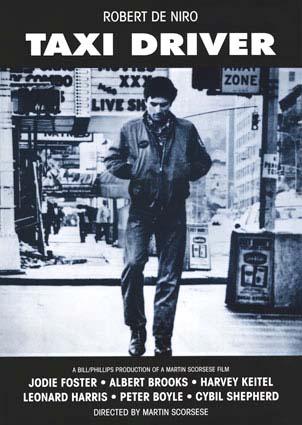
Taxi_Driver_poster

We’ve never had a President named Charles.  We’ve had several Presidents named John and a quite a few named James.  We’ve even had three named George.  But we’ve never had a Charles.  We’ve come close.  Charles Evans Hughes nearly beat evil old Woodrow Wilson in 1916.  Charles Cotesworth Pinckney was nominated two times in a row by the Federalists but lost to Thomas Jefferson and James Madison respectively.  We’ve had three Vice Presidents names Charles — Fairbanks, Dawes, and Curtis — but never a President.

And, if we ever do elect a President named Charles, he’s probably go by either Charlie or Chuck.  The United States has always liked to think of itself as being a country that has no official royal family and, as a name, Charles probably sounds far to aristocratic for most voters.

That’s why I’m sure that, once U.S. Sen. Charles Palatine won the Democratic presidential nomination back in 1976, he probably insisted that people start calling him Chuck.  Of course, Sen. Palatine probably had no idea how lucky he was to win that nomination.  If not for a few secret service agents, Sen. Palatine could very well have fallen victim to a psychotic taxi driver named Travis Bickle.

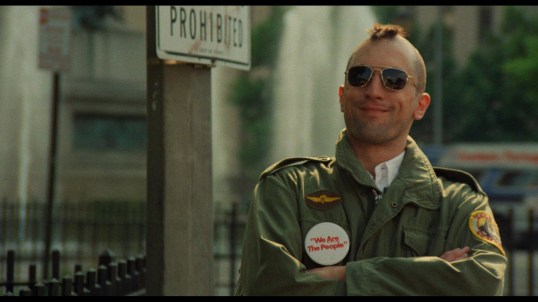
Sen. Palatine’s presidential campaign is a major subplot of Martin Scorsese’s 1976 masterpiece of paranoia, Taxi Driver.  As played by an actor named Leonard Harris, Sen. Palatine appears to be the epitome of a politician.  He may smile at the right moment but his eyes are always shifty.  Even his campaign slogan (“We Are The people!”) is vapid in an all too plausible way.  (How different is “We Are the People” from “We Are The People We’ve Been Waiting For?”)  For the most part, Palatine remains a remote figure, giving speeches and appearing in television commercials.  The only time that we get to know Palatine as a person is when he gets in a taxi being driven by Travis Bickle (Robert De Niro).

Travis recognizes him immediately and tells him that he tells everyone who gets in the cab that “they gotta vote for you.”  Palatine smirks a little as he asks Travis what he thinks the most important issue of the election is.  Travis goes on a bit about how someone needs to destroy all of the scum and filthy lowlifes who seem to populate Travis’s section of New York.  As Travis rambles, Palatine’s smile disappears and it becomes obvious that he’s realized that he is essentially being driven by a psycho.  Oh shit, Palatine is probably thinking, this guy is telling people that they gotta vote for me?  However, Palatine quickly regains his composure and assures Travis that the wisest people that he’s ever met have been taxi drivers.

Of course, what Palatine doesn’t realize is that Travis only knows about the campaign because he happens to be obsessed with a Palatine campaign worker named Betsy (Cybill Shepherd).  And Betsy even goes out with Travis a few times.  But then Travis, who spends the majority of the film showing how little skill he has when it comes to understanding and relating to other people, takes Betsy to an adult film.

With Betsy refusing to take his calls, Travis’s attention shifts to Iris (Jodie Foster), a teenage prostitute.  Obviously seeing himself as being a knight in shining armor, Travis tells Iris that she has to go back home to her parents.  As Travis talks, it becomes apparent that he’s simply repeating talking points that he’s heard on TV.  (If Taxi Driver was made today, Travis would be one of those people constantly sharing “inspirational” Facebook posts.)  Iris laughs at Travis and goes back to her pimp, Sport (Harvey Keitel).

And, of course, Travis goes even crazier than before.

38 years after it was first released, Taxi Driver remains a disturbing and powerful film.  However, what makes it effective is that, in many ways, it’s perhaps the darkest comedy ever made.  Throughout the entire film, Travis essentially tells everyone that he meets that he’s disturbed and potentially dangerous and, throughout the entire film, everyone seems to be determined to ignore all of the signs.

Critics always talks about the scene where Travis points a gun at his mirror and asks, “You talkin’ to me?”  And that’s a great scene.  It deserves to be famous, just as De Niro deserves all of the praise that he’s gotten for his iconic performance in Taxi Driver.

However, for me, there are two other scenes that are just as brilliant.  The first is where Travis attempts to get some advice from an older cabbie named Wizard (Peter Boyle).  Travis says he’s been having a lot bad thoughts.  Wizard shrugs and says that everyone has those.  What makes this scene particularly memorable are the lengths that Wizard goes to in order to avoid acknowledging that Travis is obviously disturbed.

And then, there’s the scene where Travis buys a gun from Easy Andy (Steven Prince).  Andy is such a salesman and is so nonchalant about all of his weaponry that, for a few brief minutes, Steven Prince actually manages to steal the spotlight from Robert De Niro.

Whenever one thinks about Taxi Driver, one automatically pictures Robert De Niro.  That’s why it’s all the more interesting that De Niro was not the first choice for Travis.  When Taxi Driver was in pre-production and a pre-Jaws Steven Spielberg (of all people) was thinking about directing it, Jeff Bridges as briefly attached to the role.  And while it’s always tempting to think about what a Spielberg/Bridges version of Taxi Driver would look like, I think we’re all right to be happy that the actual film was directed by Scorsese and starred De Niro.  They truly made Taxi Driver into one of the most memorable films ever made.

taxi-driver-mohawk

Back To School #11: The Last Picture Show (dir by Peter Bogdanovich)


Monday is the first day of school down here in Dallas so it seems only appropriate that this latest entry in our Back to School series should be a look at one of those most quintessential Texas films ever made, the 1971 best picture nominee, The Last Picture Show.

http://www.youtube.com/watch?v=3YQomR5xJ_Y

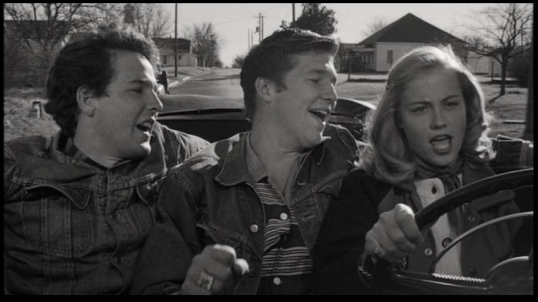
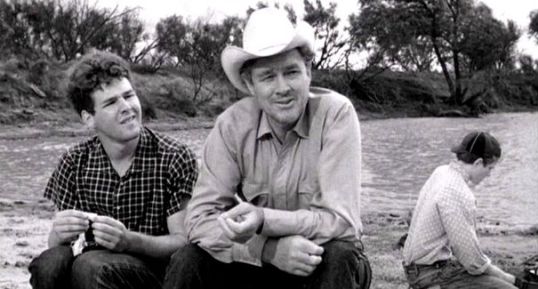
Directed by Peter Bogdanovich and based on a novel by Larry McMurtry, The Last Picture Show takes place in 1951 and tells the story of two high school seniors, best friends Sonny Crawford (Timothy Bottoms) and Duane Jackson (Jeff Bridges, reminding us once again why everbody loves him).  Sonny and Duane live in the rural town of Anarene, Texas.  With little to look forward to in the future, beyond perhaps getting a job working in the oil fields, Sonny and Duane are both intent on enjoying their final year of high school.  Sometimes, that means driving down to Mexico for the weekend.  Sometimes, it means going to the only theater in town and seeing a movie.  Most of the time, however, it means hanging out in a pool hall owned by the strict but fatherly Sam (Oscar winner Ben Johnson).  Often times they are accompanied by the intellectually disabled Billy (Sam Bottoms), who responds to everything with a blank smile and spends most of his spare time wandering around with a broom, futilely trying to sweep the dusty streets.

last-picture-show

The charismatic and impetuous Sonny is dating the beautiful and self-centered Jacy Farrow (Cybil Shepherd), who is the daughter of the wealthiest woman in town.  Jacy knows that her cynical mother (Ellen Burstyn) is having an affair with an oil worker named Abilene (Clu Gulager) but she’s more concerned with her own future.  Even though she’s dating Sonny, Jacy still accepts an invitation from the awkward Lester Marlow (played by a memorably goofy Randy Quaid) to attend a naked indoor pool party.  At the party, she meets Bobby Sheen (Gary Brockette), who is rich and will be able to provide her with the future that Duane never will.  However, Bobby tells Jacy that he isn’t interested in her because she’s a virgin.  If nothing else, this gives Jacy a reason to stay with Duane, at least until after they have sex.

Meanwhile, the far more sensitive Sonny ends up having an affair with Ruth Popper (Cloris Leachman, who won an Oscar for her performance in this film), the wife of the high school football coach.  It appears that Sonny truly cares about Ruth but then he finds himself being tempted by none other than his best friend’s girlfriend…

Sonny and Ruth

At heart, The Last Picture Show really is basically a small town soap opera, a Texas version of Peyton Place.  The difference between the two films — beyond the fact that The Last Picture Show just happens to be a 1oo times better than Peyton Place — is that The Last Picture Show doesn’t take place in a beautiful, idealized small town.  Instead, the town of Anarene is a believably bleak location, one that will be familiar to anyone who, like me, grew up in the American southwest.  A good deal of the success of The Last Picture Show is due to the fact that it was actually filmed on location in Archer City, Texas.

(Nothing annoys me more than when I see the mountains of California in the background of a movie that’s supposed to be taking place in North Texas.  We don’t have mountains up here.  For the most part, we don’t even have hills.  The land is flat.  You can see forever, if you know where to look.)

Of course, you can’t talk about The Last Picture Show without talking about Robert Surtees’s stunning black-and-white cinematography.  Not only does the black-and-white remind us that this is a film about a fading way of life but it drives home the fact that Sonny and Duane don’t have much to look forward to.  Growing up in Anarene means they are destined for lives without color or excitement.  In the end, can you really blame them for occasionally acting before they think?

Ben Johnson

Ultimately, the success of The Last Picture Show is due to a lot of things.  This was Peter Bogdanovich’s second film as a director and he did such an excellent job here that he’s basically spent the rest of his career trying to live up to this one film.  (That said, Bodganovich also left his wife for Cybill Shepherd — despite the fact that his wife was the one who suggested that he make this film and cast Cybill in the first place!  Don’t worry though — Polly Platt got her revenge by having a far more successful career than her ex-husband and she even produced Say Anything, a film that we will soon be looking at.)  The screenplay, by McMurtry and Bogdanovich, is full of sharp dialogue and memorable characters.  As for the performers, this is probably one of the best acted films ever made.  Jeff Bridges and Timothy Bottoms play off each other well, Cybill Shepherd is the epitome of casual destructiveness, and Ben Johnson is brilliantly cast as the film’s moral center.  My favorite performance comes from Ellen Burstyn, who delivers every line with just the right combination of contempt and ennui.

Ellen Burstyn in The Last Picture Show

Ellen Burstyn in The Last Picture Show

If you’re a Texan, The Last Picture Show is one of those films that you simply have to see.  And if you don’t enjoy it and if you don’t relate to at least a few of the characters (I related to Jacy, though I like to think that I’m a lot nicer in the way I treat people), then you’re not a real Texan.

It’s as simple as that.

the-last-picture-show-poster