Film Review: Jackie Brown (dir by Quentin Tarantino)


It took me a while to really appreciated Jackie Brown.

I was nineteen and in college when I first watched the movie.  A friend rented it and we watched it with the expectation that it would be another Tarantino film that would be full of violence, fast music, and stylish characterizations.  And, of course, Jackie Brown did have all three of those.  But it was also a far more melancholy film than what we were expecting and compared to something like Kill Bill, Jackie Brown definitely moved at its own deliberate pace.  That’s a polite way of saying that, at times, the film seemed slow.  It seemed like it took forever for the story to get going and, even once it became clear that Jackie Brown (Pam Grier) and Max Cherry (Robert Forster) were going to steal from Ordell Robbie (Samuel L. Jackson), it still felt like an oddly laid back heist.  Robert de Niro, the film’s biggest star, played a guy who seemed to be brain dead.  Bridget Fonda brought an interesting chaotic energy to the film but her character was disposed of in an almost off-hand manner.  The whole thing just felt off.  I appreciated the performances.  I appreciated the music on the soundtrack.  But I felt like it was one of Tarantino’s weaker films.

As I’ve gotten older, I’ve come to better appreciate Jackie Brown.  First released in 1997 and adapted from a novel by Elmore Leonard, Jackie Brown finds Quentin Tarantino at his most contemplative.  Indeed, Tarantino wouldn’t direct anything quite as humanistic until he did Once Upon A Time In Hollywood.  If the heist seemed rather laid back, that’s because Jackie Brown really isn’t a heist film.  It’s a film about aging, starring two icons of 70s exploitation.  Robert Forster was 56 when he played bail bondman Max Cherry while Pam Grier was 48 when she was cast as Jackie Brown, the flight attendant turned smuggler.  Jackie and Max two middle-aged people faced with a world that doesn’t really make much sense to them anymore.  (Obviously, it’s easier for me to understand them now than it was when I was nineteen and I felt like the future was unlimited.)  Max bails people out of jail and it’s obvious that he still has a shred of idealism within him.  He actually does care about the people he gets out of jail and he’s disgusted by Ordell’s callous attitude towards the people who work for him.  Jackie is a flight attendant who, when we first see her, looks like she could have just stepped out of a 1970s airline commercial.  Ripping off Ordell isn’t just something that she’s doing for revenge or to protect herself, though there’s certainly an element of both those motivations in her actions.  This is also her chance to finally have something for her.  Jackie and Max are two lost souls who find each other and wonder where the time is gone.  All of those critics who have wondered, over the years, when Quentin Tarantino would make a mature movie about real people with real problems need to rewatch Jackie Brown.

Of course, it’s still a Quentin Tarantino film.  And that means we get a lot of scenes of Samuel L. Jackson talking.  This is one of Jackson’s best performances.  Ordell is definitely a bad guy and most viewers will be eager to see him get his comeuppance but, as played by Jackson, he’s also frequently very funny and definitely charismatic.  One can understand how Ordell lures people into his trap.  Jackson loves to watch video tapes of women shooting guns.  He allows De Niro’s Louis to crash at his place and the scene where Ordell realizes that Louis is thoroughly incompetent is brilliantly acted by both men.  And then you have Bridget Fonda, as a force of pure sunny chaos.  Jackson, De Niro, and Fonda are definitely a watchable trio, even if the film rightly belongs to Pam Grier and Robert Forster.

The older I get, the more I appreciate Jackie Brown.  This is the film where Tarantino revealed that there was more to his artistic vision than just movie references and comic book jokes.  This film takes Tarantino’s style and puts it in the real world.  It’s Tarantino at his most human.
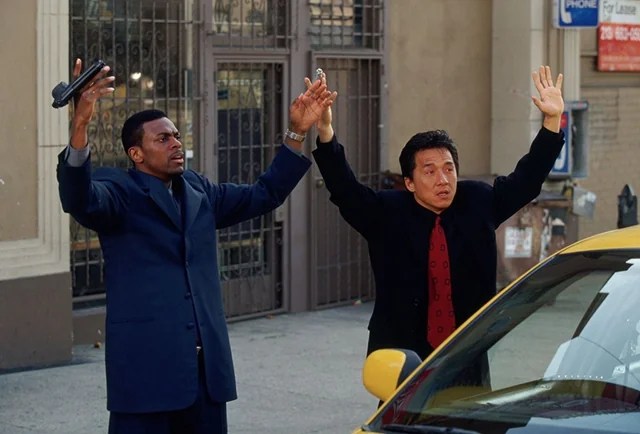
RUSH HOUR – 1998, a special year for this fan of Hong Kong action cinema!


1998 was certainly a special year for me as a fan of Hong Kong cinema but first let me provide a little context… After 150 years of British rule, Hong Kong was being handed over to communist China on July 1, 1997. This left a lot of uncertainty in Hong Kong’s local film industry. Because of that uncertainty, many of Hong Kong’s most popular filmmakers decided it was time to take their talents abroad. Director John Woo had already left for America in the early 90’s and had made successful films like HARD TARGET, BROKEN ARROW and FACE/OFF. This gets us to 1998, the year that many of Hong Kong’s biggest action stars would release their first American films. Chow Yun-fat would reprise his popular, honorable hitman role in his first American film, THE REPLACEMENT KILLERS, which was produced by John Woo and directed by Antoine Fuqua. Jet Li would make a strong impact as the badass villain in the 4th installment of the LETHAL WEAPON franchise. And then there’s Jackie Chan, probably the biggest of all the Hong Kong movie stars. Jackie had been banging around Hollywood as early as 1980 without a lot of fanfare in the west. But in 1996 Chan had a solid American box office hit when his Hong Kong production RUMBLE IN THE BRONX was dubbed and released in America. Armed with that success and a sizable budget provided by an American studio, Chan would get his own big release in 1998, the action-comedy RUSH HOUR!

In RUSH HOUR, Jackie Chan plays inspector Lee, a Hong Kong police detective who’s also a friend to Chinese Consul Han (Tzi Ma), currently serving in Los Angeles. When Consul Han’s daughter Soo Yung is kidnapped, he asks Lee to come to America to assist him and the FBI in rescuing her. The FBI doesn’t really want Lee’s help so they ask the Los Angeles police department to assign someone, anyone, to stay with Lee and keep an eye on him so he doesn’t get in the way of their investigation. Enter fast-talking, LAPD Detective James Carter. After some initial clashes and disagreements, the mismatched duo eventually begins working together to find the criminal mastermind behind the kidnapping, Juntao.

I watched RUSH HOUR at the movie theater on my birthday in 1998. I loved every second of it. A few weeks later I was on a business trip in Chicago, I told my boss how good the film was, and we went to see it as well. I enjoyed it just as much the 2nd time. I’m a big fan of “buddy cop” films like LETHAL WEAPON and BAD BOYS, and RUSH HOUR is an excellent addition to that sub-genre of action films. Jackie Chan and Chris Tucker have an excellent chemistry together. Their comedic interplay is hilarious and entertaining. It’s one of the main reasons I enjoy the movie so much. Jackie Chan was 44 years old when RUSH HOUR was released, but he was still extremely athletic so his brand of martial arts action and comedy still worked. The movie would go on to gross just short of $250 million at the worldwide box office and establish Jackie Chan as a bonafide star in the American film market. 2001’s RUSH HOUR 2 would be an even bigger hit, making almost $350 million worldwide. No one works harder or gives more of himself to his film productions than Jackie Chan, and it was nice seeing him achieve the truly worldwide success that he had earned! 

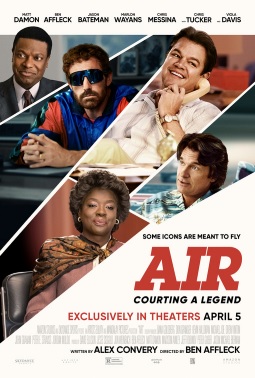
Film Review: Air (dir by Ben Affleck)


Air opens with a montage of the 80s.  Ronald Reagan is President.  MTV is actually playing music.  Wall Street is full of millionaires.  Sylvester Stallone is singing with Dolly Parton for some reason.  Because the specific year is 1984, people are nervously giving George Orwell’s book the side-eye.  Everyone wants an expensive car.  Everyone wants a big house.  Everyone wants the world to know how rich and successful and special they are.

What no one wants is a pair of Nike basketball shoes.  All of the major players are wearing Adidas and Converse while Nike is viewed as being primarily a company that makes running shoes.  CEO Phil Knight (played by Ben Affleck) is considering closing down the basketball shoe division.  Sonny Vaccaro (Matt Damon), however, has a plan that he thinks will save the division.  Instead of recruiting three or four low-tier players to wear and endorse Nike shoes, Sonny wants to spend the entire division’s budget on just one player.  Sonny is convinced that a young Michael Jordan is destined to become one of the best players in the history of basketball and he wants to make a shoe that will be specifically designed for Jordan.

The problem is that Michael Jordan doesn’t want to have anything to do with Nike because Nike is not viewed as being a cool brand.  Jordan wants to sign with Adidas, though he’s considering other offers as well.  He also wants a new Mercedes.  Even though everyone tells Sonny that he’s wasting his time and that he’ll be responsible for a lot of people losing their jobs if he fails, Sonny travels to North Carolina to make his pitch personally to Jordan’s mother (Viola Davis).

For it’s first 50 minutes or so, Air feels like a typical guy film, albeit a well-directed and well-acted one.  Almost all of the characters are former jocks and the dialogue is full of the type of good-natured insults that one would expect to hear while listening to a bunch of longtime friends hanging out together.  For all the pressure that Sonny is under, the underlying message seems to be one of wish fulfilment.  “Isn’t it great,” the film seems to be saying, “that these guys get to hang out and talk about sports all day?”  When Sonny runs afoul Michael Jordan’s agent, David Falk (Chris Messina), one is reminded of the stories of temperamental film executives who spent all day yelling at each other on the telephone.  The efforts to sign Jordan feel a lot like the effort to get a major star to agree to do a movie and it’s easy to see what attracted Damon and Affleck to the material.  Even though the majority of the film takes place in the Nike corporate offices, it deals with a culture that Damon and Affleck undoubtedly know well.

But then Jason Bateman delivers a great monologue and the entire film starts to change.  Despite his reluctance to sign with Nike, Michael Jordan and his family have agreed to visit the corporate headquarters.  Sonny has a weekend to oversee the creation of the shoe that will hopefully convince Jordan to sign.  When Sonny shows up for work, he’s excited.  But then he has a conversation with Rob Strasser (Jason Bateman), the head of marketing.  Strasser talks about his divorce and how he only sees his daughter on the weekends.  Every weekend, Rob brings his daughter the latest free Nike stuff.  His daughter now his 60 pairs of Nike shoes.  Rob admits that, even if he loses his job, he’ll probably still continue to buy Nike shoes because that’s now what his daughter expects whenever she sees him.  Rob compares Sonny’s plan to the Bruce Springsteen song Born in the USA, in that the tune sounds hopeful but the lyrics are much darker.  If the plan succeeds, Nike will make a lot of money.  If it fails, Rob and everyone in the basketball division will be out of a job and that’s going to effect every aspect of their lives.  Rob points out that Sonny made his decision to pursue only Michael Jordan without thinking about what could happen to everyone else.  Sonny says that success requires risk.  Rob replies that Sonny’s words are spoken, “like a man who doesn’t have a daughter.”

It’s an honest moment and it made all the more powerful by Bateman’s calm but weary delivery of the lines.  It’s the moment when the film’s stakes finally start to feel real, even though everyone knows how the story eventually turned out.  As well, it’s in this moment that the film acknowledges that the Air Jordan legacy is a complicated one.  Rob talks about how the shoes are manufactured in overseas sweatshops.  Later, when discussing whether or not Michael Jordan should get a percentage of the sales, Jordan’s mother acknowledges that the shoes aren’t going to be cheap to purchase.  They’re going to be a status symbol, just as surely as the Mercedes that Jordan expects for signing with the company.  Air becomes much like that Springsteen song.  On the surface, it’s a likable film about a major cultural moment, full of dialogue that is quippy and sharply delivered without ever falling into the pompous self-importance of one of Aaron Sorkin’s corporate daydreams.  But, under the surface, it’s a film about how one cultural moment changed things forever, in some ways for the better and in some ways for the worse.

It’s an intelligent film, one the creates a specific moment in time without ever falling victim to cheap nostalgia.  Matt Damon gets a brilliant monologue of his own, in which he discusses how America’s celebrity culture will always attempt to tear down anyone that it has previously built up.  Ben Affleck plays Nike’s CEO as being an enigmatic grump, alternatively supportive and annoyed with whole thing.  As for Michael Jordan, he is mostly present in only archival footage.  An actor named Damian Delano Young plays him when he and his parents visit Nike’s corporate headquarters but, significantly, his face is rarely show and we only hear him speak once.  In one of the film’s best moments, he shrugs his shoulders in boredom while watching a recruitment film that Nike has produced to entice him and, because it’s the first reaction he’s shown during the entire visit, the audience immediately understands the panic of every executive in the room.

Air is a surprisingly good film.  It’s currently streaming on Prime.

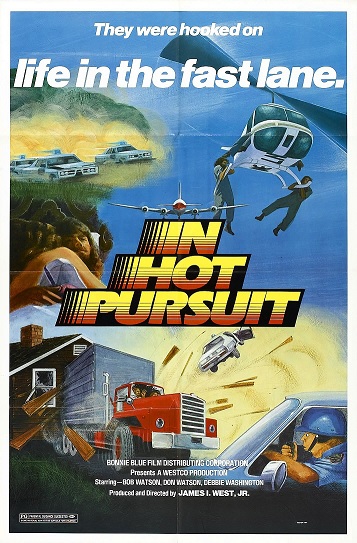
Monday Live Tweet Alert: Join Us For In Hot Pursuit and Rush Hour 2!


As some of our regular readers undoubtedly know, I am involved in hosting a few weekly live tweets on twitter.  I host #FridayNightFlix every Friday, I co-host #ScarySocial on Saturday, and I am one of the five hosts of #MondayActionMovie!  Every week, we get together.  We watch a movie.  We tweet our way through it.

Tonight, for #MondayActionMovie, the film will be 1977’s In Hot Pursuit!  Selected and hosted by me, this Southern drive-in epic features drug smugglers, an airplane, a helicopter, and an RV!  It also features a cast made up of a combination of real-life cops and hippied!  The movie starts at 8 pm et!  Here’s the playlist!


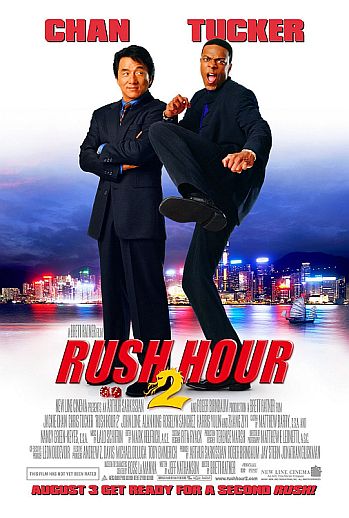
Following #MondayActionMovie, Brad and Sierra will be hosting the #MondayMuggers live tweet.  We will be watching Jackie Chan and Chris Tucker in 2001’s Rush Hour 2!  This film is available on Netflix and HBOMax!


It should make for a night of fun viewing and I invite all of you to join in.  If you want to join the live tweets, just hop onto twitter, start the In Hot Pursuit playlist  at 8 pm et, and use the #MondayActionMovie hashtag!  Then, at 10 pm et, start Rush Hour 2, and use the #MondayMuggers hashtag!  The live tweet community is a friendly group and welcoming of newcomers so don’t be shy.    

Hope to see you there!

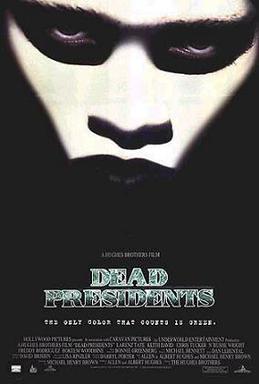
Dead Presidents (1995, directed by the Hughes Brothers)


In 1969, Anthony (Larenz Tate) graduates from high school in the Bronx and shocks his family by announcing that he will not be following in his brother’s footsteps by enrolling in city college but that he will instead be enlisting in the Marines and going off to fight in Vietnam.  While his friends taunt him for choosing to fight in a “white man’s war,” Anthony thinks that serving in the Marines will make him a man.  His two biggest heroes, his father and the local numbers boss, Kirby (Keith David), both served in Korea.  Kirby’s even lost his his leg in the war but he can still keep order in the neighborhood.

Vietnam doesn’t turn out to be what Anthony was expecting.  He serves two tours of duty and becomes an efficient killing machine but he is also forced to do things that will haunt him long after the war is over.  When Anthony finally returns to the Bronx in 1971, the old neighborhood has changed.  Crime, drugs, and poverty are destroying the community and Anthony struggles to support his girlfriend (Rose Jackson) and his daughter.

Finally, with no other opportunities available and feeling as if his country has abandoned him, Anthony agrees to take part in an armored car robbery.  Working with him are a few friends from the old days and a few members of the revolutionary Nat Turner Cadre.  Anthony thinks that he has the robbery planned out perfectly but nothing ever goes as planned.

In 1993, The Hughes Brothers made their directorial debut with Menace II Society, an incendiary film that holds up as one of the best feature debuts of any filmmaker.  Their follow-up to Menace II Society was Dead Presidents.  While Dead Presidents operates on a more epic scale than Menace II Society, it’s also a far more uneven film.  While the first part of the film (which follows Anthony and his friends during their final days of high school) is strong, things start to fall apart once the action moves to Vietnam.  The Hughes Brothers tried to recreate the Vietnam War on a Grenada Invasion budget and the action never feels credible.  When Anthony returns to the Bronx, Dead Presidents regains some of its footing but the eventual armored car heist is never as exciting as it could be.

Still, Dead Presidents has enough good moments that it’s always watchable.  Larenz Tate gives a good performance as Anthony and he’s surrounded by the some of the best black character actors of the 90s.  Keep an eye out for a young and incredibly obnoxious Terrence Howard, playing an aspiring gangster and getting a deserved beating at the hands of Anthony.  Though the movie often bites off more than it can chew, it does do a good job of seriously dealing with the issues that returning vets have to contend with when they come back home.  Anthony suffers from PTSD, which is something that a lot of people didn’t talk about in 1995, and the Hughes Brothers deserve much credit for their sensitive handling of the topic.  Dead Presidents may not be perfect but it’s impossible not to admire the film’s ambition.

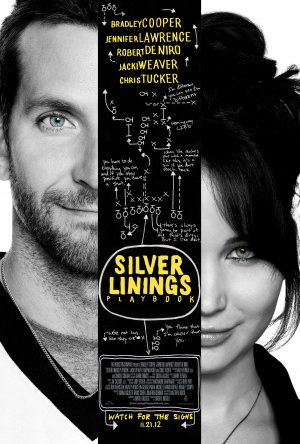
Quick Review: Silver Linings Playbook (dir. by David O. Russell)


slpIn Silver Linings Playbook, Pat Solitano (formerly Pat Peoples in the novel written by Matthew Quick, played by Bradley Cooper) is recently released from a mental hospital to the care of his parents. Obsessed over reclaiming the love of his ex-wife, Nikki, he sets out on exercising and reading books to become better when he sees her again. Working under the notion that positivity, mixed with great effort can lead to a Silver Lining, he uses this new outlook to focus on his goal. Of couse, this doesn’t happen without some hiccups. There’s one key scene in the film where he asks his parents where his wedding tape is, and starts tearing through boxes around the house searching for it. With Led Zeppelin’s “What Is And What Should Never Be” blasting in the background as everything escalated, I had an Anton Ego Ratatouille moment.

My mom had this thing where she’d shift from High to Low. Some days would be quiet, but if the wrong word or event happened, she’d explode either into a fit of activity or anger. We would be sometimes careful to not trigger this – “set her off”, she would say. My clearest memory is of having Alice in Chains’ “Don’t Follow” turned up really loud on the family stereo (and on repeat by her request) as she proceeded to break various objects in her bedroom. She isn’t the only one in the family who has that happen with her. My cousin has this thing where at night she has to check all of the burners on the stove at least 2 times before she’s satisfied they’re fine and off. She says she knows everything’s correct the first time, but says she needs to be sure.

We all have our quirks. When people burp around me, I feel compelled to say “Bless You”. It’s only right.

So, sitting in the theatre and watching Silver Linings Playbook, it all felt very familiar to me. The great thing -and possibly the problem near the very end – about it is that the film isn’t completely A Beautiful Mind in it’s sense of seriousness. I’ll admit I found myself smiling and laughing through a lot of it, just as much as I winced during Pat’s trouble spots. As he returns home, he finds his father (Robert DeNiro in a fine performance) already skeptical about him, but content that he has his son back to watch the Philadelphia Eagles games and to be his lucky charm. After being invited to dinner by one of his friends, Pat meets Tiffany (Jennifer Lawrence), who seems to be just as different as he is and he discovers that she’s been in contact with Nikki. She’ll help send word to her about how he’s doing (because a restraining order keeps him from doing so), if he will help her perform in a dance contest. This ends up starting a good friendship between the two and we start to find that Pat is doing better as things progress.

Director David O’Russell keeps the story centered on the two leads. Both Cooper and Lawrence are energetic and have this really great chemistry between them that makes it feel like they had a lot of fun working on this movie. What’s better is that there isn’t a single person in the supporting cast that doesn’t feel like (to me, anyway) that they were miscast or out of step. They could make a tv series with this cast, and it would be watchable. O’Russell also changes the nature of the story in his adaptation, making the dance sequence itself a major focus on the growth between Tiffany and Pat (and by extension, the family and friends). He also eliminates a side story where Pat’s mom leaves his father because of the Dad’s obsessive nature with the Eagles, choosing to replace it with some more heartfelt and/or moments between DeNiro and Cooper (who coindentially worked together in Limitless). I felt it tightened up the story overall.

Another element I enjoyed was the film’s use of music. Stevie Wonder’s “My Cherie Amour” serves as a song that’s important to the story (in the same way that Kenny G’s “Songbird” was to the novel) and as I mentioned before, the Zeppelin song also worked. Alabama Shakes, which are a group new to me, also had a good song with “Always Alright”. The music of the film felt similar to Juno for me in a lot of ways.

The only problem I had with Silver Linings PlayBook, the only thing that didn’t work for me was the way the film ended. Dealing with something as serious as any kind of mental disorder, especially one where there are meds involved, it’s a serious thing. I’m not saying that one in Pat’s situation can’t be with anyone, far from it, but the film paints a picture at the end that everything will be just fine and simple. I don’t know I agree with that. Fine, perhaps, but certainly not simple. Granted, the story sets up such a social tapestry for Pat that if anything were to go wrong, he’d have people who would rally behind him. The ending just makes it seems that he no longer has any quirks and possibly robs an otherwise perfect from a bit of reality.

Overall, the Silver Linings Playbook is a feel good film that’s definitely worth seeing, with an ensemble cast that helps to elevate the great performances by both Jennifer Lawrence and Bradley Cooper. The lack of a heavy-handed nature towards the issues with the main character help the comedic elements of it, but also stutter steps it at the very end for me.