Retro Television Review: Fantasy Island 7.4 “God Child/Curtain Call”


Welcome to Retro Television Reviews, a feature where we review some of our favorite and least favorite shows of the past!  On Tuesdays, I will be reviewing the original Fantasy Island, which ran on ABC from 1977 to 1984.  Unfortunately, the show has been removed from most streaming sites.  Fortunately, I’ve got nearly every episode on my DVR.
This week, the curse of Lawrence continues.

Episode 7.4 “God Child/Curtain Call”

(Dir by Ted Lange, originally aired on October 29th, 1983)

Tori Spelling is in this episode.  She was only ten years old at the time but she was already a terrible actress.   In the role of Laurie, a poor little rich girl whose fantasy is to ask God why her parents died in a crash, Spelling gives a performance that is overly cutesy.  There’s nothing authentic about her or her delivery.  Her role on the show was obviously a result of her father being the producer.

Laurie doesn’t find God.  (At first, she assumes Roarke is God but he assures her that he is not, despite the fact that he has God-like powers.  Ricardo Montalban, for his part, said that he always felt that Roarke was a fallen angel who was doing penance on Fantasy Island.)  Laurie does however find Adam Cobb (George Kennedy), a former circus clown-turned-alcoholic who briefly pretends to be God.  At first, Laurie hates Adam for lying about being God.  Then Mr. Roarke explains that Adam’s wife died in a circus fire and that his own daughter was adopted by another family.  Laurie feels sorry for him and invites Adam to come live in her mansion with her aunt.  Adam considers it but ultimately decides that he needs to instead search for his own daughter.  In a rather bizarre turn of events, he dances with Laurie while singing Funny Face to her.

As for Laurie meeting God, Adam suggests that maybe there’s a bit of God in everyone and therefore, we’re all God.  Whatever, you hippie.

This storyline was ugh.  Like seriously, just ugh.  Laurie didn’t get her fantasy.  She just met some old alcoholic who spouted a bunch of a Unitarian mumbo jumbo at her.  As for Adam leaving the Island to find his own daughter …. well, did he?  This episode doesn’t tell us.  How exactly is he going to find her?  Does she want anything to do with him?  How was the penniless Adam able to afford a trip to Fantasy Island in the first place?

AND WHERE THE HELL IS TATTOO!?

Meanwhile, Milton Berle played an old comedian who wanted his former partners (Imogene Coca and Howard Morris) to forgive him so that they could perform together one last time.  This storyline felt very familiar and it featured a lot of singing.  Even Mr. Roarke sang a song.  It’s actually kind of strange how many songs were sung in this episode because this wasn’t a musical episode.  This wasn’t like that musical episode of The Love Boat where the songs were evenly distributed across the program.  Instead, towards the end of the episode, people just started singing.  It was weird.

Speaking of The Love Boat, this episode was directed by Isaac himself, Ted Lange.  Lange keeps the action movie but I just wish this episode had been better written.  This is another episode where it’s easy to imagine how much better it would have been with Tattoo than with Lawrence.  Tattoo would have definitely gotten emotionally involved with Laurie’s search for God.  Lawrence, on the other hand, is just a stiff upper lip butler whose main concern is making sure everyone gets their drink order.  It’s nothing against Christopher Hewett, who I have read was a good Catholic.  It’s just that he’s stuck playing a character who does not belong on the Island.

This was a pretty desultory trip to the Island.
 

Retro Television Review: Fantasy Island 6.20 “What’s The Matter With Kids/Island of Horror”


Welcome to Retro Television Reviews, a feature where we review some of our favorite and least favorite shows of the past!  On Tuesdays, I will be reviewing the original Fantasy Island, which ran on ABC from 1977 to 1984.  Unfortunately, the show has been removed from most streaming sites.  Fortunately, I’ve got nearly every episode on my DVR.

This week, it’s zombie time!

Episode 6.20 “What’s The Matter With Kids/Island of Horror”

(Dir by Don Weis, originally aired on April 16th, 1983)

Dr. Stuart Wharton (Steve Allen) is a tightass stick-in-the-mud who has come to Fantasy Island to give a lecture on how to raise the perfect child.  His wife, Margaret (Jayne Meadows Allen), is sick of Dr. Wharton telling people how to live their lives and basically threatens to leave his condescending ass if he doesn’t allow her to adopt Andy (Justin Henry), who is not perfect but who is still better than any of the imaginary perfect children that Dr. Wharton has written and lectured about.  This fantasy was predictable and kind of boring.  Jayne Meadows Allen actually wrote the script so it’s interesting that the whole fantasy is basically her telling off her husband and accusing him of being a pompous jackass.

There is one interesting scene where Mr. Roarke talks about Stuart’s idea of the perfect child and the kid suddenly appears out of thin air.  Mr. Roarke also makes the kid disappear.  Mr. Roarke is all-powerful!

(So, you may be wondering, why Roarke doesn’t just use his God-like powers in every episode?  I think he wants his guests to sometimes lean a lesson on their own.  I always hate it when people try to make me learn something.  Sorry, Roarke.)

Meanwhile Erica Nelson (Gayle Hunnicutt) goes to a neighboring island in search of her missing fiancé, Dr. Richard Yates (Christopher Connelly).  Uh-oh!  The Island’s controlled by a mad scientist named Dr. Christophe (Jared Martin)!  And Dr. Christophe is into voodoo!

That’s right, there are zombies all over the place!  And one of the zombies is Erica’s husband!  Fortunately, it turns out that zombification is not a permanent condition and Erica is eventually able to cure her husband while the remaining zombies descend upon Dr. Christophe.

I liked this fantasy.  The island was atmospheric and, by Fantasy Island standards, the zombies were actually pretty effective.  The scene of them rising from their graves was surprisingly well-done and I also appreciated that Jared Martin totally embraced the melodrama in the role of Dr. Christophe.  This fantasy also featured a great moment where Roarke appeared on the Island to inform Erica that the zombies were coming and then he promptly vanished.  I love it when Roarke does that

(Of course, I don’t think that Erica was ever in any real danger.  I mean, this episode established that Roarke can conjure people out of thin air.  I’m sure he could have just snapped his fingers and made all the zombies vanish.  But, in typical Roarke fashion, he wanted Erica to learn a lesson.)

The orphan fantasy was annoying but I like zombies!  This was a good trip to the Island.

Retro Television Review: St. Elsewhere 2.1 “Ties That Bind”


Welcome to Retro Television Reviews, a feature where we review some of our favorite and least favorite shows of the past! On Fridays, I will be reviewing St. Elsewhere, a medical show which ran on NBC from 1982 to 1988.  The show can be found on Hulu and, for purchase, on Prime!

This week, we start season 2!

Episode 2.1 “Ties That Bind”

(Dir by Bruce Paltrow, originally aired on October 26th, 1983)

The second season is here and there are changes to be found in the opening credits.

David Birney and G.W. Bailey are no longer listed in the opening credits.  I’m not sorry to see Birney go as Dr. Samuels was never that interesting of a character.  I will miss Bailey’s performance as Dr. Beale.

Norman Lloyd is now listed in the credits, appearing right after Ed Flanders.  Ellen Bry, Kim Miyori, and Eric Laneuville are also now listed in the opening credits.  That’s good.  Last season, Shirley Daniels (played by Ellen Bry) was one of the most important characters on the show and it always seemed strange that she was left out of the opening.  Mark Harmon, sporting a mustache, appears in the credits, though he didn’t appear in this episode.  The final addition to the opening credits is Nancy Stafford, who does appear in this episode.

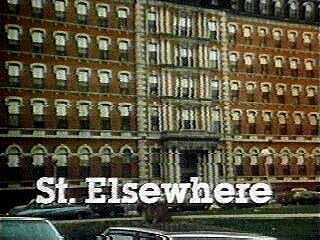
Stafford plays Joan Halloran, the new city budget advisor who has been assigned to cut St. Eligius’s budget.  She tells Westphall and Auschlander that St. Eligius is not popular downtown.  “They call you St. Elsewhere,” she says.  Joan wants to do away with the animal research lab, which is a part of the hospital that has never been mentioned before.  (And with good reason.  Boo, animal research, boo!)  Westphall finally agrees, on the condition that the city fund Dr. Craig’s attempt to perform a heart transplant on teacher Eve Leighton (Marian Mercer).

Wisely, Dr. Craig gets a lot of screentime in this episode.  If the first season seemed to often be unsure of just how abrasive the show should allow Craig to be, the second season premiere would seem to suggest that the show’s writers realized that the more abrasive Craig is, the better.  Of course, Dr. Craig has good reason to be in a bad mood.  As he confesses to Nurse Rosenthal, he caught his son doing drugs.  Craig explains he kicked him out of the house and now, he wants nothing to do with him.

Speaking of drugs, orderly Luther (played by Eric Laneuville) finally manages to capture the thief who has been stealing all the drugs from the hospital.  Dr. White is no longer under suspicion!  Yay, I guess.  I don’t know.  Dr. White wasn’t in much of this episode but he still cames across as being a jerk.  I have to admit that I groaned a little when I saw he was still on the show.  A part of me is hoping he’ll get a redemption arc this season but, from his behavior during rounds, he still seems to be a jackass.

Speaking of jackasses, when Jerry Singleton (Alan Arkin) discovers that his wife, Fran (Piper Laurie), has had a stroke, he responds by crashing his car into the ER and then refusing to leave the doctors along while they try to save his wife’s life.  Jerry is convincing that he knows everything and he’s very demanding.  Naturally, Fran’s doctor is Jack Morrison because Morrison always gets the really depressing cases.  Fran does wake up from her coma but she neither speaks no seems to hear anything anyone says to her.  I can’t imagine this is going to end well, mostly because she’s Morrison’s patient and things never seem to go well when Morrison is involved.  (What’s really sad is that Morrison, unlike Peter White, is a good doctor!  He just has rotten luck.)

Shirley Daniels finds out that Fiscus is cheating on her with Kathy Martin, who spends most of this episode promoting cryogenics.  Shirley responds by dumping Fiscus and telling him that he’s a pig.  Fiscus tells Kathy that they no longer have to sneak around, just for Kathy to say that the sneaking around was the whole point.  She promptly dumps Ficus.

Finally, Dr. Ehrlich meets a woman, Bobbi (Jean Bruce Scott) at the laundromat.  They go back to her apartment.  She strips down to her underwear.  She has Ehrlich tie her to the bed.  Ehrlich realizes that he has to get something from his car so he runs outside and …. gets locked out.  And then he nearly gets arrested while trying to use his credit card to open the building’s door.  However, the next day, Bobbi shows up at the hospital for her “encounter group,” and the two of them are reunited.  Again, I have a feeling this is not going to end well, just because it involves Dr. Ehrlich.

Hey, this episode was pretty good!  It moved quickly, it reintroduced us to the cast, and all of the stories were actually fairly interesting.  It’s obvious that show’s producers paid attention with what didn’t work during season one and they made an effort to improve things with season two.  Compared to the majority of this first season’s episodes, the pace was quicker, the humor was sharper, and just about everyone got a moment or two to shine.  I’m looking forward to next week!

The Munsters (2022, directed by Rob Zombie)


Have you ever wondered how Herman and Lily Munster came to live at 1313 Mockingbird Lane?

No?

That’s too bad, because Rob Zombie is going to tell you anyways.

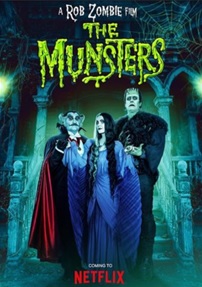
Rob Zombie’s The Munsters is a prequel to the 60s sitcom of the same name.  It shows how Herman Munster (Jeff Daniel Phillips) came to be created, how he became a Rob Zombie-style rock star, and how he overcame the opposition of the Count (Daniel Roebuck) and married Lily (Sheri Moon Zombie).  It also shows how Lily’s brother, Lester (Tomas Boykin), tricked Herman into signing over the deed for the Count’s castle in Transylvania.  There’s not much of a plot but there was never much of a plot when it came to the original sitcom either.  Just like the show that the movie is based on, The Munsters exists to show classic monsters making corny jokes and freaking out at the prospect of dealing with what the rest of the world considers to be normalcy.  Unlike the multi-faceted Addams Family, The Munsters have always been a one-joke family.

There have always been elements of satire and subversive humor in everything that Rob Zombie has done, as both a musician and a director.  Those who claim that Rob Zombie does not have a sense of humor are mistaken.  However, the comedy in The Munsters is deliberately broad and vaudevillian, like the show on which the movie is based.  As a director, Zombie doesn’t always seem to know how to best present that type of humor.  The Munsters is the rare movie that would have benefitted from a laugh track because the jokes are definitely sitcom-level.  They were designed to be followed by canned laughter.  Zombie’s affection for the material and the characters come through and the deliberately artificial production and costume design actually works better than I was expecting but, at nearly two hours, The Munsters often feels directionless.  

Jeff Daniel Phillips and Daniel Roebuck do adequate imitations of Fred Gwynne and Al Lewis, respectively, but its Sheri Moon Zombie who steals the show, bringing a lot of mischievous energy to Lily.  Of the principle cast, Sheri Moon Zombie is the only one makes her character feel like something more than just a tribute to an old sitcom.  The camera loves her and she convinces us that she loves Herman, no matter how childishly he behaves.

One final note: Sylvester McCoy — the seventh doctor, himself! — plays the Count’s assistant, Igor.  McCoy doesn’t get to do much but it was still good to see him.  Igor was the type of role that Tom Baker used to specialize in before he was cast as the Fourth Doctor.  By casting McCoy as Igor, it almost felt as if Zombie was keeping the role in the family.

Allan Quatermain and The Lost City Of Gold (1987, directed by Gary Nelson)


Having previously discovered and escaped King Solomon’s mines, Allan Quatermain (Richard Chamberlain) and Jesse Huston (Sharon Stone) are now living in a domestic bliss in Africa.  They’re planning on eventually returning to America so that they can get married but it turns out that Allan has one more quest that he has to complete before he can truly settle down.

When Allan receives information that his long last brother is not only still alive but has also discovered a fabled Lost City of Gold, Allan sets out to discover the city for himself.  Traveling with Jesse and an old friend named Umslopogaas (James Earl Jones!), Allan makes his way across the Sahara, survives a battle with a group of native, and manages to find both the city and his brother!

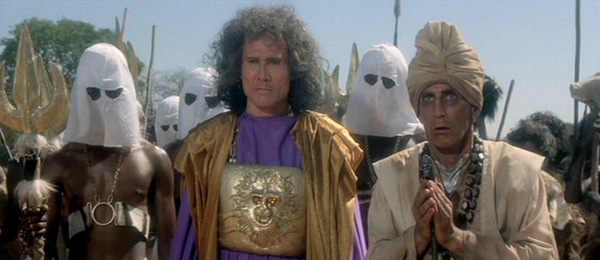
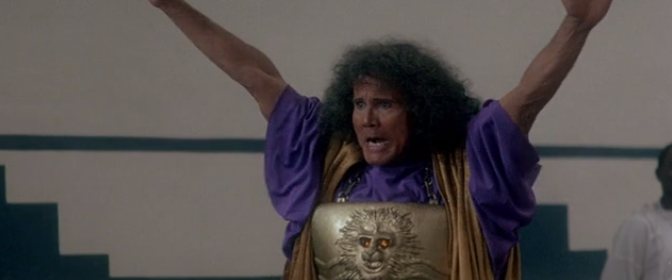
However, all is not well in the City of Gold.  Queen Nyelptha (Aileen Marson) is on the verge of going to war with Queen Sorais (Cassandra Peterson, a.k.a Elvira, Mistress of the Dark!!).  Manipulating both of the queens is the evil high priest, Agon (Henry Silva!!!!).  To save the City of Gold and his future marriage, Allan will first have to figure out a way to defeat Agon.

Allan Quatermain and the Lost City Of Gold was filmed back-to-back with King Solomon’s Mines.  The two films were released within a year of each other and, while King Solomon’s Mines was a minor box office success, Allan Quatermain and the Lost City of Gold was not.  I wasn’t expecting much when I watched the film but, believe it or not, Allan Quatermain and the Lost City of Gold is not that bad.  It’s a definite improvement on King Solomon’s Mines.  Richard Chamberlain is more believable as Quatermain in the sequel and he and Sharon Stone share the minimum amount of chemistry to be somewhat believable as a couple in love.  If that sounds like I’m damning with faint praise, it’s still an improvement over King Solomon’s Mines, where the two of them often seemed as if they couldn’t stand to be anywhere near each other.  Best of all, Allan Quatermain and the Lost City of Gold has Henry Silva in a ridiculous costume and that automatically makes the film worth watching.

Henry Silva, everyone.

Like King Solomon’s Mines, Allan Quatermain and The Lost City of Gold adds a large dose of intentional humor to its adventure story.  Fortunately, the comedy here is better executed than in the previous film.  There’s less mugging on Chamberlain’s part and some of the dialogue is genuinely amusing.

Of course, Allan Quatermain and The Lost City of Gold is not without its flaws.  This is a low-budget Cannon film that often tries too hard to duplicate the success of the Indiana Jones films without ever showing much understanding of what made those films successful in the first place.  Allan Quatermain and the Lost City of Gold can’t hold a candle to the classic adventure films of the past.  But, for a low-budget Cannon film starring Richard Chamberlain as a rugged, jungle explorer, it’s actually a lot of fun.

Plus, did I mention Henry Silva?

A Movie A Day #323: Ted & Venus (1991, directed by Bud Cort)


Strange movie, Ted & Venus.

Actor Bud Cort (you remember him from Harold and Maude) both directs and stars as Ted.  Ted is a homeless poet who lives on the beach and only has one friend, a mellow beach bum named Max (Josh Brolin).  Kim Adams plays Linda, who is the Venus of the title, a social worker who has a bodybuilder jerk for a boyfriend (Brian Thompson, who you might remember as the main villain in Cobra).  When Ted sees Linda, it is love at first sight and at first, the movie seems like it is going to be a quirky romantic comedy where Ted eventually wins Linda over.  When Linda turns down Ted’s advances, Ted does not give up.  Instead, Ted starts following her everywhere and making harassing phone calls.  Ted starts out as a nuisance and goes on to become a full-out stalker.  Everyone, even Max, tells Ted to stop bothering Linda but he is convinced that he can make her fall in love him.  He’s wrong.

Because of the presence of Cort both in front of and behind the camera, Ted & Venus sometimes seems like Harold and Maude: The Later Years.  Harold, the iconoclast that everyone loved, has grown up and become Ted, the unemployable stalker.  It’s an interesting idea and Cort pulls it off as an actor but not as a director.  You have to admire Cort’s devotion to his vision but it’s impossible to be certain what that vision was because the film’s tone is all over the place.  Cort gets a far better performance from himself than he does from the rest of the cast.

Speaking of the cast, the movie is full of familiar faces.  In fact, there are almost too many familiar faces.  It’s hard not to get distracted by all of the cameos.  If you somehow see this obscure movie, keep an eye out for: Woody Harrelson (who gets two lines and five seconds of screen time), Rhea Pearlman, Carol Kane, Martin Mull, Gena Rowlands, Pat McCormick, Vincent Schiavelli, Cassandra Peterson, and Andrea Martin.  When Ted is hauled into court, charged with stalking, the judge is played by LSD guru Timothy Leary.  I am not sure what Ted & Venus was trying to say but Bud Cort assembled an impressive cast to say it.