A Movie A Day #138: Navajo Joe (1966, directed by Sergio Corbucci)


Duncan (Aldo Sambrell) and his gang are the most ruthless and feared outlaws in the old west.  When first seen, they are destroying a Navajo village and shooting everyone that they see.  Duncan even steals a pendant from a young Indian woman.  When that woman’s husband, Joe (Burt Reynolds), discovers what has happened, he sets out for vengeance.  With Ennio Morricone’s classic score playing in the background, Joe kills one gang member after another.  When Duncan and his gang lay siege to the town of Esperanza, Joe approaches the townspeople and offers to defend them.  His price?  “One dollar a head from every man in this town for every bandit that I kill.”
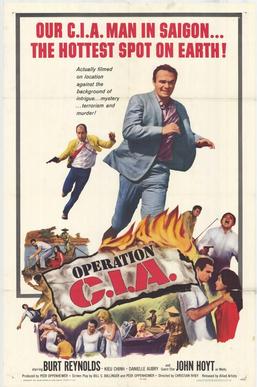
Following in the footsteps of his friend and fellow television star, Clint Eastwood, Burt Reynolds went to Italy in the 1960s and made a spaghetti western.  Navajo Joe was his second starring role, after Operation CIA.  Reynolds has always described Navajo Joe as being one of the worst movies ever made but, with the excepton of Deliverance, Burt says that about every film that he has ever made.  (Burt has also complained that the wig he wore in Navajo Joe made him look like Natalie Wood, which is true.)  While it never reaches the height of some of Sergio Corbucci’s other westerns, Navajo Joe is a frequently exciting movie, featuring one of Morricone’s best scores and a lead performance that is never as bad as Burt claims it was.  At first, it is strange to see Burt Reynolds playing such a grim and stoic character but, by the time he is throwing dynamite at Duncan’s gang, he has grown into the role and proven that he could actually play something other than a giggling good old boy.  As usual for a Corbucci western, both the outlaws and the greedy and ungrateful townspeople stand in for capitalism run amok. Like many spaghetti protagonists, Joe is an outsider who fights to save a town full of cowardly people who will never accept him.  As Joe explains, his ancestors were in America long before any of the townspeople’s ancestors.  America is his land but the forces of progress and greed are robbing him of his home.

Navajo Joe may not be a classic but it’s a solid western featuring one of Burt Reynolds’s most underrated performances.  If you have ever wanted to see Burt Reynolds smile while scalping a man, Navajo Joe is the film to see.

A Movie A Day #83: Shattered: If Your Kid’s On Drugs (1986, directed by Burr Smidt)


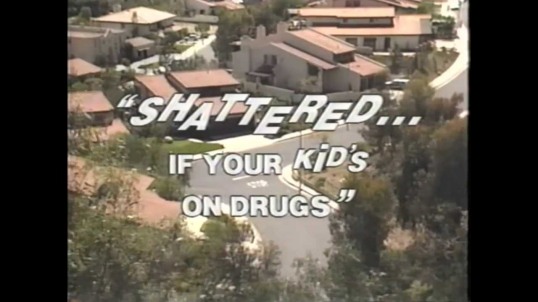
Shattered: If Your Kid’s On Drugs is a typical anti-drug video from the 1980s.  The story is familiar after school special material.  Kim (Megan Follows) and Rick (Rick Segall) are upper middle class kids who live in the suburbs.  Rick is a track star.  Kim is at the top of her class.  That all changes when they start hanging out with the local drug dealer (Dermot Mulroney), who gets Rick hooked on marijuana and Kim hooked on cocaine.  Kim gets an F on her report card.  Rick can no longer jump the hurdles.  Eventually, their parents stop drinking and taking valium long enough to force them into rehab.  The message is that tough love is the only solution.

The only thing that makes Shattered: If Your Kid’s On Drugs noteworthy is the strange and unexpected presence of Burt Reynolds and Judd Nelson, playing themselves and commenting on the action.  The first scene in the video is Burt and Judd driving their pickup truck through the suburbs, talking about how nice it is.  “Lot of nice restaurants,” Burt says.  “Are you going to buy me lunch?” Judd asks.  “Lot of nice restaurants,” Burt replies.  “This town is the American Dream,” Judd says.  “Or the American nightmare,” Burt adds.  When Kim and Rick are getting high in Dermot Mulroney’s chartreuse microbus, Burt and Judd sit on a picket fence and shoot the crap.  Burt can’t understand why teens would use drugs and Judd reminds him that it has been a while since he was a teenager. Rumor has it that both Burt and Judd appeared in this video to fulfill court-ordered community service.

Everything works out in the end.  If you have any doubt, just look at Burt giving us a thumbs up before the final credits roll.

A Movie A Day #34: Small Potatoes: Who Killed the USFL? (2009, directed by Mike Tollin)


usfl

A part of ESPN’s 30 for 30 documentary series, Small Potatoes: Who Killed the USFL? tells the story of the United States Football League.  The USFL was not the first American football league to try to take on the NFL but, arguably, it was one of the most successful.  Playing a spring/summer schedule, the USFL lasted for three seasons, from 1983 to 1985.  During that time, the USFL introduced many rules that would later be adopted by the NFL, including the two-point conversion and the coach’s challenge.  Several future NFL superstars, like Herschel Walker and Steve Young, got their start in the USFL.

So, why is the USFL nearly forgotten today?  This documentary largely lays the blame at the feet of none other than Donald Trump.  Long before he was President or even a reality TV star, Trump wanted to own a football team.  When it became obvious that he wasn’t going to be able to buy an NFL team, Trump purchased the USFL’s New Jersey Generals.  Trump not only decided that the USFL needed to switch to a fall schedule and compete directly with the NFL but, under his direction, the USFL also filed an antitrust lawsuit against the NFL.  Ironically, the USFL won that lawsuit but were only awarded $3.75 in damages.  With the league’s financial resources depleted by the lawsuit, the USFL suspended the 1986 season and never came back.

For all the legitimate criticism that can be directed towards ESPN, the 30 for 30 documentaries have been consistently excellent.  While Small Potatoes features plenty of exciting game footage and interviews with former USFL players, it’s not surprising that the most interesting thing about it is listening to Trump revealingly discuss his time as a USFL team owner with the same mix of self-aggrandizement and defensive posturing that he uses to discuss the size of the crowd at his inauguration.  Unlike the majority of the players and former owners interviewed in Small Potatoes (including Burt Reynolds, who was one of the owners of the Tampa Bay Bandits), Trump still appears to take it personally that he was never taken seriously as the owner of a football team.

I did not know anything about the USFL before I watched Small Potatoes.  My only complaint is that I wish it had been longer.  The story of the USFL was too interesting to be confined to just one hour.

Star Vehicle: Burt Reynolds in WHITE LIGHTNING (United Artists 1973)


gary loggins's avatarcracked rear viewer

wl1

Burt Reynolds labored for years in the Hollywood mines, starring in some ill-fated TV series (his biggest success on the small screen was a three-year run in a supporting role on GUNSMOKE) and movies (nonsense like SHARK! and SKULLDUGGERY) before hitting it big in John Boorman’s DELIVERANCE. Suddenly, the journeyman actor was a hot property (posing butt-naked as a centerfold for COSMOPOLITAN didn’t hurt, either!), and studios were scurrying to sign him on to their projects. WHITE LIGHTNING was geared to the Southern drive-in crowd, but Reynolds’ new-found popularity, along with the film’s anti-authority stance, made it a success across the nation.

wl22

WHITE LIGHTNING takes place in rural Arkansas, and Gator McKluskey (Burt) is doing a stretch in Federal prison for running moonshine. His cousin visits and tells Gator his younger brother Donnie was murdered by Sheriff J.C. Connors, the crooked boss of Bogan County. A raging Gator tries to escape, but is immediately caught, so he…

View original post 690 more words

A Movie A Day #10: The Longest Yard (1974, directed by Robert Aldrich)


longest-yard-burt-reynolds

Once, Paul “Wrecking” Crewe (Burt Reynolds) was a superstar NFL quarterback.  That was until he was caught up in a point-shaving scandal and kicked out of the league.  When a drunk Crewe steals his girlfriend’s car, gets into a high-speed police chase, and throws a punch at a cop, he ends up sentenced to 18 months at Citrus State Prison.

The warden of the prison, Rudolph Hazen (Eddie Albert), is a football fanatic who, at first, is excited to have Crewe as an inmate.  The prison guards have a semi-pro football game and Hazen wants Crewe to coach the team and help them win a national championship.  Though initially reluctant and just wanting to do his time, Crewe relents after witnessing and experiencing the cruelty of the prison system.  Crewe forms The Mean Machine, a team made up of prisoners, and agrees to play an exhibition game against the guards.

At first, the members of the Mean Machine are just looking for an excuse to hit the guards without being punished but soon, they realize that they have a chance to win both the game and their dignity.  But Hazen is not above blackmailing Crewe to throw the game.

When it comes to understanding the Tao of Burt, The Longest Yard is the place to start.  Starting with a car chase and ending with near martyrdom, The Longest Yard is the ultimate Burt Reynolds film.  Paul Crewe ranks alongside Deliverance’s Lewis Medlock and Boogie Night‘s Jack Horner as Reynolds’s best performance.  Before injuries ended his athletic career, Reynolds was a college football star and, on the prison’s playing field, he holds his own with the large group of former professional football players who were cast to play the guards and the prisoners.  The Longest Yard’s climatic football game takes up over an hour of screen time and reportedly, the action was largely improvised during shooting.  Unlike most movie football games, the one in The Longest Yard looks and feels like a real game.

The Longest Yard was directed by Robert Aldrich, who specialized in making movies about anti-authoritarians fighting the system.  The scenes of Crewe recruiting and training The Mean Machine are very reminiscent of Aldrich’s best-known movie, The Dirty Dozen.  With its combination of dark humor, graphic violence, rebellious spirit, and Southern-friend melodrama, The Longest Yard is a movie that could only have worked in the 1970s.  The Adam Sandler remake may have made a lot of money at the box office but it still comes nowhere close to matching the original.

For tomorrow’s movie a day, it’s the best film of 2016, which also happens to be about a football player in prison.

thelongestyard

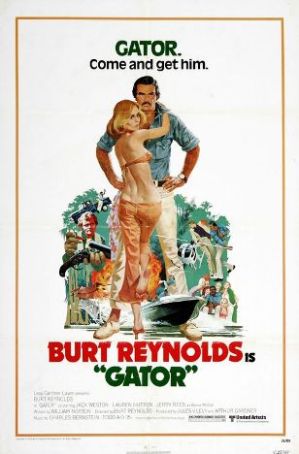
A Movie A Day #9: Gator (1976, directed by Burt Reynolds)


gatorposterGator McClusky is back!

Since the events in White Lightning, Gator (Burt Reynolds) has been released from prison and he’s now living in the Okefenokee Swamp.  Other than running moonshine, Gator is laying low and keeping to himself.  Gator may be done with the feds but the feds are not done with him.

Gator’s old friend, Bama McCall (Jerry Reed), is now unofficial boss of Dunston County and both the Department of Justice and the Governor of Georgia (played by talk show host Mike Douglas) are determined to take him down.  Federal agent Irving Greenfield (Jack Weston) is convinced that he can get Bama on charges of tax evasion.  But Irving’s from New York and he does not know how to talk to the good ol’ boys.  He needs someone on the inside and that’s where Gator comes in.

Gator not only starred Burt Reynolds but it was his directorial debut as well.  Though it’s a sequel to White Lightning, Gator feels like a very different movie.  Whereas Joseph Sargent kept White Lightning relatively serious, Reynolds take a more jokey approach with Gator.  Reynolds has his famous mustache and his hairpiece in Gator and the self-amused attitude that went along with them.  Gator is full of car chases, fist fights, willing women, and corny jokes.  It also has Lauren Hutton, playing a familiar character who would appear in all of Reynolds’s movies, the sophisticate who cannot resist Burt’s good ol’ boy, country charm.  In the 1970s, audiences couldn’t resist Burt’s good old boy charm, either.  Critics hated Gator but it made a lot of money.

Gator is dumb but fun.  The most interesting part of the movie is seeing Jerry Reed playing a ruthless villain.  Reed is thoroughly convincing as a Dixie Mafia crime boss, the type of redneck who earlier inspired Buford Pusser to pick up a baseball bat and destroy pool halls.  One year later, Jerry would play Burt Reynolds’s best friend in Smoky and the Bandit so it’s interesting to see them playing deadly rivals in Gator.

For tomorrow’s movie a day, Burt’s a football player in jail in The Longest Yard.

A Movie A Day #8: White Lightning (1973, directed by Joseph Sargent)


white-lightning-02

A year after co-starring in Deliverance, Burt Reynolds and Ned Beatty reunited for another movie about life in the backwoods, White Lightning.

White Lightning starts with two hippies, bound and gagged and floating in a canoe.  While a banjo plays in the background, two rednecks use a shotgun to blow the canoe into pieces.  They watch as the hippies drown in the swamp.  It turns out that one of those hippies was the brother of legendary moonshiner and expert driver, Gator McCluskey (Reynolds).  Gator is doing time but when he hears that his brother has been murdered, he immediately realizes that he was probably killed on the orders of corrupt Sheriff J. C. Connors (Ned Beatty).  The Feds arrange for Gator to be released from prison, on the condition that he work undercover and bring them enough evidence that they can take Connors down.

Back home, Gator works with a fellow informant, Dude Watson (Matt Clark), teams up with local moonshiner, Roy Boone (Bo Hopkins), and has an affair with Roy’s girl, Lou (Jennifer Billingsley).   Connors and his main henchman, Big Bear (R.G. Armstrong) both suspect that Gator and Dude are working for the government.  Since this is a Burt Reynolds movie, it all ends with a car chase.

A classic of its kind and a huge box office success, White Lightning set the template for almost every other film that Burt Reynolds made in the 1970s and 80s.  There is not much to the movie beyond Burt’s good old boy charm and Ned Beatty’s blustering villainy but if you’re in the mood for car chases and Southern scenery, White Lightning might be the movie for you.   Joseph Sargent also directed the New York crime classic, The Taking of Pelham One Two Three, and he gives White Lightning an edginess that would be lacking from many of Burt Reynolds’s later movies.

For tomorrow’s movie a day, it’s the sequel to White Lightning (and Burt Reynolds’s directorial debut), Gator.

white-lightning-05

A Movie A Day #7: Sharky’s Machine (1981, directed by Burt Reynolds)


220px-sharkys_machine_ver3After a drug bust goes wrong, Atlanta police detective Tom Sharky (Burt Reynolds, who also directed) is transferred from narcotics to the vice squad, the least desirable assignment in the Atlanta police department.  Despite all of his honors and commendations, Sharky finds himself reduced to busting hookers with Papa (Brian Keith) and Arch (Bernie Casey).  But then Sharky discovers evidence of a prostitution ring being run by Victor D’Anton (Vittorio Gassman), one that services the wealthiest and most powerful men in Georgia.

Working with Papa, Arch, and a burned-out bugging expert named Nosh (Richard Libertini), Sharky begins a surveillance of Domino (Rachel Ward), one of Victor’s girls.  As the days turns into weeks, Sharky falls in love with Domino, who doesn’t even know that she’s being watched.  Sharky also discovers that Domino is sleeping with Hotckins (Earl Holliman), who is about to be elected governor of Georgia.  At the same time, a heroin-addicted assassin named Billy Score (Henry Silva) is assassinating anyone who could reveal Victor’s crimes.

There are two great sequences in Sharky’s Machine.  One is the opening credits scene, in which a bearded Burt Reynolds walks through the roughest parts of Atlanta while Randy Crawford sings Street Life.  This scene lets everyone know from the start that this is not another Burt Reynolds good ol’ boy comedy.  The other is a cat-and-mouse chase through an Atlanta skyscraper, as Sharky and his partners try to track down Billy Score, who is so doped up on painkillers that he barely flinches whenever he’s shot.  Billy Score is one of the most frightening movie villains of all time, seemingly indestructible and capable of moving like a ghost.

henry-silvaWith the exception of maybe Deliverance, Sharky’s Machine is Burt Reynolds’s darkest movie.  There are moments of humor and appearances by the usual members of the Burt Reynolds stock company, like John Fiedler and Charles Durning.  But overall, this is one dark movie.   Likable characters die.  Sharky cries and loses two fingers when they are graphically chopped off by the bad guys.  A woman’s face is literally blown off.  Even when Sharky starts to talk about his childhood, a sentimental moment the occurred in almost every Burt Reynolds film, Domino tells him that she doesn’t care.

In other words, this ain’t The Cannonball Run.

Burt Reynolds’s first cut of Sharky’s Machine reportedly ran for 140 minutes.  Twenty minutes were cut before it was released into theaters and, as a result, Sharky’s Machine sometimes seems to be rough around the edges.  (One important supporting character is killed off-screen and if you don’t pay close attention to the dialogue, you might never know what happened to him.)  Still, this violent film noir, which Reynolds once called “Dirty Harry in Atlanta,” is one of Burt’s best.

sharky-machine

A Movie A Day #6: The Cannonball Run (1981, directed by Hal Needham)


cannonball_runA legendary Hollywood stuntman, Hal Needham moved into directing in the 1970s and proved that all he required to make a successful film were willing stuntmen, fast cars, Coors beer, and Burt Reynolds.  Following that logic, The Cannonball Run may very well be the ultimate Hal Needham movie.

The Cannonball Run follows several teams of racers as they compete to see who can be the first to reach California from Connecticut.  Trying to stop them is Arthur J.  Foyt (George Furth), who represents the Safety Enforcement Unit and who believes that cars are a menace.  However, Foyt is no match for these racers, who include:

  • J.J. (Burt Reynolds), who is racing in memory of his father, and his mechanic Victor (Dom DeLuise), who turns into Captain Choas whenever he is feeling threatened.  J.J. and Victor are driving an ambulance and are accompanied by crazy Dr. Van Helsing (Jack Elam) and a fake “patient” (Farrah Fawcett),
  • Bradford Compton (Bert Convy) who is riding a motorcycle and who, because of the weight of his mechanic, has to pop a wheelie for the entire race,
  • An Arab oil sheik (Jamie Farr) who is racing for “the glory of Islam” and who would probably not be in the movie if it were made today,
  • Sidney Goldfarb (Roger Moore), the heir to a mattress fortune who has had extensive plastic surgery to make himself look like Roger Moore,
  • Jackie Chan and Michael Hui, called “The Japanese team” even though they both speak Cantonese throughout the entire movie,
  • Terry Bradsahw and Mel Tillis because why the Hell not?,
  • Marcie (Adrienne Barbeau) and Jill (Tara Buckman), using their cleavage to get out of speeding tickets, or at least they do until they’re pulled over by Valerie Perrine,
  • And Dean Martin and Sammy Davis, Jr., pretending to be priests and apparently drunk throughout filming.

Based on a real life (and very illegal) cross-country race that was held four times in the 1970s, The Cannonball Run is profoundly stupid movie that, if you’re in the right mood for it, is also profoundly fun.  It’s a movie that really has no plot but it does have a lot of cars, a lot of stunts, a lot of cleavage, and a lot of politically incorrect humor, some of which has not aged well.  Despite being hated by the critics, The Cannonball Run was a huge box office hit and it still remains a nostalgic guilty pleasure for a lot of people, myself included.  One person who did not like The Cannonball Run was Burt Reynolds who, in an interview with the New York Times, once said, “”I did that film for all the wrong reasons.  I never liked it. I did it to help out a friend of mine, Hal Needham. And I also felt it was immoral to turn down that kind of money. I suppose I sold out so I couldn’t really object to what people wrote about me.”

Burt has a point but, in defense of The Cannonball Run, what other movie actually features Jackie Chan beating up Peter Fonda?

chan-fonda-cannoball-run

Or Roger Moore playing someone who thinks that he’s Roger Moore?

roger-moore

Or Jack Elam playing a mad scientist?

jack-elam

Or Sammy and Dino, phoning it in one last time?

sammy-and-dean

Or Captain Chaos?

captain-chaos

Like most of Hal Needham’s films, The Cannonball Run ends with outtakes of Burt Reynolds blowing his lines and hitting people.

Tomorrow’s movie a day will be a film that Burt Reynolds is presumably much more proud of, Sharky’s Machine.

Worst of the Worst: Mad Dog Time (1996, directed by Larry Bishop)


Mad_dog_time_4841Remember how, in the 1990s, every aspiring indie director tried to rip off Quentin Tarantino by making a gangster film that mixed graphic violence with quirky dialogue, dark comedy, and obscure pop cultural references?  That led to a lot of terrible movies but not a single one (not even Amongst Friends) was as terrible as Mad Dog Time.

That Mad Dog Time was terrible should come as no surprise.  Most directorial debuts are.  What made Mad Dog Time unique was the sheer amount of talent that was assembled and wasted in the effort to bring this sorry movie to life.  As the son of Joey Bishop, director Larry Bishop was Hollywood royalty and was able to convince several ridiculously overqualified actors to play the thinly drawn gangsters and rouges who populated Mad Dog Time.  Much like the Rat Pack movies that his father once starred in, Larry Bishop’s debut film was full of familiar faces.  Some of them only appeared for a few seconds while others had larger roles but they were all wasted in the end.  Hopefully, everyone was served a good lunch in between filming their scenes because it is hard to see what else anyone could have gotten out of appearing in Mad Dog Time.

Mob boss Vic (Richard Dreyfuss) has just been released from a mental hospital.  With the help of his main enforcer, Mick (Jeff Goldblum), and a legendary hitman named Nick (Larry Bishop, giving not only the worst performance in the film but also the worst performance of the 1990s), Vic is going to reassert his control over the rackets.  Vic also wants to find his former mistress, Grace Everly (Diane Lane) but he doesn’t know that Grace is now with Mick and that Mick is also having an affair with Grace’s sister, Rita (Ellen Barkin).

(Grace and Rita are the Everly Sisters!  Ha ha, between that and all the rhyming names, are you laughing yet?)

Anka and Byrne

Ben London (Gabriel Byrne) has taken over Vic’s nightclub and, while singing My Way with Paul Anka, tells Vic that he should take an early retirement because he’s a paranoid schizophrenic.  Before he can deal with Ben, Vic has to kill all of his other rivals, all of whom are played by actors like Michael J. Pollard, Billy Idol, Kyle MacLachlan, Gregory Hines, and Burt Reynolds.  The bodies start to pile up but Jimmy the Undertaker (Richard Pryor, looking extremely frail in one of his final roles) is always around to make sure that everyone gets a proper burial.

And there are other cameos as well.  Joey Bishop is the owner of a mortuary.  Henry Silva is wasted as one the few gangsters to stay loyal to Vic.  Christopher Jones, who previously co-starred with Larry Bishop and Richard Pryor in Wild In The Streets before dropping out of a society, plays a hitman who pretends to be Nick Falco.  Even Rob Reiner shows up a limo driver who talks too much.

Almost every poorly paced scene in Mad Dog Time plays out the same way.  Three or more men confront each other in a room.  Hard-boiled dialogue is exchanged for an interminable length of time until someone finally gets shot.  You would think, at the very least, it would be watchable because of all the different people in the cast but none of the actors really seem to be into it.  Richard Dreyfuss and Jeff Goldblum resort to smirking through their scenes while Gabriel Byrne often appears to be drunk.  Whenever he’s in a scene, Burt Reynolds seems to be trying to hide his face and it is hard to blame him.  There were many terrible movies released in the 90s but none were as bad as Mad Dog Time.