Horror Book Review: Switched by R.L. Stine


Oh hell yeah!

Dear readers, I present to you perhaps the greatest book ever written by the one and only R.L. Stine!

Now, I’m not going to spoil too much of this plot because, seriously, this book is crazy. Once the plot twists start, they never stop. Once the first two dead bodies show up, it’s a nonstop parade of bloody corpses. People don’t just die in this book. They get their heads ripped off and then they sometimes show up alive a few pages later. That’s the type of book this is. First published back in 1996, Switched is like the ultimate Fear Street book.

Basically, Nicole is having a really bad day. Her parents are being totally overprotective. Her boyfriend wants to dump her because he says that she’s too much too handle, even though Nicole can’t imagine what he means by that. (Don’t worry, Nicole! I’ve been there!) She didn’t do her class project because she just didn’t feel like it. Nicole’s obviously suffering from a case of terrible ennui.

However, her friend Lucy has a solution! Lucy says that there’s a wall near the cemetery and basically, all you have to do is climb the wall with someone else and then jump off the wall while holding that person’s hand and then — BOOM! — it’s body switch time! Lucy says that they can switch bodies and Nicole can get a chance to live Lucy’s perfect life and maybe make out with Lucy’s boyfriend. Nicole says sure!

So, they jump off the wall and, quicker than you can say Freaky Friday, it works! Unfortunately, no sooner has the body switch occurred than Nicole starts to find dead bodies all over the place! Could Lucy be killing them while using Nicole’s body!? Or is something even stranger happening?

Seriously, this book is a lot of fun. Not only do you get the totally insane body switch plot and a lot of gore and impure thoughts but you also get nonstop twists. And, as opposed to certain other Stine books, the twists all make a strange sort of sense in Switched! I won’t say much else about Switched because I don’t want to spoil it for anyone but, if you ever feel the need to prove that R.L. Stine could tell a good story and keep the reader guessing, Switched is the book to go with!

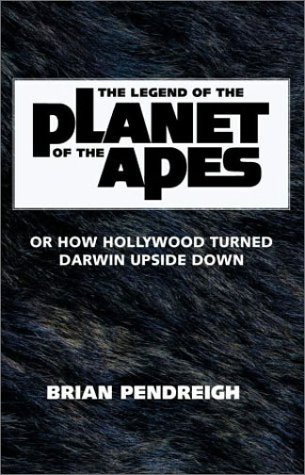
Book Review: The Legend of the Planet of the Apes: Or How Hollywood Turned Darwin Upside Down by Brian Pendreigh


Recently, while going through all the books that I’ve collected over the years, I came across a copy of The Legend of Planet of the Apes: Or How Hollywood Turned Darwin Upside Down.  It’s a book by a Scottish film critic named Brian Pendreigh and it takes a look at the Planet of the Apes film franchise, from the 1968 original all the way to Tim Burton’s now-forgotten remake.  Though I couldn’t find a copyright date in the book, it was obviously written long before the Planet of the Apes franchise was rebooted and sent in an entirely new direction by 2011’s Rise of the Planet of the Apes.

That’s okay, though.  The three recent Planet of the Apes films all had moments of brilliance and Andy Serkis probably deserved an Oscar nomination for his performances in all three of them but they have also tended to overshadow the original Planet of the Apes and its sequels and, as this book points out, the first 5 films were actually pretty good.  (Okay, okay — Battle of the Planet of the Apes isn’t great, even if it is entertaining.  But I defy you not to cry at the end of Escape From The Planet of the ApesBeneath the Planet of the Apes is wonderfully subversive with its abrupt and nihilistic ending.  Conquest of the Battle of the Apes is probably even more relevant today than it was in the 70s.)  While the majority of Pendreigh’s book focuses on the production of the original Planet of the Apes, he writes enough about both its sequels and the short-lived Planet of the Apes television show to make a convincing argument that the original franchise itself deserves to be held in higher regard than it often is.

It’s a good book, though I do wish Pendreigh had been a little bit less obvious in his loathing of Charlton Heston.  Certain writers will never forgive Heston for not being a liberal.  Heston, of course, was hardly the only Republican to be a star during the 50s and the 60s.  John Wayne, Jimmy Stewart, Gary Cooper, James Cagney (from the 50s onward), Robert Mitchum, and many others leaned to the right.  However, John Wayne, Gary Coper, Robert Mitchum, and even Jimmy Stewart were largely associated with westerns and war films, two genres that were already considered to be thematically conservative.  Heston, on the other hand, appeared in left-wing dystopian sci-films like Soylent Green, The Omega Man, and Planet of the Apes.  While other Hollywood conservatives were supporting the blacklist, Heston fought to get Orson Welles hired to direct Touch of Evil.  He appeared in film that were critical of capitalism and blind patriotism and fanatical militarism.  He did everything that a left-wing actor was supposed to do but he did it while voting Republican and a lot of film writers will never forgive him for it.  As a result, people far too often tend to act as if Heston’s films were good despite Heston when, in all actuality, Heston’s macho persona and his willingness to subvert it (or at the very least, his willingness to allow his directors to subvert it) is what made so many of his film memorable and important in the first place.  One reason why the endings of both Planet of the Apes and Beneath the Planet of the Apes continue to resonate after all these years is because they featured Charlton Heston, rendered helpless and driven mad.

Admittedly, when it comes to dismissing Heston, Pendreigh is not as bad as some.  He acknowledges the importance of Heston’s performance to the success of the original Planet of the Apes.  And yet, he can’t resist complaining about Heston’s later political activities or his admittedly pompous view of himself.  Anytime an actor is quoted as saying something good about Heston, Pendreigh is sure to also include a quote from someone saying something negative.  It’s a distraction that takes away from discussing the films.  One gets the feeling that the author was deeply troubled by the fact that praising Planet of the Apes would require him to also offer up some praise for the film’s star.

But …. no matter!  Regardless of however he felt about Charlton Heston, Brian Pendreich clearly appreciated the Planet of the Apes films and that genuine appreciation comes through in this book.  In fascinating and rewarding detail, it explores the controversy of who, among the many people who worked on developing the film, deserves the credit for coming up with the original’s classic final scene.  It examines the circumstances that led to Edward G. Robinson leaving the role of Dr. Zaius.  It takes a look at the career of Pierre Boulle, who wrote the somewhat forgotten novel that led to the films in the first place.  And it provides a fair look at what worked (and occasionally didn’t work) about the film’s sequels.

If you’re a fan of the original and its sequels, this book is a must-have.

Book Review: What Holly Heard by R.L. Stine


Has there been yet another murder at Shadyside High!?

That’s the latest gossip!

R.L. Stine’s 1996 YA thriller, What Holly Heard, is all about gossip.  Actually, one the things that made the book an interesting read for me was discovering how people gossiped in 1996, in the age before social media.  Today, we get our gossip by overanalyzing what people post on Instagram or what they tweeted back when they were 12.  Back in 1996, though, you actually had to stalk people through the high school, hide behind a corner to listen to conversations, and essentially act like a private detective.  That actually sounds like fun!

Anyway, Holly Silva’s knows all the gossip at Shadyside High!  When this book opens, she’s all excited because she’s learned that her classmate, Mei, might be fighting with her boyfriend, Noah.  Holly has a major crush on Noah and is hoping that Mei and Noah break up so that she can go out with him.  Her best friends, Ruth and Miriam, remind Holly that she has a super nice boyfriend named Gary but Holly doesn’t care.  It’s all about the gossip!

Then, suddenly, Holly is found dead in the school gym!  Who is the murderer!?  Could it Mei?  Could it be Noah?  Could it even be Gary?  How about Jed, the strangely moody jock?  Can Miriam solve the mystery before someone else dies!?

As I read this book last night, I found myself wondering if maybe I had read it before.  It all seemed strangely familiar.  While it is possible that I had actually read What Holly Heard before, it’s just as possible that I was reacting the fact that the same basic characters appear in all of R.L. Stine’s books.  There’s always a bad boy.  There’s always a couple that’s on the verge of breaking up.  There’s almost always a jock who might have a secret.  And there’s always at least one murder victim who went too far with the gossip!  But, actually, the familiarity is a part of the appeal of these books.  They’re like YA Lifetime movies.  You don’t read them to be shocked as much as you read them to judge the characters when they’re shocked over the exact same thing happening to them that happened to the people in all of the previous Fear Street book.  No one at Shadyside High ever learns a lesson from any of this!

That said, I liked What Holly Heard.  It’s fast-paced, it’s silly, and it features a totally out-of-nowhere drug subplot that I imagine was included in the name of 90s relevancy.  Plus, it features someone getting hit over the head with a hamster cage.  That made me smile.  If you’re looking to indulge in a little childhood nostalgia by reading (or re-reading) a little R.L. Stine, this is a good one to go with.

Book Review: “They’re Here….” Invasion of the Body Snatchers: A Tribute, edited by Kevin McCarthy and Ed Gorman


On Saturday night, I watched Piranha, which featured the great character actor Kevin McCarthy in a supporting role. This led to me remembering McCarthy’s iconic performance in the original Invasion of the Body Snatchers (as well as his cameo in the 70s version). And that led to me remembering a book that I found at Half-Price Books a few years ago.

First published in 1999, They’re Here is a tribute to Invasion of the Body Snatchers, featuring essays about the films and interviews with some of the people involved. For instance, Stephen King and Dean Koontz both write about how seeing the original film influenced their later approach to horror. Jon L. Breen, James Combs, and Fred Blosser write about Jack Finney, the author of the book that served as the basis for the film. Other essays take a look at the remakes that were directed by Philip L. Kaufman and Abel Ferrara. Ferrara is himself interviewed and is as outspoken as ever. Also interviewed is Dana Wynter, who co-starred in the original.

However, the majority of the book is taken up with a terrifically entertaining and informative interview with Kevin McCarthy himself. McCarthy not only talks about filming the original Invasion of the Body Snatchers but also his entire career, his friendship with Montgomery Clift, and his status as pop cultural icon. Sometimes it can be disillusioning to read or listen to an interview in which an icon turns out to be kind of boring (call it the Steven Soderbergh syndrome) but, fortunately, McCarthy comes across as being just as eccentric, intelligent, interesting, and downright lovable as you would hope he would be. Kevin McCarthy, who passed away in 2010 at the age of 96, was one of the great character actors and this interview shows that he was …. wait for it …. quite the character! (Sorry.) The interview is a great tribute not only to McCarthy’s most famous film but also the man himself.

Seriously, if you’re a Body Snatchers fan but just appreciate great character acting, order a copy of this book!

Book Review: The Girlfriend by R.L. Stine


Oh Scotty, baby, baby, baby, you idiot….

That’s what I found myself thinking as I read R.L. Stine’s 1991 YA suspense thriller, The Girlfriend.  Scotty is the book’s main character.  He’s got a great life ahead of him, despite the fact that he’s an idiot.  Scotty has been accepted to Princeton.  He’s the quarterback of high school’s football team.  His family is rich.  He’s dating Lora, the head cheerleader.  He and Lora have just been elected homecoming king and queen.  However, Lora and her family are going on vacation to Paris and that means that she’ll miss the homecoming dance!  Scotty will be a king without a queen!  Scotty is so upset over this that he makes out with Shannon.  Shannon has just moved to town and no one knows anything about her.  Scotty certainly knows little, beyond the fact that she claims to have three overprotective older brothers and that one of them is former wrestler.  Oh, and Shannon’s in love with Scotty.  She likes to call him “baby.”

Now, when I say that she likes to call him “baby,” what I mean is that the word “baby” appears close to a million times in this book.  I didn’t actually sit down and count all of the times that the word appeared, of course, but I am a fairly observant reader and it seems like a million is close to the right number.

Of course, overusing the word “baby” is not the only thing that Shannon does.  Shannon turns out to be a bit unstable and more than a little possessive.  She sets out to make Scotty and Lora’s life as miserable as possible but you know what?  Good for her!  Seriously, Scotty is a jerk and Lora’s incredibly bland for someone who can go to Paris whenever she feels like it.  Shannon provides the book with what life it has.  She’s a jolt of pure energy, forcing all of the dull people around her out of their complacency.  Though it may or may not have been Stine’s intention, it’s impossible to read The Girlfriend without spending the whole time looking forward to what Shannon is going to do next.  Unfortunately, she does kill two pets and, as a result, I can’t really be on Team Shannon but, even after that, she’s still more interesting to read about than either Scotty and Lora.

Anyway, The Girlfriend is an entertaining work of Stine fiction.  Scotty is a uniquely unlikable lead character but Shannon brings a much-needed jolt of life to the proceedings.  It’s too bad that she never returned for a sequel.  Of course, it’s not too late.  Scotty’s probably still working at his Dad’s architectural firm.  Maybe it’s time for Shannon to stop by for a visit.

What do you think about that, baby?

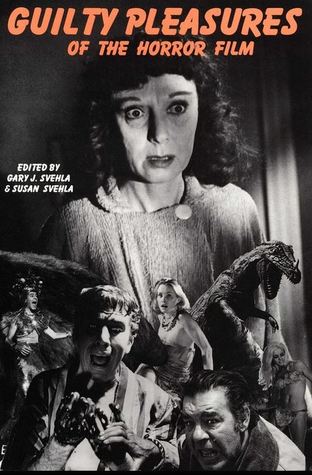
Horror Book Review: Guilty Pleasure of the Horror Film, edited by Gary J. and Susan Svehla


The back cover of this book announces, “THE CHARGE: Bad filmaking!”

It then offers up a list of 12 films (most of which are horror films, though a few are not) that were dismissed by the critics.  The book features 12 essays, each providing a defense of one of the films in question.  Those 12 films are:

  1. Maniac (1934), which is defended by Bret Wood
  2. Sh!  The Octopus (1937), defended by John Soister
  3. Voodoo Man (1944), defended by Gary Don Rhodes
  4. Unknown Island (1948), defended by John Parnum
  5. Scared Stiff (1953), defended by Ted Okunda and James L. Neibaur
  6. Indestructible Man (1956), defended by Don Leifert
  7. Rodan (1957), defended by Don G. Smth
  8. The Tingler (1959), defended by Tom Weaver
  9. The Flesh Eaters (1964), defended by David J. Hogan
  10. When Dinosaurs Ruled The Earth (1970), defended by Mark A. Miller
  11. King Kong (1976), defended by Robert A. Crick
  12. Dune (1984), defended by Susan Svedha

There’s a few things that you’ll notice about this list.  First off, you’ll notice that — as I already pointed out — not all of these films are horror films.  Dune, in particular, is a surreal science fiction epic.  Like all of David Lynch’s films, there are elements of horror but the film itself isn’t actually a part of the genre.  Secondly, I was surprised to discover that Rodan and The Tingler apparently needed to be defended.  Finally, just by looking at the release dates of the film included in the book, you’ll probably be able to guess that Guilty Pleasures of the Horror Film has been around for a while.  The book was first published in 1996.  I picked up my copy at Recycled Books of Denton, Texas, way back in 2006.  And finally, in 2021, I got around to reading the entire thing.  It’s funny how that works out some times.

With all that in mind, though, it’s an enjoyable book and each essayist does a good job of making their case.  (The fact that it took me so long to get around to reading it has everything to do with me having ADHD and nothing to do with the quality of the book itself.  My office is currently full of very good books that I need to get around to reading.  And I will!)  While I think the natural instinct of most readers will be to automatically jump ahead to see what the essayists has to say about David Lynch’s version of Dune (and perhaps the 70s version of King Kong), my favorite essays dealt with Indestructible Man and Flesh Eaters.  While I was already familiar with the surprisingly grim and violent Indestructible Man, reading David J. Hogan’s thoughts on Flesh Eaters inspired me to make a commitment to watch and review the movie sometime this October.  Really, what more can you ask for from a book like this?

Despite the fact that they’re not all horror films and I’ve never really been comfortable with the term “guilty pleasure,” (despite the fact that I’ve used it more than a few times), Guilty Pleasures of the Horror Film is an enjoyable book for those of us who love the genre and who are always willing to defend an unfairly maligned film.

Book Review: Execution of Innocence by Christopher Pike


*sigh*

I was super excited when I came across a copy of the 1997 Christopher Pike novel, Execution of Innocence, in my collection of used paperbacks. Along with R.L. Stine, Christopher Pike was one of the kings of YA horror and suspense literature in the 1990s. In fact, his books were often a bit more macabre than even Stine’s. If Stine killed off four people in a book, Pike would probably kill off 8. I was looking forward to reading Execution of Innocence. Just the title alone promised all sorts of morbid drama! Unfortunately, the book itself doesn’t really live up to the promise of that title.

The book opens with Mary, a teenage girl, sitting in a police department. It turns out that one of her classmates, the wealthy Dick (and that does turn out to be an appropriate name) is dead. The cops thinks that Mary’s boyfriend, Charlie, murdered Dick because he got jealous over Mary and Dick going to the school dance. Charlie, it turns out, is a mechanic from the bad side of town. Mary’s a good girl and Charlie’s a bad boy, and Dick’s dead. And now, Charlie has mysteriously disappeared.

The problem is that Mary swears that she doesn’t remember what happened the night that Dick died. The cops are skeptical, especially when another witness comes forward and declares that Mary threatened to kill Dick herself! Now, Mary has to work with her friend Hannah and prove that she didn’t murder Dick. But what Mary doesn’t realize is that Hannah has secrets of her own….

This is one of those books where describing makes it sound more than it actually is. The mystery of who murdered Dick has the potential to be intriguing but Pike, instead, continually has his characters act in the most illogical and improbable of ways. The reader spends a good deal of the book trying to understand everyone’s possible motives just to discover that the actual motives either don’t make sense in the first place or, in the case of one major character, they feel a bit homophobic. It also doesn’t help that the book attempts to present Charlie and Mary as being some sort of ideal couple when they’re relationship is actually about as toxic as they come. You really can’t help but feel that all of Mary’s friends (and the cops) had a point when they warned her away from the guy.

Execution of Innocence is definitely not first-rate Pike. Try re-reading Monster instead. That’ll give you nightmares!

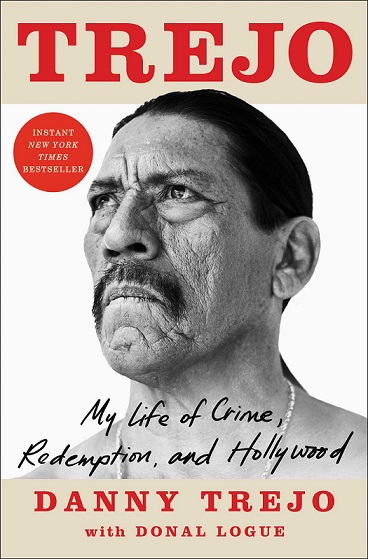
Book Review: Trejo: My Life of Crime, Redemption, and Hollywood by Danny Trejo


As I sit here, preparing to write a few words about Danny Trejo’s autobiography, I find myself tempted to refer to him as being a “horror star.”

That’s just because it’s October and I’m in a horror mood.  The truth of the matter is that Danny Trejo has appeared in all sorts of films.  He’s done comedy.  He’s done action.  He’s done drama.  Not surprisingly, given his background, he’s appeared in a ton of crime films.  He guest-starred on two episodes of Baywatch.  On King of the Hill, he lent his voice to the character of Enrique.  He starred as Machete in two movies.  And yes, he’s done his share of horror.  He was killed by a giant snake in Anaconda.  He was killed by Michael Myers (or “Mikey” as Danny’s character called him) in Rob Zombie’s Halloween.  He battled both a multi-headed shark and a murderous ghost for SyFy.  Danny Trejo has appeared in all sorts of films, to the extent that you never really know where or when he’s going to show up.

That’s something Trejo addresses in his autobiography, which is itself simply called Trejo.  He writes about getting asked whether or not he minds appearing in so many B-movie and his reply is that even a B-movie will give people jobs, put food on the table, and perhaps provide some joy to someone who watches it.  In another passage, he points out that one bad day on a movie set is still better than the best day in prison.  He makes a good point.  A lot of movie snobs could learn a lot from Danny Trejo’s attitude.

As for the book, it’s as straight-forward as the actor himself.  Trejo talks about his early life of crime, the time he spent in prison, his struggle to get off drugs, his career as a no-nonsense drug counselor, and finally, his current status as a pop cultural icon.  Trejo doesn’t hold much back, discussing not only the crimes that he committed when he was young and incarcerated (A lot of the people who love Danny Trejo the character actor would have been terrified of Danny Treo the violent criminal, including myself) but also his subsequent struggles to be a good and responsible father.  Maturing is a theme that run through the entire book and Trejo admits that, even as he closes in on his 80th birthday, he’s still learning and growing.  What makes the book truly effective is that Trejo never avoids responsibility for his mistakes nor does he attempt to deflect blame.  He’s as honest about his sins as he is about his subsequent redemption and it’s that honesty that makes his story so inspiring.

If you’re hoping for a lot of Hollywood gossip, this book might disappoint you.  With a few notable exceptions involving Edward James Olmos’s attempts to make a movie about the Mexican Mafia, Trejo focuses on the positive when he discusses his film career.  One gets the feeling that he loves his life and he loves his unique place in the entertainment universe.  There’s nothing wrong with that.  Trejo takes a great deal of joy out of the fact that he’s survived and it’s hard not to share that joy.  It’s also hard not to be touched by Trejo’s efforts to keep others from making the same mistakes that he made.

Trejo is a good and inspiring read.  Check it out and give thanks for Danny Trejo.  He’s a survivor and the world is better for it.

Horror Book Review: Who Killed The Homecoming Queen? by R.L. Stine


This 1997 YA novel from R.L. Stine tells the story Tania, Eva, and all of their friends at Shadyside High!

Tania, as we learn in the book’s opening pages, is having the best year of her life! She’s got a hunky stepbrother. She’s got a football player boyfriend. Her movie career is about to be launched because she’s been cast in a high school student film. (Yeah, that didn’t make sense to me either but just go with it.) And, at the big pep rally that starts the book, it’s announced that she’s going to be the homecoming queen! Meanwhile, Eva apparently has psychic abilities that allow her to know if something bad is going to happen. That may sound impressive but the book doesn’t really do much with it.

Of course, life is never as perfect as it seems. Tania may be the most popular girl in school but that doesn’t mean that everyone likes her. In fact, Leslie, one of the defeated homecoming queen finalists, even attempts to push Tania down some stairs! OH MY GOD! Leslie says it was an accident but was it? Later on, when Tania mysteriously disappears, Eva and her friends wonder …. who killed the homecoming queen!? (Of course, that’s assuming Tania is dead. She’s actually just missing so it could be that Eva is getting ahead of herself.) Leslie seems like the obvious suspect but …. OH MY GOD AGAIN, is that Cherise Colby making out with Tania’s boyfriend!? And seriously, why would anyone trust their boyfriend with someone named Cherise Colby?

I love the old R.L. Stine and Christopher Pike books and I’m planning on reading and reviewing a lot of them for October. The main reason I read this particular book was because of the title. I mean, Who Killed The Homecoming Queen is the type of title that you would come up with if you were challenged to come up with the perfect R.L. Stine title. That said, the book itself is pretty anti-climatic. There’s only one death in the book and — surprise! (and spoiler alert, I suppose) — it’s not the homecoming queen! So, as perfect as the title is, it’s kind of a lie. Stine used the title but he didn’t actually use it as the plot of the book, which is strange.

To be honest, though, this book feels like R.L. Stine on autopilot. This is one of the last of the original Fear Street books (though Fear Street itself is not really mentioned in the book) so one gets the feeling that Stine was a bit bored when he wrote it. I was a bit bored when I read it, though I did have to laugh at the obnoxious student filmmakers who insisted on making Eva’s life awkward. Never have a group of supporting characters felt more true to life.

Anyway, fear not! This particular R.L. Stine book may be disappointing but he wrote a lot of books and I’m planning on reading and reviewing a few of the better ones this October!

I mean, who can resist a trip to Fear Street, right?

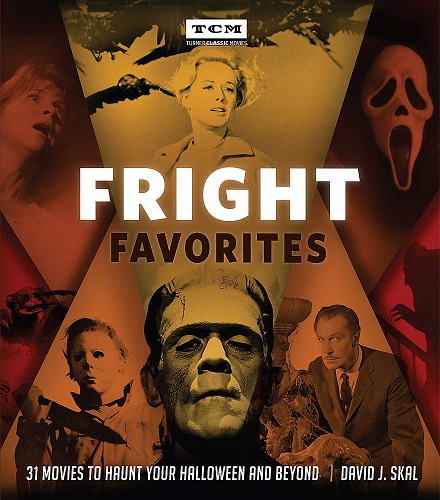
Horror Book Review: Fright Favorites by David J. Skal


Happy October!

Now, if you’re like those of us here at the Shattered Lens, you’ve already got your list of movies set up to go. You know exactly which horror movies you’re going to watch this year and you’re ready for a great Halloween! Good for you! However, for everyone else, David J. Skal’s Fright Favorites is a good place to start when it comes to making out your list.

The book is subtitled 31 Movies To Haunt Your Halloween and Beyond and that’s pretty much the perfect description. Skal writes about 31 classic horror films, analyzing both their content and discussing their historical importance and making a pretty good case why these should be the films that you watch this Halloween. (Actually, since there’s 31 films, you could easily watch a film a day.) Going in chronological order, Skal starts with silent classics like Nosferatu and The Phantom of the Opera and then goes all the way to modern classics like Get Out. Along the way, Skal discusses Universal classics like Dracula and Frankenstein, the Hammer films, the Corman Poe films, and, of course, films like The Exorcist, The Shining, Halloween, Beetlejucie, Scream, A Nightmare on Elm Street, and many more. He also recommends Hocus Pocus but we won’t hold that against him. He also devotes a chapter to Black Sunday (with a little mini-section about Surpiria) so Italian horror does not go unmentioned!

It’s a fun read, for both horror and non-horror fans. It’s a good starter for those who might not know much about the genre but, at the same time, there’s a lot here for those of us who already love the films. Skal’s appreciation of the genre comes through and, even if you’ve already seen the films that he recommends, it’s still interesting to consider his thoughts on them. This is one of those books that will remind you of why you fell in love with the horror genre in the first place.