Retro Television Review: Decoy 1.7 “Deadly Corridor”


Welcome to Retro Television Reviews, a feature where we review some of our favorite and least favorite shows of the past!  On Thursdays, I will be reviewing Decoy, which aired in Syndication in 1957 and 1958.  The show can be viewed on Tubi!
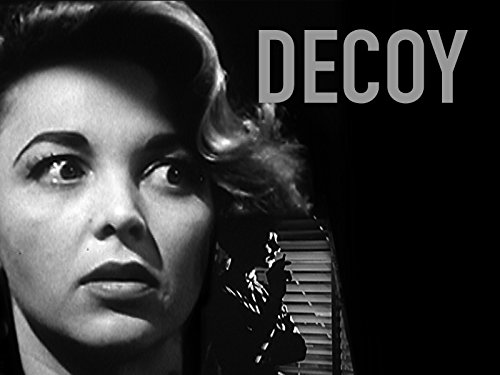
This week, Casey goes to prison!

Episode 1.7 “Deadly Corridor”

(Dir by Teddy Sills, originally aired on November 25th, 1957)

A murder has occurred in the medium security wing of a woman’s prison.  The Warden (Agnes Young) and the District Attorney (John Newton) asks Casey to go in undercover to discover who killed a prisoner.  Casey will pretend to be a prisoner and only the Warden will know that she’s actually a cop.  Casey won’t have her gun, her badge, or her usual backup.  It’s a dangerous assignment but the medium security wing will be shut down if there’s another incident.  The District Attorney starts to explain the importance of rehabilitation.  Casey replies, “I’m a police woman, not a sociologist.”  Casey accepts the assignment because that’s her job.

Casey’s in jail!  She has a really nice cell.  It comes with a dresser, a vanity mirror, a bed, a lamp, and a desk!  She’s even allowed to wear makeup in prison.  Sign me up!  Casey comes to suspect that the murder was committed by the butch Taffy (Colleen Dewhurst) but instead, it turns out the killer was the mentally-fragile Lois (Lois Nettleton).  Lois is a kleptomaniac and killed the other prisoner after she ratted Lois out to the warden and caused Lois’s sentence to be lengthened.  Lois subsequently attacks Casey because she’s worried that Casey is also “a fink” and Lois doesn’t want to end up spending any more time in prison.  She wants to be released in three months so she can finally visit the grave of her baby.  (Awwww!)  Unfortunately, by the end of this episode, it’s looking like Lois will be lucky to escape the electric chair.

This episode has all of the usual women-in-prison cliches but they were all handed in a way so as to not upset the 1950s television viewing audience.  For instance, the episode never came out and said that Taffy was a lesbian but the way she stared at Casey and ordered her to “come and see me,” didn’t really leave much doubt.  When Taffy beats up Casey, she’s establishing her dominance and reminding the viewer that no one can walk away from a fight in prison.  When Casey snitches to the warden, it’s because she wants to get Taffy out of the way for 24 hours so that Casey can investigate the murder.  Casey can get away with that because she’s a cop and she can always just go to the Warden and ask to be released from the prison.  If Casey were an actual prisoner, being labeled a snitch (or a “fink” as they apparently put it back then) would be a fatal error.

This episode had its campy moments but Lois Nettleton and Colleen Dewhurst both gave excellent performances and the final confrontation between Casey and Lois was actually pretty suspenseful.  To my surprise, this turned out to be a good episode.

Retro Television Review: Decoy 1.6 “The Savage Payoff”


Welcome to Retro Television Reviews, a feature where we review some of our favorite and least favorite shows of the past!  On Thursdays, I will be reviewing Decoy, which aired in Syndication in 1957 and 1958.  The show can be viewed on Tubi!

This week, Casey gets involved in the shady world of college athletics.

Episode 1.6 “The Savage Payoff”

(Dir by Teddy Sills, originally aired on November 18th, 1957)

When a college basketball player is killed in a car accident, the police discover evidence that he may have been throwing games for the mob.  Lt. Franklin (Bill Zuckert) suspects that the dead player’s best friend and roommate, Dave Carter (Don Hastings), might be taking money as well.  Disguising herself as the dead player’s sister, Casey introduces herself to Dave and befriends him in an attempt to discover the truth.  It turns out that the gangsters have been paying Dave off but, at the last minute, Dave decides not to throw the game and instead leads the team to victory.

This episode bothered me a little.  When the episode begins, there is no real evidence that Dave has been taking money from the mob.  Instead, Lt. Franklin just assumes that Dave is guilty and, with only his hunch to go on, he assigns Casey to befriend Dave and try to prove his guilt.  Obviously, there are times when the police have to go undercover but it was still hard not to feel that the police should have at least had some sort of solid evidence before upending Dave’s life.  The fact that Dave was both mourning his friend and was obviously attracted to Casey just made the whole thing feel all the more icky.  Indeed, a lot of Casey’s action in this episode seem like they would be considered to be entrapment.

Probably the most interesting thing about this episode was that Dave was played by a young Don Hastings.  If you’re like me and you grew up with an aunt who loved As The World Turns, you’ll immediately recognize him as Dr. Bob Hughes.  Hastings played Dr. Hughes for a record-setting 50 years and even spoke the show’s final lines when he said, “Good night” on September 17th, 2010.  Hastings gave a convincing performance as Dave.  I was happy to see him take a stand and refuse to fix the game.  I was also happy that Casey didn’t have to take him to jail.  That would have been depressing.

Speaking of jail, there’s where Casey’s going next week!  We’ll see what happens!

Retro Television Review: The Decoy 1.5 “Dream Fix”


Welcome to Retro Television Reviews, a feature where we review some of our favorite and least favorite shows of the past!  On Thursdays, I will be reviewing Decoy, which aired in Syndication in 1957 and 1958.  The show can be viewed on Tubi!

This week, Casey goes after a drug dealer.

Episode 1.5 “Dream Fix”

(Dir by Teddy Sills, originally aired on November 11th, 1957)

This week’s episode opens with Casey walking down a city street.  She tells us that she’s working Juvenile undercover, which apparently means that she just walks around the city and waits for a teenager to do something strange.  When she sees a teenage girl collapse on the sidewalk, Casey runs over to her and looks at the powder in her hand.  Casey tastes it.

“Heroin!” Casey snaps.

(How are cops always able to dip their fingers in random powers and then taste it without anything bad happening?  What if the cocaine turned out to be strychnine?  It just seems like a poor training and an unnecessary risk.)

Joanne Kittridge (Phyllis Newman) is indeed hooked on cocaine and heroin.  However, neither her rich father (Les Damon) or her attorney (Frank Bandimer) want her to work with the police to track down her dealer.  Her attorney arranges for Joanne to be sent to a rehab.  Casey’s lieutenant (played, in this episode, by Simon Oakland) assigns Casey to undercover as a nurse.

In the end, Joanne not only gets straight but she reveals that her drug dealer is her lawyer!  When the attorney pulls a gun on Joanne, Casey pulls her gun and shouts, “Freeze, police!”

This was a good episode, one that was well-acted by the entire cast and which featured Beverly Garland at her best.  (Garland even gets to show off some karate moves when she disarms the attorney.)  That said, it’s starting to bother me how almost all of Casey’s assignments seem to involve her pretending to be someone’s friend.  I get that she’s working undercover but it’s sometimes hard not to wonder what’s going to happen to people like Joanne after they realize that the only reason Casey talked to her in the first place was because someone ordered her to.

Retro Television Review: Decoy 1.4 “To Catch A Thief”


Welcome to Retro Television Reviews, a feature where we review some of our favorite and least favorite shows of the past!  On Thursdays, I will be reviewing Decoy, which aired in Syndication in 1957 and 1958.  The show can be viewed on Tubi!

This week, Casey investigates a case of insurance fraud.

Episode 1.4 “To Catch A Thief”

(Dir by Teddy Sills, originally aired on November 4th, 1957)

A thief and his girlfriend mug a business owner named Mr. Whitaker (John McGovern).  When the police capture the thief, Mr. Whitaker claims that more money was stolen from him than was recovered.  Casey is sent undercover to discover whether or not Whitaker is lying or if a cop actually skimmed the cash that they recovered.

Pretending to be the thief’s girlfriend, Casey approaches Mr. Whitaker and tries to blackmail him.  When Mr. Whitaker appears to be innocent, his secretary (Mary James) falls under suspicion.  Mr. Whitaker, however, is eventually exposed as trying to commit insurance fraud when he has a conversation with his secretary at the police headquarters.  Unfortunately, for him, the room was bugged.

This episode bothered me.  On the one hand, I didn’t want an innocent police officer to be suspended for stealing money that he didn’t steal.  On the other hand, having Casey go undercover as a blackmailer felt almost as if it verging on entrapment.  As well, I found it hard to understand why Mr. Whitaker would be fooled into thinking Casey was the one who had robbed him earlier.  Didn’t Mr. Whitaker see the people who mugged him?

This episode just didn’t work for me.

Retro Television Review: Decoy 1.3 “The Phoner”


Welcome to Retro Television Reviews, a feature where we review some of our favorite and least favorite shows of the past!  On Thursdays, I will be reviewing Decoy, which aired in Syndication in 1957 and 1958.  The show can be viewed on Tubi!

This week, Casey help to stop an obscene phone caller.

Episode 1.3 “The Phoner”

(Dir by Teddy Sills, originally aired on October 28th, 1957)

Betty Hodges (Pat Englund) has been getting obscene phone calls.  It’s the 1950s.  That means there’s no caller ID, there’s no cell towers to ping signals off of, there’s no way to block a number, the phone rings until its answered, and every call is made and taken on a landline phone.  This is the era when most calls were still connected by an operator.  Terrified of the calls but determined not to be chased out of the city like so many other young women who have targeted by the so-called Phoner, Betty calls the police.  Casey (Beverly Garland) moves in with Betty, pretending to be her sister.  When the phone rings, it’s Casey who will answer and it’s Casey who will have to keep the guy talking for five minutes while the phone company traces the call.

We don’t ever learn the name of the man making the calls.  In the credits, he’s listed as the Phoner.  Played by Frank Sutton, the Phoner is a sweaty man who makes his calls from a phone booth and who brags about how many girlfriends he claims to have  had.  (He’s the 50s version of an incel.)  We’re told that he says disturbingly obscene things over the phone but, this being a 50s show, we don’t hear any of them.  Of course, we don’t have to hear them.  Betty’s terrified reactions are all we need to see.

Eventually, Betty is attacked leaving work.  She stumbles out of an alley, her face beaten and her clothes torn.  And again, it’s the 50s.  So all we hear is that Betty has been attacked but anyone watching would understand what had happened.  In the hospital, Betty whispers to Casey.  When Casey is asked what Betty said, Casey replies, “She wishes she was dead.”

Eventually, the Phoner calls Casey back.  They set up a date in the park.  The Phoner doesn’t show up at the park but he does show up at the apartment later.  After a struggle, he’s subdued by Casey and the other cops watching the apartment.  Even though common sense tells the viewer that nothing too bad is going to happen to the show’s lead character, it’s still a tense scene, largely because of Frank Sutton’s feral performance as the Phoner.

This is a poignant episode, even if it did obviously have to hold back due to the censorship rules of the time.  Just as frightening as Sutton was as the Phoner, Garland was equally impressive as the determined Casey.  If I did have any problem with this episode, it’s that when she’s initially confronted by the Phoner, Casey doesn’t recognize his voice.  When a man threatens you, you never forget the voice.

This was a good episode.  Hopefully, the Phoner died in prison.

Retro Television Review: Decoy 1.2 “The Red Clown”


Welcome to Retro Television Reviews, a feature where we review some of our favorite and least favorite shows of the past!  On Thursdays, I will be reviewing Decoy, which aired in Syndication in 1957 and 1958.  The show can be viewed on Tubi!

This episode, Casey searches for a man who has abandoned his daughter so he can pursue a career as a painter of clowns.

Episode 1.2 “The Red Clown”

(Dir by Teddy Sills, originally aired on October 21, 1957)

Mike Foley (John McLiam) has quit has job and left his New York home.  His wife (Barbara Barrie) suspects that Mike has returned to Greenwich Village so that he can pursue his dream of being a painter.  Normally, this wouldn’t be a police manner but Mike has also left behind his daughter, Bobby (Barbara Myers), and is facing charges of child abandonment unless he starts paying child support.  Policewoman Casey Jones (Beverly Garland) works undercover, pretending to be a bourgeois art collector who wants to buy one of Mike’s horrid clown paintings.

This episode featured some wonderful on-location footage of New York City in the 1950s.  The history nerd side of me loved that.  I have to admit, though, that I found myself wondering whether or not Casey is actually that good at her job.  Bobby managed to follow Casey all the way to Greenwich Village without Casey noticing.  When Casey did notice, she did the whole thing where she went to a phone booth and told Bobby, “Stay here while I make a call.”  Well, of course, Bobby didn’t stay there.  Bobby went running off to look for her father.

(Was Bobby’s mother not concerned that her daughter was basically wandering around the city?)

Of course, if Bobby hadn’t followed Casey to Greenwich Village, they never would have found Mike.  Mike, it turned out, was living in a shabby building and spending all of his time painting.  He was pursuing his dream.  When Bobby asked him to come home, Mike replied that he had no interest in his old life and that he didn’t want anything to do with his family.  Mike’s harsh words left Bobby in tears.  The episode ended with Bobby playing in a playground a few wees later, with Casey watching her and telling us, “I think she’ll be okay.”  Yeah, I don’t think so, Casey.

The episode was depressing!  But I have to give the show a lot of credit for not having Mike have a sudden change of heart.  The truth of the matter is that he left his family because he was self-centered.  He didn’t become any less self-centered when he was confronted by his daughter.  After listening to Mike’s self-serving crap, Bobby dropped the clown doll that she carried with her as she searched for Mike, saying that she didn’t like clowns anymore.  It’s a painful lesson and a sad one but at least Bobby now knows that truth about her father.  Other than that playground coda, this episode had the guts not to give into false hope.

Next week: Casey deals with an obscene phone caller!

Retro Television Review: Decoy 1.1 “Stranglehold”


Welcome to Retro Television Reviews, a feature where we review some of our favorite and least favorite shows of the past!  On Thursdays, I will be reviewing Decoy, which aired in Syndication in 1957 and 1958.  The show can be viewed on Tubi!

This week, we start a look at Decoy, a show that will hopefully be a considerable improvement on Malibu CA!

Episode 1.1 “Stranglehold”

(Dir by Don Medford, originally aired on October 17th, 1957)

“There are 249 of us in the Department. We carry two things in common wherever we go – the shield, called a “pottsy”, and a .32 revolver. We’re New York’s finest …. we’re police women.”

Those are the words that end the first episode of Decoy and they’re delivered by Casey Jones (Beverly Garland), a former ballet dancer who now works undercover as a member of the NYPD’s Department of Policewomen.  Casey holds up her revolver for the audience to see, leaving them no doubt that she’s telling the truth.  A woman who know how to handle a gun!?  Audiences in 1957 were no doubt stunned.

Of course, the audience had also just spent 25 minutes watching Casey work undercover.  After a merchant seaman is murdered and a woman named Molly Orchid (Joanne Linville) is caught with some of his jewelry, Casey is sent to live across the hall from Molly.  (Casey is also living in the dead man’s apartment.  Casey, a true New Yorker, comments that she’ll do anything to get a good apartment.)  After hiding her gun in a lighting fixture and hiding her badge under her blouse, Casey befriends Molly and tries to meet George, the mysterious boyfriend that Molly says gave her the jewelry.

Molly loves to talk about George but George never seems to be around.  Molly says that George is a musician and that he’s often out of town.  Casey comes to feel sorry for Molly, feeling that the emotionally vulnerable woman is being manipulated by George.  Whereas the male cops would just as soon shoot Molly than try to negotiate with her (this entire show is from the pre-Miranda era), Casey does her best to reason with Molly.  That is the difference between a policewoman and a policeman.

Of course, as you probably already guessed, there is no George.  Casey eventually figures it out after she realizes that Molly has been going to the movies alone as opposed to meeting up with George.  Molly, spotting Casey’s gun, grabs it and finally admits the truth.  The merchant seaman tried to assault her and Molly strangled him in self-defense.  George is a figment of her imagination, someone who she made up as a way to deal with her guilt.  A policeman barges into the apartment and points his gun at Molly but Casey steps in front of him and then manages to talk Molly down.

The first episode of Decoy was distinguished by some on-location shooting in New York City and the performances of Joanne Linville and especially Beverly Garland.  Garland’s empathetic but strong-willed performance dominates the show and it leaves us with little doubt that Casey Jones is the best at what she does.  Meanwhile, Linville, in the role of Molly, may be dangerous but she’s also sympathetic.  Her crime was initially one of self-defense and George was someone she created as her way of surviving in a world where no one was willing to look out for her.

Next week: Casey searches for a missing artist.

Horror Film Review: It Conquered The World (dir by Roger Corman)


“Man is a feeling creature, and because of it, the greatest in the universe….”

So says scientist Paul Nelson (Peter Graves) towards the end of 1956’s It Conquered The Universe.  Paul may be a scientist but he understands the importance of emotion and imagination and individuality.  He knows that it’ll take more than just cold logic to save humanity from destruction.

Unfortunately, Paul’s best friend, Tom Anderson (Lee Van Cleef), disagrees.  Tom worked at Los Alamos.  Tom helped to develop the atomic bomb.  Tom is convinced that humanity will destroy itself unless a greater power takes over.  Tom feels that he has discovered that greater power.  Tom has recently contacted a Venusian and invited it to come to Earth.  Upon arriving, the Venusian promptly disrupts all electrical power on Earth.  It sends out bat-like creatures that inject humans with a drug that takes control of their minds and turns them into a compliant slaves.  Paul tells Tom that robbing people of their free will is not going to save the Earth but Tom remains committed to the Venusian, even as it becomes obvious that the Venusian’s main concern is with its own survival.

It Conquered The World is very much a film of the 1950s.  Along with tapping into the era’s paranoia about nuclear war and UFOs, it also features Peter Graves delivering monologues about freedom and the inherent superiority of the human race.  When Paul confronts Tom, he not only accuses Tom of selling out the Earth but he also attacks Tom’s patriotism.  When Tom’s wife, Claire (Beverly Garland), confronts the alien and orders it to leave her plant along, she does it while wearing high heels and a tight sweater and holding a rifle.  The one female scientist (played by Karen Kadler) spends most of her screentime being menaced while wearing a white slip and there’s a platoon of bumbling but unbrainwashed soldiers hanging out in the woods.  If one looked up 1956 in the dictionary, there’s a very good chance this film would be the definition.

At the same time, the film’s story feels like a metaphor for modern times.  When the Venusian-controlled police turn authoritarian and start threatening to punish anyone who questions their orders, we’re reminded of the excesses of the COVID lockdowns.  When the editor of the town’s newspaper is shot by a policeman who says that words are no longer necessary in the new world, it’s hard not to think of all the writers, commentators, artists, and ordinary citizens who have run afoul the online cancellation brigade.  When Paul is reduced to riding a bicycle from place to place, it’s hard not to think of the environmental Luddites, with their hatred of anything that makes life more convenient.  When Tom rationalizes his activities by saying that humanity must be saved from itself, he’s expressing an opinion that is very popular among several people today.  Tom’s embrace of cold logic feels very familiar.  Of course, today, people don’t need a Venusian to order them to accept authoritarianism.  Instead, they’re more than happy to do on their own.

It Conquered The World was directed by Roger Corman.  It was his eighth film as a director and it remains one of his most entertaining.  As one might expect from a low-budget sci-fi film, It Conquered The World produces it’s share of laughs.  It’s hard not to smile at the sight of the extremely serious Peter Graves peddling his bicycle from location to location.  (It doesn’t help that Graves never takes off his suit or loosens his tie.)  And the Venusian simply has to be seen to be believed:

At the same time, It Conquered The World holds up well.  Lee Van Cleef and Beverly Garland both give performances that transcend the material, with Van Cleef especially doing a good job of paying a man struggling to rationalize his bad decisions.  It Conquered The World holds up today, as both a portrait of the 50s and 2024.

Horror Film Review: The Alligator People (dir by Roy Del Ruth)


You know what the worst bayou is?

Bayouself.

Thank you!  I’ll be here all night and don’t forget to tip your server!

Anyway, the 1959 film, The Alligator People, largely takes place in the bayous of Louisiana.  Nurse Jane Marvin (Beverly Garland) is suffering from amnesia so she allows two psychiatrist to give her a dose of truth serum and then, when she’s in a hypnotized state, she proceeds to remember her former life as Joyce Webster.

Joyce married a handsome and seemingly perfect man named Paul Webster (Richard Crane) but, right when they were about to go on their honeymoon, he received a telegram that disturbed him.  After he made a phone call, he vanished from Joyce’s life.  Joyce did some research of her own and discovered that Paul’s former home was the Cypresses Plantation in the small town of Bayou Landing, Louisiana.

When Joyce travels down to Bayou Landing, she discovers that there’s really not much there, other than a bunch of hungry alligators.  She meets the owner of the plantation, Lavinia Hawthorne (Frieda Inescort).  She also meets the handyman, Manon (Lon Chaney, Jr.), a one-handed brute who spends most of his day shooting at alligators.  And, eventually, Joyce comes across her husband but Paul is no longer the man that she remembers.

Paul’s skin is scaly and he only comes out at night.  It turns out that Paul was, long ago, injected with a serum that would allow him to grow back a missing limb.  The serum worked as far as the limb was concerned but an unfortunate side effect is that Paul is now turning into an alligator!  Dr. Mark Sinclair (George Macready), the man who came up with the serum in the first place, is hopeful that he can reverse the process but, to do so, he’s going to need a lot of radioactive material.

Complicating things is that Manon has decided that he wants Joyce for himself and he’s certainly not going to compete with some alligator man for her attention.  Of course, Joyce despises Manon from the first moment she sees him but Manon’s not that smart.  Can Paul be cured before Manon destroys everything?

The Alligator People is one of those 1950s B-movies that is probably better-known for its name than anything else.  That said, when taken on its own terms, it’s an entertaining watch.  It was one of the final films to be directed by Roy Del Ruth, who had previously been one of Hollywood’s top directors of musicals and comedies.  There’s not much music or deliberate comedy to be found in The Alligator People but Del Ruth does manage to capture the humid stillness of the bayous.  As always, Beverly Garland gives a strong performance as a determined woman who isn’t going to be told what to do and Richard Crane is about as convincing as one can be while turning into an alligator.

As for Lon Chaney, Jr, he plays Manon as being a total monster and he gives a convincing performance, even if it is hard not to mourn the loss of the shadings that he brought to his monster roles while he was with Universal.  Manon is a rough and determinedly unintelligent character, one who exists only to destroy.  Significantly, he’s not one of the Alligator People.  Instead, he’s just a man who doesn’t care about anyone but himself.

The Alligator People is an effective B-movie, full of a bayou atmosphere.

Retro Television Reviews: The Weekend Nun (dir by Jeannot Szwarc)


Welcome to Retro Television Reviews, a feature where we review some of our favorite and least favorite shows of the past!  On Sundays, I will be reviewing the made-for-television movies that used to be a primetime mainstay.  Today’s film is 1972’s The Weekend Nun!  It  can be viewed on YouTube!

By day, Marjorie Walker (Joanna Pettet) is a probation officer who, some might say, cares just a little too much.

By night and on the weekends, she’s Sister Mary Damian, a nun who has taken the three vows of poverty, chastity, and obedience.

Mother Bonaventure (Ann Sothern) isn’t sure that she’s happy about Sister Damian working as a probation officer.  And the tough and cynical Detective Chuck Jardine (Vic Morrow) certainly isn’t happy when he discovers that the reason why Marjorie has never invited him into her home for a drink is because she lives at a convent.  But Marjorie is determined to make a difference, especially in the life of a troubled teen runaway named Audree (Kay Lenz).

Now, this may sound like the premise of a socially relevant sitcom and, indeed, The Weekend Nun is one of those titles that might lead some to expect wacky hijinks and an intrusive laugh track.  However, The Weekend Nun is not only loosely based on a true story but the film also takes itself very seriously.  From the minute that Sister Damian agrees to take part in a program that would allow her to work a real job during the day while returning to the convent at night, she’s exposed to the harsh realities of the world.  She goes from being sheltered to dealing with distraught parents, drug addicts, teen prostitutes, and violent criminals.  Because Captain Richardson (James Gregory) doesn’t want anyone to feel uncomfortable, he hides the fact that she’s a nun.  Of course, this leads to be people like Chuck Jardine wondering why Marjorie is so shocked when she witnesses the thing that he has to deal with a day-to-day basis.

And, indeed, the film’s biggest flaw is that Marjorie is often portrayed as being ridiculously naïve.  The film acts as if spending time in a convent is somehow the equivalent of spending a decade hiding out in a bomb shelter or something.  (Speaking as a Catholic school survivor, nuns are usually some of the least naïve people around.)  Marjorie is portrayed as being such a wide-eyed innocent that it’s hard not to wonder why she was hired to work as a probation officer in the first place.  Of course, Marjorie quickly gets an education on just how dangerous and unforgiving life on the streets can be and she soon has to make a choice between being a nun or being a probation officer.  Will she give her life to God or will she potentially give it to Vic Morrow?

Joanna Pettet overplays Marjorie’s innocence but that’s more the fault of the script than anything else.  James Gregory, Vic Morrow, and Ann Sothern are all believable as the authority figures in Marjorie’s life and Kay Lenz has a few good scenes as the teenage runaway who Marjorie tries to save.  Beverly Garland has a small but brief role as Lenz’s horrifically unconcerned mother.  It’s a well-acted film, regardless of any other flaws.

The Weekend Nun is not perfect but it’s still preferable to The Flying Nun.  It’s a sincerely heartfelt film, one that’s earnest in a way that can seem a bit quaint but which is still likable when watched today.  For better or worse, there’s not a hint of snark to be found.