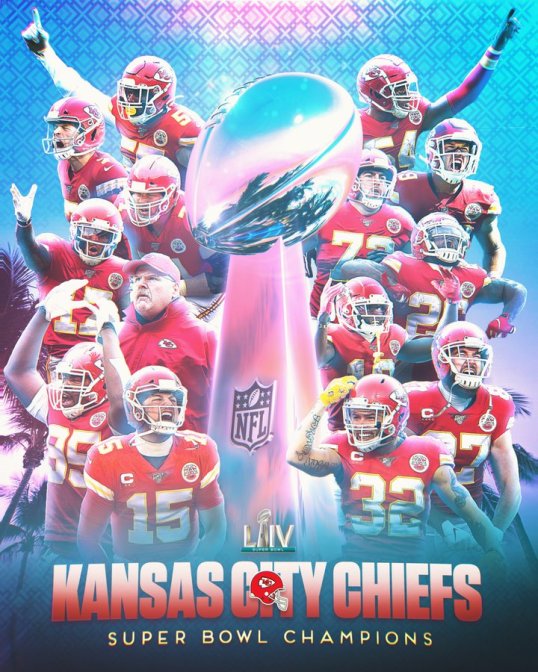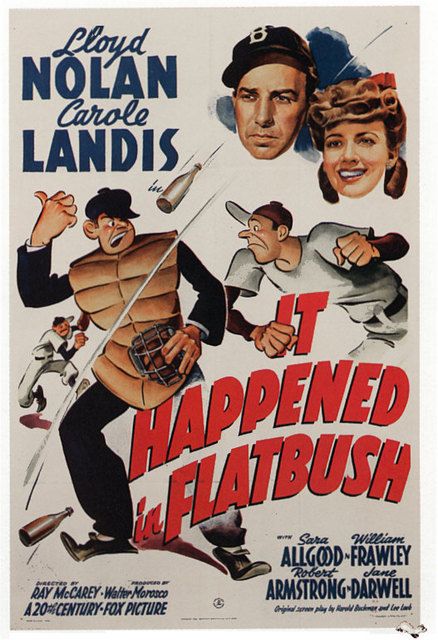
It Happened In Flatbush (1942, dir. by Ray McCarey)


It’s not easy being a Rangers fan.

I start every season feeling so optimistic and hopeful that this will be the season that the team will finally get itself together and return to the World Series. Every season, that feeling lasts for a game or two and then it’s back to just taking my victories where I can get them. This season, we’re already in last place in the AL West and my favorite Ranger, Elvis Andrus, is now playing for Oakland. However, as bad as things are here at the start, we’ve still won more games than the Yankees, The Twins, and the Tigers. That’s my little victory. The great thing about baseball is that if you get enough of those little victories, there’s a chance that they’ll eventually turn into a big victory.

Earlier today, I watched an old, black-and-white movie called It Happened In Flatbush. It’s about a baseball team that no one is giving much of a chance. Even though the team isn’t given a name in the film, the film takes place in Brooklyn and, in the 1942, the Dodgers were Brooklyn’s team. The owner of the team, Mrs. McAcvoy (Sara Allgood), has promised all of the team’s fans that the team is going to reward their loyalty by eventually making it to the World Series. Looking for a new manager, she sets her eyes on Frank Maguire (Lloyd Nolan). Maguire used to play for the team until he committed an error that led to a crucial defeat. Now, Frank is managing a minor league team in Texas and everyone thinks that he’s washed up. Mrs. McAvoy knows that Frank has something to prove and she hires him to be her new manager.

Just like the team, no one gives Frank much of a chance but he proves them wrong. He wins over the people of Brooklyn when he stands up for a fan who lived out every baseball lover’s dream of punching an umpire. When Mrs. McAcoy dies and the team is inherited by her daughter (Carole Landis), Frank teaches her all about baseball and Brooklyn and the two of them fall in love. With his team sometimes grumbling about his tough coaching style, Frank tries to lead both the team and an untried pitcher into the race for the pennant.

It Happened in Flatbush is an old movie but I liked it. Of course, I also love baseball so that probably helped because the move loves baseball too. I especially liked the courtroom scene where Frank stood up for every fan who has ever gone overboard supporting their team. He talks about what the team means to the people of Brooklyn and how a victory for the team is a victory for the entire borough. Even today, any baseball fan will be able to relate to what Frank’s saying. I also liked that the movie included a lot of footage of actual baseball games from the 40s.

Mostly, I appreciated the movie because it was a classic underdog story. No one gives the team much of a chance but they prove them wrong. It reminded me that, in baseball, anything can happen and just because your team is struggling now, that doesn’t mean that they can’t make a comeback. Watching It Happened in Flatbush made me realize that there’s hope for my team yet!

It Happened in Flatbush is a movie for those of us who love baseball. It isn’t available on any streaming services but it does sometimes air on the Fox Movie Channel.
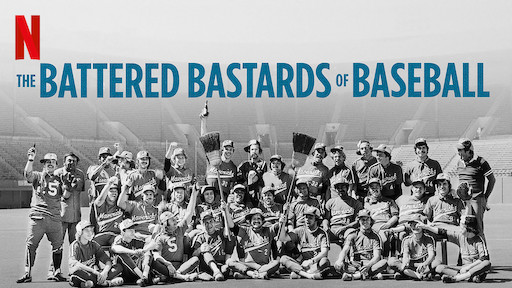
The Battered Bastards of Baseball (2014, dir. by Chapman Way and Maclain Way)


If you’re like me and you’re already missing baseball, I recommend watching a documentary called The Battered Bastards of Baseball.

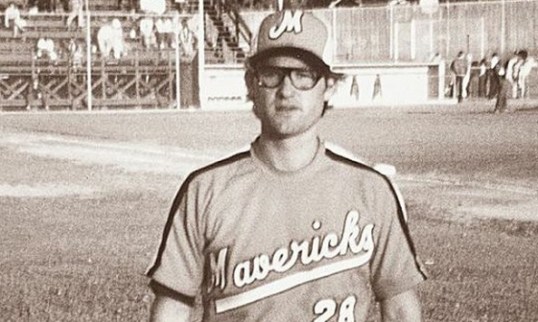
In 1972, Portland, Oregon lost their minor league baseball team when the Portland Beavers abandoned the city in order to become the Spokane Indians.  At the same time, actor Bing Russell, a former minor leaguer and the father of Kurt Russell, had grown tired of Hollywood and was looking to get back into baseball.  Relocating to Portland, Russell announced that he was going to start his own independent minor league team, the Portland Mavericks.

At first, no one took the Mavericks seriously.  Because they weren’t affiliated with a major league team, the Mavericks roster was largely made up of misfits and rulebreakers, many of whom had been released from other organizations and who had been blacklisted from the major leagues.  On average, most of the Mavericks players were older than the average major leaguer.  Many of them were players who were looking for one last shot at glory and Bing refused to cut any of them because he felt that that they deserved that chance.  When the skeptical media asked Bing what the Mavericks were going to offer that other baseball teams couldn’t, he replied, “Fun.”

And he delivered.  From 1973 to 1977, the Mavericks played exciting baseball, won divisional and league titles, and, most importantly, they put on a good show.  Playing mostly for the love of the game (because Russell never had much money to spend on salaries), the Mavericks reminded people of what baseball was all about.  They pulled off amazing plays on the field while their off-field antics were legendary.  The Mavericks played baseball the way that people wanted to see baseball played, with one manager living every fan’s dream by punching an umpire.

The Battered Bastards of Baseball tells the story of the Mavericks and Bing Russell.  It features archival footage of the Mavericks at play, along with interviews with people like Kurt Russell, who briefly played for the Mavericks and then served as one of their vice presidents.   The documentary pays tribute to the players who never gave up, the fans who eventually welcomed them to a new town, and most of all to the vision and determination of Bing Russell.  Even while Bing was bringing the fun back to baseball, he was also breaking down other barriers by hiring professional baseball’s first female general manager, as well as the first Asian American general manager.

Most importantly, though, The Battered Bastards of Baseball reminds us of why people love baseball in the first place.  It celebrates the game, the players, and most of all the fans.  It’s a documentary that will just leave you in a good mood.  That’s something we all could use!

Kurt Russell as a Maverick

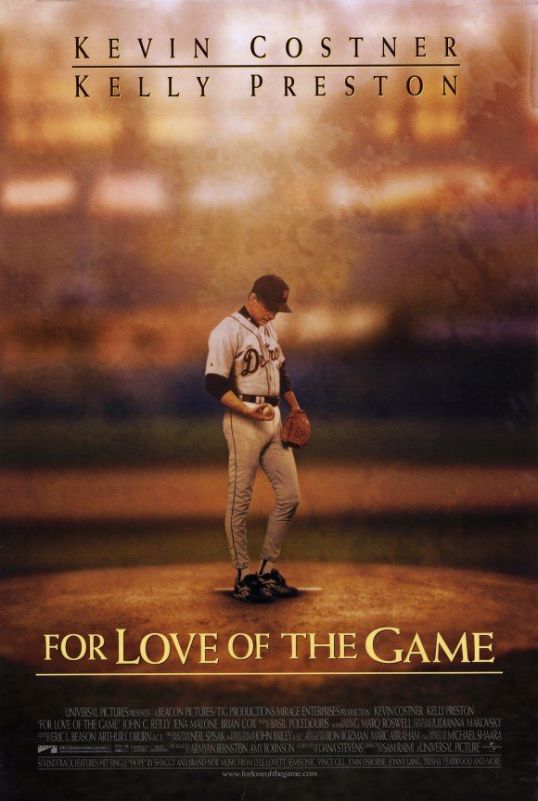
For Love of the Game (1999, dir. by Sam Raimi)


Last week, the Dodgers won the World Series and brought the 2020 MLB season to a close.  For me, it was a disappointing season because the Rangers ended up with the worst record in the American League and came nowhere close to the playoffs.  I should be used to that by now but it still hurts every season.

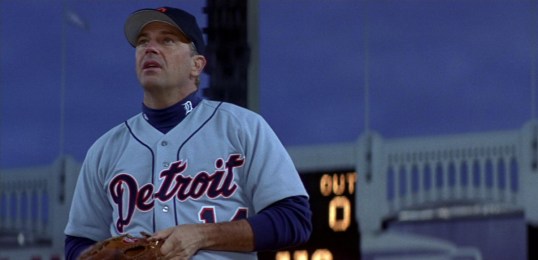
If only we could have had a pitcher like Billy Chapel, who Kevin Costner plays in For Love of the Game.  Billy Chapel is a forty year-old veteran who has been playing baseball his entire life and who has spent his entire major league career as a member of the Tigers.  Before the start of the team’s final game against the Yankees (the Yankees have already clinched the playoff berth while the Tigers are at the bottom of their division, kind of like my Rangers), Billy is told that the Tigers have been sold and that Billy is going to be traded to the Giants.  Will Billy go to San Francisco or will he retire and go to London with the woman he loves, Jane Aubrey (Kelly Preston)?

That’s the decision that Billy is going to have to make.  But first, Billy’s going to throw a perfect game against the New York Yankees.

While Billy is pitching the game, he’s also thinking about Jane and having flashbacks to how they first met and fell for each other.  Billy loves Jane but he also loves playing baseball and it keeps the two of them apart.  Jane doesn’t want to be a baseball groupie and she needs a man who she knows is going to be there for her and her daughter, instead of spending most of the year traveling around the country.  Billy, meanwhile, doesn’t want to give up the game that’s defined his life.  As Billy throws his perfect game, he has to decide whether or not to keep playing until he can no longer get the ball across the plate or whether to start a new chapter with Jane.  Meanwhile, Jane is stuck in an airport, watching Billy play the game of his life.

For Love Of The Game is a good love story but it’s a great baseball movie.  I loved the scenes of Billy standing out on the mound, carefully evaluating each batter while blocking out all of the noise around him.  (The only villains in this movie are the New Yorkers who won’t stop yelling at Billy during the game.)  I enjoyed the interplay between Billy and the catcher (John C. Reilly) and I especially appreciated the way that the movie showed that it takes more than a good pitcher to have a perfect game.  It takes teamwork and focus.  It’s not just Billy’s perfect game.  It’s the entire team’s perfect game.

For Love of the Game may be a romantic drama but it’s also a celebration of everything that makes baseball great.  It’s America’s pastime and this movie shows why.  Watching Billy Chapel get his perfect game made me look forward to seeing what will happen next year.  Who knows?  Maybe the Rangers will even shock everyone and make the postseason.  If Billy Chapel can throw a perfect game while playing the Yankees in New York City, then anything can happen!

The Stratton Story (1949, dir. by Sam Wood)


Monty Stratton was one of the greats.

He was a Texas farmboy who knew how to throw a baseball.  Recruited by the Chicago White Sox, he spent five years in the majors.  From 1934 through 1938, he compiled a 36–23 record with 196 strikeouts and a 3.71 ERA in 487.1 innings.  In 1937, he won 15 games with a 2.40 ERA and five shout-outs.  The next season, he won another 15 games and completed 17 of his 22 starts.  For those of you who might not speak baseball, that all means that he was a really good right-handed pitcher.

When Stratton wasn’t playing baseball, you could find him down on his farm in Greenville, Texas.  He lived there with his wife, Ethel.  On November 27th, 1938, Monty Stratton was hunting rabbits when he accidentally shot himself in his right leg.  While Stratton survived the shooting, his leg was amputated, bringing Stratton’s major league career to an end.

No longer able to play in the majors, Monty Stratton spent the next few years as a pitching coach and helping to start a semi-pro team in Greenville.  With the help and encouragement of his wife, he continued to practice his pitching and he eventually trained himself to the point where he could transfer his weight effectively onto his artificial leg so that he could effectively throw a baseball.  In 1947, Monty Stratton made a comeback, pitching in the minors and ending the season with an 18–8 record and a 4.17 earned run average.  Stratton spent the next six years pitching in the minors before retiring from the game.  He went on to start the Greenville Little League program.  If you go to Greenville, you can still find Monty Stratton Field near Greenville High School.

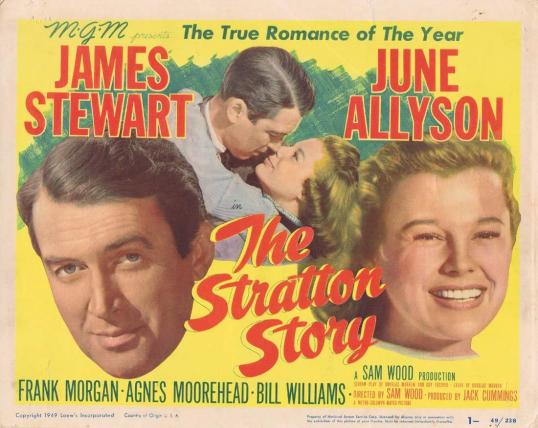
The Stratton Story was made in 1949, shortly after Stratton’s comeback and while he was still playing in the minors.  James Stewart plays Monty Stratton while June Allyson plays his wife.  The movie follows Stratton from his early days on the farm through his major league career, his accident, and his eventual comeback.  Though the real Monty Stratton served as a technical advisor to the film, I don’t know how historically accurate it was.  The movie, for instance, seemed to condense the timeline so that it seemed like Stratton went straight from losing his leg to practicing for his comeback when it actually took ten years for Stratton to eventually get signed to a minor league team.  Even if it does take some liberties from the facts, The Stratton Story is still a good movie.  The baseball scenes are great and Jimmy Stewart is convincing when he’s throwing the baseball.  He’s also convincing in the scenes where Stratton sinks into a dark depression after losing his leg.  Stewart was so good in the role that, when Stratton finally started to practice his pitching again, I wanted to jump up and cheer.

I liked The Stratton Story.  It probably helps that I love baseball but it’s also a good movie about an inspiring story.

Major League (1989, dir. by David S. Ward) and Major League II (1994, dir. by David S. Ward)


I’m so excited that baseball’s back!

The 2020 regular season of Major League Baseball is going to start on July 22nd and it’s going to last until September 27th.  The teams will play 60 games and the World Series will be held in October.  It’s an abbreviated season but there was no way to avoid that.  I’m just happy that there will at least be some games played this year.

Of course, as excited and happy as I am, I can’t deny that baseball almost always breaks my heart.  Just a few years ago, I was so excited when a Texas team finally won the World Series.  Later, we all found out that the Astros won because they cheated, which will forever taint both the legacy of the team and the MLB.  It breaks my heart to say it but, as far as I’m concerned, no Texas team has yet to legitimately win the World Series.

And then there’s the Rangers.  I’m a Rangers fan.  I love the Rangers.  I was so excited the two times that they made it to the World Series and I’ve never gotten over their loss to the Cardinals.  (Their loss to the Giants I can accept because the Giants were a great team and they earned their wins.  The Cardinals, on the other hand…)  Ever since 2012, though, the Rangers have always broken my heart.  It’s been a while since we’ve had a great Rangers season.  At the start of every season, though, I say, “This is our season!”  And no matter how badly things end, I always say, “Next season, we’re going all the way!”

I guess that’s why I love Major League.

Major League is the ultimate underdog baseball movie.  It’s a film about a fictional version of the Cleveland Indians.  Rachel Phelps (Margaret Whitton), the new owner of the Indians, wants to move the team to Miami but to do that, she’s going to need to have the worst season ever, one where the team plays so badly and breaks so many hearts that even the most loyal fans stop coming to the games.  It shouldn’t be too hard since the Indians have’t even won a pennant in over 30 years.  But to make sure that it happens and that the team only wins 15 games over the entire season, Phelps recruits the worst players she can find.

The team that she puts together is made up of has-beens and never-weres.  Some of them have raw talent but none of them know how to play as a team.  Ex-con Ricky Vaughn (Charlie Sheen) has a killer fastball but is so near-sighted that he’s a danger whenever he steps on the mound.  Catcher Jake Taylor (Tom Berenger) is a veteran team leader but his knees are so bad that he can barely walk.  Willie Mays Hayes (Wesley Snipes) is fast but can’t hit worth a damn.  Pedro Cerrano (Dennis Haysbert) can hit home runs but only if the pitcher throws him a fastball.  Just as Rachel expected, the team struggles at first.  Even when they start to show signs of improvement, she cut back on their budget and sells their equipment, all to try to make winning impossible.  It’s only when their manager, ex-drywall salesman Lou Brown (James Gammon), tells them that Rachel wants them to lose that the team comes together and starts to win.

Everything that’s great about baseball can be found in Major League.  I love all the scenes with the fans slowly coming around to believing that maybe the Indians actually could win it all.  I’ve been through that so many times with the Rangers that I know exactly how they all felt.  I love the interactions between all the players on the team, from the new players eager to win to the veterans who just want to survive another season.  I love the scenes with the play-by-play announcer (Bob Uecker) trying to put a good spin on the way the team plays.  (All together: “Just a bit outside!”)  And mostly, I love that the film treats the game and its players with the respect that they deserve.  So many other films would have turned a character like born-again pitcher Eddie Harris (Chelcie Ross) into a punchline.  Instead, in Major League, he gets a standing ovation after he pitches his last game.  The best thing about Major League is that it loves baseball, both the games and the players.

Since Major League was a success at the box office, it was eventually followed by a sequel, Major League II.

Major League II picks up the season after the first movie ended and it tells the exact same story as the first film, just not as well.  Almost everyone from the first film is back (though Omar Epps takes over the role of Willie Mays Hayes from Wesley Snipes) but the charm and the chemistry from the first movie just aren’t there.  The players have to set aside their egos and learn how to play like a team all over again.  The main difference between the two movies is that it takes a lot longer for the Indians to start winning in the sequel than in the first film.  Plus, the sequel just isn’t as funny.

Even if the sequel is a let down, the first Major League is still one of the best baseball movies ever made.  If the Indians could win the pennant in Major League, maybe there’s hope for my Rangers yet!

Bang The Drum Slowly (1973, dir. by John Hancock)


The last time I wrote a film review for this site, it was because I was missing baseball.

Guess what?

I still miss baseball!  Luckily, I’ve still got plenty of baseball films to keep me busy until the MLB gets its act together and starts up again.  I hope we’ll get baseball this year but if we don’t, at least I can watch a movie like Bang The Drum Slowly.

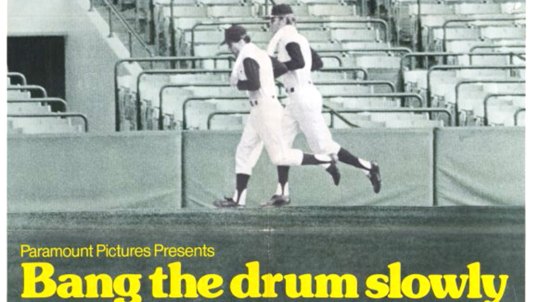
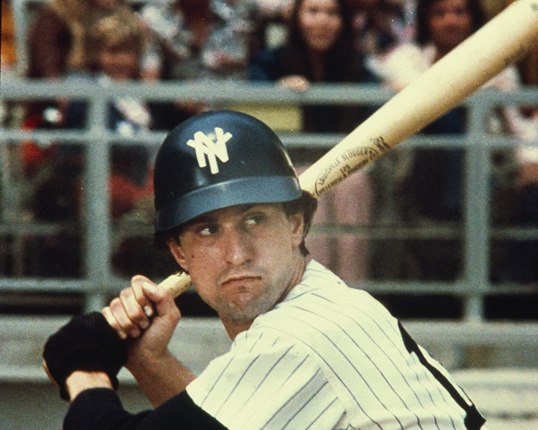
Bang The Drum Slowly is the ultimate baseball movie.  It’s about a pitcher named Henry Wiggin (Michael Moriarty) who plays for the New York Mammoths and who has a side job selling insurance and writing books.  When it’s time to renegotiate his contract, Henry says that he’ll re-sign with the team if the team agrees to not release or trade one of their catchers, Bruce Pearson (a really young Robert de Niro).  Henry says that he and Bruce are a package deal.  No one can understand why Henry cares because Bruce isn’t an outstanding player and everyone thinks that he’s slow but Henry finally gets the team’s general manager, Dutch (Vincent Gardenia), to agree to his terms.  What only Henry knows is that Bruce is terminally ill and that he will be lucky to survive the entire season.

Though the Mammoth eventually make a run for the World Series and there’s a lot of great baseball footage, Bang the Drum Slowly is more about friendship than it is about winning or losing.  Henry is willing to sacrifice everything to make sure that Bruce enjoys his final days and Bruce finally gets to play on a wining team.  Because Bruce is so young and he appears to be so healthy for most of the film, it’s really devastating when he suddenly does get ill and he’s finally has to come to terms with his mortality.  I cried a lot while I was watching Bang The Drum Slowly.  You will too.

The other players eventually rally around Bruce and they become a stronger teams as a result.  That’s one of the things that I love about baseball.  One player, no matter how good, can’t win a game on his own.  Instead, the entire team has to work together.  Not everyone can go out and try to hit a home run.  That’s not the way you win at baseball.  Instead, you win by doing what you have to do to bring your teammates home.  Bang The Drum Slowly celebrates friendship and loyalty and it perfectly captures the spirit of the game.

We may not be able to watch baseball right now.  But at least we can watch movies like Bang The Drum Slowly.

The Rookie (2002, dir. by John Lee Hancock)


I miss baseball!

I know that the regular MLB season being delayed (or even — gasp! — cancelled) is hardly the worst thing that we have to deal with right now but I still really miss watching baseball!  I miss the swing of the bat, the sounds of the stadium, and I even miss getting upset over the Rangers having a disappointing season.  I’ve been dealing with my grief by watching old games and a lot of baseball movies.  It’s not the same as getting to watch a real game but I guess it’s as good as things are going to get right now.

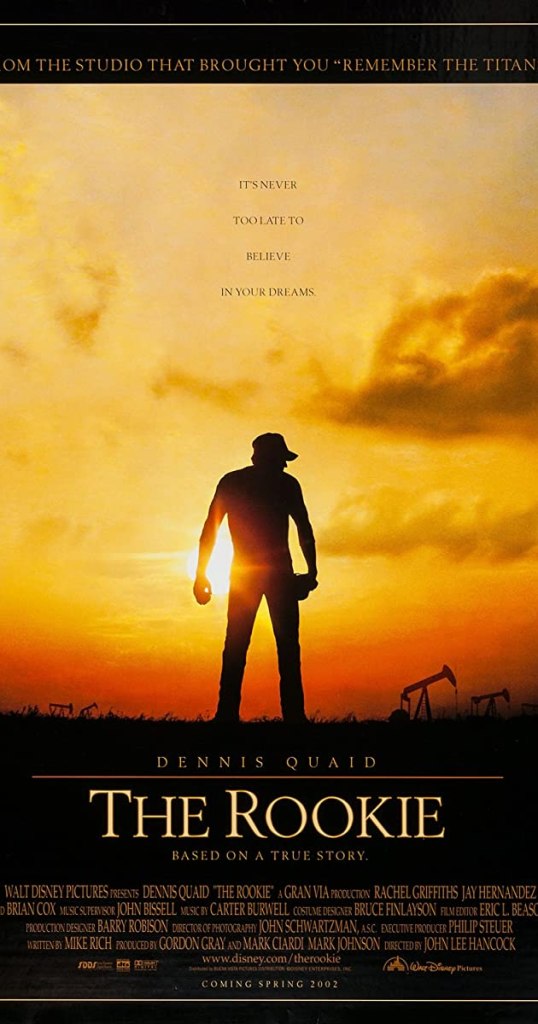
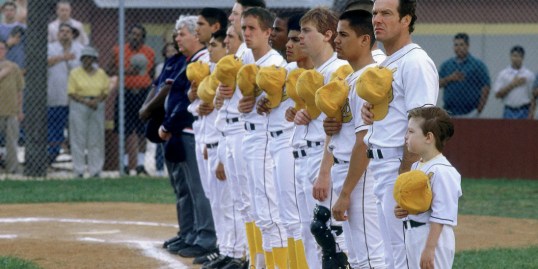
When the quarantine stated, one of the first baseball movies that I watched was The Rookie.  Starring Dennis Quaid (who gives a really good performance), The Rookie is based on the true story of Jim Morris, a former minor league pitcher who retired from playing the game after injuring his arm and took a job coaching baseball for Reagan County High School in Big Lake, Texas.  In 1999, Morris promised his players that if they managed to win the district championship, he would try out for a major league baseball team.  When his team went on to win the championship, Morris honored his side of the bargain by trying out for the Tampa Bay Devil Rays.  Even though no one expected Morris to make it onto the team, he was given a chance because it was felt that it would be good publicity.  The 35 year-old Morris shocked everyone by throwing a 98 mph fastball.  The team started Morris out in the minors and then, when the roster expanded in September, called him up to the majors.  At an age when many other players were calling it quits, Morris made his major league debut at the Ballpark in Arlington and struck out Royce Clayton.

Though I’m sure it probably takes a lot of liberties with Morris’s story, I really like The Rookie.  It’s a really sweet movie that was filmed on location in Texas.  It’s one of my favorite baseball movies because it captures everything that I love about the game.  It’s about more than just who wins or who struck who out.  It’s about teamwork and healthy competition and fairplay.  (Or, at least, that’s what baseball should be about.  That’s one reason why the Astros cheating scandal hurts so much.  For me, it’s not just that the first Texas team to win the World Series did so dishonestly.  It’s that what they did goes against the spirit of baseball.)  I liked that the movie is as much about Jim coaching his high school team as it was about him eventually getting to play a few games in the majors.  The whole reason that Jim even tried out for the Devil Rays was to keep a promise to his high school team and, in a perfect world, that’s what baseball would be all about.

The Rookie is not just a baseball movie.  It’s also a movie about never giving up on your dreams.  Jim Morris may be happy coaching high school baseball but he’s never stopped thinking about how he once dreamed of playing in the major leagues.  Even he’s surprised when he discovers that he’s still a good pitcher.  (My favorite scene is him throwing a baseball at one of those radars that tells how fast you’re driving.  He only thinks he’s throwing a 78 mph fastball and it’s only after he drives off that the full sign lights up and reveals that he was throwing 98 mph.)  When Jim makes his major league debut, it’s real stand up and cheer moment.

Here’s hoping that we’ll all be back at the ballpark soon!

Congratulations To The Super Bowl 54 Champions, the Kansas City Chiefs!


Congratulations to the Kansas City Chiefs on their amazing come from behind victory in the Super Bowl tonight!  I thought that the 49ers had it all wrapped up until the final six minutes of the game when the Chiefs came alive and scored two touchdowns, giving them a 31-20 victory and their first Super Bowl title in 50 years!  It was a great game.

And now that the football season is over with, bring on baseball!

You’re Killing Me, Smalls!: Let’s Play in THE SANDLOT (20th Century-Fox 1993)


gary loggins's avatarcracked rear viewer


Baseball movies are as American as apple pie, and everyone has their favorites, from classic era films like THE PRIDE OF THE YANKEES and TAKE ME OUT TO THE BALL GAME to latter-day fare like THE NATURAL and FIELD OF DREAMS. There’s so much to choose from, comedies, dramas, and everything in-between. One of my all-time favorites is 1993’s coming of age classic, THE SANDLOT.

Like most baseball movies, THE SANDLOT is about more than just The Great American Pastime. Director David Mickey Evans’ script (co-written with Robert Gunter) takes us back to 1962, as young Scotty Smalls has moved to a brand new neighborhood in a brand new city. His dad died, and his mom (Karen Allen of NATIONAL LAMPOON’S ANIMAL HOUSE fame) has remarried preoccupied Bill (young comedian Denis Leary…. hmmm, I wonder what ever happened to him??), who tries to teach the nerdy kid how to play…

View original post 433 more words

RIP Pumpsie Green


gary loggins's avatarcracked rear viewer

Most people these days think of Boston (and the Northeast as a whole) as a modern Athens, the standard bearer for progressive, liberal thinking. But it wasn’t always so. The City of Boston in the 1950’s and 60’s was a hotbed of racial tensions, with frequent rioting over such issues as forced busing and integration. While Jackie Robinson was the first black player to break the Major League Baseball color barrier in 1947, the Boston Red Sox (owned by avowed racist Tom Yawkey) didn’t add a player of color until 1959. That player’s name was Elijah “Pumpsie” Green.

Green was born October 27, 1933 in the small town of Boley, Oklahoma. As a youth, he excelled at sports, as did his brother Cornell, who wound up playing 13 seasons as a Defensive Back for the Dallas Cowboys. After playing college ball at Contra Costa, Pumpsie turned pro in 1954, and…

View original post 193 more words