Welcome to Retro Television Reviews, a feature where we review some of our favorite and least favorite shows of the past! On Fridays, I will be reviewing St. Elsewhere, a medical show which ran on NBC from 1982 to 1988. The show can be found on Hulu and, for purchase, on Prime!
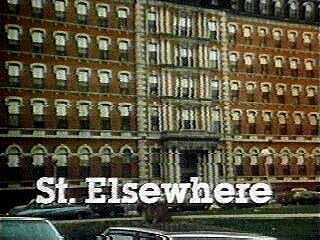
This week, a famous face shows up in the ER!
Episode 1.9 “Rain”
(Dir by Victor Hsu, originally aired on January 3rd, 1983)
Last night, after writing my review of Goodfellas, I watched the ninth episode of St. Elsewhere and there was Ray Liotta!
Liotta played Murray, a young man who came into the ER with a deep cut on his back. Orderly Luther took one look at him and decided that he was a member of the same gang who mugged Fiscus a few episodes ago. Luther then told Fiscus right before Fiscus was due to stitch Murray up. Murray was indeed rude but Fiscus wasn’t particularly polite to him. Fiscus didn’t stich up Murray’s wound but he did pull his gun on him. Murray fled the ER and, after knocking over several doctors who were in his way, he jumped out of a window and escaped from St. Eligius.
As for Fiscus, he got a stern talking to from Dr. Westphall. Westphall ordered Fiscus to get rid of the gun and told him that if he ever brought a weapon to work again, his residency would come to an end. Fiscus agreed to not bring the gun to the ER anymore but he later told Dr. Chandler that he was terrified for his life. I’ve been critical of Howie Mandel’s performance on this show but he actually did a pretty good job in this episode. He was able to hold his own while sharing the screen with Denzel Washington. That’s quite an accomplishment.
While Dr. Westphall yelled at Fiscus, Dr. Craig yelled at Ehrlich for spraining his pinkie while playing handball. Dr. Craig demands to know how Ehrlich will ever make it as a surgeon if he doesn’t protect his hands. Ehrlich spends the entire day trying to protect his hands and he continually fails. (Ehrlich’s a bit of a klutz.) Finally, Ehrlich storms into Craig’s office and interrupts a meeting to announce that he’s going to continue to play handball. Craig shrugs and dismissively says, “He’s from California.”
As for the rest of this episode, it took place over one very long and rainy day. Peter is still struggling as both a doctor and a husband. When his daughter (a very young Candace Cameron Bure) was rushed to the hospital after eating mothballs, Peter blamed his wife and his wife blamed Peter. Returning home from the hospital, Peter nearly hit his wife after she tossed his dinner on the floor. It was scary to watch. I’m getting a bad feeling about what’s going to happen with this marriage.
Dr. Morrison made the mistake of making a house call and soon, he discovered himself constantly being called by Mr. Lukovic (George Morfogen) whenever any of Lukovic’s neighbors were taken ill. Morrison kept telling Lukovic to take his friends to the hospital but Lukovic talked about how, in the past, doctors would always make house calls. When Morrison finally refused to go to Lukovic’s building, Lukovic brought his neighbor to the hospital. The neighbor was in cardiac arrest but Morrison managed to get his heart beating again. Rather than be thankful, Lukovic blamed Morrison for not responding to his call. Morrison lost his temper and told Lukovic that he couldn’t keep living in the past. “I will not call you again,” Lukovic replied. Roll the end credits!
This was a pretty good episode, one that not only answered the question of why doctors don’t make housecalls but also which featured Ray Liotta being tough and dangerous. There were a few annoying scenes involving the guy who thinks that he’s a bird but otherwise, this was a well-done and rainy hour.

 Through the Shattered Lens