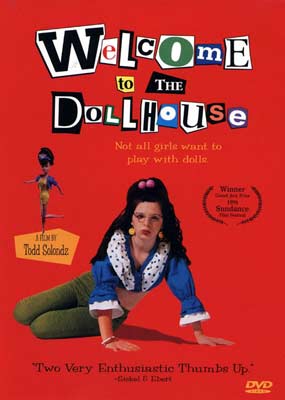
Back to School Part II #30: Welcome to the Dollhouse (dir by Todd Solondz)


wdollhousemovieposter

1995’s Welcome to The Dollhouse is a seriously dark movie.

That really shouldn’t be too surprising.  The film was written and directed by Todd Solondz, a filmmaker who goes out of his way to showcase the darkest corners of human existence.  For that matter, the film stars Heather Matarazzo.  Matarazzo won an Independent Spirit Award for playing Dawn Wiener, a 12 year-old outcast who is nicknamed “Wiener Dog” and essentially spends Welcome to the Dollhouse being tormented by almost everyone in her life.  According to Wikipedia, upon winning the award, Matarzzo announced that she hoped to spend her career playing characters “whom are ostracized for some reason.”

And, if nothing else, Dawn is certainly ostracized.

There’s been a lot of movies that have claimed to be about teen outcasts.  Whenever you watch those films, one thing you immediately notice is that the “outcasts” rarely seem to truly be outcasts.  Instead, they’re often portrayed as artistic types who just need to take off their glasses, let down their hair, and go on a shopping spree.  For instance, Rachael Leigh Cook was an outcast in She’s All That but it turned out that all she needed to do was go out on a date with Freddie Prinze, Jr.  Sissy Spacek, Chloe Grace Moretz, and Emily Bergl all played outcasts in different versions of Carrie but, fortunately, they could always use their psychic powers to kill all the bullies at their school.  Unfortunately, Dawn doesn’t have psychic powers and it’s doubtful that even dating Freddie Prinze, Jr. would help her out.

There’s a scene in Welcome to The Dollhouse in which Dawn witnesses a group of bullies shoving another outcast into a locker.  When Dawn steps forward to ask him if he’s okay, her fellow outcast snaps, “Leave me alone, Weiner Dog!” and then runs off.  Dawn is the outcast that even the other outcasts make fun of.

The entire film is pretty much told from her point of view.  It’s a true journey into the life of an outcast and a chance to see what life looks like when you’re on the outside looking in.  We watch as her family ignores her and instead lavishes their attention on her bratty younger sister, Missy (Daria Kalinina).  When Missy is briefly kidnapped (largely because Dawn neglected to let Missy know that their mother wouldn’t be able to pick her up after ballet class), Dawn even goes, by herself, to New York City and searches for her.  Dawn wants to be the hero of this story but not only does she not find her sister but, when Dawn returns, she discovers that no one even noticed that she was gone.

Dawn does have two friends.  One is a fifth grader whose friendship she quickly loses.  The other is Brandon (Brendon Sexton III), an angry delinquent who, before becoming her friend, tries to rape her.  Brandon, who has a horrific and abusive home life, lights a joint at one point.  Dawn tells him that she doesn’t smoke but then earnestly adds that she does think marijuana should be legal.

Dawn does have an older brother named Mark (Matthew Faber).  Mark is as nerdy as his sister but he appears to have made peace with it.  (Either that or he’s so used to being on the outside that he doesn’t even notice anymore.)  Mark assures Dawn that things will get better but it’ll be a few years.  He also starts a band, which leads to Dawn getting a huge crush on the lead singer, Steve (Eric Mabius).  In fact, Steve is so handsome and charismatic (in a teenage rock star wannabe sort of way) that Dawn doesn’t even realize that, during the rare times that he does talk to her, he’s actually talking down to her…

Welcome to the Dollhouse is one of those films that you watch and you keep waiting for that one moment that Dawn is going to be allowed some sort of victory.  You wait for her to get a compliment.  You wait for her to make a new friend.  You wait for her to smile after coming to some sort of sudden realization.  And it never happens.  If anything, Dawn is more miserable at the end of the movie than she was at the beginning.

In the end, you realize that her only triumph comes from the fact that she’s managed to survive and she now has a better understanding of just how much life is going to suck.  It’s not exactly a happy movie.  It gets even worse if you know that Solondz’s 2004 film, Palindromes, opens with Dawn’s funeral.  (Dawn, we learn, committed suicide after getting pregnant in college.)

And yet, Welcome to the Dollhouse remains compulsively watchable.  Heather Matarazzo does such a good job as Dawn that you find yourself rewatching and hoping things turn out differently.  Whenever I watch Welcome to the Dollhouse, I always think to myself that I would have been nice to Dawn if I had known her.  Of course, that’s probably not true.  No one was nice to Dawn in the movie and no one would probably be nice to her in real life.  At the best, if I had gone to school with Dawn Weiner, I probably would have just patted myself on the back for not being mean to her face.

What sets Welcome to the Dollhouse apart from other teen films is that Todd Solondz is willing to admit this.
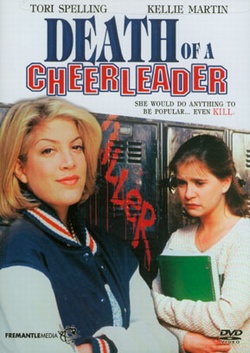
 

Back to School Part II #29: A Friend To Die For a.k.a. Death of a Cheerleader (dir by William A. Graham)


death_of_a_cheerleader

Over the past couple of year, I’ve had so much fun making fun of Tori Spelling’s performance in the original Mother, May I Sleep With Danger? that I almost feel like I have an obligation to review a movie in which she gave a halfway decent performance.

That film would be another 1994 made-for-TV-movie.  It was apparently originally broadcast as A Friend To Die For but most of us know it better as Death of a Cheerleader.  That’s the title that’s used whenever it shows up on Lifetime.  There actually was a time when Death of a Cheerleader used to show up on almost a monthly basis but that was a while ago.  Lifetime has since moved on to other movies about dead cheerleaders.

Technically, as my sister immediately pointed out when I made her watch the movie, the title isn’t quite correct.  Though Stacy Lockwood (Tori Spelling) does try out for and is named to her school’s cheerleading squad, she never actually gets to cheer.  Instead, shortly after the school assembly in which her selection is announced, Stacy is found stabbed to death.  But really, Death of A Future Cheerleader doesn’t quite have the same ring to it.

As for who killed Stacy … well, it’s no secret.  This is one of those true crime films where the murderer is not only portrayed sympathetically but is the main character as well.  Angela Delvecchio (Kellie Martin) was a high school sophomore who was obsessed with trying to become popular.  She looked up to Stacey and desperately wanted to be her best friend.  (Why she didn’t just offer to bribe Stacey, I don’t know.  Maybe she hadn’t seen Can’t Buy Me Love….)  When Stacey got a job working in the school office, so did Angela.  Of course, the school’s somewhat sleazy principal (Terry O’Quinn, coming across like John Locke’s worst nightmare) only made it a point to talk to Stacey and pretty much ignored Angela.  When Stacey applied to work on the yearbook, so did Angela.  When Stacey tried out for cheerleading, so did Angela.

In fact, the only time that Angela stood up to Stacey was when Angela was taunting the school’s token goth (played by Kathryn Morris).  That turned out to be a mistake because Stacey never forgave her.  When Angela invited Stacey to a party, Stacey was reluctant to go.  When Stacey did finally accept the invitation, Angela stabbed her to death.

A Friend to Die For/Death of a Cheerleader is based on a true story and the film tries to lay the blame for Angela’s crime on the affluent neighborhood she was raised in.  Just in case we missed the message, the film actually features a Priest (played by Eugene Roche) who says that the community put too much pressure on Angela to succeed.

Uhmmm….okay, if you say so.

Seriously, this is a pretty good little true crime film and both Tori Spelling and Kellie Martin give really good performances but this whole “It’s society’s fault” argument is typical, mushy, made-for-TV, bourgeois liberal BS.  Angela picked up the knife, Angela committed the crime, end of story.  That said, A Friend To Die For is pretty good as far as these movies go.  I already mentioned the performances of Spelling and Martin but also keep an eye out for Marley Shelton, who gets a really good scene in which she explains that she never liked Stacey that much while she was alive.

You can watch A Friend To Die For/Death of a Cheerleader below!


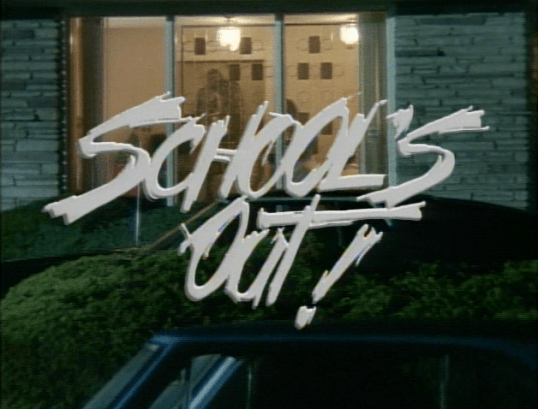
Back to School Part II #28: School’s Out (dir by Kit Hood)


schools-out

School’s Out, a 1992 film that was made for Canadian television, is historically important for two reasons.

First off, it featured not only the first use of the F-word on Canadian broadcast television but the second as well!  The first actor to say the word was Stefan Brogren who, in the role of frustrated lifeguard Snake Simpson, complained, “Joey Jeremiah spends his summer dating Caitlin and fucking Tessa!”  About a minute later, Stacie Mistysyn (in the role of Caitlin), yelled, “You were fucking Tessa Campanelli!?”

I’m not sure what exactly went on behind-the-scenes before School’s Out broke the F-word barrier.  Help me out, Canadian readers.  Was this a big deal in your country?  Was this controversial?  Did you get weeks of warning or was everyone taken by surprise?  And was happened afterwards?  Does the F-word now show up regularly on Canadian television?  I’m sincerely curious and I guess I’ll find out for myself when, after the presidential election, I move to Toronto.

Still, regardless of whether there was any drama behind-the-scenes, it’s interesting that, in 1992, Canada had already progressed beyond America, as far as censorship and broadcast standards concerned.  24 years later, actors on American network television are still not allowed to say what Stefan Brogren said during School’s Out.

Of course, if you’re a fan of Degrassi, you can probably appreciate the irony of Stefan Brogren being the one to break the Fuck Barrier.  Brogren plays Archie “Snake” Simpson.  When Degrassi: The Next Generation began in 2001, Archie was a teacher at Degrassi Community School.  Over the course of the series, Archie married, became Emma Nelson’s stepfather, and was eventually appointed principal.  Through it all, Archie has been a well-meaning but somewhat dorky authority figure.  Simpson has always been the guy who you can depend on to explain why condoms are important and stalkers are bad but he’s also always been the guy who inevitably says something unintentionally humorous and then wonders why everyone is laughing at him.

But before Degrassi: The Next Generation, there was Degrassi Junior High and Degrassi High.  These two shows aired in the 80s and featured Brogren (and Snake Simpson) as just another student, worrying about getting a girlfriend and occasionally dealing with an issue-of-the-week.

That brings us to the other reason why School’s Out is historically important.  School’s Out was meant to serve as the finale of Degrassi High, a chance for the show’s fans to get one last chance to hang out with Snake, Caitlin, Wheels (the tragic Neil Hope), and Joey Jeremiah (Pat Mastroianni, with hair!) and perhaps get a glimpse of what the future held in store for them.

Though the producers may not have realized it at the time, School’s Out also perfectly lay the foundation for Degrassi: The Next Generation.  I have to admit that, as much as I love Degrassi, I haven’t seen many episodes of Degrassi Junior High or Degrassi High.  Fortunately, that didn’t make it difficult for me to follow School’s Out.  In fact, many of the things that happened in School’s Out would regularly be referred to in Degrassi: The Next Generation.

The film opens with the senior class of Degrassi High graduating and preparing for their final summer before university and responsibility.  Joey Jeremiah plans to ask his longtime girlfriend, Caitlin, to marry him.  However, when Joey proposes to Caitlin, she turns him down.  She’s not ready for that type of commitment, not when she’s about to leave town to go to college.  (For his part, Joey failed a grade during Degrassi Junior High and, as a result, he’ll finally be starting his senior year while all of his friends are getting on with their lives.  While Caitlin is studying journalism at university, Joey will presumably still be trying to pass Mr. Raditch’s history class.)  Hurt over being turned down by Caitlin, Joey ends up sleeping with Tessa Campanelli (Kirsten Bourne).  Soon, he is — as Snake memorably puts it — dating Caitlin and fucking Tessa.

What amazed me, as I watched School’s Out, was just how much of asshole Joey Jeremiah was truly portrayed as being.  If, like me, you previously only knew him from Degrassi, then you know Joey as being a widowed used care salesman, a loving father, and an all-around good guy.  So, it’s strange and a little bit jarring to see him here as a remorseless cheater who brags about betraying Caitlin and who cruelly teases Snake for being a virgin.

(Then again, seeing School’s Out adds an interesting shading to Joey’s character.  Watching the film, I suddenly understood why Joey often seemed so overprotective of his stepson, Craig.  During the third season of Degrassi, Craig made many of the same bad decisions that Joey previously made in School’s Out.  Much as Joey was “dating Caitlin and fucking Tessa,” Craig was dating Ashley and fucking Manny.  Watching School’s Out, I finally understood that, during seasons 3 and 4 of Degrassi, Joey was often looking at Craig and seeing himself.)

Of course, it wouldn’t be Degrassi if there weren’t a few other subplot going on at the same time as the Joey/Caitlin/Tessa love triangle.  Seriously, hardly anyone gets a positive ending in School’s Out.  Not only does Joey cheat and Snake curse but there’s also an unplanned pregnancy.  There’s a party that leads to a major character driving drunk, killing a child, and blinding a classmate.  Yes, the film does end with a wedding but we barely know the people getting married.  Nobody, it seems, gets a truly happy ending.

Seriously, Canadian readers, how traumatizing was School’s Out when it was originally broadcast!?

Fortunately, I was able to watch School’s Out with the knowledge that, as bad as the summer was, Joey would eventually find love and Snake would get a job.  As for Caitlin, she would not only end up hosting a public affairs show called Ryan’s Planet but, at the end of the 4th season of Degrassi, she would have a brief flirtation with director Kevin Smith.

(Both Kevin Smith and Jason Mewes were in Canada, filming Jay and Silent Bob Go Canadian, eh?  It’s a long story.)

Anyway, I’m very happy that I finally watched School’s Out.  I may even go back and watch Degrassi Junior High and Degrassi High.  They’re all available on YouTube now!

On a final note — LOVE YOU, CANADA!

degso

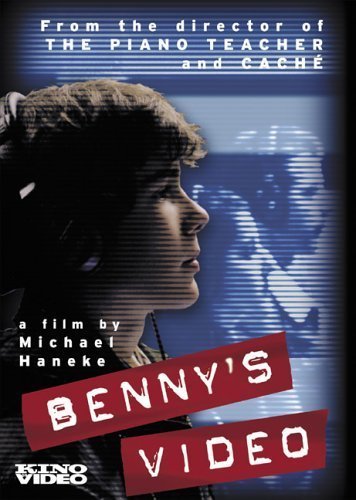
Back to School Part II #27: Benny’s Video (dir by Michael Haneke)


bennysvideo

For our next film in this Back to School series of reviews, let’s take a look at the 1992 Austrian film, Benny’s Video.  It’s a dark and disturbing film about murder and the death of morality.

“A disturbing Austrian film about murder and the death of morality?!” you’re saying, “What is this!?  A Michael Haneke film!?”

Well, as a matter of fact, it is.  Benny’s Video was Haneke’s second film and one of the interesting things about it is that it reveals that, even this early in his cinematic career, Haneke was already a master at telling stories about characters estranged from society.  Benny’s Video is remarkably assured film but it’s also one that is so disturbing that you may never want to watch it for a second time.

Benny is a an affluent teenager.  He’s obviously intelligent and he has friends but, from the minute we meet him, we can tell that there is something off about Benny.  Maybe it’s the flat monotone that he uses to express his thoughts.  Maybe it’s the cold and rather pitiless look of his eyes and the way that Benny always seems to be on the outside observing his family and friends.  Or maybe it’s the fact that, when we first meet Benny, he is obsessively watching and rewatching a video of pig being slaughtered with a bolt pistol.

When his parents go out of town for the weekend, Benny meets a girl (Ingrid Stassner) outside a video store.  He brings her back to his house and, while his own cameras record the action, Benny shows her the footage of the pig being slaughtered.  He tells her that he’s never actually seen a dead body but he knows “the tricks they use in action films” to make someone appear dead.  He then shows her that he has a bolt gun of his own.  As opposed to what happened to the pig, it takes three shots from the bolt gun to kill the girl.

Benny, who seems to be as confused by his actions as we are, puts the body in a closet and then goes out to a club.  He sees a movie.  He visits with friends.  He gets his head shaved.  And when his parents return home and snap at him for his new haircut, he shows them the video of him killing the girl.

Amazingly enough, the murder is not the most disturbing part of the film.  What’s far more disturbing is the way his parents react.  After sending Benny to his room, they sit at the kitchen table.  Benny’s father (Ulrich Muhe) starts to calmly discuss their options and points out that, if Benny’s crime is discovered, they could be held responsible.  Benny’s mother (Angela Winkler) is much more shaken by Benny’s crime.  When, in a state of shock, she starts to giggle at her husband’s dispassionate demeanor, he snaps at her to remain calm…

And, seriously, it is so disturbing to watch!  Haneke directs the film in an understated, almost documentary-like fashion and Arno Frisch gives a performance that somehow manages to be both compelling and soulless at the same time.  Benny remains a mystery to not only his parents and the audience but to himself as well.  Much like Gus Van Sant’s Elephant, Benny’s Video invites us to consider the enormity of a destructive act without offering any easy answers as to why the act happened in the first place.

Benny’s Video is a powerful film that will stick with you and one that shows that, even early in his career, Michael Haneke was a cinematic force to be reckoned with.


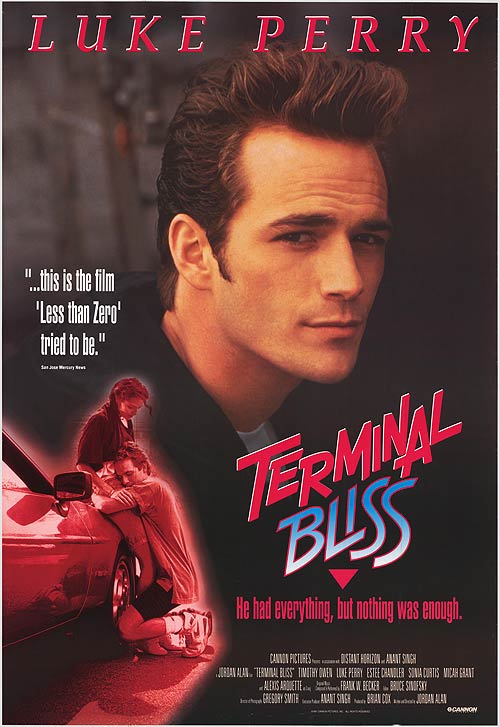
Back to School Part II #26: Terminal Bliss (dir by Jordan Alan)


mpw-59133

There’s been a long-standing rumor floating around the internet that, before she became a star, Sandra Bullock appeared in the 1992’s Terminal Bliss, a film about decadent, upper class teenagers.  Well, having watched the film on YouTube, I can tell you that, unless she’s an extra, Sandra Bullock is not in the film.

That said, she does have a connection to Terminal Bliss.  In 1987, when a 17 year-old aspiring director named Jordan Alan was attempting to raise the money for his film debut, he shot a few scenes and put together a promotional trailer for his unmade film.  Sandra Bullock does appear in that trailer.  Watch it below:

On the strength of the trailer, Alan was able to raise 3 million to make his movie.  (Charmingly, Alan has written that he raised the money while “playing hooky.”)  Alan shot the film in 1989 and there was even some news coverage about this teenager making his directorial debut.

As for the film itself, it appears that it wasn’t released until 1992, presumably to capitalize on the performance of Luke Perry, who, at that time, was starring on Beverly Hills 90210.  According to Wikipedia, the film was not particularly embraced by critics, nor did it do much at the box office.  It’s never been released on DVD or Blu-ray.

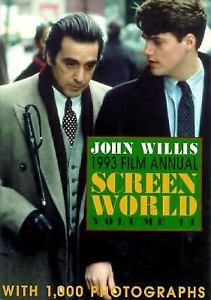
The only reason I knew about Terminal Bliss is because I like to collect those old Screen World Annuals and I came across Terminal Bliss in the back of the 1992 edition.  The name immediately caught my attention, largely because I once used the phrase “terminal bliss” in a poem and was rather unfairly criticized by a creative writing professor who felt I was “trying too hard.”

John Willis's Screenworld Annual (It may say 1993 on the cover but it actually covered the film released in 1992)

John Willis’s Screenworld Annual (It may say 1993 on the cover but it actually covered the film released in 1992)

However, Terminal Bliss is not an easy film to track down.  As I mentioned earlier, I finally found the movie on YouTube but it was the French-language version.  Though I do speak French (though, admittedly, with a Texas accent), I would hardly call myself fluent and, as I watched Terminal Bliss, I came to realize just how rusty my French has gotten.  (I’m definitely going to have to brush up on it, if I end up fleeing to Canada after the presidential election.)  Fortunately, I was able to follow the film enough to review it.

Terminal Bliss tells the story of two teenage friends.  They’re both rich.  They’re both neglected by their parents.  At the start of the film, they both seek escape through drugs.  Alex (Timothy Owen) is the one who often hides his sensitivity behind a wall of cynicism.  John (Luke Perry) is the charming and sociopathic one, the one who lives his entire life seeking to satisfy his own urges.  When he finds out that Alex has a crush on Stevie (Estee Chandler), John responds by introducing Stevie to cocaine and getting her pregnant.  When Stevie has an abortion, an angry Alex checks into drug rehab.  When Alex comes out of rehab, he’s still as angry and as cynical as he ever was.  He continues to hang out with his friends, the most recognizable of which is a drug dealer played by Alexis Arquette.  Alex also continues to be friends with John, despite the fact that John seems to be getting more and more out-of-control in his behavior.  Alex refuses to intervene, saying that John is responsible for his own decisions.  After John rapes Stevie’s sister, he invites Stevie and Alex to join him out at his family’s lake house.  When, over the course of the weekend, John drowns, Alex can only coldly watch.  Why help?  As Alex sees it, John would probably be happier dead anyway…

So, yeah, Terminal Bliss is not exactly a cheerful movie.  In fact, it’s such a dark and borderline nihilistic film that it reminded me of the type of stories that I used to write when I was 17 years old.  Terminal Bliss has “teen trying to be edgy” written all over it but you know what?  That actually works to the film’s advantage.  This is a film about teenagers that was actually made by a teenager and, while it may not be a perfect movie, it is a pretty good example of what the world looks like when you’re 19 and trying to be a cynic.  Say what you will about the film’s storyline, there’s an honesty to its outlook.  Only when you’re 19 would you have the guts to make a commercial movie that was this relentlessly bleak.  That bleakness sets Terminal Bliss apart from a lot of other films that I’ve reviewed for this series.

Because I was watching a dubbed version, I’m not going to try to judge the performances.  But I will say that I really liked the look of Terminal Bliss.  Jordan Alan — who, according to his Wikipedia page, is still working as an independent filmmaker — creates and maintains an almost oppressive atmosphere of ennui.  This is a film that often seems to take place in the shadows and even the liveliest of scenes (a party, a wedding reception) seem to be overcast.  When, at the start of the film, we see Timothy Owen and Luke Perry’s shadowy forms, playing lacrosse on a sunny morning, we’re put right into the proper existential mood.  When the camera focuses on Owen’s often passive face, we feel as if we are looking straight into the heart of ennui.

So, Terminal Bliss does not feature Sandra Bullock but it’s still an interesting artifact of the time in which it was made.

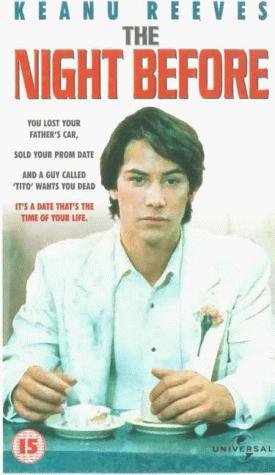
Back to School Part II #25: The Night Before (dir by Thom Eberhardt)


cover_of_the_night_before

For the past two and a half weeks, I’ve been taking a chronological look at some of the best and worst films made about teenagers, high school, and even college!  We are 25-reviews into the 56-review series and we are quickly approaching the 1990s.  However, before we enter the final decade of the 20th Century, let’s take a look at one last film from the 80s.

Released in 1988, The Night Before (which should not be mistaken for the recent HBO series or the Seth Rogen Christmas comedy that nobody saw) opens with 17 year-old Winston Connelly (Keanu Reeves) waking up in an alley.  Winston isn’t the type that you would expect to find in an alley.  For that matter, he’s also not the type who you would usually expect to be played by Keanu Reeves.  He’s the president of his school’s astronomy club, a nice but socially awkward kid.  Even stranger than the fact that he’s waking up in an alley is the fact that he’s waking up in an alley while wearing a tuxedo!

How did Winston end up in that alley?  Well, it turns out that he was on the way to prom.  His date was Tara Mitchell (Lori Loughlin), a popular cheerleader who only asked Winston to the prom because she lost a bet with one of her friends.  (In a revealing bit of character development, Winston doesn’t care that she only asked him because she had to.  He’s just happy to have a date!)  When Winston was driving her to the prom, he took a wrong turn and he ended up in the bad side of town.  Then his car broke down and, as we see in several flashbacks, he and Tara stepped into a nearby bar and asked for help…

And the rest is the blur.  All Winston knows is that, upon waking up, his car has been stolen and Tara has disappeared.  And a pimp named Tito (Trinidad Silva) wants to kill him!

Uh-oh!

Will Winston be able to find his car, Tara, and discover what happened during his blackout?  You’ll have to watch the film to find out!

And, actually, I liked The Night Before.  It was a well-directed and energetically acted movie.  It takes a while to get used to Keanu Reeves playing such an innocent character but he actually gives a really likable and genuinely funny performance.  The film was directed by Thom Eberhardt, who also did Night of the Comet and Sole Survivor, and he keeps the action moving a nice pace.  The movie won’t win any points for originality — the debt to Adventures In Babysitting is especially obvious — but it’s still an entertaining 80s teen comedy.

Add to that, Keanu Reeves and Lori Louglin made a super cute couple!  I wonder if they spent their time on set sharing memories of making Brotherhood of Justice together?

I sure hope they did!

Back to School Part II #24: Can’t Buy Me Love (dir by Steve Rash)


220px-cant_buy_me_love_movie_poster

For some reason, the 1987 comedy Can’t Buy Me Love is really beloved by clickbait headline writers.  I’ve lost track of the number of times that I’ve seen headlines like “Why We Still Love Can’t Buy My Love” or “See What The Cast Of Can’t Buy Me Love Looks Like Today!”

Why is it that the worst movies always seem to have the most rabid fan bases?  Actually, to be fair, Can’t Buy Me Love is not one of the worst movies of all time.  I watched it on Netflix a few nights ago and it wasn’t terrible.  But, at the same time, it was hardly the classic that so many articles have made it out to be.  Maybe the people writing about Can’t Buy Me Love are viewing it through the lens of nostalgia.  Who knows?  Maybe my future children will think I’m a weirdo for loving Easy A.

(They better not!  Easy A is the best!)

Anyway, Can’t Buy Me Love takes place in the same upper class suburb in which all teen films from the 80s take place.  Nerdy Ronald Miller (Patrick Dempsey) has spent the summer mowing lawns and he’s raised enough money that he can finally afford to buy a super telescope.  However, as Ronald is walking through the mall, he sees the girl that he’s been crushing on, Cindy Mancini (Amanda Peterson).  Disobeying her mother, Cindy borrowed a suede outfit without asking.  She wore it to a party, the outfit got ruined, and now Cindy desperately needs a replacement.  The leads to Ronald getting an idea.  Who needs a telescope when he can use his money to pay Cindy to be his girlfriend for a month?  Cindy can buy a new outfit and Ronald can date the most popular girl in school and become popular himself!

School begins and Ronald’s plan seems to work.  With Cindy’s help, Ronald goes from being a nottie to being a hottie!  (Yes, that’s a reference to the infamous Paris Hilton film from 2008, The Hottie and the Nottie.)  Of course, it’s a very 80s transformation.  Ronald learns about the importance of sungalsses, vests, and going sleeveless.  Along the way, Cindy falls in love with Ronald and comes to realize that her friends are all a bunch of followers.  When Ronald starts to do a spastic dance, Cindy can only watch in shock as all of her friends starts to the same dance, convinced that it has to be cool if Ronald is doing it!

Meanwhile, Ronald changes.  Being popular goes to his head.  He rejects his old friends.  He becomes a jerk.  It’s only when he discovers that his oldest friend, Kenneth (Courtney Gains, who appears in hundreds of these films), is being targeted by the popular kids that Ronald is forced to confront the type of person he has become and hopefully realize that you can’t buy love…

It’s always weird to see Patrick Dempsey in these old high school movies.  Some of that is because he was so scrawny that it’s hard to believe that he’s the same actor who made McDreamy into a household word.  Add to that, Patrick Dempsey is a good actor now.  Judging from this film, he wasn’t necessarily a good actor in the 80s.  At times, Dempsey seems to be trying so hard that it’s actually uncomfortable to watch.  Amanda Peterson, who tragically passed away last year, is a lot more natural as Cindy.

Anyway, Can’t Buy Me Love was apparently a huge hit back when it was released and it appears that a lot of people have good memories of watching it.  I thought it was kind of bland and poorly acted.  I’ll stick with Easy A.


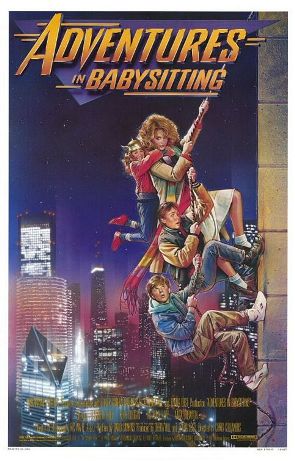
Back to School Part II #23: Adventures in Babysitting (dir by Chris Columbus)


adventures_in_babysitting

One unfortunate thing about both being the youngest of four and having a teenage reputation for being a little out of control is that I never got a chance to be a babysitter.  Whenever my mom wasn’t around, my older sisters were in charge.  When I was technically old enough to look after other children, nobody was willing to trust me with them.  So, I missed out on babysitting and…

Well, to be honest, that never really bothered me.  I was too busy either having too much fun or no fun at all to worry about any of that.  But maybe I should have because, whenever I watch the 1987 film Adventures in Babysitting, I’m always left convinced that I could have been a kickass babysitter.  Seriously, if Elisabeth Shue could still get babysitting jobs even after taking the kids into downtown Chicago and nearly getting them killed, then anyone could do it!

In Adventures in Babysitting, Chris Parker (Elisabeth Shue) is a responsible 17 year-old who lives in the suburbs of Chicago.  (As anyone who seen The Breakfast Club, Sixteen Candles, and Ferris Bueller’s Day Off can tell you, being a teenager in 1980s meant living in Illinois.)  When we first meet Chris, she’s getting ready for her anniversary date with her boyfriend, Mike Todwell (Bradley Whitford, years before achieving fame by playing assorted pompous jerks in assorted Aaron Sorkin productions) and she’s dancing around her bedroom.  There’s an important lesson to be learned from the opening of Adventures in Babysitting: if you want me to relate to a character, introduce her while she’s dancing in her bedroom.  Seriously, though, the whole film succeeds because of that opening bedroom dance.  Chris is instantly likable and relatable.  You want to see her succeed and achieve what she wants.

So, of course, we’re all disappointed when Mike shows up and breaks his date with Chris.  That said, as upset as Chris may be, she’s still willing to take the time to try to talk her friend Brenda (Penelope Ann Miller) out of trying to poison her stepmother with Drano.  That’s a true friend.

With nothing else to do, Chris ends up taking a babysitting job.  She has been tasked to look after 8 year-old Sara Anderson (Maia Brewton) and Sara’s brother, 15 year-old Brad (Keith Coogan).  Sara is a bit of a brat, though she’s also generally well-meaning and is obsessed with comic books (Thor, in particular).  Brad is likable but dorky.  He has a huge crush on Chris and even turns down a chance to spend the night at a friend’s, just so he can be around her.

Brad’s friend, incidentally, is Daryl (Anthony Rapp, who would later play Tony in Dazed and Confused and who starred in the original Broadway production of Rent).  Daryl is a hyperactive perv who is obsessed with Chris because she resembles the centerfold in one of his dad’s Playboys.  Daryl decides that, if his friend Brad can’t visit him, then maybe he should visit Brad!

However, Chris has more to worry about than just looking after Sara, Brad, and Daryl.  Brenda has attempted to run away from home and now she’s stuck in a downtown bus station!  Her glasses have been stolen and, as a result, Brenda is doing things like picking up a giant rat and calling it a kitten.  Brenda uses her last bit of money to call Chris and beg her to come pick her up.

(Of course, none of this would happen today.  Brenda wouldn’t have to use a pay phone to call Chris and she could just call Uber to get a ride home.)

So, Chris and the kids drive into Chicago and, needless to say, things quickly fall apart.  They get a flat tire on the expressway.  Chris panics when she discovers that not only does she not have a spare tire but she also left her purse back at the house.  They are briefly helped by a one-handed truck driver named Handsome John Pruitt (John Ford Noonan) but then Pruitt discovers that his wife is cheating on him and takes a detour so he can catch her in the act and, of course, this leads to Chris and the kids being kidnapped by a helpful car thief.  Soon, they’re being chased through Chicago by the Mafia and…

Well, it gets rather complicated but that’s kind of the appeal of the film.  The film starts out as a fairly realistic, John Hughes-style teen comedy and then it gets progressively crazier and crazier.  Downtown Chicago turns out to be a rather cartoonish place, one where one disaster follows after another.  (To be honest, if Adventures in Babysitting was released today, it would probably inspire a hundred increasingly tedious Salon think pieces on white privilege.  Bleh!)  But, regardless of how silly some of the adventures may get, Adventures in Babysitting remains grounded because of the good and likable performances and a script that is full of witty and quotable dialogue.

It’s an entertaining movie and it’s one of those films that always seems to be either on Showtime or Encore.  If you’re sad, watch it and be prepared to be massively cheered up!

(Avoid the Disney Channel remake.)


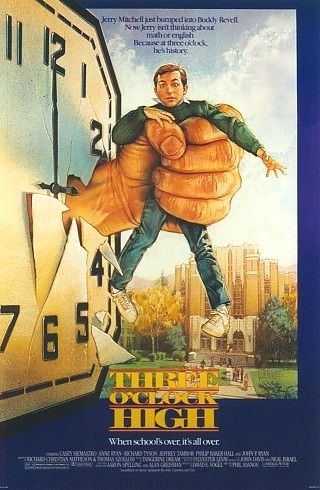
Back to School Part II #22: Three O’Clock High (dir by Phil Joanou)


Three_o_clock_high_p

For the next entry in my back to school series of reviews, I want to say a few words about the 1987 comedy, Three O’Clock High.

I have no idea how Three O’Clock High did when it was originally released into theaters.  I know, I know — I could just look it up on Wikipedia or the imdb but I’m lazy and, besides, I hate that whole idea that box office success is somehow synonymous with quality.  That said, Three O’Clock High is one of those films that seems to be in a permanent cable rotation (seriously, it always seems to be playing somewhere and there’s always a few people on twitter talking about how excited they are about coming across it) and I kind of hope that it did well when it was originally released.  It’s an entertaining and genuinely funny little high school comedy.

Three O’Clock High tells the story of Jerry (Casey Siemaszko).  Jerry is a high school student, one of those kids who is a bit anonymous.  He’s kind of a nerd but so much of a nerd that he painfully sticks out of the crowd at this school.

You know who does stick out of the crowd?  Buddy Revell (Richard Tyson).  Buddy is the new kid at school.  He’s a big, hulking, and rather intimidating figure and he comes with quite a fearsome repuations.  All anyone can talk about are the stories that they’ve heard about Buddy’s dangerous past.  The one thing that the rumors all have in common is that Buddy does not like to be touched.  In fact, it appears that his aversion to being touched has made him the most dangerous high school student in the country.

The first hour of Jerry’s school day is spent working at the school newspaper and, of course, his teacher has a bright idea.  Why not welcome Buddy to the school by interviewing him!?  Sure, why not!?  Everyone loves to be interviewed!  And why not get Jerry to do the interview?

The problem is that Buddy doesn’t want to be interviewed.  And, once he realizes that Buddy not only doesn’t want to talk to him but is actually getting rather annoyed with him (this may be because Jerry chooses to approach Buddy in the boy’s bathroom), Jerry asks Buddy to forget that he even bothered him and then reaches over and punches him on the arm.

Of course, this leads to Buddy announcing that he and Jerry are going to have a fight.  At 3 pm.  In the school parking lot…

The rest of the film plays out like a surrealistic, teen-centered parody of High Noon, with Jerry desperately trying to figure out a way to avoid the fight.  He tries to frame Buddy by placing a switchblade in his locker, just to have Buddy use the knife to disable his car, effectively trapping Jerry at the school.  He tries to help Buddy cheat on a test.  He tries to get the principal to kick him out of school.  He even tries bribery!

But ultimately, three o’clock arrives and Jerry must face his destiny…

Three O’Clock High is cheerfully cartoonish and rather entertaining little film.  Director Phil Joanou pays homage to a countless number of other films, often framing the high school action like a Spaghetti western stand-off and, when the final fight arrives, it’s just as wonderfully over-the-top and silly as you could hope for.  Casey Siemaszko, who was also in Secret Admirer, is perfectly cast as Jerry and Richard Tyson is both funny and intimidating as Buddy.  Meanwhile, ineffectual adults are played by everyone from Philip Baker Hall to Jeffrey Tambor to Mitch Pileggi.  There’s a not a subtle moment to be found in Three O’Clock High but the relentless stylization definitely works to the film’s advantage.

I’d keep an eye out for the next time that Three O’Clock High shows up on Showtime.  It’s an entertaining film about teens doing what teens have to do.

Back to School Part II #21: Brotherhood of Justice (dir by Charles Braverman)


Brotherhood_of_Justice_FilmPoster

For my next back to school review, I want to take a look at one of the best films that you’ve probably never heard of, the 1986 made-for-TV film Brotherhood Justice!

Brotherhood of Justice takes place at a California high school.  It’s a school that is pretty much ruled by the football team and the divide between the children of the upper and the working class is often violently apparent.  After several acts of violence, drug dealing, and vandalism, the school’s principal (Joe Spano) is left with a choice.  He can either hire full-time security guards and turn his school into an armed camp or he can meet with the most popular seniors and ask them to do their part to maintain order at the school.

He goes with the latter option.

At first, quarterback Derek (Keanu Reeves) is excited about doing his part to make the school a better place.  He and his friends quickly form the Brotherhood of Justice and make out a list of trouble makers.  At first, Derek and his friends are just roughing up drug dealers and demanding that all students show some school pride.  (In order to maintain their anonymity, they all wear masks to hide their faces.  However, no effort is made to disguise anyone’s voice, which means that this film takes place in a world where no one can recognize the voice of Keanu Reeves.)  However, things quickly escalate.  One member of the Brotherhood — Les (Billy Zane) — is especially enthusiastic and he has a thing for knives.

Meanwhile, Derek is having issues with his girlfriend, Christie (Lori Loughlin).  Christie, who is apparently incapable of recognizing her boyfriend’s voice whenever he’s wearing a mask, thinks that the Brotherhood is idiotic.  Christie also has a new job as a waitress and one of her co-workers is Victor (Kiefer Sutherland).  Victor obviously likes Christie and he also bravely stands up to the Brotherhood when they try to harass a student who is named Pasty.  (I kid you not.)

When Derek grows disillusioned with the Brotherhood, they decide that the situation with Christie must be distracting him.  So, they decide to blow up Victor’s car…

It’s all in the name of justice!

Obviously, one of the best things about Brotherhood of Justice is that it’s a chance to see Neo and Jack Bauer compete over Aunt Becky while Cal Hockley plays with a switch blade in the background.  (Oddly enough, Derek’s younger brother is played by Danny Nucci, who later appeared with Zane in Titanic.)  But there’s more to Brotherhood of Justice than just the curiosity value of the cast.

That plot hole about the voices aside, Brotherhood of Justice is actually a really good movie and one that everyone should watch.  If anything, it’s even more relevant today than it probably was when it was originally made.  It’s easy to be dismissive of the self-righteous and judgmental Brotherhood but actually, how different are they from the outrage brigade who show up everyday on twitter?  When the Brotherhood demands that everyone follow the rules and love their school, how different are they from those assholes who, today, claim that anyone who disagrees with the president or questions the moral authority of the government is somehow guilty of treason?  If the Brotherhood existed today, they would be cyberbullying and doxxing anyone who they felt had failed to say or think the right thing.

Let’s face it — we currently live in a fascist culture.  In its own modest but important way, Brotherhood of Justice is one of those films that can tell us why.

And you can watch it below!