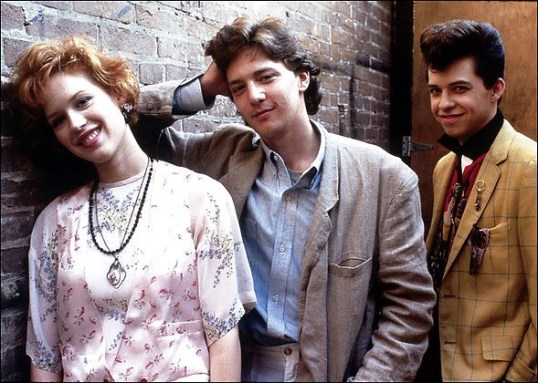
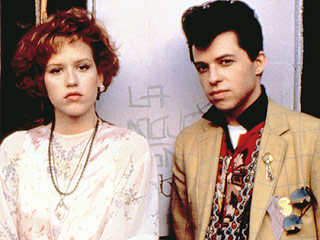
Today’s scene that I love comes from 1986’s Pretty In Pink, starring Molly Ringwald, Andrew McCarthy, Jon Cryer, and James Spader and written by John Hughes.
In the final scene, we discover Andie at prom with Duckie. Fortunately, Blaine shows up. Listen, I know that there are a lot of people who think that Andie should have ended up with Duckie. That’s how the script was originally written and the film’s ending was reshot after test audiences literally booed the idea of Andie going to prom with her best friend. In this case, though, the test audience was correct. Duckie was sweet but he wasn’t a prom date. Andie and Blaine belonged together.
The Sundance Film Festival is currently underway in Utah. For the next few days, I’ll be taking a look at some of the films that have previously won awards at Sundance.
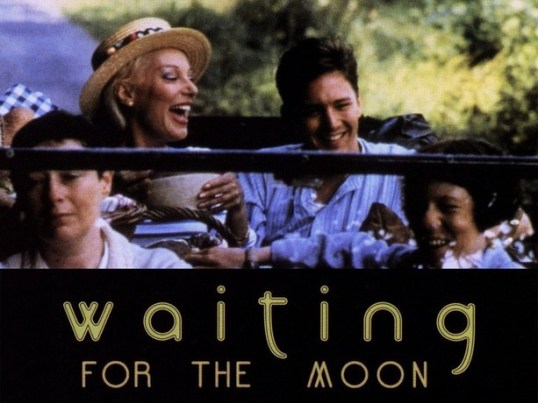
First released in 1987, Waiting For The Moon is a lowkey and fictionalized account of the relationship between Gertrude Stein (Linda Bassett) and Alice B. Toklas (Linda Hunt).
The film takes place in 1936, almost entirely at the home that Stein and Toklas shared in France. Back in the years immediately following World War I, their home was a stopping spot for almost every writer who no longer felt at home in the conventional world. It was the place where the members of the so-called Lost Generation met to socialize and discuss their art. (Ernest Hemingway memorably wrote about visiting Stein and Toklas in A Moveable Feast.) However, Waiting For The Moon takes place long after those exciting years. Gertrude and Alice are now living a rather comfortable and settled life. Occasionally, someone will stop by. Hemingway (played by Bruce McGill) shows up. Picasso stops by for a visit, though we only hear him. But, for the most part, the film focuses on Gertrude and Alice. The film follows them as they bicker like the old married couple that they essentially are, even if society in 1936 wasn’t willing to acknowledge it. Alice proofreads Gertrude’s latest writing. Gertrude waits for word from her doctor. They talk about old times and old friends. At one point, an aspiring writer named Henry Hopper (Andrew McCarthy) pays the two women a visit and, for a day at least, it’s like old time. Henry is earnest and idealistic and full of plans for the future. Unfortunately, he’s also planning on fighting in the Spanish Civil War and it doesn’t take a genius to guess that probably won’t go well. Indeed, we learn that several of Gertrude and Alice’s old acquaintances are now fighting and dying in the Spanish Civil War. For the so-called Lost Generation, the battle against Franco is a chance to find themselves but students of history already know how the war is going to end. For that matter, students of history will also realize that World War II is right around the corner. (Needless to say, the film itself offers up not a hint of the controversy that would surround Stein’s activities during the Vichy regime,)
Waiting For The Moon is a deliberately paced film, which is a polite way of saying that it’s a bit on the slow side. That said, the scenery is beautiful and both Linda Hunt and Linda Bassett give good performances as the film’s versions of Alice and Gertrude. Bruce McGill steals the film as the blustery Hemingway. I’m sure Ernest would have approved. (Could Ernest Hemingway ever be played as being anything other than blustery?) The film captures the daydream that I think captures the fancy of many aspiring writers, the idea of being in a place where your thoughts are the center of life and all of your friends understand what it’s like to be a creative soul.
Waiting For The Moon won the Dramatic Grand Jury Prize at the 1987 Sundance Film Festival. It’s not an easy film to find. On Amazon, a copy on DVD runs about $52.00. I was fortunate enough to find a copy at Half-Price Books.
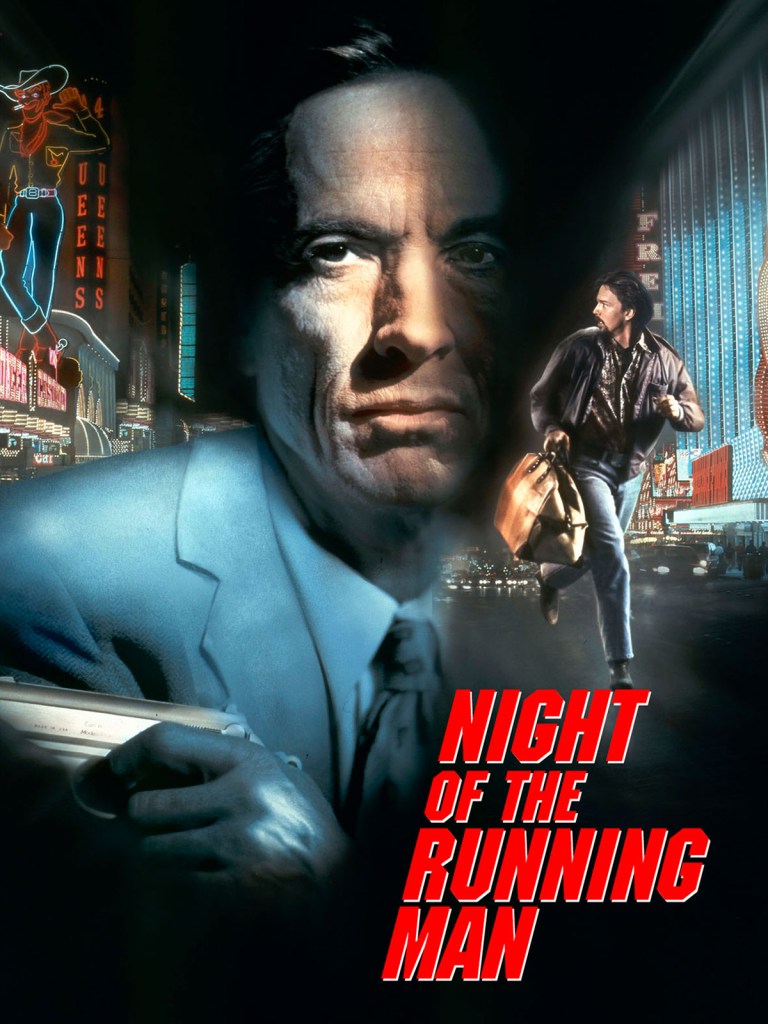
Every Monday night at 9:00 Central Time, my wife Sierra and I host a “Live Movie Tweet” event on X using the hashtag #MondayMuggers. We rotate movie picks each week, and our tastes are quite different. Tonight, Monday January 6th, we’re watching NIGHT OF THE RUNNING MAN, starring Scott Glenn, Andrew McCarthy, and John Glover.
In a nutshell, this movie is about a Las Vegas cab driver (McCarthy) who discovers a million dollars of stolen money in his cab. He is then tracked by a relentless and cold-blooded assassin (Glenn) sent to retrieve the money.
So why did Sierra pick NIGHT OF THE RUNNING MAN, you might ask? Well I asked her and she said, “I like that guy, Andrew McCarthy.” And that was it! I do remember watching the first hour or so of this movie on cable TV late one night about 25 years ago or so. I remember thinking it was pretty good prior to falling asleep. I’ve always liked Scott Glenn, even though he was a jerk in URBAN COWBOY. He’s a pretty vicious killer here so that should be fun. And John Glover is one of those guys I just enjoy seeing pop up in any movie. His bad guy in 52 PICK-UP is one of my all time favorite villains. Plus, this was directed by Mark L. Lester, the director of TRUCK STOP WOMEN, ROLLER BOOGIE, CLASS OF 1984, and COMMANDO. That’s quite a variety of flicks! And hell, it will be nice for me to see how the movie ends after all these years.
So join us tonight to for #MondayMuggers and watch NIGHT OF THE RUNNING MAN. It’s on Amazon Prime, as well as Tubi and Freevee.
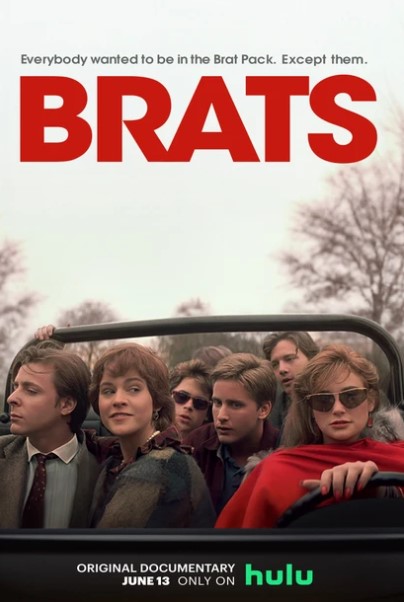
The documentary Brats opens with actor and travel writer Andrew McCarthy in New York City.
He’s obsessing over his film career, which featured him starring in several classic 80s films, like Pretty In Pink,Class, and Less Than Zero. If you love those films as much as I do, you’ll be happy to know that, physically, McCarthy has aged well. If he was adorably cute during his teen idol days, Andrew McCarthy now looks like a distinguished and handsome creative writing teacher. McCarthy talks about how he was briefly a star and now, he has a busy career as a writer. To be honest, it seems like everything should be going pretty well for Andrew McCarthy.
The only problem is that Andrew McCarthy has spent the last 30 years obsessed with an article that he feels led to him being labeled as one of the “Brat Pack,” along with Emilio Estevez, Rob Lowe, Judd Nelson, Molly Ringwald, Demi Moore, and Ally Sheedy. Interestingly enough, McCarthy is only mentioned once in the article, when Nelson dismissively describes him as playing every role “with the same intensity.” Still, McCarthy feels that the article led to him being unfairly labeled “a brat,” and it also led to his film career fizzling.
Over the course of the documentary, McCarthy travels to California and tracks down some of his co-stars (with both Ringwald and Nelson being notable for their absence) and he also talks to the author of the article. He talks about what it means to be identified with the Brat Pack and how the label still haunts him.
Seriously, this is one of the most depressing documentaries I’ve ever seen.
It’s not just that McCarthy, who really does seem like he should be enjoying his second act as a successful and respected travel writer, is still obsessed with an article that came out 30 years ago. It’s also the fact that, judging from the scenes in which he drops in on Estevez, Lowe, Moore, and Sheedy, it doesn’t appear that anyone has wanted to talk to McCarthy since they all did St. Elmo’s Fire. Emilio Estevez, especially, seems to be uncomfortable with having McCarthy in his kitchen. As for the others, Ally Sheedy is polite, Demi Moore comes across as if she’s visiting from another planet, and Rob Lowe is once again the most likable and laid back person in the room. Everyone that McCarthy interviews has dealt with the Brat Pack legacy in their own different way. The thing they all have in common is that they’ve all dealt with it better than McCarthy.
The saddest part of the film is that Molly Ringwald never returns Andrew McCarthy’s call. Seriously, the main reason I watched this documentary was because I wanted to see Andie and Blane reunited. Instead, I had to settle for Blane and Duckie having an awkward conversation. It’s nice to see that McCarthy and Jon Cryer are apparently now on friendly terms (which apparently they weren’t during the filming of Pretty in Pink), but seriously, Molly is the one that most viewers will probably want to see reunited with Andrew. That it doesn’t happen is kind of heart-breaking.
I hope someone gives Andrew McCarthy a good hug and tells him that we’re all Team Blane. He deserves it.
On Tuesday, I read Brat, the new memoir from actor Andrew McCarthy.
Though McCarthy is, today, a busy travel writer, he was a movie star in the 80s, staring in a handful of film that are still popular and being discovered by new audiences today. He starred opposite Molly Ringwald in Pretty In Pink and anyone who says that Molly should have ended up with Jon Cryer instead of Andrew McCarthy is a liar. He was a part of the ensemble of St. Elmo’s Fire. He starred in the film adaptation of Less than Zero. He spent a Weekend at Bernie’s. And, of course, he was labeled as being a member of the Brat Pack.
Brat pretty much centers on McCarthy’s life in the 80s, going from his time in acting school to his first starring role in Class to his decision to star in the critically-derided but still surprisingly popular Weekend at Bernie’s. It’s a quick but honest read and McCarthy emerges as someone who was somehow cocky enough to know that he could be star but also so insecure that, once he became a star, he wasn’t really capable of enjoying it. Reading the book, one gets the feeling that McCarthy spent the 80s feeling as if things had come too easily for him. He landed the starring role in the first film for which he ever auditioned. He starred opposite Molly Ringwald at a time when she was a superstar. And, yet, he was miserable for much of the time, a victim of his own nagging anxiety. He dealt with his insecurity by drinking and eventually, though the book doesn’t go into too much detail about it, using cocaine. He mentions that he never worked while on coke until he ended up on the miserable set of Less than Zero, which is one of the most heavy-handed anti-drug films ever made.
Brat is a good read. McCarthy is an engaging writer and he writes about the past with a refreshing lack of bitterness. In fact, the only thing he seems to be truly upset about is the fact that he got tarred with the Brat Pack label and he has every right to be upset that. As McCarthy points out, the Brat Pack label came about as the result of an article that detailed a night out with Rob Lowe, Judd Nelson, and Emilio Estevez. McCarthy wasn’t even present that night. He was only mentioned once in the article, when one of the three said that they felt McCarthy wasn’t going to make it because he always played his roles with “the same intensity.” McCarthy’s feelings were hurt, especially since the article didn’t specify which of the three said it. (One gets the feeling that Emilio Estevez — who, in every chronicle of the Brat Pack era, comes across as being the most judgmental, entitled, and pompous member of the group — was probably the guilty party.) But yet, because McCarthy appeared in St. Elmo’s Fire and in Pretty in Pink, he was tarred with the label and it was pretty much the beginning of the end of his stardom. He mentions that, years later, Emilio Estevez refused to do a movie if McCarthy was cast, specifically because he didn’t want the movie to be a “brat pack” film. Again, Emilio comes across as being a bit of a prick.
With a few exceptions, McCarthy is generous when discussing most of his co-stars. He liked working with Rob Lowe, Ally Sheedy, and Jacqueline Bissett. He writes that he and Molly Ringwald were never quite as close as those of us who love Pretty in Pink like to think. He says that he and Jon Cryer did not get along in the 80s but that they’ve since become friends. That was nice to read. He writes about watching Robert Downey, Jr. go crazy one night. (In Downey’s defense, he was ordered to do so by the director of Less than Zero as an exercise to help McCarthy get into character. Unfortunately, no one bothered to let McCarthy know what was going on.) He writes ruefully about a date with Elisabeth Shue. Judging from his memoir, McCarthy met and impressed a lot of people but he rarely felt like he was good enough to be a part of their lives. It’s kind of sad. Sometimes, Andrew McCarthy comes across as being so vulnerable that you just want to reach out and hug him.
Fortunately, this is a survivor’s memoir. McCarthy survived the 80s and he’s still around, working and continuing to touch the heart of anyone who comes across Pretty in Pink. He sounds like he’s in a better place now than he was at the time of his biggest film successes. Brat is a good and honest memoir and a must-read for anyone who loves the films of the 80s.
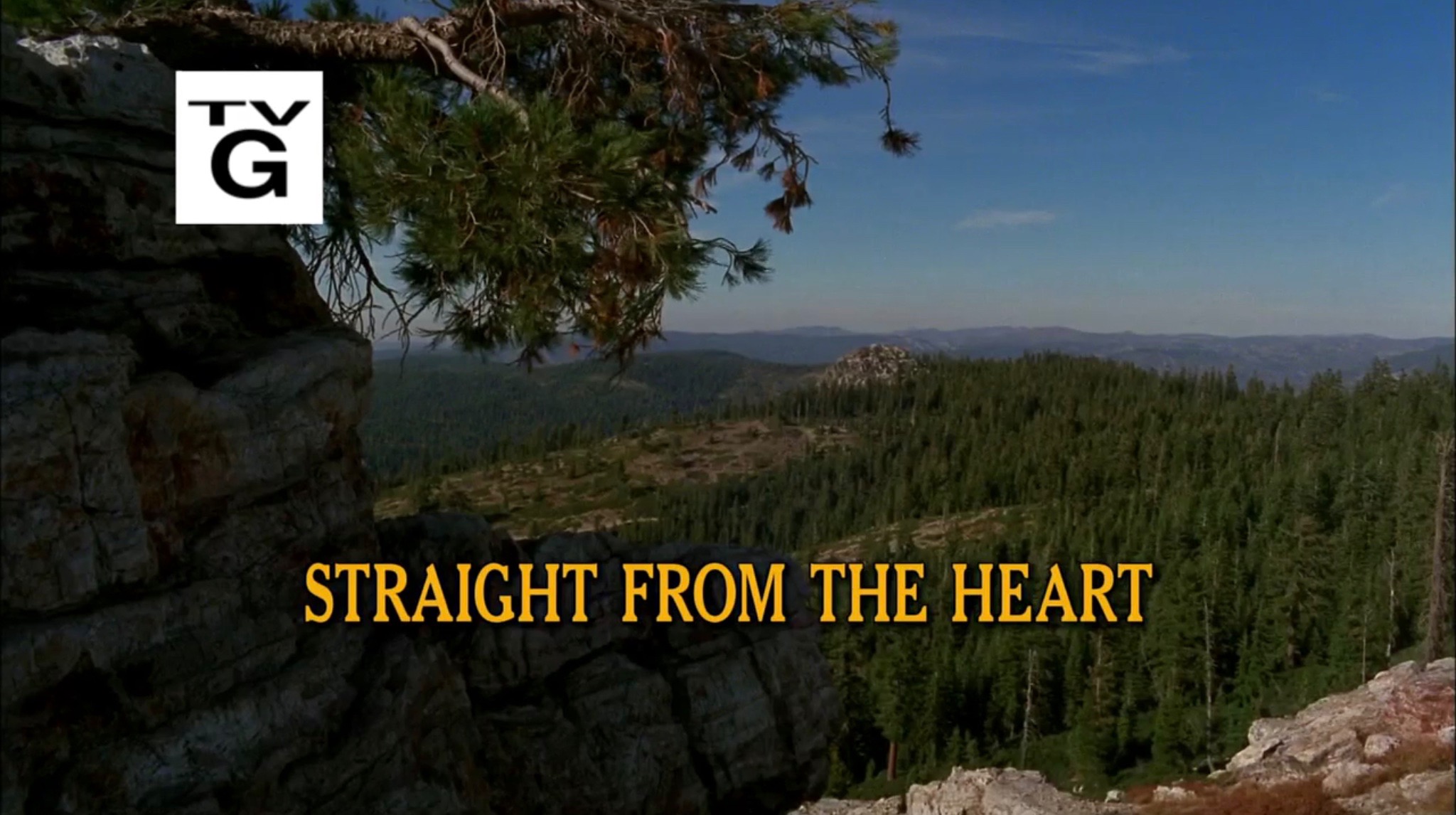
You know what the best part of Straight From The Heart is for me?
It’s that I’m almost 100% positive that’s the director David S. Cass Sr. With this movie, I will have seen 15 of his Hallmark movies. It’s nice to finally put a face with the name. The reason being that they refer to him as Mr. Cass in the movie.
Correction: According to a commenter identifying themselves as David S. Cass Sr. himself, that is most certainly NOT a picture of him.
Anyways, he’s asking a photographer named Jordan Donovan (Teri Polo) if she likes garbage, not because her photos are garbage, but because she likes taking pictures of garbage. Work isn’t going well for her. Now we are introduced to a cowboy named Tyler Ross (Andrew McCarthy). Friends and family of these two decide to play matchmaker and with an ad in Country Connections, Jordan is in now in the country with Tyler.
Honestly, there is less to talk about here than most. Sure there are details. He lost a wife and child. There is an issue with wild horses and his property that has ties back to his father in law from the now dead wife. Jordan was proposed to, sort of, before she came to the country. By sort of, I mean he asked her to move in with him, but not marriage.
None of that is really too important. What you have here is the cowboy who is damaged. A photographer who is a little lost both in her work and personal life. Then you have this little matchmaking scheme that gets them to spend some time together. They go through a series of different experiences together developing a friendship.
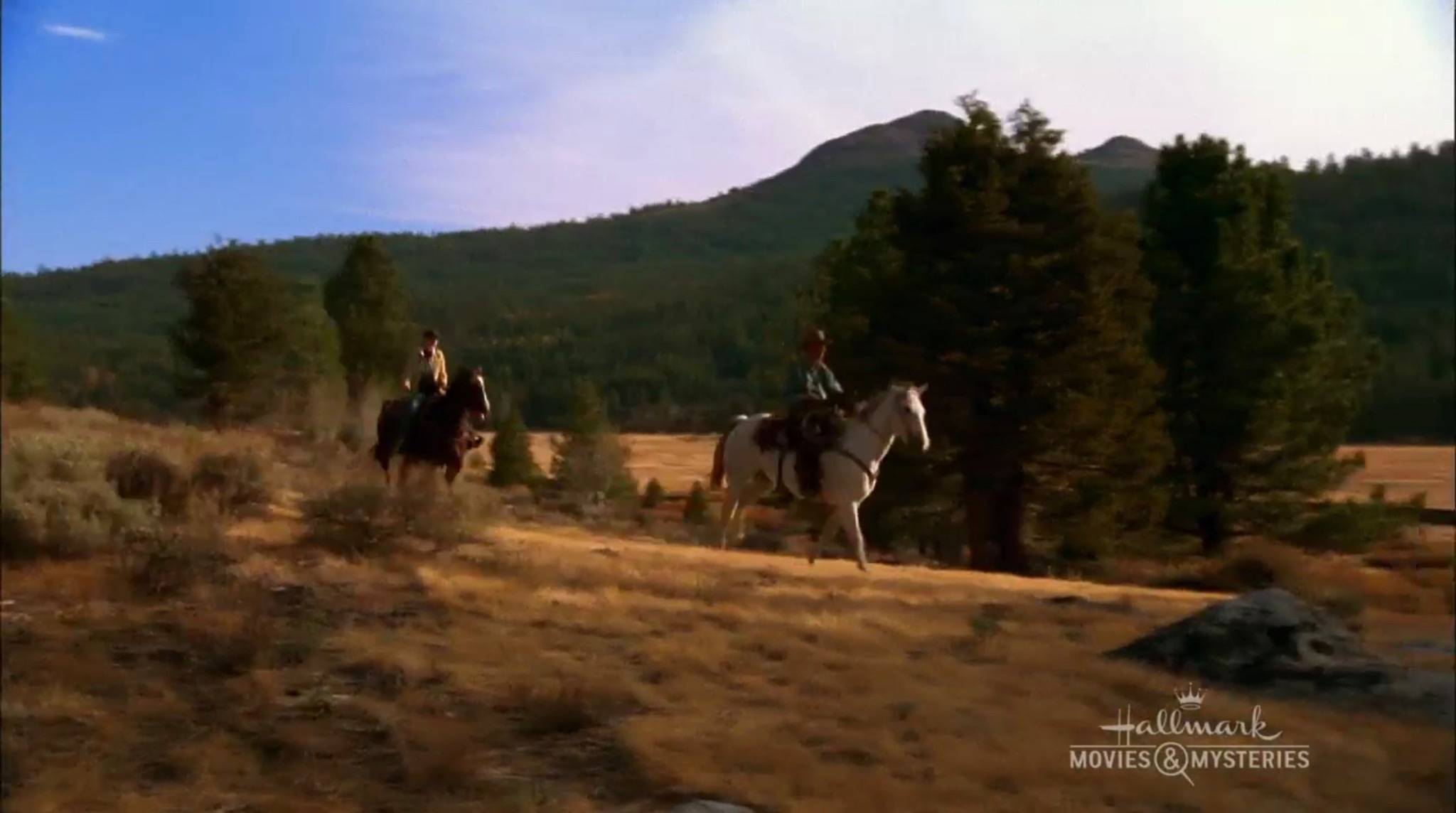
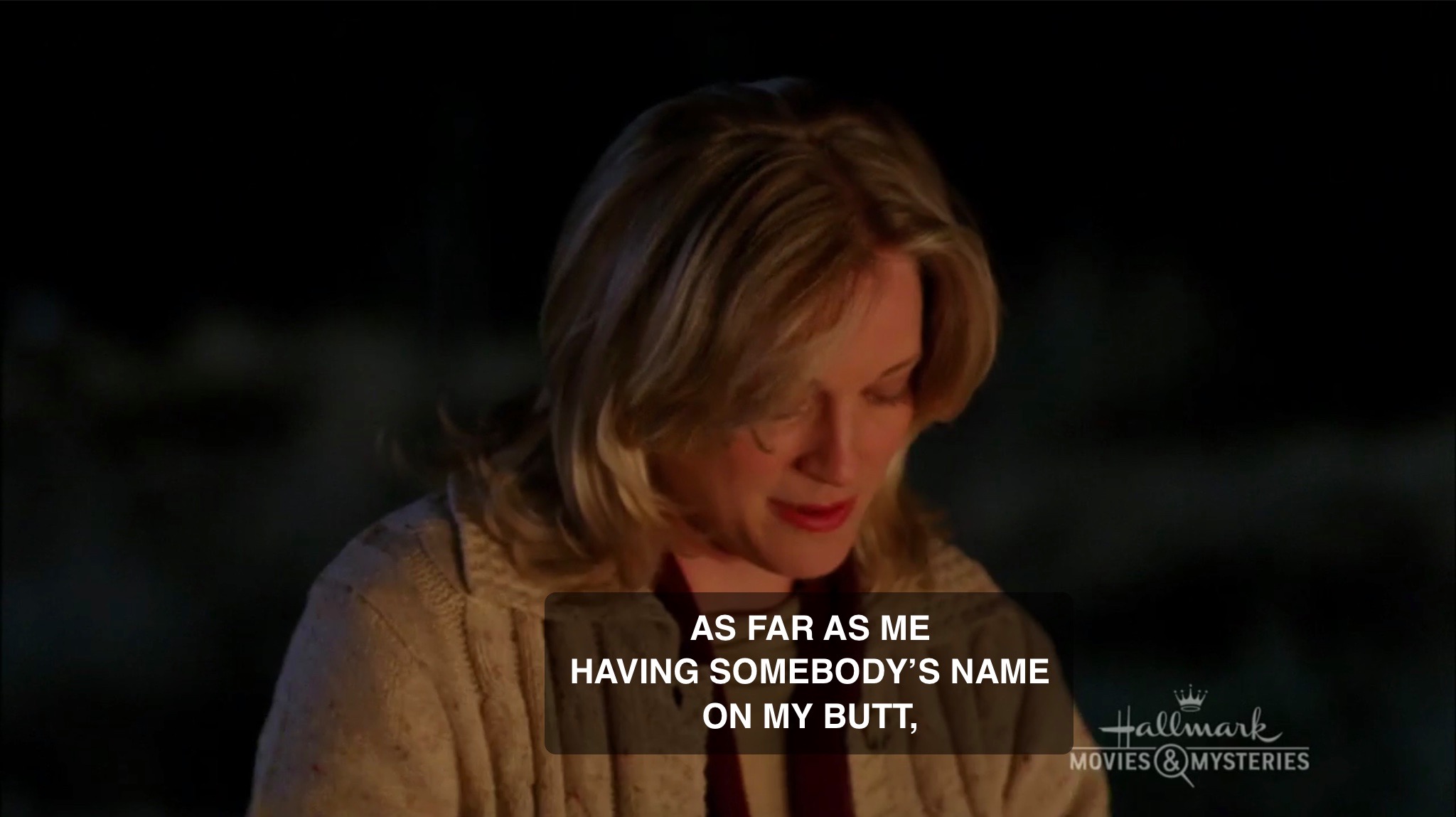
This is one of those really early Hallmark movies so it looks good. You can tell more money went into this then the stuff you see nowadays on the channel. That also means it’s one of those that censors itself. Twice, Jordan says the word “butt” and it falls silent on the word. It’s still in the captions though.
The acting is good too. In fact, I would be recommending this as one of the best one’s I have seen if it didn’t have one problem that really bothers me. I don’t really see any reason that these two people should end up together as lovers. It doesn’t make sense. It makes perfect sense that they should end up as close friends, but asking me to buy them as lovers feels as genuine as if she were a mail order bride and they just lived happily ever after. I see these two people as having helped to heal each other, not fell in love with each other. That part felt forced to me. Especially the ending where it almost felt like he shows up just out of obligation to the script.
If that part doesn’t bother you, then this is worth seeing. It certainly is one of the best looking Hallmark movies I’ve seen.
What’s an Insomnia File? You know how some times you just can’t get any sleep and, at about three in the morning, you’ll find yourself watching whatever you can find on cable? This feature is all about those insomnia-inspired discoveries!
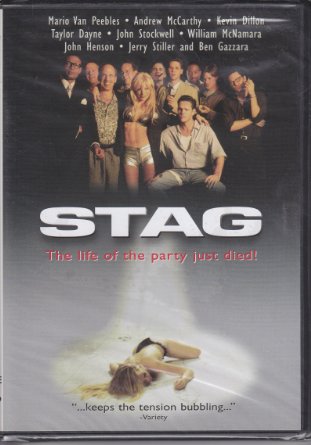
Last night, if you were suffering from insomnia around 2:30 in the morning, you could have turned over to Flix and watched Stag, a dreary film from 1997!
And I know what you’re saying. “Really, Lisa? I could have watched a dreary film! WHY DIDN’T SOMEBODY TELL ME!?” Well, sorry. Your loss. Maybe next time you won’t be so quick to resist the call of insomnia…
Anyway, Stag eventually turns out to be pretty bad but it actually has a pretty good opening. A bunch of rich guys get together in a big house and throw a bachelor party. Whenever one of them first appears on screen, they get a freeze frame that tells us their name and gives us a few biographical facts.
For instance, one coke-snorting character is introduced as “Jon DiCapri: Soap opera star, spokesman for “Stars Against Drugs.” A drunk guy begging for money is identified as “Timan Bernard: Accountant, Author of ‘Ethics in Business.'” The pensive fellow standing by the window and a smoking a cigarette is “Daniel Kane: Gulf war veteran, post traumatic stress disorder,” while the guy running around in a wig and lingerie is “Ed Labenski: Contractor, church treasurer.” My personal favorite of the introductions belonged to the guy with the neck tattoo and the terrible teeth. We’re told that he’s “Pete Weber: Drug dealer, extortionist. Self employed.”
Of course, Pete Weber is also Andrew McCarthy, playing a character who is far removed from the world of Pretty In Pink and St. Elmo’s Fire. And Daniel Kane is actually Kevin Dillon, taking part in the type of misogynistic hi-jinks that would later be celebrated in Entourage. Jon DiCapri is actually William McNamara, who will always be remembered for his memorable death scene in Dario Argento’s Opera. As for Timan Bernard, he’s played by John Henson, who was the host of that terrible Wipeout show that was on the air forever despite the fact that nobody in the world would admit to watching it.
And they’re not the only ones at this bachelor party! The bachelor himself is played by John Stockwell, the director of movies like Cheaters, Crazy/Beautiful and In The Blood. His best friend is played by Mario Van Peebles. Even distinguished character actor Ben Gazzarra is at this bachelor party!
As I said, the film starts out well enough, with the men all acting like idiots and pretty much confirming everything that I’ve always suspected about bachelor parties. But then the strippers show up and there’s a highly improbable accident and soon there are two dead bodies bleeding out on the linoleum floor of John Stockwell’s house. The rest of the movie is pretty much the men yelling at each other and arguing about what they should do. Some fear going to jail. Some want to frame someone else. Some want to cover up the accident. A few suggest calling the police but then Andrew McCarthy rips the landline phone out of the wall and, since this movie was made in the 90s, that is literally all he has to do to keep everyone from contacting the outside world.
Despite some decent performances, the film turned out to be pretty tedious. That said, as I watched it, I found myself wondering how my girlfriends and I would have handled a similar situation. What if we were throwing a bachelorette party and suddenly Magic Mike ended up lying in the middle of the floor with a broken neck? To be honest, I get the feeling we’d probably handle it in roughly the same way as the characters in Stag. We would just be a lot more passive aggressive about it.
“Oh my God, is that guy dead!?”
“I don’t know but that’s what I think Heather said. But it’s all Amy’s fault and … Bitch, everyone says it’s your fault so unless everyone in the entire world is wrong … whatever, Amy.”
“Oh my God, what are we going to do with him?”
“I don’t know but Vanessa said that maybe we should say that he like never showed up at the party and then she said that Jen said that … oh my God, are those new earrings!?”
“Yeah, do you like them!?”
“They’re so pretty! Anyway, Jen said that maybe you should like go bury him somewhere…”
“Oh my God, Jen said I should go bury him!?”
“Well, I didn’t hear for sure but Tina said that she heard Vanessa say that Jen said that you should go bury him…”
“That bitch! I am so going to kick her ass! Oh my God!”
But anyway, the body would eventually get buried. Just not by me.
Oh my God! Aren’t rich, white people just like the worst!?
Actually, usually I would never say something like that. I usually find class warfare to be tedious and I personally think poor people can be just as annoying as rich people. I had no interest in the whole Occupy Wall Street thing and I once referred to V For Vendetta as being V For Vapid.
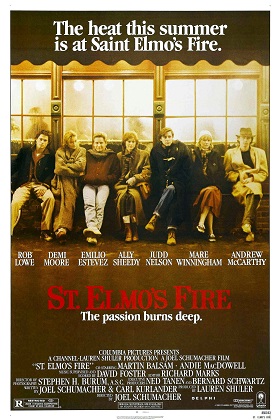
No, I may not be much of a class warrior but then again, that may be because I never met any of the characters at the center of the 1985 film St. Elmo’s Fire. Seriously, if anything could turn me into a slogan-spouting, window-smashing revolutionary, it would be having to deal with any of the self-centered, entitled characters in St. Elmo’s Fire.
St. Elmo’s Fire is about a group of seven friends, three of whom are played by actors who co-starred in The Breakfast Club.These friends all met at and are recent graduates from Georgetown University. St. Elmo’s Fire follows them as they laugh, love, drink, do drugs, and try to figure out what they want to do with the rest of their lives.
For instance, there’s Billy (Rob Lowe), who has big hair and wears one dangling earring. Billy was in a fraternity and spends most of the movie wishing that he still was. Billy also plays the saxophone and he has a wife and a kid who he has pretty much abandoned … well, you know what? I like Rob Lowe. He seems like a fun guy and his DirectTV commercials were all classics but oh my God, does he ever give a bad performance in St. Elmo’s Fire. Some of it is because Billy is not a very likable character. He’s supposed to be the rough-around-the-edges, secretly sensitive rebel type but ultimately, he just comes across as being a loser.
And then there’s Jules (Demi Moore), who does too much cocaine and, as a result, finds herself fearing that she’s on the verge of being sold into a sexual slavery. Jules doesn’t get to do much other than be rescued by the other characters. Fortunately, when it looks like the group is drifting apart, Jules attempts to commit suicide and brings everyone back together. Way to be a plot device, Jules!
Wendy (Mare Winningham) is the sweet but insecure virgin who has a crush on Billy. Wendy works as a social worker and ends up getting insulted by the very people that she’s trying to help. Winningham gives one of the film’s better performances but you can’t help but feel that Wendy deserves better friends.
Speaking of good performances, Andrew McCarthy also gives a pretty good one. McCarthy plays Kevin Dolenz, the idealistic writer who everyone is convinced is gay because he hasn’t had sex in 2 years. However, Kevin is actually in love with his best friend’s girlfriend. As written, Kevin runs the risk of coming across as being insufferably moralistic but McCarthy gives a likable performance. He turns Kevin into the nice guy that we all want to know.
And then there’s the Breakfast Club alumni.
Alec Newberry (Judd Nelson) was the vice-president of the Georgetown Democrats but now, because it pays better, he’s taken a job working for a Republican senator. Alec’s girlfriend is Leslie (Ally Sheedy). Alec obsessively cheats on Leslie, claiming that he can’t be loyal to her unless she’s willing to marry him. The group of friends is largely centered around Alec and Leslie though it’s never really clear why. Alec and Leslie are boring characters and, as a result, they’re a boring couple.
And then there’s Kirby (Emilio Estevez). Estevez gives a likable performance but he often seems to be appearing in a different movie from everyone else. Kirby is working on his law degree and he’s in love with a hospital intern named Dale (Andie MacDowell). Unfortunately, Dale isn’t as interested in Kirby as he is in her so Kirby responds by stalking her and trying to change her mind. There’s an earnestness and sincerity to Kirby that makes you like him, even if his behavior is actually rather creepy.
As for the film itself — well, it’s directed by Joel Schumacher and there’s a reason why Schmacher has the reputation that he does. As a director, Schumacher is good at gathering together an attractive cast but he has close to no idea how to tell a compelling story. St. Elmo’s Fire plods along, dutifully telling its story but providing little insight or surprise.
If you’ve read some of my previous reviews, you’re probably expecting this to be the point where I argue that St. Elmo’s Fire works as a time capsule. But, honestly, this film doesn’t have enough insight to really work as a time capsule. I mean, if you love 80s hair and 80s fashion, you might enjoy St. Elmo’s Fire but, then again, you could always just do a google image search and have the same basic experience.
“Blane! That’s not a name, that’s a major appliance!” — Duckie (Jon Cryer) in Pretty In Pink (1986)
(SPOILERS!)
Blane or Duckie? Duckie or Blane? Which one should Andi have gone to the prom with?
That’s the question at the heart of the 1986 film Pretty In Pink. In Susannah Gora’s excellent book You Couldn’t Ignore Me If You Tried (which, incidentally, has been an important source of information for this entire Back to School series of reviews), a good deal of space and debate is devoted to whether or not Andi (played by Molly Ringwald) should have ended up going to the prom with either Duckie (Jon Cryer) or Blane (Andrew McCarthy). What’s interesting is just how passionate the arguments on both side of the debate get. Those in the pro-Duckie camp, like producer Lauren Shuler Donner and director Howard Deutch, frame the debate as almost being a moral one. Those on the pro-Blane side — people like John Hughes (who wrote the film’s script) and Andrew McCarthy — make a convincing argument that the audience wanted to see Andie with Blane.
Perhaps most importantly, Molly Ringwald — who not only played Andie but upon whom the character was largely based — makes little secret of which suitor she preferred. Molly Ringwald is pro-Blane all the way.
Myself — well, I’m going to hold off on saying which side I come down on.
Both Blane and Duckie have their flaws and their strengths. Blane, for instance, comes from a wealthy family and spends too much time worrying about what his loathsome friend Steff (James Spader, who gives a wonderfully evil performance that justifies why he is quoted in Gora’s book as saying, “I figure I got a lock on this whole teen asshole thing,”) thinks. But, at the same time, Blane is obviously more sensitive than the rest of his rich friends. There’s a soulful sincerity to McCarthy’s performance and, until he breaks Andi’s heart by giving into peer pressure, he truly is every girl’s dream boyfriend.
And then there’s Duckie. As played by Jon Cryer, Duckie is the type of best friend that we all hope we’re lucky enough to have. You never have any doubt that he’ll always be there for Andie and it just takes one look at how he’s dressed to understand that Duckie doesn’t care about peer pressure. Duckie may be an outcast but, unlike Steff and Blane, he’s confident in himself. And whereas Blane is always wrestling with doubt, Duckie knows that he loves Andie. And if your heart doesn’t hurt a little when he confesses that fact to Andi, then you probably don’t have one to begin with. Add to that, as cute and charming as Blane is, you know he’d never break out into a random dance routine. Blane is no Duckie but, at the same time, Duckie is also no Blane.
And who Andie should take with her to the prom (or if she should even go at all) is an important question because, if anyone deserves to have the perfect prom, it’s Andie. Not only does she work hard to support her alcoholic and depressed father (the great Harry Dean Stanton) but she has great taste in music (or, at least, she does for someone living in the 80s) and she makes her own clothes. One reason why we love Blane is because he discovers that, even if Andie isn’t rich, she’s still the most interesting girl in the entire school. One reason why we love Duckie is because he didn’t have to discover this. He already knew it.
The film, of course, originally ended with Blane giving into peer pressure and canceling his date with Andie. Andie is heart-broken but refuses to surrender. Wearing the pink dress that she specifically made for the event, Andie still goes to the prom and, as the film ends, she shares a dance with Duckie, the one who, all along, loved her unconditionally.
As is recounted in Gora’s book, test audiences loved the movie but hated that ending. And so, a new ending was shot. Blane shows up at the prom without a date. He apologizes to Andie. He shakes Duckie’s hand. He tells Andie that he always believed in her, he just didn’t believe in himself. (Watching at home, Lisa says, “Oh my God!” and wipes away a tear.) As he leaves, even Duckie realizes that Andie belongs with Blane. Andie and Blane are reunited in the parking lot and Duckie goes off with Kristy Swanson.
And you know what? That ending — that ending is perfect. Because yes, Duckie did love Andie but Andie loved Blane and the prom is a time to be with someone who you think you’ll love forever. (Little realizing, of course, that you’ll eventually only think of your former prom date as being that guy who keeps inviting you to play games on Facebook.) Pretty in Pink is one of the most romantic high school movies ever made and one reason it works is because the ending is all about celebrating that romance. It may not be realistic and yes, it might even be borderline immoral to allow Blane to be so easily redeemed after breaking Andie’s heart but who cares?
The wonderful thing about romance is that it doesn’t have to make sense.








 Through the Shattered Lens