An Offer You Can’t Refuse #17: Murder, Inc. (dir by Stuart Rosenberg and Burt Balaban)


We all know the famous line from The Godfather.  “I’m going to make him an offer he can’t refuse.”  Of course, everyone also knows that “It’s not personal.  It’s strictly business.”  There’s another line that’s almost as famous: “One lawyer with his briefcase can steal more than a hundred men with guns.”  That line comes from Mario Puzo’s novel.  It’s never actually used in the film though it’s certainly present as a theme.

The idea of organized crime essentially being a huge corporation is hardly a new one.  In fact, it’s become a bit of a cliche.  Nearly every gangster film ever made has featured at least one scene where someone specifically compares their illegal activities to the day-to-day business of politicians and CEOs.  However, just because it’s a familiar analogy, that doesn’t make it any less important.  It’s hard not to think of organized crime as being big business when you consider that, in the 30s and the 40s, the mafia’s assassination squad was actually known as Murder, Inc.

Murder, Inc. was formed in Brooklyn, in the 30s.  It was founded and initially led by a man named Lepke Buchalter.  Lepke was a gangster but, because he was Jewish, he couldn’t actually become a made man.  However, he used that to his advantage when he created Murder, Inc.  The organization was largely made up of non-Italians who couldn’t actually become official members of the Mob.  The major mafia families would hire Murder, Inc. to carry out hits because they knew that, since none of the members were made men, they wouldn’t be able to implicate any of the families if they were caught by the police.

It was a good idea and Lepke and his band of killers made a lot of money.  Of course, eventually, the police did catch on.  A member of the organization by the name Abe Reles was eventually arrested and agreed to be a rat.  Lepke went to the electric chair.  Reles ended up falling out of a window.  Did he jump or was he thrown?  It depends on who you ask.

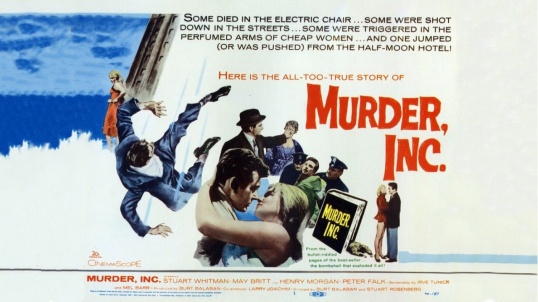
19 years after Reles plunged from that window and 16 years after Lepke was executed, their story was told in the 1960 film, Murder, Inc.  Lepke was played by David J. Stewart while Reles was played by Peter Falk.  The film is told in a documentary style, complete with a narrator who delivers his lines in a rat-a-tat-tat style.  We follow Reles as he goes to work with Lepke and as he harasses a singer (Stuart Whitman) and his wife (May Britt), forcing them help him carry out a murder and then allowing them to live in a luxury apartment on the condition that they also let Lepke hide out there.  (It’s probably not a surprise that a professional killer wouldn’t turn out to be the best houseguest.)  Eventually, a crusading DA (Henry Morgan) and an honest cop (Simon Oakland) take it upon themselves to take down Murder, Inc.

To be honest, there’s not a whole lot that’s surprising about this film but it’s still an entertaining B-movie.  The black-and-white cinematography and the on-location filming give the film an authentically gritty feel.  The action moves quickly and there’s enough tough talk and violent deaths to keep most gangster aficionados happy.  The best thing about the film is, without a doubt, Peter Falk’s portrayal of Abe Reles.  Falk is magnetically evil in the role, playing Reles as a man without a soul.  Even when Reles finally cooperates with the police, the film leaves no doubt that he’s only doing it to try to save himself.  Falk plays Reles like a tough guy who secretly knows that his days are numbered but who has convinced himself that, as long as he keeps sneering and threatening people, the rest of the world will never figure out that he’s been doomed all the time.  The more people he kills, the higher Reles moves up in the corporation and the more he tries to take on the look of a respectable member of society.  But, no mater how hard he tries, Reles always remains just another violent thug.  Falk was deservedly Oscar-nominated for his performance in this film, though he ultimately lost the award to Spartacus‘s Peter Ustinov.

Murder, Inc. may be a low-budget, B-movie but it’s also a classic of gangster cinema.  It’s an offer you can’t refuse.
Previous Offers You Can’t (or Can) Refuse:

  1. The Public Enemy
  2. Scarface
  3. The Purple Gang
  4. The Gang That Could’t Shoot Straight
  5. The Happening
  6. King of the Roaring Twenties: The Story of Arnold Rothstein 
  7. The Roaring Twenties
  8. Force of Evil
  9. Rob the Mob
  10. Gambling House
  11. Race Street
  12. Racket Girls
  13. Hoffa
  14. Contraband
  15. Bugsy Malone
  16. Love Me or Leave Me


An Offer You Can’t Refuse #16: Love Me or Leave Me (dir by Charles Vidor)


The 1955 film, Love Me or Leave Me, is a biopic about singer Ruth Etting.

Don’t know who Ruth Etting is?  Well, don’t feel too bad.  I didn’t know who she was either, at least not until I watched this movie.  Judging from the trailer that I’ve embedded at the top of this review, she was apparently well-known enough in the 50s for a biopic about her to be a big deal.  Having now watched Love Me or Leave Me and having done some independent research, I know that Ruth Etting was a popular singer in the 20 and 30s and that she was, for a while, married to a gangster named Marty Snyder (played, in the film, by James Cagney).  I also know that, after her marriage to Snyder ended, she married a composer named Johnny Alderman (played by Cameron Mitchell).

I still couldn’t tell you just how closely Love Me or Leave Me actually sticks to the facts of Etting’s life.  I imagine that there was a quite a bit of liberty taken with the truth, if just because the film was made in 1955 and it’s one of those big, glossy productions where all of the sets are ornate and all of the clothes are to die for and all of the dialogue has an edge that’s somehow both tough and sentimental.  It feels less like real life and more like the way that you would imagine life to be.

The film begins in the roaring 20s, with Marty Snyder intervening when Ruth nearly gets fired for kicking an obnoxious admirer.  For Marty, it’s obsession at first sight and, even after Ruth refuses to spend a weekend in Miami with him, Marty continues to help her out in her career.  Marty uses his considerable clout (and the fact that everyone is scared to death of him and his temper) to get Ruth on the radio and then eventually a job with the Ziegfeld Follies.  Despite the fact that Ruth is in love with Johnny and Johnny is in love with her, she ends up marrying Marty because she feels that she owes her entire career to him.  Even after they get married, Marty continues to be obsessively jealous.  It all eventually leads to a shooting, an arrest, and a final song from Doris Day.

It’s very much a film of the 50s.  I imagine that audiences in 1955 thought it made perfect sense that Ruth would feel that she owed it to Marty to marry him despite the fact that she never really asked him to do anything for her.  Seen today, though, Marty comes across as being a stalker and you really want someone to sit Ruth down and have a conversation with her about it and maybe explain concepts like gaslighting and restraining orders to her.

My advise, though, would be to not think too much about it because seriously, the film’s sets are beautiful, the musical numbers are entertainingly excessive, and Doris Day gives a really good performance.  For those who only know her from the romantic comedies that she did with Rock Hudson, Love Me or Leave Me is a revelation.  She’s likable and she’s tough and she sings as if the world depended upon it and watching her in Love Me Or Leave Me, you not only understand why Ruth Etting became a star but also why Doris Day did as well.  James Cagney also gives a good performance as Marty Snyder, bringing all of his swaggering charisma to the role.  As a fan of exploitation films, the most interesting thing about Love Me or Leave Me to me was getting to see Cameron Mitchell play a nice guy for a change.  Mitchell does an okay job with the role, though Johnny is never as interesting a character as Marty.  In the end, it’s an entertaining film, an ornate visual feast that works as long as you don’t think about it too much.

Love Me or Leave Me is an offer that you can’t refuse.

Previous Offers You Can’t (or Can) Refuse:

  1. The Public Enemy
  2. Scarface
  3. The Purple Gang
  4. The Gang That Could’t Shoot Straight
  5. The Happening
  6. King of the Roaring Twenties: The Story of Arnold Rothstein 
  7. The Roaring Twenties
  8. Force of Evil
  9. Rob the Mob
  10. Gambling House
  11. Race Street
  12. Racket Girls
  13. Hoffa
  14. Contraband
  15. Bugsy Malone

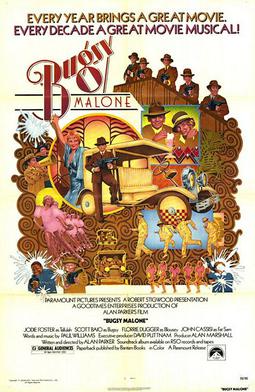
An Offer You Can’t Refuse #15: Bugsy Malone (dir by Alan Parker)


Remember how, a few weeks ago, I said I was going to spend the month of June reviewing 30 gangster movies?  Well, I was doing pretty well but then I got distracted with some things and I ended up falling behind and now, it’s the last day of June and I’ve only reviewed 14 of the 30 films that I was planning on taking a look at.  It’s frustrating but, as any movie blogger can tell you, it happens.  Still, I’m not one to give up so easily!  I promised to review 30 gangster movies and I’m going to keep my word.  Or, at the very least, I’m going to try to…. like, definitely maybe try to….

Anyway, let’s get back to it with 1976’s Bugsy Malone!

Bugsy Malone is an homage to the old gangster movies of the 1920s and 30s.  It’s also a musical, featuring a lot of songs about wanting to make a lot of money, fall in love, and go away to Hollywood.  On top of all that, it’s also a children’s film.  Though they may be playing gangsters and going to war over who will control the rackets, the cast is entirely made up of children.  Though the film does feature a lot of guns, none of the guns fire bullets.  Instead, they shoot custard pies.  Once you get cornered by a rival gangster and you get “splurged,” your career in the rackets is over.  You’re humiliated.  You’re nothing.  You’re just another two-bit hood who couldn’t make it in the big leagues.  You’re just….

Well, you get the idea.

Basically, the plot of the film is that Dandy Dan (Martin Lev) and Fat Sam (John Cassissi) are two rival gangsters who want to take over the Lower East Side.  Fat Sam owns a speakeasy, which means that there’s always a lot of dancing and singing going on in the background.  Bugsy Malone (Scott Baio) is a tough boxer who wants Fat Sam to give a job to Blousey Brown (Florrie Dugger), who dreams of going to Hollywood and becoming a big star.  Tallulah (Jodie Foster) is Fat Sam’s gun moll but she used to go out with Bugsy and she still wants him back.  Bugsy get caught up in the middle of the war between Dandy Dan and Fat Sam and it all eventually leads to a big pie fight and a lot of children covered in custard.  “You give a little love,” the children sing as they realize that their lives don’t have to be defined by gang wars, “and it all comes back to you….”

So, I have to admit that I was absolutely dreading watching Bugsy Malone.  I mean, singing children and custard pie guns?  It all sound just unbearably cutesy.  But, to my surprise, Bugsy Malone actually turned out to be a fun and clever little movie, one that was full of smart dialogue, catchy songs, excellent dancing, and wonderfully non-cutesy performances from its cast.  Even though the film may be about a bunch of children dressing up as gangsters, all of the child actors take their characters seriously and director Alan Parker directs the film as if it were an actual gangster film as opposed to just a children’s musical.  The end result is a film that’s cute but never cutesy.  Believe me, there is a huge difference between the two.

To my shock, Bugsy Malone turned out to be an offer that you can’t refuse.

Previous Offers You Can’t (or Can) Refuse:

  1. The Public Enemy
  2. Scarface
  3. The Purple Gang
  4. The Gang That Could’t Shoot Straight
  5. The Happening
  6. King of the Roaring Twenties: The Story of Arnold Rothstein 
  7. The Roaring Twenties
  8. Force of Evil
  9. Rob the Mob
  10. Gambling House
  11. Race Street
  12. Racket Girls
  13. Hoffa
  14. Contraband

An Offer You Can’t Refuse #14: Contraband (dir by Lucio Fulci)


The 1980 film, Contraband, tells a story of the Neapolitan underworld.

Luca Ajello (Fabio Testi) and his older brother, Mickey, have a pretty nice operation going.  They pilot boats up and down the coast of Italy, smuggling cigarettes and booze into Naples.  It’s given both of them a pretty good life.  They own a racehorse.  Luca’s got a big house with a beautiful wife (Ivana Monti) and a precocious son.  The police are too incompetent to stop them and their disco-loving boss, Perlante (Saverio Marconi), keeps them safe from any interference from the other mob bosses working in Naples.

But then, one night, two men disguised as policeman pull Luca and Mickey over while they’re driving down an isolated road.  The fake cops proceed to fire what seems to be over a hundred bullets into Mickey.  Luca, having ducked down in his seat, is not spotted by the assassins.  Determined to find out who murdered his brother and why, Luca immediately suspects a rival mobster named Scherino but Scherino insists that Mickey’s murder was actually ordered by a mysterious French drug lord known as Il Marsigliese (Marcel Bozzuffi, who also played a French drug smuggler in The French Connection).  The French are trying to take over the rackets in Naples and a sudden surge in violence, one which sees nearly every mob boss in Naples murdered on the same day, suggests that Scherino is telling the truth.

Contraband is a brutal Italian crime film, one that is notable for being one of director Lucio Fulci’s final non-horror films.  (Contraband was released after Zombi 2 but before City of the Living Dead.)  Though the film might not feature any zombies or any talk of “the Beyond,” it’s still unmistakably a Fulci film and some of the film’s brutal violence remains shocking even when seen today.  The scene where a duplicitous drug smuggler gets her face melted with a blow torch is nightmarish and it’s followed by a scene where a rival gangster graphically gets the back of his head blown out.  (Fulci lingers on the hole in the man’s head, giving us an out-of-focus shot of the people standing behind him.)  A later gunfight leads to one gangster dying with a gaping hole in his throat while another has his face shot away, despite the fact that he’s already dead.  It’s graphic but it’s also appropriate for the story being told.  This is a movie about violent men and, as Fulci himself often pointed out whenever he was challenged about the graphic gore in his films, violence is not pretty.  Contraband is not a film that’s going to leave anyone wanting to become a gangster.

The plot is not always easy to follow but, as is typical with a good Fulci film, the striking visuals make up for any narrative incoherence.  Fulci’s camera rarely stops moving, creating a sense of unease and pervasive paranoia.  Much like the characters in the film, we find ourselves looking in every corner and shadow for a potential threat.  A meeting with an informant at a mist-shrouded sulfur pit ends with assassin literally emerging from the mist and stabbing the informant from behind.  A later gun battle on a narrow street seems to feature gunmen literally appearing out of thin air.  Fabio Testi is ruggedly sympathetic as Luca while Saverio Marconi does a great job as the decadent Perlante.  Meanwhile, Marcel Bozzuffi is legitimately frightening in his few scenes as the evil French gangster.  He’s a great villain, smug and willing to kill anyone.  You don’t have to support organized crime to support the idea of running the French out of Naples.

Contraband is a minor crime classic and proof that there was more to Fulci than just zombies and serial killers.  Today would have been Lucio Fulci’s 93rd birthday and it’s also a good day to track down Contraband, an offer that you can’t refuse.

Previous Offers You Can’t (or Can) Refuse:

  1. The Public Enemy
  2. Scarface
  3. The Purple Gang
  4. The Gang That Could’t Shoot Straight
  5. The Happening
  6. King of the Roaring Twenties: The Story of Arnold Rothstein 
  7. The Roaring Twenties
  8. Force of Evil
  9. Rob the Mob
  10. Gambling House
  11. Race Street
  12. Racket Girls
  13. Hoffa

An Offer You Can Take or Leave #13: Hoffa (dir by Danny DeVito)


The 1992 film, Hoffa, opens in 1975, with two men sitting in the backseat of a station wagon.  One of the men is the controversial labor leader, Jimmy Hoffa (Jack Nicholson).  The other is his longtime best friend and second-in-command, Bobby Ciaro (Danny DeVito).  The two men are parked outside of a roadside diner.  They’re waiting for someone who is late.  Jimmy complains about being treated with such disrespect and comments that this would have never happened earlier.  Jimmy asks Bobby if he has his gun.  Bobby reveals that he does.  Jimmy asks him if he’s sure that there’s a loaded gun in the diner, as well.  Bobby goes to check.

Jimmy Hoffa, of course, was a real person.  (Al Pacino just received an Oscar nomination for playing him in The Irishman.)  He was a trucker who became a labor leader and who was eventually elected president of the Teamsters Union.  He was a prominent opponent of the Kennedys and that infamous footage of him being interrogated by Bobby Kennedy at a Senate hearing seems to sneak its way into almost every documentary ever made about organized crime in the 50s.  Hoffa was linked to the Mafia and was eventually sent to prison.  He was freed by the Nixon administration, under the condition that he not have anything to do with Teamster business.  When he disappeared in 1975, he was 62 years old and it was rumored that he was planning on trying to take over his old union.  Everyone from the mob to the CIA has been accused of having had Hoffa killed.

Bobby Ciaro, however, was not a real person.  Apparently, he was a composite character who was created by Hoffa’s screenwriter, David Mamet, as a way for the audience to get to know the enigmatic Jimmy Hoffa.  Bobby is presented as being Hoffa’s best friend and, for the most part, we experience Jimmy Hoffa through his eyes.  We get to know Jimmy as Bobby gets to know him but we still never really feel as if we know the film’s version of Jimmy Hoffa.  He yells a lot and he tells Bobby Kennedy (a snarling Kevin Anderson) to go to Hell and he talks a lot about how everything he’s doing is for the working man but we’re never really sure whether he’s being sincere or if he’s just a demagogue who is mostly interested in increasing his own power.  Bobby Ciaro is certainly loyal to him and since Bobby is played by the film’s director, it’s hard not to feel that the film expects us to share Bobby’s admiration.  But, as a character, Hoffa never really seems to earn anyone’s loyalty.  We’re never sure what’s going on inside of Hoffa’s head.  Jack Nicholson is always entertaining to watch and it’s interesting to see him play a real person as opposed to just another version of his own persona but his performance in Hoffa is almost totally on the surface.  With the exception of a few scenes early in the film, there’s doesn’t seem to be anything going on underneath all of the shouting.

The majority of Hoffa is told via flashback.  Scenes of Hoffa and Bobby in the film’s present are mixed with scenes of Hoffa and Bobby first meeting and taking over the Teamsters.  Sometimes, the structure of the film is a bit cumbersome but there are a few scenes — especially during the film’s first thirty minutes — that achieve a certain visual poetry.  There’s a scene where Hoffa helps to change a man’s flat tire while selling him on the union and the combination of falling snow, the dark city street, and Hoffa talking about the working man makes the scene undeniably effective.  The scenes where Hoffa spars with Bobby Kennedy are also effective, with Nicholson projecting an intriguing blue collar arrogance as he belittles the abrasively ivy league Bobby.  Unfortunately, the rest of the movie doesn’t live up to those scenes.  By the time Hoffa becomes a rich and influential man, you realize that the film isn’t really sure what it wants to say about Jimmy Hoffa.  Does it want to condemn Hoffa for getting seduced by power or does it want to excuse Hoffa’s shady dealings as just being what he had to do to protect the men in his union?  The film truly doesn’t seem to know.

Hoffa is definitely not an offer that you shouldn’t refuse but, at the same time, it’s occasionally effective.  A few of the scenes are visually appealing and the cast is full of character actors like John C. Reilly, J.T. Walsh, Frank Whaley, and Nicholas Pryor.  It’s not a disaster like The Gang Who Couldn’t Shoot Straight.  Hoffa is an offer that you can take or leave.

Previous Offers You Can’t (or Can) Refuse:

  1. The Public Enemy
  2. Scarface
  3. The Purple Gang
  4. The Gang That Could’t Shoot Straight
  5. The Happening
  6. King of the Roaring Twenties: The Story of Arnold Rothstein 
  7. The Roaring Twenties
  8. Force of Evil
  9. Rob the Mob
  10. Gambling House
  11. Race Street
  12. Racket Girls

An Offer You Should Refuse #12: Racket Girls (dir by Robert C. Dertano)


The other night, I watched the 1951 film Racket Girls with a select group of friends.  We get together every Saturday night and watch a movie.  Usually, the movie’s pretty bad.  (For instance, we watched Disco Beaver From Outer Space one night.)  Still, I think Racket Girls might be the worst film we’ve seen to date.

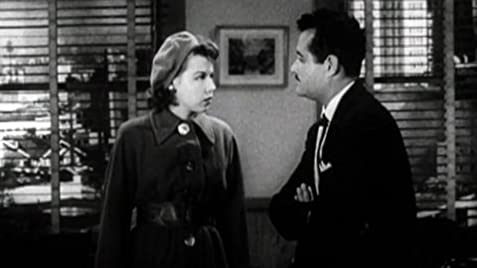
Racket Girls tells the story about how the mob infiltrated the sport of professional wrestling.  Umberto Scali (Timothy Farrell) and his little friend Joe (Don Ferrara) make their living managing female wrestlers but it turns out that the wrestling hall is really a front for all of Umberto’s illegal activities.  We’re told that there’s a lot of illegal activities going on but we don’t really see many of them.  Anyway, Umberto borrows too much money from Mr. Big and then he gets the police mad at him and it looks like it all might lead to a bad end for Umberto and his little friend Joe.

Or maybe not.  Who knows?  This movie is only a 67 minutes long but it’s next to impossible to actually follow the plot.  To be honest, I found the complete lack of background music to be more interesting than the plot itself.  It gave the film a strangely existential feel.  There’s no music.  There’s no entertainment.  There’s just a lot of wrestling and bullets.

In fact, I’d say that the film is 75% wrestling, which …. well, I guess whether or not that works depends on whether or not you’re a fan of grainy professional wrestling footage.  I’m not a huge fan, though I’ve seen some good wrestling movies that were smart enough to explore the real people behind the outsized personas.  In Racket Girls, no one really has a personality and no one has a persona either.  There’s a lot of overhead shots of a wrestling ring and we hear what sounds like a crowd cheering even though we never actually see them.  It’s actually a bit of an odd effect.  It makes the wrestling scenes seem positively surreal.  I kept waiting for that strange radiator woman from Eraserhead to step out in the ring and start singing, In Heaven, Everything Is Fine….

Anyway, the film does make a legitimate point about mob’s influence in professional sports.  Umberto, it should be noted, doesn’t appear to be a very smart gangster.  That’s his downfall.  Still, if you enjoy watching movie featuring tough guys in black suits threatening each other …. well, this film probably still isn’t for you.  I mean, a few of the actors playing the gangsters have got the look down but no one’s particularly convincing.  It’s like a community theater production of The Sopranos or something.  It’s like they remade Scarface with Justin Bieber.

As I watched this film, I found myself wondering whether or not Ed Wood was involved because the film just feels like an Ed Wood production.  Also, it should be noted that Racket Girls was produced by George Weiss, who produced several of Wood’s films and that star Timothy Farrell appeared in at least 3 Wood-directed films.  Ed Wood’s name doesn’t appear anywhere in the credit but I swear, this film has his finger prints all over it.

I’m probably making Racket Girls sound more amusing than it actually is.  This is an incredibly boring movie.  My friends nearly abandoned me about ten minutes into the movie and that hardly ever happens.  I had to beg them to stay and watch the rest of the film.  (I told them that there was a cartoon coming up that featured the first appearance of Bobba Fett.  That was the same line I used to keep them from abandoning me two years ago when we were watching The Star Wars Holiday Special.)  This is an offer that you can refuse.  In fact, you should refuse it.

Previous Offers You Can’t (or Can) Refuse:

  1. The Public Enemy
  2. Scarface
  3. The Purple Gang
  4. The Gang That Could’t Shoot Straight
  5. The Happening
  6. King of the Roaring Twenties: The Story of Arnold Rothstein 
  7. The Roaring Twenties
  8. Force of Evil
  9. Rob the Mob
  10. Gambling House
  11. Race Street

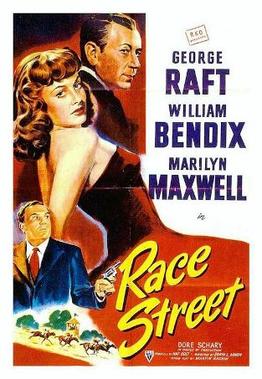
An Offer You Can’t Refuse: Race Street (dir by Edwin L. Marin)


The 1948 film noir, Race Street, tells the story of what happens when the mob comes to San Francisco.

Led by the ruthless Phil Dickson (Frank Faylen, who you might recognize as Ernie the Cab Driver from It’s a Wonderful Life), the mob is looking to move in on San Francisco’s bookmaking rackets.  Dickson wants all of the bookies to pay him for protection.  Of course, he knows that he’s going to have a hard time convincing some of them to go along with his plans so he comes up with the brilliant idea of making an example of one bookie.  He sends two of his men to talk to a small-time bookie named Hal Towers (Harry Morgan).  They tell Hal that he can either pay Phil or he can suffer the consequences.  Hal says that he’ll suffer the consequences so they promptly through him down a flight of stairs, killing him.

When Hal’s best friend, nightclub owner Dan Gannin (George Raft), discovers what has happened, he swears that he’s going to get revenge.  Even after Dickson’s men abduct Dan and give him a brutal beating, Dan remains committed to getting justice for Hal.  Lt. Barney Runson (William Bendix), who has been Dan’s best friend since childhood, tries to convince Dan to let the police handle it.  He even tries to get Dan’s sister, Elaine (Gale Robbins) and Dan’s mysterious girlfriend, Robbie (Marilyn Maxwell), to convince him to back off but Dan won’t hear of it.  Of course, because this is a film noir, Robbie has secret of her own….

Race Street is a low-budget noir that only has a running time of 79 minutes but still somehow finds time to sneak in a few musical performances from Gale Robbins.  When the film first started, I have to admit that I wasn’t expecting much.  George Raft seemed bored with his role and William Bendix’s opening narration didn’t fill me with much confidence.  However, it didn’t take long for the film to win me over.  Harry Morgan, for instance, brought a lot of wounded dignity to his relatively small role and his monologue before his murder is surprisingly moving.  Frank Faylen was cast against type as the evil mobster but it worked.  Seeing the normally amiable Faylen threatening to kill people was a good reminder that not all monsters look like monsters.  Some of them look like the friendly Bedford Falls cab driver.  As befits a film noir, the film is full of ominous shadows and sudden bursts of violence.  The scenes where Hal is murdered and Dan is beaten both stand out as being perhaps a bit more brutal than one might expect a film from 1948 to be.

Race Street is a minor noir but aficionados of the genre should enjoy it.  This is a short and no-nonsense film that gets the job done.  It’s an offer you should not refuse.

Previous Offers You Can’t (or Can) Refuse:

  1. The Public Enemy
  2. Scarface
  3. The Purple Gang
  4. The Gang That Could’t Shoot Straight
  5. The Happening
  6. King of the Roaring Twenties: The Story of Arnold Rothstein 
  7. The Roaring Twenties
  8. Force of Evil
  9. Rob the Mob
  10. Gambling House

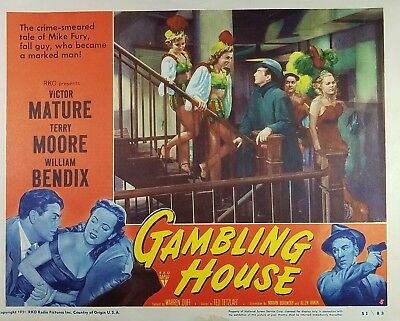
An Offer You Can Refuse #10: Gambling House (dir by Ted Tetzlaff)


The 1950 film noir, Gambling House, begins with the aftermath of a murder.

A man’s been gunned down in an illegal gambling house.  The murderer is gangster named Joe Farrow (William Bendix) but Farrow has no intention of going to prison.  Fortunately, another gambler was wounded during the shoot out.  Marc Fury (Victor Mature) will survive his injury but he might not survive being a witness.  However, Farrow sends his gunmen to make Fury an offer.  If Fury agrees to take the rap for the shooting, he’ll not only live but Farrow will pay him a good deal of money.  Fury agrees because …. well, what else is he going to do?

Fury is arrested for the murder.  He pleads self-defense and he’s acquitted at the trial.  So far, so good, right?  However, there’s always a complication.  First off, there’s the fact that Farrow wasn’t exactly being honest when he promised to pay Fury.  Farrow has no intention of giving Fury any money.  In fact, now that Fury has been acquitted and the case is officially closed, it might be more convenient just to have Fury killed.

The other problem is that Fury’s trial brings him to the attention of the Immigration and Naturalization Service.  The INS takes a look at Fury’s record and they discover that he’s not Marc Fury at all!  (I know, it’s a shock.  Who would think that a name like Marc Fury would be fake?)  It turns out that his original name was Marc Furiotta and he was born in Italy.  His family came to the U.S. when Marc was a child.  Marc always assumed that he was a citizen but it turns out that his parents were never naturalized and therefore, Marc is in the country illegally!  INS wants to deport him.  Marc wants to stay in the United States.

Fortunately, Marc will have a chance to try to convince a judge to let him stay in the United States, despite his lengthy criminal record.  Until his hearing (or until he makes bail), he’ll be detained at Ellis Island.  Marc soon finds himself stuck on Ellis Island, presumably right underneath the base of the Statue of Liberty.  (I know the Statue of Liberty isn’t actually on Ellis Island but the imagery just got stuck in my head while I was writing this review and I’ll be damned if I’m going to take it out.)  He’s surrounded by earnest immigrants who can’t wait to become American citizens and that awakens his own patriotic feelings.  He also meets a social worker named Lynn (Terry Moore) and he falls in love with her.  When he appears before the judge, he explains that he can’t put into words why he wants to stay in America.  He just know that he does.   Awwww, what a wonderful story …. oh wait.  He’s still got Joe Farrow trying to kill him, doesn’t he?

Gambling House is an odd film.  Actually, it’s something like three different films at once.  On the one hand, it’s a low-budget film noir, with menacing tough guys and a morally ambiguous hero and an outwardly respectable villain who is actually a member of the mob.  On the other hand, it’s an earnest legal drama about an immigrant who comes to love his adoptive country.  And then, on the other hand (that’s right, this movie has three hands), it’s a romcom where cynical Marc ends up falling for idealistic Lynn.

That’s a lot for one, low-budget 90-minute film to carry on its shoulder and sadly, Gambling House struggles to balance all of its different elements.  It gets off to a good start, with Victor Mature delivering all of his lines with a scornful disdainful for anyone who looks at him.  And the scenes with William Bendix as the mob boss are effective.  But none of those scenes seem to belong in the same movie with Marc waiting on Ellis Island and Lynn explaining why she wants to help people become citizens.  In the end, this is a film about many things but none of those things are really explored in that much depth.

Though this is a adequately directed and acted film and this is one scene, in which Marc looks at the New York skyline from the holding cell in Ellis Island, that achieves a certain visual poetry, this is still an offer that you can refuse.

Previous Offers You Can’t (or Can) Refuse:

  1. The Public Enemy
  2. Scarface
  3. The Purple Gang
  4. The Gang That Could’t Shoot Straight
  5. The Happening
  6. King of the Roaring Twenties: The Story of Arnold Rothstein 
  7. The Roaring Twenties
  8. Force of Evil
  9. Rob the Mob

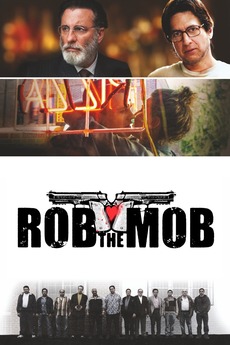
An Offer You Can’t Refuse #9: Rob the Mob (dir by Raymond De Felitta)


The 2014 film, Rob the Mob, tells the true story of a young couple in love who became minor celebrities when they robbed the mob.  Of course, they also ended up with a huge target on their back, which tends to happen when you repeatedly humiliate a bunch of angry men who have weapons at their disposal.

The year is 1992 and Tommy Uva (Michael Pitt) and his wife, Rosemarie (Nina Arianda) are professional criminals who, after getting busted for trying to rob a florist on Valentine’s Day, end up working at a debt collection agency.  Their boss (played by Griffin Dunne) spent time in prison for insider trading and he believes in giving convicts a second chance.  The problem is that Tommy doesn’t really want a second chance.  He’s actually pretty happy being a criminal.

Tommy has some issues with the Mafia, largely due to the fact that his father borrowed money from the mob to open up a shop and spent the rest of his short life being beaten and humiliated by loan sharks.  Tommy believes that the pressure is what led his father to an early grave.  Tommy’s mother (Cathy Moriarty), on the other hand, claims that it was the stress caused by Tommy being a criminal.  Regardless, seeing his father repeatedly mistreated has definitely left Tommy with some anger issues.

Even though Tommy claims that he hates the Mafia, he still seems to be rather obsessed with them.  At times, it’s hard to tell if Tommy is angry with the Mafia or if he’s just jealous about the fact that he’ll never be as rich or as powerful as the local neighborhood mobster.  Tommy starts to skip work so that he can observe the trial of John Gotti.  It’s while doing this that Tommy hears that guns are not allowed in Mafia social clubs.

Soon, Tommy is robbing those same clubs, taking all of the money that he can and humiliating the mobsters at the same time.  (He forces one group of paunchy gangsters to march outside in their underwear.)  With Rosemarie serving as his getaway driver, Tommy soon becomes something of a legend.  The mobsters even nickname the pair “Bonnie and Clyde.”  Because the Mafia doesn’t want to attract any unnecessary attention during the Gotti trial, Tommy and Rosemarie are able to get away with their activities for a while.  But then they make the mistake of stealing a list that could bring down the entire New York Mafia….

Rob the Mob is a bit of an uneven film.  The film starts with Tommy and Rosemarie getting high and then attempting to rob a florist and, in that scene, they both seemed like such idiots that I really wasn’t sure that I wanted to spend 104 minutes of my life watching a film about them.  Even after Tommy got out of a prison and got a legitimate job, he still seemed like such an unsympathetic loser that I found myself wondering why I should care.

However, once Tommy and Rosemarie start actually robbing the mob, the film picks up.  We meet Big Al, the temporary head of the New York mafia, and he’s played by Andy Garcia, who gives an intelligent and understated performance.  Big Al may be a mobster but he’s not an unsympathetic character.  The film presents him as being someone who has been unexpectedly thrust into a position of power and who is doing his best to keep everything from falling apart.  Then, as the robberies continue, Ray Romano shows up as Jerry Cardozo, a reporter who makes “Bonnie and Clyde” famous but who realizes too late that he’s also put their lives in even greater danger than they were before.  Over the past few years, Romano has gone from being a former sitcom star to being a surprisingly effective character actor and his performance here gives Rob the Mob its conscience.

Perhaps even more importantly, during the second half of the film, the chemistry of Michael Pitt and Nina Arianda finally won me over and I actually started to care about what would happen to Tommy and Rosemarie.  Tommy and Rosemarie find a reason for living in their criminal activities.  They go from being losers to being minor New York celebrities, even if they can’t reveal their actual identities.  They may be idiots but their love is real and there’s something very touching about how much they actually do care about each other.  It’s hard not to be happy for them, even if it’s obvious from the start that their story is not going to have a happy ending.

Rob the Mob is uneven but, in the end, it’s more than worth watching.  This is an offer you should not refuse.

Previous Offers You Can’t (or Can) Refuse:

  1. The Public Enemy
  2. Scarface
  3. The Purple Gang
  4. The Gang That Could’t Shoot Straight
  5. The Happening
  6. King of the Roaring Twenties: The Story of Arnold Rothstein 
  7. The Roaring Twenties
  8. Force of Evil

An Offer You Can’t Refuse #8: Force of Evil (dir by Abraham Polonsky)


The 1948 film noir, Force of Evil, plays out like a fever dream of dark and disturbing things.

The film begins on the third of July with attorney Joe Morse (John Garfield) telling us that, by the end of the 4th of July, he will have made his first million dollars, something that he describes as being “an important moment in every man’s life.”  Joe has an appreciation of money that one can only get from growing up poor.  By his own admission, Joe spent most of his youth on the streets, committing petty crimes.  It was his older brother, Leo (Thomas Gomez), who held things together back home and who kept Joe from getting into any truly serious trouble.  Now, years later, Joe is an attorney and Leo is a small-time player in New York’s numbers racket.

(The numbers racket, as the film explains, is an illegal lottery in which people — mostly in working class neighborhoods — bet on which three numbers will be drawn at the end of the day.  In this film, those three numbers are the last three digits of “the handle”, the amount race track bettors placed on race day at a major racetrack, published in the major newspapers in New York.)

Joe now works for Ben Tucker (Roy Roberts).  Tucker may look like a respectable businessman and he may operate out of an office building but he’s actually a gangster.  He got his start as a bootlegger and then, after prohibition ended, he moved into the number game.  He and Joe have come up with a scheme to consolidate and take over the entire New York numbers racket.  They’re going to fix the handle so that, on July 4th, everyone who picks “776” as their three numbers will win.  (As Joe explains, a mix of patriotism and superstition leads to thousands of people picking 776 on every Independence Day.)  When the small time operators don’t have the money to pay off the winners, Tucker will loan them the money to stay afloat.  However, by accepting the loan, the operators will now be in debt to Tucker and Tucker will basically control their operations.  Anyone who doesn’t want to work for Tucker will either be out of work or dead.  It’s all strictly business.

The only problem is that Joe knows that the plan will basically bankrupt Leo.  When Joe goes to Leo and tries to warn him, Leo refuses to listen to him.  Leo may be a criminal but he’s an honest criminal and he has no interest in getting involved with someone like Ben Tucker.  Leo watches out for the people working underneath him and treat them fairly, a concept that men like Ben Tucker will never understand.  In fact, the only thing that Leo asks from Joe is that Joe make sure that Leo’s longtime secretary, Doris Lowry (Beatrice Pearson), is taken care of.

Needless to say, things get even more complicated from there….

Force of Evil presents us with a world where everyone — with exception of maybe Doris — is corrupt and where everything — from blackmail to murder — is strictly business.  Greed is the motivator for every action and the more money that comes in, the easier it is to justify every ruthless act.  Joe makes his fortune over the course of one of America’s most sacred holidays but it comes at the expense of his brother.  His brother tries to do the right thing as far as his employee are concerned, just to discover that the Walter Tuckers of the world don’t care what happens to the people who work for them as long as the money keeps coming in.  It’s a dark and cynical movie, a gangster movie were the cops are just as dangerous as the people they’re arresting and where concepts like love and loyalty mean nothing when there’s money to be made.

As directed by Abraham Polonsky, Force of Evil plays out like a filmed nightmare.  Every interior seems to be full of ominous shadows and the exterior scenes always seem to find characters like Leo Morse and his timid accountant (Howland Chamberlain) dwarfed by the city around them.  Gangsters like Ben Tucker and his associates emerge from the darkness, with the film’s final shoot-out taking place in complete darkness and featuring characters shooting at shadows despite not knowing who that shadow might belong to.  It’s a dark and claustrophobic world that Polonsky presents, one that always seems to be closing in on the Morse brothers and the people unlucky enough to be around them.  (The real world would later close in on Polonsky, an unapologetic Marxist whose ideology is obvious in the film’s portrait of crime just being another form of big business.  Polonsky was among those blacklisted in the 50s.  Force of Evil was the first of only three movies that he would ever direct.)

John Garfield plays Joe Morse with a barely contained anger.  Even after he’s made his first million, he’s still angry at the world.  Getting rich is his revenge on a society that predicted that someone like him would never amount to anything.  Roy Roberts is perfectly sleazy as the outwardly respectable Walter Tucker and Marie Windsor has a few wonderful scenes as his vampish wife.  Perhaps the film’s best performance comes from Howland Chamberlain, playing an accountant who soon finds himself in over his head as Tucker makes his move on Leo’s operation.

Tough, violent, and visually unforgettable, Force of Evil is an excellent gangster film and a classic noir.  It’s definitely an offer that you can’t refuse.

John Garfield in Force of Evil

Previous Offers You Can’t (or Can) Refuse:

  1. The Public Enemy
  2. Scarface
  3. The Purple Gang
  4. The Gang That Could’t Shoot Straight
  5. The Happening
  6. King of the Roaring Twenties: The Story of Arnold Rothstein 
  7. The Roaring Twenties