
It may seem odd to describe Coffy as being a love story.
After all, this is a film that is perhaps best known for a scene in which Pam Grier (as Nurse Coffin, a.k.a. Coffy) shoots her lying boyfriend in the balls. Coffy is often described as being the epitome of 70s grindhouse, a film in which Pam Grier takes on drug dealers, the Mafia, and a corrupt political establishment with a combination of shotguns and shanks. Coffy is perhaps Grier’s best-known films and it features one of her best performances. There’s nothing more empowering than watching Pam Grier take down some of the most corrupt, arrogant, and disgusting men to ever appear in a movie. It’s a violent and gritty film, one that opens with a drug dealer’s head literally exploding and never letting up afterwards. There are many different ways to describe Coffy but it’s rarely called a love story.
But here’s the thing. A film about love doesn’t necessarily have to center around romantic love. Coffy is about love but it’s not about any love that Coffy may have for her boyfriend, the duplicitous politician Howard Brunswick (Booker Bradshaw). Instead, the love at the center of this film is the love that Coffy has for her sister, who died from a heroin overdose. It’s her sister’s death that leads to Coffy first seeking revenge but that’s not the only love that motivates Coffy. There’s also the love that Coffy feels for her community. Throughout the film, we hear about how the black community is being destroyed by the drugs that are being pushed into their neighborhoods by white mafia dons like Arturo Vitronia (Allan Arbus, who was once married to the iconic photographer, Diane Arbus). It’s not a random thing that, for all of Coffy’s anger, she saves her most savage revenge for the members of her community who are working with the white mobsters, men like the pimp, King George (Robert DoQui), and her own boyfriend, Howard.
Throughout the film, Coffy says that she feels like she’s “in a dream” and Pam Grier gives an intelligent performance that suggests that, even after her mission is complete, Coffy will never be the same. She’s not a natural killer. She’s a nurse and it’s her job to save lives. But when she sets out to get revenge on those who killed her sister and who are destroying her community, Coffy shows no mercy. When she violently interrogates another victim of the drug trade, Coffy shows the junkie no sympathy because sympathy isn’t going to solve the problem. Coffy is determined and the reason why she succeeds is because none of her victims realize just how serious she is. Coffy uses her beauty to distract them and then, when they aren’t looking, she strikes. By the end of the film, she’s walking alone on the beach and the viewer is left to wonder what’s going on inside of her head. After all the people that Coffy has killed, can she ever go back to simply working the night shift at the ER? After you’ve seen life and death at its most extreme, can things ever go back to the way that they once were?
And listen, I’m generally a pacifist and I’m not a huge fan of real-life vigilante justice and I’ve signed many petitions against the death penalty but it’s impossible not to cheer for Coffy. Pam Grier gives such a committed performance that it’s impossible not to get sucked into her mission. (It helps, of course, that most of the people who she targets are legitimately terrible human beings.) The brilliance of Grier’s performance comes in the quiet moments. Yes, she’s convincing when she has to shoot a gun and she delivers vengeful one-liners with the best of them. But the film’s best moments are the ones were Grier thinks about how her life has become a dream of violent retribution and where she allows us to see the love for her sister and her community, the same love that is motivating all of the bloodshed.
Coffy is a rightfully celebrated film. For once, a cult film actually deserves its cult. It’s one of the best of the old grindhouse films and, in fact, to call it merely an exploitation film actually does a disservice to how effective a film Coffy actually is. It’s just a great film period.
 The year is 1998 and America is flat broke. Paper currency is now worthless and, to the joy of Ron Paul supporters everywhere, all transactions are done in gold. After the country ran out of oil, people started using skateboards and bicycles for transportation and many turned their cars into homes. While the citizenry spends their time consuming a steady diet of sitcoms and reality television, the government tries to figure out how to pay back the loan that it took from Sam Birdwater (Chief Dan George), a Native American who made billions after buying Nike. Birdwater wants his money back and he is prepared to foreclose on the entire country.
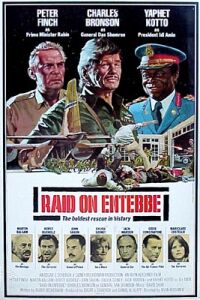 On June 27th, 1976, four terrorists hijacked an Air France flight and diverted it to Entebbe Airport in Uganda. With the blessing of dictator Idi Amin and with the help of a deployment of Ugandan soldiers, the terrorists held all of the Israeli passengers hostage while allowing the non-Jewish passengers to leave. The terrorists issued the usual set of demands. The Israelis responded with Operation Thunderbolt, a daring July 4th raid on the airport that led to death of all the terrorists and the rescue of the hostages. Three hostages were killed in the firefight and a fourth — Dora Bloch — was subsequently murdered in a Ugandan hospital by Idi Amin’s secret police. Only one commando — Yonatan Netanyahu — was lost during the raid. His younger brother, Benjamin, would later become Prime Minister of Israel.
 Yesterday, the great character actor Harry Dean Stanton passed away at the age of 91. Cisco Pike is not one of Stanton’s best films but it is a film that highlight why Stanton was such a compelling actor and why his unique presence will be missed.

 Through the Shattered Lens