Retro Television Review: The Love Boat 6.7 and 6.8 “The Spoonmaker Diamond/Papa Doc/The Role Model/Julie’s Tycoon”


Welcome to Retro Television Reviews, a feature where we review some of our favorite and least favorite shows of the past!  On Wednesdays, I will be reviewing the original Love Boat, which aired on ABC from 1977 to 1986!  The series can be streamed on Paramount Plus!
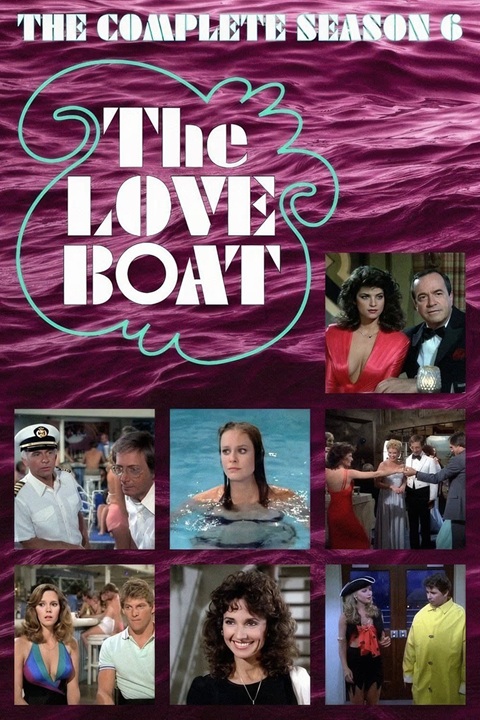
Come aboard, we’re expecting you….

Episodes 6.7 and 6.8 “The Spoonmaker Diamond/Papa Doc/The Role Model/Julie’s Tycoon”

(Dir by Robert Scheerer, originally aired on November 13th, 1982)

The Love Boat is going to Greece and Turkey!

Well, actually, it’s the Love Boat crew that is going to Greece and Turkey.  They’ve been asked to temporarily take over another ship and, of course, Captain Stubing said yes.  This is one of those two-hour Love Boat episodes where the action was actually shot on location and on a real cruise ship.  As such, it’s more of a travelogue that anything.  We get to see the sights of both Greece and Turkey and no one makes any jokes about Midnight Express.

The majority of the storylines revolve around the Spoonmaker Diamond, a very valuable diamond that has been stolen by someone on the ship.  Was the diamond stolen by Emmett and Ellen Stokes (Harvey Korman and Nancy Dussault)?  Was the diamond stolen by Mark Hayward (Mike Connors)?  That’s what Inspector Sadu (Jamie Farr) is trying to figure out!  Of course, regardless of who stole it, it ultimately ends up in the unknowing possession of travel agent Dana Pierce (Polly Bergen).  Will Mark steal the diamond or will he fall in love with Dana?  Why can’t he do both?  This was an odd story because you had the goofiness of Harvey Korman and Jamie Farr and then you had the grouchy intensity of Mike Connors.  Connors seemed to be under the impression that he was appearing on a hard-boiled crime show as opposed to an enjoyably silly comedy about a cruise ship.

Meanwhile, Sabrina Drake (Jan Smithers) is a young heiress who is traveling with her mother, Amanda (Alexis Smith).  Amanda is not happy when she sees that tabloid reporter Joe Novak (Kiel Martin) is also on the cruise.  She’ll probably be even less happy when she discovers that Amanda is 1) secretly seeing Joe and 2) is pregnant.  When Doc finds out that Sabrina is pregnant, he offers to marry her.  Why not?  He’s known her for two days and he’s in love.  Fortunately, Joe talks to Amanda and wins Amanda’s blessing for his relationship with Sabrina.  Doc remains single.

Speaking of marriage, Greek tycoon Gregori Pananopolis (Lorenzo Lamas) asks Julie to marry him.  Julie is stunned and says she needs some time to think it over.  She tells Captain Stubing that she’s not sure if she’s ready to get married.  Uhmm …. Julie, this like the third or fourth guy who had asked you to marry him on this show.  You’ve nearly gotten married twice.  It’s odd how the show always acts as if marriage proposals aren’t a recurring theme when it comes to Julie.  Fortunately, Julie stays single because we all know she’s destined to eventually marry Doc.  Or Gopher, maybe.

Fashion photographer Cliff Jacobs (David Hedison) runs into his ex-wife, model Monica Brandon (Linda Evans).  He lies about having landed a job with a magazine in order to get her to pose for him.  He also takes some pictures of Vicki posing amongst the ruins of Greece.  Later, a magazine contacts him and offers to make Vicki into a star but he and Monica decide not to tell Vicki because they don’t want her to have to deal with pressure of being a model.  Hey Cliff and Monica, that’s really not your decision to make.  I’m sure being a model would be no less detrimental to Vicki than spending her entire youth on a cruise ship with people who are several decades older than her.

As I said at the start of the review, this episode worked best as a travelogue.  None of the stories were particularly intriguing but the scenery was lovely.  Even Turkey looked like a nice place to visit!
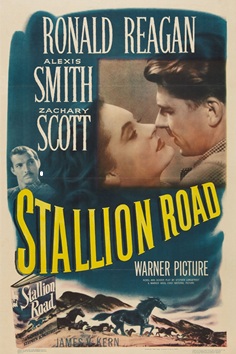
Stallion Road (1947, directed by James V. Kern)


Writer Stephen Purcell comes out to the country to visit an old school friend, veterinarian Larry Hanrahan (Ronald Reagan).  Larry is great at taking care of horses but a little clueless when it comes to women.  Both rancher Rory Teller (Alexis Smith) and Rory’s neighbor, Daisy Otis (Peggy Knudsen), have a thing for Larry but Larry is kept pretty busy taking care of all the horses in the community.  Stephen decides that he likes Rory but, deep down, he knows there’s no way he can compete with Larry.  When Larry gets busy tending to an anthrax outbreak, Rory finds herself tempted to give Stephen a shot.

When Stallion Road originally went into production, Humphrey Bogart was cast as Stephen and Lauren Bacall was cast as Rory.  Both of the stars refused to do the movie, feeling it was too lightweight.  Audiences were cheated out of a chance to see Reagan and Bogart, who were friends despite their differing styles of acting, co-starring opposite each other.  (They were both in Dark Victory but they didn’t share any scenes.)  Speaking of Bogart and Reagan, it’s a Hollywood legend that Reagan was originally offered the role of Rick in Casablanca though I’ve also read that Reagan was actually offered the role of Victor Laszlo.

Bogart and Bacall were right.  Stallion Road is the epitome of lightweight entertainment, with Reagan giving a pleasant but bland performance as Larry and the film never really allowing any doubt as to who Rory belongs with.  It’s the type of movie that would be a Hallmark film today so if you’re actually looking for a realistic drama about ranching and taking care of horses, it’s best to look elsewhere.  This film does show why Reagan was such a successful politician.  Even though his character isn’t exactly exciting, he’s innately likable and, from the minute he first appears, he’s dependable.  He’s someone who any rancher would trust to take care of their horses.


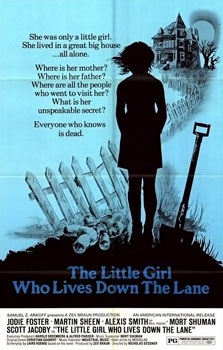
Horror Film Review: The Little Girl Who Lives Down The Lane (dir by Nicolas Gessner)


First released in 1976, The Little Girl Who Lives Down The Lane tells the story of Ryann Jacobs (played by Jodie Foster, who was thirteen years old when she made this film).

Rynn lives in a small New England town, in a house that her father has leased for three years.  It’s been a while since anyone has seen Rynn’s father.  Rynn always tells everyone that he’s either out of town or that he’s busy in his study and can’t be disturbed.  When the friendly local policeman (Mort Schuman) expresses some doubt about Rynn’s claim that her father is working, Rynn says that her father is a drug addict, like all of the great poets.

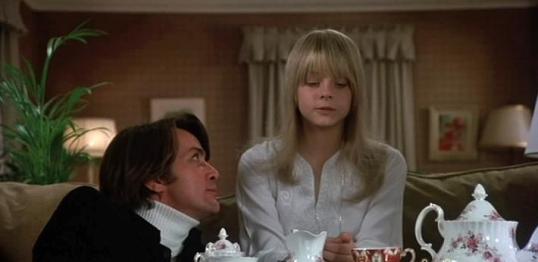
Rynn’s main problem is with the Halletts.  Cora Hallett (Alexis Smith) owns the house in which Rynn is living.  Cora drops by regularly, haughtily demanding to see Rynn’s father.  Her creepy son, Frank (Martin Sheen), also makes a habit of visiting.  He’s not interested in Cora’s father.  Instead, he’s interested in Cora.  Everyone in the town knows that Frank is a perv but no one is willing to do anything about it.  He’s protected by his mother’s money.

One day, when Cora drops by, she insists on going into the basement.  She says she has something down there that she needs to retrieve.  Rynn tells her not to go down there but Cora refuses to listen, which turns out to be a huge mistake.  Cora screams at what she sees down there and then falls to her death.  With the help of her only friend, Mario (Scott Jacoby) an aspiring magician who walks with a limp, Rynn covers up the murder.

Mario turns out to be a very good friend, indeed.  Not only does he tell people that he’s seen Rynn’s father but he even stands up to Frank when he shows up at the house, searching for his mother.  However, as it soon becomes clear, Frank isn’t one to give up so easily….

The Little Girl Who Lives Down The Lane is an interesting hybrid of a film.  It definitely does have elements of horror.  The running theme throughout the film is that Rynn might kill people but it’s all the adults in her life who are truly monstrous.  Frank is truly a monster and Martin Sheen gives a remarkably intense and creepy performance in the role.  Frank is the type who will say that worst things imaginable and then smirk afterward, confident that he’ll never have to face any sort of justice for his crimes.

At the same time, the film is also a coming-of-age-story and a teen romance.  Rynn and Mario are two outsiders who find each other.  You like both of them and you want things to work out for them, even though you spend almost the entire film worried that Rynn might end up poisoning Mario.  Foster and Jacoby share some genuinely sweet scenes.  Things would be just fine, the film seems to be saying, if all of these stupid adults would just mind their own business.

The Little Girl Who Lives Down The Lane is an effectively creepy and sometimes even sweet little film about a girl who occasionally has to kill people.  Keep an eye out for it!

The Big Let-Down: THE TWO MRS. CARROLLS (Warner Brothers 1947)


gary loggins's avatarcracked rear viewer

You would think THE TWO MRS. CARROLLS is just the type of movie I’d love. It’s a Warner Brothers pic from the 1940’s, it’s got Humphrey Bogart and Barbara Stanwyck , there’s mystery and murder, a Gothic atmosphere… and yet, I didn’t love it, or particularly like it, either. For the first three-quarters, it’s too mannered, slow-moving, and (the cardinal sin) boring for my tastes. Things do pick up a bit towards the end, with Bogie menacing Babs alone in that gloomy mansion, but the denouement failed to satisfy me.

There are a number of reasons why the movie just doesn’t work. It was filmed in 1945, but held back two years by the studio for some reason or another (reports vary). Director Peter Godfrey, a Stanwyck favorite, just wasn’t up to the task of creating much suspense. Then again, the screenplay by Thomas Job practically gives everything away early…

View original post 345 more words

Embracing The Melodrama Part III #5: Jacqueline Susann’s Once Is Not Enough (dir by Guy Green)


“Only in the movies, baby.” 

— Mike Wayne (Kirk Douglas) in Jacqueline Susann’s Once Is Not Enough (1975)

Jacqueline Susann’s Once Is Not Enough (for that indeed is the unwieldy title of this little movie) opens with a shot of two Oscars sitting on an end table.  Those Oscars belong to Mike Wayne (Kirk Douglas), a legendary Hollywood producer who hasn’t had a hit in way too long.  He’s struggling financially.  He may even have to fire his maid (Lillian Randolph), despite the many years that she’s spent making sure he wakes up and remembers to take a shower before leaving the house.  What choice does Mike have but to marry Deidre Milford Granger (Alexis Smith), the world’s sixth richest woman?  Mike doesn’t even mind that Deidre is having an affair with Karla (Melina Mercouri).

That makes sense to everyone by Mike’s daughter, January (Deborah Raffin).  As Mike explains it, January’s name came about as a result of January being born in January.  So, I guess if I was Mike’s daughter, I would have been named November.  Everyone in the film thinks that Mike’s being terribly clever by naming his daughter after her birthday but, to me, that just sounds lazy.

Does January have some issues?  Well, when she returns to America after getting into a serious motorcycle accident in Europe, she greets her father by cheerfully saying, “I hope nobody thinks we’re father and daughter.  I hope they think you’re a dirty old man and I’m your broad.”

Agck!  That sounds like the set up for a Freudian nightmare but instead, the film’s rather blasé about the whole incestuous subtext of January’s relationship with her father.  Mike is soon pushed to the side as the movie follows January as she tries to make a life for herself in New York City.  Fortunately, she’s able to land a job at a magazine, working for her old college friend, Linda (Brenda Vacarro).  In college, Linda was smart and homely but she has since had so much plastic surgery that January doesn’t even recognize her.  Linda’s either found the greatest plastic surgeon in the world or else January is just really, really stupid.

Linda gets all the best lines.  While talking about all of the work that she’s had done, she takes the time to brag that she had everything fixed by her navel, which she declares to be perfect.  When January comments that Linda is beautiful, Linda replies, “And now ugly is in!  I want my old nose back!”

Linda is stunned to learn that January is still a virgin but that problem is solved once January goes out on a few dates with David (George Hamilton), who is Deidre’s cousin.  David and January go out to a club and January is shocked when a random woman throws a drink in David’s face.  Later, January goes back to David’s apartment, which turns out to be the epitome of 70s tackiness.  When January asks David why the carpet and all of the furniture is red, David replies, “I wanted it to look like a bordello.”

Things don’t really work out between January and David but don’t worry!  January soon meets the world-renowned author, Chest Hair McGee (David Janssen)!  Okay, actually his name is Tom Colt.

Tom spends almost the entire movie drunk and acting obnoxious but January falls in love with him.  And, of course, it has nothing to do with the fact that he’s the same age as her father.  No, of course not.  Instead, she’s charmed by the way he slurs the line, “Forgive me, I can’t take my eyes off of your ass!”

January is convinced that she and Tom are going to be together forever.  Of course, Mike hates Tom.  And there is the fact that Tom’s married.  Literally everyone in the movie tells January that Tom is never going to leave his wife but I guess we’re still supposed to be shocked when Tom tells her that he’ll never leave his wife.  He does, however, thank her for allowing “a broken-down old man” to “feel like a stud.”  In the end, nothing really works out for January but she’s such an annoying and vacuous character that you really don’t mind.

Based on a novel by the same author who gave the world The Valley of the Dolls, Once Is Not Enough is a movie that manages to be both remarkably bad and also surprisingly watchable.  Some of that is because the film is a time capsule of 70s fashion, 70s decor, and 70s slang.  A lot more of it is because the cast is made up of such an odd mishmash of performers and acting styles that nobody seems like they should be in the same movie.  Kirk Douglas grimaces.  George Hamilton looks embarrassed.  David Janssen lurches through the film like a drunk trying to remember where he lives.  Alexis Smith and Melina Mercouri chew every piece of scenery they can find while Brenda Vaccaro shouts her lines as if hoping the increased volume will keep us from noticing what she’s actually saying.  Poor Deborah Raffin wanders through the film with a dazed look on her face.  Can you blame her?

Interestingly enough, Jacqueline Susann’s Once Is Not Enough actually was nominated for an Oscar.  Brenda Vaccaro was nominated for Best Supporting Actress.  Admittedly, Vaccaro does probably come the closest of anyone in the cast to creating an interesting character but I still have to wonder just how weak the Supporting Actress field was in 1975.

Anyway, this incredibly silly and tacky film is a lot of fun, though perhaps not in the way that it was originally intended to be.  Between the nonstop drama, the unintentionally hilarious dialogue, and the weird performances, the film plays out like a cartoon character’s dream of the 70s.

Tomorrow, we’ll take a look at another silly and tacky film from the same decade, 1978’s The Betsy!

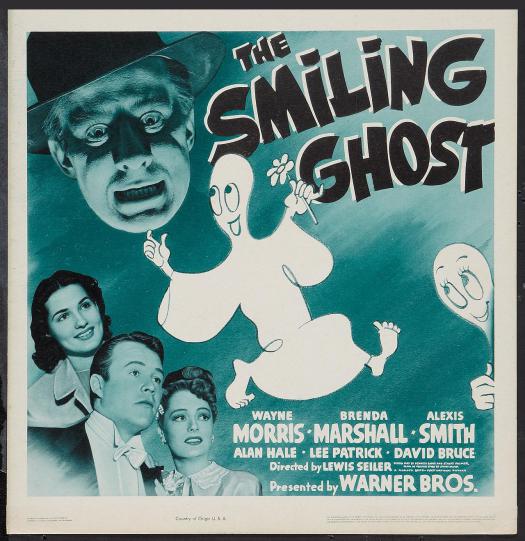
Halloween Havoc!: THE SMILING GHOST (Warner Brothers 1941)


gary loggins's avatarcracked rear viewer

A mysterious killer stalks his prey in an old, dark house! Sound familiar? Sure, the formula has been around since Lon Chaney Sr. first crept his way through 1925’s THE MONSTER, and was perfected in the 1927 horror comedy THE CAT AND THE CANARY. THE SMILING GHOST, a 1941 variation on the venerable theme, doesn’t add anything new to the genre, but it’s a pleasant enough diversion with a solid cast courtesy of the Warner Brothers Stock Company of contract players and a swift 71-minute running time.

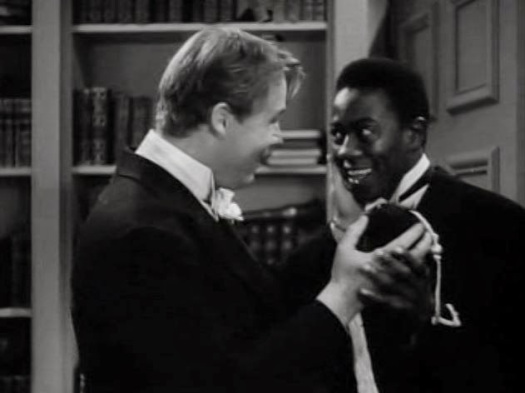
Lucky Downing, a somewhat dimwitted chemical engineer heavily in debt to his creditors, answers a newspaper ad for a male willing to do “anything legal’ for a thousand bucks. Rich Mrs. Bentley explains the job is to get engaged to her granddaughter, Elinor Bentley Fairchild, for a month. Smelling easy money, and a way out of the hole, Lucky and his best friend/valet Clarence take a train…

View original post 553 more words

Benny’s From Heaven: Jack Benny in THE HORN BLOWS AT MIDNIGHT (1945)


horn11Jack Benny claimed 1945’s THE HORN BLOWS AT MIDNIGHT killed his movie career. After rewatching it, I can’t understand why. This comedy/fantasy is just as good as any Bob Hope or Red Skelton film of the era. Yet the critics of the time savaged it, and Benny spent the rest of his life cracking jokes about what a turkey the movie was. I disagree, and think THE HORN BLOWS AT MIDNIGHT deserves a second look.

Jack plays Athanael, a third rate trumpeter playing third trumpet for a radio show sponsored by Paradise Coffee (“the coffee that makes you sleep”). Lulled to sleep himself by the dulcet tones of the show’s announcer, Athanael dreams he’s playing his trumpet in a heavenly orchestra. Beautiful harpist Elizabeth (Alexis Smith) recommends him to the chief angel (Guy Kibbee) for an important mission. It seems Earth has been acting up, with “persecution and hatred everywhere”, and The Big Boss (aka God) has decided to eliminate it. Athanael is sent to play “the first four notes of the Judgment Day Overture” precisely at midnight and signal the end of the world.

Our hero lands at a swank hotel, where he’s spotted by two fallen angels (Allyn Joslyn, John Alexander) who’re comfy with their corrupt lives. Athanael saves a desperate cigarette girl (Dolores Moran) from suicide and misses his chance to blow at midnight. He loses the trumpet when he can’t pay for a meal and Elizabeth is sent to straighten out the mess. The fallen angels conspire with a slick thief (Reginald Gardner) to steal the horn. A merry mix-up ends with everyone hanging from the hotel’s rooftop scrambling for the horn.

horn3

I won’t spoil the ending, but suffice it to say Athanael wakes from his dream to deliver the punchline. There are lots of historical and heavenly puns (seeing people jitterbugging on the dance floor, Athanael exclaims “I must tell St. Vitus about this”)and plenty of silly sight gags. The score by Franz Waxman adds to the fun, aided by music cues you’ll surely recognize from Warner Brothers’ Looney Tunes (an uncredited assist from cartoon maestro Carl Stalling).

The cast is loaded with comic actors like Franklin Pangborn, Margaret Dumont, ex-wrestler Mike Mazurki, and Hollywood’s favorite souse Jack Norton. And then there’s Jack. He’s perfect in the role, and his impeccable timing, comic delivery, and that unmistakable mincing walk are on full display. Director Raoul Walsh was better known for his tough, manly films (THE ROARING 20’S, HIGH SIERRA, WHITE HEAT), but handles the comedy with a sure hand.

horn2

While THE HORN BLOWS AT MIDNIGHT is no classic, it’s not as bad as you may have heard. It’s certainly not as bad as Jack Benny made it out to be all those years. He certainly got some mileage out of making fun of it, though. Watch and judge for yourself. I don’t think you’ll be disappointed. Then again, I’m a huge Jack Benny fan, in case you haven’t guessed, so I may be a little biased.