Here is Dracula, presented by Orson Welles and The Mercury Theater!


Did you know that in 1938, the same year that they horrified America with their production of The War Of The Worlds, Orson Welles and the Mercury Theater did a radio version of Dracula?

Check out this amazing cast list:

Orson Welles – Dracula/Dr. Arthur Seward
George Coulouris- Jonathan Harker
Ray Collins – Russian Captain
Karl Swenson – The Mate
Elizabeth Fuller – Lucy Westenra
Martin Gabel – Professor Van Helsing
Agnes Moorehead – Mina Harker

Coulouris, Collins, and Moorehead would, of course, all go one to appear with Orson Welles in Citizen Kane.

And now, we are proud to present, for your listening pleasure …. DRACULA!

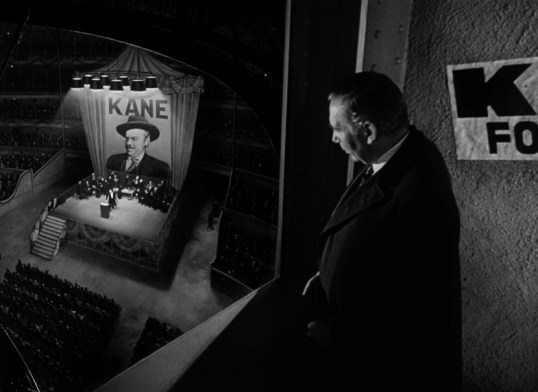
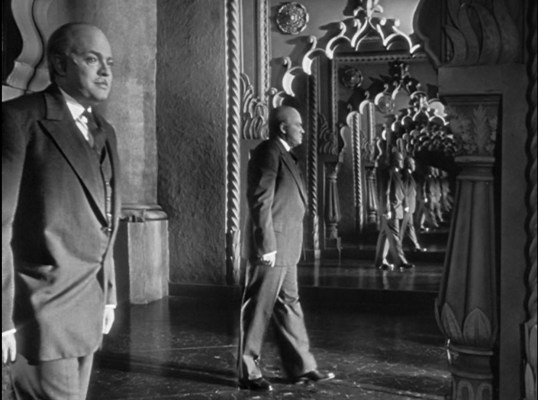
Lisa Marie Reviews An Oscar Winner: Citizen Kane (dir by Orson Welles)


For some reason, certain people seem to feel the need to try to reduce what Orson Welles accomplished with 1941’s Citizen Kane.

In 1971, the famous film critic Pauline Kael published an essay called Raising Kane, in which she argued that screenwriter Herman J. Mankiewicz deserved the majority of the credit for Citizen Kane.  This was Kael’s shot at rival Andrew Sarris and his embrace of the auteur theory.  (1971 was the same year that Kael described Dirty Harry as being  a “fascist work of art” so I guess even the best film critics can have a bad year.)  David Fincher’s father, after reading Kael’s essay, wrote the screenplay for Mank, which not only made the case that Mankiewicz deserved the credit but which portrayed Orson Welles in such a negative fashion that you really did have to wonder if maybe Orson had owed old Jack Fincher money or something.  Herman J.  Mankiewicz himself always claimed that he deserved the majority of the credit for Citizen Kane but then he would, wouldn’t he?

The truth of the matter is that Mankiewicz did write the screenplay for Citizen Kane and he did base the character of Charles Foster Kane on William Randolph Hearst and the character of Kane’s second wife on Hearst’s mistress, Marion Davies.  There’s some debate over how much of the film’s narrative structure belongs to Mankiewicz and how much of it was a result of Welles rewriting the script.  Mankiewicz played his part in the making of Citizen Kane but he played that part largely because Orson Welles allowed him to.  Like all great directors, Welles surrounded himself with people who could help to bring his vision to life.  (That’s something that would think David Fincher, of all people, would understand.  Aaron Sorkin may have written The Social Network but the reason why the film touched so many is because it was a David Fincher film.)

Make no mistake about it.  Citizen Kane is Orson Welles’s vision and Welles is the one who deserves the majority of the credit for the film.  The themes of Citizen Kane are ones to which Welles would frequently return and the cast, all of whom bring their characters to vivid life, is made up of largely of the members of Welles’s Mercury Theatre.  The tracking camera shots, the dark cinematography, and the satiric moments are all pure Welles.  As the Fincher film argues, Mankiewicz may have very well meant to use the film to attack Hearst for his personal hypocrisy and for opposing the political ambitions of Upton Sinclair.  If so, let us be thankful that Orson Welles, as a director, was smart enough to realize that such didacticism is often deadly dull.

And there’s nothing dull about Citizen Kane.  It’s a great film but it’s also an undeniably fun film, full of unforgettable imagery and scenes that play like their coming to us in a dream.  It’s a film that grabs your interest and proves itself to be worthy of every minute that it takes to watch it.  I was lucky enough to first see Citizen Kane at a repertory theater and on the big screen and really, that’s the best way to watch it.  It’s a big film that’s full of bigger-than-life characters who are ultimately revealed to be full of the same human longings and regrets as all of us.  As a young man, the fabulously wealthy Charles Foster Kane thinks that it would be “fun” to run a newspaper.  Later, he thinks that he’s found love by marrying the niece of the President.  He runs for governor of New York and, watching Welles in these scenes, you can see why FDR tried to recruit him to run for the Senate.  Welles has the charisma of a born politician.  When Welles first meets Susan Alexander (Dorothy Comingore) it’s easy to laugh.  The great man has just been splashed by a taxi.  Susan laughs but then winces in pain due to a tooth ache.  Later, Kane insists on trying to turn her into an opera star.  He runs a negative review written by his friend (Joseph Cotten) and then he promptly fires him.  As in all of Welles’s films, it’s all about personal loyalty.  Kane may betray his wife and the voters but he’s ultimately just as betrayed by those around him.  In the end, you get the feeling that Kane was desperately trying to not be alone and yet, that’s how he ended up.

There are so many stand-out moments in Citizen Kane that it’s hard to list them all.  The opening — MIGHTY XANADU! — comes to mind.  The satirically overdramatic newsreel is another.  (Citizen Kane can be a very funny film.)  Joseph Cotten’s performance continues to charm.  Orson Welles’s performance continues to amaze.  Who can forget Agnes Moorehead as Kane’s mother or Everett Sloane as Mr. Bernstein, haunted by that one woman he once saw on a street corner?  Myself, I’ve always liked the performances of Ray Collins (as the sleazy but strangely reasonable Boss Gettys), Paul Stewart (as the subtly menacing butler), and Ruth Warrick (as Kane’s first wife).  Mankiewicz may have put the characters on paper but Welles is the one who selected the amazing cast that brought them to life.

Citizen Kane was nominated for nine Oscars and it won one, for the screenplay written by Welles and Mankiewicz.  Best Picture went to How Green Was My Valley.  When was the last time anyone debated who should be given credit for that movie?

Here is Dracula, presented by Orson Welles and The Mercury Theater!


Did you know that in 1938, the same year that they horrified America with their production of The War Of The Worlds, Orson Welles and the Mercury Theater did a radio version of Dracula?

Check out this amazing cast list:

Orson Welles – Dracula/Dr. Arthur Seward
George Coulouris- Jonathan Harker
Ray Collins – Russian Captain
Karl Swenson – The Mate
Elizabeth Fuller – Lucy Westenra
Martin Gabel – Professor Van Helsing
Agnes Moorehead – Mina Harker

Coulouris, Collins, and Moorehead would, of course, all go one to appear with Orson Welles in Citizen Kane.

And now, we are proud to present, for your listening pleasure …. DRACULA!

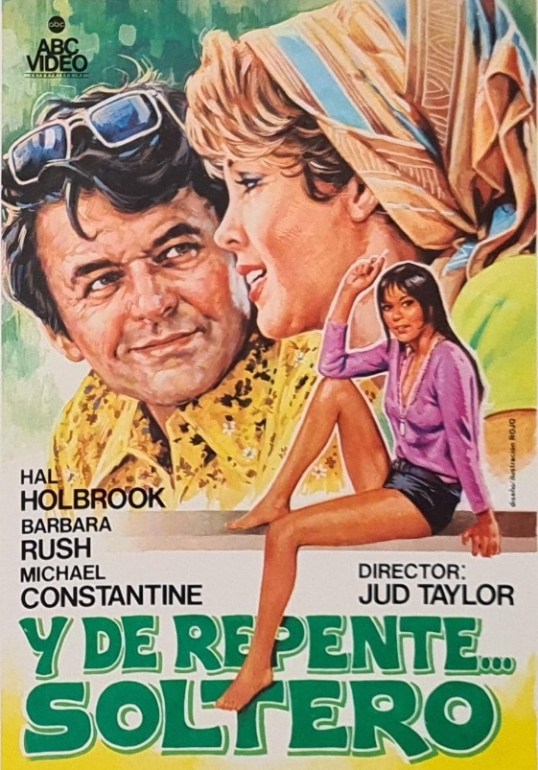
Retro Television Reviews: Suddenly Single (dir by Jud Taylor)


Welcome to Retro Television Reviews, a feature where we review some of our favorite and least favorite shows of the past!  On Sundays, I will be reviewing the made-for-television movies that used to be a primetime mainstay.  Today’s film is 1971’s Suddenly Single!  It  can be viewed on YouTube.

Suddenly Single opens with middle-aged Larry Hackett (Hal Holbrook) loading his suitcases into the back of his car.  His neighbors (David Huddleston and Pamela Rodgers) come over to say goodbye.  Larry has just gotten divorced and, as a result, he’s lost his perfect house in the suburbs.  Now, he’s going to have to move into the city and start a new life but he assures his neighbors that he’ll be okay and that there aren’t any hard feelings between him and his ex, Joanne (Cloris Leachman).  Sometimes, marriages just don’t work out….

Then Joanne shows up….

With her new husband, Ted (Fred Bier)!

While Larry can only watch, Ted insists on picking up Joanne and carrying her over the threshold of what used to be Larry’s house.  As it dawns on him that Joanne was having an affair during the final days of their marriage, Larry is understandably miffed.

Larry just isn’t ready to find himself in the world of the early 70s.  He’s an extremely conservative pharmacist who will now have to deal with hippies and the single scene.  His co-worker (Harvey Korman) encourages Larry to hit the bars.  Marlene (Agnes Moorehead) encourages him to figure out what he wants to do with his life.  His new and much younger neighbor, Jackie (Margot Kidder), tells him that he needs to get a gym membership and be more open-minded.  At first, Larry pursues a relationship with the classy Evelyn Baxter (Barbara Rush) but then he’s drawn to Jackie.  And Jackie, oddly enough, is drawn to him….

Quicker than you can say Breezy, Larry is dating the much younger Jackie and he’s starting to wear hip clothes and hang out with cool, long-haired people.  When he runs into his old neighbors on the street, he discovers that he no longer has much in common with them.  However, Larry still finds himself becoming jealous and possessive of Jackie, who is not the type of to give up her freedom for a relationship.  In the end, Larry is forced to admit that, while he has become more open-minded following his divorce, he still can’t magically change who he is.

Suddenly Single has a great cast and it’s not surprising that it’s a well-acted film.  At the same time, Larry can be a bit of a jerk.  Evelyn is the nicest person in the entire movie and Larry basically breaks her heart so that he can pursue an obviously doomed relationship with the younger Jackie.  It’s a bit sad to watch because everyone but Larry can see what he’s doing.  Larry may be wiser by the end of the film but that’s small solace to Evelyn.  Suddenly Single is about flawed characters and, as such, it can be easy to get annoyed with Larry and Jackie while also appreciating the fact that, like all of us, they’re just trying to figure out life as they go along.

Suddenly Single acts as a bit of time capsule and watching it is as probably as close as one can get to 1971 without a time machine.  It’s a trip to the past with some of the best actors of the era.

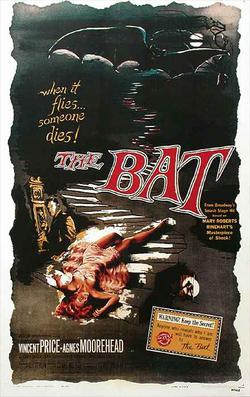
Horror on the Lens: The Bat (dir by Crane Wilbur)


Today’s Horror on the Lens is 1959’s The Bat.  A simple case of bank embezzlement leads to a murder that may or may not be connected to a series of other murders that are apparently being committed by a mysterious killer known as “The Bat.”  The Bat is said to have no face and steel claws and, needless to say, everyone in town is worried about becoming the next victim.

Who is the Bat?  Is Dr. Malcolm Wells (Vincent Price), the shady scientist whose work has led to him doing experiments on bats?  Is it Victor Bailey (Mike Steele), the bank clerk who is a prime suspect in the embezzlement case?  Is it the butler (John Sutton) with a secret past?  Could it even be one of the cops (Gavin Gordon and Robert B. Williams) who has been tasked with capturing The Bat?  Can mystery novelist Cornelia van Gorder (Agnes Moorehead) solve the mystery before becoming The Bat’s next victim!?

The Bat is based on a play and it’s definitely a bit stagey but when you’ve got performers like Agnes Moorehead and Vincent Price onscreen, it really doesn’t matter.  The Bat is an entertaining and atmospheric mystery, featuring a Vincent Price playing another one of his charmingly sinister cads.

Enjoy!

From 1938: Orson Welles and The Mercury Theater Present Dracula!


Did you know that in 1938, the same year that they horrified America with their production of The War Of The Worlds, Orson Welles and the Mercury Theater did a radio version of Dracula?

Check out this amazing cast list:

Orson Welles – Dracula/Dr. Arthur Seward
George Coulouris- Jonathan Harker
Ray Collins – Russian Captain
Karl Swenson – The Mate
Elizabeth Fuller – Lucy Westenra
Martin Gabel – Professor Van Helsing
Agnes Moorehead – Mina Harker

Coulouris, Collins, and Moorehead would, of course, all go one to appear with Orson Welles in Citizen Kane.

And now, we are proud to present, for your listening pleasure …. DRACULA!

The Stratton Story (1949, dir. by Sam Wood)


Monty Stratton was one of the greats.

He was a Texas farmboy who knew how to throw a baseball.  Recruited by the Chicago White Sox, he spent five years in the majors.  From 1934 through 1938, he compiled a 36–23 record with 196 strikeouts and a 3.71 ERA in 487.1 innings.  In 1937, he won 15 games with a 2.40 ERA and five shout-outs.  The next season, he won another 15 games and completed 17 of his 22 starts.  For those of you who might not speak baseball, that all means that he was a really good right-handed pitcher.

When Stratton wasn’t playing baseball, you could find him down on his farm in Greenville, Texas.  He lived there with his wife, Ethel.  On November 27th, 1938, Monty Stratton was hunting rabbits when he accidentally shot himself in his right leg.  While Stratton survived the shooting, his leg was amputated, bringing Stratton’s major league career to an end.

No longer able to play in the majors, Monty Stratton spent the next few years as a pitching coach and helping to start a semi-pro team in Greenville.  With the help and encouragement of his wife, he continued to practice his pitching and he eventually trained himself to the point where he could transfer his weight effectively onto his artificial leg so that he could effectively throw a baseball.  In 1947, Monty Stratton made a comeback, pitching in the minors and ending the season with an 18–8 record and a 4.17 earned run average.  Stratton spent the next six years pitching in the minors before retiring from the game.  He went on to start the Greenville Little League program.  If you go to Greenville, you can still find Monty Stratton Field near Greenville High School.

The Stratton Story was made in 1949, shortly after Stratton’s comeback and while he was still playing in the minors.  James Stewart plays Monty Stratton while June Allyson plays his wife.  The movie follows Stratton from his early days on the farm through his major league career, his accident, and his eventual comeback.  Though the real Monty Stratton served as a technical advisor to the film, I don’t know how historically accurate it was.  The movie, for instance, seemed to condense the timeline so that it seemed like Stratton went straight from losing his leg to practicing for his comeback when it actually took ten years for Stratton to eventually get signed to a minor league team.  Even if it does take some liberties from the facts, The Stratton Story is still a good movie.  The baseball scenes are great and Jimmy Stewart is convincing when he’s throwing the baseball.  He’s also convincing in the scenes where Stratton sinks into a dark depression after losing his leg.  Stewart was so good in the role that, when Stratton finally started to practice his pitching again, I wanted to jump up and cheer.

I liked The Stratton Story.  It probably helps that I love baseball but it’s also a good movie about an inspiring story.

TV Review: Night Gallery 1.3 “The House/Certain Shadows on the Wall”


The third episode of Night Gallery aired on December 30th, 1970.  While Americans were undoubtedly finalizing their plans for a wild New Year’s Eve (because, after all, Nixon was president and every day was a party), NBC and Rod Serling invited viewers to take a tour through a darkened museum, one where every painting told a story.

This episode of Night Gallery featured two stories:
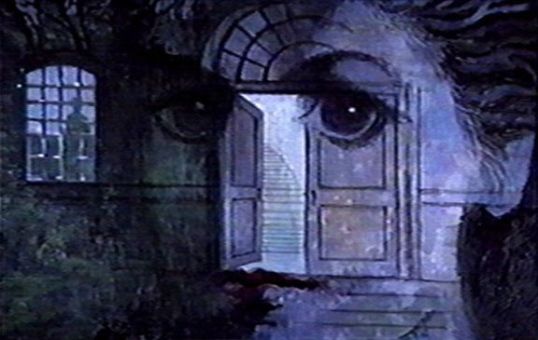
The House (dir by John Astin, written by Rod Serling)

The House opens with Elaine Latimer (Joanna Pettet) talking about a recurring dream.  She’s driving her car through the countryside when she comes across a large house.  Though she’s never seen the house, she finds herself drawn to it, as if she somehow belongs in the house.  As Elaine describes her dream, we come to realize that she’s talking to a psychiatrist (Steve Franken) and that Elaine is recovering from mental breakdown.  Her doctor tells Elaine that the dream is nothing to worry about.

However, when Elaine is driving home, she realizes that the countryside looks familiar.  Soon, she’s pulling up in front of the house from her dreams!  When Elaine gets out of the car, she’s greeted by a real estate named Peugeot (Paul Richards) who asks her if she’s interested in buying the house.  As Peugeot gives her a tour of the estate, he mentions that the house is thought to be haunted….

I liked The House.  It was an atmospheric little tale and, from the minute that Elaine started talking about her dream, the story captured my attention.  (I should admit that I also have recurring dreams about a house that I’ve never actually seen before.)  Admittedly, the story does play out at a very deliberate pace and requires a bit of patience but the dream sequences are effectively surreal and Joanna Pettet gives an empathetic performance in the lead role.
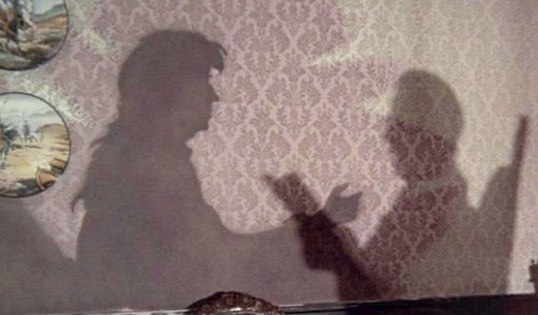
Certain Shadows On The Wall (dir by Corey Allen, written by Rod Serling)

This segment features Agnes Moorehead as the sickly Emma, who is poisoned by her own brother, the despicable Stephen (Louis Hayward).  After Emma’s death, Stephen is shocked to discover that, even though Emma is gone, her shadow remains on the wall.  While Stephen is trying to make sense of that, his other two sisters (played by Grayson Hall and Rachel Roberts) have plans of their own for how to deal with their duplicitous brother.

Like The House, Certain Shadows On The Wall is appropriately atmospheric.  The ending is a bit weak as Stephen gets what he deserves but the shadow itself doesn’t have much to do with his actual fate.  Just when you’re waiting for Agnes Moorehead to make a sudden, ghostly appearance, the story comes to an end.  Still, this is an effective segment and it features excellent work from its ensemble.  I especially liked the performance of Grayson Hall, which features one of the most frightening glares that I’ve ever seen.

The third episode of Night Gallery was a definite improvement over the two that came before it.  Both segments tell intriguing stories, though it’s obvious that the show was still better at coming up with good premises than effective endings.
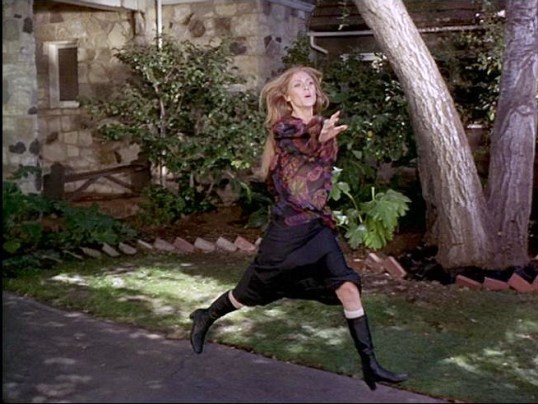
Previous Night Gallery Reviews:

  1. The Pilot
  2. The Dead Man/The Housekeeper
  3. Room With A View/The Little Black Bag/The Nature of the Enemy
Rage in the Cage: CAGED (Warner Brothers 1950)


gary loggins's avatarcracked rear viewer

“In this cage, you get tough or you get killed” – Kitty Stark (played by Betty Garde) in CAGED


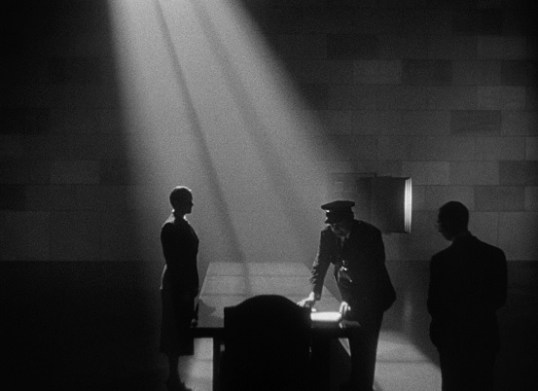
The Grandmother of all “Women in Prison” films, CAGED still packs a wallop, nearly seventy years after it’s release. This stark, brutal look at life inside a women’s penitentiary was pretty bold for its time, with its savage sadism and heavy lesbian overtones, and matches up well with BRUTE FORCE as an example of film noir prison flicks. Everything about this film clicks, from its taut direction by John Cromwell to the use of sound to create mood by Stanley Jones, plus a powerhouse mostly female cast led by Eleanor Parker .

The 28-year-old Parker convincingly plays 19-year-old Marie Allen, given a one-to-fifteen year sentence for accessory to an armed robbery during which her husband was killed. The mousey Marie is indoctrinated, given a number (Prisoner #93850), and poked and…

View original post 649 more words

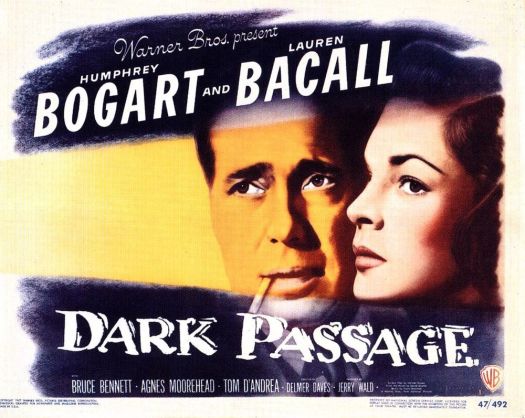
Face the Darkness: Bogie & Bacall in DARK PASSAGE (Warner Brothers 1947)


gary loggins's avatarcracked rear viewer

“Tuesdays in Noirvember” concludes with the genre’s biggest icon, Humphrey Bogart (and he’s bringing Lauren Bacall along for the ride!):

The year 1947 belonged to filmnoir, as some of the dark genre’s true classics saw the light of day: Robert Mitchum donned that iconic trenchcoat in OUT OF THE PAST , Richard Widmark snarled his way through KISS OF DEATH, Burt Lancaster battled sadistic Hume Cronyn with BRUTE FORCE , Tyrone Power got trapped in NIGHTMARE ALLEY , Rita Hayworth bedeviled Orson Welles as THE LADY FROM SHANGHAI , Ronald Colman won an Oscar as a cracked actor leading A DOUBLE LIFE, and Lawrence Tierney terrorized the hell out of everyone in his path in BORN TO KILL . Humphrey Bogart and Lauren Bacall, noir’s power couple thanks to the previous year’s THE BIG SLEEP , teamed again for DARK PASSAGE, an slam-bang crime drama that may not…

View original post 554 more words