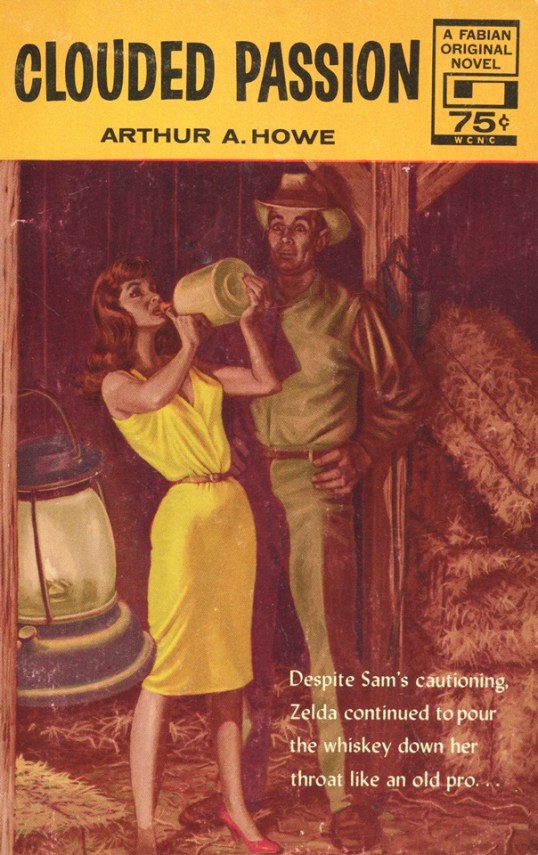
by Bill Edwards
This cover is from 1965.
by Bill Edwards
This cover is from 1965.
Amy Winehouse. Her talent is missed more with each day that passes.
This beautifully shot video takes place at a funeral. What’s being buried? Amy’ heart, after another failed love affair. Originally, the video made this clear by featuring a close-up of the tombstone, announcing that Amy had just buried her heart. After Amy died in 2011, that shot was cut from the video. That’s an understandable decision and I think it actually adds an extra hint of mystery to the video. That said, I’ve always wondered if that’s the same decision that Amy would have made if she had some sort of say in the matter.
Enjoy!
Welcome to Late Night Retro Television Reviews, a feature where we review some of our favorite and least favorite shows of the past! On Fridays, I will be reviewing Freddy’s Nightmares, a horror anthology show which ran in syndication from 1988 to 1990. The entire series can be found on Tubi!
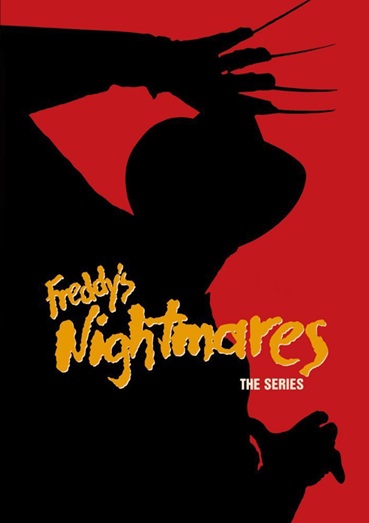
This week, it’s Halloween in Springwood!
Episode 2.4 “Photo Finish”
(Dir by Tom DeSimone, originally aired on October 29th, 1989)
This episode starts with Freddy welcoming us to a special Halloween episode of Freddy’s Nightmares. Because it is the season, Freddy actually plays a role in both of this week’s stories and it must be said that they are both rather gruesome, even by the standards of this show.
In the first story, photographer Stoney Adler (Patty McCormack) is commissioned to take some photos for a Halloween spread that will appear in Kink Magazine. Stoney is amazed at how good her models are at pretending to be scared. That’s because they’re all actually terrified because they keep seeing Freddy. Stoney isn’t aware of Freddy’s presence, at least not until Freddy drives a stake through the heart of one of her models. Stoney tries to avoid doing any more horror shoots but she takes on one final assignment. Freddy appears and asks Stoney, “Do you want me to make (the model) scream?” Stoney says yes. Freddy plucks out Stoney’s eyes. That certainly does lead to some screaming.
The second story feature three FBI men trying to figure out why a suburban father shot his wife and daughter the night before Halloween and then apparently slit his own throat. One of the agents — a profiler who owes more than a little to William Petersen’s performance in Manhunter — figures out that Freddy possessed the father. Freddy, however, then possesses another one of the FBI agents and the tragedy plays out a second time. The profiler ends up with his throat slashed, slowly dying while the camera lingers on him. There’s no way this episode didn’t inspire a few nightmares.
This was a good episode. It was scary, it was gory, and it was definitely designed to offend people who weren’t into horror. This episode was exactly what you would want Halloween with Freddy Krueger to be. The second season continues to be a hundred times better than the first.
Welcome to Retro Television Reviews, a feature where we review some of our favorite and least favorite shows of the past! On Fridays, I will be reviewing St. Elsewhere, a medical show which ran on NBC from 1982 to 1988. The show can be found on Daily Motion.
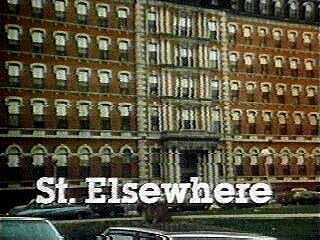
This week, the heartbreak continues!
Episode 3.11 “Homecoming”
(Dir by David Anspaugh, originally aired on December 5th, 1984)
What a depressing episode!
Actually, it’s not totally depressing. Dr. Elliot Axelrod (Stephen Furst) survives his first night as the attending-on-duty and he even convinces cranky old Mrs. Hufnagle (Florence Halop) to go back to her room. He also handles things when a patient collapses in the hallway. One can be sure that Elliot will be given absolutely no praise for his good work because he never is. But at least, he was there and he proved himself to be more competent than anyone gives him credit for being.
Now, for the depressing stuff:
Nurse Rosenthal is continuing her affair with Richard Clarendon. This wasn’t depressing because of anything that happened in this episode. Instead, it’s just depressing that any time was devoted to these two boring characters.
After her apartment is broken into while she’s in the shower, Clancy (Helen Hunt) moves in with Jack. Jack and Clancy make for a cute couple but, watching this episode, it’s easy to see that their relationship is doomed. Clancy is young and enthusiastic. Jack is young but he moves like an old man and he’s already been through a lifetime’s worth of tragedy. Sadly, Clancy living with Jack does not last longer than one night. Clancy says that Jack acts like he’s offended by having her stuff in his apartment and she’s right. Jack is still mourning his wife and not ready to live with anyone.
Lois Wegener (Mimi Kennedy) comes home from being out of town and discovers that her husband, Andrew (John Schuck) is becoming progressively weaker from the experimental bone marrow treatment that he’s going through in an attempt to save the life of their daughter (Brandy Gold). Everyone at the hospital is impressed with Andrew’s courage but it’s obvious to me that this is not going to have a happy ending.
Kathy Martin is still in the psych ward. During this episode, she gives Fiscus the note that Shirley Daniels gave her after Shirley shot and killed Peter White.
And finally, it wouldn’t be a depressing episode without a Westphall storyline. Westphall’s daughter, Lizzie (Dana Short), comes home from college for the weekend and, without asking Westphall ahead of time, she brings along her new boyfriend, Rick (Casey Seimaszko). Lizzie assumes that Rick will be sleeping with her in her room. Westphall is not thrilled to hear about that. (It doesn’t help that Rick isn’t wearing a shirt when he and Westphall first meet.) Lizzie gets angry. Westphall points out that his dead wife would not have approved. Lizzie argues that she is now an adult and can do whatever she wants.
And you know what? I am totally on Westphall’s side here. It’s his house! Lizzie isn’t the one paying the bills. If Westphall doesn’t want Rick sleeping in her room (and, I might add, there are other rooms in the house where Rick could sleep), then Rick doesn’t sleep in her room. When I was younger, I probably would have been on Lizzie’s side but now that I’ve gotten older, I see Westphall’s point and Lizzie comes across as being a spoiled brat. I mean, if she wants to stay in the same room as Rick, they can get a motel room. How expensive could one be in 1984? This episode ends with Lizzie telling her father that she’s leaving. “Lizzie!” Westphall says but she’s already gone.
See what I mean? This was a depressing episode, even by St. Elsewhere standards. That said, it was also a good episode. Ed Flanders, David Morse, Helen Hunt, Stephen Furst, Mimi Kennedy, they all gave wonderfully empathetic performances. Your heart may hurt for them but you can’t wait to see what happens next. Sometimes, life is depressing but, like the characters on this show, you have to moving forward.
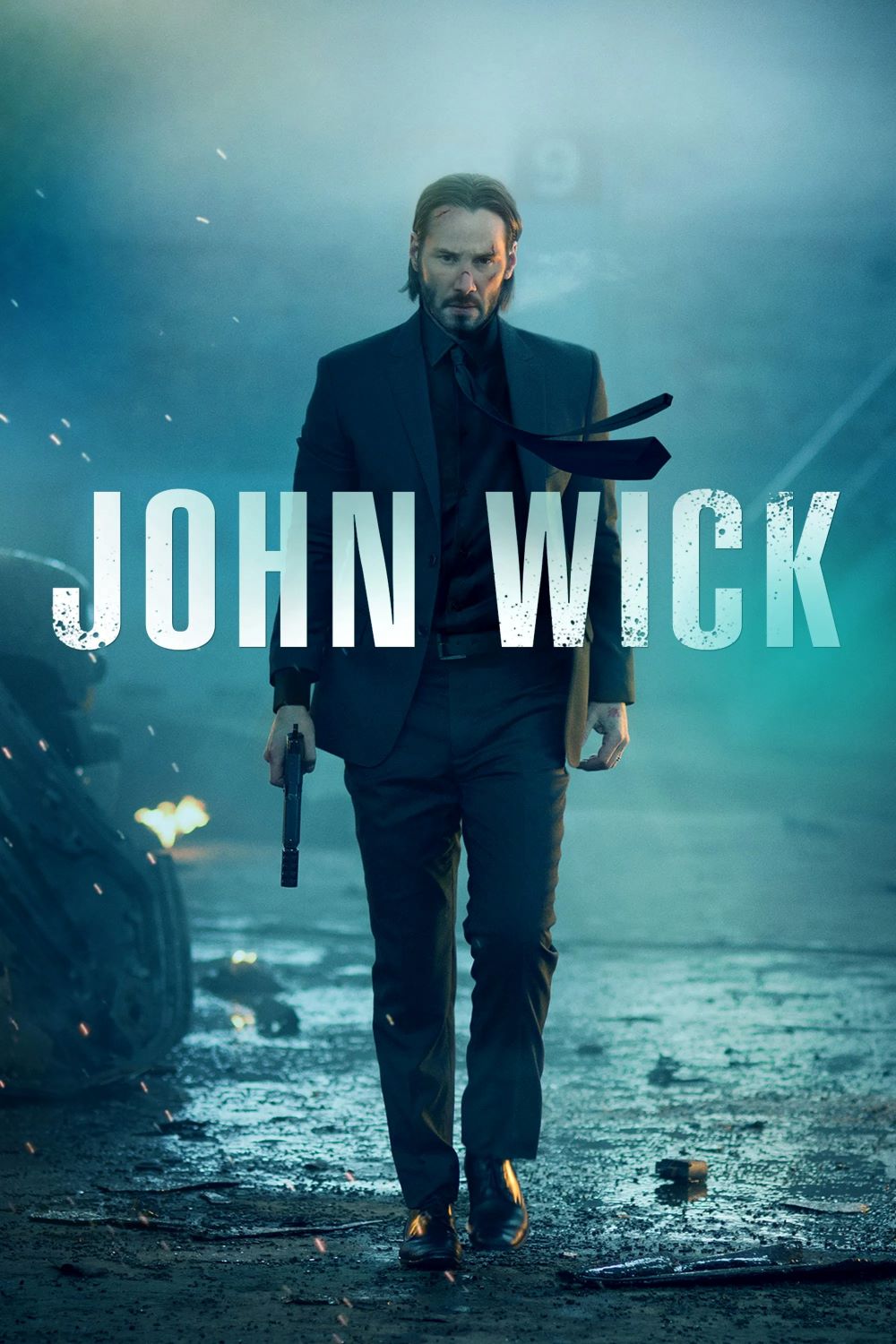
“John is a man of focus, commitment, sheer will… something you know very little about. I once saw him kill three men in a bar… with a pencil, with a fucking pencil.” — Viggo Tarasov
John Wick kicks off with a simple, gut-punching premise that hooks you right away. Keanu Reeves plays the titular character, a retired hitman trying to leave his bloody past behind after the death of his wife. She leaves him a beagle puppy as a final gift, symbolizing a chance at normalcy, but some punk Russian mobsters steal his prized Mustang and kill the dog, setting off a revenge rampage. It’s a revenge story done right—straightforward, no frills, and fueled by raw emotion rather than convoluted twists. Directed by Chad Stahelski and David Leitch, who share a stunt background, the film feels like a love letter to classic action flicks from the ’80s and ’90s, but with a modern polish.
What sets John Wick apart from the glut of forgettable action movies is its relentless focus on craftsmanship. The action sequences are balletic and brutal, blending gun-fu—a mix of precise gunplay and martial arts—with practical stunts that avoid overreliance on CGI. This gun-fu draws directly from the Center Axis Relock (CAR) system, a real-world self-defense close-combat technique where the pistol is held close to the chest at a forward cant for better retention and control in tight quarters. Reeves, at 50 when the film was made, moves like a man possessed, his long-limbed frame perfect for the choreography. Watch the nightclub shootout: bodies drop in waves as Wick reloads with one hand while pistol-whipping foes with the other, all grounded in CAR’s principles that have since become a staple in action films. It’s exhilarating, almost musical in rhythm, thanks to a thumping soundtrack featuring artists like Aloe Blacc and Kaiser Chiefs that amps up the tension without overpowering the visuals.
Keanu Reeves carries the film on his stoic shoulders, and it’s one of his best turns since The Matrix. John Wick isn’t a chatterbox; he’s all simmering grief and quiet menace, his thousand-yard stare conveying depths of loss that words don’t touch. That opening montage of him and his wife—tender beach walks, her terminal illness—hits hard because it’s so understated. Reeves sells the puppy’s death not with histrionics but a single, shattered sob, making his vengeance feel earned. Supporting players elevate the mix too: Michael Nyqvist chews scenery as the mob boss Viggo, Willem Dafoe shines as a sympathetic mentor figure, and Ian McShane adds suave authority as the Continental hotel’s manager. Alfie Allen, pre-Game of Thrones fame, nails the cocky antagonist role without caricature.
The world-building is another standout, introduced efficiently without info-dumps. The Continental Hotel emerges as a neutral ground for assassins, complete with gold coins as currency and strict no-business-on-premises rules—hints at a larger universe that sequels would expand. It’s a clever nod to pulp noir and spy thrillers, giving the violence a code of honor. Stahelski’s visual style, with its neon-drenched nights and stark lighting, evokes The Raid while carving its own path. The Mustang chase is a highlight: tires screech, bullets ping off chrome, and Wick dispatches goons from the driver’s seat with cold efficiency. Production design shines in details like the mobsters’ gaudy mansions contrasting Wick’s minimalist home, underscoring his outsider status.
John Wick isn’t flawless. The plot is paper-thin, essentially “bad guys kill dog, hero slaughters 100 dudes,” with little character depth beyond Wick. Supporting characters get one-note arcs; Viggo monologues about Wick’s legend, but we learn more through reputation than growth. Some viewers find the 101-minute runtime padded by repetitive shootouts—after the first dozen kills, the thrill dips into redundancy for all but the most action-addicted. Women are scarce and sidelined: Wick’s wife appears mostly in flashbacks, and the few female roles are functional at best. It’s a dude-bro fantasy at heart, prioritizing spectacle over substance, which alienates if you’re craving nuance or social commentary.
Pacing stumbles early too. The first act drags with somber setup, mourning the wife and puppy, before exploding into chaos. Once it hits gear, though, it rarely brakes, building to a cathartic finale at Viggo’s compound. Some criticize the violence as gratuitous—headshots galore, blood sprays like a Tarantino wet dream—but it’s stylized, not sadistic, with clear rules (headshots for efficiency) that heighten tension. Compared to contemporaries like Taken, which leaned on gruff one-liners, John Wick opts for silence, letting deeds speak. It’s refreshing, but purists might miss emotional beats amid the bullet casings.
Stylistically, the film borrows heavily yet innovates. Influences from Hong Kong cinema (Hard Boiled, John Woo) shine in the balletic-style of action, while the “gun fu” term coined by critics fits perfectly, elevated by that CAR-inspired hold that’s now echoed in blockbusters everywhere. Cinematographer Jonathan Sela’s work—wide lenses for spatial awareness in fights—makes every room a battlefield, unlike shaky-cam hacks. The music for the film was courtesy of Tyler Bates and Joel L. Richard, pulsing with industrial beats that sync to gunfire like a heartbeat. Budgeted at $20-30 million, it grossed over $86 million worldwide, proving audiences craved this stripped-down revenge tale amid superhero fatigue.
Reeves’ commitment deserves props; he trained rigorously in judo, jiu-jitsu, and firearms, selling every beatdown with authentic CAR posture. Stahelski, his longtime stunt double, directs with intimacy, framing close-quarters brawls to feel visceral. The film’s legacy? It revived Reeves’ career, birthed a franchise (now four films deep, plus spin-offs), and influenced action design industry-wide—expect “John Wick”-style choreography, complete with Center Axis Relock grips, in everything from Netflix shows to indies. Yet its simplicity invites backlash: online threads buzz with “overhyped” takes, arguing it’s style sans soul. Fair point—it’s not Heat‘s operatic depth—but as popcorn entertainment, it delivers uncut adrenaline.
Culturally, John Wick taps male grief mythology: the Baba Yaga legend (Wick as unstoppable boogeyman) mirrors real loss through mythic fury. No preachiness, just catharsis. Drawbacks persist—predictability (you know Wick wins), thin Russian accents straining credulity, and a sequel-bait ending that feels calculated. Still, it revitalized the genre post-Avengers dominance, proving solo heroes endure. For fans of Die Hard or Léon, it’s essential; others might yawn at the body count.
In a landscape of quippy Marvel flicks, John Wick stands tall for earnestness. It doesn’t pretend to be profound, owning its B-movie roots with A-grade execution. Reeves mourns, fights, repeats—rinse with blood. Flaws and all, it’s a blast: taut, stylish, and unapologetic. If action’s your jam, dive in; just don’t expect Shakespeare.
Weapons used by John Wick throughout the film
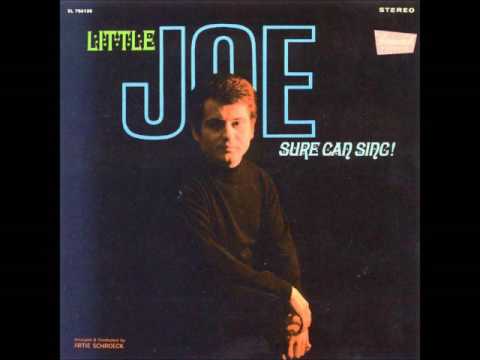
It’s often forgotten that, before he became an award-winning actor, Joe Pesci pursued careers as both a stand-up comedian and a singer. Here he is, performing a lounge version of The Beatles’ Fool On The Hill for his 1968 album, Little Joe Sure Can Sing!
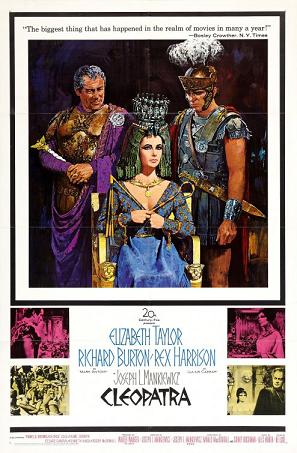
Today would have been the 94th birthday of one of the greatest film stars of all time, Elizabeth Taylor!
Today’s scene that I love comes from 1963’s Cleopatra. Cleopatra is often dismissed as the film that nearly bankrupted a studio but it’s enjoyable if you’re in the right mood and you’ve got four hours of free time. Elizabeth Taylor may not have been a historically accurate Cleopatra but who cares? It seems appropriate that the most glamorous woman of what was then the modern world played the most glamorous woman of the ancient world.
In this scene, Cleopatra arrives in Rome with all of the fanfare befitting the world’s most beautiful and powerful woman. Keep in mind that this scene was done in the days before AI. Every costume was real. Every extra was real. Everything about this scene was real.
4 Shots From 4 Films is just what it says it is, 4 shots from 4 of our favorite films. As opposed to the reviews and recaps that we usually post, 4 Shots From 4 Films lets the visuals do the talking!
Today is the birthday of one of the greatest films stars ever, Elizabeth Taylor! And you know what that means. It’s time for….
4 Shots From 4 Elizabeth Taylor Films
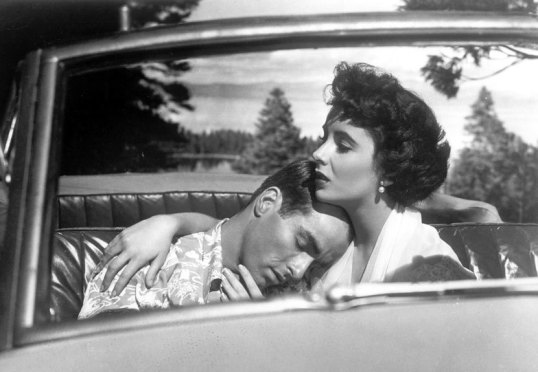
A Place in the Sun (1951, dir by George Stevens, DP: William C. Mellor)

Boom! (1968, dir by Joseph Losey, DP: Douglas Slocombe)
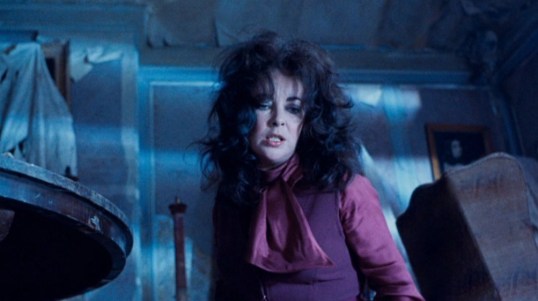
Night Watch (1973, dir by Brian G. Hutton, DP: Billy Williams)
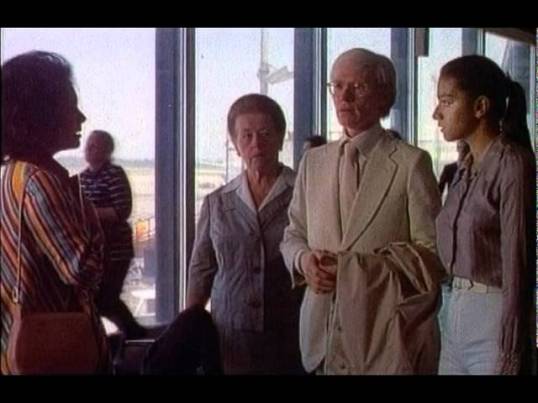
The Driver’s Seat (1974, dir by Giuseppe Patroni Griffi, DP: Vittorio Storaro)
As some of our regular readers undoubtedly know, I am involved in a few weekly watch parties. On Twitter, I host #FridayNightFlix every Friday and I co-host #ScarySocial on Saturday. On Mastodon, I am one of the five hosts of #MondayActionMovie! Every week, we get together. We watch a movie. We tweet our way through it.
Tonight, at 10 pm et, I will be hosting #FridayNightFlix! The movie? 2003’s Detention!
If you want to join us this Friday, just hop onto twitter, find Detention on Prime or Tubi, start the movie at 10 pm et, and use the #FridayNightFlix hashtag! I’ll be there happily tweeting. It’s a friendly group and welcoming of newcomers so don’t be shy.
See you there!
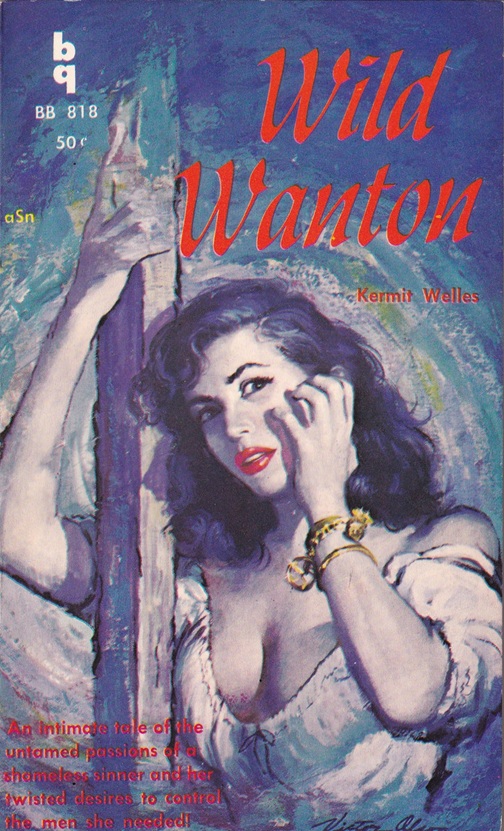
by Victor Olson
This wild and wantonly cover is from 1959.
 Through the Shattered Lens