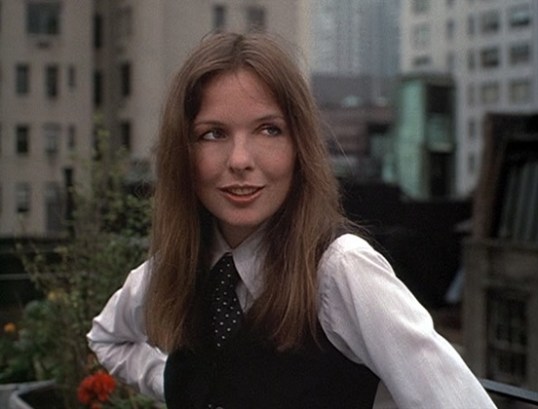
I’m so sad to hear the Diane Keaton has passed away. She was 79 years old.
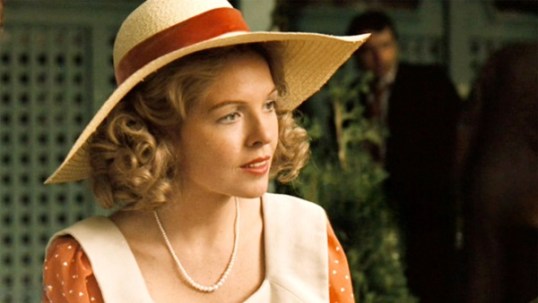
A great actress, she was also one of the few performers who seemed to be as genuine off-screen as she was on-screen. She brought Kay Adams to life in The Godfather, adding a certain edge that wasn’t present in the novel or the script. She starred in Woody Allen’s best films. She lent her voice to Finding Dory. She won an Oscar for Annie Hall and was nominated for a few other films as well. In 1996’s Marvin’s Room, she easily stole the film from showy performers like Meryl Streep and Leonardo DiCaprio and earned perhaps her most deserved Oscar nomination. At a time of generic faces and publicist-written statements, she was refreshingly real.
Inferno (1980, dir by Dario Argento, DP: Romana Albano)
Today’s horror song of the day comes from Keith Emerson’s soundtrack of Dario Argento’s Inferno. Emerson did not have an enviable task, having to follow up Goblin’s soundtrack for Suspiria. But Emerson pulled it off, crafting a score that compliments Goblin’s earlier work while maintaining an identity of its own.
This October, I’m going to be doing something a little bit different with my contribution to 4 Shots From 4 Films. I’m going to be taking a little chronological tour of the history of horror cinema, moving from decade to decade.
Today, we look at the latter half of the 1940s.
4 Shots From 4 Horror Films
Strangler of the Swamp (1946, dir by Frank Wisbar)
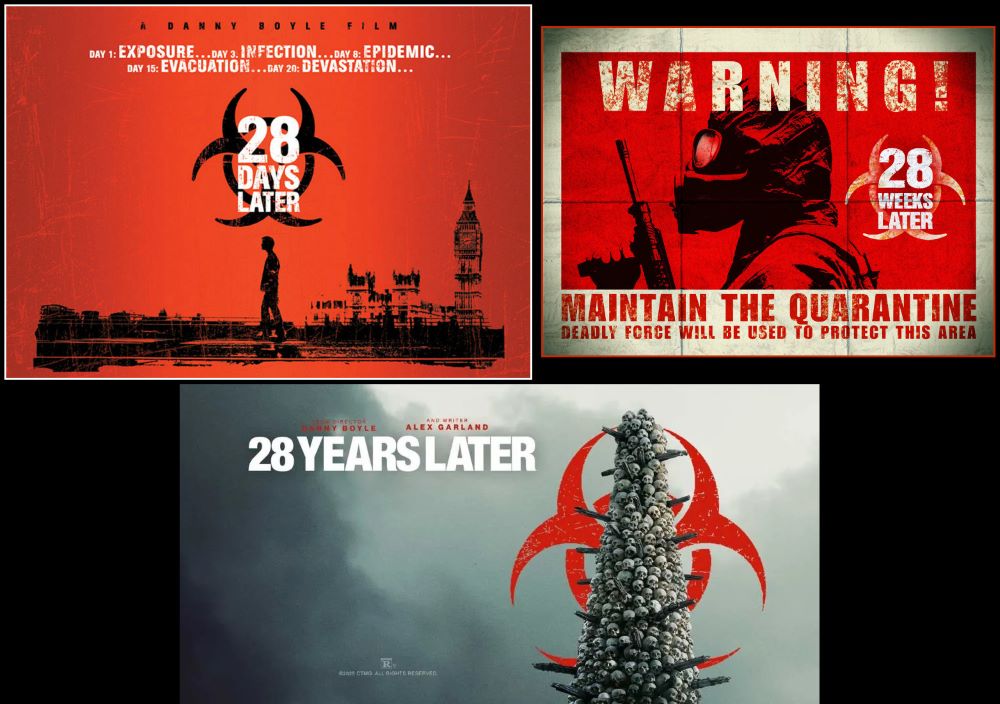
Raw Urgency and Psychological Horror in 28 Days Later
The original 28 Days Later broke new ground in horror filmmaking with its raw depiction of societal collapse fueled by a bioengineered rage virus. Danny Boyle and cinematographer Anthony Dod Mantle’s decision to shoot on early digital video cameras gave the film a distinct grainy, handheld aesthetic that enhanced the feeling of immediacy and disorientation. This style was pivotal in immersing the audience in the eerie emptiness of a London ravaged by infection and abandonment. The stark realism allowed viewers to viscerally experience the isolation and relentless threat surrounding the protagonists.
Unlike traditional zombie films that relied on the supernatural or undead creatures, 28 Days Later introduced infected humans whose fast, uncontrollable aggression metaphorically represented not just a physical virus but the eruption of primal rage and societal breakdown. The tension escalates beyond the infected themselves, focusing sharply on human nature’s darker side through the militarized faction led by Major West, whose corruption and moral decay pose threats as dangerous as the virus itself. This potent blend of external horror and ethical decay elevated the film into a profound exploration of survival, despair, and moral ambiguity in post-apocalyptic conditions. The film resonated deeply with early 21st-century anxieties about sudden disaster and social breakdown, marking a revitalization of horror that has influenced countless works since.
Expansion and Escalation in 28 Weeks Later: A Cinematic Allegory of Its Time
Five years later, 28 Weeks Later expanded the series’ scope significantly. Director Juan Carlos Fresnadillo shifted the narrative from personal survival to the complexity of institutional attempts at restoring order. The film’s polished 35mm cinematography reflected its larger budget and ambition, with expansive urban destruction, dynamic action sequences, and a broader focus on systemic chaos. The narrative unfolds against the backdrop of a militarized “Green Zone” in London, an unmistakable cinematic parallel to the fortified American-controlled zone in Baghdad during the Iraq War.
This allegory extends beyond setting: it captures the tangled failures and ethical dilemmas inherent in the military occupations of Iraq and Afghanistan. The film’s military forces struggle to differentiate friend from foe, ally from insurgent, mirroring the real-world complexities and frequent tragic mistakes of those conflicts. The virus and subsequent resurgence symbolize not only physical contagion but institutional and social rot—highlighting how the rage of war, betrayal, and corruption can infect governance and community trust. The film’s grim depiction of fractured family relationships echoes a society strained by war and occupation, portraying how betrayal and mistrust pervade all levels of social interaction. Through this lens, 28 Weeks Later critiques the hubris of militarized control and the illusion of security, underscoring the fragile, often illusory nature of civilization under stress.
The film’s slicker, high-production-value style distances the viewer somewhat from the intimate immediacy of 28 Days Later but serves its themes by creating a sensation of broad and relentless turmoil. Thematically, this sequel embraces a darker cynicism by portraying militaristic and bureaucratic responses to crisis as part of the problem rather than the solution, intensifying the series’ meditation on rage to encompass political and social failure as well as personal violence.
Reflection and Maturation in 28 Years Later: Evolution of Horror, Philosophy, and a Pandemic Mirror
Returning to the director’s chair decades after the original, Danny Boyle’s 28 Years Later marks a tonal and stylistic evolution that reflects not only the temporal distance from the initial crisis but also a deepening philosophical introspection. The film depicts a Britain still struggling under the long shadow of trauma left by the rage virus. Its infected are no longer iconic red-eyed figures vomiting blood but more mutated, less defined threats, symbolic of how trauma itself can evolve into something less visible but more pervasive.
Cinematographically, 28 Years Later blends moody, shadowy aesthetics with intimate, often handheld shots. Notably, the production’s use of modern digital technology, including iPhone cameras, allowed the film to maintain an intimate feel despite technological shifts. This stylistic choice reflects the thematic focus on memory, decay, and fragile attempts at normalcy. The film’s visual language speaks to a world where the horrors of the past persist beneath the surface, influencing human behavior and societal structures.
Importantly, 28 Years Later serves as a cinematic allegory to the global COVID-19 pandemic and its aftermath. In interviews, both Boyle and Garland acknowledged how the experience of living through the COVID crisis deeply informed the film’s narrative and tone. The pandemic effectively turned empty urban landscapes and daily precautions—once confined to dystopian fiction like 28 Days Later—into real shared experience. The film’s story of a society struggling to live with the virus, navigating quarantine zones and adapting to endemic conditions, echoes how the world has contended with COVID-19’s ongoing impact. Themes of risk, resilience, and generational divide are foregrounded: characters grapple with what it means to live “28 years later,” taking long-term risks even as uncertainties remain. This mirror between fiction and reality deepens the film’s resonance, showing how past speculative fears have become present-day lived realities.
The tonal shift to a more contemplative and somber horror reflects how the pandemic shifted global consciousness from immediate crisis to endurance and adaptation. The film acknowledges grief, loss, and the cultural memory of lives disrupted and taken. Notably, a character’s act of creating memorials to victims reflects real-world efforts to remember those lost to COVID-19, underscoring cinema’s role in processing collective trauma. While this evolution away from pure terror to introspection divides audiences—some missing previous visceral scares—it represents a mature reckoning with the lasting scars pandemics imprint on humanity.
Pandemic Parallels: The Trilogy as a Cinematic Allegory for COVID-19 and Endemic Realities
While each film in the 28 Days Later trilogy originally reflected the anxieties and socio-political contexts of its own era, together they now resonate profoundly as a prophetic allegory of the global COVID-19 pandemic and humanity’s ongoing struggle to live with viral threats as part of everyday life. The trilogy’s trajectory—from sudden catastrophic outbreak to institutional collapse to long-term trauma and adaptation—mirrors the historical arc the world has experienced with COVID-19, offering viewers insight into the psychological, societal, and cultural impacts of pandemics.
28 Days Later anticipated much of the early pandemic experience—fear of rapid contagion, empty cityscapes, social disintegration, and the terrifying vulnerability of individuals isolated amid a global crisis. Jim’s awakening into an eerily deserted London strikingly parallels the empty streets during COVID lockdowns around the world, turning what was once dystopian fantasy into frightening reality. The film’s exploration of panic, isolation, and distrust toward institutions echoes widespread experiences of confusion, fear, and uncertainty during the first months of the pandemic when COVID-19 was unfamiliar, unpredictable, and devastating.
28 Weeks Later deepens this pandemic allegory by portraying the consequences of failed institutional responses and attempts at control. The militarized “Green Zone” concept eerily parallels the real-world challenges of creating “safe zones” amid outbreaks, with tensions between enforcement, mistrust, and community survival. The film’s depiction of fractured families and systemic collapse reflects how social solidarity frays under the pressure of prolonged crisis, political distrust, and ethical quandaries surrounding public health measures experienced globally during COVID waves. The allegory isn’t just about physical infection but social contagion—fear, misinformation, and political polarization as viral threats themselves.
With 28 Years Later, the trilogy fully embraces its role as a cultural mirror to COVID-19’s enduring legacy. Danny Boyle and Alex Garland have openly discussed how the realities of the pandemic shaped the film’s narrative and tone, with characters navigating life decades after the outbreak under quarantine and endemic conditions. The film presents a world where viral infection is an ongoing condition to be managed rather than eradicated, reflecting how many experts now view COVID-19’s transition from acute pandemic to endemic presence. This shift from immediate horror to long-term social and psychological adaptation speaks to the global experience of living alongside risk and uncertainty, balancing caution with the human drive to reconnect and rebuild.
Visual motifs such as quarantine zones, memorial walls, and generational divides throughout the film underscore real-world pandemic realities about loss, resilience, and the passing of collective trauma. The story’s focus on a new generation born into post-virus society echoes global concerns about children’s—educational, emotional, and social—impacts during and after COVID. The film’s meditative tone reflects the world’s evolving understanding that recovery from a pandemic is neither swift nor purely scientific but deeply human, requiring reckoning with grief, memory, and ethical questions about care and sacrifice.
Together, the trilogy transcends traditional horror storytelling to become a cinematic meditation on humanity’s confrontation with biological catastrophe—capturing the terror of sudden collapse, the anguish of institutional failure, and the fragile hope of enduring and adapting to an altered world. In doing so, the 28 Days Later series offers both a chilling warning and a compassionate reflection on survival in an age defined by viral uncertainty.
Stylistic Evolution: From Gritty Realism to Reflective Sophistication
The trilogy’s visual evolution is a testament to the shifting thematic priorities and growing artistic ambition of the filmmakers. 28 Days Later’s raw digital aesthetic—with grainy textures and handheld immediacy—rooted the audience in the chaos of sudden societal collapse, pioneering an immersive and tangible horror. The decision to film real, unpopulated London streets added an authentic eeriness that fueled the film’s power.
With 28 Weeks Later, the move to 35mm film signaled a turn toward cinematic polish, spectacle, and scope. The expansive shots, precise lighting, and dynamic action sequences reflect the film’s thematic scale, portraying systemic collapse and institutional failure with cinematic authority. The surveillance-like camerawork amplifies feelings of observation and control that echo its allegorical engagement with military occupation themes.
28 Years Later rebalances styles, fusing intimate handheld shots with shadowy, atmospheric imagery, aided by modern digital filmmaking tools including smartphone cameras. This blend cultivates mood and emotional depth over traditional jump scares, visually representing a society haunted by trauma and in cautious recovery. The stylistic shift underscores the trilogy’s journey from immediate survival panic to measured reflection on long-term consequences.
Thematic Progression and the Metaphor of Rage
Rage is the fundamental metaphor animating the trilogy, but its form and focus evolve significantly. In 28 Days Later, rage manifests as an explosive primal force embodied in the infected—visible, aggressive, and terrifying, stripping away thin veneers of civilization to reveal instinctual violence.
28 Weeks Later expands rage to include institutional rot, betrayal, and the failure of governance. The infected remain threats but rage’s more insidious expressions appear in military violence, political cynicism, and fracturing communities. Rage becomes a societal contagion undermining cohesion as thoroughly as any virus.
28 Years Later shifts to a metaphor of inherited trauma and enduring wounds. Rage here is less overt but deeper—passed through generations in memory, ethics, and societal dysfunction. The virus and its mutated infected echo how psychological and cultural trauma evolve and persist, questioning humanity’s capacity for healing or self-destruction.
Characters and Emotional Depth: From Intimate Survival to Generational Reckoning
Character arcs reflect this thematic evolution. 28 Days Later centers on individual survival and fragile relationships formed amid chaos. Jim’s transformation from bewildered victim to protector provides audiences emotional grounding in a shattered world.
28 Weeks Later explores family ruptures wrought by betrayal and trauma, mirroring broader social breakdowns. Characters’ struggle with trust and loss enriches the narrative with psychological realism.
28 Years Later depicts survivors burdened by collective memory and ethical dilemmas, often across generations. Its characters wrestle not only with the immediate horrors but with legacies of violence and the search for reconciliation, offering psychological and moral complexity rare in horror narratives.
Cultural Impact and Legacy
28 Days Later transformed horror by replacing slow, supernatural zombies with fast, rage-fueled infected who symbolize contemporary fears about sudden collapse and human savagery. It revitalized a moribund genre and influenced popular culture globally.
28 Weeks Later expanded on this foundation with action spectacle and socio-political allegory, polarizing audiences but enriching thematic depth, especially with its projection of military occupation anxieties.
28 Years Later confronts the real-world pandemic experience directly, integrating cultural trauma into its narrative and style. It challenges genre boundaries by emphasizing reflection and resilience over instant terror, heralding a new phase for horror cinema aware of global trauma.
The Future of the “28 Days Later” Series: Continuing the Journey
Building on the foundation of its groundbreaking predecessors, the “28 Days Later” series is set to continue with two more films that promise to expand its intricate narrative and thematic depth. 28 Years Later: The Bone Temple, directed by Nia DaCosta and scripted by Alex Garland, is scheduled for release in January 2026. This film, shot back-to-back with 28 Years Later (2025), will deepen the post-apocalyptic exploration with returning characters and new threats, continuing the saga of trauma, survival, and societal collapse.
Additionally, a fifth film in the series is currently in development, though its title and release date remain unannounced. With Danny Boyle and Alex Garland involved in these projects, audiences can expect a thoughtful continuation that balances horror with reflective inquiry into humanity’s resilience. The return of Cillian Murphy as Jim further ties the new films to the series’ emotional origins, ensuring that the evolving mythology stays grounded in personal stakes.
As these future films approach, the 28 Days Later series remains ripe for ongoing critical and cultural re-examination, especially given its enduring power to mirror contemporary fears—from early 2000s anxieties to the global experience of the COVID-19 pandemic and beyond. The series stands as a dynamic, evolving reflection on rage, ruin, and the hope for redemption in an uncertain world.
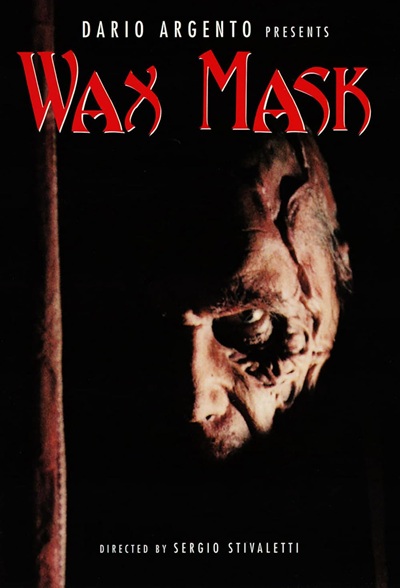
The 1997 Italian horror film, Wax Mask, takes place in Rome at the turn of the 20th Century.
The film opens in 1900, with a young girl named Sonia witnessing the murder of her parents by a man with an iron claw and a wax mask. 12 years later, Sonia (Romina Mondello) steps into a Rome’s newest sensation, a wax museum where all of the wax figures appear to either be victims or murderers. The museum is meant to scare people. One man accepted a dare to spend the night in the museum and he was found dead the next morning, frightened to death. Sonia’s not interested in being scared. She just needs a job. Her mother taught her how to make clothes for wax figures. The owner of the museum, Boris (Robert Hossein), hires her.
When Sonia leaves the museum, her picture is taken by Andrea (Riccardo Serventi Longhi), a reporter who is investigating the mysterious deaths that have been connected to the museum. Meanwhile, Inspector Lanvin (Aldo Massasso) contacts Sonia to let her know that he’s following up some new leads concerning the still-unsolved deaths of her parents. He seems quite concerned about her working at the museum. When Lanvin later turns up dead, Sonia becomes concerned as well.
You can probably guess where all of this is going. Wax Mask is a remake of House of Wax, with the action moved to Rome and also with a lot more nudity and considerably more gore. The murders are brutal and bloody and the same can be said of what Sonia discovers when she starts to take a closer look at the wax figures in the museum. Perhaps the most disturbing aspect of this film is the idea that the wax figures are actually suspended in a state between life and death, aware of what is happening but unable to move, speak, or do anything about it. WaxMask is a frequently diverting throwback to the bloody but atmospheric giallo films of the 70s. Suspense is mixed with special effects, some of which are more effective than others.
Wax Mask was originally meant to be Lucio Fulci’s final film. Dario Argento saw his old cinematic rival, Lucio Fulci, in 1994, by which point Fulci was using a wheelchair and was in frequent pain. Thinking that working on a movie might be good for Fulci’s state-of-mind and overall health, Argento agreed to produce Fulci’s next film. The idea that they came up with was to remake House of Wax. While Argento wanted to concentrate on spectacular death scenes, Fulci wrote a script that emphasized atmosphere over blood. Tragically, Fulci died in 1997 while the film was still in pre-production. Argento replaced Fulci with Sergio Stivaletti, a special effects artist who has worked on several Argento films.
Stivaletti rewrote the script and put the emphasis back on the special effects. (In the end, the killer has as much in common with The Terminator than with a traditional giallo killer.) Stivaletti does a good job directing the film. There are plenty of scary scenes. The film looks good. Even the special effect shots that don’t quite work still have a certain charm to them. That said, it’s hard to watch the film without thinking about what Fucli, at his best, could have done with the material.
In the end, though, WaxMask is an effective work of late era Italian horror.
There’s something living under the streets of New York City.
That’s the basic idea behind 1984’s C.H.U.D., a film that opens with an upper class woman and her little dog being dragged into the sewers by a creature the reaches out of a manhole. People are disappearing all over the city but the authorities obviously aren’t revealing everything that they know. Even after the wife of NYPD Captain Bosch (Christopher Curry) disappears, the city government doesn’t seem to be too eager to dig into what exactly is happening.
Instead, it falls to two activists. Photographer George Cooper (John Heard) specializes in taking picture of the homeless, especially the one who live underground in the New York subways. He’s like a well-groomed version of Larry Clark, I guess. Social activist A.J. “The Reverend” Shepherd (Daniel Stern) runs a homeless shelter and is convinced that something is preying on the most vulnerable citizens of New York. When the police won’t do their job, George and the Reverend step up!
So, what’s living in the sewers? Could it be that there actually are cannibalistic humanoid underground dwellers out there? Everyone in New York City has heard the legends but, much like stories of the alligators in the Chicago sewers, most people chose not to believe them. Or could the disappearance have something to do with the cannisters labeled Contamination Hazard Urban Disposal that are being left in the sewers by the Nuclear Regulatory Commission? Wilson (George Martin) of the NRC says that they would never purposefully mutate the people living underground but Wilson works for the government so who in their right mind is going to trust him?
C.H.U.D. is a horror film with a social conscience. It’s very much an 80s films because, while you have Shepherd running around and attacking everyone for not taking care of the most vulnerable members of society, the true villain is ultimately revealed to be the members of a regulatory agency. Instead of finding a safe way to get rid of their nuclear waste, they just found a sneaky way to abandon it all in New York and obviously, they assumed no one would care because …. well, it’s New York. Everyone in the country knows that New York City isn’t safe so who is going to notice a few underground monsters, right?
The idea behind C.H.U.D. has a lot of potential but the execution is a bit lackluster. For every good C.H.U.D. kill, there’s long passages where the story drags. Considering that Heard spent most of his career typecast as the type of authority figure who would dump nuclear waste under New York City, it’s actually kind of interesting to see him playing a sympathetic role here. Daniel Stern, on the other hand, is miscast and rather hyperactive as Shepherd. You really do want someone to tell him to calm down for a few minutes. Watching C.H.U.D., one gets the feeling that it’s a film with an identity crisis. Is it a horror film, an action flick, a work of social commentary, or a dark comedy? There’s no reason why it can’t be all four but C.H.U.D. just never really comes together. It ultimately feels more like a mix of several different films instead of being a film made with one clear and coherent vision.
In the end, Death Line remains the film to see about underground cannibals.
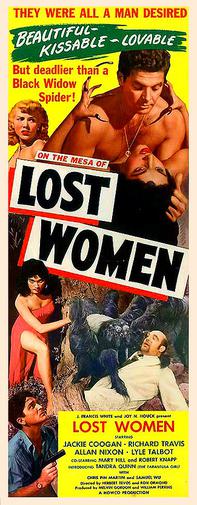
“Have you ever been kissed by a girl like this?” a disembodied voice asks at the start of 1953’s Mesa For Lost Women as a pair hands with claw-like fingernails caresses the face of someone who is later identified as being “Doc” Tucker (Allan Nixon).
Things get stranger from there. A couple is found lost and dehydrated in the Mexican desert. Grant Phillips (Robert Knapp) rambles about “super bugs” out in the desert and how they have to be destroyed. American land surveyor Frank (John Martin) assumes that Grant must be delirious but Frank’s assistant, Pepe (Chris Pin Martin), knows differently. We know that Pepe knows differently because the narrator tells us that Pepe had heard all about the monsters in the desert but Pepe keeps that information to himself….
Who is this narrator and why is he so condescending? (For the record, he’s actor Lyle Talbot, who split his career between major, Oscar-winning productions and stuff like this.) Have you ever noticed that a narrator usually just leaves you feeling even more confused by what you just watched? There’s a trailer playing right now for a film called Ella McCay that opens with Julie Kavner saying, “Hi, I’m the narrator!” and whenever I hear that line, I’m just like, “Oh, this film is going to be so bad!”
I think it’s because most narrators are added after the fact, in an attempt to give some sort of uniformity to a badly constructed movie. The narrator is there to tell us stuff that a good movie would be able to show us. For instance, in the trailer for Ella McCay, Julie Kavner tells us that “I’m nuts about her,” as a way to assure us that Ella McCay is someone worth making a movie about. Now, ideally, you wouldn’t have to have someone tell you that. You would just watch the movie and say, “Hey, Ella McCay! She deserves all the happiness in the world!” But when your trailer is a bunch of scenes of Ella McCay acting a bit immature for someone who is destined to become “governor of the state you were born and raised in,” you need that narrator to say, “No, she’s likable, I promise!”
By that same logic, Mesa of Lost Women was apparently a mash-up of several different films, none of which had a complete script. Narrator Lyle Talbot is here to tell us that, despite what we’re seeing, Mesa of Lost Women is an actual movie with an actual story as opposed to just a bunch of random scenes that were haphazardly crammed together. We get a flashback of a scientist named Masterson (Harmon Stevens) traveling to the laboratory of Dr. Aranya (Jackie Coogan) and discovering that Aranya is creating giant tarantulas and transforming human women into mind-controlled slaves with the instincts of a spider. Masterson doesn’t think that’s ethical so Aranya’s assistant, Tarantella (Tandra Quinn), gives him an injection that turns him into a simpleton. Masterson ends up in a mental hospital, though he later escapes. Meanwhile, an American businessman and his girlfriend (Mary Hill) come to Mexico and witness Tarantella dancing in a bar. Masterson shows up and shoots Tarantella and then takes everyone hostage so that he can force Grant, who we now discover is a pilot, to fly him to the mesa of lost women …. or something.
Despite the best efforts of the narrator, the film is impossible to follow. A big problem is that Dr. Aarnya’s plan never makes much sense. How is creating a giant spider and a bunch of women who think that they’re spiders going to help him conquer the world? The other problem is that the film had two directors, one of whom was an enigmatic German named Herbert Tevos who got the job by claiming to have directed Josef von Sternberg’s The Blue Angel. Tevos’s footage of Dr. Aranya, the giant tarantula, and the “lost women” was not enough to secure the film distribution so a second director, Ron Ormond, was brought in to shoot a bunch of new footage to make the film more commercial. Tevos’s film became an extended flashback in the middle of Ormond’s film and the whole thing is a big mess.
In fact, the film is such a mess that some people insist Ed Wood must have been involved. It is true that narrator Lyle Talbot also appeared in Plan 9 From Outer Space and Glen or Glenda. Plan 9‘s Mona McKinnon appears as a spider woman. So does Dolores Fuller, who was Wood’s girlfriend at the time. Wood later “borrowed” Mesa of Lost Women‘s score for Jail Bait. Mesa of Lost Women was definitely Wood-adjacent but, by all accounts, Wood didn’t actually do any work on the film. This mess of a film belongs to Tevos and Ormond.
And it is a mess. It’s a watchable mess, in much the same way that a nuclear meltdown would probably be watchable. But, nonetheless, it’s still a mess and the incoherence of the plot really does get on one’s nerves, despite the best efforts of Lyle Talbot. Talbot can’t sell the viewer on Mesa of Lost Women. Maybe he would have had better luck with Ella McCay.
First released in 1955 and directed by the legendary Ed Wood, Bride of the Monster is a classic mix of a haunted house, a mad scientist, a lumbering assistant, and a giant octopus. The plot may be impossible to follow but it doesn’t matter when you’ve got Tor Johnson grunting and Bela Lugosi giving a surprisingly good performance as the persecuted Dr. Vornoff, a man who “tampered in God’s domain.”
A lot of people consider this to be Wood’s best film. Personally, I would go with Plan 9 From Outer Space but Bride of the Monster is still an entertaining look at monsters and madmen.
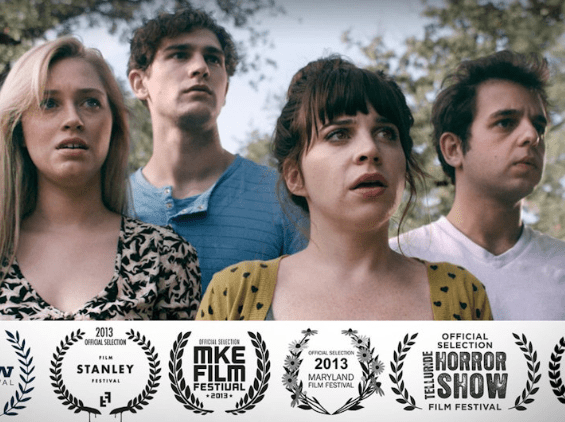
This is fun!!! Technically, this short film does not have an actual story, BUT it is still a well done and fun short film. But Case, you’re so hard on everyone and this year you’re being so lenient! Fair critique, but I argue that this is within the parody genre and is exempt from my usual rules. Attack of the Killer Tomatoes was one of the first films to do a feature length send up of many different movies and this short is in that vibe.
They go through the tropes: they stop at an abandoned cabin and say – F THAT!, a cop who WAITS for backup, and a boy who finds the Hellraiser puzzle and just plays with his iPhone instead and then does something hilarious to the box. If you want a quick laugh when you’re in line or anything other time you have about 3 minutes to kill, it is great choice. Life can be challenging and good laugh is better than a good cry.
As some of our regular readers undoubtedly know, I am involved in a few weekly live tweets on twitter. I host #FridayNightFlix every Friday, I co-host #ScarySocial on Saturday, and I am one of the five hosts of #MondayActionMovie! Every week, we get together. We watch a movie. We tweet our way through it.
Tonight, for #ScarySocial, I will be hosting a true classic, Creature From The Black Lagoon!
If you want to join us on Saturday night, just hop onto twitter, start the film at 9 pm et, and use the #ScarySocial hashtag! The film is available on Prime and Tubi! I’ll be there co-hosting and I imagine some other members of the TSL Crew will be there as well. It’s a friendly group and welcoming of newcomers so don’t be shy!



 Through the Shattered Lens