Rabid (1977) – (dir. by David Cronenberg)


Great films are loved by all, read Gary’s take on Rabid before starting this one.

What a strange film. I don’t have a whole lot to say about it, save that I enjoyed what I saw.Rabid-1977-movie-Chambers-cronenberg-3

I accidentally stumbled on to Rabid. I woke up with the tv on late at night to some guy trying to console a nearly nude and upset patient in her bed.

“Wait a minute….” I say, rubbing my eyes and trying to wake up fully. “Okay, this isn’t Lifeforce. What is this?” My hands start looking for the remote, but by the time I’m able to grab it, the guy howls in pain. Blood starts running down his side while in the patients arms.

“What the what? Hell am I watching?” My hands search for the remote.

I bring up the info on the film and sigh with a smile…”Oh. Cronenberg. I should have known.”

I jumped to the In Demand station and watched it from start to finish. I was always under the impression that Scanners was David Cronenberg’s first film, so Rabid was a nice surprise. I also learned that Ivan Reitman was a producer both for this and some of Cronenberg’s earlier works, much like Mel Brooks was for The Fly. My mind is blown. What is with comedy makers turned Horror Producers?

When Rose (Marilyn Chambers) suffers major injuries in a motorcycle accident, a local medical center takes her in and performs some strange new surgery on her. She’s kept for some time, while her boyfriend Hart (Frank Moore) is sent home. It’s during her stay that the madness starts. As she recovers, Rose finds she has a craving for blood, Leave it to Cronenberg to find the strangest way to do it. Rabid is the kind of film that teaches horror fans. Watching it, I was able to see how it was the source for films like James Gunn’s Slither, Tobe Hooper’s Lifeforce, George Romero’s The Crazies and Hal Barwood’s Warning Sign. Anyone watching Rabid would get an idea of where Slither could have gotten the stinger from, which is interesting to see.

Those bitten by Rose begin to suffer from an advanced case of rabies, and this spreads like wildfire. It happens to be one of the best elements of the film. The terror in Rabid comes from both Rose as a carrier, who is compelled to find someone to drink from/infect and her victims, who are left foaming and violent.  Bart spends the bulk of the film trying to track down Rose and piece together what’s occurring while facing some guilt. Not a terrible thing, given the entire situation and the fact that it was his motorcycle they crashed.  As the story progresses, the danger escalates for everyone involved. By the second half of the film, the city is almost under Martial Law as they try to contain the virus. As a result, the pacing for Rabid is even for a film from the 70s. It doesn’t feel like it drags on at all.

From an acting standpoint, everyone’s parts were okay. Chambers’ Rose is a mixture of innocence, quiet sexuality and a little ruthlessness. I particularly liked Joe Silver (Shivers, another early Cronenberg film) as the investor who watches the hospital kind of unravel. Frank Moore (who reminds me a lot of Christopher Walken) has this tortured soul quality to him that I enjoyed.

The effects and makeup work were great. There’s quite a bit of blood and foamy mouths, of course it’s what anyone would expect from Cronenberg. The blood doesn’t look entirely real, but considering that this was about 40 years ago, it seems to hold up okay.

Overall, Rabid is a great late night movie worth catching if you can. At the time of this writing, the film is available on Amazon Prime.


Whit Taylor Answers The “What Does She See In Him, Anyway?” Question In “Fizzle” #3


Ryan C. (fourcolorapocalypse)'s avatarRyan C.'s Four Color Apocalypse

Now on its third issue — the first released under the auspices of its new publisher, Radiator Comics — Whit Taylor’s Fizzle is really finding its footing as one of the outstanding naturalist comic book narratives of our time. Stories focused on physically and emotionally unmoored “20-somethings” are hardly anything new, of course, but ones that use homemade popsicles (or, if you prefer, “paletas”) as a framing device are — and ones that transcend their own (admittedly clever) storytelling crutches and gimmicks as the series goes along are a true rarity indeed.

All of which is my convoluted way of saying that Taylor’s skills as a cartoonist are developing right before our eyes as we go along here, and it’s a pretty remarkable thing to behold. We’ve all had friends who are with significant others that leave us scratching our heads and wondering “what the hell is she doing with…

View original post 565 more words

Ford v Ferrari (dir. by James Mangold)


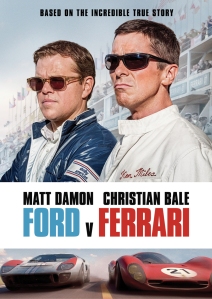
fordvferrari posterIt’s rare for me to say that I enjoyed a film so much that I didn’t want it to end, but James Mangold’s Ford v. Ferrari hits all the right notes. A fantastic cast, impressive visuals on the races, scenes that flow without any time wasted and sound that begs to be heard on a surround system. It’s no surprise that the film earned Four Oscar Nominations – Best Sound Editing, Best Sound Mixing, Best Film Editing and Best Picture, all of which are well deserved. If the lineup this year wasn’t so stacked, I’d say that Ford v Ferrari would score quite a bit. It can go any way, but It may end up like The Shawshank Redemption – A great film that could be eclipsed by giants.

Based on a true story, Ford v. Ferrari focuses on the Ford Motor Company in the mid 60’s, down on its luck and looking for a way to stay ahead of the game. Henry Ford II, played by a scene stealing Tracy Letts (August: Osage County), asks his workers to come up with an idea. A young Lee Iacoccoa  (Jon Bernthal, The Punisher) feels the best way to do so is to attempt to win the famed 24 hour race at Le Mans in France. The LeMans is dominated by Ferrari, who hand manufactures their machines to be legends in the racing circuit. If Ford could win, it would put them in a better light to consumers, but winning requires more than just a fast car.

Ford enlists the help of Carroll Shelby (Matt Damon, The Martian), along with his brash and skillful driver, Ken Miles (Christian Bale, 3:10 to Yuma), Ken has a few issues getting along with others, but his knowledge of cars is brilliant. Shelby continuously goes to bat for Miles, who isn’t exactly poster boy material in the eyes of Ford.  Together, they work on building a competitive vehicle. The poster may suggest the story is about the cars, but at its heart, I felt that Ford v. Ferrari was more about the friendship between Shelby and Miles than anything else. Their mutual love of cars and racing is what ties it all together.

When it comes to the technical points of racing, Ford v Ferrari’s script doesn’t ask you to know much about cars going in. Just about everything you need to about the LeMans and the abilities of the cars is explained through the characters over time. Car gurus may find areas where liberties are taken, but casual watchers should find themselves entertained.

Kudos goes out to the casting for Ford v. Ferrari. Josh Lucas (Poseidon) plays the heavy in the film as a Ford businessman who would love to see Miles out of the spotlight. Caitriona Balfe (Starz’ Outlander) has some good moments with Bale as Miles’ wife, Mollie, though she happens to be the only woman in the film with many lines. Given that the story takes place in the 1960s and its guys building cars, it made sense. Playing Miles son, Peter, Noah Jupe (Honey Boy, A Quiet Place) is that character that helps the audience understand the nuances of racing. I kind of wish Bernthal had more to do here, but he’s cool when he’s on screen and carries his weight easily.

The film belongs to Damon and Bale, though. Damon’s Shelby is full of attitude. He knows what he wants to get done, what needs to happen and just does it. Damon carries this with ease, and it’s easy to forget that the actor is there at times (for me, anyway). Bale does the same, but is on a different level, with his Ken Miles being both focused and a little wild, perhaps even cynical. There’s a great mix of comedy and drama between the two actors.

The sound quality of Ford v. Ferrari is amazing. If you had the chance to see it in the cinema, consider yourself lucky. The rev of the engines are crisp, the shifting the of gears sublime. I’d be somewhat shocked if the film doesn’t walk away with the Sound Mixing / Sound Editing Oscars. From a visual standpoint, the races themselves offer some nice tracking shots, though there may be one or two scenes that particularly stand out.

Mangold and Phedon Papamichael (his Director of Photography for Walk the Line) perform some interesting tricks with the camera. With the races themselves, the cuts are smooth. You have dynamic tracking shots of cars  in some cases while others are lit enough to be comfortable. One of my favorite scenes involves a play on shadows that makes it appear like you’re watching a race, complete with the sound of the cars in the background. It’s subtle touches like that make me wonder why it wasn’t nominated for Best Cinematography. I should also note that for a 2:30 minute film, it flies by. I found very few (if any) moments where I felt a scene wasn’t particularly needed to push the narrative along. You can thank Jez and John-Henry Butterworth (Edge of Tomorrow) for that screenplay.

I can’t say I have any real problems with Ford v Ferrari. Overall, it’s an entertaining film right from the start that gets you into the story and behind the wheel.

Natalie Dupille’s “In Spite Of Ourselves” : A Travelogue Of The Human Heart


Ryan C. (fourcolorapocalypse)'s avatarRyan C.'s Four Color Apocalypse

There’s no better “relationship recharge” for a couple than getting away for a few days (at least) together — but that doesn’t mean a skilled cartoonist with a natural eye and ear for interpersonal dynamics can’t mine such an excursion for thematically-deep, if often subtle, pathos. And with that in mind, it’s my distinct pleasure to introduce you (or re-introduce you, should that be the case) to Natalie Dupille and her latest “graphic novella,” a sublime little self-published number titled In Spite Of Ourselves.

Rendered by hand entirely in ink and lush watercolors, this is a sensitively-illustrated work that concerns itself with sensitively-explored topics ranging from gender mores to differences in ability (particularly athletic ability) to our nation’s ever-present urban/rural cultural and economic divide. It’s a lot to cram into 48 pages, but it never feels like Dupille is “forcing” anything into her narrative, simply because of her…

View original post 489 more words

4 Shots From 4 Films: Special George Romero Edition


4 Shots From 4 Films is just what it says it is, 4 shots from 4 of our favorite films. As opposed to the reviews and recaps that we usually post, 4 Shots From 4 Films lets the visuals do the talking!

Today would have been George Romero’s 80th birthday.

Now, those of you who have been reading us since the beginning know how important the work of George Romero has been to this site.  A mutual appreciation of Night of the Living Dead is one of the things that first brought many of us together.  It’s a film that we watch ever Halloween and Arleigh’s review of the original remains one of our most popular posts.  If this site had a patron saint, it would probably be George Romero.

And yet, Romero wasn’t just a director of zombie films.  He made many films, dealing with everything from hippie lovers (There’s Always Vanilla) to wannabe vampires (Martin) to government conspiracies (The Crazies) and eccentric bikers (Knightriders).  George Romero was one of the pioneers of independent films and today, on his birthday, we should all take a minute to consider and appreciate the man’s cinematic legacy.  It’s not just horror fans who owe George Romero a debt of gratitude.  It’s lovers of cinema everywhere.

With that in mind, here are….

4 Shots From 4 George Romero Films

Night of the Living Dead (1968, dir by George Romero)

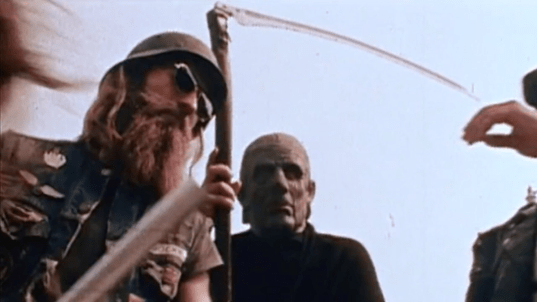
The Crazies (1973, dir by George Romero)

The Amusement Park (1973, dir by George Romero)

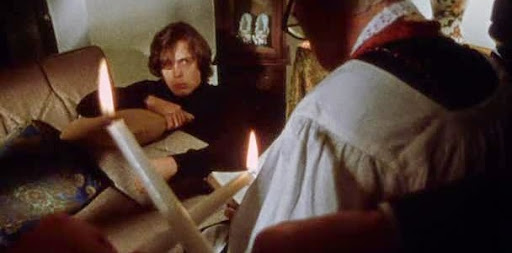
Martin (1978, dir by George Romero)

4 Shots From 4 Films: Special Michael Cimino Edition


4 Shots From 4 Films is just what it says it is, 4 shots from 4 of our favorite films. As opposed to the reviews and recaps that we usually post, 4 Shots From 4 Films lets the visuals do the talking!

In life, Michael Cimino was often controversial.

Cimino hit box office gold with his first film as a director, Thunderbolt and Lightfoot.  With his second film, The Deer Hunter, he won the Academy Award for Best Director.  With his third film, Heaven’s Gate, he nearly bankrupted United Artists.

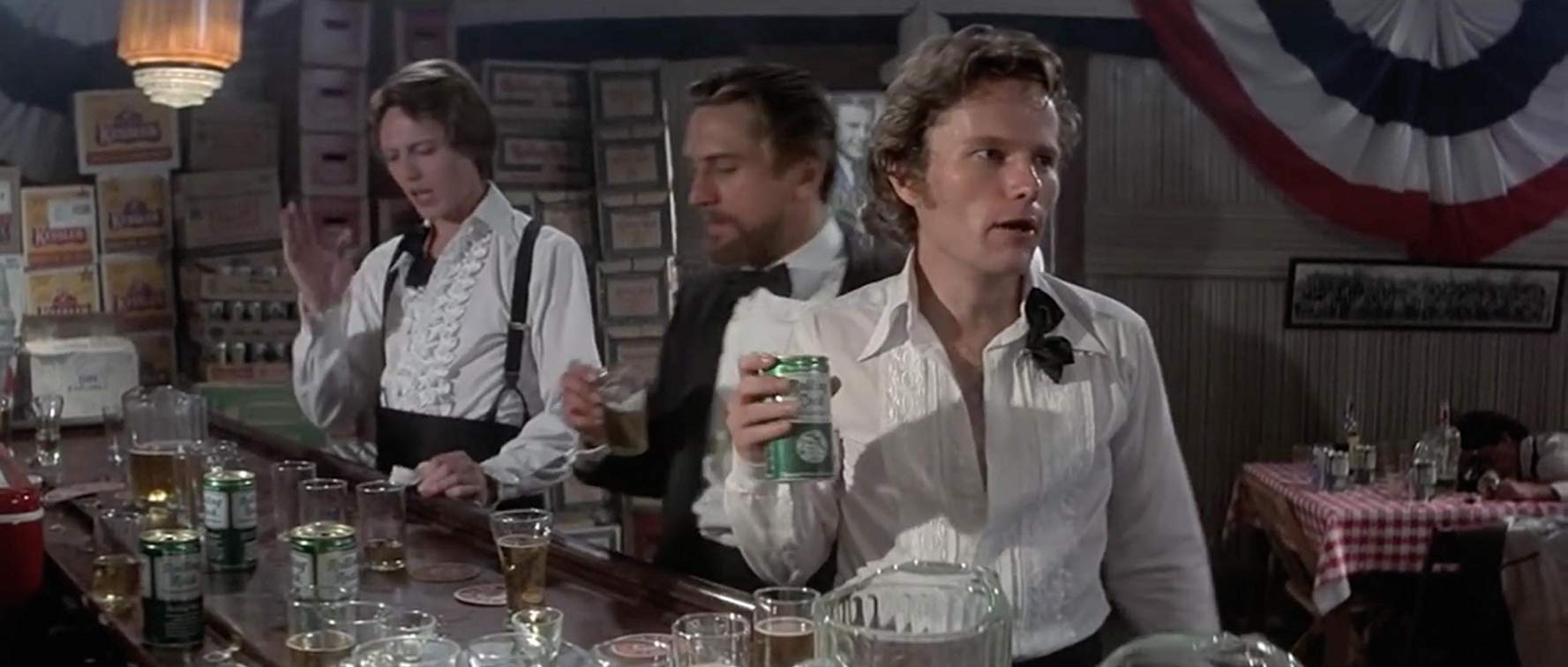
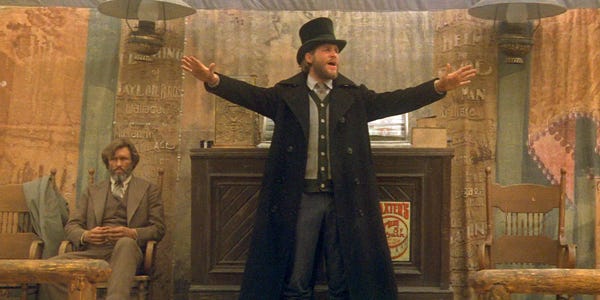
Heaven’s Gate was Cimino’s passion project, an epic western that was based on the historical Johnson County War.  Considering that Cimino had just won an Oscar, expectation were high when production began in 1979.  Soon, however, ominous reports started to come back from the set.  It was said that Cimino was a perfectionist and a megalomaniac who was demanding so many takes and retakes that the filming was quickly falling behind schedule.  The modestly budgeted production soon went overbudget and overschedule.  After nearly a year of shooting, Cimino finally allowed the studio executives to view his first cut.  It was over five hours long.

Though the film was eventually edited down to a more manageable length, the damage had been done.  By the time Heaven’s Gate was finally released, the title was already being used a byword for fiasco.  The film lost a ton of money and, at the time, it was savaged by critics.  Cimino would only direct four more films after Heaven’s Gate and none of them were a success at the box office or with critics.

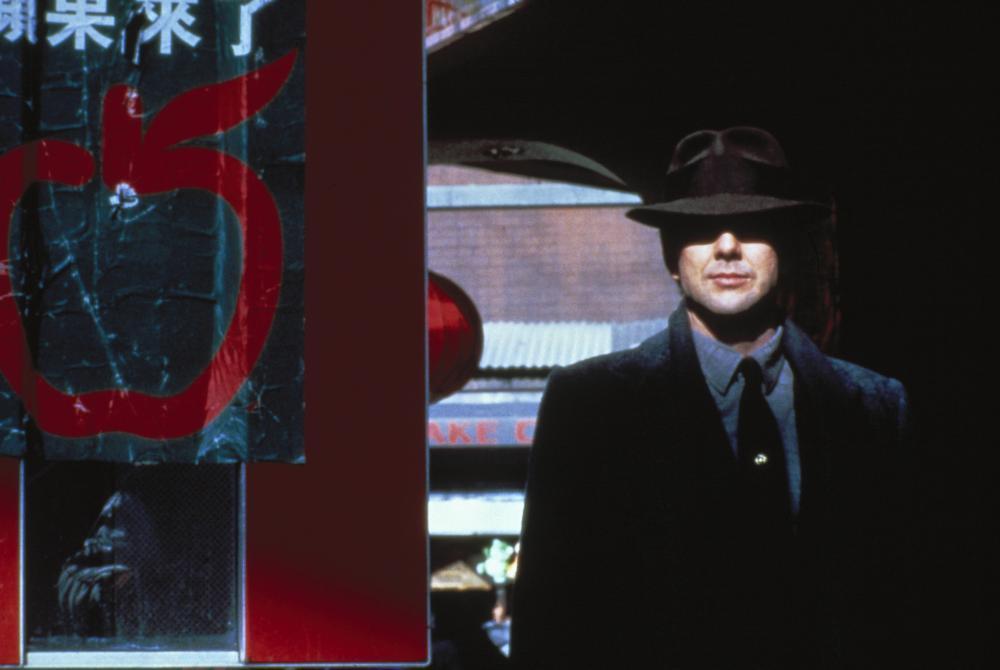
However, once the initial hype died down, some critics started to take another look at Cimino’s films.  Heaven’s Gate has been reevaluated and is now considered by many to be a minor classic.  Cimino’s Year of the Dragon has also developed a strong cult following.  Though Cimino himself died in 2016, he is a director who is currently in the process of being rediscovered.

Today would have been Michael Cimino’s birthday.  Because he told so many conflicting stories about his past, there is some controversy about the year of Cimino’s birth.  Most people agree that it was probably 1939.  Today, on his birthday, let’s take a moment to honor this unfairly dismissed talent.

4 Shots From 4 Films

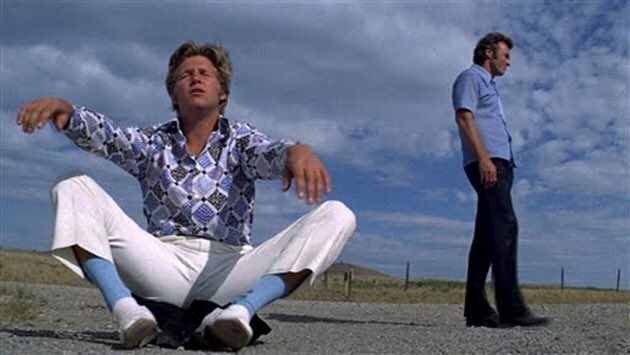
Thunderbolt and Lightfoot (1974, directed by Michael Cimino)

The Deer Hunter (1978, directed by Michael Cimino)

Heaven’s Gate (1980, directed by Michael Cimino)

The Year of the Dragon (1985, directed by Michael Cimino)

Weekly Reading Round-Up : 01/26/2020 – 02/01/2020


Ryan C. (fourcolorapocalypse)'s avatarRyan C.'s Four Color Apocalypse

It’s a total fucking grab-bag this week with a first issue, a last issue, and a couple of regular old middle-ish number issues from a pair of favorite ongoings. And so, having said that —

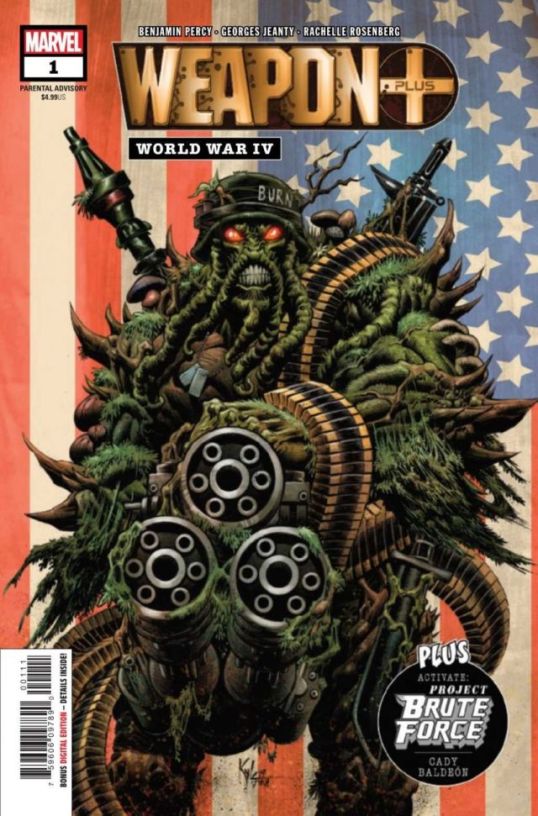
I’m a sucker for Man-Thing, particularly Steve Gerber’s take on the character, and while the new anti-hero called Man-Slaughter (not that he/it is ever referred to as such in the story) who features in Marvel’s Weapon Plus : World War IV #1 isn’t exactly the same (man-) thing, he’s pretty close — and this eco-horror yarn by Benjamin Percy and Georges Jeanty comes as near to re-capturing that old Gerber mystique as anything I’ve read. I don’t know jack shit about what the “Weapon IV” program is, nor what the “Weapon Plus” referred to in this comic’s title even means, but I know a good comic when I read one — and for “Wednesday Warrior”…

View original post 908 more words

Fast 9 – The Fast Saga revs things up with a trailer.


When it comes to the Fast and Furious franchise, Tokyo Drift is my favorite, followed closely by Fast Five. I thought the franchise should have ended at 7 with the death of Paul Walker, but the show went on with The Fate of the Furious. They managed to close off all of the loops between the earlier movies, After a bit of a spat between Vin Diesel and Dwayne Johnson, Johnson branched off with his character Luke Hobbs and Jason Statham’s Deckard Shaw on their own film, Hobbs & Shaw. 

Not to be left behind, we now have the ninth entry in the franchise. F9 reunites director Justin Lin with Vin Diesel, Jordana Brewster, Tyrese Gibson, Chris “Ludacris” Bridges, Michelle Rodriguez, and Nathalie Emmanuel. John Cena (Bumblebee) plays the villain this time around, as a thief with personal ties to Dominic Toretto.  With this trailer, we see a few very familiar faces, including Tokyo Drift’s Lucas Black and Sung Kang. How Kang’s character Han is still alive, I don’t know, but we’ll find out this May when the film releases.

Enjoy.

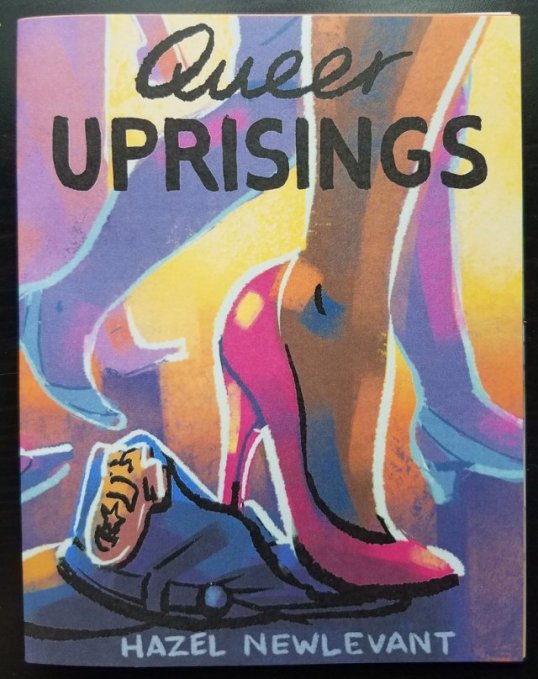
Hazel Newlevant’s “Queer Uprisings” : How History Lessons Should Be Done


Ryan C. (fourcolorapocalypse)'s avatarRyan C.'s Four Color Apocalypse

Long a proponent of sexual and bodily autonomy (see Sugar Town and Comics For Choice, respectively), cartoonist Hazel Newlevant has always shown a frankly uncanny facility for communicating the political and the moral by means of the personal and intimate, but Newlevant’s 2019 self-published mini Queer Uprisings takes a different, though equally successful, tack : originally published on The Nib website, this is a nuts-and-bolts recounting of various instances of largely-impromptu LGBTQ+ anti-injustice rebellions that actually predate Stonewall and place the community’s struggles and triumphs as they exist today within a larger — and, who are we kidding, lengthier — historical framework than many are/were aware of previously.

And, let me be perfectly clear so as to not to absolve myself of any lame-ass ignorance on my own part : that “many” includes me, which means that I’m squarely among the audience this work aims to educate.

If…

View original post 648 more words

Weekly Reading Round-Up : 01/19/2020 – 01/25/2020


Ryan C. (fourcolorapocalypse)'s avatarRyan C.'s Four Color Apocalypse

Just when you thought you’d probably seen the last of this column — anyway, it’s not that I’ve been missing my usual Wednesday comic shop pick-ups, it’s more a case of nothing standing out all that much. Which, in fairness, is also the case with a couple of the books this week, but I wanted to get “back in the saddle” with doing these Round-Ups every seven days, so now’s as good a time as ever, right? We’ve got one first issue and three last issues to look at this week, although it turns out that two of those last issues are actually anything but, which we’ll deal with in due course —

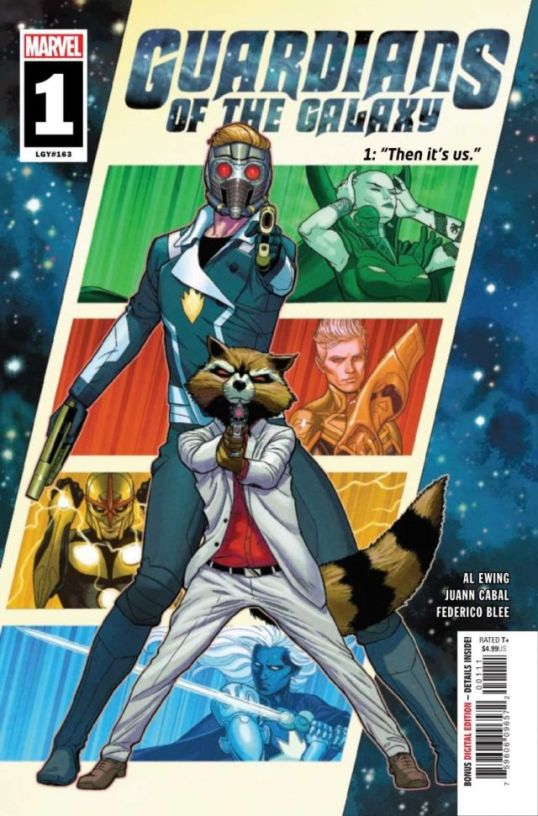
Guardians Of The Galaxy #1 marks yet another re-launch of Marvel’s premier cosmic super-team, this time courtesy of mega-popular Immortal Hulk scribe Al Ewing and artist Juann Cabal. This one referred back to events of the…

View original post 864 more words