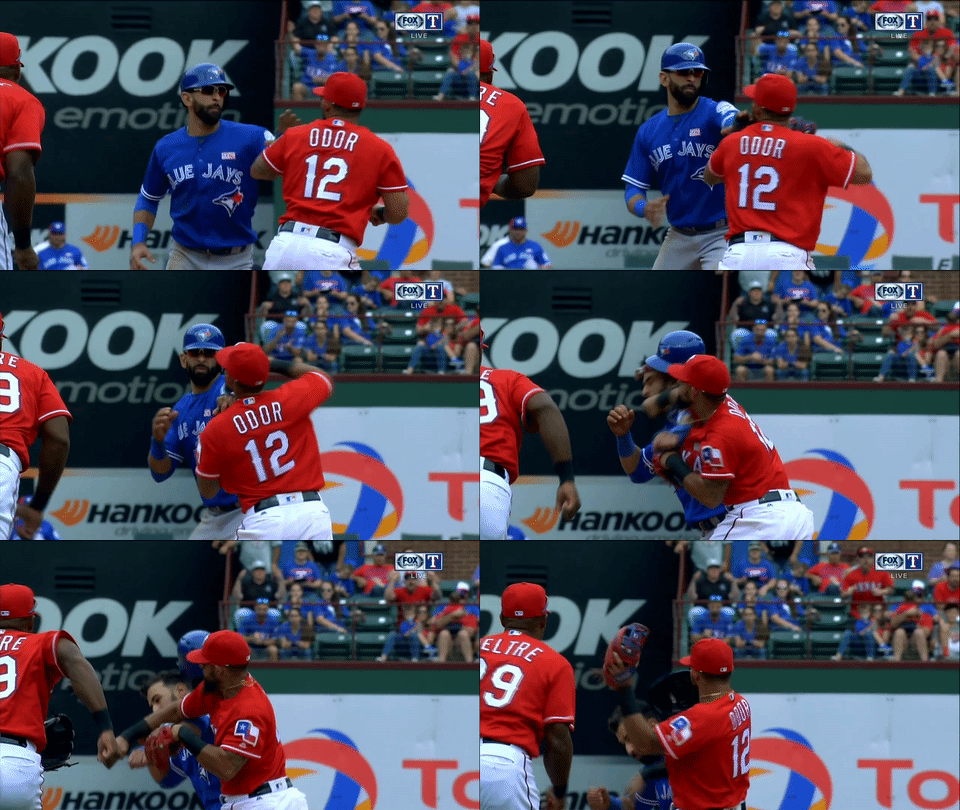
I don’t like the Blue Jays and the last thing I want is to see them win any games during the ALCS but, as a baseball fan, I have to give credit where credit is due. And, as a Rangers fan, I have to share this GIF of Rougned Odor flattening Jose Bautista.
A 13-4 victory over the Mariners cannot be ignored and the Blue Jays got it at the exact time they needed it. They’re still down in the series, 2-1. But they’ve proven that they’re not out of this.
I’m depending on you, Mariners. Don’t let me down!
Tonight, we have the final episode of Hammer House of Horror and it is a macabre one indeed! A morgue attendant (Peter McEnery) becomes obsessed with both the number nine and a recently deceased neurosurgeon who died after trying to drill a hole in his own head in an attempt to let out all of his evil thoughts. McEnery finds himself becoming consumed by disturbing thoughts as well. Is he going mad or is he somehow seeing what no one else can see? This episode is effectively creepy and not for the squeamish.
Having had a vison of the President of the Time Lords being assassinated, the Doctor returns to his home planet to prevent it from happening. Instead, he ends up framed for the crime. The Doctor insists that he is innocent and then announces that he will be a candidate for the presidency. Under Time Lord law, a candidate for president cannot be prosecuted for any crimes in the run up to the election.
The Doctor’s investigation leads him into the Matrix, a virtual reality world that is the collection of all the Time Lords’s consciousnesses. He discovers that the assassination was actually masterminded by The Master (Peter Pratt, replacing the late Roger Delgado). Having used up all of his previous regenerations, The Master is now a decaying skeletal figure who can barely speaks and wears a black hood. 12 lifetimes of evil appear to have caught up with him. The Master’s plan is steal the black hole nucleus that was captured by the first Time Lod, Rassilon (sorry, Omega!), and use it to give himself a new set of generations. Doing so will also destroy Gallifrey.
This was an important serial for many reasons. It was the first serial to feature The Doctor on his own, with no other companions. Having a companion usually gave the Doctor a chance to explain things that might seem strange or alien to the audience at home. For The Deadly Assassin, we learn that Gallifrey has a BBC-like television service that provides coverage of political events and helpfully explains what is happening even though the audience of Time Lords would presumably already know. The Doctor also spends a good deal of time talking to himself. Normally, that could have been awkward but Tom Baker was a great talker and very good at handling solo conversations. This serial also fully introduced us to Time Lord politics and featured the first appearance of the Doctor’s former teacher, Borusa (Angus MacKay). Finally, and most importantly, it featured the return of the show’s greatest villain, The Master. The Master hadn’t been seen since Roger Delgado’s tragic death in 1973.
The Deadly Assassin was one of the more violent of the Doctor Who stories. The President was assassinated. Time Lord anchorman Runcible (Hugh Walters) ended up with a dagger in his back. The Master’s ally, Chancellor Goth (Bernard Horsfall), attempted to drown the Doctor in The Matrix. After receiving outraged letters from parents, the BBC actually edited out the scene of Goth holding the Doctor’s head underwater from rebroadcasts. The Deadly Assassin was also one of the scarier serials of the classic era. The Master was truly a frightening figure with his raspy voice and his burned-out, skeletal appearance.
I’ve always liked The Deadly Assassin. It features a genuinely interesting story and Tom Baker gives one of his best performances. (Baker had specifically asked to do one serial without a companion.) The serial’s cynical view of politics almost made it ahead of its time. The Deadly Assassin ends with The Doctor being told that he’s won the election and that he is now President of the Time Lords. He’s also told that it’s far too early for him to even think of resigning. Of course, the Doctor makes a run for his TARDIS.
The TARDIS materializes in a quarry and, for once, it’s an actual Earth quarry and not just an alien plant that looks like a quarry. An explosion both knocks Sarah Jane Smith out and also exposes a fossilized hand that has been hidden away under the rocks for centuries. The hand belongs to an executed alien was criminal named Kastrian Eldrad (Stephen Thorne, playing yet another Doctor Who baddie). When the hand is found, it starts to search for sources of radiation so that it can fully regenerate back into its original form and then seek revenge on its home planet.
The Hand of Fear would have been a standard Doctor Who adventure, except that it ended with Sarah Jane (Elisabeth Sladen) announcing that she can no longer handle the death, violence, and occasional mind control that goes along with being the Doctor’s companion. She asks the Doctor (Tom Baker) to return her to South Croydon. The Doctor reluctantly agrees. While Sarah is packing her things, The Doctor suddenly gets a telepathic message telling him to come to his home planet of Gallifrey and he realizes that, even if Sarah wasn’t leaving, he would not be able to take her with him. When The Doctor tells Sarah this, it upsets Sarah. Even though she impulsively decided to go home, it’s obvious that it’s not really what she wants. When The Doctor drops her off on Earth, she tells him not to forget her and we know that he never will. As the Doctor dematerializes, Sarah looks around and sees that she’s on Earth and probably in England but nowhere close to South Croydon.Plenty of companions had come and gone before this episode but none of them had quite the impact of Sarah Janes Smith. Sarah was one of the few companions to actually be viewed as being an equal of the Doctor. Even though she spent a lot of time doing typical companion things like being menaced by aliens and asking the Doctor to explain things, Sarah Jane still always projected a determination and inner strength that made her more than worthy to be traveling through time and space. Even dressing like Andy Pandy during her final appearance couldn’t diminish Sarah Janes Smith as a character.
Elisabeth Sladen had the perfect rapport with both Jon Pertwee and Tom Baker. Sladen and Baker were apparently close enough that they improvised their final goodbye and the emotions in that scene feel very real. For viewers like me, who were introduced to Doctor Who by PBS airing the Fourth Doctor’s adventures, Sarah Jane was the first companion that we met and her suddenly leaving came as a shock. She just seemed as if she was meant to be a part of the TARDIS crew forever.
Sarah Jane Smith would return, of course. There was K-9 and Company in 1981. There were the Sarah Jane Adventures, which ran from 2007 to 2011. Sadly, the wonderful Elisabeth Sladen passed away in 2011. For many of us, it felt like losing a valued a childhood friend.
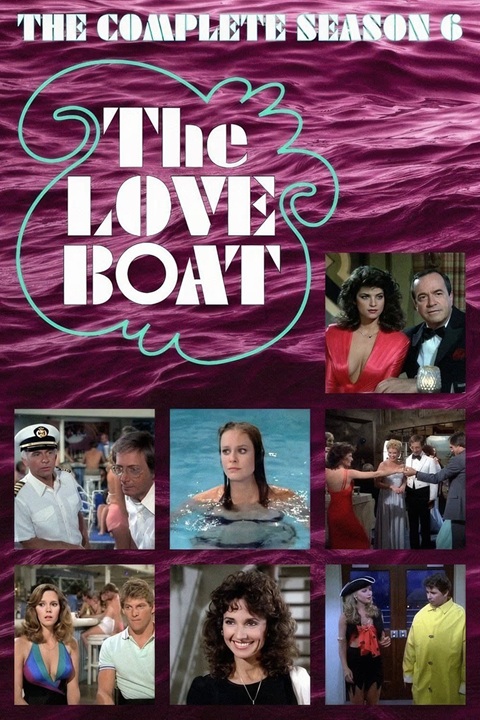
Welcome to Retro Television Reviews, a feature where we review some of our favorite and least favorite shows of the past! On Wednesdays, I will be reviewing the original Love Boat, which aired on ABC from 1977 to 1986! The series can be streamed on Paramount Plus!
Love, life’s sweetest reward….
Episode 6.22 “Abby’s Maiden Voyage/He Ain’t Heavy/I Like To Be In America”
(Dir by Jerome Courtland, originally aired on February 26th, 1983)
When Abby (Mary Beth McDonough) boards the boat, her best friend (Constance Forslund) informs Julie that this cruise will be Abby’s “first time.” She may be setting sail a virgin but she won’t be returning one. Julie is too coked up to care. Abby meets Neil (Brodie Greer), who is handsome and nice but, whenever they start to fool around, Abby starts laughing and the mood is killed. At the end of the voyage, Abby is still a virgin but she and Neil are now a couple.
Spoiled high school grad Jimmy (Michael J. Fox) boards the boat with his adoptive parents (Don Porter and Barbara Billingsley) and almost immediately makes an enemy out of a waiter named Greg (Gregg Henry). We’ve never actually seen Greg on the show before but Isaac acts as if Greg has been working on the boat forever. Jimmy later realizes that Greg is his older brother, the one who he hasn’t seen since their parents died and Jimmy was adopted. At first, Greg refuses to accept that Jimmy is his brother but, by the end of the cruise, they embrace. Awww! Actually, considering that Gregg Henry and Michael J. Fox look absolutely nothing alike, I can understand why Greg had his doubts. That said, if he’s been on the boat for as long as this episode implies, Greg has surely seen another long-lost siblings just happen to find each during a cruise. It happens at least once every season.
Speaking of once every season, it’s time for April Lopez (Charo) to take her annual voyage. Though April is returning to Mexico, she wants to become an American citizen. Good for her! America rocks! Unfortunately, she struggles with the oral exam. Judge Kramer (Esther Rolle) realizes that April will be able to remember the answers if she sings them so she gives April the examination while April is performing in the Acapulco Lounge. The audience loves it because who doesn’t love paying money for an expensive cruise just so you can spend the final night watching someone take a citizenship exam.
(For the record, in high school, I tutored one student who was about to take his exam because he was like really hot but he couldn’t remember how many years were in a Congressional term. I taught him to think of it as 2-4-6. Two for the House. 4 for the President. 6 for the Senate. He became a citizen and sent me flowers and then he moved to Idaho.)
This week’s cruise was a bit bland but I’m glad April became a citizen of the greatest country in the world.
“In a world haunted by both the living and the dead, the true monsters are those who often wear the crown.”
Kingdom debuted on Netflix on January 25, 2019, riding the crest of the global Hallyu wave and building on the international success of Korean horror. The series followed a rich tradition of critically acclaimed films such as Train to Busan, The Host, A Tale of Two Sisters, and notably The Wailing. These works helped elevate South Korean horror on the world stage, blending supernatural terror with intense social and psychological themes that primed Kingdom for widespread interest.
The series was adapted by playwright and writer Kim Eun-hee from her own webtoon The Kingdom of the Gods, which she created alongside artist Yang Kyung-il. This blend of popular Korean cultural imports—webtoons and horror cinema—provided a strong narrative base for the live-action adaptation. Kingdom distinguished itself by marrying the zombie genre with historical drama, setting its epidemic in the Joseon dynasty—a period marked by frequent mass deaths and epidemics. This historical backdrop provided a plausible narrative foundation for a catastrophic outbreak, grounding the series’ supernatural horror in the real dread of past pandemics and social collapse.
The Joseon era was repeatedly struck by deadly outbreaks and famines that devastated communities and challenged social structures. While Kingdom doesn’t focus on specific historical records, the knowledge of these recurring calamities creates a realistic and haunting context that informs the series’ tension—the desperation of starving peasants, societal breakdown, and the government’s inability to maintain order under extreme crisis. This setting allows the zombie outbreak to function not just as a horror element but as a powerful allegory for historical suffering and institutional decay.
Kingdom centers on Crown Prince Lee Chang, who is thrust into a deadly fight against both undead hordes and court conspiracies after the king’s mysterious illness and death are covered up by Queen Consort Cho and her father. Their selfish decision to conceal the truth and use a resurrection plant to keep the king “alive” initiates the plague, demonstrating how corruption and obsession with power directly contribute to the kingdom’s fall. The series effectively exposes the deadly consequences of political deceit and unequal society—while nobles hoard resources and betray their subjects, peasants are left starving and vulnerable. Rival political factions further sabotage any chance of a unified response, showing that human ambition is as perilous as the zombie outbreak itself.
What sets the zombies in Kingdom apart from many earlier depictions is their unique behavior and characteristics, which elevate the horror and intensify the series’ kinetic action scenes. These zombies move swiftly and aggressively, unlike the sluggish, shambling undead common in Western lore. Their speed allows them to attack with terrifying suddenness, creating relentless tension and forcing characters into frantic, dynamic escapes and battles. Additionally, the zombies in Kingdom only awaken at night and seem to revert to dormancy during daylight hours, a nocturnal cycle which adds an eerie rhythm and strategically heightens suspense.
Moreover, the infection’s origin tied to a resurrection plant introduces a quasi-vampiric element, blending horror genres and expanding the mythos beyond traditional zombie tropes. This variation not only refreshes the genre but intensifies stakes for the characters, who must navigate a world where death is no longer certain and danger lurks in shadows. The fast-moving zombies enable spectacularly choreographed action sequences, elevating visceral thrills and maintaining an adrenaline-fueled momentum distinct from more lethargic zombie narratives.
The success of Train to Busan played a crucial role in reinvigorating the zombie genre, both in South Korea and internationally, and this revitalization was a significant advantage that the creators of Kingdom skillfully leveraged. Train to Busan injected new energy into zombie cinema with its frenetic, visceral depiction of zombies—fast, aggressive, and highly reactive—breaking away from the sluggish, shambling archetypes prevalent in older Western iterations. Its influence is evident in how Kingdom’s zombies behave; they move swiftly, attack relentlessly, and operate on a nocturnal cycle, which heightens the horror and intensifies the kinetic action sequences. These zombies are not mere mindless monsters but active participants in the chaos, embodying a new standard of terrifying, kinetic undead.
Furthermore, Train to Busan‘s impact extended beyond mere behavior. It was also a culturally resonant piece that connected deeply with Korean audiences by reflecting recent national trauma—most notably the Sewol Ferry disaster—and embedding social critique within a genre framework. This powerful contextualization allowed the film to function as more than entertainment; it became a symbol of societal failure and resilience. The film’s success created a template for how Korean cinema could adapt and localize the zombie mythos, blending horror with social commentary in a way that was both emotionally impactful and commercially successful globally.
Kingdom’s creators astutely drew on this momentum, adopting the highly kinetic, fast-moving zombie model popularized by Train to Busan, but adding their own spin through the behavior and cycle of their undead. These zombies only rise at night, stay dormant during the day, and exhibit contorted, unpredictable movements—something Yeon Sang-ho himself infused into his zombies through choreographed dance routines, emphasizing their frenetic and unnatural agility. Such innovations keep the horror fresh, heighten the visceral excitement of action scenes, and differentiate Kingdom from earlier zombie fare, making its undead both terrifying and uniquely emblematic of Korean horror’s modern renaissance.
This evolution of zombie behavior—fueled by Train to Busan’s successful reinvention—enabled Kingdom to stand out in an increasingly saturated genre. It seized upon the momentum of recent Korean horror cinema, using the distinct movement and cycle of its undead to heighten suspense and deliver a new level of kinetic energy. Through this approach, the series not only paid homage to the genre’s Western roots but also created a uniquely Korean expression of zombie horror that captured global attention, cementing Korea’s place at the forefront of contemporary zombie filmmaking.
Despite its many strengths, Kingdom is not without imperfections. The first season, which premiered on January 25, 2019, unfolds unevenly, at times slowed by a deliberate pacing that prioritizes intricate political set-up and exposition over constant action. This emphasis on explanatory dialogue—essential for unfamiliar viewers of Joseon society and its complex political dynamics—sometimes weighs down character development. Characters often act as instruments for delivering background information rather than revealing themselves naturally through interaction, which can lessen emotional engagement early on. Key information about the outbreak’s origins, political rivalries, and the resurrection plant’s properties is frequently conveyed through heavy-handed dialogue rather than action or subtlety, limiting moments of tension and organic story progression.
The second season, released on March 13, 2020, builds on the first by balancing its horror and dramatics more effectively. Stunning cinematography, immersive production design, and committed performances—from Ju Ji-hoon’s strong portrayal of Lee Chang to Bae Doona’s soulful Seo-bi—deepen the emotional core. More nuanced character work and escalating stakes make the political machinations and zombie horror increasingly compelling. The zombies themselves, with their terrifying speed and mysterious biology, deliver some of the most memorable and intense action scenes in contemporary zombie media.
Adding to the lore and depth of the series is Kingdom: Ashin of the North, a special feature-length episode released on July 23, 2021. This episode acts as a prequel and sidequel to the first two seasons, exploring the backstory of the mysterious character Ashin, played by Jun Ji-hyun. It reveals the origins of the resurrection plant and how it ties into the events that drive the main narrative forward. This special enriches the overarching storyline by providing critical context for the outbreak and weaving a deeper understanding of the motivations behind some of the series’ most enigmatic characters, strengthening the ties within the Kingdom saga as a whole.
Kingdom is a series that skillfully blends the intensity of period drama with the thrills of zombie horror. It offers complex political intrigue, rich historical atmosphere, and pulse-pounding suspense wrapped in strong performances and impressive production values. As such, it comes highly recommended for viewers who enjoy either genre—or both—providing a fresh and compelling experience that stands out within contemporary television drama and horror.
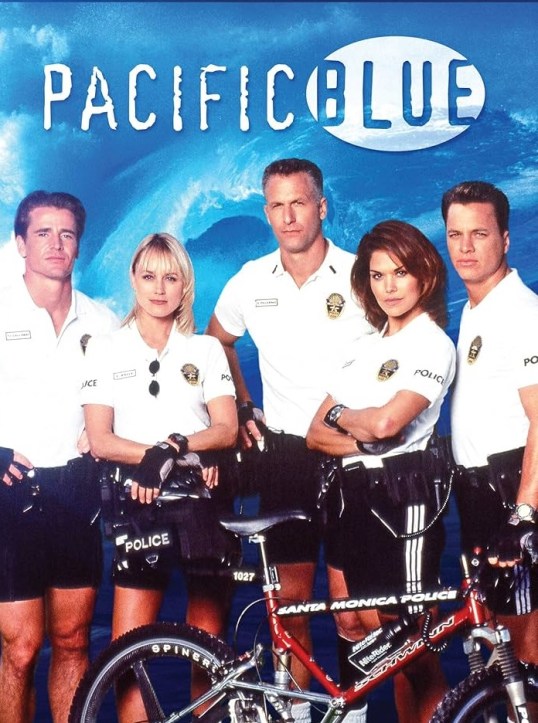
Welcome to Late Night Retro Television Reviews, a feature where we review some of our favorite and least favorite shows of the past! On Tuesdays, I will be reviewing Pacific Blue, a cop show that aired from 1996 to 2000 on the USA Network! It’s currently streaming everywhere, though I’m watching it on Tubi.
This week, the bike patrol continues to be largely ineffective.
Episode 3.2 “Ties That Bind”
(Dir by Sara Rose, originally aired on August 10th, 1997)
TC is excited because Jeff Pierce has moved to Santa Monica. I had no idea who Jeff Pierce was but the show explained that he was some sort of professional bike rider. Even if Jeff Pierce hadn’t been credited as “himself,” I would have guessed that he was a professional athlete just by how bad of an actor he was.
Pierce needs help retrieving his pink competition shirt. TC and Victor help him out. That was nice of them. Pierce challenges the thief to a race and the thief is so excited about getting to race Jeff Pierce that he doesn’t even mind when he gets arrested at the finish line. He even gets an autographed picture of Jeff Pierece!
Meanwhile, Gloria Allred also appears as herself. She appears as an advocate for a group of women who are protesting the release and the return of former serial killer Conway Henriksen (Marc Riffon). Conway has spent ten years in a mental hospital and he says that he’s now reformed. However, after he gets harassed by some of his former victims (apparently, he didn’t kill everyone) and his house house is set on fire, Conway snaps and kidnaps Cory’s best friend, Billie (Rainer Grant). Conway thinks that Billie is his abusive mother and he starts quoting from the Bible and the overacting gets a bit embarrassing. Finally, Conway shoots himself.
Now, this storyline had potential. Conway was sincere in his desire to start his life over again but the harassment campaign pushed him over the edge. Unfortunately, because this is Pacific Blue, the idea of the people trying to protect their neighborhood from a serial killer pushing the guy into becoming just that was left largely unexplored. Instead, everyone just breathes a sigh of relief after Conway shoots himself.
Finally, Chris’s real father (Kent McCord), shows up at headquarters and explains to Chris that, despite what her mother told her, he didn’t actually die in Vietnam. Instead, he’s been working as a commercial pilot and now he wants to get to know Chris. Chris, of course, acts like a total bitch about it, especially after she discovers that he’s married and that Chris has a teenage half-sister who is as much of a sullen brat as she is. Still, Chris eventually forgives her father for having a life and the episode ends with Chris and her real father going sky-diving. This episode missed an opportunity to have Gloria Allred and Jeff Pierce join them in jumping out of the plane. That would have been classic Blue.
Congratulations to the Los Angeles Dodgers, who earlier tonight won Game 2 of the NLCS, defeating the Brewers by a score of 5-1.
I am happy to say that the Dodgers are currently ahead 2-0 in the series while the Mariners are currently ahead of the Blue Jays, also by 2-0, in the ALCS. Hopefully, this will mean that the Blue Jays will not make it to the World Series (Thank you, Seattle!) and that the Dodgers will keep the both the Mariners and the Brewers from taking the Commissioners Trophy up north. (Thank you, Los Angeles!)
It’s not ideal but, after the season I just lived through, I’ll take it!
On tonight’s episode of Hammer House of Horror, a family picks up a hitchhiker. A subsequent tragedy leaves a wife wondering if her husband is actually her husband. This is a creepy and twisty episode that is guaranteed to inspire just a little paranoia.
This episode originally aired on November 29th, 1980.
Working on behalf of World Ecology Bureau (?), the Doctor (Tom Baker) and Sarah Jane Smith (Elisabeth Slader) are sent to a remote research station in Antarctica where an expedition has unearthed two mysterious plant pod. The Doctor recognizes the pod as a Krynoid, an alien that survives by laying its seeds in a host organism who is then slowly and painfully transformed into a plant. One of the members of the expedition, Winlett (John Gleeson), has already been infected. The infection is so bad that the Doctor is forced to say that there is nothing that can be done to save Winlett, other than amputating his arm to try to slow the infection.
While the Doctor and Sarah Jane try to deal with the Krynoid, a pant-obsessed millionaire named Harrison Chase (Tony Beckley) learns of the pod’s existence. He sends two of his henchmen, Scorby (John Callis) and Keeler (Mark Jones) to collect it for him. While the now fully mutated Winlett kills the other members of the expedition, Scorby and Keeler steal one of the pods. Scorby blows up the base, killing Winlett and nearly killing the Doctor and Sarah Jane as well.
That’s all in the first two episodes of this six-episode serial. The remaining four episodes find the Doctor and Sarah Jane (and eventually UNIT) invading Chase’s estate and trying to destroy the Krynoid before it grows big enough to destroy all animal life on Earth. Chase becomes possessed by the Krynoid, Keeler turns into fungus, and several people are strangled by plants. There’s even a death by mulcher.
The Seeds of Doom is one of those serials that has really stuck with me. I think it’s because of how desperate the Doctor gets once he realizes that he’s failed in his mission to keep the Krynoid from escape Antarctica. Tom Baker was usually known for being the funny Doctor but, in this episode, he’s almost an action hero, smashing through windows, beating up numerous henchpeople, and maybe snapping one man’s neck. (It’s hard to tell if the Doctor killed him or just rendered him unconscious.) It’s a different side of the Doctor but it’s appropriate because, for once, the Doctor isn’t one step ahead of everyone else. There’s no time for fun and games when the Krynoid has already taken over Chase’s entire estate.
Harrison Chase was one of the best of the Doctor Who one-off villains. Tony Beckley gave a great performance as Chase, playing him as someone who was an evil fanatic even before his mind was taken over by the Krynoid. By the end of the serial, as he rants while bullet fly around his estate, Chase has become a truly wonderfully loathsome character. Watching him, it’s easy to imagine Tony Beckley playing a minor villain in a James Bond movie. (Sadly, Tony Beckley died just four years after playing Harrison Chase.)
Still, the moment that has always stuck with me is Sarah Jane discovering Keeler, covered in spores and grasping onto his last strands of humanity before becoming a Krynoid. There was always considerable debate over whether or not Doctor Who was too scary for its target audience. That debate usually seems pretty dumb but I imagine The Seeds of Doom inspired more than a few nightmares.
The Seeds of Doom brought the 13th season of the classic series to an impressive end. The Doctor and Sarah Jane decided to take a vacation. They had earned it.