Scene That I Love: A New Year Begins In The Godfather Part II


Happy New Year!

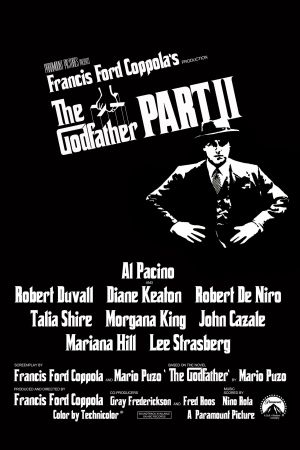
Well, the clock has now struck midnight on the West Coast and that officially means that it is 2026 in the United States!  What better way to start things off than by sharing a scene that I love from one of the greatest and most important films of all time, 1974’s The Godfather Part II?

The scene below takes place on New Year’s Eve.  The scene starts in 1958 and it ends in 1959.  Michael Corleone (Al Pacino) and his brother Fredo (John Cazale) are in Havana at the invitation of Hyman Roth (Lee Strasberg).  Roth know that Cuba could be a gold mine for the American mob but Michael, from the start, realizes that the country’s corrupt government is on the verge of collapse and that it’s about to be replaced by something even worse.  (Admittedly, that’s my opinion.  Director Francis Ford Coppola had a much higher opinion of Castro and the communists than I did.)   Tragically, it’s also in Havana that Michael realizes that Fredo betrayed him to his enemies.  On December 31st, 1958, as the new year is celebrated in Havana, the rebels ride into the city.  While the President of Cuba prepares to announce that he will be fleeing the country, Michael confronts his brother and tells him that he knows the truth.  Later, as they both attempt to flee the country, Michael and Fredo see each other on the streets.  Fredo runs from Michael, refusing his offer to help.  Though Fredo would eventually return to the family, the film’s ending revealed Fredo’s first instinct was the correct one.

Here’s a scene that I love, featuring great work from both Al Pacino and the brilliant John Cazale:
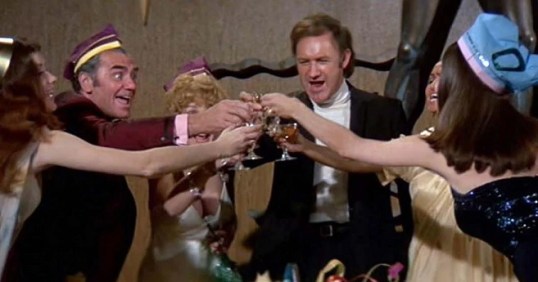
Scene That I Love: The New Year’s Countdown from The Poseidon Adventure


The Poseidon Adventure (1972, dir by Ronald Neame, DP: Harold E. Stine)

It’s nearly time!

As they prepare to count away the last few seconds of 2025 on the West Coast, here’s a scene from one of the greatest New Year’s Day films ever made.  Indeed, just as Die Hard is a great Christmas film, then 1972’s The Poseidon Adventure is a great New Year’s film.

So, let’s join with Gene Hackman, Ernest Borgnine, Stella Stevens, Shelley Winters, Red Buttons, and a host of other familiar faces as we count down.  2026 will undoubtedly bring some tidal waves but I remain confident that we will not be tipped over!

Scenes That I Love: The Third Man


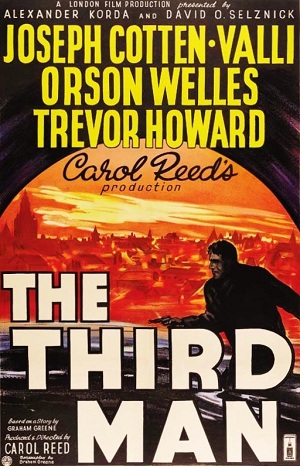
ThirdManUSPoster

Some movies are merely good.  Some movies are undeniably great.  And then, a handful movies are so amazingly brilliant that, every time you watch, you’re reminded why you fell in love with cinema in the first place.

The Third Man is one of those brilliant films.

Directed by Carol Reed and scripted by novelist Graham Greene, The Third Man takes place in the years immediately following the end of World War II.  Pulp novelist Holly Martins (Joseph Cotten) comes to Vienna to search for his old friend Harry Lime (Orson Welles).  Upon arriving, Holly is shocked to learn that Harry makes his living selling diluted penicillin on the black market.

In the classic scene below, Harry and Holly have a clandestine meeting in a Ferris wheel and Harry justifies both his actions and the lives that have been lost as a result of them.

While Orson Welles’ performance is (rightfully) celebrated, I’ve always felt that Joseph Cotten’s work was even more important to the film’s success.  While Welles made Harry Lime into a charismatic and compelling villain, it was  Cotten who provided the film with a heart.

Scenes that I Love: The Iguanas On The Coffee Tables From Bad Lieutenant: Port of Call New Orleans


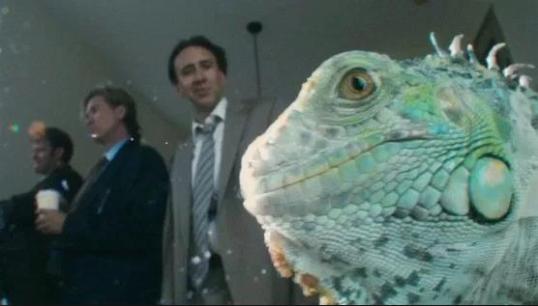
Ever since Werner Herzog’s Bad Lieutenant: Port of Call New Orleans was first released in 2009, people have debated the symbolism of the iguanas on the coffee table.  Are they just a sign that Nicolas Cage’s bad lieutenant is totally high or do they have a deeper meaning?  Myself, I’m not even going to try to guess.  All I know is that the lieutenant eventually came to appreciate their presence.

Scenes That I Love: The Mirror Scene From Duck Soup


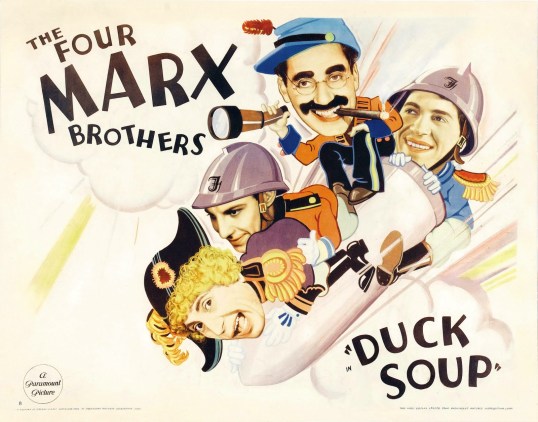
Believe it or not, when Duck Soup was initially released in 1933, it was considered to be something of a failure.  Especially when compared to previous Marx Brothers films, it was seen as being a box office disappointment.  The critics didn’t care much for it, either.  They felt that the film’s political satire was preposterous and tasteless.  Critics in 1933 attacked Duck Soup for being a cynical, anti-government satire released during the Great Depression.

Of course, today, Duck Soup is justifiably viewed as being a classic comedy.  It’s certainly my favorite Marx Brothers film.  In the classic scene below, Harpo pretends to be Groucho’s reflection in a shattered mirror.  It’s a marvelous piece of physical humor so enjoy it!

Scenes That I Love: The Martians Attack In The War Of The Worlds


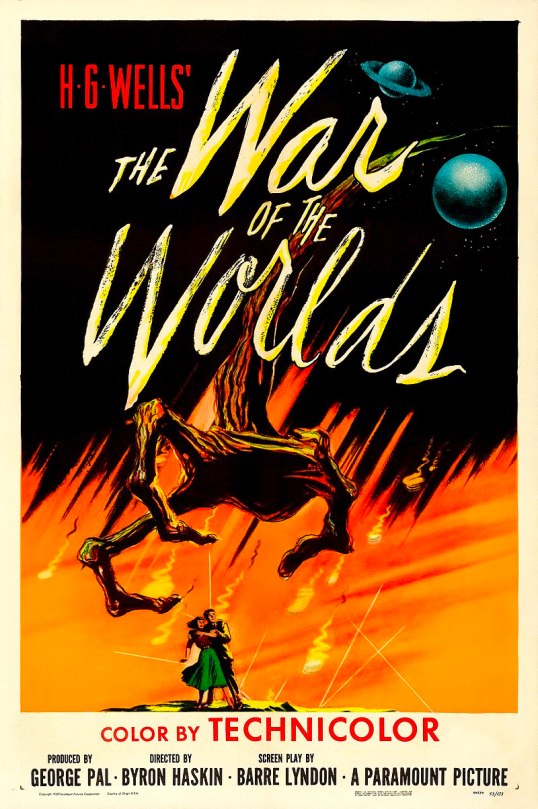
Today’s scene that I love comes from the 1953 film, The War of the Worlds.

It’s a scene that perfectly establishes the fact that, in this film, humanity has no hope when it comes to defeating the Martians that have invaded the planet.  Trying to reason with them, as Uncle Matthew does, is useless.  Trying to fight them, as the army does, is useless.  Matthew is atomized as he approaches in peace.  The tough and plain-spoken military man — a reassuring authority figure in so many 50s films — is destroyed as he orders everyone out of the bunker.  The Martians, meanwhile, are unstoppable and, even worse, they are without mercy or concern for the people that they are destroying.

Seriously, this is a frightening scene when viewed today!  I can only imagine how it traumatized audiences in 1953!  After watching this scene, all I can say is Thank God for the common cold.

Scene That I Love: Linus’s Speech in A Charlie Brown Christmas


Here’s the most famous scene from A Charlie Brown Christmas.  When A Charlie Brown Christmas was first aired in 1965, Charles Schulz had to fight to keep CBS from removing the scene in which Linus explains the true meaning of Christmas.  It has gone on to become one of the most popular moments in the special.

For those who may not be able to watch it on Apple TV+, here it is:

Holiday Scenes That I Love: Festivus Dinner From Seinfeld (NBC, 1997)


Again, Happy Festivus!

This scene is from The Strike episode of Seinfeld.  Believe it or not, it is based on a true story.  Scriptwriter Dan O’Keefe, who wrote this episode, grew up celebrating Festivus, a holiday that was created by his father.  In the real Festivus, the aluminum pole was replaced by a clock that O’Keefe’s father would put in a bag and nail to a wall.  To quote O’Keefe:

“The real symbol of the holiday was a clock that my dad put in a bag and nailed to the wall every year…I don’t know why, I don’t know what it means, he would never tell me. He would always say, ‘That’s not for you to know.'”

Enjoy!