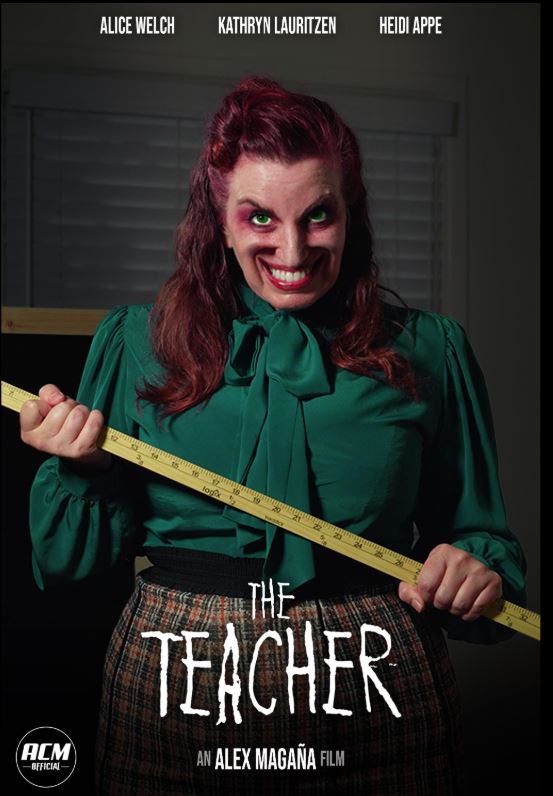
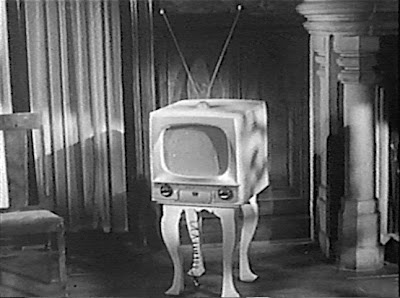
You’re not that bad because Alex Magana makes films. He’s like how Alabama can look down on Mississippi. It has been a Horrorthon tradition that I review his “art”, but it is difficult. 1 Million people watched this short, which tells me that WE NEED A DRAFT! Being an Alex Magana fan is like being proud of your artisanal meth pipe or bragging about doing a TED talk about the THIRD time you got gonorrhea. I do have to admit that his film does have beginning middle and an end; so, it is a short film. Someone has to review it and who else would do this to themselves, but me????
The Teacher begins with two teens warning each other that if they don’t finish their homework, The Teacher will kill them. One of them does not finish her homework; so, she gets killed by the eponymous Teacher. I do have to admit that for Alex this is good because unlike the Smiling Woman crapfest, The Teacher has rules and a Strumplepeter message. Therefore, it does have some literary ancestry. It is still awful, but not as awful as what he usually does to us. It’s like a jab to the eyes rather than his usual Mortal Kombat finishing move to the eyes. Enjoy…I guess.
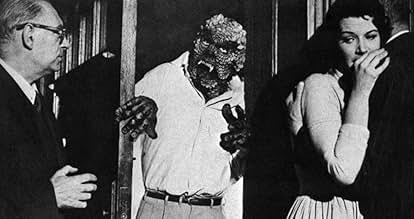
Esperanto was an international language that was briefly promoted by one-world government weirdos but which never really caught on. Four movie have been made in Esperanto but only one is still remembered. 1966’s Incubus features William Shatner, giving a very Shatnerish performance, as a solider who is tempted by a mysterious woman. The cinematography of the legendary Conrad Hall gives this one a very dream-like feel, even before everyone starts to talk.
Yes, this movie has subtitles. But, so what? Who hasn’t wanted to see William Shatner speak Esperanto?
Zombie and infection films have long been a proving ground for aspiring horror filmmakers. The subgenre is relatively inexpensive to produce, often relying on claustrophobic settings, survival scenarios, and plentiful blood-and-makeup effects. Because of this, it’s become an enticing entry point for directors looking to make their mark. But while horror can be a forgiving sandbox for experimentation, creating a film that is not just watchable but truly memorable is another matter entirely.
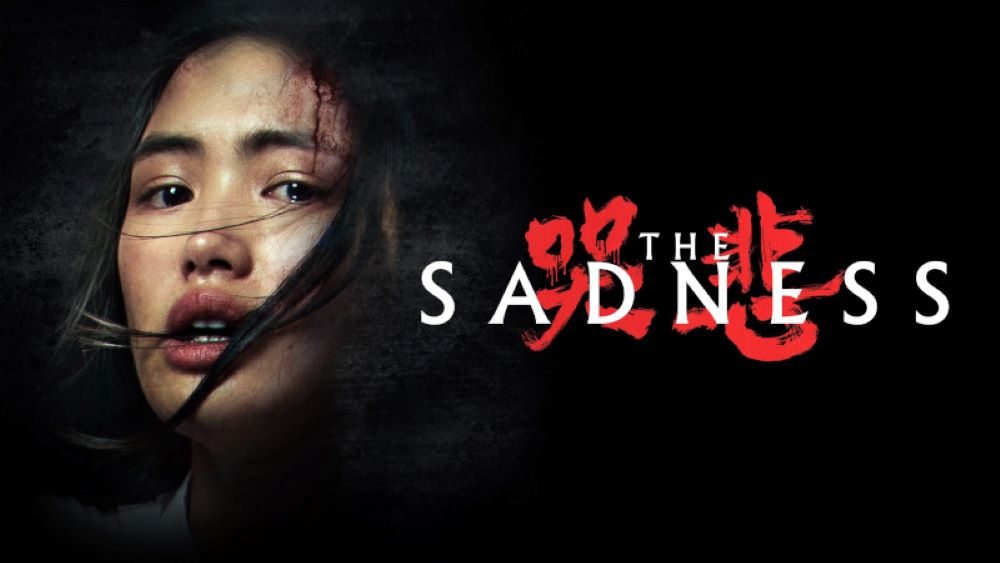
That’s why Rob Jabbaz’s 2021 debut feature The Sadness feels like both a breath of fresh air and a brutal gut-punch. In a cinematic landscape oversaturated with lifeless zombie rehashes, The Sadness stands out as one of the rare gems in the rough: an uncompromising, unfiltered vision that twists infection horror into grotesque new extremes.
The film’s timing alone heightens its impact. Premiering in 2021 as the world was still reeling from COVID-19, The Sadness unfolded against a backdrop of real-world uncertainty and fear. Set in Taipei, it follows a young couple, Jim (Berant Zhu) and Kat (Regina Lei), as they struggle to reunite while a viral outbreak ravages the city. But this isn’t a traditional zombie plague. Those infected don’t stumble through streets in mindless hunger—instead, they shed every shred of empathy and morality, indulging instead in the darkest, most depraved impulses imaginable.
What makes this outbreak particularly disturbing is not the survivalist violence we expect from zombie cinema, but the sadistic cruelty with which the infected embrace their new instincts. They don’t just kill. They torment, torture, and mutilate with gleeful abandon. And yet, in one of the film’s most haunting touches, many of the infected appear to be crying as they carry out these atrocities. Buried deep in the recesses of their corrupted minds is an awareness of the horror of their actions, a recognition that what they are doing is monstrous and wrong. But the virus strips them of the ability to stop themselves, forcing them to participate in their own cruelty even as they mourn it. This paradox of weeping while committing acts of unthinkable violence underlines the film’s title: The Sadness is not simply about gore or shock, but about the profound tragedy of human beings imprisoned within impulses they are horrified to enact.
On its surface, the film invites comparisons to Danny Boyle’s 28 Days Later—especially in its depiction of a city descending into viral chaos. But where Boyle’s rage virus unleashed primal anger, Jabbaz’s strain of infection is even more terrifying: it revels in cruelty, poisoning not just the body but the soul. The Sadness also recalls Garth Ennis’ infamous Crossed comic series—widely deemed unfilmable due to its extremes. That connection is impossible to ignore, both in subject matter and in its deliberate transgressiveness.
As writer, editor, and director, Jabbaz approaches the material with unnerving precision. The first act foreshadows the viral threat in subtle ways—background chatter on TV screens, fleeting moments of sudden aggression—before Taipei collapses into anarchy almost overnight. The narrative remains lean and purposeful, stripping away filler in favor of pacing that escalates terror with brutal efficiency.
Shot in just 28 days, the film nevertheless carries an impressive polish. Cinematographer Jie-Li Bai and production designer Liu Chin-Fu infuse the movie with a grounded sense of place: crowded subways, sterile hospitals, bustling street corners. Each environment feels authentically lived-in before they transform, piece by piece, into blood-soaked arenas of carnage. Practical gore effects are prioritized over CGI, and the result is viscerally effective—sickening yet strangely mesmerizing, almost operatic in their execution. Like the best extreme horror, it locates a twisted beauty in its spectacle of destruction.
The Sadness is more than just gore for gore’s sake. Released during the height of a global pandemic, the film functions as a thematic mirror, reflecting society’s fractures under pressure—our denial of crisis, government missteps, selfish impulses, and the darkness that emerges when rules and trust collapse. Whether or not Jabbaz meant the film as a direct allegory is almost irrelevant; in its execution, it feels pandemic-era, uncannily timely, and raw.
Unsurprisingly, the horror community quickly drew parallels to Ennis’ Crossed. The comparison resonated so strongly that Jabbaz himself has since been attached to direct a live-action Crossed adaptation. If The Sadness is any indication, he may be the rare filmmaker with both the vision and the audacity to bring such an “unfilmable” work to life.
From its deceptively calm beginning to its bleak and nihilistic finale, The Sadness never loosens its grip. It is not a film for everyone—many will find it too transgressive, too nihilistic, or simply too traumatic to endure. But for horror fans who crave extremity, who embrace the genre as a place where boundaries should be tested, The Sadness is more than another zombie flick. It is a tragedy as much as it is a nightmare, and the sight of its infected monsters weeping as they commit atrocities lingers long after the credits roll. That image embodies the very essence of the title: a work that confronts not only our capacity for violence, but the unbearable sorrow of being aware of it, powerless, and consumed.
It is a defining statement in 21st-century horror: brutal, relentless, grotesque, and timely. Rob Jabbaz’s debut doesn’t just enter the infection canon—it tears through it, leaving behind a benchmark of modern extreme cinema.
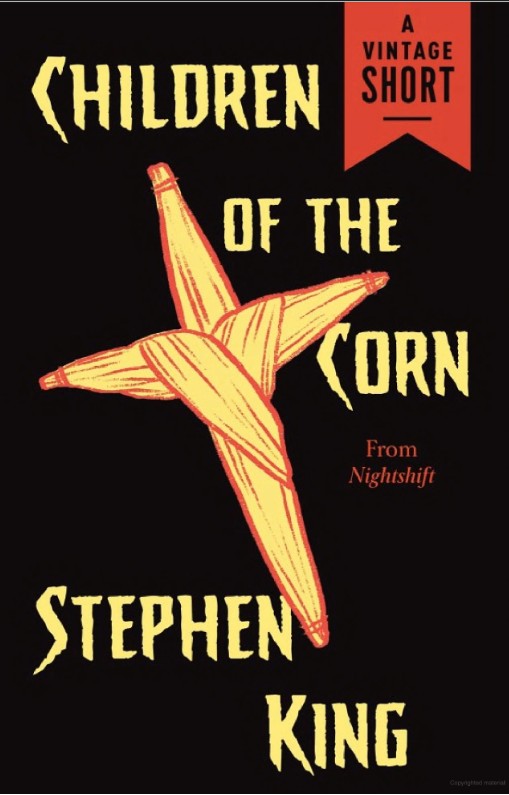
Horrorthon is in full swing; so, it’s time to review a classic: Children of the Corn from Night Shift. Night Shift is an anthology devoted to failure. It’s all about Men not measuring up and people getting hurt by their failings. Poor Stephen, he needs a hug. Children of the Corn was published in 1977 in Penthouse…the 60s and 70s were weird. I’m not anti-p0rn because I really don’t care, but why mix it with literature? Was it that the WWII and Boomer generations wanted a one-stop shop? If so, why not merge the p0rn, literature, fishing gear, and fire extinguishers?
If you’re reading an early King novel, be prepared to be depressed because it is always a gruesome and unhappy ending because a guy failed. Children of the Corn is no exception. I wonder if Night Shift wasn’t this clever anthology I always thought it was, but was actually Stephen King’s clumsy pitch meeting short story compilation? Many of the stories that were adapted to film were way better written. To be honest, the film versions of Stephen King’s short stories are usually significantly better than his books.
The plot is that Burt and his wife Vicky are trying to do a cross country trip to save their marriage. Once they arrive in Nebraska, they get trapped and sacrificed to a pagan corn god who likes to use children as his henchmen- a typical Nebraska custom. The Cornhuskers draw a big crowd, but in the off season, it’s always about the pagan corn god murders. During the Cornhusker season, the residents still do sacrifices, but the victims are deep fried with the other Fair Foods, which means that the victims are all A salted and Battered. *BOOM*
There are a few more details that I am leaving here like the He Who Walks Behind the Rows etc., but once you’ve seen one pagan corn god, you’ve seen them all.
Have you ever heard Penderecki’s Threnody to the Victims of Hiroshima? It’s definitely not your typical kind of music. When I first listened to it, I wasn’t really sure what was happening—it’s loud, chaotic, and incredibly intense. There’s no melody or rhythm that you can follow; instead, it feels like a massive wave of sound crashing over you, full of raw emotion and tension.
One of the things that makes it so striking is that Penderecki wrote it for 52 string instruments. Now, usually, when you think of that many strings playing together, you imagine something rich, smooth, and harmonious. But this is completely different. Those violins, violas, cellos, and basses don’t blend into a melody; instead, they create layers of dissonant sounds—like dozens of voices crying out all at once. It’s less about making “music” in the traditional sense and more about creating an intense atmosphere you can almost feel physically.
What’s really interesting is that Penderecki wasn’t initially trying to compose a tribute. The piece was simply titled 8 minutes and 37 seconds, just the length of the piece. But when he heard it performed, he realized something powerful was happening. The sound conveyed devastation and sorrow in a way words couldn’t. That’s when he dedicated it to the victims of Hiroshima, giving all that chaotic noise a heartbreaking context.
Listening to Threnody is like being caught in a storm made of sound. It opens with a blast of high-pitched, almost screaming tones, then moves between moments of total chaos and eerie silence. Instead of a neat ending, the piece slowly fades away, leaving you with a heavy, unsettling quiet—like the echo of a tragedy that never really ends.
What’s especially notable is how much this piece challenges what we usually expect from music. It doesn’t have melodies, harmonies, or rhythms in the way most music does. Penderecki broke all those rules to focus purely on emotion through sound itself. That approach not only made Threnody groundbreaking in classical music but also opened the door for its huge influence on horror film music. Filmmakers recognized how those sharp, dissonant strings create tension and fear on a gut level. You can hear Penderecki’s influence in iconic horror scores like those in Kubrick’s The Shining or Lynch’s Twin Peaks. Those creepy, screeching string sounds that make your skin crawl? That’s Penderecki’s legacy.
For me, what makes Threnody unforgettable is how honest it feels. It doesn’t try to comfort or please the listener. Instead, it’s a raw cry of grief made real through fifty-two instruments playing together but refusing to blend smoothly. It’s a reminder that music doesn’t always have to be beautiful to be powerful and that sometimes the most intense emotions are best expressed through sound that challenges everything we think music should be. Once you’ve listened, it sticks with you—an echo of sorrow that doesn’t fade.
In the third episode of Hammer House of Horror, Denholm Elliott plays an estate agent who finds himself having a series of nightmares about his wife (Pat Heywood) and his secretary (Lucy Gutteridge) and a murder that may or may not have happened on Friday the 13th. This episode is an enjoyably surreal trip into the subconscious.
In the UK, Rude Awakening originally aired on September 27th, 1980.
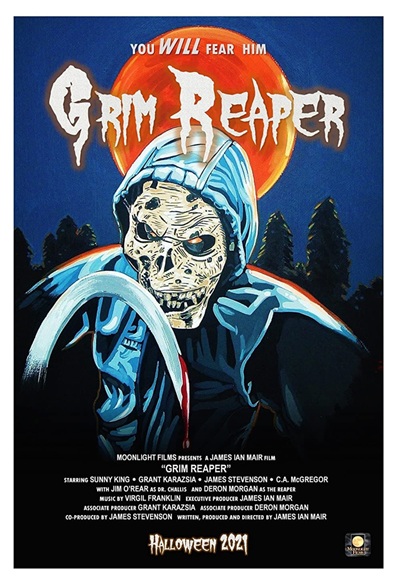
In 2021’s Grim Reaper, escaped mental patient Victor Cunningham (Deron Cunningham) is wandering around a small country town and killing people.
That’s pretty much the entire plot. Grim Reaper is only a 70-minute film and the majority of those minutes are made up of either Cunningham wandering around in his grim reaper mask, Cunningham’s victims being stalked, and the police being ineffective. (The main detective wears a baseball cap that read: POLICE. It’s a good thing that the guy was wearing that baseball cap because, otherwise, I would have just mistaken him for a local bartender.) Our final girl has a big bruise on her face and is trying to escape an abusive relationship, which adds a level of poignance to her story.
There’s a tendency amongst many to be automatically dismissive of DIY slasher films like GrimReaper. It’s true that Grim Reaper has its amateurish moments and that the soundtrack leans a bit too heavy on the metal and it’s also obvious that most of the actors were not professionals but I have to admit that I kind of enjoyed the movie and not just in an ironic sense. It helps that the film was obviously made by people who appreciate the genre and, watching the film, one gets the feeling that it was a fun set. It may seem like a backhanded compliment to say that the film is comfortable with being what it is but you need only compare it to some of the current big budget horror films to see the difference between a horror film made be fans of the genre and people who think that they’re somehow better than the horror label. Even shot on video, the film still had somewhat effective shots. Director James Ian Mair appears to have a good eye and he even manages to make good use of natural light. That’s the same thing that got Chloe Zhao an Oscar and a Marvel movie.
Sometimes, you just have to be willing to appreciate a film for what it is.
Charles Bronson played a cop a bunch of times in the 1980’s, but my personal favorite is Leo Kessler from 10 TO MIDNIGHT. Kessler wants to be a better dad to his daughter Lori (Lisa Eilbacher), but first he needs to catch a psychotic killer who’s murdering beautiful young women. One of the most interesting things about 10 TO MIDNIGHT is the way it tries to fuse a badass cop film with the popular slasher films of the 1980’s. It’s arguably Bronson’s best Cannon film, and Gene Davis is a certifiable creep as the slasher, Warren Stacy. Enjoy this infamous scene where Kessler confronts Stacy about his, ummm… private sexual activities!