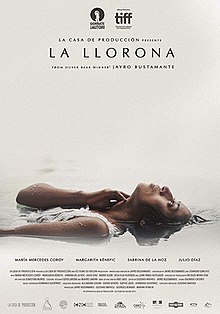
International Horror Review: La Llorona (dir by Jayro Bustamante)


Enrique Monteverde (Jose Diaz) lives in a mansion in Guatemala.  He’s an old man, one who look harmless on first glance.  He always has an Oxygen tank nearby.  His family says that he’s suffering from Alzheimer’s and, therefore, can’t always be held responsible for some of the things that he might say.  He shamelessly leers at the younger woman who work in his home.  His family says that he’s always been a flirt but he doesn’t mean any harm or offense.  His family insists that he’s just an old man with dementia who is hoping to pass away peacefully while surrounded by his loved ones.

The protestors who gather daily outside of Enrique’s mansion have a different opinion of the man.  They chant and hold up signs illustrated with the faces of their missing relatives.  Before he retired, Enrique was a general.  He fought the communist guerillas.  Previously, he was convicted of committing genocide against the indigenous people of Guatemala but his conviction was overturned by a higher court.  There are other retired generals who know that, if Enrique had gone to prison, it would not have been long until they followed him.  Just because people are going on trial and even getting convicted, that’s not guarantee of justice.

Enrique’s wife, Carmen (Margarita Kenefic)m insists that Enrique is innocent and that all of his accusers are lying.  Enrique’s daughter, Natalia (Sabrina De La Hoz), is less sure while his granddaughter, Sara (Ayla-Elea Hurtado), just thinks of Enrique as being her somewhat goofy grandfather.  Meanwhile, his housekeeper, Valeriana (Maria Telon), remains strangely devoted to him.  Even after a scared and confused Enrique fires a gun in the house because he swears he heard someone moving in the darkness, Valeriana stays.  The rest of the household staff quits.  Alma (María Mercedes Coroy), a young woman from Valeriana’s village, comes to the home to work as a maid.

Enrique continues to insist that some sort of curse has been placed over the mansion and that something evil has entered the house.  Is he just suffering, as his family assumes, from dementia or is he correct?  Even as the protests continue outside and the enigmatic Alma hints that she has a secret of her own, Carmen finds herself haunted by nightmares and visions of her husband’s crimes.

La Llorona is a film that combines two horrors, one legendary and one very real.  There is, of course, the legend of the weeping woman.  She is said to haunt the night, crying for her drowned children and, in some cases, killing anyone who tries to help her.  And there’s the very real horror of the war crimes that were committed, by various military dictatorships, against the indigenous people of Central and South America.  Though Enrique may be a fictional creation, the crimes that he and others committed were not.  La Llorona is more than just a haunted house story.  It’s a film about the crimes of the past and how those crimes continue to haunt the present.  Like many prominent men, Enrique is protected not by the loyalty of those he worked with but instead by the knowledge that the minute one guilty war criminal actually pays for his crimes, they’ll all end of paying.  The political and legal establishment will do what it has to do to protect itself by protecting men like Enrique.  But, as this film demonstrates, the sins of the past cannot be escaped in present.

Unfortunately, the premise is a bit more interesting than the execution.  The film’s deliberate pacing often lends La Llorona a dream-like feel but, in other scenes, the film just feels slow.  The idea of the legendary weeping woman acting as a sort of vigiliante is an interesting one but the story itself is a bit predictable.  That said, the cast all give strong and memorable performances and the film uses the horror genre to discuss disturbing truths that many would rather ignore.  Flawed or not, La Llorona is a good example of how the horror genre can be used to comment on the past and the present.

La Llorna was a Guatemala’s submission for the 2020 Oscar for Best International Film.  Though it deserved a nomination for ambition alone, it didn’t make it beyond the 15-film shortlist.  Fortunately, nominated or not, the film can currently be viewed on Shudder.
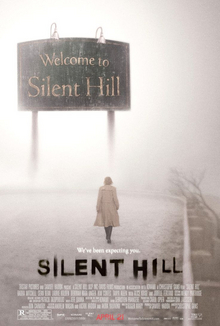
Horror Film Review: Silent Hill (dir by Christophe Gans)


Oh, Silent Hill.

I first saw this movie way back in 2006, when it was first released into theaters.  At the time, I knew nothing about Silent Hill, beyond the fact that it was based on a video game that a lot of my friends seemed to like.  I have to admit that I had a really hard time following the plot and yet the film still totally creeped me out.  The film was one of those movies that created such an atmosphere of impending doom that the real world looked and felt different when I left the theater.  For the rest of that night, I found myself feeling paranoid about any sudden shadows.

I’ve watched Silent Hill or, at the very least, parts of Silent Hill a few more times over the years.  The plot still makes little sense to me, though I am now a bit more familiar with the game that inspired the film.  Over the years, a handful of the special effects have aged a bit poorly, with many of the once-fearsome monsters now looking somewhat cartoonish.  And yet, when the film works, it really, really works. There are certain scenes in this film that still surprise and frighten me, even though I’ve already seen them.  One character, for instance, is burned alive and I still have to look away when the fire consumes them.  The thing is that, even if the CGI now looks a bit cartoonish, the atmosphere remains.  That feeling dread continues to snake its way through every scene in the film and into the consciousness of the viewer.

I rewatched the film earlier today.  I’m feeling nervous tonight.  Maybe it’s just because I’ve got a lot of writing to do and we’ve got some home repair people coming by tomorrow to do some work.  Or maybe, it’s because I’m worried that I’m suddenly going to find myself in some sort of shadow world, being menaced by blind but stabby nurses.

The film opens with Rose (Radha Mitchell) and her husband, Christopher (Sean Bean) trying to figure out why their adopted daughter, Sharon (Jodelle Ferland), is sleepwalking and having nightmares about a town called Silent Hill.  Silent Hill is in West Virginia and was abandoned after a mysterious natural disaster.  Rose decides that visiting the town is the best way to solve the mystery.  However, after an automobile accident, Sharon disappears and Rose finds herself wandering around the town and getting attacked by monsters and occultists.  Meanwhile, Christopher is also wandering around Silent Hill, accompanied by a helpful deputy (Kim Coates), but it’s hard not to notice that his Silent Hill seems to be signifcantly difficult from the Silent Hill that Sharon and motorcycle police officer Cybil (Laurie Holden) have found themselves in.

It’s a confusing plot but director Christopher Gans does such a good job of creating and maintaining the film’s creepy atmosphere that it doesn’t matter that you’re not always sure what’s going on.  And while it’s true that there’s perhaps too many scenes of Sharon walking from place to place, there’s also some truly frightening scenes, like the one with all of those killer nurses.  The film plays out like a dream and, as we all know, you don’t question dream logic.  Instead, you just go with it.

And so, 15 years after the film was first released, I’m usually willing to just go with Silent Hill.  I’m at peace with never quite understanding it.  Instead, I appreciate it for what it is: a creepy and surreal experience that will make you think twice before stepping out into the fog.

Sledgehammer (1983, directed by David A. Prior)


Long ago, an adulterous couple was beaten to death by someone weilding a sledgehammer while one of the victm’s 8 year-old son watched.  Ten years later, a bunch of stupid college kids decide that the farmhouse would be a great place to throw a party.  Great idea!  After a lot of filler, including a length foodfight, one of the partiers tells the story of the murder and then suggests holding a seance so that they can talk to “ghosts and goblins.”  Everyone agrees.  At first, it seems like the seance is just an extended practical joke but soon, a killer with a sledgehammer shows up.

Sledgehammer was an early direct-to-video slasher film.  It was directed by David A. Prior, who later went on to become one of the buseist DTV directors of the 80s and 90s.  Starring in the film was Ted Prior, brother of David.  Ted plays Chuck, who is not sure whether or not he wants to marry his fiancee, Joni (Linda McGill).  There’s a scene where Chuck and Joni walk through a fied in slow motion.  It adds nothing to the plot but it did add to the running time, which I imagine was the intent.  There are, in fact, several slow motion sequences in the film.  There’s so much slow motion that it’s hard not to laugh whenever the frames start to slow down.  It’s an 87 minute film but it feels like at least 20 minutes of that is due to the slow motion.

Sledgehammer is slow and dumb but it’s hard to really dislike it.  The cast may be amateurish but they also appear to be having a good time and the decision to film almost the entire movie in what was then David Prior’s apartment is actually likable in a low-rent, anyone-can-make-a-movie way.  The opening credits are written in generic 80s computer font and the movie ends with a lengthy “You have been watching” style montage of the cast.  It’s like bad 80s synthesizer music, cheesy but impossible to hate.  As for the killer, he’s stuck wearing a cheap mask but the sledgehammer is a good weapon and it actually makes him more threatening than many of his knife and axe wielding comrades.

Sledgehammer is not great.  It’s not even the best thing from the 80s to be called Sledgehammer.  (David Rasche rules!)  But it’s better than many other direct-to-video slashers.  What it lacks in creativity, it maes up for with ethusiasm.

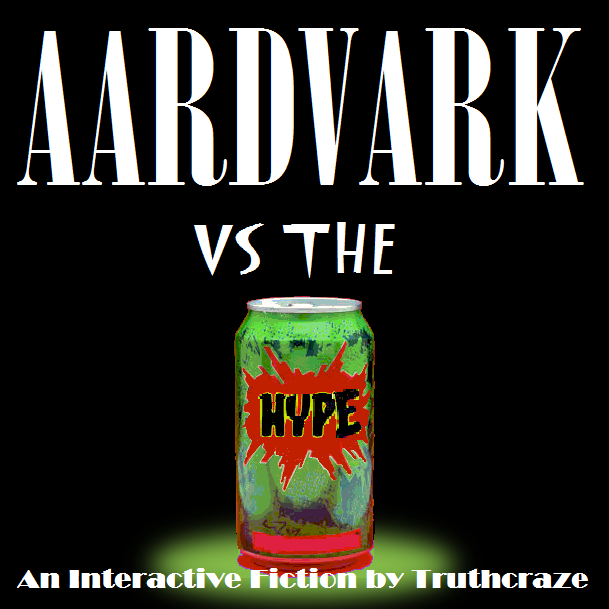
Game Review: AardVarK Versus The Hype (2021, Truthcraze)


AardVarK versus The Hype is an entrant in the 2021 Interactive Fiction Competition.  All of the entries can be browsed and experienced here.

This year is 1997 and the students at the local high school have been transformed into blood-coughing, murderous zombies by the Hype, a new soft drink.  It’s up to the members of the world’s great garage band, AardVarK, to defeat the Hype but doing so is going to involve solving some puzzles and spendng a lot of time at a convenience store.

This is an intentionally strange game and it takes a while to get used to the format but I dug it.  There are four members of AardVarK and, throughout the game, you switch back and forth from which member of the band you’re playing.  Sometimes, it can be difficult to keep track of which band member you are but I still appreciated the game’s ambition.  This might be the first true enemble Interactive Fiction game that I’ve ever played.

The story is full of goofy, self-referential humor.  Imagine if Kevin Smith wrote an IF game and you might have some idea of this game’s skewed perspective.  It’s a fun game, though, full of odd dialogue and strange scenes.  Some of the puzzles do have weird, out-there solutions but fortunately, the game comes with a HINT section that will help you out.  The best thing to do with a game like this is to just type whatever pops into your head and see what happens.  The joy here is from the journey and seeing just how weird things can get!

Play AardVark Versus The Hype.

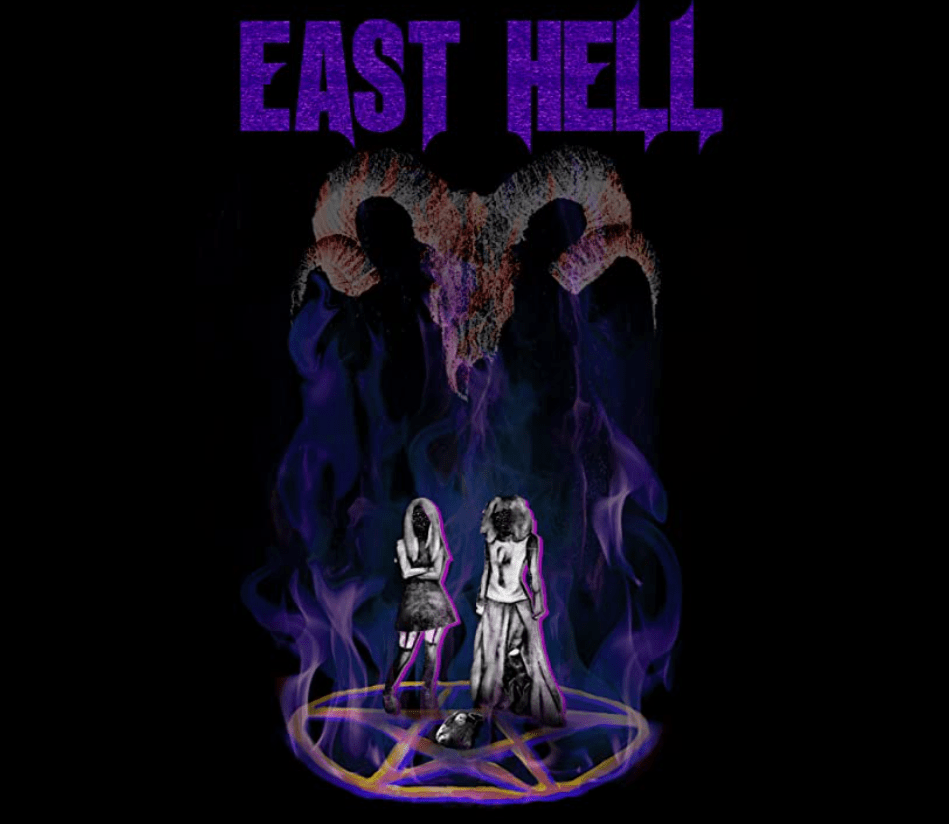
“East Hell”, Review by Case Wright


Finally, I get to watch a good short. I will not lead you astray. This short is worth your time. I promise. It goes for comedy and achieves it. A short is successful if you care about the story and characters and get an emotional response in a brief period of time. Really, that is a tremendous achievement. It has a mean girl (well, mean girl demon), two aspiring devil worshippers, and a neglected boy who needs a sitter.

The two girls summon a demon and she appears and it’s awesome!!! The girls are all goth and the Demon is too cool for school-Brooklyn-hipster-badass.

The demon starts savaging them, “You’d be really pretty if it weren’t for your clothes and face and house”. This is fun because demons are usually scary, slick, or sexy, but that’s usually only the purview of male demons. It was fun dark girl power. I felt like I was back in the City and it’s nice to know that these people still exist in my absence.

After the demon is summoned, she’s takes a liking to the real underdog and the story becomes a quasi-revenge story. I really to hope to see Lauren Cipoletti (The Demon) more. She has great comic timing and we need more of her!

When a short is done well, it’s great!

Horror Book Review: Switched by R.L. Stine


Oh hell yeah!

Dear readers, I present to you perhaps the greatest book ever written by the one and only R.L. Stine!

Now, I’m not going to spoil too much of this plot because, seriously, this book is crazy. Once the plot twists start, they never stop. Once the first two dead bodies show up, it’s a nonstop parade of bloody corpses. People don’t just die in this book. They get their heads ripped off and then they sometimes show up alive a few pages later. That’s the type of book this is. First published back in 1996, Switched is like the ultimate Fear Street book.

Basically, Nicole is having a really bad day. Her parents are being totally overprotective. Her boyfriend wants to dump her because he says that she’s too much too handle, even though Nicole can’t imagine what he means by that. (Don’t worry, Nicole! I’ve been there!) She didn’t do her class project because she just didn’t feel like it. Nicole’s obviously suffering from a case of terrible ennui.

However, her friend Lucy has a solution! Lucy says that there’s a wall near the cemetery and basically, all you have to do is climb the wall with someone else and then jump off the wall while holding that person’s hand and then — BOOM! — it’s body switch time! Lucy says that they can switch bodies and Nicole can get a chance to live Lucy’s perfect life and maybe make out with Lucy’s boyfriend. Nicole says sure!

So, they jump off the wall and, quicker than you can say Freaky Friday, it works! Unfortunately, no sooner has the body switch occurred than Nicole starts to find dead bodies all over the place! Could Lucy be killing them while using Nicole’s body!? Or is something even stranger happening?

Seriously, this book is a lot of fun. Not only do you get the totally insane body switch plot and a lot of gore and impure thoughts but you also get nonstop twists. And, as opposed to certain other Stine books, the twists all make a strange sort of sense in Switched! I won’t say much else about Switched because I don’t want to spoil it for anyone but, if you ever feel the need to prove that R.L. Stine could tell a good story and keep the reader guessing, Switched is the book to go with!

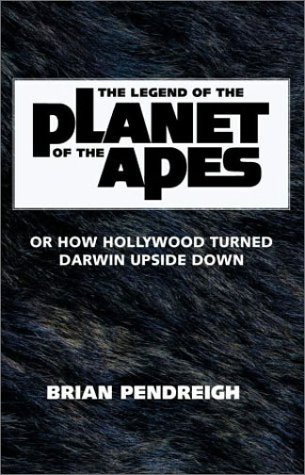
Book Review: The Legend of the Planet of the Apes: Or How Hollywood Turned Darwin Upside Down by Brian Pendreigh


Recently, while going through all the books that I’ve collected over the years, I came across a copy of The Legend of Planet of the Apes: Or How Hollywood Turned Darwin Upside Down.  It’s a book by a Scottish film critic named Brian Pendreigh and it takes a look at the Planet of the Apes film franchise, from the 1968 original all the way to Tim Burton’s now-forgotten remake.  Though I couldn’t find a copyright date in the book, it was obviously written long before the Planet of the Apes franchise was rebooted and sent in an entirely new direction by 2011’s Rise of the Planet of the Apes.

That’s okay, though.  The three recent Planet of the Apes films all had moments of brilliance and Andy Serkis probably deserved an Oscar nomination for his performances in all three of them but they have also tended to overshadow the original Planet of the Apes and its sequels and, as this book points out, the first 5 films were actually pretty good.  (Okay, okay — Battle of the Planet of the Apes isn’t great, even if it is entertaining.  But I defy you not to cry at the end of Escape From The Planet of the ApesBeneath the Planet of the Apes is wonderfully subversive with its abrupt and nihilistic ending.  Conquest of the Battle of the Apes is probably even more relevant today than it was in the 70s.)  While the majority of Pendreigh’s book focuses on the production of the original Planet of the Apes, he writes enough about both its sequels and the short-lived Planet of the Apes television show to make a convincing argument that the original franchise itself deserves to be held in higher regard than it often is.

It’s a good book, though I do wish Pendreigh had been a little bit less obvious in his loathing of Charlton Heston.  Certain writers will never forgive Heston for not being a liberal.  Heston, of course, was hardly the only Republican to be a star during the 50s and the 60s.  John Wayne, Jimmy Stewart, Gary Cooper, James Cagney (from the 50s onward), Robert Mitchum, and many others leaned to the right.  However, John Wayne, Gary Coper, Robert Mitchum, and even Jimmy Stewart were largely associated with westerns and war films, two genres that were already considered to be thematically conservative.  Heston, on the other hand, appeared in left-wing dystopian sci-films like Soylent Green, The Omega Man, and Planet of the Apes.  While other Hollywood conservatives were supporting the blacklist, Heston fought to get Orson Welles hired to direct Touch of Evil.  He appeared in film that were critical of capitalism and blind patriotism and fanatical militarism.  He did everything that a left-wing actor was supposed to do but he did it while voting Republican and a lot of film writers will never forgive him for it.  As a result, people far too often tend to act as if Heston’s films were good despite Heston when, in all actuality, Heston’s macho persona and his willingness to subvert it (or at the very least, his willingness to allow his directors to subvert it) is what made so many of his film memorable and important in the first place.  One reason why the endings of both Planet of the Apes and Beneath the Planet of the Apes continue to resonate after all these years is because they featured Charlton Heston, rendered helpless and driven mad.

Admittedly, when it comes to dismissing Heston, Pendreigh is not as bad as some.  He acknowledges the importance of Heston’s performance to the success of the original Planet of the Apes.  And yet, he can’t resist complaining about Heston’s later political activities or his admittedly pompous view of himself.  Anytime an actor is quoted as saying something good about Heston, Pendreigh is sure to also include a quote from someone saying something negative.  It’s a distraction that takes away from discussing the films.  One gets the feeling that the author was deeply troubled by the fact that praising Planet of the Apes would require him to also offer up some praise for the film’s star.

But …. no matter!  Regardless of however he felt about Charlton Heston, Brian Pendreich clearly appreciated the Planet of the Apes films and that genuine appreciation comes through in this book.  In fascinating and rewarding detail, it explores the controversy of who, among the many people who worked on developing the film, deserves the credit for coming up with the original’s classic final scene.  It examines the circumstances that led to Edward G. Robinson leaving the role of Dr. Zaius.  It takes a look at the career of Pierre Boulle, who wrote the somewhat forgotten novel that led to the films in the first place.  And it provides a fair look at what worked (and occasionally didn’t work) about the film’s sequels.

If you’re a fan of the original and its sequels, this book is a must-have.

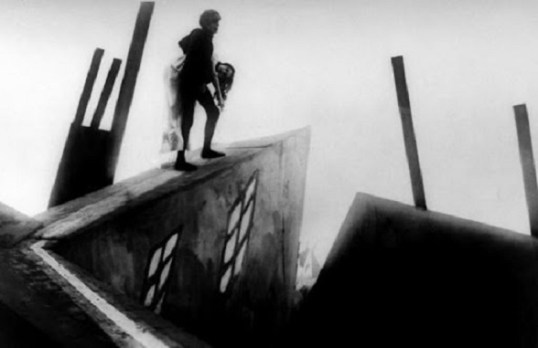
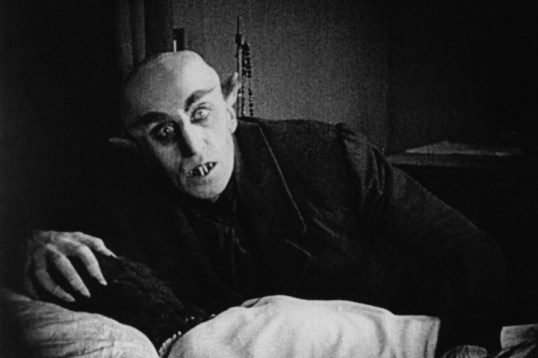
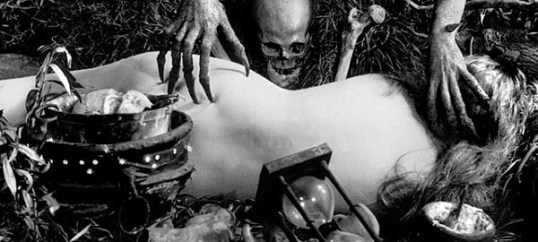
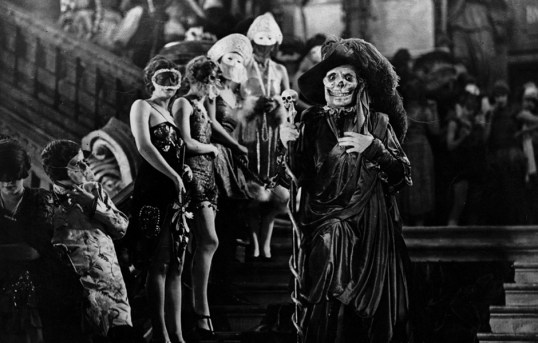
4 Shots From 4 Silent Horror Films


4 (or more) Shots From 4 (or more) Films is just what it says it is, 4 (or more) shots from 4 (or more) of our favorite films. As opposed to the reviews and recaps that we usually post, 4 (or more) Shots From 4 (or more) Films lets the visuals do the talking.

The horror genre has been around ever since people struggled to explain their fears and horror films were a feature of cinema from the time of the earliest movies.  Today, we pay tribute to some of the early entries in the horror genre with….

4 Shots From 4 Horror Films

The Cabinet of Dr. Caligari (1920, dir by Robert Wiene, DP: Willy Hameister)

Nosferatu (1922, dir by F.W. Murnau, DP: Fritz Arno Wagner and Günther Krampf)

Haxan (1922, dir by Benjamin Christesen, DP: Johan Ankerstjerne)

The Phantom of the Oepra (1925, dir by Rupert Julian, DP: Milton Bridenbecker, Virgil Miller, Charles Van Enger)

Cast A Spell With The Witches Of The Pulp Era


Artist Unknown

Witches were a popular subject during the pulp era, starring in stories and appearing on covers.  Sometimes, they were riding broomsticks and other times, they were just casting spells.  Whatever they were doing, they were always ready to work their magic on readers.

Today, it’s time to pay tribute to some of the witches of the pulp era!

Artist Unknown

by Earle Bergey

by Hannes Bok

by Jack Thurston

by Margaret Brundage

by Rudolph Belarski

by Tommy Shoemaker

Unknown Artist

A Blast From The Past: Donald Pleasence Guest Stars On Columbo


A few days ago, we observed the birthday of Donald Pleasence, a great actor who became a horror icon with his performance as Dr. Sam Loomis in Halloween. However, 5 years before a generation of filmgoers first met Dr. Loomis, Donald Pleasence played a wine connoisseur-turned murderer on a classic and much acclaimed episode of the classic detective show, Columbo.

Largely due to the battle of wits between Donald Pleasence and Peter Falk — two of the best character actors of their generation — Any Old Port In A Storm has come to be seen as one of the best episodes ever of this still much-beloved detective show. This episode originally aired on October 7th, 1973, just two days after Pleasence’s birthday. Today, on the 48th anniversary of the episode’s airing, the Shattered Lens is proud to share Donald Pleasence and Peter Falk in Any Old Port In A Storm!

As we frequently say around these parts, enjoy!