The first day of BlizzCon 2014 is coming to an end. While the Starcraft 2 stage pulls an all-nighter with live demonstrations of Archon mode from Legacy of the Void featuring such big names as MC and Polt, the rest of the Anaheim Convention Center has cleared out and gone home. Of course Overwatch was the biggest deal. What were some of the other interesting announcements?
Hearthstone will be getting a new expansion in December called Goblins vs. Gnomes. There will be 120 new cards, and the game is coming to Android.
Warcraft the movie will be released in March 2016, and it will be based on the original Warcraft: Orcs & Humans RTS.
Legacy of the Void matches will start with 12 workers, and players will not need to own either Wings of Liberty or Heart of the Swarm to play it. Lurkers are coming back, along with a whole mess of new units, and resource availability has been cut back to force faster matches. I’m not sure the last bit is good news for those of us who would rather watch the pros than play ourselves, but time will tell.
Everything was pretty quiet on the Diablo 3 front. I missed its hour slot, but considering it was on a side stage and got zero mention on the main stage, there couldn’t have been anything substantial. Heroes of the Storm got a lot of demonstration love, and Blizzard explained the rational behind a lot of the class and loot changes in Warlords of Draenor. Legacy of the Void demonstrations are still going on as I write this, and it might be the most entertaining segment we’ll see at BlizzCon. All the pros that lost in the round of 16 are going up against each other in Archon mode–shared-control team matches–messing around and showing off the new units. The commentary and in-game banter has been pretty hilariousl I’ll post up the cast of MC and HyuN’s TvZ stomp tomorrow if I can find it.
So anyway, I’ll close out the night by sharing the videos from day one that I think matter most: new cinematic trailers and gameplay videos for Overwatch and Legacy of the Void:
The hidden two hour bracket following BlizzCon’s opening ceremony was of course dedicated to Overwatch. The big spin they put on it was to emphasize how the game will not depend on “putting crosshairs over targets”. They talked of making it “less lethal”, and extending the gameplay to make it more stategic. That sounds like my Blizzard. Is it going to be something like an RTS FPS? Maybe. The biggest break from traditional FPS combat will be the abilities to heal and build things. A healer, as it sounds, follows the team around to keep them alive. Builders put up strategic zone-control defenses and weaponry. I’m being told that this is a bit of a copycat of Team Fortress 2, and that may well be the case. I am not familiar with that game, but strategy over beat-em-up has always been Blizzard’s style. The combat is not really just about killing the other team. Different maps will have different objectives, and Blizzard mentioned base defenses as well as escort missions. Battles will be 6 on 6, and Blizzard highlighted a few of the classes that will be involved. Here is how they broke it down:
‘Offense’ class has abilities like blink, arial rocket boost, teleportation, and wall climbing. These characters will have low survivability and maximum mobility, functioning as scouts and creating diversions.
‘Defense’ class guards objectives, creates choke points, and sets up sniper positions. Due to the high mobility of offense classes, choke points will be hard to come by and require thorough knowledge of the map.
‘Tank’ class does what you expect. They have 50% damage reduction and abilities such as shields that defend everyone within them from all damage for a time. They also have disruption abilities that break up defensive structures in the making.
‘Support’ class includes the healers and builders Blizzard had mentioned earlier. The regenerate players’ health, lay down gun turrets, apply damage increasing debuffs, and can teleport the team around the map.
Keep in mind, of course, that no player is going to have all of these abilities at once. The game consists of a number of “Heroes”, and each hero has its own unique set of abilities. Each hero will function as one of the four classes, but with their own unique advantages and disadvantages. You will be able to swap your hero in-game each time you die, alowing for more diverse strategy, and there can be more than one of the same hero on the field at the same time. There will supposedly be substantial backstory behind the game and characters, a lot of which will be presented to the players through media outside of the game, perhaps like the video lore series Blizzard released in preparation for Warlords of Draenor. In-game story will be limited, as there will be no campaign mode and it will be strictly multi-player. Blizzard declined to comment on what exactly out-of-game character development would be in the Q&A segment.
It all sounds quite promising, and the 10 or so minute demo match they showcased looked visually stunning, but I don’t know that the gameplay I saw lived up to the level of strategic involvement Blizzard tried to sell me. The demo opened up with the focus team setting up all kinds of ‘strategic’ positioning and gun turrets and the like, and then a buffed-up tank unit from the opposition jumped in the middle and face-rolled the entire team. Within a couple seconds the whole team was alive again and it was pretty pew pew for the next eight minutes. Granted the demo was a real demo, not a contrived, pre-planned sequence of combat, I kind of got the feeling the game would have a lot of this. So-called ‘strategic’ decisions happened in a split second, and what I think I saw was a lot of the same old “putting crosshairs over targets” technique that always turned me off to FPS games. Maybe those crosshairs sent out a magic spell or sticky grenade instead of a rocket, but it felt like the same old. We only saw one map, and ten minutes is waaay too little time to pass judgment, but I can say I haven’t seen what I want to see in this game yet.
In other news, during the SC2 WCS Global Finals Pre-Show Blizzard elaborated on “Archon” mode for Legacy of the Void in a way that made it sound like classic Starcraft shared bases–something I always enjoyed. It was also mentioned in-between segments that there are currently no plans to introduce any new classes in Hearthstone. Oh, and MMA whooped Bomber 3-1 in an upset victory in the Starcraft 2 round of 8. herO and Classic are up next.
BlizzCon 2014’s opening ceremony just ended about 10 minutes ago, and it ran the gauntlet of new Blizzard products. Hearthstone, Heroes of the Storm, and Legacy of the Void got some attention, but the big news was about a franchise I did not expect: a brand new one!
First we got to see some Heroes of the Storm clips, and they announced Thrall, Jaina, and The Lost Vikings as playable characters. Nothing particularly “new”, unless you were already actively involved in the beta and recognized a new map or ability. The Hearthstone announcements were much more substantive. First of all, they announced that the game would be made available for Android “tablets”. I am going to assume that means it will work on my smart phone too. Hey, it’s not technically “texting” while driving. Count me in. We also found out about the next expansion, which Blizzard oddly called the “first” Hearthstone expansion. I am not sure what that makes Curse of Naxxramas, but suffice to say Hearthstone: Golbins vs. Gnomes is going to be way bigger. There will be a whopping 120 new cards, and we won’t have to wait long to see them. The game is coming in December 2014. Whaaa?
Legacy of the Void was covered next. Lurkers are coming back. Sweet. There will also be an “Archon” mode that didn’t get much of an explanation, but it was described as a mode that will allow you to see the game “the way the pros do”, giving you a grand view of everything at once. I’m not sure what that means, or whether it’s going to be more than a well-made UMS, but I’m intrigued.
That was the first half hour. Some big announcements for Hearthstone–a Goblins vs. Gnomes expansion with 120 new cards due out in only a month, and an Android edition. Heroes of the Storm and Legacy of the Void didn’t get much of a substantial update. Then on to Chris Metzen in a horde hoodie (racist!). “17 years since Blizzard opened up a new world”, he tells us. And it’s true. Everything has been Starcraft, Warcraft, or Diablo based since the mid-90s. Not anymore.
Overwatch. The cinematic opens with some kids in a museum watching anime footage of an old cyborg task force called “Overwatch”, that had once saved the world from something or other. As they walk through the museum, explaining that Overwatch has since devolved to scattered mercenary task forces, two groups of cyborg dudes including a giant gorilla in a space suit and Ghost Rider’s alter-ego bust through the ceiling and start duking it out, apparently trying to nab old Overwatch technology on display in the museum. The video revealed nothing about the game, besides gorillas in space suits, and the audience was kind of “meh” when the trailer ended. Not to be realistic, Metzen said “It looks you guys really liked that!” and introduced Jeff Kaplan to explain the game behind the cinematic.
Jeff Kaplan described Overwatch as a “team-based multi-player shooter” and kicked off the trailer to the game proper. I don’t really like first-person shooters that aren’t GoldenEye 007, so I don’t really know what I’m looking at mechanically, but the graphics were really impressive. Vibrant and colorful, we see none of the gritty realism that FPS games like to push. The game is set in Japan with an anime vibe, and the character abilities appear to be far from conventional. I saw characters cast spells, teleport through walls, fly around in the air… It’s certainly different. We don’t have to wait long to check it out either, relatively speaking. The beta will launch some time in 2015.
And that’s that. Nothing on Diablo, as I kind of expected. Warlords of Draenor will in fact be a two year expansion, as expected. Legacy of the Void should be out in a year or so, as expected. Heroes of the Storm still exists. Hearthstone is getting a major expansion in only a month, 120 new cards, and an Android edition. That’s pretty sweet. The big deal was all Overwatch. It felt a little anti-climatic to me, but hey, Blizzard have been trying to make an FPS since Starcraft: Ghost like two billion years ago. They’ve had plenty of time to figure out exactly how they want it, and this is not a company known for half-assing their products. It’s not my style, but you can bet I’ll be playing it anyway, at least for a little while.
Well, we are now only a day away from Blizzard Entertainment’s eighth BlizzCon convention, and as has become a sort of tradition here, I will aim to bring you as much coverage as I can while I watch the live stream. I’d like to get a bit of a head start this year by setting the rumor mill in motion.
The biggest question on everyone’s mind will inevitably be: what is Blizzard’s big opening surprise announcement? BlizzCon has traditionally been the company’s favorite venue to open the lid on secret projects and plans. The first BlizzCon introduced us to The Burning Crusade. In 2007 we learned of Wrath of the Lich King. 2008 gave us our first in-depth look at Starcraft II and Diablo III. 2009 brought Cataclysm, 2011 ushered in Mists of Pandaria, and 2013 introduced us to Warlords of Draenor. But 2010 was a bit of an anomaly. In 2010, we got nothing, and it’s probably no surprise that I remember that year the least of the four I followed.
Even numbers are off years for Blizzard. There was no BlizzCon 2012 for a reason; they had nothing substantial to announce. So where do we stand in 2014? It is too early to announce World of Warcraft 7. Diablo 3‘s Reaper of Souls expansion is less than a year old, and we’ve known about StarCraft 2: Legacy of the Void forever now. There is Hearthstone. But as fun as it may be, it’s just a card game. So you might be thinking Heroes of the Storm, Warcraft: The Movie, or Project Titan.
Titan would be the best guess, as Blizzard’s biggest, most ambitious upcoming project. Except Blizzard canceled Titan in September. Yes, after seven years of development, Project Titan went the way of Starcraft: Ghost. This wasn’t a spur of the moment decision, either. Blizzard had been “reevaluating” the project for a year, aka deciding if they should can it, so it’s not as if this was going to be the big BlizzCon announcement and they had to change their plans at the last minute.
Hmm… A repeat of 2010 then? Maybe. Probably? If Blizzard have a truly new game in store for us this year, it’s going to catch everyone off guard. Blizzard trademarked the title Overwatch earlier this year, and that has gained a lot of attention for lack of anything more concrete to speculate over. Overwatch could just as easily be the next Hearthstone expansion though, following Curse of Naxxramas. I think we can safely assume Blizzard will pump one of those out a year as long as people are willing to keep buying them.
So what will the big opening showcase definitely not be? I remember hearing a rumor years ago that after WoW 5, which would be Mists of Pandaria, Blizzard were going to shrink their expansions from two years down to one. That’s stupid. I’ll believe it when I see it, and I’ll still think it’s stupid. There will be no World of Warcraft 7 announcement at this BlizzCon. It’s also not likely to be Warcraft: The Movie or Heroes of the Storm. How do I know? Because there are introduction and overview slots scheduled for both of these projects immediately following the opening mystery segment.
But wait, Diablo 3 and Starcraft 2 are going to have “What’s Next?” segments on the panel stage after the opening. So that leaves ???. Maybe, just maybe, Blizzard have a really big announcement in store. But they have scheduled events in such a way that it appears to rule out all six of their currently known major projects. Blizzard take years upon years to develop new games. That is why we knew about Starcraft: Ghost for an eternity. That is why we knew about Project Titan for an eternity. That is why the Starcraft II announcements were really just icing on a cake we had long known was in the oven. Blizzard is a company with Duke Nukem Forever syndrome, not an organization that spits out new titles out of the blue in a year’s time. Whatever the gaping two hour gap between BlizzCon 2014’s Opening Ceremony and its first presentations and panels will be, I predict that it will be anticlimactic.
Still, why the secrets? If the space is just going to be filled by a general overview of everything Blizzard, surely they would tell us. They wouldn’t get our hopes up for nothing, would they?
Well, I have one idea. StarCraft II: Legacy of the Void. The one hour “What’s next?” panel certainly suggests that we won’t already know what’s next, but that could be misleading by intent. Wings of Liberty was released in July 2010. Heart of the Swarm came out in March 2013. At that pace, Legacy of the Void is due around November 2015, conveniently coincident with BlizzCon 2015 (where World of Warcraft 7 will be the obvious big deal). If Blizzard don’t want Legacy of the Void to go up in a puff of smoke, November 7, 2014, is the day to hype the shit out of it. They surely aren’t going to give it a measly one hour discussion on a side stage. Sure, it’s going to be more like Diablo III: Reaper of Souls than a big freakin’ deal, but Starcraft 2 needs more publicity. The Diablo series is now intimately tied with Warcraft. Every WoW subscriber owns the original D3, because you got a whopping year-long subscription free for buying it, and it only came out two and a half years ago. Starcraft 2 has been around for four and a half now, and let’s face it, the solo campaign for Heart of the Swarm was a boring letdown compared to Wings of Liberty. The game lacks casual players like me because it requires constant practice to maintain skill, so it competes with WoW for Blizzard fans’ time in a way that Diablo 3 doesn’t. It’s by far Blizzard’s best franchise, never mind that I’m a WoW junkie, and it’s been slowly isolating itself to Koreans and hardcore aficionados. My realid list is always capped at 100 players, and it’s totally normal for me to catch a WoW gamer playing Diablo or Hearthstone. Starcraft just never happens. It should, because it’s better than all those other games, but it doesn’t.
So what do you do at BlizzCon 2014? Hype the hell out of Legacy of the Void and announce a streamlined, highly publicized and consistently broadcasted esports league that brings the top tier of Korean competition to the front page of my Battle.net app every weekend. If I could watch Day[9] broadcast a Jaedong vs. Life zerg throwdown at the click of a button in my Battle.net interface, without having to dive into a foreign corner of the internet to find it, bye-bye raiding. And don’t worry Blizzard, I’ll still subscribe to do mindless fishing and archeology while I watch. The tail end of the SC2 WCS Global Finals is getting exclusive coverage with no overlap from other events on Saturday, so I’m pretty excited about that. And Day[9] is one of the tournament’s broadcasters. His commentary is always epic. I don’t know if that’s a sign of anything. Maybe it’s just a distant hope.
But are there any other options? Heroes of the Storm, Blizzard’s DotA-style free-to-play project, is getting one more hour of show time than any other project, and the official BlizzCon 2014 site background suggests it:
Kerrigan as a human, Arthas as a Death Knight, and a Diablo III Warlock all engaged in combat? That sounds like Heroes of the Storm to me. But then, if that’s the game they’re openly making a big deal about, it’s not going to be the secret surprise, is it? Well, I’ll break down the announced non-competition content and you be the judge:
World of Warcraft: 4 hours total
1 hour WoD changes overview
1 hour Content Q&A
1 hour Cinematics panel
1 hour Documentary
Warcraft: The Movie: 1 hour presentation
Diablo III: 2 hours total in two separate “What’s next?”-type panels.
Hearthstone: 2 hours total
1 hour “What’s next?” panel
1 hour Arena guide and strategy Q&A
Starcraft II: 4 hours total
2 hours total in two separate “What’s next?”-type panels.
2 hour “exhibition” on a side stage, no further information
Heroes of the Storm: 5 hours total
1 hour “Overview”
2 hour “exhibition” on a side stage, no further information
1 hour audio panel
1 hour character and team-building guide
*mysterious* Unannounced Content: 3 hours total
2 hours of empty space to follow the opening ceremony
1 hour of empty space on the main stage Saturday, 11:30 to 12:30.
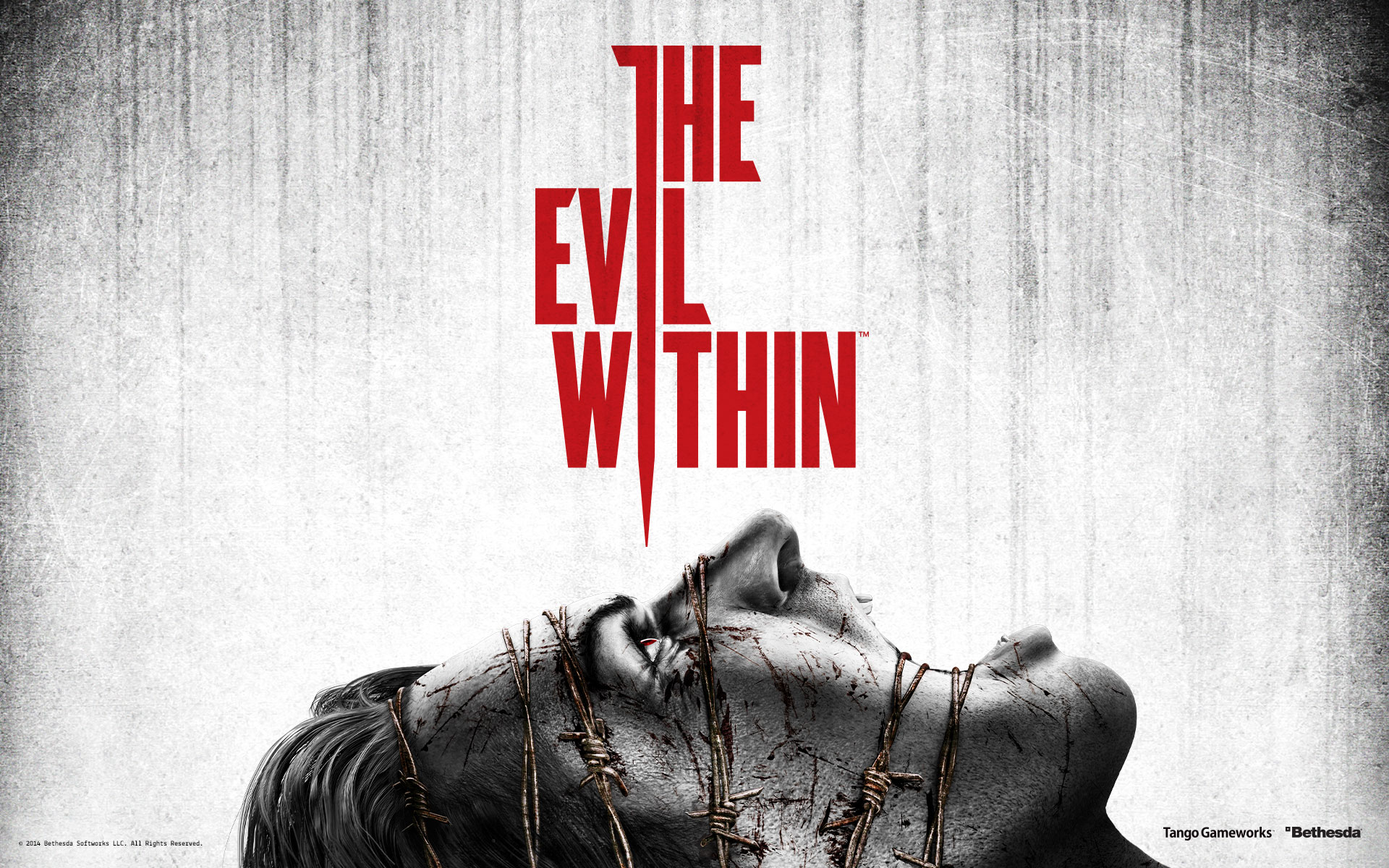
The Evil Within’s announcement was met with huge expectations for being an original horror title directed by Shinji Mikami, creator of Resident Evil, benchmark of modern horror videogames. Over the years he personally directed a few projects with very fluctuating results, but his leadership of the Resident Evil games was competent, and they only really squandered when he cut ties with the series after his involvement right after Resident Evil 4, which many regard as one of the best games of the last decade. No pressure in this new intellectual property then.
And I’ll just straight out say it. It’s a disappointment. It would be hard not to be one. But it’s not a normal disappointment. If it were I’d give it a passable review and say that people might enjoy it just for the effort. However, The Evil Within is, pardon me, utter piss. I realize negative reviews are very “in” nowadays and people do them just for the sake of it, but this one is sincere. I wouldn’t buy something on retail price crossing my fingers, HOPING, it would be such a mess. I spent cash on this shit. This money was invested. I wanted it to give some return in the form of entertainment. Which was wishful thinking, of course.
First of all let me talk about the technical issues. Full disclosure; I played the PC port; not a good option, apparently. To be honest I only had one issue with it, but I understand that “it is not a good port” because this piece of trivia was bombarded on me by my peers. So don’t buy the PC version, it’s bad (maybe until they release some patches). That being stated, we’re left with “the game”. The real horror.
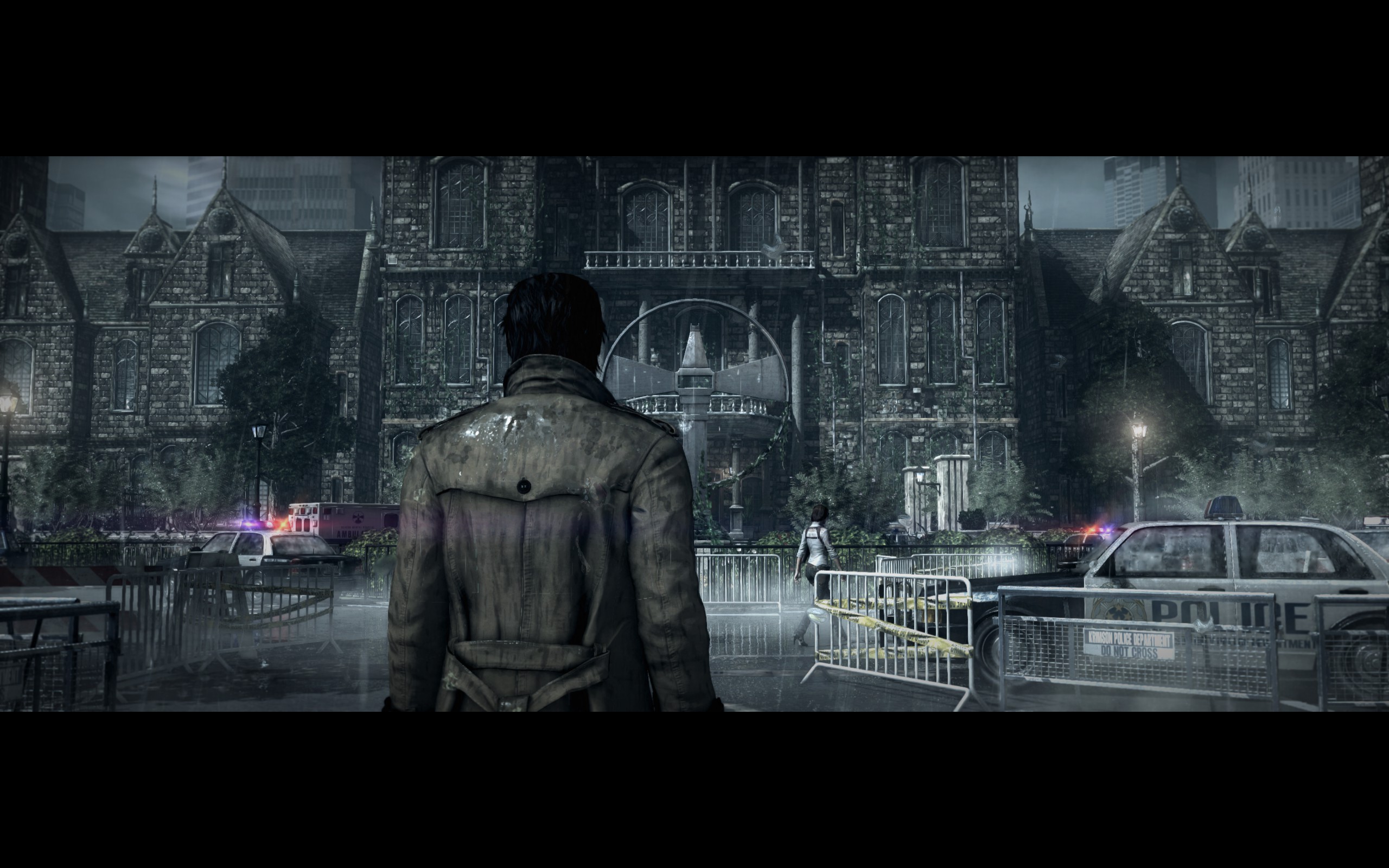
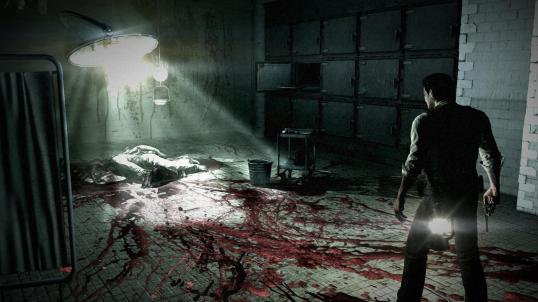
Probably under the pretense that this would make the game scarier, the development team decided that the camera just had to be forever stuck on letterbox view. This is not just pretentious, it is an OBSTACLE. It takes maybe a third of everything in your field of view. Your eyes are hindered by two monstrous gaps of black bars, top and bottom. And you need to actually look at stuff to be able to pick them, so you can only imagine how this is cumbersome on the playing experience (By items, I mean ammo, medicine, documents, same kind of thing that was in Resident Evil). Are you a fan of collecting stuff? A perfectionist maybe? You’ll either spend more time than you should inside one map to make sure you’ve gotten everything or you’ll forget that. Chances are you’ll miss items either way. This camera is out of this world. It is a monster incarnate full of spite toward you. Catching inbound enemies is an equally hard job, as the lack of proper vision of your immediate surroundings makes it hard to realize if you’re being chased, or to know exactly how many enemies are around you. This might lead to some unintentional scares if that fancies you, but fact of the matter is that it’s simply put, bad camera mechanics. And let’s not talk about the obtuse amount of film grain. That being said, this title is not entirely offensive on a visual scale. The art and graphics are quite nice, even if hamfisted on the gore. It’s just too bad it’s so hard to see it properly.
Actually, it seems to cover something closer to 45% of the screen
A document early on the playthrough makes a point of telling you that the protagonist, Sebastian Castellanos is one of the fastest ever policemen of Krimson City to rise to the rank of detective (I feel like the name of the city might have been suggested by me when I was 14 and thought I was really death metal) . You will quickly notice though that Detective Castellanos isn’t the physical marvel he is laid out to be. The act of sprinting in the beginning takes a full 3 seconds from top speed to complete exhaustion. At his best, Sebastian can run for ten seconds before needing to stop and breathe in the middle of a full herd of enemies (which he WILL do if you rely on sprinting too much). He’s not a very good shot either, even at ranges close to point blank he’ll miss often unless you upgrade his weapon. Walking is awkward, running away is awkward, shooting is awkward. Some of these can be improved by buying common sense into the game in the form upgrades for the character with green goop. Seriously, that’s their currency. I confess to maybe having missed something, but I don’t think that part was ever explained.
If you think objectively about it, Resident Evil was awkward. Even the fourth one. The controls were always strange at best. It comes to me that, while people were begging for a new, good Resident Evil, Mikami acknowledged their wants and needs. That’s what The Evil Within is. I mean, the zombies are there, the alien controls as well, and it’s ever so slightly scarier, which was another major complaint, since some viewed the Resident Evil series as having swayed from survival horror to mostly action with some horror elements. In this sense, people got just what they asked for: A survival horror made by Mikami that is very much like Resident Evil. However since Resident Evil 4, Mikami directed two titles, a four year gap between each of them (2006, 2010, and The Evil Within in this Gregorian year of 2014), and the other two were not even close to being horror games. So what we got is a newly released outdated survival horror with ten year old survival horror mechanics.
What happened!? I heard there was a good game in here!
The sad realization is that maybe Shinji Mikami isn’t a master of horror. The Evil Within isn’t very scary past the few initial chapters, where you’re completely powerless (and maybe this was this game’s real element, which in my opinion he failed to realize). Some of the more tense parts orchestrated by him come from trial and error, when some scripted event or other makes you face something new, something you’re totally willing to fight against. Then, upon closer inspection, you notice your head has just been pulverized by this new thing you perceive. So it occurs to you that you don’t fight this thing, you run from it. Of course, that’s after you died. Not very fair, honestly. The story is intriguing, but extends itself far too much. My interest was gradually lost on what could be a great mixture of body and psychological horror. It failed because while the art was on the right spot, the writing lost its way and somewhere it just became a zombie game. And I hoped it would pick up again. It never did.
It seems The Evil Within has few redeeming features and is somewhat obsolete in a very weird way. The space reserved for its image projection is malevolent. The gameplay is unimpressive and clumsy. It is artistically well intentioned, but ultimately poor. It does have, however, a very nice character in the form of an otherworldly and cryptic nurse that helps you through the story during dreamlike sequences. Her personality and oddities make her seem like a character from a Suda51 game, maybe something learned by Mikami in his time working with Suda on Shadows of the Damned. Man, now that’s a good title. Suda is really good, isn’t he?
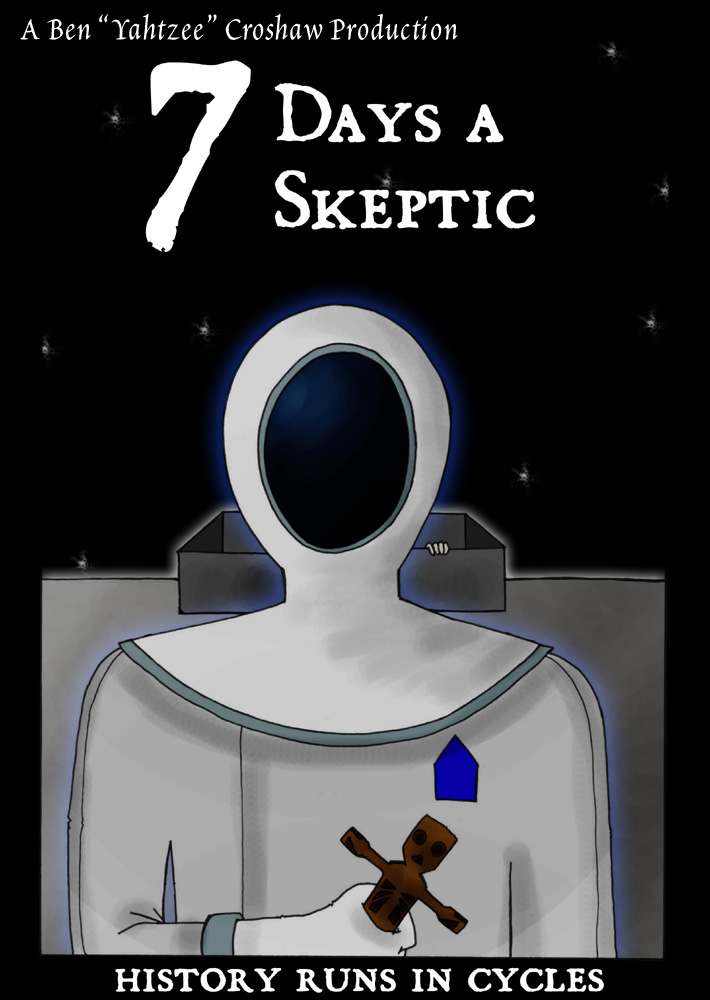
Following the success of 5 Days a Stranger, Yahtzee decided that, no! A one hit wonder just wouldn’t do! He had more horror tropes to nod to, more space to cover! And speaking of space that became the setting of the futuristic sequel 7 Days a Skeptic. Most flawed of the series from a narrative standpoint, it might be, however the most horrorific of them.
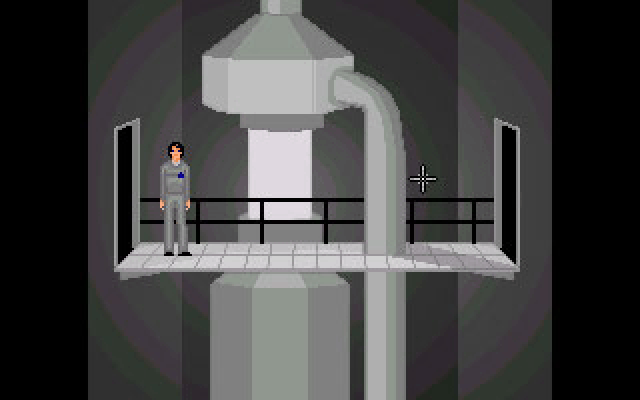
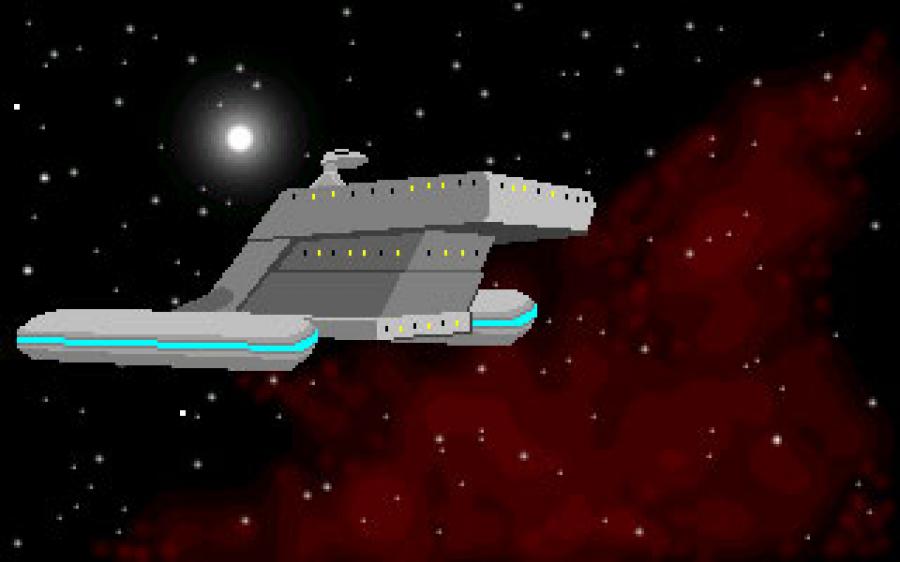
Skipping a few centuries right into the the year 2385, 7 Days (a game awfully ominous when referred to like this) is played through Jonathan Somerset, experienced psychiatrist of spaceship Mephistopheles. On exploration duty for the Earth Federation, the ship’s crew of Jonathan and five others find a sealed metal box adrift in space. Upon inspection, they find that it contains the remains of John DeFoe, character of some importance to the first game as players might recall. As the crew returns to their assigned duties, leaving the box unopened, Dr. Somerset realizes things start to grow veeeery eerieeee.
With a premise and aesthetical style reminiscent of sci-fi horror movies, particularly Alien, 7 Days is a nice shift while still retaining the characteristics that made its prequel scary. The isolation and inability to run away makes sense when away means out in the vacuum of outer space. Dream sequences still mix into reality, giving it an ethereal feel at times. And it further expands the tales of the series’ supernatural killer, giving him a more active role this time, which makes some parts really fucking scary.
It may sounds ridiculous and hamfisted at first to go from modern to futuristic in one game while still keeping the same themes, but it’s a title that does so unpretentiously. 7 Days a Skeptic is enjoyable and very very creepy and you should play it just for that. And if you don’t do it for the cold spike you feel while being chased by an insane murderer, play it for its sequels because, boy, it’s worth it. And I’ll get to that soon.
Some are not aware that Yahtzee Croshaw of The Escapist fame was somewhat famous as a developer before his venture into journalism. I myself am still a fan of his for his work making games instead of his deconstruction of them. And that’s mostly because of the Chzo Mythos Quadrilogy, a series that works as a homage to slasher horror films from the 70s and 80s, as well as an independent horror tale with firm Lovecraftian roots and damn good story.
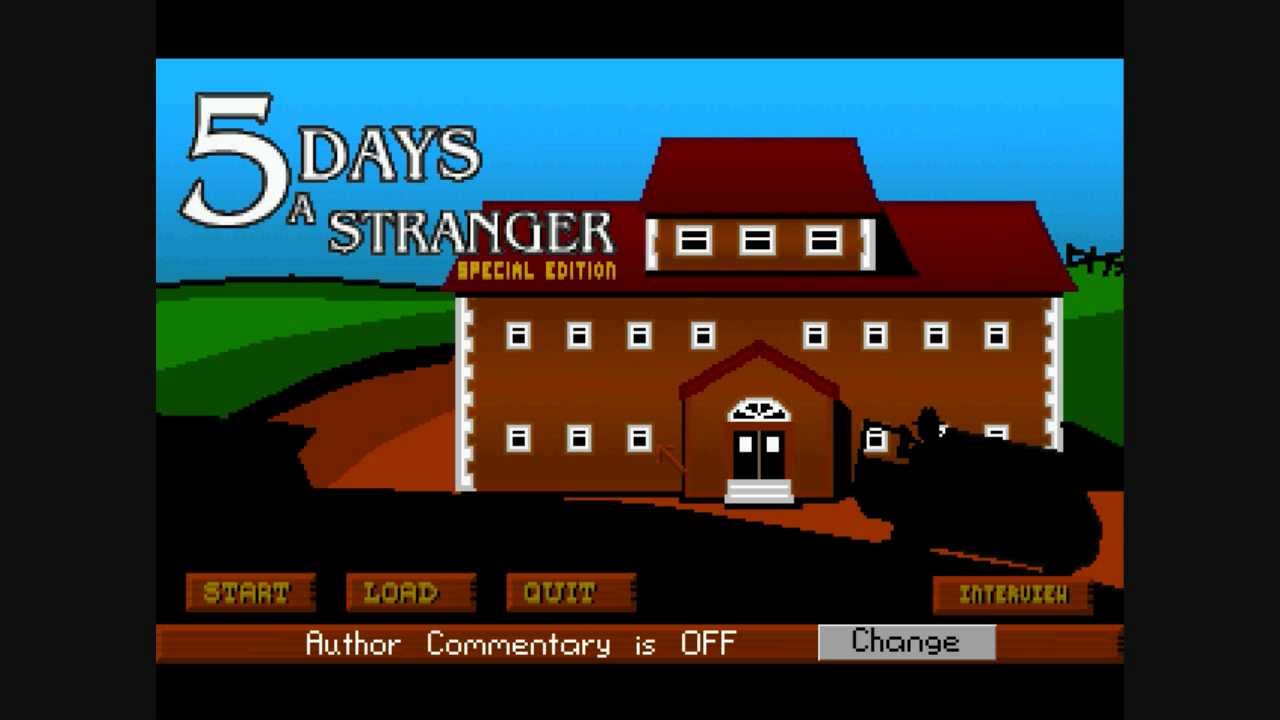
In the first game, the more famous 5 Days a Stranger, you control Trilby, legendary gentleman thief named after a hat. Breaking into a mansion on top of a hill, a fine place to rob as horror tales go, Trilby finds that the window he entered through is inexplicably sealed. It is un-unlockable. It has become unbreakable. It is now thoroughly impassable. Even worse, he finds nothing of value, aside from four other prisoners of a strange house, equally confused with the situation.
Needless to say, people start getting murdered, it becomes a great deal of stress to the survivors as the mystery begins. Who is killing these people? How is this house so hermetically sealed? And we know why Trilby is there, but what about the others? Dream sequences start muddling into reality in-between the twists and reveals in this murder house. What they discover is strange enough to last for three other games.
Made with AGS (Adventure Game Studio) in 2003, 5 Days a Stranger is a refreshing attempt of rescuing the genre, popularized by Sierra and LucasArts with titles such as Leisure Suit Larry and Monkey Island. It’s an excelent adventure game in its own right, being by the time of its release Yahtzee’s most competent game in terms of art, and from a game design standpoint, very well thought, aside from a few pixel hunt sequences which can annoy its player into resorting to a walkthrough, though that was long common in adventure games anyway. 5 Days a Stranger went on to win several awards as an indie adventure game. This, in 2003, was quite an achievement
Inspired by eerie hentai visual novel Nocturnal Illusion (very horrorific in its own right, pornography aside) and classic horror movies like Friday the 13th, 5 Days a Stranger is part of what ascended Yahtzee into internet fame. And besides all that, eleven years ago, it was evidence of how adventure games, which had fallen so high, could still thrive. An amateur game that served as an influence to many others adventure titles released in the last few years. Also, it’s free to play. A gem of the internet, indeed.
The Walking Dead by Telltale Games scarcely needs any introduction. Widely agreed to be one of the best games of 2012, its narrative dictated by your choices punched at the player’s gut with its strong emotional content in a subtle sidestory of atonement, fatherhood, and of course, survival, in the zombie universe of The Walking Dead.
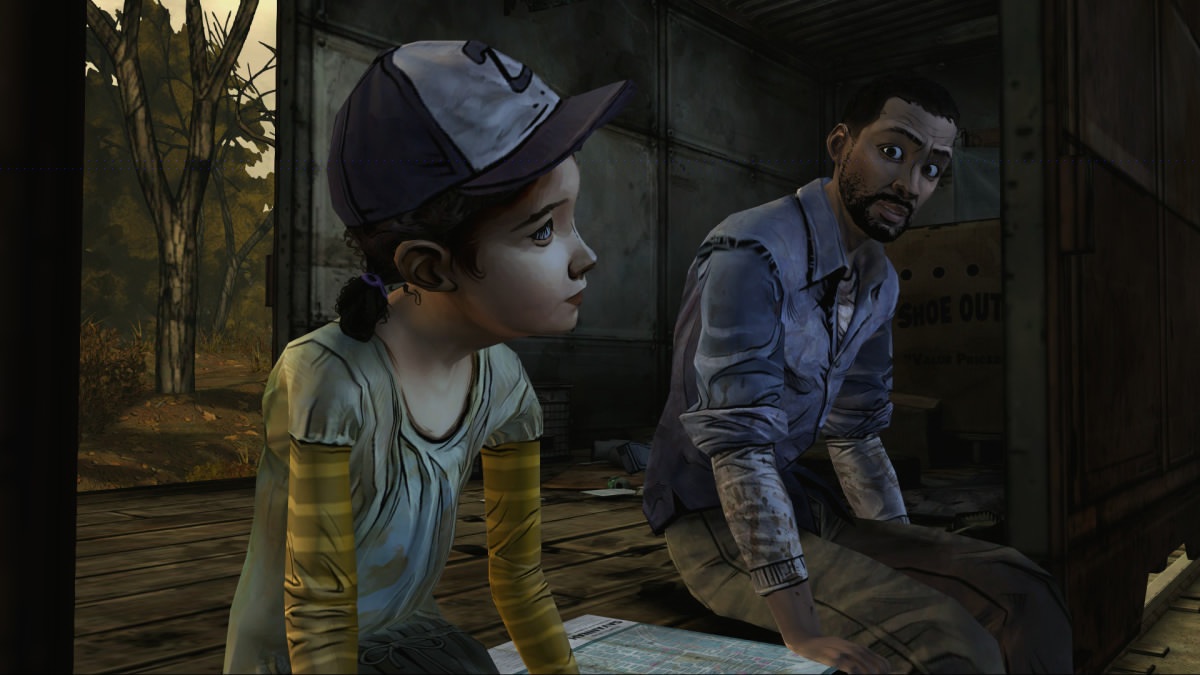
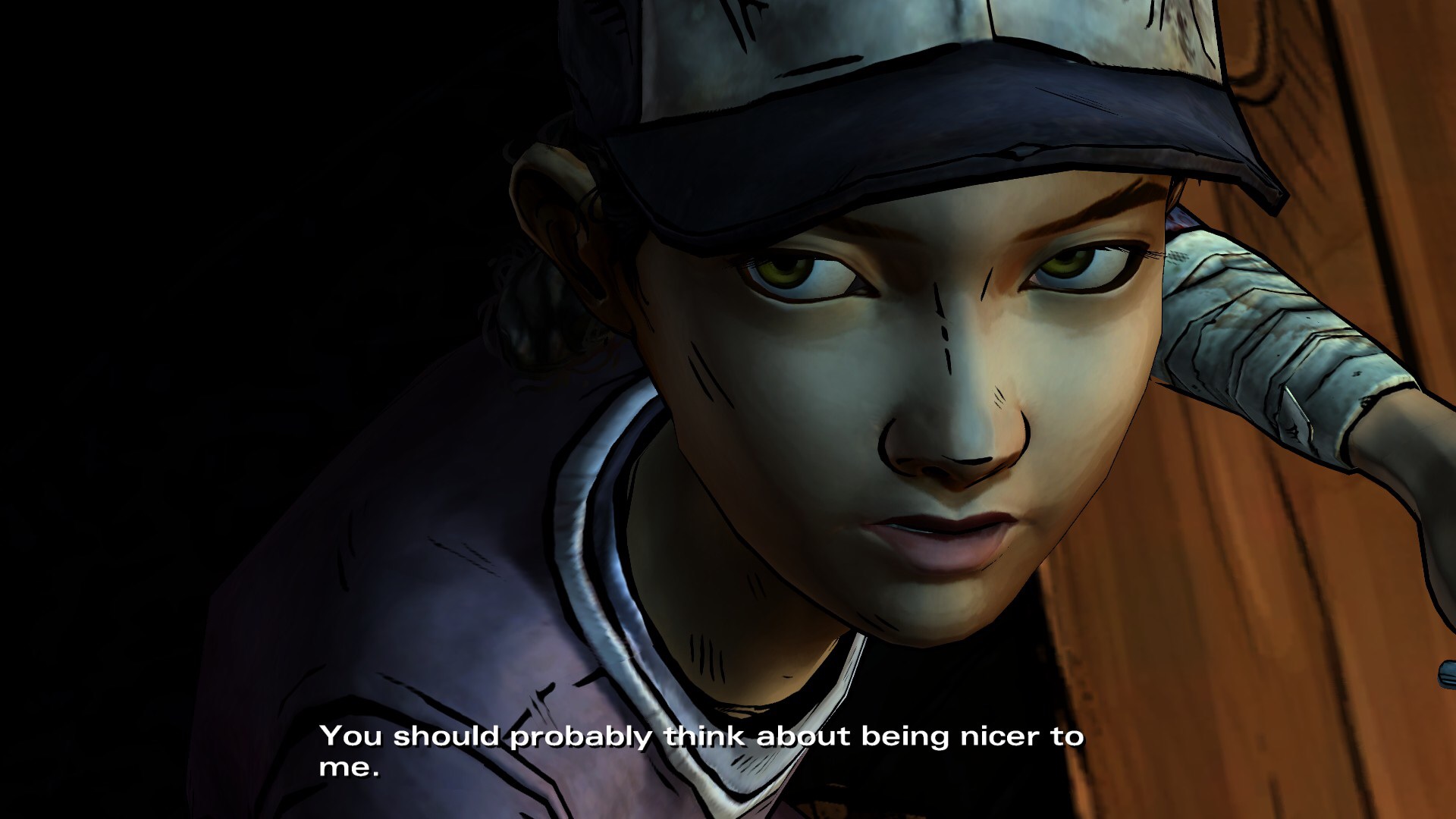
Clem does keep that hair short, whether you like it or not.
However, the gameplay and its difficult choices were an illusion. A magic trick. As long as you looked at the story you didn’t notice how much you didn’t make a dent at the course of the storytelling. Two playthroughs will prove that the story is almost exactly the same, even if you interpreted protagonist Lee Everett two polar opposite characters. Not that it mattered, since it was made to play once; to become emotionally involved and keep your little saved game until next time, for the next season, much like the TV Series.
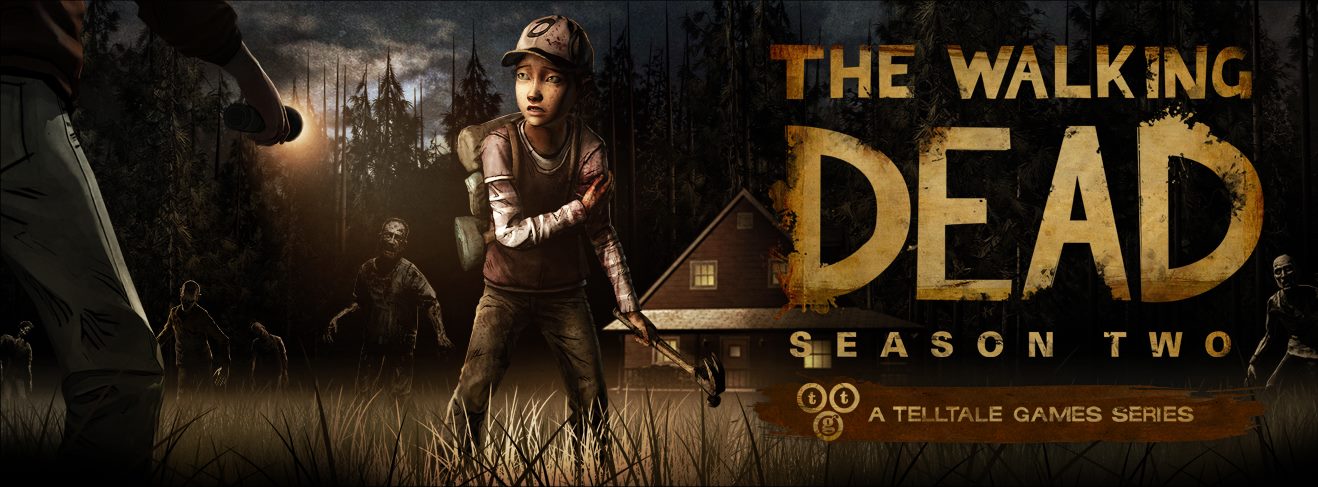
And so it came to pass that Season Two came out. Through the emotional roller coaster we go again, load your season one save for vaguely rewarding shoutouts to your playthrough of season one. This time the story is set two years after the its predecessor. You play as Clementine, Lee’s (now) eleven year old protegé. Having survived through the hell zombie apocalypses tend to dish out, young Clem is not the the little girl up in the treehouse anymore, having become sullen and untrusting, used to the bedouin life of scavenging and killing after society breaks.
The story does progress ostensibly slow at first. Episodes One and Two may appear as uninspired reflections of the original game and may be hard to tolerate for some, but it’s worth it. Seeing the full game, they are justified. The magic trick was being set up again, with more flair this time. As you start interpreting this little girl’s choices and behavior, you start to become emotionally involved again. Her persona becomes an extension of your own (Verily, in a way, you become an eleven-year old, which is super fucking weird). By episode three it’s all set, and you’re looking at the magic hand again, while the other supposedly weaves a defined scenario.
Reminder: Eleven years old.
This time is different though. If in the first game you (Lee) took the role of leadership, in Season Two, you (Clem) are the pivot character. People want to do what’s safer for the child, she is the motive of concern of every survivor group, and being forced to take sides ultimately creates different paths that don’t end the same way, in contrast to Season One. The multiple endings pay off. Enthralled by this story, you’re encouraged to follow through it as if you were a wildly different person, with feelings and thoughts. You feel the weight of being Clementine.
From the beggining of episode three to the end of five, the last one, Clem is swept in a crescendo of intrigue. The group is trying not to break and she is often encouraged to voice her opinions, except when she disagrees with someone, in which case it doesn’t matter because adults know better. But that may also mean that she’s agreeing with another person, and her opinion is defended as the most important because the weakest needs to feel safe. You can’t seem to fix this group, driving it further into discord in fact. You may take one side entirely or try to keep things nice and easy for everyone, and in the end you are responsible for Clem’s fate. For better or for worse. The subject “Clem” and the subject “you” are sort of interchangeable in this paragraph.
The new season is more emotionally complex and more morally ambiguous. Really, it’s about the evil that men do rather than zombies. Though not an entirely original concept, Season Two does create a very nice example of it. It’s difficult to say if it’s better or worse than the first one. It’s just different. However, it shows improvement in its immersion and narrative, and proves that Telltale is capable of carrying on the quality of their own version of The Walking Dead.
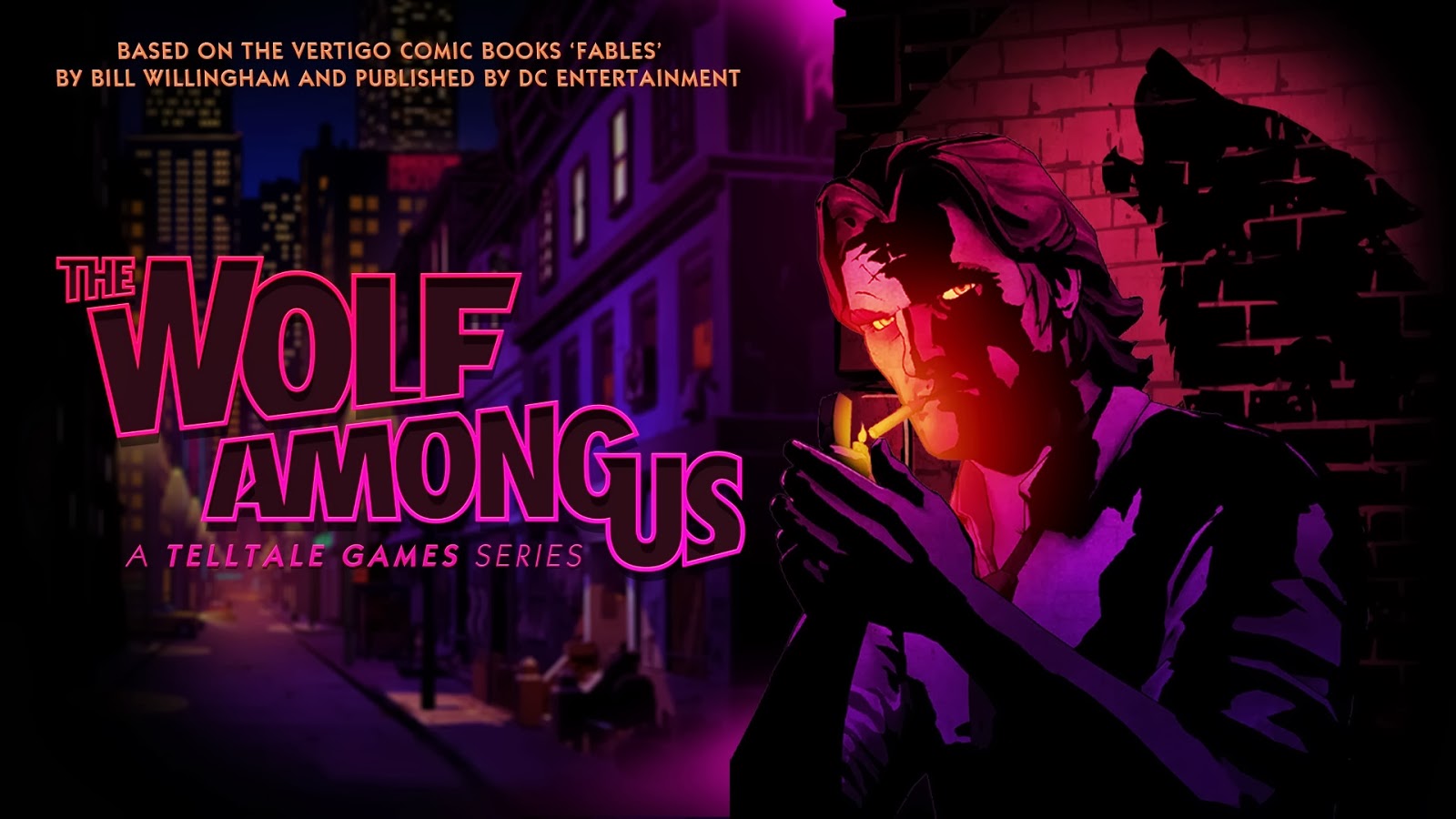
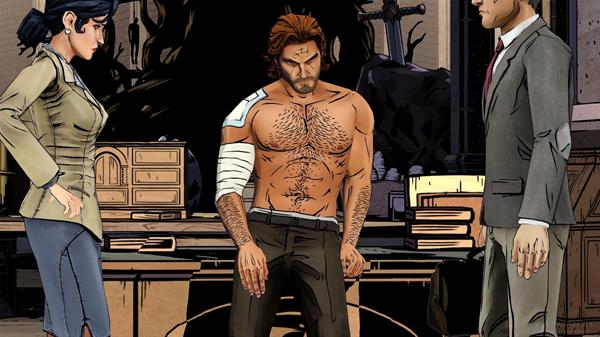
The Wolf Among Us was the first game released by Telltale after the extraordinary success of The Walking Dead. They had finally found their element, and decided (prudently) to stick with it. But how do you follow up a title based on a comic book series recognized by some as the best game of its year?
It’s simple. Make another title based on a comic.
Fables, the series Telltale’s following project was based upon, is about fairy tale characters we grew up reading about secretly living in our real world, in a real city, hiding their existence by creating their own society. None of that Once Upon A Time cutsey niceness. They are opressed and opressors, have severe flaws in their characters, vices and, in some cases, signs of antisocial personality disorder. That is to say, they’re often psychopaths.
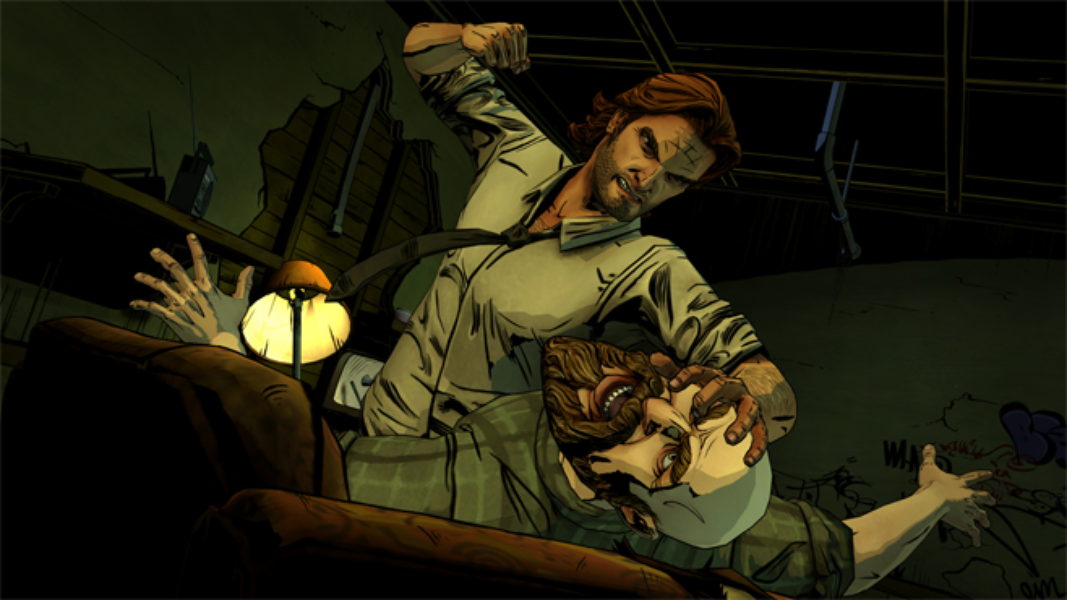
I’ll reconcile the shit out of you!
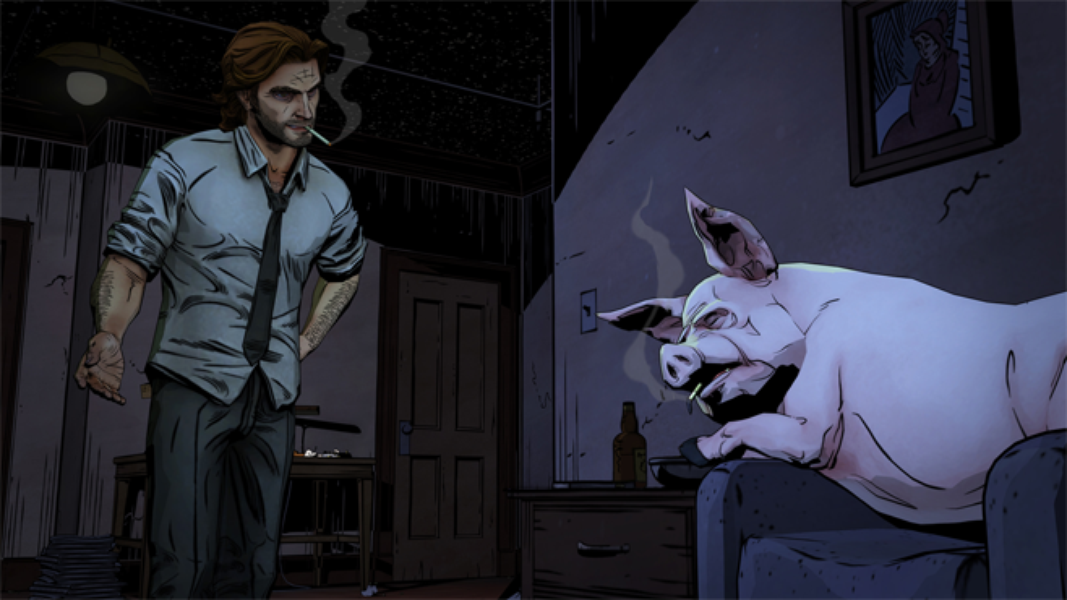
The game gives you control of Bigby Wolf, sheriff of the fables. As you might have guessed, previously known as the Big Bad Wolf of Little Red Riding Hood and Three Little Pigs fame. Reformed and willing to put his past behind him, Bigby tries to reconcile the poor and rebelious with the powerful and bureaucratic, in a very socially imbalanced society of mythical people.
Bigby is the most human of all characters, ironically. Given the task of upholding the law in this broken, small society where everyone knows everyone else, he lives a lonely life, being recognized and feared for doing his job, which frustrates him. His tendency to bend the rules makes the fables’ mayor office see him as a loose cannon. Bigby is a noir hero, chain smoking and full clad in trenchcoat. Bitter with having to raise his hand against unsatisfied citizens and with the impunity of guileful villains; forced against rebellion, but resentful towards the bureaucrats, he often passes his own kind of law. His humanity is revealed through conversations with the only people close to him. Colin, one of the three pigs he used to terrorize, and Snow White, secretary of the mayor office and object of his affections.
The amount of deviance from the path of justice in the game vary depending on your playing style. As you solve a series of murders during the span of the game, you decide how violent Bigby will be towards everyone, from the mostly innocent to the very guilty. However, this is not a story about choices like The Walking Dead, but about people leading double lifes. By taking fables, one of our most powerful cultural symbols of purity and innocence, and twisting and corrupting them, The Wolf Among Us is a modern and allegorical story with heavy noir influences, with fantasy and magic playing a part in the narrative.
It is not without flaws, however. It should be noted that, as the game needs a central story, the mystery of the series of murders obfuscate this amazing world, and one purely interested in the big picture; the unjust society of the fantastical, would be better served by reading the Fables comics. The Wolf Among Us has lots of ups far too early in the game and a few too many downs too late into it. It serves as a decent mystery thriller, and more importantly as an origin story for the comic book series, and it does have absolutely thrilling moments. However, it doesn’t bring much new to the table of longtime Fables fans other than focusing on one of the most interesting characters of its mythos.
As a standalone story, The Wolf Among Us has amazing action sequences and is a very exciting story up until the last quarter where it disappoints. As part of the Fables series, and possibly first chapter of others to come, it’s a perfect entry point and highly recommended. The complexity of its premise and excellence of some of its moments more than compensates for the lackluster closure of this first chapter. If that’s not enough to convince you, play it for Bigby Wolf, who might just be the coolest detective in videogame history.
Abbreviated boilerplate! Once again I return to this ongoing series, in which I attempt to play through every game in the Final Fantasy franchise that I can get my hands on, from FF1 through Lightning Returns, and a variety of the spinoffs and other titles not included in the ‘main series’. This list continues to undergo revision, and I seriously considered removing Final Fantasy 9 from it for personal reasons. In addition, no MMO titles will be played. Sorry, folks?
I think all of this is extremely important knowledge, and that the human race will be improved by my research. Let’s move on!
Version Played: Original PSX discs, played using a “slim” PS2 system
Final Fantasy IX is a game that for me, and mine, and my generation of gamers… feels more modern than it actually is. How many among us would be surprised to learn that Final Fantasy IX was released in November of 2000? We are approaching its 15th anniversary. It’s perhaps the newest of the old Final Fantasy games. Except, we don’t think of Final Fantasy VII as old, do we? It is, and we should. Some of us probably do. But that still seems odd to me. Truthfully, Final Fantasy XIII probably has more in common with VII than it does with I. Evolution is an ongoing process, and it’s one that ongoing fans have learned to accept.
But there’s a lot going on in Final Fantasy IX that would be both weirdly prescient and altogether ignorant of the future. It’s an interesting game in many ways.
The core conceit behind FFIX is that it’s a return to the “roots” of the Final Fantasy series. Superficially, there can be no argument about this at all. Final Fantasy IX brings back the saga of the four crystals that rule or shape the world (a premise which every game before Final Fantasy VI incorporates). It’s got airships, it’s got the ATB gauge, you buy and equip weapons and armor, and your abilities are gained as you level. After Final Fantasy V (with its variable Job System), and VI, VII, and VIII… which allowed total freedom of customization to the player given more or less application of effort… Final Fantasy IX has our characters locked into their classes, in a nod to Final Fantasy I and IV.
The designs of both the world elements and (particularly) the characters are also a deliberate reaction against VI, VII and (especially) VIII, which featured increasingly advanced technologies and settings that were undeniably darker than previous Final Fantasy realms. Final Fantasy IX’s – and this is important – surface tone is much goofier. The character designs reinforce that for the entire game. Of course, this game is actually full of some really messed up shit… way more than I remembered there being, in fact. Even in the darkest pits of this game’s soul though, the bobblehead characters work to lessen the impact. There’s nothing creepy about them, for the most part.
The unfortunate side-effect of your characters being “locked in” to their roles is that a certain party composition is virtually required to complete the game. With enough ability gimmickry, you might be able to pass the game’s challenges by overleveling significantly and abusing Auto-Potion, but in general, you will take one of the game’s White Mage characters, Eiko or Garnet. Neither provides any meaningful offense. Garnet has offensive Eidolons, but their MP cost remains prohibitive until perhaps the very end of the game, with a few notable exceptions. Physical fighters like Steiner, Zidane and Freya remain your bread and butter as always, though Black Mage Vivi can certainly contribute. Indeed, my own party for this entire playthrough consisted of Zidane, Garnet, Vivi, and Steiner.
The one nod to character customization available in this title are character “abilities” which are learned off of equipped weapons, armor and accessories. Calling this system “customization” is a bit of a stretch, as all unique character abilities are learned this way (i.e., Garnet’s weapons will teach her White Magic, which Zidane and others cannot learn), along with the same pool of generic abilities for each character. Some abilities are easier to come by than others on certain types of armor. For example, Zidane’s light armor and daggers have easy access to thief abilities, as well as physical combat abilities such as Bird Killer or Golemslayer. You have a limited number of points with which to “equip” learned abilities, and equipping the proper status resistances and combat proficiencies can mean the difference between victory and defeat in many of the game’s areas.
That’s about all there is too it, really.
I have trouble taking the main antagonist of this game seriously, and it turns some of the dramatic moments into silly ones for me. Aside from that, however, it would be difficult to earnestly argue that this game doesn’t live up to what the Final Fantasy brand represents. It’s even a little meatier than its predecessors in VII and VIII in terms of core story, taking a fair amount of time to work through. In addition, some of the battles in IX can be difficult unless you’ve substantially overleveled. Once you’ve identified the best abilities for each situation, you won’t have much of a problem, though this game’s final boss might be the most difficult one I’ve faced, other than the infamous Cloud of Darkness from FF3. As always, your own mileage may vary, but I have a hard time conceiving of ways to make a more infuriating storyline boss.
All of that goes triple for Final Fantasy IX’s superboss, the dreaded Ozma. Although there are many cheesy workarounds available to make him much easier to defeat, he will still feel completely impossible unless everything goes perfectly. I have defeated him, but elected not to do so during this playthrough. I did defeat the other optional boss, Hades, in Memoria, which gives access to the game’s most complete Synthesis Shop. Taking advantage of the items available there will make the game’s final challenges – and Ozma! – quite a bit easier to deal with, and Hades is nothing more than a fairly difficult boss.
On the whole, I found IX to be fairly uneven. Its plot is a bit on the ridiculous side, which I’ve come to realize is an appropriate thing to say about most of the Final Fantasy games. The only ones whose stories have stuck with me so far were IV, VI, and VII, and maybe a little bit of FFT. Will this improve? Hmmm! The gameplay is very straightforward, which is a mixed bag. Eventually you’ll reach a point where you’ll have your ‘strong’ party, and the occasional swap of abilities to protect against local status effects will be enough to find your way. Certainly, I did not find the system here to be nearly as engaging as the ones from VI, VII and VIII, but nor is it entirely without substance (such as in FF1). Still, probably the weakest system to be seen since FFIV’s similarly static model. When the game was fun and interesting, it was fun and interesting, but I did spend periods tiring of the random encounter rate, wishing the graphics were better, and hating the back of Zidane’s face with the scorching power of my brain. Him and his stupid tail.
But I knew going in that this one would be far from my favourite installment. I actually think I enjoyed it more this second, and probably final, time through. So there’s that.
One word of caution for anyone looking to play back through this title: I played on the physical PS2 plugged into my HDTV, and boy did this game look like shit. I highly recommend pretty much any solution but the one I chose. The text was mercifully still quite legible, and the cutscenes scaled nicely, but the in-game graphics… well. Let’s say that I was startled after having played through the nicely-upscaled Steam ports of VII and VIII, and the beautiful PSP version of FFT.
Oh, and join me next time when I discuss the jump to the Playstation 2 with Final Fantasy X!
This game’s soundtrack is far from one of my favourites. It took time just to pick two songs for this piece. Yikes.


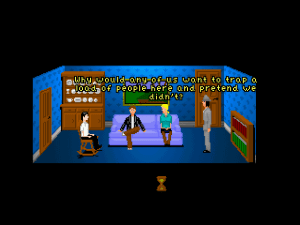 Made with AGS (Adventure Game Studio) in 2003, 5 Days a Stranger is a refreshing attempt of rescuing the genre, popularized by Sierra and LucasArts with titles such as Leisure Suit Larry and Monkey Island. It’s an excelent adventure game in its own right, being by the time of its release Yahtzee’s most competent game in terms of art, and from a game design standpoint, very well thought, aside from a few pixel hunt sequences which can annoy its player into resorting to a walkthrough, though that was long common in adventure games anyway. 5 Days a Stranger went on to win several awards as an indie adventure game. This, in 2003, was quite an achievement

 Through the Shattered Lens
