Review: Silent Night (dir. by John Woo)


“I can’t speak, but I’ll make them listen.” — Brian Godlock

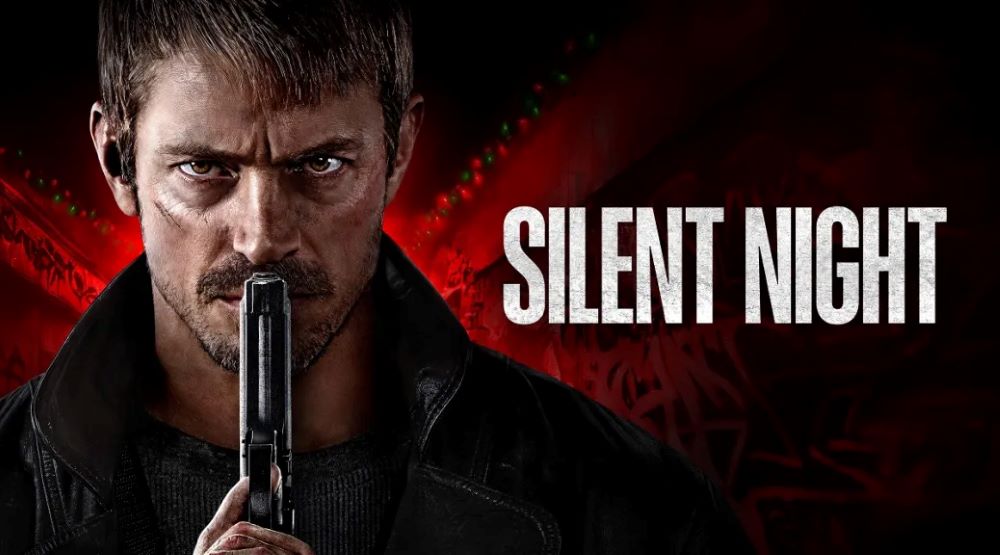
Silent Night (2023) finds John Woo making his first American action film in two decades, since the disappointing Paycheck in 2003. While it’s definitely a step up from that sci-fi thriller misfire, Silent Night still doesn’t quite reach the heights of Woo’s Hong Kong classics or even his best Western productions like Face/Off. This latest outing is a lean, mostly dialogue-free revenge thriller that has Woo’s fingerprints all over it—a mix of balletic violence and emotional anguish—but it also shows the limitations of trying to recapture that old Woo magic in a very different cinematic landscape.

The story is simple: Joel Kinnaman plays Brian Godlock, an electrician whose son is killed in a gang shootout on Christmas Eve, and he himself is shot in the throat, losing his voice. The film then follows Brian’s quiet but brutal quest for revenge a year later. The choice to tell this nearly wordless story is a bold gamble, and for much of the film, the absence of dialogue adds power to the emotions and the tension. Kinnaman’s physical performance carries most of the weight—his grief, anger, and determination are all conveyed through body language and expression. This is one of the biggest strengths of Silent Night: Woo’s ability to communicate story and feeling visually, which harkens back to the silent films of early cinema, blending with his signature poetic violence.

That said, the silence also highlights the script’s thinness. The supporting characters, including Brian’s wife (Catalina Sandino Moreno) and a sympathetic detective (Kid Cudi), feel underdeveloped, serving more as plot functions than full people. This narrow focus on Brian’s pain and revenge means the film sometimes feels emotionally shallow beyond the core trauma. Compared to Woo’s earlier work, where secondary characters and relationships added layers of complexity and intensity, Silent Night is more singular and direct, for better and worse.

When it comes to action, Woo shows he still has the chops. The gunfights and hand-to-hand scenes are meticulously choreographed, emphasizing realism with a solid dose of stylized flair. It’s a return to the grounded grit Woo displayed in some of his earlier Hong Kong films, leaving behind some of the higher-octane operatic excess of his best-known Hollywood hits. The violence feels impactful and earned, avoiding cheap spectacle for a more tactile, bone-crunching effect.

Still, Silent Night doesn’t quite have the scope and scale of Face/Off or The Killer. It lacks the grandeur and intricate storytelling that made those films iconic. Instead, it’s a tighter, moodier experience that prioritizes emotional atmosphere over plot complexity. This stripped-down approach is refreshing to a degree, but it can also become monotonous—especially since the lack of dialogue and limited character development demand more patience from the viewer.

Comparing it directly to PaycheckSilent Night is a clear improvement. Paycheck was widely regarded as a forgettable action film that failed to capitalize on Woo’s talents, stuck with a muddled sci-fi plot and lacking the emotional firepower Woo excels at. Silent Night ditches the high-concept sci-fi for a more grounded, personal revenge story, allowing Woo to bring more of his hallmarks to bear—the intense physical performances, a palpable sense of loss, and carefully crafted action sequences.

However, it’s important to temper enthusiasm with the fact that Silent Night is not a full return to Woo’s prime Hong Kong cinema or his best Hollywood days. It’s missing some of the poetry, charm, and iconic bravado of movies like Hard Boiled or Face/Off, where Woo’s characters felt larger than life and the action was operatic and unforgettable. Here, the film often feels restrained, even muted, perhaps reflecting a director adapting to new cinematic expectations but also struggling to fully bring himself back to the forefront in the American industry.

Silent Night is a worthwhile viewing for fans of John Woo and action cinema looking for something different—one part homage to classic revenge tales, one part experiment in silent storytelling. It’s emotionally raw, visually precise, and markedly better than Paycheck, but it also lacks the fire and inventiveness that made Woo a legend. It’s a step forward and a reminder that even the greatest filmmakers can evolve and sometimes falter. If Woo is finding his voice again, it’s decidedly quieter but still unmistakably his own.

Live Tweet Alert: Join #ScarySocial for The Stuff!


As some of our regular readers undoubtedly know, I am involved in a few weekly live tweets on twitter.  I host #FridayNightFlix every Friday, I co-host #ScarySocial on Saturday, and I am one of the five hosts of #MondayActionMovie!  Every week, we get together.  We watch a movie.  We tweet our way through it.

Tonight, at 9 pm et, Deanna Dawn will be hosting #ScarySocial!  The movie?  The Stuff!  

If you want to join us this Saturday, just hop onto twitter, start the movie at 9 pm et, and use the #ScarySocial hashtag!  It’s a friendly group and welcoming of newcomers so don’t be shy.

The film is available on Tubi!

Brad’s “late night” movie review: THE NAKED CAGE (1986), starring Shari Shattuck and Angel Tompkins!


It’s a hard knock life for Michelle (Shari Shattuck). One moment she’s a hardworking teller at the local bank who loves her horse, Misty. The next moment she’s sentenced to three years in the women’s penitentiary for a crime she didn’t commit. And life is damn tough in prison. There’s the prison warden Diane (Angel Tompkins) who, when she’s not participating in lesbian dalliances with inmates, is offering Michelle protection, but only if she agrees to act as a spy for her. When Michelle says no, Diane sets her up to be brutalized by the sadistic Rita (Christina Whitaker), the bitch who’s responsible for her being in the pen in the first place! Now having to dodge the threat of rape from prison guard Smiley (Nick Benedict), as well as the constant threat of shiv-induced death at the hands of Rita, it seems Michelle may have finally received a lifeline with the arrival of a new prison guard named Rhonda (Lucinda Crosby). Rhonda seems to show some extra interest and empathy in Michelle’s plight, and she just may be in a position to help her with the wrongful conviction. That is, if Michelle can survive one more night in THE NAKED CAGE!! 

Recently, I’ve been trying to watch movies I’ve never seen before that star actors or actresses who worked with Charles Bronson. Tonight, I decided to look for a film starring Angel Tompkins, a Facebook friend, who worked with Bronson in the 1986 cop film from Cannon Films called MURPHY’S LAW. In that film she plays Jack Murphy’s ill-fated ex-wife, where she gives an uninhibited and committed performance in what would have been a throwaway role for many actresses. Not Angel… she took the role very seriously and is actually quite memorable in her couple of scenes. Paul Talbot’s book BRONSON’S LOOSE AGAIN has a chapter on the film, and he was able to interview Tompkins who told of just how much effort went into to her preparation. I recommend the book to anyone interested in Bronson or those numerous actors and actresses who worked with him in the 70’s, 80’s, and 90’s. Filmed the same year as MURPHY’S LAW, I thought it might be fun to see how committed she is in the role of the corrupt warden in Cannon’s THE NAKED CAGE. 

I’ll admit that I am not an expert on the “women in prison” genre of film. I did go through my Pam Grier phase that started with movies like COFFY (1972) and FOXY BROWN (1974), but did extend as deep as the Jack Hill “women in cages” films THE BIG DOLL HOUSE (1971) and THE BIG BIRD CAGE (1972). But those movies had Pam Grier in the cast which provided a couple of ample reasons for me to watch. THE NAKED CAGE does have some interesting things going for it. Like most of Charles Bronson’s 1980’s output, the movie was produced by Cannon Films, the international symbol of quality moviemaking from the 1980’s. And then there’s Angel Tompkins herself. She’s quite the sexy lady, having appeared in films like PRIME CUT (1972) and THE TEACHER (1974). Cannon Films and Angel Tompkins drew me in, but what about the film itself? Is it worth a watch? 

I’ll go ahead and say that for me, THE NAKED CAGE was worth the watch. This kind of movie only works for me if I like the cast. Shari Shattuck is appealing in the lead role of Michelle, a good woman, who’s wrongly convicted, but who soon finds levels of toughness she never knew she had in order to survive. I remember Shattuck starring in films like POINT OF SEDUCTION: BODY CHEMISTRY 3 (1994) with Andrew Stevens. My wife and I also watched the entire DALLAS TV series a few years ago where Shari had an extended role in season 13. She starts out here as a sweet and innocent lady, and by the end she’s wielding guns and knives like a lifelong delinquent, and I liked it! Angel Tompkins does not disappoint as the corrupt warden who seduces the inmates in order to meet her own sexual needs, as well as manipulating them into playing her larger games of control over the rest of the prison. Overall, she plays the role pretty straight, but is once again quite uninhibited when it comes to the more mature content. To me though, the most enjoyable performance comes from Christina Whitaker as the psychotic Rita. Not content with just ruining Michelle’s life, she’s determined to murder her behind the prison walls as well. From the beginning of the film where the fugitive Rita had Michelle’s estranged husband snorting cocaine off her boobs, all the way to the final frames, Whitaker chews every piece of scenery that comes into view. She’s the character I’ll remember whenever I think of THE NAKED CAGE. 

There are some things I didn’t like very much about the film. Prison guard Smiley’s sadistic rapist isn’t fun at all to watch, but his character’s fate is well deserved and somewhat satisfying when it finally occurs. Also, I didn’t care for the manipulation of the character of the drug addict Amy, played by Stacey Shaffer. She had worked very hard to beat her addiction, and in a world where many of us know people who have been lost to addiction, it’s not easy to watch her tragic fall. 

Overall, if you enjoy “women in prison” films, I think you’ll probably like this one. It’s certainly not perfect, but being a fan of Cannon Films and Angel Tompkins, I thought it was an enjoyable way to spend a Friday night while I was waiting for my wife to get home from work! 

Review: Kraven the Hunter (dir. by J. C. Chandor)


Kraven is Sony’s latest attempt to mine its Spider-Man-adjacent characters for cinematic gold, this time taking a stab at Sergei Kravinoff, better known as Kraven the Hunter. Even if you’re going in with rock-bottom expectations set by Morbius or the patchy Venom films, you might find yourself torn between mild intrigue and full-on indifference. The movie doesn’t bomb, but it certainly doesn’t soar either—it lands squarely in the “it’s fine, I guess” territory, buoyed by a handful of positive elements but weighed down by a laundry list of issues.

The film tries to position itself as a darker, grittier entry in Sony’s Spider-Man Universe but ultimately falls flat in several key areas. The movie follows Sergei Kravinoff (Aaron Taylor-Johnson), a man battling his toxic past and violent instincts, trying to define himself apart from his ruthless father, Nikolai (Russell Crowe). While Taylor-Johnson puts in a committed, physical performance and the action sequences deliver some visceral excitement—with brutal fight scenes and a snowy prison breakout standing out—the film struggles to transcend its predictable, shallow narrative.

One of the strongest aspects of Kraven is its commitment to visceral, intense action. The movie doesn’t shy away from bloody, fierce fights, embracing Kraven’s nature as a hunter rather than a hero. Physicality is a highlight here with Taylor-Johnson convincingly portraying the character’s power and agility. Some of the choreography—such as a snow-covered prison escape and a jungle chase—inject adrenaline into the movie, complemented by Russell Crowe’s imposing presence as the domineering father. Ariana DeBose’s Calypso and Alessandro Nivola’s Rhino provide interesting, if underdeveloped, counterparts that add flavor to the otherwise monochrome supporting cast.

However, the film is weighed down by a paint-by-numbers storyline that treads the well-worn path of antihero origin stories without adding fresh insight or emotional texture. The plot feels cliched and forgettable, with many moments so awkward and stilted that the dialogue and narrative flow could easily be accused of being AI-generated—and that accusation wouldn’t be out of place. This mechanical, artificial quality in the script creates a disconnect that makes characters seem like hollow archetypes rather than fully realized people. It’s as if the story was stitched together by a formula rather than human creativity, robbing the film of natural humor, depth, or emotional impact.

The biggest glaring example of this artificiality comes in the odd use of CGI for some of the characters’ facial movements. In particular, a scene with DeBose’s Calypso involved digital manipulation of her mouth and eyes to sync dialogue after filming, creating an uncanny, often distracting effect. This technique, reminiscent of the awkward, jarring movement of digitally animated mouths on still images, recalls the uncomfortable “Annoying Orange” vibe and highlights a troubling overreliance on technology rather than retakes or better production planning. It is a standout low point that further reinforces the impression of a rushed or overly engineered project.

The emotional core of Kraven revolves around the toxic father-son dynamic, which Crowe and Taylor-Johnson approach with convincing intensity, though the writing undermines their efforts with repetitive, obvious lines. The other characters, including Calypso, Rhino, and the Foreigner, suffer from limited screen time and one-dimensional arcs, often serving only to advance the plot mechanically rather than enrich the story. The film’s isolation from the broader Spider-Man universe also makes the stakes feel lower, leaving Kraven’s violent vendetta somewhat directionless and detached from broader consequences.

Visually, the film is inconsistent. While it nails gritty, physical action sequences, the CGI and digital alterations break immersion. The attempt at a darker, more grounded tone battles against these technical missteps and a narrative stuck in early-2000s superhero tropes.

Kraven offers some genuinely brutal action and committed performances but is hamstrung by a formulaic, AI-esque script and distracting technical glitches like the digital mouth-sync. It feels like a film caught between creative ambition and lazy execution, where flashes of potential are overwhelmed by awkward dialogue and uninspired plotting. For fans craving raw action or eager to see a Spider-Man villain on screen, it may be a mildly watchable diversion; for anyone seeking a fully fleshed-out, emotionally engaging story, Kraven is likely to disappoint.

Live Tweet Alert: Join #FridayNightFlix for Monty Python and the Holy Grail!


As some of our regular readers undoubtedly know, I am involved in a few weekly watch parties.  On Twitter, I host #FridayNightFlix every Friday and I co-host #ScarySocial on Saturday.  On Mastodon, I am one of the five hosts of #MondayActionMovie!  Every week, we get together.  We watch a movie.  We tweet our way through it.

Tonight, at 10 pm et, I will be hosting #FridayNightFlix and celebrating the event’s 5th birthday with an encore presentation!  The movie?  Monty Python and the Holy Grail!

If you want to join us this Friday, just hop onto twitter, find Legend on Prime, start the movie at 10 pm et, and use the #FridayNightFlix hashtag!  I’ll be there happily tweeting.  It’s a friendly group and welcoming of newcomers so don’t be shy.

See you there!

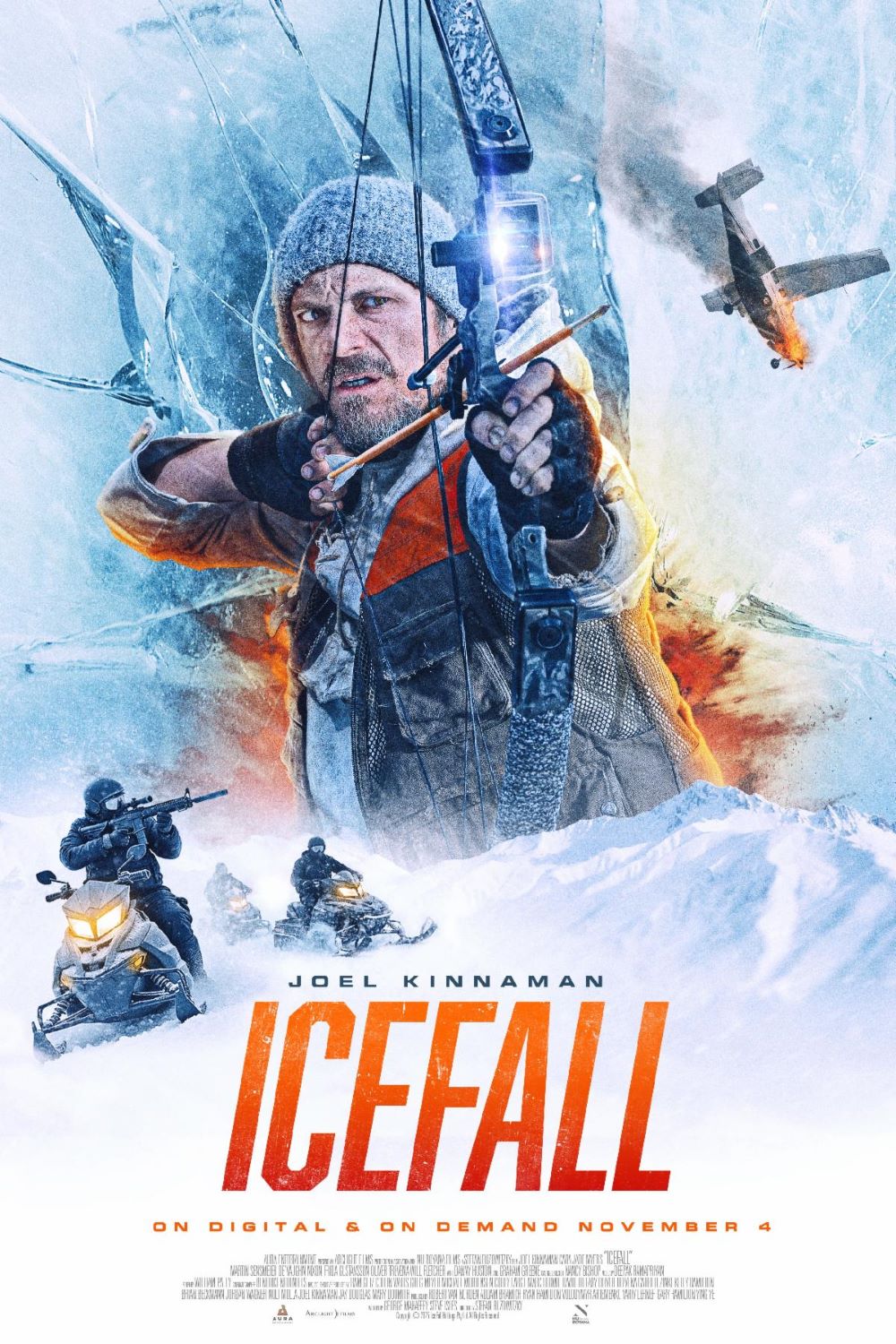
Review: Icefall (dir. by Stefan Ruzowitsky)


“You don’t find redemption in warmth. You fight for it in the cold.” — Ani

Icefall (2025) is a survival thriller set deep in a frozen wilderness where Ani, a determined Indigenous game warden, and Harlan, a grizzled poacher, find themselves forced together to evade criminals hunting down a crashed plane’s cash stash. Their uneasy alliance forms the heart of the movie, supported by the biting cold, shifting ice, and relentless danger that keeps the tension alive throughout.

The film benefits significantly from its leads’ performances, especially Joel Kinnaman’s portrayal of Harlan. Kinnaman has become something of a seasoned veteran in this kind of gritty thriller and action role, having built a career playing characters who balance toughness with a hint of vulnerability. His familiarity with this genre brings a dependable authenticity to Harlan, who feels weathered but not worn out, someone who understands survival instinctively. Alongside Cara Jade Myers’ portrayal of Ani, their on-screen chemistry roots the film in more than just action beats, making their relationship genuinely engaging amid the harsh landscape.

Speaking of the environment, Icefall uses its setting as more than just a backdrop. The fragile ice and near-empty wilderness create natural obstacles that heighten the sense of peril, reinforcing the story’s theme that nature itself is an adversary. The melting ice becomes a constant threat, lending the narrative a slow-burning pressure that’s as effective as any chase or gunfight. This atmospheric tension is one area where the film really earns its keep, immersing viewers in the dangerous beauty of its frozen world.

However, Icefall stumbles when it comes to story originality and pacing. The film’s premise feels familiar—dangling on the edge of a formula that fans might recognize as similar to the 1993 Sylvester Stallone thriller Cliffhanger. While Cliffhanger had that film’s villain as a magnetic and complex antagonist, Icefall misses that mark. Its criminals lack charisma and depth, removing a vital layer of excitement and tension from the story. Without a compelling foil for Harlan and Ani, many confrontations fall flat, and the thriller’s pulse falters.

The plot is further weakened by a somewhat cluttered narrative, introducing a secret government biohazard subplot that feels shoehorned in and detracts from the simpler core survival story. Characters occasionally make choices that seem more dictated by the demands of the script rather than believable motivations. These factors lead to inconsistent pacing, which can frustrate viewers looking for a tight, focused thriller.

Visually, the film offers moments of stark beauty but is uneven technically. Some sequences perfectly capture the isolating chill and danger of the icy wild, while others suffer from abrupt editing and less convincing digital embellishments that distract from the intended immersion. The cinematography shifts between grand vistas and awkward close-ups, occasionally disrupting the flow of tension.

Characterization is uneven as well. Ani shines intermittently but sometimes veers into typical thriller protagonist territory, exhibiting moments of indecision or cliché. Kinnaman’s Harlan remains the more grounded and believable figure, benefiting from his extensive experience playing similar roles. Meanwhile, the villains fail to rise above stereotype, lacking the nuance or menace that could have made the story pulse with higher stakes.

Still, when the film settles into the rhythm of survival—the crunch of snow underfoot, the slow erosion of trust, the ever-present threat of dissolving ice—Icefall delivers a tense, atmospheric experience. It’s not a revelatory thriller, but it does offer enough grit and moodiness for a single viewing, especially for fans of cold-climate survival dramas.

Icefall is a mixed bag: it has strong performances, especially from Joel Kinnaman, who clearly knows the ropes of this genre and plays an experienced, weathered survivor with ease. The film’s use of environment is a big plus, giving it an edge that many thrillers lack. Yet it suffers from an unoriginal plot that recalls better films like Cliffhanger but without their charismatic antagonists, plus narrative distractions and technical inconsistencies. It’s an okay watch for those in the mood for a frosty thriller with solid leads but never quite rises to leave a lasting impression.

The “This Week in Charles Bronson Podcast” talks THE MECHANIC (1972)!


I don’t know how many of you enjoy listening to podcasts, but I joined a Facebook group back in 2021 focused on the actor Charles Bronson. The group is called the “This Week in Charles Bronson: Podcast.” We focus on Bronson, but the page is really just a springboard for all kinds of pop culture discussions. Well, one of the things we do is periodically produce podcasts focused on Bronson’s movies, the actors who are in them, the directors, the stunt people… you name it, we discuss it. I’ve been lucky enough to meet actors and actresses who’ve worked with Bronson, authors who write about Bronson, and most importantly, people just like me all over the world who love Charles Bronson. It’s been such a fun experience in my life.

Today, I’m sharing just a snippet from one of our podcasts where we discuss the excellent opening sequence of Bronson’s 1972 action classic, THE MECHANIC! If you like what you hear, listen to the full episode and our back catalogue of episodes on YouTube, Spotify, Apple Podcasts, etc. Heck, we’d love you to join our Facebook page and get involved. That’s all I did! Before you know it, you could be part of the show! Enjoy my friends!

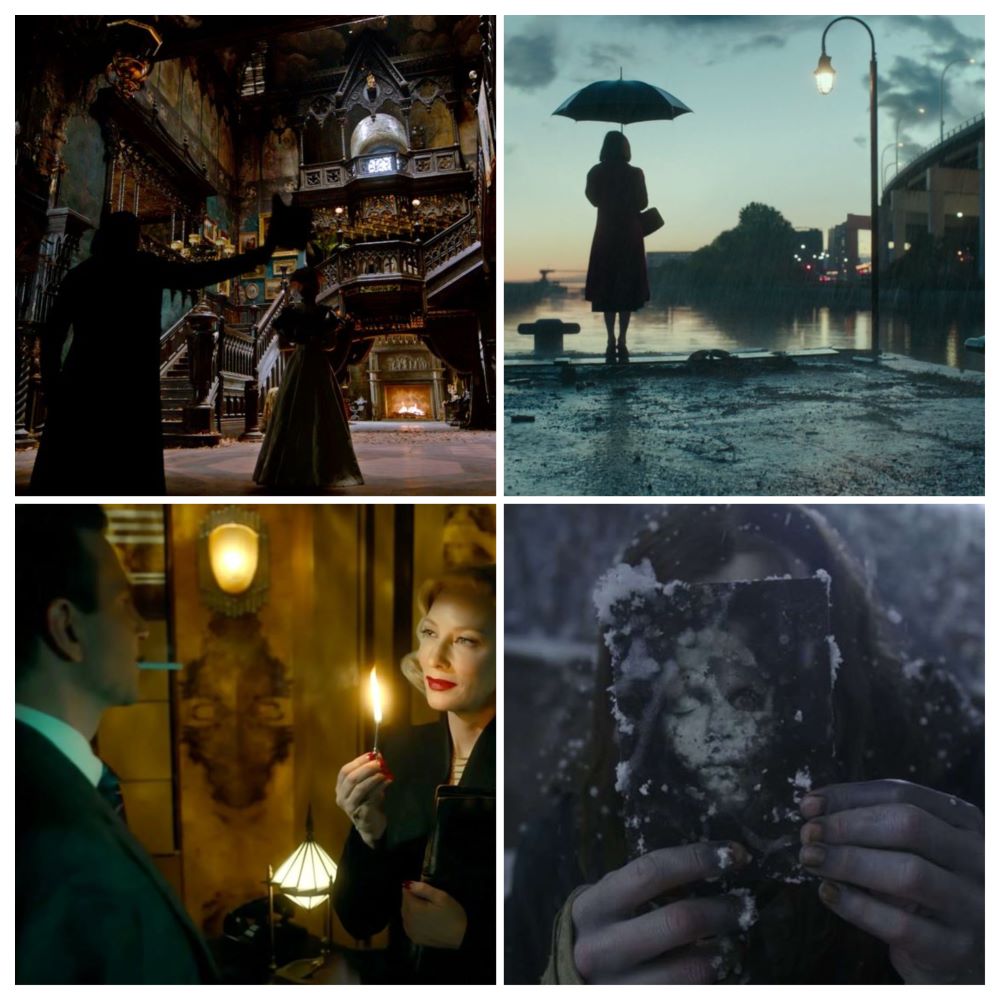
4 Shots From 4 Films: Guillermo Del Toro Edition


4 Shots From 4 Films is just what it says it is, 4 shots from 4 of our favorite films. As opposed to the reviews and recaps that we usually post, 4 Shots From 4 Films is all about letting the visuals do the talking.

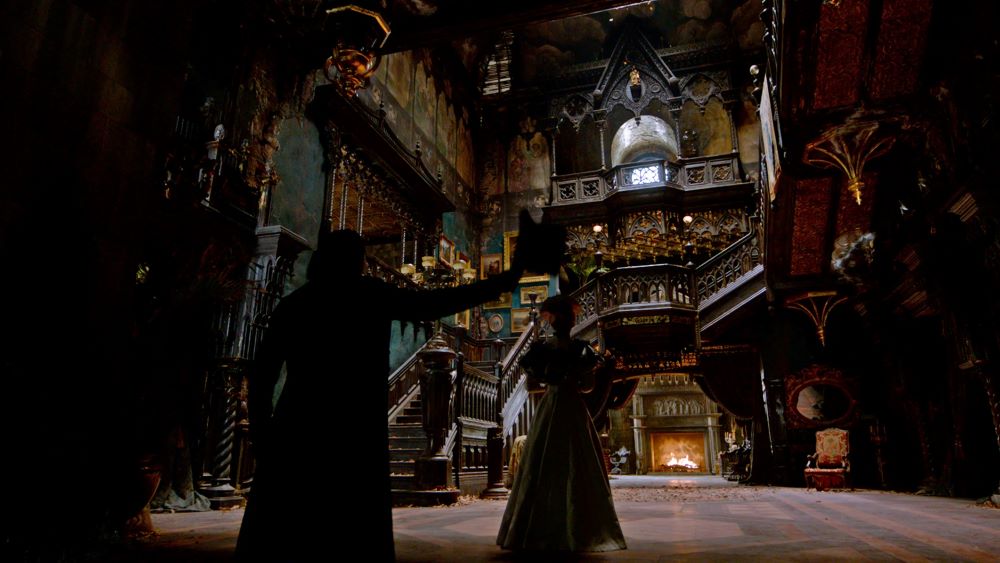
Crimson Peak (2015, dir. by Guillermo Del Toro, DP: Dan Laustsen)
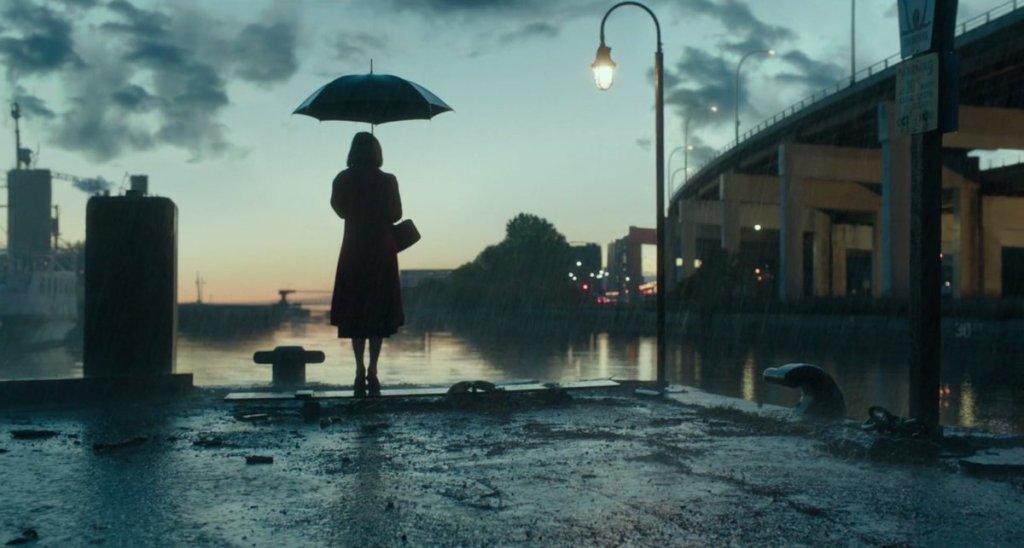
The Shape of Water (2017, dir. by Guillermo Del Toro, DP: Dan Laustsen)
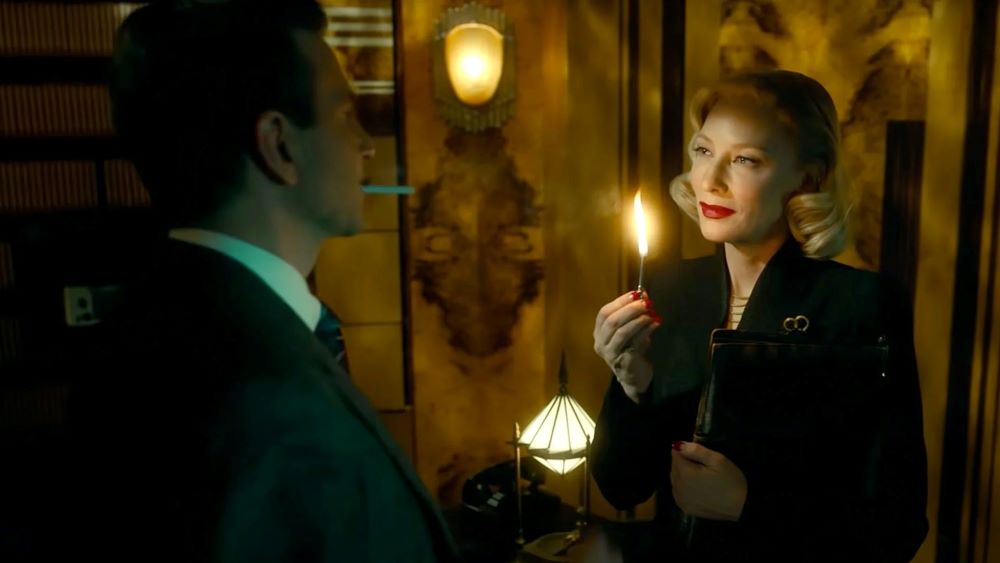
Nightmare Alley (2021, dir. by Guillermo Del Toro, DP: Dan Laustsen)
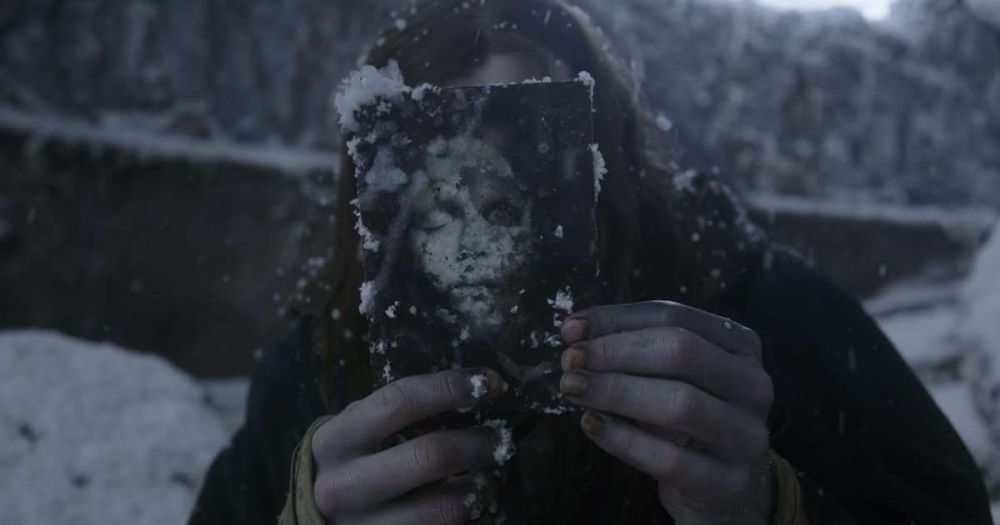
Frankenstein (2025, dir. by Guillermo Del Toro, DP: Dan Laustsen)

The Hong Kong Film Corner – What are in those DUMPLINGS (2004)?


DUMPLINGS (2004) centers on Mrs. Li (Miriam Yeung), a former actress now in her forties, who’s struggling with getting older and no longer being attractive to her husband, Mr. Li (Tony Leung Ka-Fai). It seems he’s more interested in his beautiful young masseuse than he is in her, which leads Mrs. Li to seek out Aunt Mei (Bai Ling), an ex-gynecologist from mainland China who has a reputation in the underground for her expensive “miracle” dumplings that promise a fountain of youth. Initially appalled by Aunt Mei’s not-so-secret ingredients, once she starts looking better, Mrs. Li begins to not only accept the recipe, but she also starts to relish it. Soon she’s making passionate love to her husband and finding herself the envy of her friends again. But what is that fishy smell and why is she so itchy all of a sudden? And does it even matter if she feels young and beautiful again?!! Expanded into a feature length movie from a segment of the 2004 anthology film, THREE…EXTREMES (2004), DUMPLINGS ponders just how far we’re willing to go to defy the aging process. 

I recently reviewed the category III Hong Kong film THE UNTOLD STORY, one of the most graphically violent films I could possibly imagine. Today, I’m discussing the category III film DUMPLINGS. While receiving the same rating, these movies couldn’t be more different. While THE UNTOLD STORY presents murderous violence in horrific detail, DUMPLINGS makes us imagine what it’s like to be so vain that unspeakable and immoral acts against others are meaningless as long as we feel good about the way we look. Even though the film gives away the “secret” of the dumplings somewhere in the first twenty minutes, I’m not going to give it away here. Just know that it’s repulsive, and the gleeful manner with which Aunt Mei goes about her work is every bit as sick to me as serial killer Wong in THE UNTOLD STORY. At the end of the day, each of us must ask what we’re willing to do to feel good about ourselves. In DUMPLINGS, it appears that the characters will do anything it takes! 

This is the first time I’ve ever watched a film directed by Fruit Chan, whose MADE IN HONG KONG (1997) swept all the major Hong Kong Film awards a number of years before this film came out. Blending culinary horror with human self-obsession, his DUMPLINGS is a patient film, willing to let his gruesome story seep into our bones without relying on a lot of graphic shock value. Chan doesn’t flinch from showing the extreme subject matter a number of times, but he still crafts an almost elegant film that deals with real world human emotions, albeit extremely selfish and morally bankrupt ones. He also gets really strong performances from the cast. Bai Ling’s casually demented and sexualized turn as the eternally young Aunt Mei is the showpiece of the film, with her cleavage practically in a supporting role all to themselves. Her performance was strong enough to earn her the Hong Kong Film Award for Best Supporting Actress for this movie. Miriam Yeung, who was best known at the time for her fluffy romantic comedies like LOVE UNDERCOVER (2002) and THREE OF A KIND (2004), is solid as the lady whose desire for beautiful, tight skin allows her to willingly abandon basic human dignity, transforming into a remorseless monster just below the surface of that skin. And finally, Tony Leung Ka-Fai, as the philandering husband who thinks with his male anatomy more than he does with his heart, is suitably effective in the way he makes us wish Mrs. Li would have just accepted the aging process and left his sorry ass from the very beginning. 

Overall, DUMPLINGS is a slow burn that will reward patient and attentive viewers with a tale of madness that touches on real world petty concerns while using extremely sick and twisted subject matter. As viewers, our discomfort with both that subject matter and the unchecked evolution of the characters seem to almost be the point. I don’t know how much you’ll truly enjoy the film, but I can’t imagine it not provoking a reaction.

Review: Glass Onion: A Knives Out Mystery (dir. by Rian Johnson)


“Everyone loves a puzzle until it’s time to solve it.” — Benoit Blanc

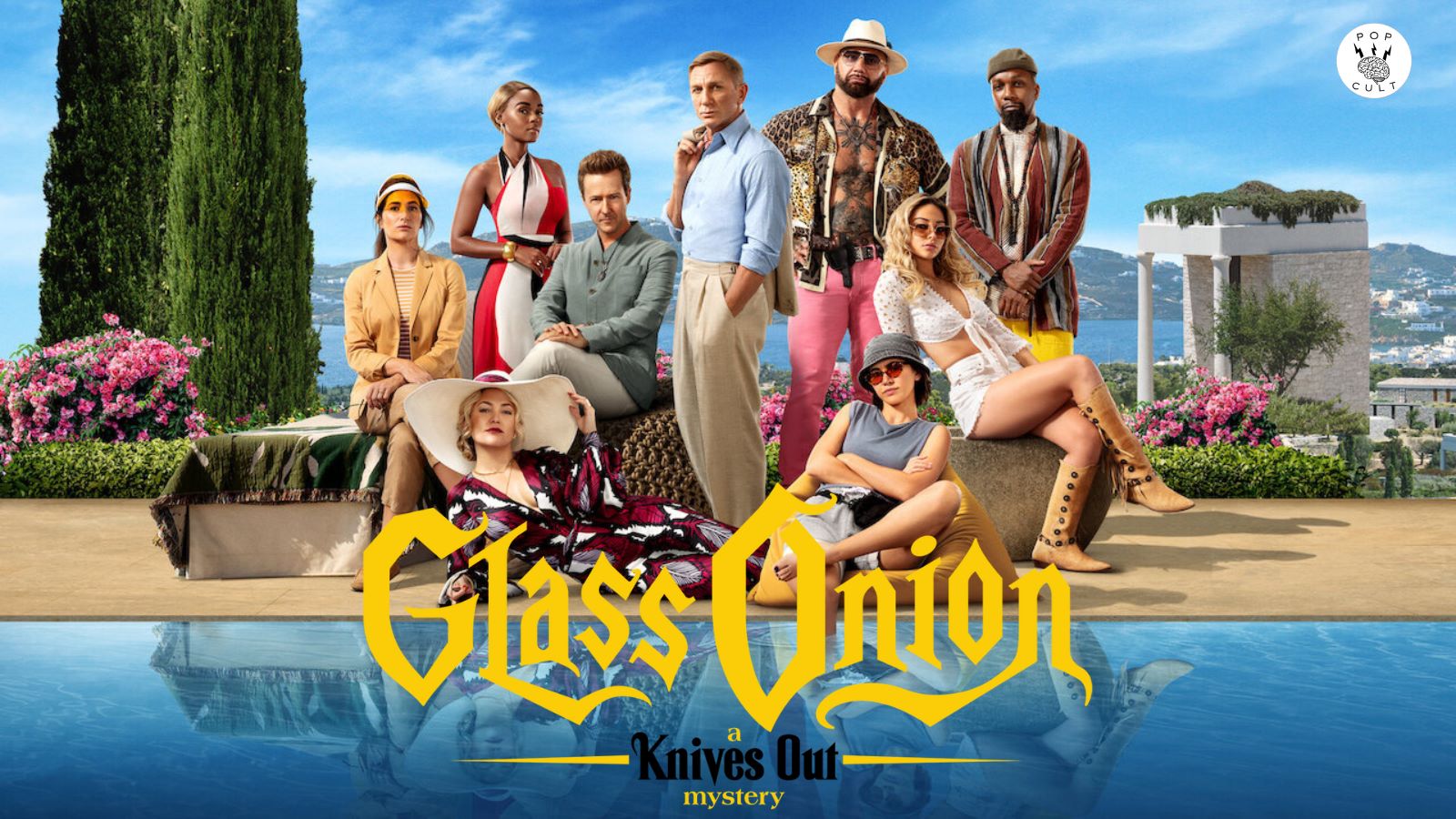
Glass Onion: A Knives Out Mystery is a follow-up to the original Knives Out film, starring Daniel Craig as the ingenious detective Benoit Blanc. It builds on the premise of a murder mystery but wraps it inside a colorful, satirical commentary on wealth, influence, and the human condition. Set on the private island of a tech billionaire named Miles Bron, the story assembles a quirky cast of characters, all entangled in complicated relationships that unravel layer by layer. The casual tone of the movie masks a sharp, incisive look at the absurdities of the ultra-rich and the moral compromises they often make.

From the outset, Glass Onion shines with its clever blending of classic whodunit tropes and contemporary social critique. The gathering on the island is ostensibly for a murder mystery party, but the tension quickly escalates when the lines between game and reality blur. As detective Benoit Blanc begins to peel back the layers, it becomes clear that the story is much more than just a puzzle; it’s a reflection on fame, fortune, intellectual theft, and the lengths people will go to protect their reputations and secrets. The mystery itself is engrossing, delivering plenty of twists and turns that keep viewers guessing without feeling predictable.

The characters are vividly drawn, each embodying a certain archetype of privilege and excess, yet crafted with enough depth to avoid caricature. Miles Bron, in particular, captures the archetypal tech mogul—brash, arrogant, and unapologetically wealthy—but his flaws and vulnerabilities make him an intriguing focal point. His colorful group of friends each contribute their quirks and motives, creating a dynamic interplay that enriches the plot. Through their interactions, the film deftly explores themes of betrayal, sycophantic behavior, and the moral decay that can accompany unchecked power.

Edward Norton’s portrayal of Miles Bron has often been linked to Elon Musk, mostly because Bron’s flamboyant personality and billionaire tech mogul status seem reminiscent of Musk. However, director Rian Johnson and Norton himself have been clear that the character is not based specifically on Musk. Instead, Miles embodies the broader archetype of “tech bros”: exceedingly wealthy, extremely arrogant, and more than a bit sociopathic. Norton’s portrayal blends charm, obliviousness, and bravado, embodying this tech mogul stereotype more than mimicking any particular real-life figure. This approach allows the film to critique the broader billionaire culture, using Miles as a symbol of its excesses and absurdities, rather than targeting one individual.

A distinctive feature of Glass Onion is how it incorporates the reality of its production during the height of the COVID-19 lockdown. Set in May 2020, during global lockdowns, the film naturally weaves in social distancing and mask-wearing as part of its narrative fabric. This not only adds an element of authenticity but also becomes a device to reveal character traits—whether sincere compliance or performative adherence. The pandemic protocols also shaped production logistics, reducing extras and focusing tightly on the main cast, creating an intimate but tense atmosphere. By anchoring the isolation of its characters in a real-world health crisis, the film echoes classic mystery confinements while feeling relevant and immediate.

Emotional stakes in Glass Onion are amplified through Helen, who arrives on a personal mission to uncover the truth behind her sister’s death. Unlike many self-interested guests on the island, Helen represents a disruptive force challenging the privileged elite. Her story adds urgency and depth, highlighting themes of justice, accountability, and silence’s costs. This subplot weaves seamlessly into the larger narrative, enriching the mystery’s resolution with meaningful emotional weight.

Visually, the film dazzles with opulent settings and a vibrant color palette that amplify the sense of excess and detachment characterizing the guests’ lives. The private island itself almost becomes a character—a lush, insular playground where drama explodes amid luxury. Production design and cinematography balance whimsy with darker undertones, while costumes and set details root satire in an authentic world.

Craig returns as Benoit Blanc with a mix of charm, wit, and gravitas, anchoring the film amidst eccentric chaos. Blanc’s character delights as a master detective who enjoys intellectual puzzles but wrestles with moral questions. Meanwhile, the supporting cast gives nuanced performances that capture their characters’ complexities and motivations.

Narratively, Glass Onion triumphs by delivering an engaging mystery while embedding incisive social commentary on inequality and hypocrisy. The film compellingly probes how wealth and influence can obscure truth and the costs endured by those who confront power. The sharp, often humorous writing makes it both entertaining and thought-provoking.

Whether viewed casually or analyzed deeply, Glass Onion offers much to enjoy. Plot twists, sharp dialogues, visual style, and strong performances combine for an engrossing experience. At its core, the story emphasizes how the pursuit of personal gain can harm others, and reckoning with uncomfortable truths demands courage and sacrifice.

Ultimately, Glass Onion is a skillfully crafted, entertaining mystery that surpasses typical genre fare. It balances suspense, humor, and social critique naturally and compellingly. Cementing Rian Johnson’s success in the Knives Out franchise, it reclaims his reputation after the contentious backlash to The Last Jedi. While fan expectations proved insurmountable in that galaxy far, far away, Glass Onion confirms Johnson as a brilliant filmmaker capable of crafting sharp, layered stories. The film invites audiences to not only solve a crime but also reflect on integrity, power, and humanity’s search for justice and meaning. Its impact lingers long after the credits roll.