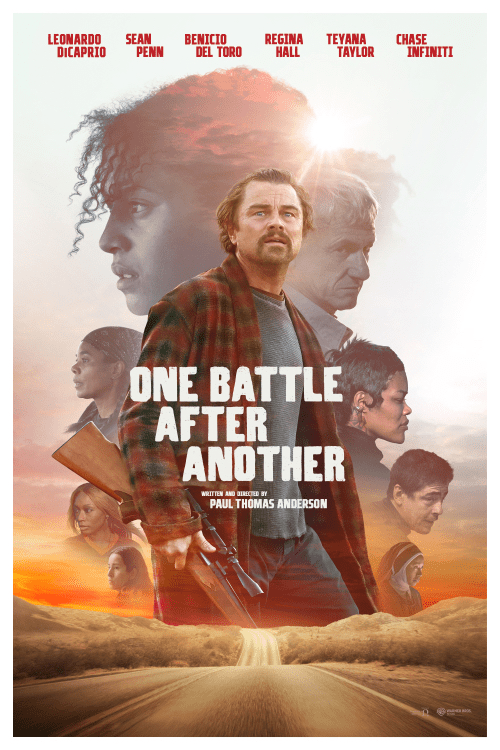
The Philadelphia Film Critics Circle have named One Battle After Another as the best film of 2025. I guess it makes sense. When you live in Philadelphia, life is one battle after another.
Best Film Winner: ONE BATTLE AFTER ANOTHER Runner-Up: SINNERS
Best Director Winner: Paul Thomas Anderson – ONE BATTLE AFTER ANOTHER Runner-Up: Ryan Coogler – SINNERS
Best Actress Winner: Jessie Buckley – HAMNET Runner-Up: Rose Byrne – IF I HAD LEGS I’D KICK YOU
Best Actor Winner: Michael B. Jordan – SINNERS Runner-Up: Ethan Hawke – BLUE MOON
Best Supporting Actress Winner: Teyana Taylor – ONE BATTLE AFTER ANOTHER Runner-Up: Wunmi Mosaku – SINNERS
Best Supporting Actor Winner: Benicio del Toro – ONE BATTLE AFTER ANOTHER Runner-Up: Delroy Lindo – SINNERS
Best Screenplay Winner: SINNERS Runner-Up: ONE BATTLE AFTER ANOTHER
Best Score/Soundtrack Winner: SINNERS Runner-Up: ONE BATTLE AFTER ANOTHER
Best Directorial Debut Winner: Charlie Polinger – THE PLAGUE Runner-Up: Eva Victor – SORRY, BABY
Best Breakthrough Performance Winner: Chase Infiniti – ONE BATTLE AFTER ANOTHER Runner-Up: Miles Caton – SINNERS
Best Cinematography Winner: SINNERS Runner-Up: ONE BATTLE AFTER ANOTHER
Best Documentary Winner: GRAND THEFT HAMLET Runner-Up: ORWELL: 2+2=5
Best Foreign Film Winner: IT WAS JUST AN ACCIDENT Runner-Up: SENTIMENTAL VALUE
Best Animated Film Winner: KPOP DEMON HUNTERS Runner-Up: ZOOTOPIA 2
Best Ensemble Winner: SINNERS Runner-Up: ONE BATTLE AFTER ANOTHER The Steve Friedman Award For a person or film that drives major public discourse on a topic or issue
SINNERS
The Elaine May Award For a deserving person or film that brings awareness to a story from a woman’s perspective
IF I HAD LEGS I’D KICK YOU
The Cheesesteak Award (Sponsored by Philips Steaks) Winner: SUPERMAN Runner-up: PREDATOR: BADLANDS
The Boston Online Film Critics Association has announced its picks for the best of 2025. And here they are:
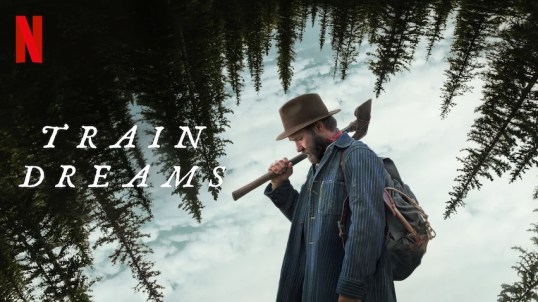
TOP TEN FILMS OF 2025 1. ONE BATTLE AFTER ANOTHER 2. SINNERS 3. MARTY SUPREME 4. NO OTHER CHOICE 5. IT WAS JUST AN ACCIDENT 6. SENTIMENTAL VALUE 7. WEAPONS 8. HAMNET 9. THE SECRET AGENT 10. TRAIN DREAMS
Best Director Paul Thomas Anderson – ONE BATTLE AFTER ANOTHER
Best Actress Rose Byrne – IF I HAD LEGS I’D KICK YOU
Best Actor Wagner Moura – THE SECRET AGENT
Best Supporting Actor Benicio Del Toro – ONE BATTLE AFTER ANOTHER
Best Supporting Actress Amy Madigan – WEAPONS
Best Screenplay Paul Thomas Anderson – ONE BATTLE AFTER ANOTHER
Best Ensemble SINNERS
Best Score Ludwig Göransson – SINNERS
Best Cinematography Adolpho Veloso – TRAIN DREAMS
Best Editing Ronald Bronstein & Josh Safdie – MARTY SUPREME
“I see now. I can’t save my family by running. This is our home. This is our fortress. This is where we make our stand.” — Jake Sully
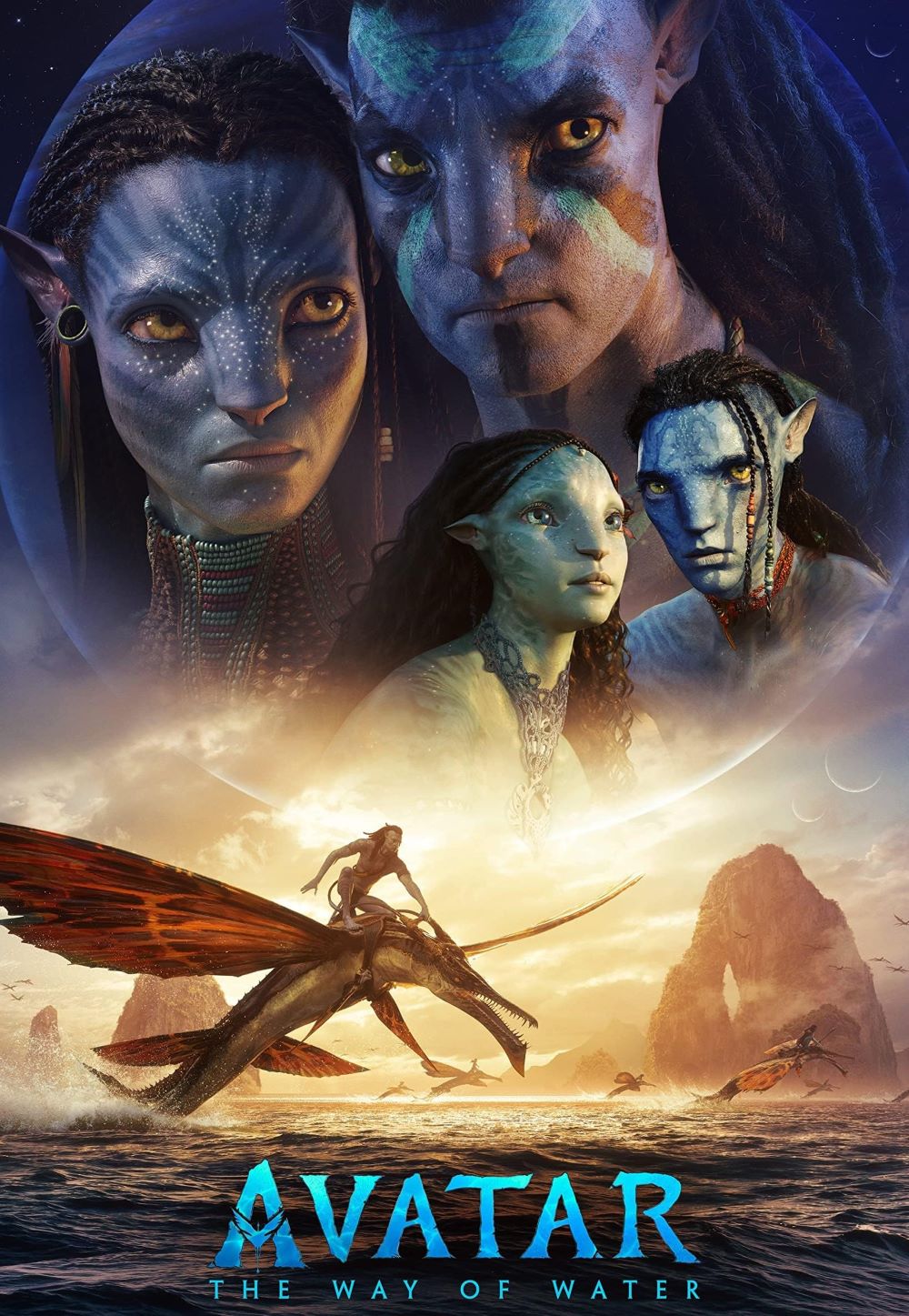
Avatar: The Way of Water delivers jaw-dropping visuals and a sincere dive into family struggles, but it drags under its three-hour weight with repetitive plotting and uneven character depth that keeps it from breaking truly new ground.
James Cameron returns to Pandora over a decade after the original Avatar, catching up with Jake Sully and Neytiri as they’ve built a sprawling family amid fragile peace—only for human colonizers, the so-called Sky People, to crash back with upgraded tech, ruthless determination, and a deeply personal grudge led by a vengeful Colonel Quaritch reborn in Na’vi avatar form. This forces the Sullys into a desperate flight to the Metkayina, a reef-dwelling Na’vi clan whose ocean-adapted physiology and customs—broader tails for swimming, gill-like breathing aids, a deep spiritual bond with marine life—present a whole new cultural and environmental challenge, transforming the story from the first film’s jungle rebellion into a watery survival tale laced with themes of displacement and adaptation.
What truly sets the film apart, even if the story treads familiar “pursued heroes vs. imperial baddies” territory without bold twists, is how it masterfully expands the Avatar universe’s worldbuilding, turning Pandora from a singular bioluminescent jungle into a teeming planet with diverse ecosystems and cultures. The Metkayina villages perch on floating lattices of woven kelp and coral, lit by phosphorescent anemones pulsing like underwater stars, while daily life revolves around symbiotic ties with ilu (skittish six-finned mounts) and skimwings (leathery ocean skimmers); nomadic Tulkun society—intelligent, philosophical whale-like beings communicating via sonic songs—clings to a strict non-violence “tulkun way” brutally shattered by human whalers.
These layers emerge organically through the Sullys’ awkward integration, like mastering fluid sign language or breath-holds for deep dives, and the spectacle dazzles relentlessly, powered by advancements in hyperrealistic CG that continue to erode the uncanny valley effect on characters—Na’vi faces now convey micro-expressions of pain, joy, and exhaustion with lifelike subtlety, their skin textures responding to water and light in ways that feel organic rather than synthetic.
Bioluminescent reefs glow in electric blues and greens, iridescent fish schools dart through sun-dappled shallows, and massive Tulkun glide with skyscraper grace and scarred hides. Cameron’s pioneering underwater motion capture—actors in massive tanks layered with tactile CG—makes every bubble, flipper stroke, and coral sway palpably real, as Na’vi teens free-dive twisting kelp forests and maze-like atolls in lung-burning tension. The film also pushes 3D technology to new heights since the first film, baked natively into every frame rather than tacked on as a post-production gimmick—this integral approach ensures depth pops organically, from swirling plankton clouds enveloping swimmers to layered reef foregrounds framing distant horizons.
The action peaks in the third-act frenzy of ship crashes against waves, flare-lit dogfights, Tulkun rams crumpling hulls, and a claustrophobic flooding vessel breach where air dwindles second-by-second. Cameron’s chaos clarity—echoing The Abyss or Titanic—ties stakes to family peril, amplified by thundering sound (crashing surf, whale calls, Na’vi gasps) and Jon Landau’s IMAX polish into sensory overload.
Family drives the lived-in, flawed emotional core: Jake (Sam Worthington’s gravelly gravitas) wrestles fatherhood’s math—stern orders backfiring into guilt—as he clashes with impulsive Lo’ak (Britain Dalton’s sulky edge), whose outsider rage forges a bond with scarred Tulkun Payakan, flipping “monster” tropes for real agency; dutiful Neteyam buckles under expectations, innocent Tuk (Trinity Jo-Li Bliss) witnesses horrors, and mystic Kiri—Grace’s avatar-born daughter linked to Eywa—teases lore like planetary souls, while Neytiri (Zoe Saldana’s fiery sorrow) simmers with grief-fueled, mama-bear savagery, her outbursts piercing deeper than rifles.
These arcs convert invasions into gut punches on protection, belonging, parental failures, and war’s selfish costs—specific melodrama over generic heroism. Yet simplicity amplifies flaws over runtime: a chase loop (hunts, hides, teen trouble, repeat) grates, with middle sags of cultural lessons (sign language, ilu taming, Tulkun reverence) feeling like filler; humans are greed caricatures—whalers gutting pacifists for longevity goo amrita, suits enabling genocide—lacking nuance despite Earth’s biosphere desperation nods, preaching eco-colonialism to the choir. Neytiri gets benched post-roars (a co-lead letdown), Quaritch dangles complexity (death memories, Spider ties) but snarls relentlessly; reef archetypes (wise Tonowari, omen-Ronal, bully-to-ally Aonung) lopsided the cast, Tulkun elders out-nuancing humans.
The film’s themes land with sincere force: whaling atrocities, from harpooned flesh and bloodied seas to a mother’s primal rage, hammer home human irredeemability without much subtlety, while family adaptation explores “forest people” taunts, strained bonds, and Eywa’s mystical interventions that weave personal growth into planetary balance—heartfelt without ironic quips, either refreshing in its earnestness or manipulative depending on your taste. Pacing remains deeply polarizing, offering immersive vibes for world-huggers who savor the slow builds but feeling bloated and front/back-loaded for plot purists impatient with the expansion-heavy middle.
Ultimately, Avatar: The Way of Water triumphs as a visual banquet and saga extender, hooking viewers with its aquatic marvels, raw parental fears, peerless craft (hyperreal CG and improved 3D elevating it), and smart universe growth through new clans, beasts, and lore seeds—all sans true narrative reinvention, as bloated length, repetitive echoes, and flat foes keep it from pantheon status. Fans of Pandora dive in sated; skeptics surface impressed by the technical wizardry yet impatient with the sprawl. It’s pure Cameron—huge swings promising more sequels ahead. Worth submerging for the spectacle.
In director Todd Phillips’ THE HANGOVER PART II, the night before his wedding, groom-to-be Stu (Ed Helms), his two best friends, Phil and Doug (Bradley Cooper and Justin Bartha), Stu’s soon-to-be brother-in-law Teddy (Mason Lee) and Doug’s brother-in-law Alan (Zach Galifianakis), sit on a beach in Thailand for a toast to the bride and groom. After cracking open sealed bottles of beer in the beautiful setting, the movie screen goes black, and soon we see Phil, Stu and Alan wake up in a seedy room in Bangkok with absolutely no memory of what happened the previous night. The room is trashed, there’s a monkey wearing a denim Rolling Stones jacket, a naked Chow (Ken Jeong) is sleeping under a pile of blankets, Alan’s head is completely shaved, Stu has a face tattoo, and both Doug and Teddy are nowhere to be found! Doug calls and he’s back at the resort, but the only trace of Teddy is his severed finger, which is now in possession of the monkey. With the wedding just hours away, the three friends follow any clues they can find in a frantic search for Teddy. The search leads to the surprise discovery that Stu had intimate relations with a transsexual stripper, a tattoo parlor run by Nick Cassavetes, a dangerous and duplicitous American gangster named Kingsley (Paul Giamatti), and an arrested, ancient Buddhist monk who’s taken a vow of silence and who’s also confused for the 16-year-old, Teddy. Hell, at one point Mike Tyson shows up and sings the classic Murray Head single, “One Night in Bangkok.” Most importantly though, will the friends find Teddy alive and still have time to get back to the resort in time for Stu’s wedding?!!
A massive box office hit in the summer of 2011, THE HANGOVER PART II became the highest grossing R-rated comedy up to that time, with a worldwide gross of $586 million, against an $80 million budget. It was also the highest grossing R-Rated film to have opened over Memorial Day weekend, raking in over $118 million in its first four days. The story went to the well again with its still clever, but not quite as unique premise, comprised of a mystery-driven plot line where we follow the investigative adventures of Phil, Stu, and Alan and discover what happened the night before at the same time that they do. This allows for another series of outrageous, raunchy, surprising, and funny moments that escalate in absurdity over the course of the film’s 102-minute running time, culminating with another secret roll of pictures on Teddy’s camera that fill in the crazy events from their wild night in Bangkok. Based on the familiarity with the characters and the types of situations, I didn’t laugh out loud quite as frequently this time around, but the film still has its share of amusing moments, and I enjoyed revisiting the film again after a number of years. One of the things that I noticed about THE HANGOVER PART II is that it does not have the re-quotability factor going for it like the first film does. Alan and Chow have some funny lines, but honestly, I don’t think I’ve ever re-quoted a single one of them. I will agree with Alan on one point though, “When a monkey nibbles on a penis, it’s funny in any language.” I’d say that this film is more about mining comedy out of the extreme and absurd situations that our heroes are put in and less about clever, quotable quips.
THE HANGOVER PART II works because of the outrageous situational comedy, as well as the exceptional chemistry between Bradley Cooper, Ed Helms, and Zach Galifianakis. Ken Jeong has a bigger part this time around as Mr. Chow, and of course he’s hilarious. I did get some solid laughs from its combination of shock-value, sight gags and character interplay. The Bangkok we see here also makes for a seedy, raunchy and dangerous background to the crazy action. Of course the biggest negative of the film, as is the case with many sequels, is the fact that it’s practically a remake of the first HANGOVER, just set in Bangkok instead of Vegas. Think Charles Bronson’s DEATH WISH (New York) versus DEATH WISH II (Los Angeles). Also like the first two DEATH WISH films, THE HANGOVER PART II pushes the boundaries even farther, with even more graphic nudity and just overall harder material in general. Sequels always up the ante, but lose a little of what makes them so special in the process, and that’s definitely going on here.
Ultimately, while THE HANGOVER PART II was even more financially successful than the original, it’s not quite as fun because we’ve seen it before in the first film. But I loved the first film, so I enjoyed this one as well, just not quite as much.
In 2019’s Random Acts of Christmas, journalist and single mom Sidney Larkin (Erin Cahill) is assigned to discover who has been committing random acts of Christmas kindness throughout the city. At first, Sidney doesn’t want to investigate the identity of “Secret Santa,” but then she meets another journalist named Cole (Kevin McGarry), who is also looking into the story. It’s a love that springs from rivalry except …. have you ever noticed that you never see Cole and Secret Santa in the same place at the same time?
Oh, come on. We would all love to live in a city with a Secret Santa!
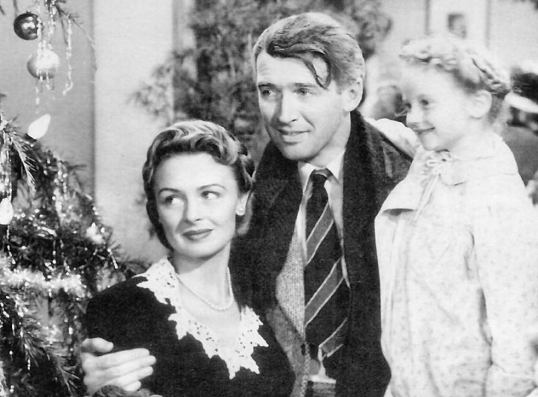
I love It’s A Wonderful Life and I’m looking forward to watching it many times over the upcoming week. To me, it’s the rare example of a perfect film.
Below is one of the more somber but important scenes from It’s A Wonderful Life. George (James Stewart) and Clarence (Henry Travers) go to what would have been Bailey Park if George had been born. Instead, it’s now a cemetery and buried there is George’s brother, who would have died if George hadn’t been born. And, as Clarence explains, every man that George’s brother saved would have died as well. “Each man’s life touches so many other lives,” as Clarence puts it.
Here is a scene from a wonderful movie called It’s A Wonderful Life.
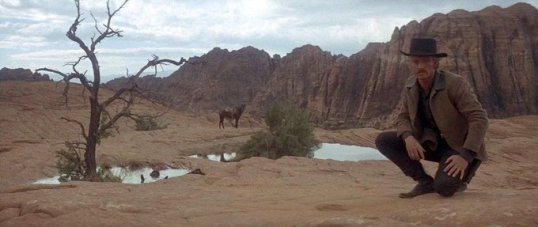
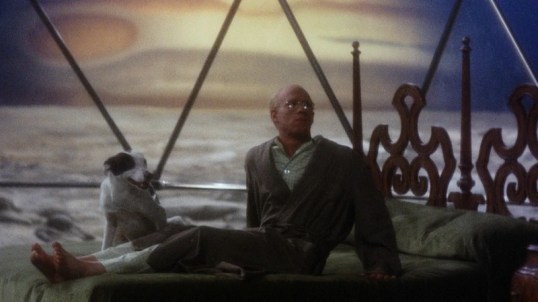
4 Shots From 4 Films is just what it says it is, 4 shots from 4 of our favorite films. As opposed to the reviews and recaps that we usually post, 4 Shots From 4 Films is all about letting the visuals do the talking.
4 Shots From 4 George Roy Hill Films
Butch Cassidy and the Sundance Kid (1969, dir by George Roy Hill, DP: Conrad Hall)
Slaughterhouse Five (1972, dir by George Roy Hill, DP: Miroslav Ondříček)
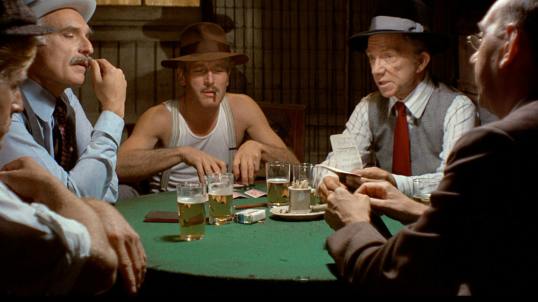
The Sting (1973, dir by George Roy Hill, DP: Robert Surtees)
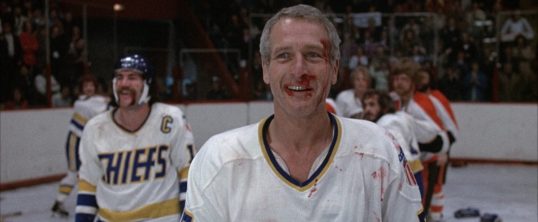
Slap Shot (1977, dir by George Roy Hill, DP: Victor Kemper)
As some of our regular readers undoubtedly know, I am involved in a few weekly live tweets on twitter. I host #FridayNightFlix every Friday, I co-host #ScarySocial on Saturday, and I am one of the five hosts of #MondayActionMovie! Every week, we get together. We watch a movie. We tweet our way through it.
Tonight, at 9 pm et, Deanna Dawn and I will be hosting #ScarySocial! The movie? 1980’s Christmas Evil!
If you want to join us this Saturday, just hop onto twitter, start the movie at 9 pm et, and use the #ScarySocial hashtag! It’s a friendly group and welcoming of newcomers so don’t be shy.
Here are the 2025 Nominations of the Georgia Film Critics Association. The winners will be announced on December 27th.
Best Picture Black Bag Hamnet It Was Just an Accident Marty Supreme One Battle After Another Sentimental Value Sinners Sorry, Baby Train Dreams Weapons
Best Director Hamnet – Chloé Zhao One Battle After Another – Paul Thomas Anderson Sentimental Value – Joachim Trier Sinners – Ryan Coogler Train Dreams – Clint Bentley
Best Actor Timothée Chalamet – Marty Supreme Leonardo DiCaprio – One Battle After Another Joel Edgerton – Train Dreams Ethan Hawke – Blue Moon Michael B. Jordan – Sinners
Best Actress Jessie Buckley – Hamnet Rose Byrne – If I Had Legs I’d Kick You Chase Infiniti – One Battle After Another Renate Reinsve – Sentimental Value Eva Victor – Sorry, Baby
Best Supporting Actor Benicio Del Toro – One Battle After Another Jacob Elordi – Frankenstein Sean Penn – One Battle After Another Adam Sandler – Jay Kelly Stellan Skarsgård – Sentimental Value
Best Supporting Actress Ariana Grande-Butera – Wicked: For Good Regina Hall – One Battle After Another Inga Ibsdotter Lilleaas – Sentimental Value Amy Madigan – Weapons Teyana Taylor – One Battle After Another
Best Original Screenplay If I Had Legs I’d Kick You Marty Supreme Sentimental Value Sinners Sorry, Baby Weapons
Best Adapted Screenplay Frankenstein Hamnet No Other Choice One Battle After Another Train Dreams
Best Cinematography F1 Frankenstein One Battle After Another Sinners Train Dreams
Best Production Design The Fantastic Four: First Steps Frankenstein Hamnet Marty Supreme Sinners
Best Original Score F1 – Hans Zimmer Hamnet – Max Richter One Battle After Another – Jonny Greenwood Sinners – Ludwig Göransson Train Dreams – Bryce Dessner
Best Original Song “Golden” – KPop Demon Hunters “Highest 2 Lowest” – Highest 2 Lowest “I Lied to You” – Sinners “Last Time (I Seen the Sun)” – Sinners “Train Dreams” – Train Dreams
Best Ensemble Black Bag Marty Supreme One Battle After Another Sentimental Value Sinners
Breakthrough Award Miles Caton David Corenswet Chase Infiniti Jacobi Jupe Eva Victor
Best Animated Film Arco Elio KPop Demon Hunters Scarlet Zootopia 2
Best Documentary The Alabama Solution The Librarians My Mom Jayne The Perfect Neighbor Predators
Best International Film It Was Just an Accident No Other Choice The Secret Agent Sentimental Value Sirāt
Oglethorpe Award for Excellence in Georgia Cinema Bugonia Meta Take One The Naked Gun Sister Salad Days (Short) Superman Swimming Holes (Short) Thunderbolts Weapons Withdrawl Zora Head: The Life and Scholarship of Valerie Boyd (Short)
The Florida Film Critics Circle has announced its picks for the best of 2025. The winners are in bold.
BEST PICTURE Grand Tour The Mastermind No Other Choice (RUNNER-UP) One Battle After Another (WINNER) Sinners
ACTOR Lee Byung-hun (No Other Choice) Timothée Chalamet (Marty Supreme) Leonardo DiCaprio (One Battle After Another) Wagner Moura (The Secret Agent) Josh O’Connor (The Mastermind) (WINNER)
ACTRESS Crista Alfaiate (Grand Tour) Jessie Buckley (Hamnet) Rose Byrne (If I Had Legs I’d Kick You) (WINNER) Jennifer Lawrence (Die My Love) (RUNNER-UP) Renée Zellweger (Bridget Jones: Mad About the Boy)
SUPPORTING ACTRESS Rita Cortese (Most People Die on Sundays) Amy Madigan (Weapons) Wunmi Mosaku (Sinners) (RUNNER-UP) Teyana Taylor (One Battle After Another) (WINNER) Mia Threapleton (The Phoenician Scheme)
SUPPORTING ACTOR Benicio del Toro (One Battle After Another) Jacques Develay (Misericordia) David Jonsson (The Long Walk) (RUNNER-UP) Delroy Lindo (Sinners) Sean Penn (One Battle After Another) (WINNER)
ENSEMBLE Eephus One Battle After Another (RUNNER-UP) The Secret Agent Sentimental Value Sinners (WINNER)
DIRECTOR Ryan Coogler (Sinners) Bi Gan (Resurrection) Kelly Reichardt (The Mastermind) Paul Thomas Anderson (One Battle After Another) (RUNNER-UP) Park Chan-wook (No Other Choice) (WINNER)
ORIGINAL SCREENPLAY The Astronaut Lovers (Marco Berger) If I Had Legs I’d Kick You (Mary Bronstein) It Was Just an Accident (Jafar Panahi) (WINNER) Rent Free (Fernando Andrés & Tyler Rugh) (RUNNER-UP) Sentimental Value (Eskil Vogt & Joachim Trier) Sinners (Ryan Coogler)
ADAPTED SCREENPLAY Bugonia (Will Tracy) Hamnet (Chloé Zhao & Maggie O’Farrell) Little Amélie or the Character of Rain (Liane-Cho Han, Aude Py, Maïlys Vallade & Eddine Noël) No Other Choice (Park Chan-wook, Lee Kyoung-mi, Don McKellar, Lee Ja-hye) (RUNNER-UP) One Battle After Another (Paul Thomas Anderson) (WINNER)
CINEMATOGRAPHY Grand Tour (Gui Liang, Sayombhu Mukdeeprom, Rui Poças) One Battle After Another (Michael Bauman & Paul Thomas Anderson) Resurrection (Dong Jingsong) (WINNER) Sinners (Autumn Durald Arkapaw) (RUNNER-UP) Sirāt (Mauro Herce)
VISUAL EFFECTS Avatar: Fire and Ash (WINNER) Frankenstein (RUNNER-UP) No Other Choice Resurrection Sinners
EDITING Die My Love (Toni Froschhammer) (RUNNER-UP) No Other Choice (Kim Sang-bum & Kim Ho-bin) Marty Supreme (Ronald Bronstein & Josh Safdie) One Battle After Another (Andy Jurgensen) (WINNER) Sinners (Michael P. Shawver)
PRODUCTION DESIGN & ART DIRECTION Frankenstein (RUNNER-UP) The Phoenician Scheme Resurrection (WINNER) The Secret Agent Sinners
ORIGINAL SCORE The Mastermind (Rob Mazurek) (RUNNER-UP) One Battle After Another (Jonny Greenwood) Sinners (Ludwig Göransson) (WINNER) Sirāt (Kangding Ray) Resurrection (M83)
DOCUMENTARY BLKNWS: Terms & Conditions (RUNNER-UP)
The Perfect Neighbor Predators River of Grass Sabbath Queen (WINNER)
INTERNATIONAL FILM Grand Tour (WINNER TIE) It Was Just an Accident No Other Choice (WINNER TIE) Resurrection The Secret Agent Sirāt
ANIMATED FEATURE 100 Meters (RUNNER-UP) Arco KPop Demon Hunters Little Amélie or the Character of Rain (WINNER) Zootopia 2
FIRST FILM BLKNWS: Terms & Conditions Eephus (RUNNER-UP) Lurker Sorry, Baby (WINNER) The Ugly Stepsister
BREAKOUT AWARD Miles Caton (Sinners) Chase Infiniti (One Battle After Another) (WINNER) Jacobi Jupe (Hamnet) Théodore Pellerin (Lurker) Eva Victor (Sorry, Baby) (RUNNER-UP)
GOLDEN ORANGE River of Grass – Sasha Wortzel No Sleep Till – Alexandra Simpson




 Through the Shattered Lens