The Films of 2020: Possessor (dir by Brandon Cronenberg)


Tasya Vos (Andrea Riseborough) is a professional assassin.

That really shouldn’t come as too much of a surprise.  For whatever reason, films about assassins have become very popular over the past few years and those assassins are often women.  However, what sets Tasya apart from other assassins is the technique that she uses.  Under the direction of Girder (Jennifer Jason Leigh), Tasya can possess someone else’s body.  While controlling that other person’s body, Tasya commits her murders and then commits suicide.  The host dies while Tasya’s mind returns to her original body.  The media then reports that the murder was some sort of random incident and, with the killer dead by their own hand, their true motives will probably never be known.  It’s an outlandish premise and yet, it’s one that feels oddly plausible.  Most mass shootings and random acts of violence remain a mystery precisely because their perpetrators often take their own lives.  Three years after the deadliest mass shooting in U.S. history, we still don’t know why Stephen Paddock opened fire on a music festival in Las Vegas.  We’ve become conditioned, I think, to accept that these things just happen.

Wisely, Possessor doesn’t go into too much details about just how exactly Tasya possesses other people.  We see that it involves a lot of odd technology and we also discover that Tasya struggles to return to her “normal” self after her mind returns to her body.  That’s really all we need to see.  Too many films make the mistake of trying to explain all of the little details, as if the audience is going to be concerned as to whether or not a film about possession is 100% plausible.  The director of Possessor, Brandon Cronenberg, understands that all he really has to do is make it look convincing.  He doesn’t have to explain it and, indeed, there’s much that Cronenberg doesn’t explain.

Tasya’s latest assignment takes her into the body of Colin Tate (Christopher Abbott), who is engaged to marry the daughter of arrogant businessman named John Parse (Sean Bean).  Colin and Tasya find themselves fighting for control of Colin’s body.  Even while Tasya is setting up the circumstances that will lead to Colin killing both his girlfriend and her father, Colin is resisting and struggling to take control.  It all leads to some disturbingly surreal imagery, as well as some shockingly gory violence.  There’s a lot of blood in Possessor.  Both figuratively and literally, Possessor is a film that’s obsessed with what lies under the skin.  Throughout the film, bodies and minds are ripped open and what we discover inside of them is frequently grotesque.

Possessor is a film that raises a lot of questions and which often refuses to provide easy answers.  Does Girder sincerely care about Tasya or is she just manipulating her emotions to get the result that she desires?  Who exactly does Girder work for?  Does Tasya truly want to get back together with her estranged husband, Michael (Rossif Sutherland)?  Is Michael as clueless as he seems or does he secretly understand that Tasya is lying whenever she says that she has to go away on business?  Possessor is not always an easy film to follow but Cronenberg’s visuals are so strong and the performances are so wonderfully off-center that it remains enthralling regardless of whether or not it always makes it sense.  By the time one person is wearing someone else’s face as a mask, it’s pretty much impossible to look away.

With its emphasis on body horror and loss of identity (as well as its chilly Canadian setting), Possessor has a lot in common with the early work of David Croneberg.  That’s perhaps not surprising, considering that Possessor was directed by David’s son, Brandon Cronenberg.  Unfortunately, Possessor doesn’t really have the same dry sense of humor that distinguished David Cronenberg’s best films.  (David Cronenberg was, in his way, as much of a satirist as a horror director and Possessor doesn’t quite have the same subversive charge as something like Rabid or Shivers.)  That said, Possessor is still a fascinating and enthralling film, one that will stick with you long after it ends.


The Films of 2020: Ava (dir by Tate Taylor)


Ava tells story of Ava Faulkner (Jessica Chastain), who has a troubled past, a turbulent present, and an uncertain future.

As we learn via a series of still frames during the film’s opening credits, Ava was the valedictorian of her high school class but her bright future was derailed by her own alcoholism.  She killed two of her friends while driving drunk and, presumably to avoid prison, she instead went into the army.  In the army, she was noted for being an efficient killer while, at the same time, being a bit unstable.  She has issues with authority.  Well, don’t we all?  When she got out of the army, she was recruited by Duke (John Malkovich), who taught her how to be an international assassin!

Unfortunately, since Ava screwed up her last mission and has gotten into the habit of talking to her targets before she kills them, Simon (Colin Farrell) wants her dead.  Simon also used to be a student of Duke’s but now he is Duke’s boss or something.  It’s all a bit vague and, to be honest, I found myself spending way too much time trying to figure out the corporate structure of whatever group it was that everyone was supposedly working for.  Apparently, Duke works for Simon but Simon still has to get Duke’s permission before trying to kill Ava or, failing that, try to kill Duke so that Duke won’t complain about it.  Duke spends a lot of time fishing and Simon spends a lot of time with his adorable family.  I liked Simon’s house.

Anyway, Ava has returned to Boston, where she’s trying to reconnect with her family.  It turns out that teenage Ava discovered that her father was cheating on her mom and that’s what set Ava on her downward spiral.  Mom (Geena Davis) is now a hypercritical semi-recluse.  Meanwhile, Ava’s sister, Judy (Jess Wexler), is a singer in a band and she’s engaged to Michael (Common, who, for some reason, keeps getting cast in all of these extremely wimpy roles), who just happens to be Ava’s ex-boyfriend.  And Michael is a gambling addict who owes a ton of money to Toni (Joan Chen).  It’s hinted that Toni and Ava also have a past but then again, everyone in the film has a past with Ava.  It’s get a little bit difficult to keep track of it all.

Ava gets off to a bad start by making us sit through one of Ava’s jobs.  She kills an accountant but first she asks him a lot questions about why anyone would want him dead because apparently, she’s an ethical assassin.  The scene goes on forever and it features Jessica Chastain trying to speak with an Arkansas accent.  Things picked up a bit during the opening credits, which was largely made up of still frames from Ava’s past.  However, once the credits ended and the film’s actual story got started, things quickly went back downhill.

The main problem with Ava is one of sensibility.  Both Jessica Chastain and director Tate Taylor have totally the wrong sensibility for a film like this.  Ava is essentially a work of pulp fiction but Chastain takes herself far too seriously to actually bring a sense of fun to the title role.  Meanwhile, Tate Taylor directs as if he’s never had a single subversive thought in his life.  (In Taylor’s defense, he was a last minute replacement for the film’s original director, Matthew Newton.)  Ava is a film that cries out for a star like Gina Carano and a director like John Stockwell, people who have no hesitation about totally digging in and embracing the silliness of it all.  Instead, we get Chastain and Taylor trying to give us a semi-realistic look at a woman battling her addictions and trying make peace with her past.  Malkovich, Farrell, and Chen all seem to get the fact that Ava should be a fun B-movie, unfortunately, Taylor and Chastain apparently didn’t get the memo.  (Of course, Chastain produced the film so maybe it was her co-stars who didn’t get the memo.  Who knows?)

Ava commits the sin of taking itself too seriously.  Check out John Stockwell’s In The Blood or Phillip Noyce’s Salt instead.

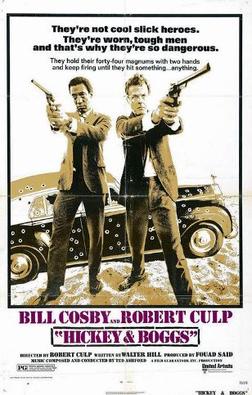
Hickey & Boggs (1972, directed by Robert Culp)


Frank Boggs (Robert Culp) and Al Hickey (Bill Cosby) are two private investigators who are constantly in danger of losing their licenses and going out of business.  Hickey is the responsible one.  Boggs is the seedy alcoholic.  When Hickey and Boggs are hired to track down a missing woman, their investigation lands them in the middle of a war between the mob and a group of political activists who are fighting over who is going to get the loot from a recent robbery.  Hickey and Boggs are targeted by the mob and soon, everyone is dying around them.

With its cynical themes and downbeat ending, Hickey & Boggs is very much a 70s film.  The script was written by future director Walter Hill and when it was eventually offered to Bill Cosby, Cosby agreed to star on the condition that his I Spy co-star, Robert Culp, be hired to direct.  Producer John Calley hired Culp but after Calley refused to provide the budget that Culp requested, Culp bought the script and raised the money himself.

There are a few problems with Hickey & Boggs, the main one being that the plot is next to impossible to follow.  As a director, Robert Culp apparently didn’t believe in either filming coverage or providing establishment shots so, especially early on, it is often impossible to tell how one scene is connected to another or even how much time has passed between scenes.  I don’t know if this was an intentional aesthetic decision or if the production just ran out of money before everything could be shot but it makes it difficult to get into the film’s already complicated story.  On a positive note, Culp did have a flair for staging action scenes.  The film ends with a shoot out on the beach that’s is handled with such skill that it almost makes up for what came before it.  Also, like many actors-turned-director, Culp proved himself capable of spotting talent.  Along with giving early roles to Vincent Gardenia, James Woods and Michael Moriarty, Culp also took the chance of casting sitcom mainstay Robert Mandan as a villain.  It was a risk but it worked as Mandan convincingly portrays the banality of evil.

Of course, the biggest problem with Hickey & Boggs is that it stars Bill Cosby as a straight-laced hero and that’s no longer a role that anyone’s willing to believe him in.  Cosby actually does give a convincing dramatic performance in Hickey & Boggs.  Just look at the final scene on the beach where Hickey has his “what have we done” moment and shows the type of regret that Cosby has never shown in real life.  The problem is that to really appreciate Cosby’s performance, you have to find a way to overlook the fact that he’s Bill Cosby and that something that I found impossible to do while watching Hickey & Boggs.  When you should be getting into the movie, you’re thinking about how many decades Bill Cosby was able to get away with drugging and assaulting women.  If not for a comment from Hannibal Buress that led to a social media uproar, Cosby would probably still be getting away with it.  If Buress’s anti-Cosby comments hadn’t been recorded and hadn’t gone viral, Bill Cosby would still be free and the media would probably still be holding him up as some sort of role model.

At the time Hickey & Boggs was made, both Bill Cosby and Robert Culp were at a career crossroads.  Cosby was hoping to transform himself into a film star.  Culp was hoping to become a director.  Hickey & Boggs, however, was disliked by critics and flopped at the box office.  Culp never directed another film and we all know what happened with Bill Cosby.  (Of course, it wasn’t just the box office failure of Hickey & Boggs that kept Cosby from becoming a movie star.  Say what you will about Robert Culp as a director, he had nothing to do with Leonard Part 6.)  Hickey  & Boggs is too disjointed to really work but Robert Culp and Bill Cosby were convincing action stars and the film’s downbeat style and cynical worldview is sometimes interesting.

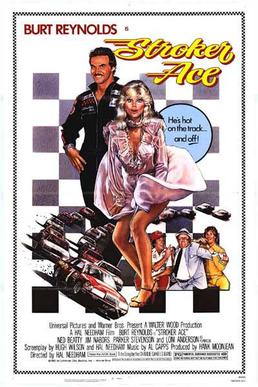
Stroker Ace (1983, directed by Hal Needham)


In 1983, Burt Reynolds had the choice of appearing in two films.

He was offered the role of former astronaut Garrett Breedlove in Terms of Endearment, a role that director/screenwriter James L. Brooks wrote specifically with Reynolds in mind.  The role was designed to play to all of Reynolds’s strengths and none of his weaknesses.  It was also a key supporting role in a film that was widely expected to be an Oscar contender.

Or, Reynolds could star in Stroker Ace, another car chase film that was going to be directed by his old friend, Hal Needham.  No one was expecting Stroker Ace to be an Oscar contender but Needham and Reynolds had made three similar films together and all of them had been hits at the box office.

Reynolds decided to star in Stroker Ace.  Jack Nicholson received the role of Garrett Breedlove and went on to win his second Oscar.  As for Burt, he later called Stroker Ace “the beginning of the end.”

The title character of Stroker Ace is a good old boy race car driver.  He’s a typical Reynolds character.  He grew up in the South and learned how to race cars by watching moonshiners outrun the police.  Now, he’s a star on the NASCAR circuit but he’s also arrogant and needlessly self-destructive.  Because this is a Hal Needham car chase movie, those are portrayed as being good traits.  When Stroker loses his former sponsor after pouring wet concrete on him, he’s forced to accept sponsorship from a crooked chicken mogul (played by Ned Beatty, who deserved better).  When Stroker’s not driving his car while dressed as a chicken, he’s romancing the prudish Pembrook Feeney (Loni Anderson).

It’s hard to describe the plot of Stroker Ace because it really doesn’t have a plot.  There’s a few scenes where Burt looks directly at the camera and smirks.  It’s supposed to remind us of Smoky and the Bandit but Stroker Ace doesn’t have the spectacular stunts that the first film had nor does it have the comedic energy of Jackie Gleason.  Instead, it’s got Jim Nabors as a mechanic named Lugs.  The former star of Gomer Pyle does say “Golly” but he doesn’t sing.

The main problem with Stroker Ace is that there’s no reason to root for Stroker Ace.  The Bandit was good at his job and cared about his car.  The same thing is true about the stuntman that Burt played in Hooper.  Stroker is a racer who would rather destroy his car than come in second and who loses his sponsorships because of his own stupid behavior.  Stroker Ace doesn’t care about anything so it’s difficult to get outraged over him having to wear a chicken suit while racing.

Reynolds later described turning down Terms of Endearment for Stoker Ace as being one of the biggest mistakes of his career.  When he talked about how the Terms of Endearment role won Nicholson an Oscar, Reynolds added that he didn’t win anything for Stroker Ace because “they don’t give awards for being stupid.”  It was a missed opportunity for sure and Reynolds would have to wait another fourteen years before Boogie Nights finally proved that he could do more than drive cars and smirk at the camera.

Despite the failure of Stroker Ace, Reynolds and Needham remained friends and even made two more film together (Cannonball Run II and Hostage Hotel).  Their friendship later served as the basis for the relationship between the characters played by Leonardo DiCaprio and Brad Pitt in Quentin Tarantino’s Once Upon A Time In Hollywood.

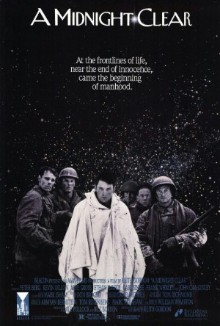
A Midnight Clear (1992, directed by Keith Gordon)


In December of 1944, with the world at war and Christmas approaching, a small U.S. Army Intelligence squad is sent to a deserted chateau near the German lines.  The squad, which was decimated during the Battle of the Bulge, is made up of six young soldiers who all have genius IQs.  They’ve been hardened by war but they’re still young enough to have some hope for the future.  Leading them is “Mother” Wilkinson (Gary Sinise), an officer who cares about his men but who has been mentally struggling with not only the war but also with the recent death of a child back home.

At first, the chateau seems like a perfect sanctuary, a place to wait for the war to end.  But then the Americans discover that there is a regiment of German soldiers nearby.  The Germans are just as young as the Americans and when the two groups meet each other, they don’t fire their guns but instead have a snowball fight.  The Germans say that they know the war is about to end and that they want to surrender before the Russians arrive.  However, the Germans are worried about their families back home and what will happen when word gets back that they’ve surrendered.  They request a staged fight so that it will appear that they were captured in combat.  Almost everyone is down with the plan but it turns out that it’s not easy to fake a war in the middle of a real one.

Based on a novel by William Wharton, A Midnight Clear is one of the best Christmas films that hardly anyone seems to have heard of.  It’s a war film that is more concerned with the men who fight the wars than with the battles. Along with Sinise, the ensemble cast includes Ethan Hawke, Peter Berg, Kevin Dillon, Ayre Gross, Frank Whaley, and John C. McGinley and all of them make an impression, bringing their characters to life.  By the end of the movie, you feel like you know each member of the squad and their individual fates hit you hard.  Some of them make it to the next Christmas and tragically, some of them don’t.  The film starts out almost gently and all of the soldiers are so intent on just letting the war end while they hide out at the chateau that you find yourself believing that it could actually happen.  When reality intrudes, it’s tragic and poignant.  Intelligently directed by Keith Gordon (making his directorial debut), A Midnight Clear is an unforgettable anti-war story that has an amazing final shot.  A Midnight Clear makes an impression on Christmas and every other day.

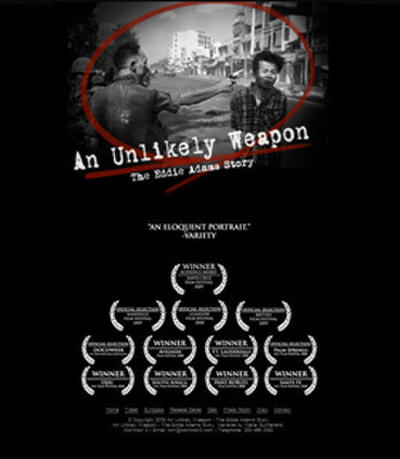
An Unlikely Weapon: The Eddie Adams Story (2008, dir. by Susan Morgan)


In 1968, Eddie Adams took a picture that would change history.

Adams was 34 years old and working as a photographer for the Associated Press.  He was covering the war in Viet Nam.  On February 1st, Adams saw a Viet Cong prisoner being led through the streets of Saigon.  Adams was among the many who followed, taking pictures.  Adams wasn’t expecting to capture anything unusual.  He thought it was just another day in Saigon.  Instead, he captured a shot of Saigon police chief Nguyễn Ngọc Loan executing the prisoner in the street.  Adams just happened to catch the exact moment that Loan fired his gun into the man’s head.

After the picture appeared in newspapers around the world, it became a rallying cry for the anti-war movement and it has since always been included in every documentary made about the Vietnam Conflict.  The picture won Eddie Adams a Pulitzer Prize and it has been frequently cited as a picture that changed history.  But Eddie Adams was never happy with it.  Adams felt that it overshadowed every other picture that he took over the course of his long career and he also felt that it just wasn’t a very good picture.  He hated the way that the picture was used to demonize Loan and, years later, when there was an attempt to charge Loan with a war crime, Adams testified on Loan’s behalf.  Adams later wrote of the picture, “Two people died in that photograph: the recipient of the bullet and General Nguyen Ngoc Loan. The general killed the Viet Cong; I killed the general with my camera.”

An Unlikely Weapon is a documentary about Eddie Adams and his career.  It not only tells the story of the photograph but it also looks at Adams’s later work.  Adams went from war photography to fashion photography and even spent a while working for Penthouse (“Before it got raunchy”).  Years after taking that picture in Saigon, he took photographs of refugees and activists around the world.  The pictures were published in an acclaimed book called Speak Truth To Power.  Adams hated the title, which he said was forced on him by the publishers.  As the documentary shows, Adams was a perfectionist.  That’s why his pictures are so powerful but it’s also why he was never happy with any of them.  An Unlikely Weapon features several interviews with the late Adams and his colleagues and it’s inspirational to hear the story behind how they captured some of the most influential images in history.

Every photographer dreams of capturing the perfect picture.  An Unlikely Weapon tells the story of a photographer who did just that and never forgave himself for it.  It’s a documentary that should be required viewing for everyone who carries a camera.

Overcomer (2019, dir. by Alex Kendrick)


John Harrison (played by Alex Kendrick, who also directed the film and co-wrote the script) is a high school basketball coach whose entire season comes to a crashing halt when the local manufacturing plant moves to another city and most of his players move with it.  The high school is left with next to no athletes and John nearly loses his job until he finally agrees to coach cross country, even though John doesn’t consider it to be a sport.  When only one student shows up to try out for the cross country team, John ends up exclusively coaching Hannah (Aryn Wright-Thompson), who has asthma and a lot of heart.

John is also doing volunteer work at the local hospital.  That’s where he meets Thomas (Cameron Arnett), who used to be a championship runner before he got involved in drugs and who is now blind due to diabetes.  John eventually discovers that Thomas is actually Hannah’s father, who she was told had died.  With the help of John, Thomas, and Principal Brooks (Priscilla Shirer), Hannah tries to find the inner strength to overcome all obstacles and win the state championship.

I usually love inspiring movies but Overcomer just didn’t really work for me.  I think I would have liked it better if the movie had just focused on Hannah but instead, it was more about her coach and his family than it was about her.  Hannah should have been at the center of the story but instead, it was almost all about John and how upset he was was over having to coach her.  Even in the scenes with Thomas, it was more about how the coach felt than how Hannah felt about learning that her father was still alive.  Along with being a sports film, Overcomer is also a religious film and it gets pretty preachy.  In one scene, the principal teaches Hannah how to pray, which is something that I don’t think many public school official could get away with in real life.

I appreciated the message of Overcomer, about having faith and giving it your all, but the movie otherwise didn’t work for me.

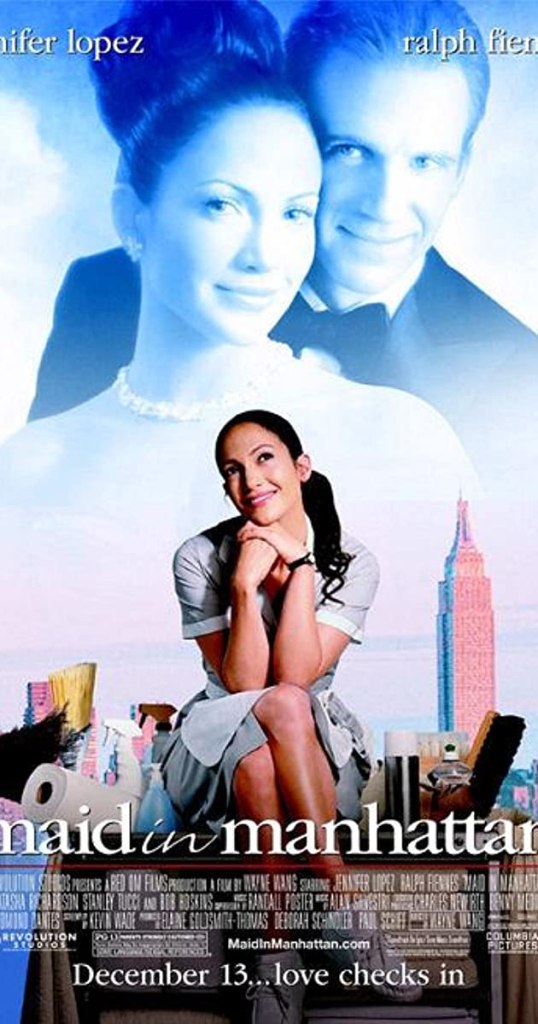
Guilty Pleasure No. 50: Maid in Manhattan (dir by Wayne Wang)


Whenever I see that the 2002 film, Maid in Manhattan, is going to be playing on HBO or Cinemax, I always think to myself, “I can’t understand why everyone hates on this film.  I mean, it’s not that bad.  It may be predictable and silly but it’s kind of sweet and Jennifer Lopez and Matthew McConaughey have a tame but sexy chemistry.”

Of course, then I watch the film and I discover that Maid in Manhattan is not the film where Jennifer Lopez and Matthew McConaughey fall in love.  That’s The Wedding Planner.  Instead, Maid in Manhattan is the one where Jennifer Lopez is a maid who works in a big fancy hotel and who is a single mother to a precocious child who is obsessed with Richard Nixon.  Maid in Manhattan is also the one where Jennifer Lopez falls in love with Ralph Fiennes.  Fiennes plays a candidate for the U.S. Senate.  Everyone is worried that he’ll never make it to Washington if people discover that his girlfriend is a maid.  I think his bigger problem is that he’s a Republican running for the U.S. Senate in New York.  (At least, I assume he’s a Republican because — as we learn from his conversations with Lopez’s son — he certainly seems to know a lot about and be rather sympathetic to Richard Nixon.)

I still like Maid in Manhattan, though perhaps not as sincerely as I like The Wedding Planner.  Some of that is because Maid in Manhattan takes place during the Christmas season and I love a good wintry romance.  Some of it is because this is probably the only mainstream film to feature people discussing the good points of Richard Nixon.  There’s the fact that Jennifer Lopez is always perfectly cast as someone determined to make something out of her life, regardless of whether or not the world supports her or not.  She’s always had the ability to make steely ambition sympathetic and that’s a good ability to have when you’re playing a maid who is determined to get promoted into management.

Finally, there’s the odd romantic pairing of Ralph Fiennes and Jennifer Lopez.  It’s one of those things that shouldn’t work and yet, strangely, it does.  Fiennes always brings a certain off-center, neurotic energy to his performances, which not only explains why he’s played so many villains but also why it’s strange to see him starring in a romantic comedy.  And yet, that odd energy is exactly what Maid in Manhattan needs.  It keeps the viewer on their toes and it makes the surprising discovery that Fiennes and Lopez have romantic chemistry all the more rewarding.

Don’t get me wrong, of course.  This is a deeply silly movie and there’s a lot of less than sparkling dialogue and the plot falls apart if you even start to think about it.  The entire story revolves around mistaken identity, with Fiennes not realizing that Jennifer Lopez is a maid and …. well, it’s all a bit unnecessarily complicated.  The film also takes Fiennes’s political aspirations a bit too seriously.  It’s not quite as bad the whole thing with Matt Damon running for the Senate in The Adjustment Bureau (“Due to his charming concession speech, he will someday be elected President,” — whatever, Beto) but it gets close.

But, still — I love romance and I love New York and the pairing of Jennifer Lopez and Ralph Fiennes in Maid in Manhattan is just too strange (and oddly effective) for me to resist.

Previous Guilty Pleasures

  1. Half-Baked
  2. Save The Last Dance
  3. Every Rose Has Its Thorns
  4. The Jeremy Kyle Show
  5. Invasion USA
  6. The Golden Child
  7. Final Destination 2
  8. Paparazzi
  9. The Principal
  10. The Substitute
  11. Terror In The Family
  12. Pandorum
  13. Lambada
  14. Fear
  15. Cocktail
  16. Keep Off The Grass
  17. Girls, Girls, Girls
  18. Class
  19. Tart
  20. King Kong vs. Godzilla
  21. Hawk the Slayer
  22. Battle Beyond the Stars
  23. Meridian
  24. Walk of Shame
  25. From Justin To Kelly
  26. Project Greenlight
  27. Sex Decoy: Love Stings
  28. Swimfan
  29. On the Line
  30. Wolfen
  31. Hail Caesar!
  32. It’s So Cold In The D
  33. In the Mix
  34. Healed By Grace
  35. Valley of the Dolls
  36. The Legend of Billie Jean
  37. Death Wish
  38. Shipping Wars
  39. Ghost Whisperer
  40. Parking Wars
  41. The Dead Are After Me
  42. Harper’s Island
  43. The Resurrection of Gavin Stone
  44. Paranormal State
  45. Utopia
  46. Bar Rescue
  47. The Powers of Matthew Star
  48. Spiker
  49. Heavenly Bodies

Get Ready For Christmas With Santa and The Ice Cream Bunny!


Patrick tried to warn me.

When I told him that I was planning on watching 1972 film, Santa and The Ice Cream Bunny, he warned me that it would totally change the way that I viewed Christmas and probably not for the better.  But, you know me.  When I get an idea in my head, I simply have to do it.

Despite all the warnings, I watched Santa and the Ice Creamy Bunny.  I made Jeff and my friends Johnny and Jim watch it with me.  Leonard nearly joined us but he was smart enough to think twice. Santa and the Ice Cream Bunny was like nothing that any of us had ever seen before.  We all just kind of watched it like, “What the Hell is happening?!”

The plot — well, who knows?  Apparently, Santa is stuck in Florida and he calls a bunch of kids to come help him out.  It turns out that the kids are pretty stupid so not only do they fail to rescue Santa but Santa also has to tell them a story to keep their spirits up.  The version that we watched featured the story of Jack and the Beanstalk.  Apparently, there’s another version that features Thumbelina.  Regardless, Santa was probably doing some pretty serious drugs when he came up with the story.

Eventually, a human-bunny hybrid shows up and helps Santa transport back to North Pole.  Christmas is saved!

Interestingly enough, it’s never really explained how Santa came to be stuck in Florida in the first place.  Santa gives off a definite beach bum vibe and …. well, there’s a part of me that kind of doubts whether or not Santa was actually Santa Claus at all!  For all we know, he could just be some jerk with a sleigh and red suit.  That said, the Ice Cream Bunny was definitely for real.

As Patrick already pointed out in his review of the film, Santa and the Ice Cream Bunny is not a particularly good film but I do feel like it’s one that everyone should watch at least one.  It’s just so weird.  Plus, if you watch the version with Jack and the Beanstalk, you will totally get the giant’s theme song stuck in your head.

So, with all that in mind, please enjoy Santa and the Ice Cream Bunny!

Holiday Film Review: A Very British Christmas (dir by Steven Nesbit)


2019’s A Very British Christmas tells the story of Jessica (Rachel Shenton), a world-famous singer who misses her flight to Vienna and somehow ends up stuck in a small country village in England.  Now, to be honest, I’m not really sure how Jessica missed her flight or why she ended up in that village.  I probably missed some important dialogue in the beginning to explain the problem with the flight and arriving in the village had something to do with getting too relaxed on a train.  But, to be honest, in the grand scheme of the film’s overall story, it really doesn’t matter why she’s in the village or why she missed her plane.

Instead, what’s important is that it’s nearly Christmas and Jessica needs a place to stay.  Fortunately, the local B&B is owned by a handsome widower named Andrew (Mark Killeen).  Andrew lives with his adorable daughter and his caring mother.  He’s not only a perfect host but he’s also an aspiring artist and he’s also the one man in the village who can hopefully convince the rest of the landowners not to sell out to a mining company….

Does all this sound familiar?  This may be a very British Christmas but it’s also a very Hallmark-y Christmas, even though this is not technically a Hallmark film.  That said, it has everything that you would typically expect from a Hallmark Christmas film.  Rachel and Andrew fall in love.  They do Christmas stuff.  They tour the countryside.  Rachel has to decide whether to stay in the village or to leave so that she can continue with her career.  You already know what’s going to happen.

I have to admit that I do wish that the film had been a bit more British.  Nowadays, when I hear the term “Very British,” I assume that means that there will at least be a fierce debate over Brexit, a good deal of casual profanity, and a lot of football talk.  Instead, this movie takes place in the type of British village that we Americans like to fantasize about, the place where all of the streets are cobblestone, all the citizens are friendly and earnest and everyone has mince pies for breakfast.

That said, it’s a sweet movie and, if you like this sort of thing, you should enjoy A Very British Christmas.  The scenery is nice, the actors are all likable, and the Christmas cheer cannot be denied.  One thing that I particularly appreciated about this film is that Rachel wasn’t presented as being someone who hated Christmas or who needed a man to show her how to embrace the holiday spirit.  Instead, Rachel pretty much falls in love with both the village and the B&B as soon as she sees it.  She’s not a snob or a cynic who needs be taught the importance of family and love.  Instead, she’s a nice person who meets a bunch of other nice people in a nice village and they all have a nice holiday.  You may have noticed that the key word here is “nice.”  There’s no darkness to be found in A Very British Christmas.  Andrew is a surprisingly cheerful widower and everything pretty much works out wonderfully for everyone.  Yay!