Lisa Reviews An Oscar Nominee: The Citadel (dir by King Vidor)


The 1938 Best Picture nominee, The Citadel, is about a doctor who briefly loses his way but — don’t worry! — he eventually finds it again.

The film opens with the following title card:

This motion picture is a story of individual characterizations and is in no way intended as a reflection on the great medical profession which has done so much towards beating back those forces of nature that retard the physical progress of the human race.

Having gotten that out of the way, it goes on to tell the story of Dr. Andrew Manson (Robert Donat), an idealistic British doctor who serves his apprenticeship in rural England and who eventually ends up in Wales, trying to figure out why all of the miners seem to developing a mysterious cough. Along the way, he marries the always supportive Christine (Rosalind Russell, doing a lot with an underwritten role). Unfortunately, Dr. Manson discovers that being a doctor is not always an easy life. He’s frequently underpaid and underappreciated. His patients are often suspicious and argumentative and the medical establishment is hesitant to accept change. When the frustrated Dr. Manson returns to London, he discovers that he can make a fortune by working as a doctor for the type of wealthy people who are always willing to spend a little extra money on the latest fad treatment. With the encouragement of the decadent Dr. Lawford (Rex Harrison), Manson abandons his old ways and he’s finally able to make some money off of patients who will basically do anything that he tells them to do. However, a personal tragedy forces Manson to reexamine his life and consider why he became a doctor in the first place.

The Citadel is a coming-of-age film, one the follows Dr. Manson from the time when he’s a young doctor in need of a mentor until he himself is the one who is doing the mentoring. It gets off to a bit of a slow start. To be honest, I found Manson’s early apprenticeship to be almost as tedious as Dr. Manson found it to be. Things pick up a bit once Manson is on his own, fighting for the rights of miners or trying to find some sort of ethical justification for only treating the rich. If Robert Donat seems oddly hesitant during the first half of the film, he’s undeniably compelling during the second half. Though Dr. Manson has many scenes in which he rails against ignorance and injustice, Donat wisely resists the temptation to go overboard while portraying his indignation and, as a result, The Citadel never slips into melodrama. Donat doesn’t play Manson as being a crusader but instead as just being an often frustrated professional who knows that he’s being prevented from doing his best work. Director King Vidor, who made several films about thwartded visionaries, was never a particularly subtle director but Donat’s performance goes a long way towards making Vidor’s messianic tendencies tolerable.

Donat gets good support from the rest of the cast, especially Ralph Richardson in the role of his sometimes mentor. That said, Donat is still definitely the main reason to watch The Citadel, which is an uneven thought ultimately worthwhile film. The Citadel is very much a film of 1938 and it’s slow pace, earnest seriousness, and dialogue-heavy style will undoubtedly be an issue for some people watching the film in 2021. Watching a film like The Citadel today requires a willingness to adjust to the aesthetics of a past age. This is a film that will definitely be best-appreciated by those who aren’t unfamiliar with spending an entire weekend watching TCM. But you know what? It’s good to watch old movies. You can’t understand the present or prepare for the future if you’re not willing to look at the past.

The Academy nominated The Citadel for Best Picture. It was one of the first British films to be so honored (though not the first, that honor went to The Private Life of Henry VIII). However, it lost to Frank Capra’s You Can’t Take It With You. Though Robert Donat lost the Oscar for Best Actor to Spencer Tracy in Boys Town, he would be rewarded the very next year for his performance in Goodbye Mr. Chips. Among those who Donat defeated was Clark Gable, nominated for playing Rhett Butler in Gone With The Wind, a characters that Margaret Mitchell always said she envisioned as being played by Robert Donat.

Film Review: Operation Varsity Blues: The College Admissions Scandal (dir by Chris Smith)


In Operation Varsity Blues, Matthew Modine plays Rick Singer, the real-life “college admissions consultant” who was one of the many people involved in the 2019 College Admissions scandal.

Singer was the former basketball coach who helped the rich and famous get their children into the right Ivy League schools. As the film shows (and as you probably already know), he did this by faking test scores, faking athletic activities, and often arranging for money to exchange hands. The film not only features Modine and others actors acting out the actual conversations that Singer was taped as having with his wealthy clients, it also features interviews with a few of Singer’s acquaintances and with the various journalists who covered the scandal. It’s a documentary with dramatic recreations.

And that’s fine. Modine does a good enough job portraying Rick Singer, playing him as essentially being a sleazy salesman who knew exactly what to say to the parents who were desperate to get their child into a prestigious university. (The film reveals that Singer would often lie to his clients, brainwashing them into believing that there was no way their children would be able to get into USC or Harvard without his help.) Unfortunately, with his gray hair and, his nervous smile, Matthew Modine as Rick Singer bares an odd but definite resemblance to the great Eric Roberts and, as I watched Operation Varsity Blues, I found myself thinking about how great it would be to see a film in which Eric Roberts did play Rick Singer. (I mean, seriously, Singer just seems like a perfect Eric Roberts role.) That may sound like a petty complaint but it does get at a bigger issue. Operation Varsity Blues is 100 minutes long but, despite its slightly different narrative format, it still doesn’t tell us anything that we couldn’t have learned from all of the other documentaries and dramatic adaptations based on the college admissions scandal. Even with the reenactments and the chance to hear Singer’s own words, Operation Varsity Blues still doesn’t tell us anything new about the scandal or why it happened. If nothing else, Eric Roberts and his neurotic screen presence would have put a new spin on a now-familiar story,

To be honest, the hybrid, docudrama format actually works against the film. On the one hand, you’ve got the real people telling their story in talking head interviews. But every time you start to get into their stories, the film cuts away to a reenactment and the film goes from being a documentary to being a low-budget Matthew Modine film. The film would have worked better if it had chosen to be either a documentary or a drama. By trying to be both, the end result is a movie that often seems disjointed and leaves you still feeling as if you haven’t actually gotten the entire story.

Finally, Lori Loughlin and her husband are featured in the documentary, though only in news footage. At one point, it’s revealed that after their daughter was accepted to USC, her high school guidance counselor called the college to tell them that Olivia Jade was never on her school’s rowing team, regardless of what her application said. Apparently, Lori and her husband got very angry about the counselor doing this and you know what? They had every right to be pissed off. Why is a guidance counselor trying to keep one of his students from getting into a good college? I mean, how was it really any of his business to begin with? That’s something that I would have liked to have seen explored in a bit more detail. Instead, the film just hurries along to another reenactment of Rick Singer explaining how to cheat on the ACT. (I’m still amazed that people spent that much money to do something as easy as cheat on a standardized test. I mean, it’s not that difficult.)

Unfortunately, the entire film is like that. It raises some interesting points but it ultimately leaves you frustrated by its refusal to do anything more than scratch the surface.

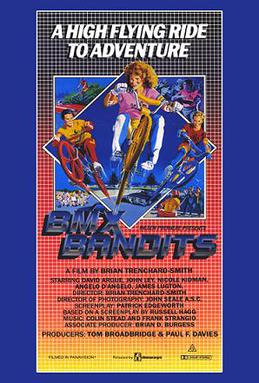
Film Review: BMX Bandits (dir by Brian Trenchard-Smith)


Bicyclists!

Oh, don’t even get me started on people who ride bicycles. Don’t get me wrong. I own a bicycle. I like to ride my bicycle occasionally, though only in the park and never in the street. They’re good exercise. They’re good for the environment, I guess. They don’t kill as many people as cars do, I assume. That said, professional bicyclists — and by that, I mean the ones who don’t even own a car — drive me crazy.

Don’t even pretend that you don’t know what I mean. You’re trying to drive to work or the grocery store or maybe you’re just taking a nice drive to clear your head. You’re tapping on the accelerator. You’re going over 60 mile per hour because there aren’t any cops around. Everything’s just fine and then suddenly …. you get stuck behind some jerk on a bicycle. He’s got his helmet on. He’s got his tight little bicycle shorts and his fluorescent shirt. He’s peddling along, all hunched over and with his ass up in the air, like that doesn’t make him look like a total idiot.

And then, you have to slow down. You’re have to be careful that you don’t accidentally run him over. You have to watch his arms because his stupid little bicycle doesn’t have a goddamn turn signal or a brake light. When you reach a red light, he sits there on his bike with one hand on his hips and the other hand holding up his little water bottle, from which he drinks as if he’s spent the past week in a desert. And you’re left to wonder why this guy is even here, riding his bicycle down a busy street that doesn’t even have a bicycle lane. The worst part of it is the smug look of satisfaction on his face as he looks back at your car and thinks, “I may be inconveniencing everyone but at least I’m making a difference.”

Considering my anti-bicyclist feelings, I may not have been the ideal audience for the 1983 Australian film, BMX Bandits. Fortunately, though, the teenager bikers in this film were all extremely fast and very stunt-orientated. These bikers weren’t interested in using their bikes as a symbol of moral superiority. Instead, they were more about using them to jump over shopping carts and to ride across the beaches of Sydney. One of the bikers was played by a 16 year-old Nicole Kidman and she managed to bring at least a hint of reality to even the most absurd pieces of dialogue.

That’s a good thing because BMX Bandits is, even by the standards of a bicycle film from the early 80s, is a thoroughly absurd film. A group of bank robbers lose a box of walkie talkies. Three BMX bike enthusiasts find the box. This leads to a long chase through Sydney, as well as a sort of bizarre counter attack launched by hundreds of teenage BMX bike owners. The bank robbers don’t stand a chance! That said, I’m not really sure why, since the movie opened with them successfully robbing a bank, they couldn’t have just purchased a new box of walkie talkies. Interestingly enough, the police also spend a lot of time listening to walkie talkies, which can only lead me to believe that walkie talkies were a really huge deal back in 1983. This film is fascinated by them, to the extent that a more appropriate title for the film might have been Law & Order: Walkie Talkie Squad.

Anyway, what can you really say about something like BMX Bandits? It’s such a silly film that it’s almost impossible to review because to take it seriously is to miss the point. The villains are buffoons. The plot makes no sense. Nicole Kidman’s good, though you still only really notice her because you know what audiences in 1983 did not know, that she’s future Oscar winner Nicole Kidman. At the same time, the scenery is lovely and there’s an extended scene that takes place in a cemetery that has some nice atmosphere even if it does go on a bit too long. There’s not really a lot to be said about BMX Bandits but at least it won’t slow down traffic.

Ghosts of War


(Dir Eric Bress)

Review by Case Wright

What makes you you? Better yet, what’s the meaning of life? Lucky for you, I know the answer to both of these questions. You are your experiences. That’s it. The meaning of life is choice. You are a sum of your experiences and choices. Life is a series of choices from the lowliest earth worm going into soil or the sun to a person deciding to risk their life to save themselves or their own skin. Sorry, the meaning of life isn’t more exciting, but that’s it just the same. Choice after choice after choice is what life is and what makes you you are the results of those choices. You may now go about your business.

Ghosts of War was written and directed by Eric Bress for Netflix. I am very grateful to Eric Bress because without him we wouldn’t have Final Destination 2 or The Final Destination and that is a sad life indeed. FD2 is Super Awesome: there’s people sliced in half and trees that take your head off and death itself is really into Rube Goldberg machinations of killing you. Death is kinda bored and goes a little nutty.

Ghosts of War was a lot of fun. The ending was hard to watch, but not because it was poorly done; it was just pretty realistic. Also, GOW has Billy Zane that alone should make you watch it. I also liked that the film had both Brenton Thwaites and Alan Ritchson of Titans (See it on HBO Max), which is Breaking Bad levels of awesome! Yeah, I said it.

GOW centers around a WWII era platoon assigned to protect a house in France. When they arrive, they realize that the house quite haunted. Bress solves the why not leave the haunted house question by putting them into a loop, wherein, no matter where they travel, they are back at the haunted house.

There are some good scares and not just jump scares. It has the gross stuff that you loved in Final Destination 2, which must be a Bress signature. There’s at least three people who are immolated in this movie. If you miss the gore of Supernatural, this movie is for you!

Brenton and Alan both have some real stand out performances and make me want to re-watch Titans again because of it. Brenton and Alan play frustration, fear, and rage better than anyone I’ve ever seen.

On a personal level, I’m always watching how well people play Soldiers. This movie is VERY realistic. The characters talk like us, think like us, handle stress like us, and move like we really do. I could understand why and what they were doing at all times. It was amazingly accurate. I was very impressed and would recommend the movie just for its realistic portrayal of Soldiers. This movie accurately showed how Soldiers would react to a supernatural enemy. This doesn’t just happen. It was clear to me that the actors and director took care to do this correctly. It is appreciated.

The ending was a good twist and there were clever subtle clues along the way to lead you to solving the mystery. I would highly recommend this movie and hope to see Brenton and Alan work with this director again.

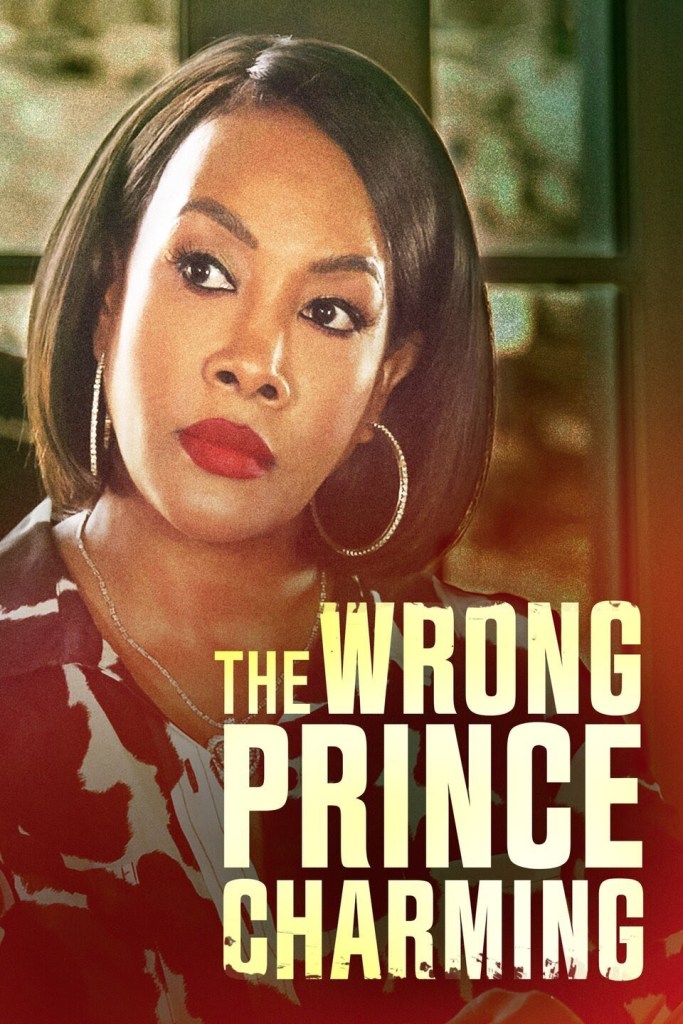
Lifetime Film Review: The Wrong Prince Charming (dir by David DeCoteau)


“It looks like you found the wrong prince charming!” Vivica A. Fox says towards the end of The Wrong Prince Charming.

I’ll admit that I cheered a little when Vivica said the line. If you know anything about Lifetime’s “Wrong” franchise, you know that Vivica A. Fox always plays a sympathetic authority figure who, at some point, says something along the lines of “Looks like he was the Wrong Poolboy” or “He messed with The Wrong Administrative Assistant.” One of the main reasons why people like me look forward to seeing the latest “Wrong” films is to see just how exactly the title is going to be worked into Vivica’s dialogue.

Make no doubt about it, there’s been a lot of “Wrong” films. We’ve had wrong blind dates, wrong tutors, wrong cheerleader coaches, wrong teachers, wrong real estate agents, wrong motel owners, wrong boyfriends, wrong girlfriends, and wrong houseguests. It only makes sense that we would eventually have a wrong Prince Charming.

The title character would be Prince Edward (James Nitti), who claims to be royalty but who, we learn fairly early on, is actually just a con artist who works with his assistant Liam (Jonathan Stoddard) to defraud people and corporations out of their money. Edward may be a charmer but he’s also a charlatan who is not above murdering anyone who he feels might be getting too close to the truth. That’s what greed does to people. That’s bad news for Anna (Cristine Prosperi), who is Edward’s latest target. Anna is an attorney. Among her clients is Bridget (Vivica A. Fox). After watching enough of the “Wrong” films, you really do find yourself wondering if maybe Vivica A. Fox is supposed to be playing the same character in every one of them. Maybe she just changes her name frequently as she travels across Canada and gets involved in thwarting the schemes of the wrong people. It would certainly explain a lot about the Wrong Cinematic Universe.

The thing with Lifetime’s “Wrong” films is that you either get them or you don’t. On the one hand, they’re pure melodrama. On the other hand, they’re also self-aware enough to poke fun at themselves. They’re not meant to be taken seriously, Instead, they’re diverting treats that are designed to keep the audience amused while they wait to hear Vivica pronounce someone to be “the wrong whatever.” They’re designed to be fun and usually, they are. The Wrong Prince Charming, for instance, has fun with the fact that everyone in the audience knows that anyone who claims to be a member of a royal family is probably lying to you. I’ve seen enough emails from enough financially burdened royals to know better than to trust anyone who claims to be a prince. When it comes to The Wrong Prince Charming, a good deal of the fun is to be found in catching all of Edward’s mistakes, all of the little moments when he accidentally lets his cover slip and reveals that he’s just some random commoner with a nice smile.

This is Cristine Prosperi’s 3rd wrong film She was also in The Wrong Cheerleader (“He messed with the wrong cheerleader!”) and The Wrong Neighbor. She’s also appeared in a handful of other recent Lifetime films, including Killer Competition and Murdered At 17. Before that, she played Imogen, the quirky stalker, on the final few seasons of Degrassi. Prosperi always does a good job in these films and the same is true here. She’s a sympathetic lead, even though it’s obvious from the start that she’s picked the wrong prince charming.

The Wrong Prince Charming is silly and fun, the type of movie that’s pretty much made to be watched with a snarky friend. I’m definitely looking forward to the next wrong film!

Lifetime Film Review: The Evil Twin (dir by Max McGuire)


If there’s anything I’ve learned from watching Lifetime films, it’s that anyone can afford a gigantic, three-story house with a basement, an attic, an Olympic-size swimming pool, and a guesthouse. Seriously, I don’t know why everyone always says it’s so difficult to get that first house because there are unemployed people in Lifetime films who live in mansions.

The other thing that I’ve learned from watching Lifetime films is that you’re screwed if you’ve got a twin. Seriously, your twin is always going to be evil. Your twin is always going to pretend to be you so that she can sleep with your boyfriend and murder your coworkers. Your twin is going to use her own DNA to frame you and then, once you’re imprisoned, she’s going to sell your identity to the Russian mob and then you’ll never get it back. Twins are bad news, or at least that’s the way it goes in the Lifetime Cinematic Universe. I’ve lost track of how many psycho twin films I’ve seen on Lifetime.

The most recent psycho twin film is named, appropriately enough, Evil Twin. Emily Piggford plays Emily, who flees from an abusive relationship and returns to her small hometown. She’s staying with her friend Lenah (Cory Lee, who also played Miss Oh on Degrassi) and she’s trying to get her life back together. Unfortunately, this prove difficult because random people keep walking up to Emily and yelling at her before telling her to stay out of their lives. Emily doesn’t know any of these people and is left to wonder why so many strangers suddenly hate her.

Emily also discovers that she has a twin sister named Charlotte! Charlotte, who lives in a beautiful house and who has longer hair than Emily, at first seems to be thrilled to have found her twin. She even asks Emily to turn her head so that Charlotte can see what the back of their earlobes look like. (That may sound like a strange request but I’d probably ask the same thing if I ever met my twin. Ears are fascinating things.) However, it soon turns out that …. well, you can probably guess. I mean, the movie is called Evil Twin, after all. Soon, Charlotte is pretending to be Emily and she’s attacking people left and right. You know how these things go.

Evil Twin is a bit more moody than the average Lifetime film. The fact that Emily is escaping from abuse and still dealing with the emotional trauma of her previous relationship gives the film a few more layers than the average Lifetime film and Emily Piggford does a good job playing both Emily and her twin sister. The film actually does manage to keep you guessing as to which twin is onscreen at any particular moment and, with Charlotte being considerably more clever and ruthless than the average Lifetime villain, the film manages to generate some suspense as Charlotte kills and maims her way through the people in Emily’s life. Evil Twin may not be the first Lifetime psycho twin movie and it definitely won’t be the last but it is one of the better ones.

Film Review: Robocop 3 (dir by Fred Dekker)


“Oh wow, Robocop can fly!”

An odd film, Robocop 3. Released in 1993, this was the third and final film in the original Robocop franchise. While the action is still set in Detroit and Robocop is back (albeit now played by Robert John Burke) and Nancy Allen shows up long enough to get killed off, Robocop 3 feels strangely separate from the previous two Robocop films. If the first two Robocop films were dark, satirical, and over-the-top in their violence, the third film is a family friendly adventure film that reimagines Robocop as being some sort of fair housing activist.

And, on top of all that, Robocop can fly now. Admittedly, that’s because Robocop gets fitted for a jetpack that he didn’t have in the previous films but he still looks incredibly ludicrous flying through the streets of Detroit. Since the Robocop armor has always looked very bulky and very heavy, it’s hard to believe that he could fly as quickly and as smoothly as he does in this film.

There’s a new set of villains too. Rip Torn has replaced Dan O’Herilhy as the CEO. And listen, I like Rip Torn. He will always be a hero to me because he bit Norman Mailer’s ear off. But Torn is far too obviously evil in the role of the CEO. O’Herlihy smartly played the Old Man as being avuncular and amoral. You could look at him and understand how he rose to his position of prominence. Torn’s performance is a bit more cartoonish but then again, Robocop 3 is the most cartoonish of the series.

The CEO wants to tear down Old Detroit so the residents of Old Detroit are fighting back. Leading the CEO’s forces — called the Rehabbers — is Paul McDagget (John Castle), who is a complete and total madman but who, at the same time, is never quite as memorable as Kurtwood Smith or Tom Noonan. He’s really just another generic militaristic bad guy. Normally, you would expect Robocop to be on the side of the company and the police but he’s been reprogrammed by an 8 year-old hacker named Nikko (Remy Ryan). Robocop is now working with the rebels. One of the rebels is played by Stephen Root, proving once again that you never know where Stephen Root might pop up.

Robocop 3 has none of the satiric bite of the first two movies. Instead of being a symbol of authoritarianism gone beserk, Robocop becomes a generic do-gooder. The violence is toned down and, with the addition of a kid sidekick, it’s obvious that this Robocop was meant to be a safer version of the character. Unfortunately, a safe Robocop equals a boring Robocop. You watch this movie and you wonder what happened to the Robocop who shot Ronny Cox out of a window.

“My friend’s call me Murphy,” he says towards the end of the film, “You can call me Robocop.” That seemed to indicate that Robocop had quite a future ahead of him of doing the right thing and standing up to big evil corporations but Robocop 3 was such a bomb at the box office that Robocop’s further adventures would only be seen on TV. The franchise was rebooted back in 2014, in a film that my friend Mark called “Rubber Cop.” After Rubber Cop fell flat, it was announced that Robocop would be rebooted for a second time, this time with a movie that would serve as a direct sequel to the first Robocop and which would ignore the sequels and the first reboot. Personally, I think it might be time to let Robocop retire. He had a good run.

Film Review: Robocop 2 (dir by Irvin Kershner)


Robocop 2, the 1990 sequel to Robocop, finds Detroit on the verge of getting nuked.

No, not nuked like that! Instead, there’s a new designer drug called Nuke and it’s tearing the city apart. Of course, Detroit has problems that go beyond just the new drug. The city is almost bankrupt. OCP, under the leadership of The Old Man (Dan O’Herlihy), is still running things behind the scenes. There’s still all sorts of petty crime to deal with. To be honest, it seems like the city has gotten even more out-of-control now that Clarence Boddiker is no longer around to oversee things.

Fortunately, Robocop (Peter Weller) is still patrolling the streets! But, for how long? There are lawyers who claim that Robocop is a huge potential liability and when you consider some of the stuff that went on during the first film, it’s hard not to see their point. His ex-wife is also suing the police department, claiming that Robocop has been harassing her. Despite being a robocop, our hero is still Murphy and he’s still haunted by memories of the family he once had. Or, at least, he is for the first few minutes of the film. That storyline kind of gets abandoned, along with a lot of other storylines.

While OCP is trying to develop a second robocop, one that can be mass produced and used to replace the human police force (the majority of whom have gone out on strike), a cult leader named Cain (Tom Noonan) is attempting to take over the city’s Nuke trade. Working with Cain is the usual gang of flamboyant malcontents. His second-in-command is a sociopathic child named Hob (Gabriel Damon). Hob may be a kid but he’ll kill anyone and he’ll enjoy himself while he’s doing it.

Robocop 2 is a bit of a mess. It apparently was rushed into production after the surprise success of the first film and filming started before there was even a completed script. As a result, there are a lot of storylines and themes that are brought up and then seem to mysteriously disappear. The film duplicates Paul Verhoeven’s satirical approach to the first film’s ultra-violence but, unfortunately, it does so in the most superficial way possible. Once again, we get the cheerful and vapid news reports about impending doom and once again, the violence is completely and totally over-the-top. But none of it carries any of the bite that was present in the first film. The first film worked because director Verhoeven actually was trying to make a larger point with all of the violence and the hints of growing fascism. He was attempting to challenge the audience and to get them wonder why they found all of the terrible thing happening in Robocop to be so entertaining. The sequel was directed by Hollywood veteran Irvin Kershner who was a good, workmanlike director but who also didn’t possess Verhoeven’s subversive sensibility. Far too often, Robocop 2 just feels like it’s going through the motions.

That’s not say that Robocop 2 isn’t occasionally an effective film. Dan O’Herlihy is wonderfully amoral as the Old Man and Tom Noonan is a worthwhile villain. Though Peter Weller has said that he wasn’t happy with how the overall film turned out, he still make for a sympathetic hero and he still manages to capture Robocop’s anguish without letting us forget that the character is still essentially a machine. I’m not really a big fan of films that use evil children for cheap shocks but Gabriel Damon is frequently chilling as Hob. Detroit is such a terrible place in the Robocop films that it’s not really a surprise when an evil child pops up and start shooting people. When compared to the first film, Robocop 2 may be a disappointment but it’s hardly a disaster.

Robocop 3 on the other hand….

Film Review: Robocop (dir by Paul Verhoeven)


Last week, I watched the original Robocop (along with Robocop 2 and Robocop 3) and I have to say that the first film holds up far better than I was expecting. Made and released way back in 1987, Robocop may be one of the most prophetic films ever made.

Consider the plot:

America is torn apart by crime and a growing gap between the rich and the poor. That was probably true in 1987 and it’s certainly true in 2021.

Throughout the film, we see news reports about what’s happening in the world. The news is always grim but the reporters are always cheerful and the main message is that, no matter what’s happening, the government is not to blame and anyone who questions the wisdom of the establishment is a fool. If that’s not a perfect description of cable news and our current state-run media, I don’t know what is.

The populace is often too busy watching stupid game shows to really pay attention to what’s happening all around them. I’m writing these words on a Wednesday, which means that Game of Talents will be on Fox tonight, immediately after The Masked Singer.

Detroit, a once proud center of industry, has now turned into a dystopian Hellhole where no one feels that they’re safe. Now, I don’t live in Detroit so I don’t know how true that is but I do know that most of the recent news that I’ve heard about the city has not exactly been positive. Also, this seems like a good time to point out that, even though the film is set in Detroit, it was shot in Dallas. Though the Dallas skyline has undoubtedly changed a bit since 1987, I still recognized several buildings while watching Robocop. Seeing Reunion Tower in the background of a movie that’s supposed to be set in Detroit was interesting, though perhaps not as interesting as seeing our City Hall transformed into the headquarters of Detroit’s beleaguered police force.

OCP, a multi-national conglomerate that’s run by the amoral but occasionally charming Old Man (played by the brilliant Dan O’Herlihy), has a contract with city of Detroit to run their police department. This certainly doesn’t seem far-fetched in 2021. Considering that we now have prisons that are run by private companies and that the government has shown a willingness to work with private mercenaries overseas, it’s not a stretch to imagine a city — especially one on the verge of bankruptcy — handing over the police department to a private company.

Two OCP executives — Dick Jones (Ronny Cox) and Bob Morton (Miguel Ferrer) — are competing to see who can be the first to create and develop a peace-keeping robot, a machine that will replace the need to employ (and pay) human police officers. Dick Jones goes with an actual robot, which malfunctions during a boardroom demonstration and guns down another executive. (The scene where the poor exec is targeted is both terrifying and darkly humorous at the same time. Particularly disturbing is how everyone in the boardroom keeps shoving him back towards the robot in order to ensure that they won’t accidentally be in the line of fire.) Bob Morton, however, takes a mortally wounded cop named Murphy (Peter Weller) and turns him into Robocop!

Robocop turns out to be a huge success and is very popular with the media. (Anyone who doubts this would really happen has obviously never watched news coverage of a drone attack.) As you can guess, Dick is not particularly happy about getting shown up by Morton and his robocop. Dick also happens to be secretly in league with Clarence Boddicker (Kurtwood Smith), the crimelord who blew Murphy apart in the first place.

(A gangster and a businessman working together!? I doubt that was shocking even in 1987.)

Robocop claims that he’s just a machine, without a past or emotions, but he’s still haunted by random flashes of his life as Murphy. Working with Lewis (Nancy Allen), Murphy’s former partner, Robocop tracks down Boddicker and his gang. A lot of people die in outrageously violent ways. (The scene where Boddicker and his gang use a shotgun to torture Murphy is still shocking, even after all these years.) The violence is so over-the-top that it soon becomes obvious that director Paul Verhoeven is deliberately trying to get those of us watching to ask ourselves why we find films like this to be so entertaining. On the one hand, Robocop is an exciting action film with a sense of humor. On the other hand, it’s the type of subversive satire of pop and trash culture to which Verhoeven would return with Basic Instinct, Starship Troopers, and Showgirls. This is the type of film that asks the audience, “What are you doing here?”

34 years after it was first made, Robocop remains a triumph. Peter Weller’s performance holds up well, as he does a great job of capturing Robocop’s anguish while, at the same time, never forgetting that the character is ultimately a machine, one that’s trapped in a sort of permanent limbo. I also really liked the performance of Miguel Ferrer, who takes a character who should be unlikable and instead makes him into a surprisingly sympathetic figure.

Of course, a film like this lives and dies on the strength of its villains and both Ronny Cox and Kurtwood Smith are ideally cast as Dick Jones and Clarence Boddicker. Kurtwood Smith especially took me by surprise by how believably evil and frightening he was. As a I watched the film, I realized that it was his glasses that made him so intimidating. Wearing his glasses, he looked like some sort of rogue poet, a sociopathic intellectual who had chosen to use his talents to specifically make the world into a terrible place. Boddicker’s crew was full of familiar actors like Paul McCrane, Ray Wise, and, as the always laughing Joe Cox, Jesse Goins. Interestingly enough, all of the bad guys seemed to genuinely be friends. Even though they were all willing to betray each other (“Can you fly Bobby?”), they also seemed to really enjoy each other’s company. That somehow made them even more disturbing than a group of bad guys who were only in it for the money. The villains in Robocop really do seem to savor the chance to show off just how evil they can be.

(Incidentally, for all of the Twin Peaks fans out there, this film features three members of the show’s ensemble: Miguel Ferrer, Ray Wise, and Dan O’Herlihy.)

Robocop holds up well as entertainment, prophecy, and satire. Though not much was expected from it when it was first released, it became a surprise hit at the box office. Needless to say, this led to a sequel. I’ll deal with that film in about an hour.

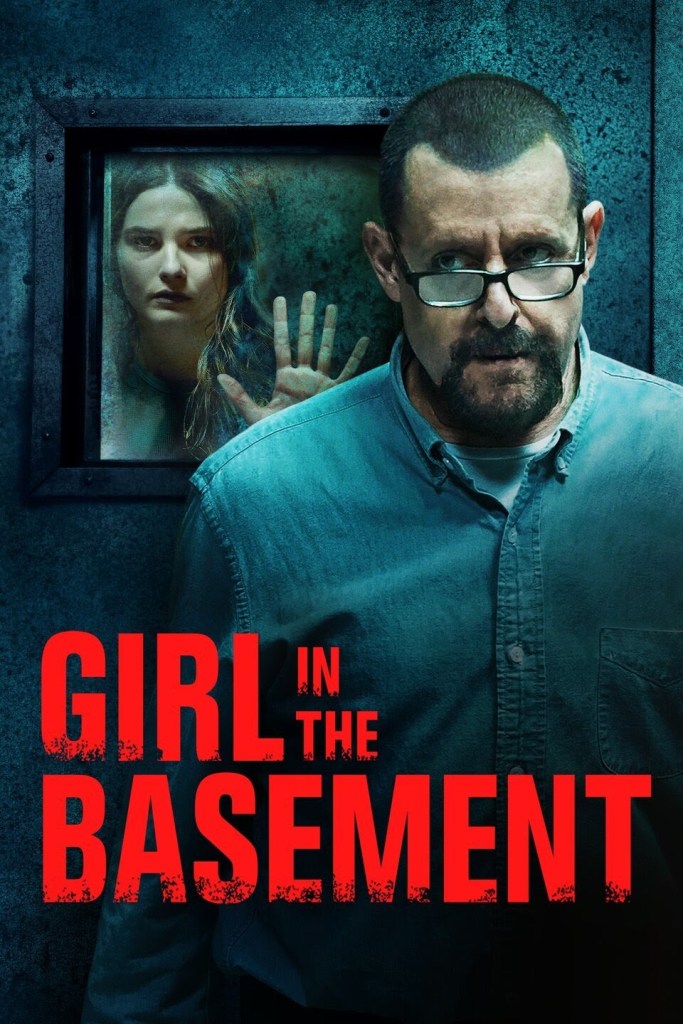
Lifetime Film Review: Girl In The Basement (dir by Elisabeth Rohm)


When Sara (Stefanie Scott) disappears shortly before her 18th birthday, her mother (Joely Fisher) and her older sister (Emily Topper) are naturally concerned. Significantly less concerned is her creepy father, Don (Judd Nelson). Don says that Sara has always been irresponsible and has always placed her own wants and desires above what’s best for her family. Don goes on to say that Sara had long been threatening to go on a road trip and that her plan was to see all 50 states before returning home.

The years pass and Sara never returns home. Don says that it’s obvious that Sara has decided never to return and that it’s best not to even worry about her. When Sara’s mother suggests maybe hiring a private detective, Don angrily says that he doesn’t want to hear another word about it. Sara has made her decision and he doesn’t want to talk about it anymore.

And the years continue to pass.

Of course, Don knows exactly where Sara is. He knows that, years ago, he tricked her into the going into the basement and that he then locked her in a secret room. Everyday, he takes her some food. He rewards her if he feels that she’s being good. He punishes her if he feels that she’s still being rebellious. As the years pass, Sara has several children, all fathered by Don. They live in the basement with Sara.

It’s a disturbing story, made all the more disturbing by the fact that it’s based on actual events. For 24 years, Elizabeth Fritzl was trapped, by her father, in a basement. Girl In The Basement is Lifetime’s take on the story. It was directed by Elisabeth Rohm, who has starred in several Lifetime films herself. Girl In The Basement is relentlessly grim, as it should be. It’s not particularly a fun film to watch but it’s impossible not to be inspired by the fact that the Sara, the film’s stand-in for Elizabeth Fritzl, managed to survive, no matter how terrible the situation became. She never gave up. Rohm does a good job of capturing the oppressive claustrophobia of Sara’s existence and Joely Fisher, Emily Tapper, and Stefanie Scott all did good job of showing how the victims of abuse often make excuses for their abusers. Even before he locks Sara in the basement, everyone in the family knows that Don is a monster but they’ve all come to accept it. They’ve all come to feel as if “That’s just Don.” Like most abusers, Don knows how to manipulate and how to gaslight his victims into accepting almost anything.

Judd Nelson does a good job in the role of Don. Unfortunately, we’re so used to seeing Judd Nelson play creeps that it was impossible to be surprised when he turned out to be one in this movie. The casting was a bit too on-the-nose and, whenever Nelson was onscreen, I found myself thinking about all over the other films that I’ve seen that featured Judd Nelson as a villain. That said, Nelson brought enough authenticity to Don’s sudden mood swings that he was convincingly menacing. It’s not just that Don locks his daughter in the basement and abuses her for 24 years while insisting that the family should just forget that she ever existed. It’s that he’s so damn proud of himself after he does it.

Girl in the Basement is well-done Lifetime true crime film, albeit not a particularly pleasant one to watch.