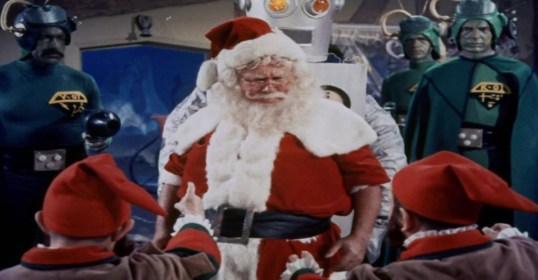
Watching the 1964 holiday sci-fi epic, Santa Claus Conquers The Martians, is a Christmas Eve tradition here at the Shattered Lens! So, sit back, turn on Kid TV, and get ready to sing!
S
A
N
T
A
C
L
A
U
S
HOORAY FOR SANTY CLAUS!
Watching the 1964 holiday sci-fi epic, Santa Claus Conquers The Martians, is a Christmas Eve tradition here at the Shattered Lens! So, sit back, turn on Kid TV, and get ready to sing!
S
A
N
T
A
C
L
A
U
S
HOORAY FOR SANTY CLAUS!
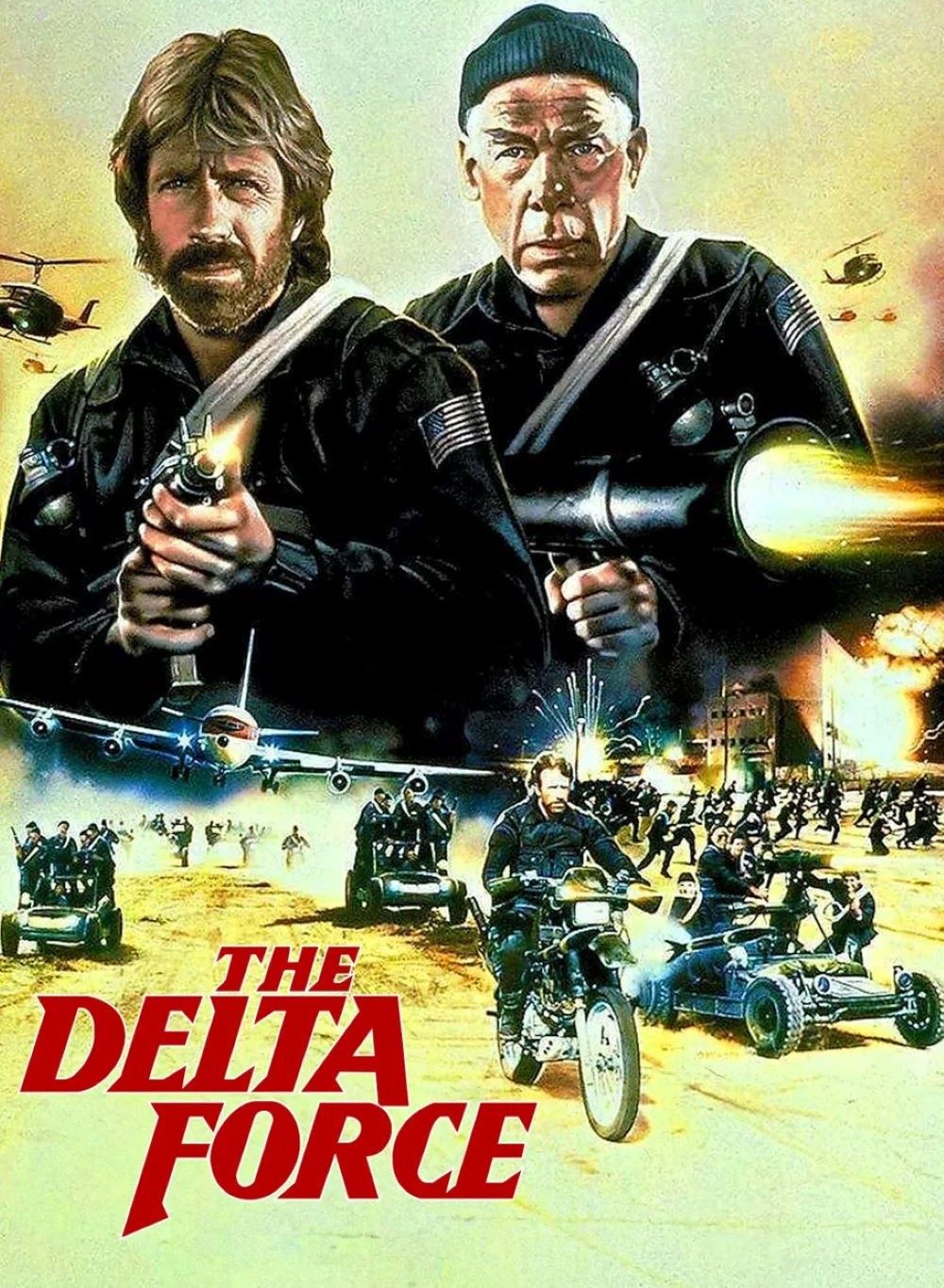
The Delta Force is the ultimate guilty pleasure from the ’80s, that rocket-bike-riding, Chuck Norris-kicking fantasy you pop on when you need two hours of unapologetic, brain-off escapism. It’s a hijacking thriller crossed with Cannon Films overkill, blending real Middle East tensions with pure action movie wish fulfillment, and yeah, it’s politically charged and dated as hell, but damn if it doesn’t deliver the kind of dumb-fun thrills that make you grin despite yourself.
Right from the jump, the film sets up its hook with a failed Delta Force raid in Iran, nodding to the real-life Eagle Claw disaster that still stung in 1986. Fast-forward, and Lee Marvin’s grizzled Colonel Nick Alexander gets yanked out of retirement when Lebanese militants hijack an Athens-to-New York flight, forcing it to Beirut and beyond. Enter Chuck Norris as Major Scott McCoy, the brooding ex-operator haunted by that botched op, who’s all too ready to strap on his gear when innocents are on the line. The setup drags you through passenger terror and terrorist demands, then explodes into rescue mayhem—it’s like the movie knows you’re here for the payback, and it serves it up hot.
As a plot, it’s pure popcorn simplicity: plane gets taken, hostages split by nationality and faith, planes hopscotch across terror hotspots, and Delta swoops in for the save. Drawing from the TWA 847 ordeal, the onboard stuff feels eerily real at first—sweaty close-ups of scared folks like Shelley Winters’ kvetching grandma or Martin Balsam’s anxious exec, turning the cabin into a pressure cooker. George Kennedy’s priest adds heart, and you almost buy the drama until Norris’ dirt bike starts spitting missiles, flipping the script to glorious absurdity. That’s the guilty pleasure pivot: from newsreel grit to arcade-game heroics, and you can’t help but love the whiplash.
Once the action ramps, The Delta Force leans into its B-movie soul with reckless abandon. McCoy’s team hits beaches, raids compounds, and yeah, that motorcycle sequence where Norris zips through baddies like a one-man apocalypse? Iconic cheese that screams “turn off your brain and enjoy.” It’s less about realism and more about catharsis—after watching hostages suffer, the third act’s bullet ballet feels like the justice porn we all secretly crave in these flicks. No deep strategy, just explosions and one-liners, perfectly tuned for that “hell yeah” rush that keeps you glued.
The cast is a riot of guilty-pleasure gold. Marvin, in his last role, growls through command with that unbeatable world-weary vibe, making every order land like gravitas wrapped in grit. Norris? Stone-faced perfection—says little, does everything, his quiet rage bubbling just enough to humanize the roundhouse legend. The passenger ensemble shines in panic mode: Winters chews scenery, Balsam frets convincingly, Kennedy prays with soul. Villain Robert Forster? Over-the-top terrorist glee, accent thick as plot armor, stealing scenes with gleeful menace that’s so cartoonish, it’s addictive.
Sure, the politics are a time-stamped minefield—terrorists as flat-out monsters, Middle East as villain playground, America as lone savior—but that’s part of the era’s guilty thrill. In a post-9/11 world, the stereotypes jar, yet for ’80s nostalgia buffs, it’s that raw, unfiltered patriotism dialed to eleven, the kind you laugh at now but cheered then. The film doesn’t pretend to balance views; it picks a lane—righteous rage—and floors it, making the righteousness feel perversely fun amid the preachiness.
Technically, it’s rough-around-the-edges charm personified. Menahem Golan directs with propulsive energy, keeping the 126 minutes zipping between dread and dazzle. Action’s shot clean—no shaky cam nonsense—with wide lenses capturing chaos in practical, pre-CGI glory that pops on a big screen. The score? Brass-blasting heroism that’s comically epic, sticking like glue and amping every slow-mo strut. Sets fake Beirut convincingly enough, backlots be damned, all fueling that immersive, low-budget magic.
The Delta Force thrives on its split personality: tense hijack bottle episode crashing into commando wet dream. Plane scenes build real unease, echoing headlines, but then rocket bikes and cheering crowds yank it back to fantasy ad. That clash? Pure guilty pleasure fuel—serious enough to hook you, silly enough to forgive its flaws, never letting tension sag.
Bottom line, embrace The Delta Force as peak time-capsule junk: terrorism tamed by ‘stache and firepower, geopolitics as blockbuster bait. Norris and Cannon diehards will fist-pump through every raid; casual viewers get a hoot from the excess. It’s flawed, fervent, and fantastically rewatchable— the kind of flick where you know it’s ridiculous, but two hours later, you’re humming the theme and plotting your next viewing. Guilty pleasure? Abso-freaking-lutely, and wear that shame badge proud.
Previous Guilty Pleasures
It’s not Christmas without the story of Ebenezer Scrooge and his visit with three ghosts. There have been numerous film versions of this story. The one below comes to us from 1938 and stars Reginald Owen in the role of Scrooge.
This version is surprisingly good, considering that it was apparently shot in a hurry. (The movie hit theaters just a few weeks after filming stopped.) Originally, Lionel Barrymore was going to play Scrooge but he had to drop out due to ill-health. Reginald Owen stepped in and gave a good performance as the famous miser.
(Barrymore himself would more or less play Scrooge a little less than ten years later in Frank Capra’s It’s A Wonderful Life.)
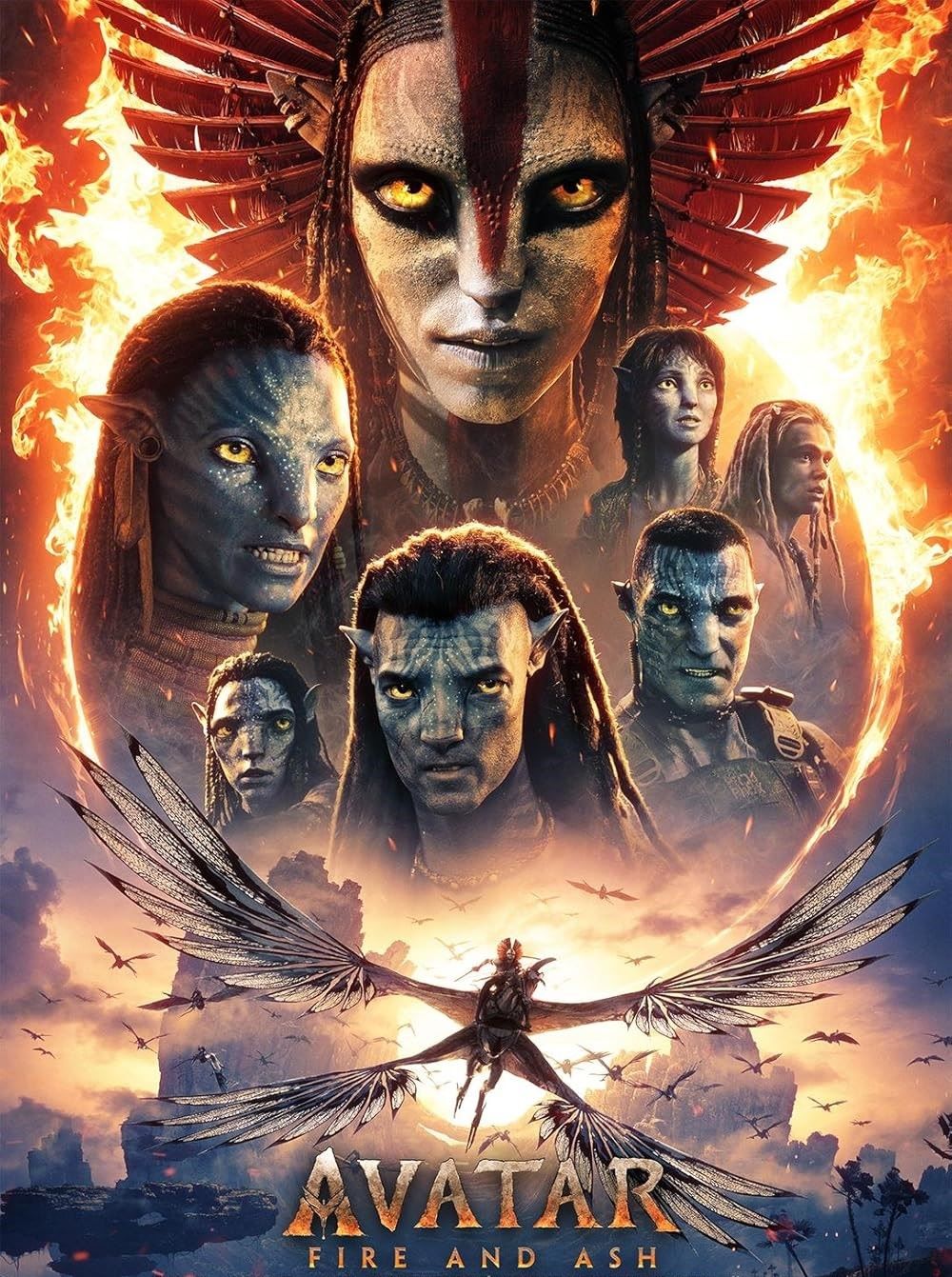
“The fire came from the mountain… Eywa did not come. So I went to the fire, and I learned its way” – Varang
Avatar: Fire and Ash plays like a massive, molten crescendo for Cameron’s Pandora saga—visually overwhelming, emotionally heavier than the last two entries, but also very familiar in ways that will either feel comfortingly mythic or a little déjà vu, depending on your tolerance for repetition. The ash-choked skies, lava rivers, and volcanic Na’vi clans are often more compelling than some of the story beats, and the final stretch delivers the kind of operatic, war-movie scale that makes the three-plus-hour runtime go down easier than it should, even though the film clearly didn’t need to run this long.
This time around, the series leaves behind the cool blues and oceanic calm of the previous chapter for a harsher, volcanic corner of Pandora that feels like a nature documentary shot in a furnace. Jagged black rock, roiling lava, and smoke-stained skies dominate the frame, with creatures and plant life that look as if they evolved to survive heat and ash rather than coral reefs and open water, giving the movie an immediately distinct visual identity even when the story rhythms feel familiar.
At the center of this environment are the Ash People, or Mangkwan clan, a Na’vi group shaped by relentless scarcity and violence. They ride creatures adapted to fire and ash instead of waves, cover themselves in soot-black markings, and fight using a deliberate blend of traditional Na’vi weaponry and repurposed human tech, putting them ideologically at odds not just with the human invaders, but with other Na’vi clans who still cling to older, more spiritual ways of living with Eywa.
The story picks up with Jake and Neytiri’s family still reeling from Neteyam’s death, and the film leans hard into unresolved grief as its emotional baseline. Jake doubles down on his protector persona, treating every decision as a matter of survival, while Neytiri’s pain expresses itself as barely controlled rage, and that emotional weather trickles down to their children, who are increasingly frustrated at being treated like liabilities. The problem is that a lot of this family dysfunction was already unpacked in the second film, so instead of evolving those arcs, the script often feels like it is rehashing earlier conflicts.
The dynamic between Jake and Lo’ak is the clearest example of this repetition. Jake’s exasperation with Lo’ak’s impulsive, run-toward-the-bullets mentality resurfaces again and again, echoing arguments audiences have already seen: the father insisting his son isn’t ready, the son bristling at never being trusted. These moments still have emotional sting, but they circle the same drain so often that entire conversations could have been trimmed or removed without sacrificing character depth, and tightening that thread alone would have shaved a noticeable chunk off the runtime.
Where the film becomes more thematically interesting is in how it reframes Pandora’s conflict. Instead of a simple “Na’vi versus humans” setup, it pits the more traditional Na’vi clans—those still committed to a symbiotic relationship with Eywa—against the Ash People, whose warlike nature and embrace of human weaponry make them ideological outliers. That split plays as a pointed echo of historical events in the Americas, where European colonial powers armed and favored specific Indigenous nations to fight their neighbors, turning native communities into proxies in conflicts that ultimately benefitted outsiders more than the people doing the actual bleeding.
The analogy becomes sharper in how human forces hang back and quietly exploit these new divisions. By giving the Ash People access to superior firepower and nudging them toward confrontation, the outsiders effectively inflame existing grievances and reshape local power dynamics, much like colonial regimes once did by supplying guns and promises to one group while framing another as the enemy. The result is a Pandora that feels more fractured and politically complex, where internal Na’vi conflict is as dangerous as external invasion.
Varang, the leader of the Ash People, is one of the film’s strongest assets. She’s portrayed as a true believer who has taken real suffering and twisted it into a doctrine of purifying destruction, convinced that burning the world is the only way to save it. The character blends zealotry and charisma in a way that makes her both frightening and compelling, and she wields faith, desire, and fear as weapons with unnerving ease, giving the movie a volatile energy whenever she’s on-screen.
Her alliance with Quaritch pushes the story into darker, more uncomfortable territory. What begins as a pragmatic arrangement—a trade of firepower and influence for help tracking Jake—evolves into a twisted, intimate partnership that underlines just how far both are willing to go to achieve their goals. Their connection is meant to feel toxic and predatory, and it succeeds on that front, though some viewers may find the intensity of those scenes off-putting compared with the relatively straightforward romance and family dynamics of earlier entries.
On a craft level, the film is almost absurdly polished. Even if it no longer feels like a quantum leap in visual effects, the execution is meticulous: volcanic vistas glow with molten light, ash storms swirl with tactile grit, and the interplay of fire, smoke, and bioluminescence gives many shots a painterly quality. The action sequences rely on clear geography and patient staging, so even when the screen is full of creatures, machines, and chaos, it remains surprisingly easy to track who is where and what’s at stake.
The final act is where the movie unleashes everything it has: parallel battles on land, in the air, and over volatile seas, stitched together into a long, escalating crescendo. Familiar James Cameron signatures return—heroic last-second saves, nature itself intervening, climaxes that mirror earlier films—but the pacing of these sequences is handled with enough control that they rarely collapse into pure noise. Still, you can’t help but feel that with a leaner, more disciplined buildup, that climax would have hit even harder.
Structurally, the story leans heavily on patterns that loyal viewers will recognize. There is yet another relocation to a new culture, another period of uneasy assimilation, another slow slide into open warfare, and another sacrificial, emotionally charged finale. Whether that comes across as mythic repetition or simple recycling depends on how patient you are with Cameron’s tendency to “rhyme” his narratives rather than reinvent them.
Most of the main character arcs feel like refinements rather than reinventions. Jake remains the guilt-ridden warrior father terrified of losing his children; Lo’ak edges closer to full-on protagonist status as the reckless but big-hearted son; Kiri’s mystical bond with Eywa deepens while remaining intentionally enigmatic; and Quaritch once again fills the role of relentless, personal antagonist. With the same father–son friction repeatedly dragged back into the spotlight, the emotional landscape can feel stuck in place, and a stricter editorial hand might have refocused attention on the fresher elements—like Varang and the Ash People’s worldview.
Tonally, the film pushes into darker territory while still staying within a mainstream rating. The battles feel more brutal, with a greater emphasis on the physical cost of arrows, explosions, and close-quarters fighting, and there’s a persistent sense that no one is truly safe. That harshness extends to the emotional side as well, as the Sully family finds itself cornered into choices where every option exacts a price, reinforcing the idea that survival in this version of Pandora demands constant compromise.
Thematically, Avatar: Fire and Ash weaves together ideas about faith, extremism, and the way trauma can be weaponized. The Ash People act as a distorted mirror of earlier Na’vi cultures: a society that has taken genuine pain and turned it into an excuse for cruelty, abandoning balance in favor of cleansing violence. Layered on top of that is the divide-and-rule dynamic, where more technologically advanced outsiders stoke internal conflicts for their own advantage, mirroring how colonial powers in the Americas encouraged Indigenous groups to fight one another while expanding their control and extracting resources.
Despite all the digital wizardry, the performances still manage to cut through. Jake and Neytiri’s scenes carry the weight of years of loss and sacrifice, and there’s a believable exhaustion in the way they argue and compromise. The younger characters, especially Lo’ak and Kiri, feel more rooted and central than they did before, which helps sell the gradual shift toward a new generation, even if the script keeps dragging them back through conflicts that feel like reruns instead of genuine evolution.
At the same time, the movie sometimes undercuts its best character work in its rush to reach the next big set piece. Quieter moments that might have deepened side characters or given the Ash People’s beliefs more nuance are often compressed or sidelined, while scenes rehashing Jake and Lo’ak’s issues are allowed to run long. If the film had trusted audiences to remember the family dysfunction carried over from the second installment and cut down on repeated arguments, those smaller, richer beats could have had more space—and the whole piece would likely feel tighter and more focused.
For viewers already invested in Pandora, Avatar: Fire and Ash is clearly built for the biggest screen available: the volcanic vistas, layered sound design, and carefully staged action set pieces are all engineered to overwhelm in the best way. It delivers a darker chapter without abandoning the earnest, sometimes corny sincerity that has always defined this series, and as a conclusion to this phase of the story, it feels emotionally full even as it insists on revisiting familiar territory and stretching its narrative longer than necessary.
For more casual viewers or anyone who found the earlier films predictable, this is unlikely to be the conversion point. The structure is recognizable, the dialogue is often workmanlike rather than sharp, and the movie leans so hard into repeating certain family conflicts that it can feel like the story is padding itself instead of evolving. But if you can live with those flaws—the repetition, the length, the occasional heavy hand—the combination of technical craftsmanship, volcanic imagery, heavy emotional stakes, and that quietly pointed commentary on colonial-era divide-and-rule tactics makes Avatar: Fire and Ash a fiery, flawed, but undeniably impressive ride.
The 2012 film Christmas Twister tells the story of what happens when several twisters hit North Texas on Christmas Day. For a film taking place in the DFW area (a region that is called the flatlands for a reason), there’s a surprisingly large amount of mountains around.
I mean check out the road leading to Fort Worth:
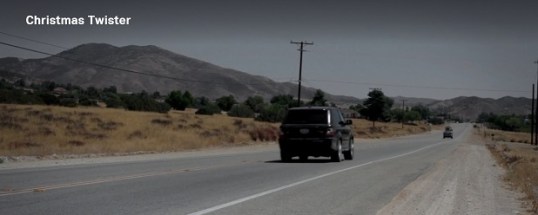
Check out the town of Gransbury!
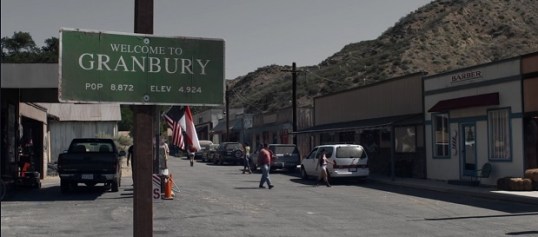
Guess which movie was definitely not filmed in Texas!
That said, Casper Van Dien manfully drives across the city, saving his children from the tornado and encouraging folks to stay inside. Plus, the film features a perfect shot that shows that the filmmakers did understand at least one thing about Texas:

Hell yeah! The flag of Texas and some other country!
Enjoy Christmas Twister:

Lisa recommended Holiday in Handcuffs to me. I said, “I need a break from Hallmark Christmas romances.” She said, “A.C. Slater in handcuffs.” I said, “I’ll hold onto the key.”
It’s Christmas time but Trudie (Melissa Joan Hart) doesn’t want to go home. She fears that she’s disappointed her parents (Timothy Bottoms and Markie Post) because she’s only a cook in a diner and she doesn’t have a rich boyfriend. Then she sees the obviously successful David Martin (Mario Lopez) having lunch at the diner so she decides to kidnap him, take him home for Christmas, and tell everyone that they’re a couple. That’s a crime, by the way.
I’m almost embarrassed about how much I enjoyed this movie. I respect the law and I don’t think you should break it, even to get a boyfriend. You shouldn’t kidnap anyone, especially at Christmas. Trudie and David won me over, though. This was made for ABC Family so even though it involves a kidnapping, it’s a very nice kidnapping. Trudie may have committed a felony and, at first, David isn’t happy about being kidnapped but soon, Trudie and David are falling in love. David goes from calling the cops to getting down on one knee. June Lockhart plays Trudie’s grandmother and calls the police “pigs.” That’s the power of Christmas. It’s a cute movie that features a heroine who does the exact thing that you should not try at home and who gets Mario Lopez as a result. Maybe it’s just the holiday spirit getting to me but I loved this unhinged Christmas romance.
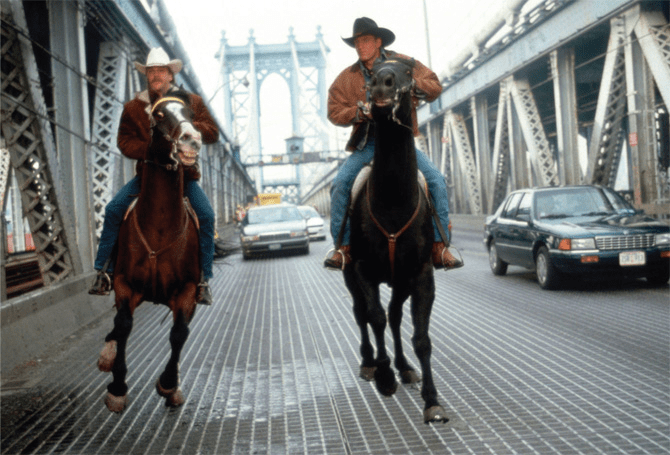
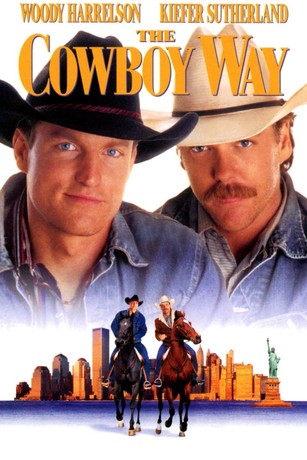
Happy 59th birthday, Kiefer Sutherland!
Sutherland portrayed my favorite TV character of all time, when he spent 8 seasons playing Jack Bauer in my favorite TV series of all time, 24. Raylan Givens (Timothy Olyphant) gave him a solid run for his money when I got around to watching the JUSTIFIED series a few years back, but I still believe Bauer edges him out. Another of my favorite shows when I was growing up was CHEERS. And a big reason for that is Woody Harrelson. CHEERS ran from 1982-1993, so when it started I was nine and when it ended I was twenty. I literally grew up on the show. I thought Harrelson’s portrayal of the dim-witted, but lovable and sweet character, Woody Boyd, was so funny. I remember being happy when he started making movies and had some solid success. I’ve always enjoyed THE COWBOY WAY, the film that teamed up Harrelson and Sutherland, so I decided to revisit the 1994 action-comedy on Kiefer’s special day.
IN THE COWBOY WAY, Woody Harrelson plays the somewhat dim-witted and overwhelmingly carefree Pepper Lewis, while Kiefer Sutherland plays the more responsible and extremely serious Sonny Gilstrap, two lifelong friends and rodeo champions from New Mexico. The story kicks off when their long-time friend Nacho Salazar (Joaquin Martinez) disappears after going to New York City to pick up his daughter Teresa (Cara Buono), who has been smuggled into the U.S. from Cuba. Pepper and Sonny decide to head to the big city themselves to track down Nacho, and soon find themselves taking on the murderous human trafficker, John Stark (Dylan McDermott), who murdered Nacho and is forcing his daughter to work in a sweatshop. With only their country boy common sense (well at least Sonny’s), their exceptional rodeo skills, and the help of an empathetic NY cop ((Ernie Hudson), Pepper and Sonny will do whatever it takes to find out what happened to Nacho and save his daughter from a life of modern day slavery.

THE COWBOY WAY is silly and unrealistic at times, with shifts in tone that will make your head spin, but I still love it anyway. This type of action-comedy was commonplace in the 80’s and 90’s, but you don’t see movies like this much anymore. I’ll admit that my personal nostalgia, as well as my lifelong appreciation of Sutherland and Harrelson, plays into my enjoyment of the film. It’s a movie that leans into the once popular formula of outsiders from the country being looked down upon by city slickers, and then proving themselves to be more than capable. Think CROCODILE DUNDEE, but without the romance. This is the kind of movie that is trying its best to give us a good time for our box office dollars. Many in Hollywood have forgotten how to entertain, and it’s such a breath of fresh air to watch movies that exist solely for that purpose, even when they’re not perfect.
As is often the case for me, the cast of THE COWBOY WAY plays a big factor in my enjoyment of the movie. Woody Harrelson is certainly over the top as the irresponsible New Mexico cowboy, but he’s also funny at times and more than capable of handling the action scenes. Kiefer Sutherland’s cowboy is the exact opposite, he’s serious, extremely responsible, and very capable. If nothing else, he needs Harrelson’s character in his life to help him remove the stick from his ass at times! Ultimately, it’s their relationship and banter that carries the film for me. Dylan McDermott is good as the sleazy villain, but if you’ve seen many 80’s and 90’s action movies, he’s pretty much exactly what you’d expect. As a fan of spaghetti westerns, I also enjoyed seeing the genre stalwart Tomas Milian pop up as McDermott’s soon-to-be ex-boss. It’s not a big role but this movie buff appreciated it. Finally, Ernie Hudson is just so likable as the kind-hearted and helpful horse-mounted cop. I like to think that he and Kiefer’s character kept a John McClane / Sgt. Al Powell type relationship going after the events of the movie.
Ultimately, in my opinion, THE COWBOY WAY may not be a great movie by critical standards, but it is a fun movie. If you’re in the mood for 90’s era action-comedy, featuring a great cast, fun stunts (e.g. men on horseback taking on New York City traffic), and a little Travis Tritt on the soundtrack, then you’ll probably have a good time with this one.

Oh no! Santa Claus has amnesia!
That’s the premise behind this 2000 Christmas movie, which features Leslie Nielsen as the amnesiac Santa. Having fallen out of his sleigh, Santa finds himself in Los Angeles. When a reporter (Steven Eckholdt) comes across Santa, he does a story about him. Santa becomes a mini-celebrity and gets a job as a department store version of himself. While his elves search for him, Santa struggles to recover his memory.
It’s a cute little made-for-TV movie. Leslie Nielsen as Santa? Who could resist that?
From David Lynch’s 1977 film, Eraserhead, here’s a reminder that, “In Heaven, everything is fine.”
And Heaven is apparently behind Jack Nance’s radiator.
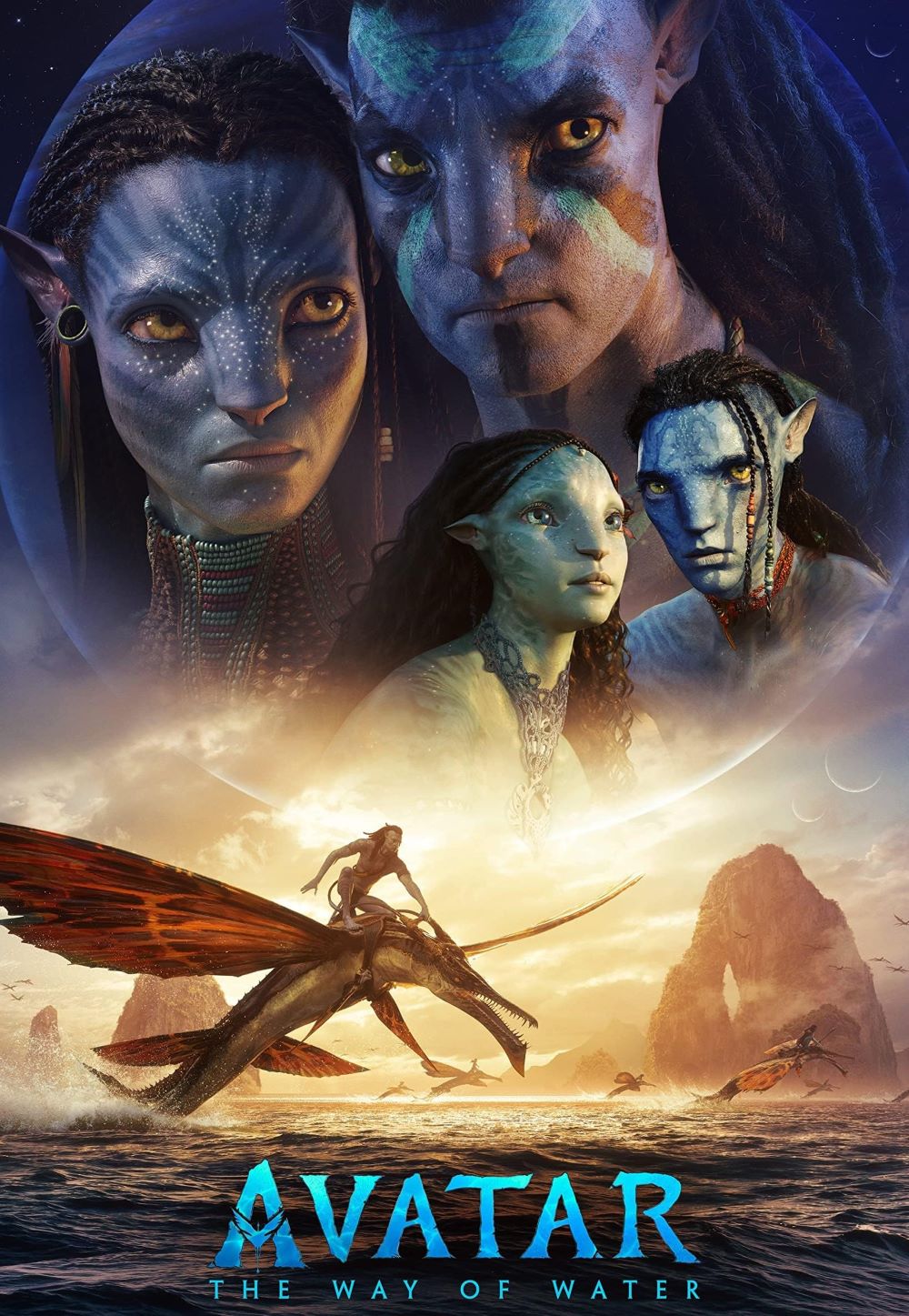
“I see now. I can’t save my family by running. This is our home. This is our fortress. This is where we make our stand.” — Jake Sully
Avatar: The Way of Water delivers jaw-dropping visuals and a sincere dive into family struggles, but it drags under its three-hour weight with repetitive plotting and uneven character depth that keeps it from breaking truly new ground.
James Cameron returns to Pandora over a decade after the original Avatar, catching up with Jake Sully and Neytiri as they’ve built a sprawling family amid fragile peace—only for human colonizers, the so-called Sky People, to crash back with upgraded tech, ruthless determination, and a deeply personal grudge led by a vengeful Colonel Quaritch reborn in Na’vi avatar form. This forces the Sullys into a desperate flight to the Metkayina, a reef-dwelling Na’vi clan whose ocean-adapted physiology and customs—broader tails for swimming, gill-like breathing aids, a deep spiritual bond with marine life—present a whole new cultural and environmental challenge, transforming the story from the first film’s jungle rebellion into a watery survival tale laced with themes of displacement and adaptation.
What truly sets the film apart, even if the story treads familiar “pursued heroes vs. imperial baddies” territory without bold twists, is how it masterfully expands the Avatar universe’s worldbuilding, turning Pandora from a singular bioluminescent jungle into a teeming planet with diverse ecosystems and cultures. The Metkayina villages perch on floating lattices of woven kelp and coral, lit by phosphorescent anemones pulsing like underwater stars, while daily life revolves around symbiotic ties with ilu (skittish six-finned mounts) and skimwings (leathery ocean skimmers); nomadic Tulkun society—intelligent, philosophical whale-like beings communicating via sonic songs—clings to a strict non-violence “tulkun way” brutally shattered by human whalers.
These layers emerge organically through the Sullys’ awkward integration, like mastering fluid sign language or breath-holds for deep dives, and the spectacle dazzles relentlessly, powered by advancements in hyperrealistic CG that continue to erode the uncanny valley effect on characters—Na’vi faces now convey micro-expressions of pain, joy, and exhaustion with lifelike subtlety, their skin textures responding to water and light in ways that feel organic rather than synthetic.
Bioluminescent reefs glow in electric blues and greens, iridescent fish schools dart through sun-dappled shallows, and massive Tulkun glide with skyscraper grace and scarred hides. Cameron’s pioneering underwater motion capture—actors in massive tanks layered with tactile CG—makes every bubble, flipper stroke, and coral sway palpably real, as Na’vi teens free-dive twisting kelp forests and maze-like atolls in lung-burning tension. The film also pushes 3D technology to new heights since the first film, baked natively into every frame rather than tacked on as a post-production gimmick—this integral approach ensures depth pops organically, from swirling plankton clouds enveloping swimmers to layered reef foregrounds framing distant horizons.
The action peaks in the third-act frenzy of ship crashes against waves, flare-lit dogfights, Tulkun rams crumpling hulls, and a claustrophobic flooding vessel breach where air dwindles second-by-second. Cameron’s chaos clarity—echoing The Abyss or Titanic—ties stakes to family peril, amplified by thundering sound (crashing surf, whale calls, Na’vi gasps) and Jon Landau’s IMAX polish into sensory overload.
Family drives the lived-in, flawed emotional core: Jake (Sam Worthington’s gravelly gravitas) wrestles fatherhood’s math—stern orders backfiring into guilt—as he clashes with impulsive Lo’ak (Britain Dalton’s sulky edge), whose outsider rage forges a bond with scarred Tulkun Payakan, flipping “monster” tropes for real agency; dutiful Neteyam buckles under expectations, innocent Tuk (Trinity Jo-Li Bliss) witnesses horrors, and mystic Kiri—Grace’s avatar-born daughter linked to Eywa—teases lore like planetary souls, while Neytiri (Zoe Saldana’s fiery sorrow) simmers with grief-fueled, mama-bear savagery, her outbursts piercing deeper than rifles.
These arcs convert invasions into gut punches on protection, belonging, parental failures, and war’s selfish costs—specific melodrama over generic heroism. Yet simplicity amplifies flaws over runtime: a chase loop (hunts, hides, teen trouble, repeat) grates, with middle sags of cultural lessons (sign language, ilu taming, Tulkun reverence) feeling like filler; humans are greed caricatures—whalers gutting pacifists for longevity goo amrita, suits enabling genocide—lacking nuance despite Earth’s biosphere desperation nods, preaching eco-colonialism to the choir. Neytiri gets benched post-roars (a co-lead letdown), Quaritch dangles complexity (death memories, Spider ties) but snarls relentlessly; reef archetypes (wise Tonowari, omen-Ronal, bully-to-ally Aonung) lopsided the cast, Tulkun elders out-nuancing humans.
The film’s themes land with sincere force: whaling atrocities, from harpooned flesh and bloodied seas to a mother’s primal rage, hammer home human irredeemability without much subtlety, while family adaptation explores “forest people” taunts, strained bonds, and Eywa’s mystical interventions that weave personal growth into planetary balance—heartfelt without ironic quips, either refreshing in its earnestness or manipulative depending on your taste. Pacing remains deeply polarizing, offering immersive vibes for world-huggers who savor the slow builds but feeling bloated and front/back-loaded for plot purists impatient with the expansion-heavy middle.
Ultimately, Avatar: The Way of Water triumphs as a visual banquet and saga extender, hooking viewers with its aquatic marvels, raw parental fears, peerless craft (hyperreal CG and improved 3D elevating it), and smart universe growth through new clans, beasts, and lore seeds—all sans true narrative reinvention, as bloated length, repetitive echoes, and flat foes keep it from pantheon status. Fans of Pandora dive in sated; skeptics surface impressed by the technical wizardry yet impatient with the sprawl. It’s pure Cameron—huge swings promising more sequels ahead. Worth submerging for the spectacle.
 Through the Shattered Lens