Back in frontier times, a warlock named Walter Machden (John Carradine) terrorized the citizens of the town of Oakmoor Crossing so they tracked him down and lynched him. Before he was hung, Machden cursed the town. A demon with a jack-o-lantern for a head terrorized the town until the Kelly Family defeated him and buried him underneath a cross.
Jump forward one hundred years. It is Halloween night and some drunk teenagers knock over the cross. Jack-O comes back to life and kills the teenagers. Jack-O sets out to get revenge on the Kelly family but, for some reason, he decides to kill their neighbors, some more teenagers, and a TV cable guy before going after his targets. It’s up to young Sean Kelly (Ryan Latshaw) to figure out how to defeat Jack-O for a second time.
The most interesting thing about Jack-O is that it features John Carradine, even though he died a full seven years before the movie was released. That either means that Jack-O had an unusually long post-production period or the Carradine scenes were shot for another movie and were clumsily inserted into Jack-O. Carradine was not the only deceased star to make an appearance in Jack-O. Cameron Mitchell, who passed away in 1994, also makes an appearance as a horror movie host. Because you can’t have a movie with Carradine and Cameron Mitchell without including Linnea Quigley, she appears as a babysitter who takes a lengthy shower. Fortunately, Linnea Quigley is still with us.
Overall, Jack-O is regrettable. The demon, with his Jack-O-Lantern head, is more likely to inspire laughs than screams and it never makes sense that Jack-O would take so much time to kill everyone except for the people that he is actually looking to kill. The best death involves a toaster but Jack-O doesn’t do anything with the toaster. Instead, someone just slips and sticks a utensil in the toaster, leading to a shocking death. Combine the poor acting with the poor special effects with notably ragged editing that often makes it unclear how much time has passed between scenes and you have a Halloween film that is no holiday.
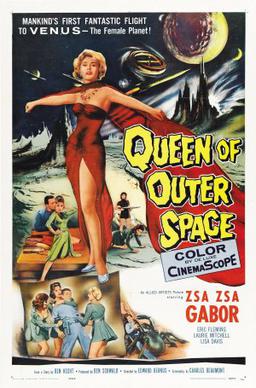
In 1958’s Queen of Outer Space, four rather dumb men take off in a spaceship from Earth.
There’s Lt. Larry Turner (Patrick Waltz) and Lt. Mike Cruze (David Wilcox), both of whom come across like they like to spend the weekend hanging out at their old frat house, playing beer pong. And then there’s Prof. Konrad (Paul Birch), who is smart because he knows what the word “atmosphere” means. And finally, in charge of the flight, is Captain Neal Patterson (Eric Fleming), who is upright and kind of dull.
The four men are supposed to be going to a space station but they get knocked off course by an animated laser beam and the ship crash lands on a mysterious planet that’s covered with cardboard rocks and plastic trees. Prof. Konrad takes one look at the planet and says that they’re on Venus.
Uh-oh! That’s not good! Isn’t Venus like a really bad place for human beings to find themselves?
Well, apparently not, because soon the four men are casually walking around the planet without so much as wearing a space suit or bringing along an oxygen supply. They even stop to get some sleep among the cardboard rocks. That’s when they’re captured by Venus’s inhabitants.
To the men’s shock, they discover that Venus is exclusively populated by women! The men are all like, “Hey, how you doing?” And the women are all like, “Silence, we have ray guns!”
Anyway, long story short, it turns out that Venus is ruled over by a disfigured queen (Laurie Mitchell), who hates men in general and Earth men in specific. She’s built a giant space laser that she’s planning to use to destroy Earth and it’s up to the men to stop her! Fortunately, they’ve got some help from Talleah (Zsa Zsa Gabor), a Venusian courier who has a wardrobe that’s to die for and who has apparently been waiting her entire life for men to come to Venus. When the Queen flirts with the captain, Talleah jealously exclaims, “I hate the Queen!” and that’s pretty much all it takes to start a revolution.
Needless to say, this is an incredibly sexist movie but, at the same time, it’s so goofy (in a 1950s sort of way) that you really can’t get too outraged by it. Instead, you just kinda cringe when Turner and Mike suggest that the captain needs to “turn on some of that old black magic” and invite the Queen out for a midnight stroll. Prof. Konrad quickly adds that Venus actually has several moons, though not all of them can be seen. I mean, it’s dumb but, at the same time, it’s just so 1958.
It’s really is a thoroughly ludicrous movie but, watching it, you get the feeling that the entire cast understood that it was ludicrous and they adjusted their performances accordingly. I mean, this is a movie that features Zsa Zsa Gabor putting on a mask and attempting to imitate the Queen while making absolutely no attempt to hide her trademark Hungarian accent. This is also a movie that features a giant rubber spider that pops up out of nowhere and for nor particular reason. I guess they just had the spider on set for the day and they decided to toss it in.
Queen of Outer Space is an incredibly silly movie but it’s entertaining in it’s own stupid way. Don’t take it too seriously. It’s only 80 minutes. Watch it for the experience.
Have you ever woken up and thought to yourself, “I’d love to see a movie where a youngish Jack Nicholson played a French soldier who, while searching for a mysterious woman, comes across a castle that’s inhabited by both Dick Miller and Boris Karloff?”
Of course you have! Who hasn’t?
Well, fortunately, it’s YouTube to the rescue. In Roger Corman’s 1963 film The Terror, Jack Nicholson is the least believable 19th century French soldier ever. However, it’s still interesting to watch him before he became a cinematic icon. (Judging from his performance here and in Cry Baby Killer, Jack was not a natural-born actor.) Boris Karloff is, as usual, great and familiar Corman actor Dick Miller gets a much larger role than usual. Pay attention to the actress playing the mysterious woman. That’s Sandra Knight who, at the time of filming, was married to Jack Nicholson.
Reportedly, The Terror was one of those films that Corman made because he still had the sets from his much more acclaimed film version of The Raven. The script was never finished, the story was made up as filming moved alone, and no less than five directors shot different parts of this 81 minute movie. Among the directors: Roger Corman, Jack Hill, Monte Hellman, Francis Ford Coppola, and even Jack Nicholson himself! Perhaps not surprisingly, the final film is a total mess but it does have some historical value.
(In typical Corman fashion, scenes from The Terror were later used in the 1968 film, Targets.)
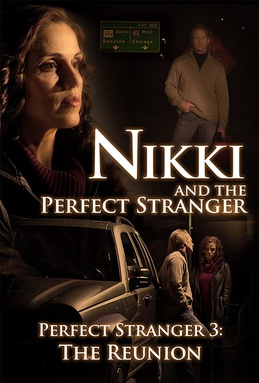
The third part of The Perfect Stranger trilogy finds Nikki Comiskey at a crossroads …. again.
The film begins with Nikki (now played by Julianna Allen) recapping how, many years ago, she was a high-profile attorney who, after having dinner with Jesus (Jefferson Moore), decided to ditch her legal career and devote herself to her family. (Nikki explains that she was a “closet agnostic” before she met Jesus.) Ten years after having dinner with Nikki, Jesus appeared to Nikki’s teenage daughter, Sarah, and encouraged her to not abandon the faith of her parents. However, while Sarah is off thriving at college, Nikki feels like her life is in a rut. Though she still believes, she no longer gets much out of going to church and, once again, her marriage is starting to feel strained.
A visit with her mom doesn’t go well. Mom wants to know why Nikki had to abandon her legal career. Nikki gets annoyed and storms out of the house. She gets in her car and starts to make the long drive home. She calls her husband and explains what happened. Her husband informs her that he’s going to busy working on the roof for a bit. (Hmmm …. I wonder if this seemingly random bit of dialogue is going to come up again towards the end of the film?) While Nikki is driving home, she sees a familiar figure standing on the side of the road.
Yes, it’s Jesus (though he’s currently going by Josh).
Nikki gives Jesus a ride and they discuss why Nikki is feeling so unsatisfied with her life. Along the way, they meet a trucker with a porn addiction and they take him to dinner so that Jesus can encourage him to go to rehab. (At the diner, Nikki tries to order a late night salad. Needless to say, that doesn’t go well.) Finally, Nikki gets a chance to help out a minister named Tony (Matt Wallace), who is a character in another film that Jefferson Moore made in which he played Jesus.
(In fact, I discovered that Moore also starred in a TV series called The Stranger, which was a spin-off of The Perfect Stranger films. So really, there’s an entire Perfect Stranger cinematic universe out there.)
My main impression of Nikki and the Perfect Stranger is that it was surprisingly short. With a running time of 63 minutes, it definitely felt more like an extra long episode of an anthology show than an actual movie. That said, Nikki and the Perfect Stranger doesn’t feel as preachy as the previous Perfect Stranger films. I imagine that’s because the previous two films featured Jesus “educating” an agnostic while this third one features Jesus checking up on an old friend and giving advice. Since he’s a bit less condescending and argumentative in this film, Jefferson Moore is far more likable here than he was in the previous films. As opposed to some of the films that I’ve watched this month, the emphasis is more on helping than on judging. (I can only imagine the tortures to which the Christianos would have subjected that trucker.) By the time the end credits roll, Nikki’s story has been efficiently wrapped up.
At the start of 1980’s The Day Time Ended, the Williams Family has relocated to the desert!
(Why the desert? I have no idea. I’ve been told that the hot air of the desert would be ideal for my asthma but then I’d have to live in the desert and, from what I’ve seen in the movies, bad things always happen in the desert. If it’s not aliens, it’s zombie cowboys.)
Grandpa (Jim Davis), Grandma (Dorothy Malone), Richard (Christopher Mitchum, looking a lot like his father, Robert), Beth (Marcy Lafferty), and their young daughter, Jenny (Natasha Ryan) have moved into a very nice ranch house that appears to be sitting in the middle of nowhere. The house comes with a barn, a few horses, and …. ALIENS!
At first, Jenny is the only one to notice the strange blue light that keeps glowing behind the barn. But soon, the rest of the family is seeing UFOs and weird (but kind of cute) creatures are knocking on the front door and saying hi. Lizard men appear in the distance and beckon for the family to follow them. Soon, the house itself is being zapped through time and space….
This is going to be a short review but, then again, The Day Time Ended is a short movie. With a running time of only 75 minutes (not including the end credits), The Day Time Ended feels less like a movie and more like an extended episode of The Twilight Zone. That said, if it was an extended episode of The Twilight Zone, it would be considered to be one of the more enjoyable episodes of the series. While none of the characters are particularly complex or deeply written, the cast is believable as a family and everyone does a good enough job that the viewer won’t want to see anything bad happen to any of them. (I’m also happy to say that all of those horses are really pretty and — fear not! — for once, no harm befalls any of the animals.) The motives of the aliens are kept ambiguous throughout the film, leaving the viewers as confused and intrigued as the family and the final shot is somehow both silly and tremendously satisfying at the same time. The Day Time Ended is a B-movie but it’s an entertaining B-movie.
Directed by B-movie specialist, John “Bud” Cardos, this is one of those movies where the cheapness of the special effects add to the film’s charm. Initially, the UFOs are represented by lights darting through the sky. (Residents of Texas will immediately think of our beloved and yet unexplained Marfa Lights.) When the UFOs are finally seen in close-up, they are obviously plastic models but, in this age of excessive CGI, there’s something undeniably charming about the idea of going to the trouble to build plastic models. The claymation aliens are adorable! Seriously, there are some films that you just can’t help but kind of love and, for me, The Day Time Ended is one of those films.
Scientists at an arctic base make an amazing discovery when they find the body of a prehistoric man that has been perfectly preserved in the ice. Dr. Stanley Shepherd (Timothy Hutton) and his fellow scientists suspect that the Iceman (John Lone) might be in a state of suspended animation. Instead of performing an autopsy when the body thaws it, the scientists attempt to resuscitate him.
And somehow, it works.
The Iceman, who is eventually named Charlie, is stunned to be in the modern world and does not know how to react to the scientists studying him. Only Dr. Shepherd treats Charlie as a human being instead of a laboratory specimen. Despite not speaking the same language, Charlie and Shepherd bond. Shepherd realizes that Charlie misses his family and eventually, he figures out that, when he was frozen, Charlie was attempting to stop the Ice Age by offering himself up as a sacrifice to a bird god. When Charlie sees a helicopter, he mistakes it for his god and starts tying to escape from the base. Realizing that Charlie will eventually be killed and experimented upon, Shepherd tries to help him escape.
If, and it’s a big “if,” you can overlook the implausibility of Charlie being in suspended animation for over 40,000 years, Iceman is actually a really good film with intelligent performances from both Timothy Hutton and John Lone. Lone is especially good as Charlie, capturing his confusion, fear, and eventually his heart. Even though he’s in a strange place and time, Charlie never stops thinking of his family and trying to get back to them. The film works because, like Shepherd, it understands Charlie is too good for the modern world.
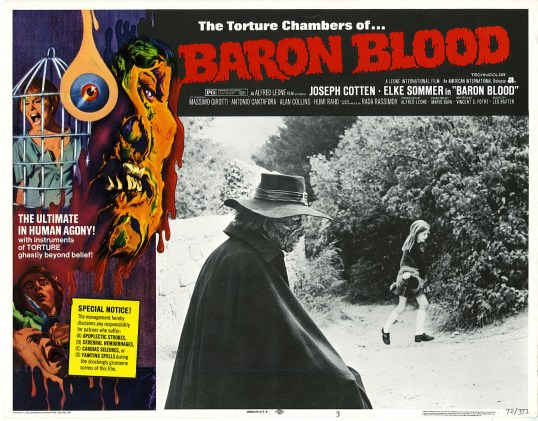
Directed by the great Mario Bava, the 1972 Italian film, Baron Blood, tells a story of gothic horror.
During the 19th century, there was no one as feared in Austria as Baron Otto Von Kleist. Much like the infamous Gilles de Rais, the Baron was a sadist who used his noble background as a cover for his macabre activities. In his castle, he murdered hundreds of villagers and, for that, he was nicknamed Baron Blood. He also had an accused witch burned at the stake. As she died, she cursed the Baron, saying that he would continually rise from the dead just so he could be killed again and again. When you think about it, that’s actually a pretty badass curse.
One hundred years later, the Baron’s American descendant, Peter Kleist (Antonio Cantafora), arrives in Austria to check out the family castle. The castle is being converted into a tacky hotel where tourists can stay in the same rooms where the Baron used to kill his victims. However, Peter is not particularly concerned with what’s about to happen to the castle. Instead, he’s in Austria because he’s discovered a parchment that contains an incantation that will bring the Baron back to life. He wants to give it a try, more for his own amusement than anything else. Neither her nor Eva (Elke Sommer), a college student who is studying the hotel’s architecture, really think that they are going to bring the Baron back to life by reading the incantation at midnight. Of course, they’re wrong.
It’s easy to make fun of Peter and Eva for being so naïve as to think that it wouldn’t be a big deal to cast a magic spell but it’s not like they realize that they’re characters in an Italian horror film. They don’t know that their lives are being directed by Mario Bava. To be honest, if I was there, I probably would have joined them in reading the spell. Sometimes, it can be fun to tempt fate.
That said, in the case, fate should not have been tempted. People are soon dying. When the man behind the hotel project is murdered, a wheelchair-bound millionaire named Alfred Becker (Joseph Cotten) shows up and purchases the castle for himself and announces plans to restore it. Will restoring the castle bring peace to the village or is the witch’s curse too powerful to defeat?
Baron Blood is often described as being one of Bava’s lesser films and is it true that it feels a bit conventional, particularly when compared to the subversive and satiric Bay of Blood and the surreal Lisa and the Devil.Baron Blood was a film that Bava himself was reportedly not enthused about making, one that he took on only because his last few films had struggled at the box office and he didn’t feel he would get any better offers. Perhaps that’s why a definite strain of melancholy and disillusionment runs through Baron Blood, a film in which a beautiful castle is destined to be turned into a tacky tourist trap by a businessman who could hardly care less about either history or aesthetics.
Though the story is a bit predictable (and you’ll have little trouble guessing which character is the Baron in disguise), I actually like Baron Blood. Not surprisingly, considering that it was a Bava film, Baron Blood is heavy on gothic atmosphere, so much so that it feels almost like an extra-bloody Hammer film. Both the castle and the village are full of shadows, from which anyone or anything could emerge at any moments and the cold grandeur of the castle is nicely contrasted with the garishness of 70s Europe. A visually striking scene where Eva flees from an attacker is especially well-directed and the film ends on a properly macabre note, one that once again feels as if it’s putting a distinctly Italian spin on a situation one would usually expect to find in a Hammer production.
Antonio Cantafora is a bit of a stiff but Elke Sommer gives an energetic and committed performance as someone who is torn between preserving the past and embracing the modern world. She doesn’t get to do as much in this film as she did in Lisa and the Devil but she’s still a sympathetic lead and someone to whom most viewers will be able to relate. We care about her character and, as a result, we care about discover just what exactly the Baron has in store for her.
Baron Blood may not have been a critical or a box office success when it was originally released but it has achieved a certain immortality. In a development that could have been lifted from one of Bava’s films, the sounds of the Baron’s victims screaming were later lifted from this film, remixed, and sold as being a recording that had apparently been made of sinners screaming from behind the gates of Hell. To this day, there are sites that insist that this recording is genuine. One hopes that Bava would have appreciated the admittedly dark humor of it all.
In 1956’s Earth vs. The Flying Saucers, the aliens have finally decided that it’s time to land their ships and meet with the Earthlings. Believe it or not, the aliens are coming in peace. They even send a coded message down to Dr. Russell Marvin (Hugh Marlowe) as he’s driving through the desert with his wife, Carol (Joan Taylor).
Unfortunately, that turns out to be a mistake because Russell totally fails to decipher the message. The flying saucers land at a local military base and, instead of being greeted in peace, they’re fired upon by a bunch of soldiers. After the aliens vaporize most of the soldiers, they kidnap Russell’s father-in-law (Morris Ankrum) and they send out another message. The citizens of Earth have 56 days to negotiate a surrender or the planet will be destroyed!
It’s now falls to Russell to not only figure out a way to defeat a superior invading force but to also build the weapon that will save Earth. And really, seeing as how this is all his fault, that’s the least that Russell could do.
Despite the campy name and the low-budget, Earth vs. The Flying Saucers actually takes itself fairly seriously. This movie was made at the start of the big UFO boom, when newspapers were still full of stories about people claiming that they had spotted something strange in the air. The legendary Ray Harryhausen based his UFO designs on actual reports of what people claimed that they had seen in the sky. As a result, this is the film that, for many, first solidified the idea of what a flying saucer should look like.
One of the most interesting things about this film is that the aliens, themselves, are rather reasonable. Oh sure, they end up killing a lot of people and trying to destroy the planet but really, it’s all just a big misunderstanding. The aliens came in peace and, even after they get mad, they still give humanity time to negotiate a surrender. Of course, that being said, we still have to blow them out of the sky because they are trying to conquer the world and, as always seemed to happen in 50s sci-fi films, it’s pretty much up to America to do all the work.
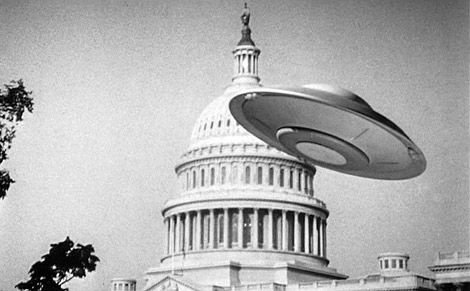
Though director Fred Sears keeps the action moving quickly and both Marlowe and Ankrum give good performances in their stock roles as, respectively, the scientist and the military leader, Ray Harryhausen is the real star of this movie. The stop-motion animation special effects are still a lot of fun to watch today. Plus, if you don’t applaud when that flying saucer crashes into the Capitol dome, there may be no hope for you.
Earth vs. The Flying Saucers is one of the better alien invasion films of the 50s. If nothing else, it’s a film that will inspire you to keep watching the skies!
(It’s tradition here at the Lens that, every October, we watch the original Little Shop of Horrors. And always, I start things off by telling this story…)
Enter singing.
Little Shop…Little Shop of Horrors…Little Shop…Little Shop of Terrors…
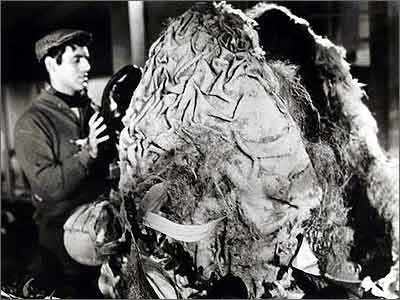
Hi! Good morning and Happy October 24th! For today’s plunge into the world of public domain horror films, I’d like to present you with a true classic. From 1960, it’s the original Little Shop of Horrors!
When I was 19 years old, I was in a community theater production of the musical Little Shop of Horrors. Though I think I would have made the perfect Audrey, everybody always snickered whenever I sang so I ended up as a part of “the ensemble.” Being in the ensemble basically meant that I spent a lot of time dancing and showing off lots of cleavage. And you know what? The girl who did play Audrey was screechy, off-key, and annoying and after every show, all the old people in the audience always came back stage and ignored her and went straight over to me. So there.
Anyway, during rehearsals, our director thought it would be so funny if we all watched the original film. Now, I’m sorry to say, much like just about everyone else in the cast, this was my first exposure to the original and I even had to be told that the masochistic dentist patient was being played by Jack Nicholson. However, I’m also very proud to say that — out of that entire cast — I’m the only one who understood that the zero-budget film I was watching was actually better than the big spectacle we were attempting to perform on stage. Certainly, I understood the film better than that screechy little thing that was playing Audrey.
The first Little Shop of Horrors certainly isn’t scary and there’s nobody singing about somewhere that’s green (I always tear up when I hear that song, by the way). However, it is a very, very funny film with the just the right amount of a dark streak to make it perfect Halloween viewing.
So, if you have 72 minutes to kill, check out the original and the best Little Shop of Horrors…
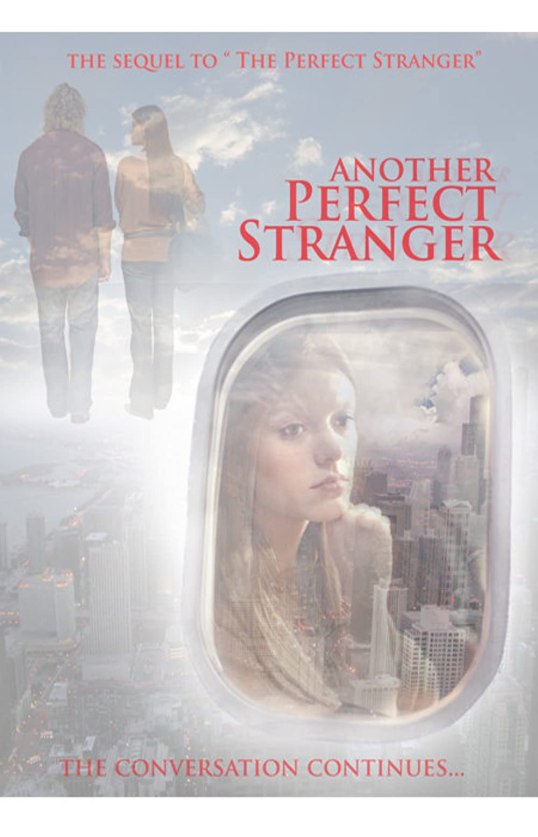
Ten years after Nikki Cominskey had the world’s most awkward dinner date with Jesus (played by Jefferson Moore), Nikki’s daughter is flying to Portland.
Having just graduated from high school, Sarah (Ruby Lewis) wants to attend an exclusive art school but she fears that she may not get the scholarship that she would need. If that wasn’t stressful enough, she’s also not getting along with her parents. She never thought that her mom and dad were actually seriously about all that church stuff but it turns out that they were and now they are scandalized to discover that Sarah doesn’t even consider herself to be a believer! The night before Sarah’s trip, Nikki sat her daughter down and told her about the night that she had dinner with Jesus. Now, Sarah is worried that her mother has lost her mind.
Because Sarah is flying the least efficient airline in existence, there’s a layover in Dallas on the way to Portland. That leaves Sarah a lot of time to get to know the man who is sitting next to her on the airplane. His name is Yesh and he says that he comes from a small town in the east. He also says that he’s a counselor and that he works with his father. When Sarah asks what Yesh’s father does, Yesh says that it’s not easy to explain but that his father has a lot of responsibility. He’s in charge of many things. Sarah thinks that Yesh is a friendly stranger but, since he’s played by Jefferson Moore, the audience knows who he actually is.
Yesh and Sarah discuss religion. Sarah says she hates religion. Yesh says that he agrees, because people have twisted religion to satisfy their own base desires. Sarah says that she can’t understand her parents. Yesh says that her parents love her just as his father loves everyone. Sarah says that she wants to be an artist. Yesh tells her to be sure not to fall asleep during art history class. (Hold on, Yesh! I majored in art history! Art history rocks!) Sarah assumes that Yesh is an atheist and gets a little annoyed when Yesh reveals that he’s actually not. Yesh reads her a poem and explains that it was written by his father and that it’s in the Bible. Sarah is amazed because she thought the Bible was just full of rules. She doesn’t seem to notice that Yesh said that his father wrote the Bible but that’s because Sarah doesn’t really come across as being that smart.
You can pretty much guess where all of this leading. With the exception of one surprisingly well-handled scene in which Sarah discusses the trauma that turned her away from religion, Another Perfect Stranger follows the same storyline as The Perfect Stranger. The main difference is that Sarah is a teenager and the conversation takes place on a plane instead of at a restaurant. Once again, Yesh wins every argument because the screenwriter is on his side and Sarah is incapable of coming up with any counterpoints that aren’t easily dismissed. Unfortunately, this film is also 20 minutes longer than The Perfect Stranger and pace is much slower. The majority of Sarah’s dialogue sounds like it was written by a computer program designed to basically approximate the speaking habits of someone under the age of 30. On the plus side, Sarah is not quite as humiliated by Jesus as her mother was.
This was followed by one more Perfect Stranger film, which was only 61 minutes long and which I’ll take a look at tomorrow.
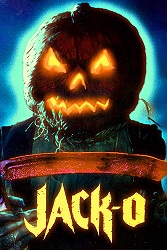 Back in frontier times, a warlock named Walter Machden (John Carradine) terrorized the citizens of the town of Oakmoor Crossing so they tracked him down and lynched him. Before he was hung, Machden cursed the town. A demon with a jack-o-lantern for a head terrorized the town until the Kelly Family defeated him and buried him underneath a cross.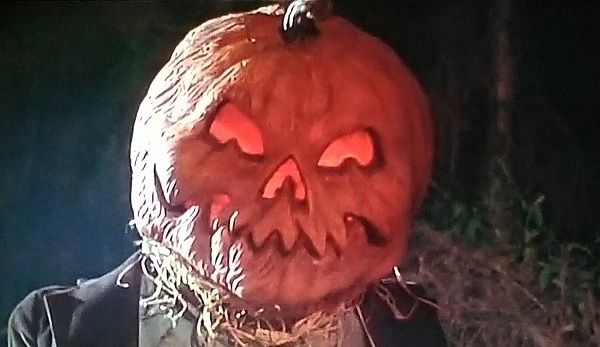



 Through the Shattered Lens