October True Crime: Easy Prey (dir by Sandor Stern)


The 1986 film, Easy Prey, tells the story of Tina Marie Riscio (Shawnee Smith), a 16 year-old who was approached in a mall by man (Gerald McRaney) who claimed to be a photographer looking for models.  The man told the insecure Tina that he wanted to take her picture but that he needed her to come out to his car and sign a release.  At first, Tina was reluctant to follow the man out to his car but when he acted embarassed and apologized for making her feel uncomfortable, Tina decided to sign the release.  Later, she would say that the man reminded her of her father.

The man, however, was Christopher Wilder.  At the time that he approached Tina, Wilder was already a suspect in several murders and had been placed on the FBI’s Most Wanted List.  In many ways, Wilder did not seem to fit the typical profile of a serial killer.  Born in Australia, he was a naturalized American citizen who had started his own business and lived what seemed to be a glamorous lifestyle.  He was a millionaire.  He owned a Porsche.  He was a race car driver who competed in races across the country.  Even with his receding hairline, he was considered to be charming and handsome.  It was only under a close examination that cracks started to appear on his perfect surface.  He had a criminal record in Australia.  His girlfriends described him as being paranoid, insecure, and abusive.  His business partners said that, despite his apparent wealth, Wilder was always one step away from financial ruin.

Because Wilder was killed by the police while resisting arrest, it’s not known how many women he murdered over the course of his six-week crime spree in 1984.  It is believed that he definitely murdered eight but the actual number is thought to be much higher.  (He’s a suspect in the disappearance of actress Tammy Lynn Lepert, who appeared in Scarface as the woman who distracted Steven Bauer while the latter should have been keeping track on what was happening with Tony’s meeting with the Colombians.)  However, he did not kill Tina Marie Riscio.  Instead, after kidnapping and assaulting her, he drove across the country with her.  After using her to lure victims in both Indiana and New York, Wilder eventually drove Tina to Boston and bought her an airplane ticket home.  While Tina was flying back to Los Angeles, Wilder was heading for Canada.  (He would be shot and killed by police near the border, in New Hampshire.)

Easy Prey follows Wilder and Tina as they drive from location-to-location.  Along the way, Tina is shown to develop a case of Stockholm Syndrome.  As much as she hates Wilder, she still fails to take advantage of many chances to escape from him.  Unfortunately, the film’s script itself doesn’t provide much insight into how this happened, beyond the fact that Wilder reminded Tina of the father who earlier abandoned her.  The film does feature two strong performances, from Shawnee Smith and Gerald McRaney.  Smith gets a a powerful monologue, in which she talks about how easy it was for Wilder to take advantage of her insecurity.  Meanwhile, McRaney plays Wilder as being a pathetic man who is desperate to convince the world that he is actually a dynamic businessman and adventurer.  If he were alive today, there’s little doubt Christopher Wilder would be on twitter, siding into people’s DMs and posting a bunch of “alpha male” nonsense.  Wilder was a monster who still feels very familiar.
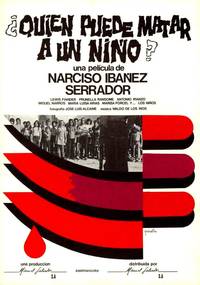
Horror Film Review: Who Can Kill A Child? (dir by Narciso Ibáñez Serrador)


The 1976 Spanish film, Who Can Kill A Child?, opens with a series of documentary clips, all detailing the world’s inhumanity to children.  We hear about how children were experimented upon in Auschwitz.  We see displaced refugees from the Korean War.  We saw the famous footage of a naked Vietnamese child running down a road after her village has been napalmed by American forces.  We see footage of Nigerian children being forced to serve as soldiers.  The footage is disturbing but it’s also a necessary reminder that, as much as everyone claims to love children, they are often those most harmed by the wars that are waged by adults.

The film then segues into the story of Tom (Lewis Fiander) and Evelyn (Prunella Ransome), an English couple who are vacationing in Spain.  Evelyn is pregnant with their third child and this vacation is their last getaway before they have to focus on raising a child.  (It is mentioned that this is their third child.  Presumably, they left their other two children behind in the UK while they jetted off to Spain.)  Finding the beaches to be too crowded and loud, Tom and Evelyn head off to a nearby island in hopes of having some time to themselves.  When they arrive at the island’s main village, they find it to be populated almost entirely by children.  At first glance, there doesn’t appear to be any adults around.

As Tom and Evelyn explore the village, they discover that almost all of the buildings appear to be abandoned.  They also can’t help but notice that the children seem to be watching their every move.  Eventually, Tom does spot one adult but that adult is quickly attacked by a group of children who beat him to death.  Tom realizes that the children have killed the adults in the village and now, they’re planning on killing him and his pregnant wife.

There have been many films made about killer kids but it’s hard to think of any of them that are as grim and downbeat as Who Can Kill A Child?  There’s really not a moment of humor to be found in the film and even the movie’s most infamous scene, in which an unborn child rebels against his mother, is played with total seriousness.  The children are frightening not just because they’re adorable kids but because they’re relentless in their violence and their determination to kill every adult in their path.  In many ways, they’re like the fast zombies from Umberto Lenzi’s Nightmare City.  The main difference is that, because their children, they’re given a benefit of the doubt that would not be given to older homicidal maniacs.  Even as the children attempt to use a battering ram to burst into the room in which they’ve locked themselves, Tom and Evelyn are still hesitant to fight back because their attackers are just children.  When Tom does fight back, it backfires on him because, to the rest of the world, he’s not a man fighting for his life but instead a man attacking innocent children.  Even when a four year-old aims a gun at Evelyn’s head, his playful smile leaves the viewers wondering if he truly understands that guns kill or if he just thinks he’s playing a game.

Who Can Kill A Child? plays out at its own deliberate pace.  It’s nearly two hours long and there’s a lot of footage of Tom and Evelyn walking around the deserted village but director Narciso Ibáñez Serrador does such a good job of creating and maintaining an atmosphere of impending doom, the film itself never feels slow.  The deserted village is a wonderfully creepy location and Serrador makes sure that the viewers realize just how many spaces there are where the killer children could be hiding and waiting for someone to walk by.  When the children suddenly show up in a group, coldly watching as Tom and Evelyn explore the island, it’s a truly chilling scene.  The film also benefits from the performances of Lewis Fiander and Prunella Ransome, who are well-cast as Tom and Evelyn.  At first, both characters seem to be a bit too complacent to be sympathetic but, as the film progresses, both Fiander and Ransome win the viewers over.  Ransome, in particular, will break your heart.

The film’s conclusion is appropriately downbeat but one can’t help but feel that the children are merely doing what they’ve seen adults do for years.  The children may be dangerous, violent, and ruthless but the film suggests that they learned from the best.

So, I Watched The Catcher (1999, dir. by Guy Crawford and Yvette Hoffman)


I should have known what I was getting into as soon as my sister told me, “You’ll like this, it’s a baseball movie!”

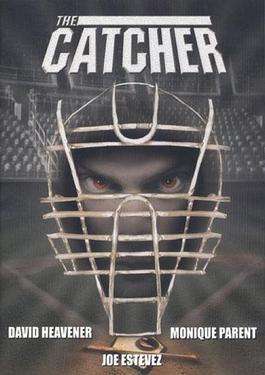
The Catcher is a movie about a little boy who goes crazy when his baseball-obsessed Dad makes fun of his swing.  The boy beats his father to death with a baseball bat.  Years later, catcher David Walker (David Heavener) is told that his contract with the Devils baseball team will not be renewed.  Someone dressed as a catcher starts to murder players, coaches, and one commentator, using baseball equipment as his weapon.  I could have gone my entire life without seeing the scene where one player is sodomized with a baseball bat.  But even if that’s your thing, The Catcher is slow and the acting’s terrible.  I had a hard time buying the idea of a killer catcher.  Outfielders move a lot quicker.  Why does my sister recommend these films to me and why do I watch them?

One thing that I did appreciate about this movie is that, for once, it was only men being killed by the masked maniac.  I get so tired of horror movies that were obviously made by men who never got over being turned down for a date in high school.  The Catcher was a change of pace as far as that’s concerned but otherwise, I wish I had not watched this film.

Horror Film Review: Elevator Game (dir by Rebekah McKendry)


If nothing else, Elevator Game does open with a truly chilling sequence.

A teenage girl named Becki (Megan Best) boards an elevator in an office building.  She’s playing a game, one that, if played correctly, will lead her to the spirit world but, if played incorrectly, will lead to her being torn apart by the spirit of an evil woman.  Why exactly anyone would want to play this type of game, I’m not sure.  I mean, I wouldn’t play it and I don’t even believe in ghosts or spirit worlds.

Anyway, Becki travels from floor to floor, in a specific, pre-determined order.  When she reaches the 5th floor, she is to keep her eyes shut from the moment the elevator doors open until they close.  When she opens her eyes, she is not to look to see if anyone is standing behind her.  It’s on the fifth floor that the game player is supposedly joined by the Fifth Floor Woman.  The Fifth Floor Woman apparently doesn’t have anything better to do than to kill anyone who fails to follow the rules of the game.  It seems like kind of a boring existence.  I mean, if I was the Fifth Floor Woman, I would have an existential crisis about having to spend my entire “life” enforcing the arbitrary rules of an elevator game but again, some people are just really into rules.  Some people have a panic attack if there isn’t a clearly defined rule book for them to follow and I guess that’s just as true among the dead as among the living.  As for Becki, she does keep her eyes closed on the fifth floor but then she makes the mistake of using her phone to check over her shoulder, which gets her in trouble with the Fifth Floor Woman.

Again, the entire opening sequence is very well-done and suspenseful, with Megan Best immediately earning our sympathy as Becki.  The scene where she reaches the fifth floor is genuinely scary, as is the moment when we realize that she is no longer alone on the elevator.  Unfortunately, the opening is so strong that the rest of the film has a difficult time topping it.

After Becki disappears, her brother Ryan (Gino Anania) gets an internship with a group of streamers who film themselves investigating paranormal rumors and visiting places that are supposedly haunted.  They play “scary games in scary places,” but they’ve also managed to tick off their only advertiser and now they desperately need to film something quick and on the cheap.  Ryan, without bothering to share his personal connection to the case, tells them about what happened to Becki and he encourages them to film themselves playing the elevator game.  Ryan is hoping that they can help him find Becki and, it’s hinted, he also wants revenge against of the streamers, Kris (Alex Russo), because Kris is the one who told Becki about the elevator game in the first place.  The streamers play the game but, instead of finding Becki, they instead bring the Fifth Floor Woman into their world.  Death follows.

Elevator Game suffers from a lack of compelling characters.  The streamers are all clichés and not even Ryan is a particularly likable character.  I mean, you really do have to wonder just what exactly Ryan thought would happen when he tricked a bunch of other people into playing the same stupid game that Becki played.  Why did he believe that dragging all of them into it would somehow make it easier to him to find Becki?  Once people start dying, it’s pretty much Ryan’s fault and it’s hard not to get annoyed with the fact that no one really seems to call him out on it.  If anything, Ryan’s actions were so selfish that one could argue that he’s as much of a villain as the Fifth Floor Woman, despite the film’s attempts to portray him as being a loving brother.

That said, there are a few effectively creepy sequences and the scene where Ryan visits the so-called “Red World” was extremely well-done and vividly visualized.  Even though the film tests just how many times a viewer can be expected to watch people ride an elevator from one floor to another, I’ll admit that my heart started to beat a little bit harder whenever anyone stopped at the fifth floor.  “You forgot to shut your eyes!” I yelled at the screen at one point.  Of course, it didn’t do any good.  Rules are rules.

Elevator Game is currently streaming on Shudder.

Horror Film Review: The Invisible Man’s Revenge (dir by Ford Beebe)


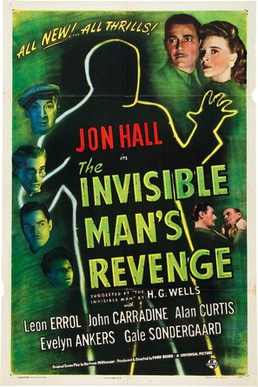
1944’s The Invisible Man’s Revenge opens with Robert Griffin (Jon Hall) arriving in England.

Despite his last name and the fact that he’s played by the star of Invisible Agent, this Robert Griffin would not appear to be in any way related to the previous invisible men.  Instead, he is someone who has just escaped from a mental institution in South Africa.  He has already murdered two orderlies and now, he’s come to England to take vengeance on Sir Jasper Herrick (Lester Matthews) and his wife, Lady Irene (Gale Sondergaard), two old friends who the paranoid Robert thinks tried to kill him in Africa so that they could steal his money.  When Robert sees Sir Jasper and Lady Irene, he informs them that they can either give him half of their fortune or they can allow him to marry their daughter, Julie (Evelyn Ankers).  Lady Irene responds by drugging Robert and having him kicked out of the house.

Dejected, Robert eventually comes across the cottage of Dr. Peter Drury (John Carradine, giving a surprisingly low-key performance in the mad scientist role).  Dr. Drury reveals to Robert that he has developed a serum that can turn living things invisible.  Drury goes on to “show” Robert all of the invisible pets that he has hanging out around the cottage, from an invisible dog to an invisible parrot.  When Robert asks how long the invisibility lasts, Drury says that it will last until the invisible person dies.  That sounds pretty good to Robert so he volunteers to be Drury’s latest test subject.

Soon, Robert is invisible and going out of his way to haunt that Herrick family.  Some of Robert’s antics are merely playful.  He helps a cobbler (Leon Errol) win a game of darts and later turns the man into his personal servant.  Robert’s other actions are a bit more destructive.  Robert, after all, was a murderer to begin with and using a serum that cause additional insanity is definitely not helping him with his temper.  When Robert decides that he wants to be visible again, he discovers that there’s only one temporary way to do it and it involves a lot of blood.

After being portrayed as being a hero in Invisible Agent, The Invisible Man is once again a villain in The Invisible Man’s Revenge and it just feels right.  There’s just something inherently sinister about the idea of someone being invisible.  Jon Hall, who was so boring in Invisible Agent, is far more compelling here, playing Robert as a paranoid megalomaniac who has so convinced himself of his own cleverness that he can’t even understand that he’s writing the script for his own downfall.  This is a good, solid Universal horror movie.  The true hero of the movie is Drury’s dog, played by a talented canine actor named Grey Shadow.  It takes more than invisibility to fool that dog!

Previous Universal Horror Reviews:

  1. Dracula (1931)
  2. Dracula (Spanish Language Version) (1931)
  3. Frankenstein (1931)
  4. Island of Lost Souls (1932)
  5. The Mummy (1932)
  6. The Invisible Man (1933)
  7. The Bride of Frankenstein (1935)
  8. Dracula’s Daughter (1936)
  9. Son of Frankenstein (1939)
  10. The Invisible Man Returns (1940)
  11. The Wolf Man (1941)
  12. Ghost of Frankenstein (1942)
  13. Invisible Agent (1942)
  14. Frankenstein Meets The Wolf Man (1943)
  15. Son of Dracula (1943)
  16. House of Frankenstein (1944)
  17. House of Dracula (1945) 
  18. Creature From The Black Lagoon (1954)

Horror on the Lens: Phantom Ship (dir by Denison Clift)


In December of 1872, a sailing ship called the Mary Celeste was found adrift and deserted in the Atlantic Ocean.  When the ship left New York in October, it had a captain and a full crew.  The captain’s wife was among the passengers sailing on the ship.  When the Mary Celeste was discovered, not only was no one on board but there was no evidence as to where everyone had gone or what caused them to abandon the ship in the first place.  The crew of the Mary Celeste appeared to have vanished into thin air and none of them were ever seen again.

As you might guess, this led to years of speculation about what happened.  Some people blamed pirates.  Some blamed food poisoning.  Some blamed ghosts and sea monsters.  More modern theorists have blamed UFOs.

First released in 1935 and originally entitled The Mystery of the Mary Celeste, Phantom Ship offers up a theory of its own.  It speculates about what happened during the final voyage of the Mary Celeste and why its crew vanished.  One of the members of the crew is played by Bela Lugosi.  Lugosi was still riding high from his starring role in Dracula when he starred in Phantom Ship and, playing a veteran sailor who appears to be a bit unstable, Lugosi gives an enjoyably over the top performance.  Admittedly, Phantom Ship has its slow spots and, at times, it threatens to get bogged down in a subplot about the love triangle involving the Captain, his wife, and the Captain’s best friend.  But Lugosi makes the film worth watching and, towards the end, there are some wonderfully atmospheric shots of the nearly deserted ship.

Along with being one Lugosi’s non-Dracula horror films, Phantom Ship is also well-known for being one of the first films to be produced by the British film company that would eventually become known as Hammer Pictures.

Enjoy!

October Positivity: Exodus of the Prodigal Son (dir by Andy Rodriguez)


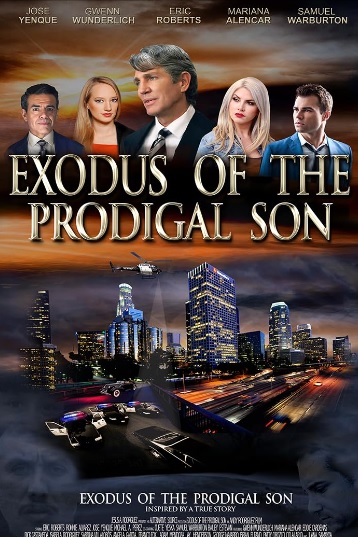
As you can tell from looking at the poster for this 2020 film, Eric Roberts is in Exodus of the Prodigal Son.  Even though he’s given top-billing on the poster and is pictured as being at the center of all of the characters, Eric Roberts doesn’t really do much in this movie.  This is one of those films where Eric Roberts probably shot all of his scenes in a day.  Whenever we see him, he is relaxing behind his desk.  I don’t think he even bother to change his clothes between scenes, despite the fact that the film plays out over a few days.

Eric Roberts is playing Chief Roberts, which really does contribute to the feeling that he just showed up on set and decided to be a part of the movie.  Chief Roberts is always encouraging his detectives to go out and catch the bad guys.  Apparently, there’s been a string of child murders and Roberts sure would like to capture whoever was responsible for them.  But it also appears that the Chief mostly just wants an arrest.  He really doesn’t seem to care if the people who are arrested are guilty or not.  It’s a bit hard to know what to make of Chief Roberts.  Then again, it’s difficult to know what to make of anyone in this movie.

The plot is damn near incoherent but, as far as I can tell, Jordan (Ronnie Alvarez) and Eddie (Pablo Nunez) are brothers who were raised in the church and taught to follow the straight and narrow path.  But then Eddie stops going to church and starts hanging out with wannabe gangsters like Mark (Adam Mendoza).  Mark is big into Santeria and his idea of flirting is to talk about how he gets good luck from sacrificing goats on an altar that’s built for La Santa Muerta.  When Eddie’s friend, Steve (Samuel Warburton), stops by Jordan and Eddie’s place to talk to Eddie about returning to church, Mark gives Steve a drink that has been laced with some sort of drug.  Steve overdoses.  Eddie goes to the hospital with Steve.  Meanwhile, Mark decides to pull a knife on Jordan which leads to a struggle in which Mark somehow stabs himself in the neck and dies.  Now, with the help of his biker uncle, Jordan has to go on the run.

Who is the prodigal son in this scenario?  I’m not really sure.  The whole point of the parable of the prodigal son is that the prodigal chose to leave home on his own.  He wasn’t fleeing the police or anything like that.  So, Eddie would seem to be the prodigal son but he’s not the one who goes into hiding or learns a spiritual lesson.  Instead, that’s what happens to Jordan but, again, Jordan didn’t leave home because he wanted to.  He left home because the cops were after him.  It’s probably best not to worry too much about it.  The plot here was obviously not meant to be followed.

There’s a lot to criticize about this film but really, the thing that took this film from bad to terrible was the sound.  Some of the dialogue is muffled.  Some of it is unreasonably loud.  In one of his first scenes, Eric Roberts keeps bumping his wristwatch against the sound of his desk and the effect is deafening.  Later, in the hospital, the beeping of Steve’s EKG monitor is so loud that it’s impossible to understand what anyone is saying.  People, I think, tend to underestimate the importance of clear sound in a movie.  It’s something we take for granted but when it’s not there, it’s enough to make you want to throw something at the screen.

Finally — and this is a spoiler — the film commits the sin of ending on a “It was all a dream!” note.  So, does that mean that Eric Roberts was a part of the dream or did he really exist?  It’s a question that’s far more intriguing than anything else about this particular film.

Previous Eric Roberts Films That We Have Reviewed:

  1. Star 80 (1983)
  2. Blood Red (1989)
  3. The Ambulance (1990)
  4. The Lost Capone (1990)
  5. Love, Cheat, & Steal (1993)
  6. Love Is A Gun (1994)
  7. Sensation (1994)
  8. Dark Angel (1996)
  9. Doctor Who (1996)
  10. Most Wanted (1997)
  11. Mr. Brightside (2004)
  12. Six: The Mark Unleased (2004)
  13. Hey You (2006)
  14. In The Blink of an Eye (2009)
  15. Enemies Among Us (2010)
  16. The Expendables (2010) 
  17. Sharktopus (2010)
  18. Deadline (2012)
  19. Miss Atomic Bomb (2012)
  20. Lovelace (2013)
  21. Self-Storage (2013)
  22. This Is Our Time (2013)
  23. Inherent Vice (2014)
  24. Road to the Open (2014)
  25. Rumors of War (2014)
  26. Amityville Death House (2015)
  27. A Fatal Obsession (2015)
  28. Stalked By My Doctor (2015)
  29. Joker’s Poltergeist (2016)
  30. Stalked By My Doctor: The Return (2016)
  31. The Wrong Roommate (2016)
  32. Stalked By My Doctor: Patient’s Revenge (2018)
  33. Monster Island (2019)
  34. Seven Deadly Sins (2019)
  35. Stalked By My Doctor: A Sleepwalker’s Nightmare (2019)
  36. The Wrong Mommy (2019)
  37. Free Lunch Express (2020)
  38. Her Deadly Groom (2020)
  39. Top Gunner (2020)
  40. Deadly Nightshade (2021)
  41. Just What The Doctor Ordered (2021)
  42. Killer Advice (2021)
  43. The Poltergeist Diaries (2021)
  44. A Town Called Parable (2021)
  45. My Dinner With Eric (2022)

October Hacks: Sorority House Massacre (dir by Carol Frank)


The 1986 film, Sorority House Massacre, tells the story of two people who share a psychic bond.

Beth (Angela O’Neill) is a college student who can’t remember anything about her childhood and who was raised by her aunt.  After her aunt dies, Beth joins a sorority and moves into their house.  Almost from the minute that she arrives, Beth starts to have disturbing visions and dreams of a man with a knife and blood dripping from the ceiling.  With most of the members of the sorority leaving for the Memorial Day weekend, Beth ends up staying with Linda (Wendy Martel), Sara (Pamela Ross), and Tracy (Nicole Rio).  The other girls want to have a fun weekend but instead, they find themselves dealing with Beth and her glum attitude.  Linda and Sara sincerely want to help.  Tracy is a bit annoyed with the whole thing and I don’t blame her.

Meanwhile, a man named Bobby (John C. Russell) is a patient at a mental asylum.  He’s been a patient ever since he was arrested for murdering almost his entire family.  Bobby has been in a rage for the past few days, beating his head on the walls and attacking anyone who enters the room.  Just as Beth finds herself having visions of Bobby, Bobby has visions of Beth.  When Bobby does finally manage to escape from the hospital, the first thing he does is break into a hardware store and steal a hunting knife.  (He uses the knife to take care of the owner of the store.)  Then he steals a car and promptly drives off towards Los Angeles and the sorority house.

Sorority House Massacre was produced by Roger Corman and, just as he did with Slumber Party Massacre, he hired a woman to both direct and write the film.  As such, while Sorority House Massacre has all of the usual scenes of sorority girls taking showers, trying on clothes, and running around in states of undress, it’s still never as misogynistic as some other slasher films.  Beth, Sara, Linda, and Tracy all come across as being fully-rounded characters and the viewer doesn’t want anything bad to happen to any of them.  If anything, in this film, it’s the various boyfriends who are portrayed as being somewhat disposable and easily victimized.  Certainly, not a single one of the guys proves to be particularly useful once Bobby shows up at the sorority house and starts his massacre.

Why is Bobby fixated on the sorority house and Beth in particular?  Director Carol Frank does a good job of portraying the killer’s mental state, with a good deal of the film’s scenes being shot from his own point of view.  (Perhaps the scariest moments are not the ones featuring blood and knives but the ones in which the killer moves from location to location and we see, through his point of view, just how relentless he is.)  Frank also takes us straight into Beth’s mind, showing us her vivid hallucinations as they happen and the end result is that Sorority House Massacre often has an unexpectedly surreal feel to it.  It’s a low-budget slasher film that plays out like a filmed nightmare and it sticks with you, even after the end credits.

The TSL Horror Grindhouse: Combat Shock (dir by Buddy Giovinazzo)


In the late 80s, Staten Island was the worst place on Earth.

That was one of the takeaways that I got from watching the 1986 film, Combat Shock.  The film was shot on location on Staten Island and, indeed, it’s a grim viewing experience.  Frankie Dunlan (played by Rick Giovinazzo, the brother of the film’s director, Buddy Giovinazzo) is a Vietnam war vet who, having spent time in a coma as a result of his war injuries, has returned home to a country that doesn’t have much use for him.  He lives in a run-down and dirty apartment with his wife (Veronica Stork) and their gray, constantly-crying mutant baby.  (The baby’s mutation is explained by Frankie’s exposure to Agent Orange.)  Because Frankie has no skills, he can’t get a job.  Because he can’t get a job, he has no money and his wife keeps yelling at him to call his father.  But Frankie doesn’t want anything to do with his father, who was apparently a jingoistic racist and who currently believes that Frankie was killed in Vietnam.

(And perhaps Frankie was.  There’s a part of me that wonders if the whole film was meant to be Frankie’s end-of-life vision as he lay dying in Vietnam.)

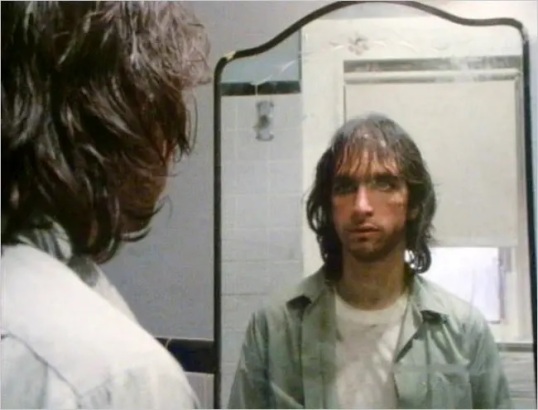
The television at the apartment only show static but Frankie and his wife watch it anyways.  The milk in the refrigerator is expired but Frankie drinks it regardless.  Frankie gets a note announcing that he and his family are about to be evicted but he doesn’t seem to be particularly upset about it.  Frankie, who has the 1,000-yard stare of a man continually woken up by nightmares and the ever-present dirty stubble of a meth addict, is too trapped in the horrors of the past to fully comprehend the horrors of the present.

Leaving his apartment, Frankie wanders around the dirtiest and most depressing areas of Staten Island.  The buildings are abandoned.  Every wall is covered in graffiti.  Gangs roam the streets.  Frankie runs into a desperate drug addict who is later seen ripping open his arms so that he can sprinkle heroin into his flesh.  Outside an employment office, a mysterious blonde on a motorcycle looks at Frankie and appears to invited him to join her but Frankie refuses to move.  Inside the employment office, Frankie’s case worker speaks in non-sequiturs.  “Life is hot, and because life is hot, I must take off my jacket,” the case worker says while Frankie stares at him with a blank look on his face.

Frankie has visions and hears voices.  His flashbacks to Vietnam are filmed in haunting slow motion, all the more to make us wonder if he’s actually seeing what happened in the past or if he’s hallucinating an entirely different existence for himself.  Combat Shock is a horror film but it’s the horror of Frankie’s fractured mind.  Frankie served his country but now his country views him with disgust.  The film ends on a dark note, one that is not pleasant to watch but one that equally feels pre-destined.

Combat Shock is a film that is so grim and dark that it’s developed a semi-legendary reputation.  Watching the film, I respected the filmmaker for staying true to his dark vision and essentially refusing to compromise or let up in the least.  At the same time, I have to admit that I got a little bit bored with film’s nonstop darkness.  As a character, Frankie is not particularly compelling.  (The film has been frequently compared to David Lynch’s Eraserhead but Combat Shock has none of that film’s quirky humor and Frankie is nowhere near as sympathetic as Jack Nance’s Henry.)  The film succeeds by staying true to itself but, in the end, it’s not a film that most people will want to watch a second time.  And perhaps that’s the point.  Frankie may be too desensitized to be angry but the film is outraged at way the country treats men like Frankie, who carry the scars of serving their country but who have simply been pushed to the side by a society that doesn’t want to be reminded of the bad times.  Much like An American Hippie In Israel, Combat Shock is a film that demands that we stop pushing buttons and take care of each other.

A Blast From The Past: The Fourth Man (dir by Joanna Lee)


Today’s Blast From The Past comes to us from 1990 and it’s a scary one.

In The Fourth Man, Peter Billingsley (yes, the kid from A Christmas Story) plays Joey Martelli, an insecure high schooler who thinks that he’ll be more attractive to girls if he becomes more like his best friend, friendly jock Steve Guarino (Vince Vaughn, making his film debut and already physically towering over everyone else in the cast).  With Steve’s encouragement, Joey tries out for the track team and, to everyone’s surprise, he makes it!

Joey is now an athlete.  He finally has friends.  Girls (including Nicole Eggert) are talking to him.  His father (Tim Rossovich) is finally proud of him.  But Joey soon discovers that staying on the track team is not an easy task.  His coach tells Joey that he has to pick up his speed.  Feeling desperate, Joey does what so many other television teenagers before him have done.  He starts taking steroids!  (Dramatic music cue!)  Soon, the kid from A Christmas Story is breaking out in pimples, throwing temper tantrums, and becoming a rage-fueled monster!  Joey only took the steroids because he wanted to be as cool as Steve but, unfortunatey, Joey learns too late that Steve’s success and popularity are not due to how big and strong he is but to the fact that he is played by a young Vince Vaughn.

(Myself, I was fortunate enough to go to a high school where the emphasis was placed more on the arts and intellectual pursuits than athletic success.  My school didn’t even have its own football field.  We had to share with the high school down the street!  Anyway, as a result, I don’t think knew anyone in high school who was abusing steroids and I never had to deal with anyone suddenly flying into a rage and punching a hole in a wall or any of the other stuff that always happens whenever anyone abuses steroids on television.)

The Fourth Man was written and directed by Joanna Lee, who is perhaps best known for playing Tanna the Alien in Ed Wood’s Plan Nine From Outer Space.  (Lee, it should be noted, had a very long and respected career as a writer and director of television dramas.  In many ways, she had the career that Ed Wood imagined that he would someday have.)  Along with Billingsley and Vaughn, the cast includes horror mainstay Adrienne Barbeau as Joey’s mother and football player-turned-horror-actor Lyle Alzado as a man who has his own history with steroids.  The film has good intentions and a good message about not taking shortcuts and being happy with who you are but I imagine that most people will just want to watch it to see Peter Billingsley descend into roid rage.  And I will say that, for all the film’s melodrama, there is something a little bit disturbing about watching fresh-faced Peter Billingsley turn into a physically aggressive bully.

From October of 1990 (and complete with the commercials than ran during the program’s first broadcast), here is The Fourth Man.