The Eric Roberts Horror Collection: Dark Image (dir by Chris W. Freeman)


2017’s Dark Image tells the story of two twins.

Jessica and Jayden Browne (April Eden) were two musical prodigies who spent their entire youth either practicing or performing under the guidance of their mother, Phyllis (Leslie Easterbrook).  One night, while Phyllis was at the opera with her brother, Alex (John Aprea), someone broke into the house and murdered one of the twins.  The surviving twin had a nervous breakdown and soon found herself in a mental hospital, where she was watched over by her uncle Alex.

Assigned to investigate the case was Detective Billy Watts (Thomas Downey), who quickly came to believe that the murderer was the groundskeeper, Ogden Edwards (Ed O’Ross).  After one particularly grueling interrogation, Ogden left the police station, got drunk, and then drove to Watts’s home to confront him.  Unfortunately, the drunk Ogden not only crashed his car on Billy’s lawn but he also ran over Billy’s son, who only wanted to stay up late so he could watch fireworks.  When Ogden was acquitted of murder, Billy swore vengeance and was quickly suspended from the force by Captain Fanning (Eric Roberts).

Now, the surviving twin has finally stopped hearing voices and is planning on spending the weekend at the house where the murders took place.  She’s hoping that staying at the house will lead her to remember something.  Alex sends his daughter, Lindsey (Eve Mauro), along to keep an eye on the twin but that turns out to be a bit of a mistake as Lindsey is kind of a drunk.  Alex also asks Billy to keep an eye on the house but, again, that plan falls apart when Billy sees Ogden Edwards stumbling around the property.

From the minute she and Lindsey arrive at the house, the surviving twin starts to hear voices and see shadows moving in the dark.  When she and Lindsey go out to a bar, everyone in the place briefly appears to be a faceless demon.  Could it perhaps be connected to a mysterious note that the twin found in the house, the one that featured a reference to Dante’s Inferno and suggested that the house itself might be a gateway to Hell?  Well, that’s always a possibility!

There are plenty of things about Dark Image that don’t make much sense.  For instance, the twin is continually freaking out and screaming about her visions but nobody around her ever seems to view that as being particularly strange.  The twin’s plan for going back to the house doesn’t make much sense (though, to the film’s credit, it does offer up an explanation as to just why exactly the twin actually did decide to return) and it also doesn’t make sense that Lindsey would agree to accompany her.  As soon as Lindsey arrives at the house, she’s drinking wine and joking about picking up men at the bar and you have to wonder why she’s apparently not creeped out about the idea of spending the weekend at the house where one her cousins was brutally murdered by a killer who was never captured.  The fact that Lindsey’s an alcoholic can only excuse so much.

That said, though, Dark Image is entertaining as long as you don’t spend too much time worrying about the film’s logic.  If you just watch it for the atmosphere and for April Eden’s intense performance, Dark Image is a perfectly serviceable horror thriller that has a decent number of twists and one effectively creepy scene where Eden is menaced by a shadowy figure while taking a shower.  Ed O’Ross does a good job playing Ogden Edwards and the ending of the film is properly macabre.  It’s an effective film when taken on its own terms.

As for Eric Roberts, he only appears in two scenes but it’s always fun to see him.  He plays the somewhat sarcastic police captain who is constantly telling his detectives to do it by the book.  Eric Roberts is always entertaining when he’s playing a character in a bad mood.

Previous Eric Roberts Films That We Have Reviewed:

  1. Star 80 (1983)
  2. Blood Red (1989)
  3. The Ambulance (1990)
  4. The Lost Capone (1990)
  5. Love, Cheat, & Steal (1993)
  6. Love Is A Gun (1994)
  7. Sensation (1994)
  8. Dark Angel (1996)
  9. Doctor Who (1996)
  10. Most Wanted (1997)
  11. Mr. Brightside (2004)
  12. Six: The Mark Unleased (2004)
  13. Hey You (2006)
  14. In The Blink of an Eye (2009)
  15. Enemies Among Us (2010)
  16. The Expendables (2010) 
  17. Sharktopus (2010)
  18. Deadline (2012)
  19. Miss Atomic Bomb (2012)
  20. Lovelace (2013)
  21. Self-Storage (2013)
  22. This Is Our Time (2013)
  23. Inherent Vice (2014)
  24. Road to the Open (2014)
  25. Rumors of War (2014)
  26. Amityville Death House (2015)
  27. A Fatal Obsession (2015)
  28. Stalked By My Doctor (2015)
  29. Joker’s Poltergeist (2016)
  30. Stalked By My Doctor: The Return (2016)
  31. The Wrong Roommate (2016)
  32. Stalked By My Doctor: Patient’s Revenge (2018)
  33. Monster Island (2019)
  34. Seven Deadly Sins (2019)
  35. Stalked By My Doctor: A Sleepwalker’s Nightmare (2019)
  36. The Wrong Mommy (2019)
  37. Exodus of a Prodigal Son (2020)
  38. Free Lunch Express (2020)
  39. Her Deadly Groom (2020)
  40. Top Gunner (2020)
  41. Deadly Nightshade (2021)
  42. Just What The Doctor Ordered (2021)
  43. Killer Advice (2021)
  44. The Poltergeist Diaries (2021)
  45. A Town Called Parable (2021)
  46. My Dinner With Eric (2022)

Zombex (2013, directed by Jesse Dayton)


In the aftermath of Hurricane Katrina, the residents of New Orleans are suffering from PTSD.  Chandler Pharmaceuticals introduces a new pill called Zombex that they claim can conquer the symptoms of PTSD.  Because of the crisis, the pill is given rushed approval by the government and introduced to the citizens of Louisiana.

Zombex has one unfortunate side effect.  If you take too many of them, you turn into a zombie and start eating all of the people around you.  With New Orleans besieged by zombie drug addicts, the government closes the airspace.  Even though there are reports of a cure that has been developed in Austin, no one can catch a plane.  A group of people, including an annoying talk show host named Aldous Huxley (Lew Temple), get in their cars and head off for Austin.

Zombex is a zombie film with a message.  Don’t trust big pharma.  Don’t trust mood-altering drugs.  Don’t trust the government.  They’re all good messages but the film’s execution is lacking, with thinly drawn characters and action that moves slowly.  The character of Aldous Huxley is especially hard to take, as he never stops talking, even though all of his talking often seems to slow down the effort to get to Austin.  Since the only cure for the zombie apocalypse is in Austin, it seems like our heroes should be in more of a hurry to get there.  Instead, they stop ever chance they get.  Even though they always seem to get attacked by zombies whenever they stop off somewhere, they still keep doing it.  It doesn’t make much sense.

As is typical of films like this, there are plenty of familiar actors in small roles.  Malcolm McDowell plays the man who developed the drug.  His name is Prof. Soulis, which is pronounced “soul-less.”  (Tell us how you really feel, movie.)  Corey Feldman shows up for a minute as one of Soulis’s co-workers.  Sid Haig plays a big bad army man.  Kinky Friedman plays a guard.  Even Slayer’s Tom Araya gets a blink and you’ll miss it appearance.

Zombex takes on Big Pharma, which it should, but the film doesn’t live up to its intentions.

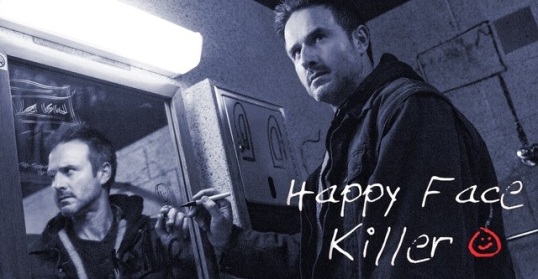
October True Crime: Happy Face Killer (dir by Rick Bota)


2014’s Happy Face Killer is loosely-based on the real-life crimes of Keith Hunter Jesperson.

Jesperson was a truck driver who, in the early 90s, murdered at least eight women in six different states.  (Jesperson later claimed that he murdered over 160 but no one knows if that’s true or not.  For his part, Jesperson has a habit of retracting his confessions shortly after giving them.)  The product of an abusive childhood, Jesperson’s trademark was drawing a smiley face on either the bodies of his victim or on the locations where he dumped them.  A good deal of Jesperson’s crime spree was inspired by anger that someone else had falsely confessed to one of his murders.  Jesperson left graffiti in truck stops all over Oregon, letting people know that the “Happy Face Killer” was still out there.

In The Happy Face Killer, Jesperson is played by David Arquette.  The film makes good use of Arquette’s naturally goofy screen persona, showing how a serial killer like Jesperson could convince someone to climb into his truck in the first place.  Arquette plays Jesperson as someone who comes across as being maybe a little bit nerdy and little but off-center but who still manages to present himself as being a likable guy.  It’s only once he has his victim alone in his truck that Jesperson allows the mask to slip and reveals his true self.  Whether making overly glib videos in which he brags about being a murderer or considering whether he should let one potential victim live because she has a baby, Arquette portrays Jesperson as being an all-too plausible and familiar monster.  The film’s best moments are the ones where Jesperson is struggling to hold up his façade of normality.  It’s those scenes that make the viewers realize that we’ve all probably known a Keith Jesperson or two.  Indeed, I think one reason why serial killers have such a hold on the culture right now is because it’s totally possible that anyone of us might know one.  Who knows what their neighbors or their co-workers are really doing behind closed doors?

Where the film falters is in its portrayal of the investigation that led to Jesperson’s eventual capture.  In real life, Jesperson panicked after the police questioned him about reports that he had been seen with some of the Happy Face Killer’s victims.  Afraid that he was going to be arrested, Jesperson twice attempted (and failed) to commit suicide before eventually turning himself in and confessing to the crimes in hopes of getting a lenient sentence.  In the film, the investigation is headed up by a tough-as-nails FBI agent (played by Gloria Ruben), who is haunted by the murder of her sister and who spends a lot of time apologizing to dead bodies and fighting the forces of the patriarchy.  The scenes with Ruben feel a bit too derivative of every other serial killer film that has ever been made and Ruben’s flat performance fails to bring much depth to her one-note character.  The scenes of Ruben snapping at the condescending men who think that a woman can’t catch a serial killer feel less like empowerment and more like pandering.

The Happy Face Killer is at its most effective when it focuses on the loneliness of the late night truck stop and the danger hiding behind the smiling face of the seemingly friendly man offering you a ride.  David Arquette gives a frightening performance as the soulless Jespersen.  In real life, Keith Jespersen is currently serving four life sentences and will hopefully never see the outside of a prison again.

Horror Film Review: Black Friday (dir by Arthur Lubin)


The 1940 film, Black Friday, opens with Dr. Ernest Sovac (Boris Karloff), a once-respected scientist, being led out of his cell on Death Row and being taken to the electric chair.  As he enters the death chamber, he hands one of the gathered reporters his journal.  Dr. Sovac says that he wants the reporter to know the true story of how he came to be on Death Row.  While the police strap Dr. Sovac into the electric chair, the reporter reads the journal.

It’s flashback time!

Months earlier, Dr. Sovac’s best friend, an befuddled English professor named George Kingsley (Stanley Ridges), is nearly fatally injured when he has the misfortune to get caught in the middle of an attempt to assassinate a gangster.  In order to save George’s life, Sovac performs a brain transplant, giving George part of the gangster’s brain.  George does recover but now he’s got the gangster inside of his head, trying to take control.  Much like Dr. Jekyll, George continually switches identities and becomes a viscous hoodlum who is looking for revenge against those who betrayed him, including gang boss Eric Marnay (Bela Lugosi).

Dr. Sovac, however, is more concerned with the fact that, before he died, the gangster apparently hid a good deal of money somewhere.  Sovac wants that money for himself so that he can build his own laboratory and hopefully help other people with otherwise incurable brain conditions.  Sovac tells himself that, once he gets his hands on the money, he can find a way to rid George of his evil alternative personality.  But until George finds the money, Sovac is content to allow George to continue turning into a murderous gangster.  Things, however, come to a head when George starts to threaten Sovac’s daughter (Anne Gwynne).

Black Friday is yet another Universal Horror Film featuring Boris Karloff was a mad scientist.  What makes Dr. Sovac a compelling character is that he starts out with the best of intentions.  He just wants to save the life of his best friend and Sovac’s desperation is increased by the fact that George himself was just an innocent bystander when he was injured.  Later, when Sovac starts searching for the gangster’s money, his intentions are again not necessarily bad.  He sincerely wants to do some good with that money and he uses those good intentions to justify allowing George to do some very bad things.  In the end, Sovac becomes so obsessed with being able to fund his laboratory that he loses sight of the price that both he and George are having to pay.  Karloff does a great job of playing Sovac, showing how a kind man manages to lose track of his morals until it is too late.  Stanley Ridges is also well-cast as George and does an excellent job of switching back and forth from being a befuddled professor to a ruthless gangster.  There’s an excellent scene in which George, attempting to teach his class, suddenly hallucinates that all of his students have become gangsters.  Ridges does a great job playing it.

Reportedly, the film was originally conceived with Karloff playing George and Bela Lugosi playing the role of Dr. Savoc.  However, Karloff said that he would rather play Savoc and, as such, Lugosi lost a role for which he probably would have been very well-cast.  Since Lugosi was a bit too naturally sinister for the role of George, he instead had to settle for a small role as a gang leader.  Lugosi, it should be said, is a convincing gangster but it’s still hard not to be disappointed that, in this film, he and Karloff don’t share any scenes together.

Previous Universal Horror Reviews:

  1. Dracula (1931)
  2. Dracula (Spanish Language Version) (1931)
  3. Frankenstein (1931)
  4. Island of Lost Souls (1932)
  5. The Mummy (1932)
  6. The Invisible Man (1933)
  7. The Bride of Frankenstein (1935)
  8. Dracula’s Daughter (1936)
  9. Son of Frankenstein (1939)
  10. The Invisible Man Returns (1940)
  11. The Wolf Man (1941)
  12. Ghost of Frankenstein (1942)
  13. Invisible Agent (1942)
  14. Frankenstein Meets The Wolf Man (1943)
  15. Son of Dracula (1943)
  16. House of Frankenstein (1944)
  17. The Invisible Man’s Revenge (1944)
  18. House of Dracula (1945) 
  19. Creature From The Black Lagoon (1954)

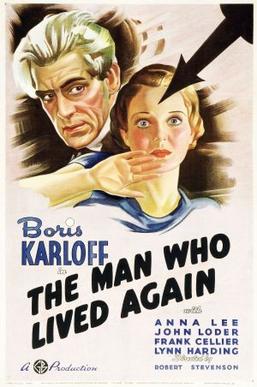
Horror On The Lens: The Man Who Changed His Mind (dir by Robert Stevenson)


In this film from 1936, Anna Lee plays Dr. Clare Wyatt, who leaves behind her reporter boyfriend (John Loder) so that she can accept a job working with the eccentric scientist, Dr. Laurience (Boris Karloff).  Dr. Laurience lives in a spooky mansion with a sarcastic, wheelchair-bound assistant (Donald Calthorp).  It turns out that Dr. Laurience believes that he has discovered how people can switch minds and bodies.  The scientific community ridicules Dr. Laurience but soon, Laurience is putting his theories to the test.  Dr. Laurience finds himself falling in love with Clare but he knows that she’s in love with her suspicious boyfriend.  What if Dr. Laurience changed his mind?

This is an entertaining British production, featuring almost the entire cast playing more than one role as various minds are moved into different bodies.  That said, the film is dominated by the great Boris Karloff, who gives one of his most enjoyable performances as the mad Dr. Laurience.  Though Karloff became a star playing the Monster, he always seemed happier whenever he got to play the mad scientist.

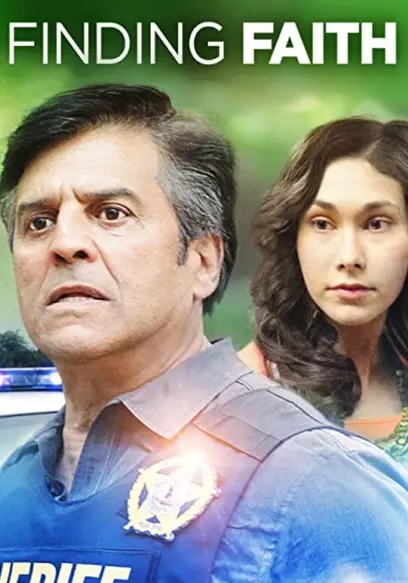
October Positivity: Finding Faith (dir by Justin Rossbacher)


The 2013 film, Finding Faith, opens with a skeezy-looking man attempting to abduct a teenage girl.  Of course, what the man doesn’t know is that the girl is not a teenager at all.  Instead, she’s an undercover cop who has spent the last few days engaging in online conversations with the man who tried to kidnap her.  The man is arrested and, as he’s taken away, she comments that she’s glad she won’t have to spend anymore time chatting with him.

Indeed, it’s dangerous world out there.  We tend to laugh about Nigerian prince emails and painfully obvious phishing scams but there’s a lot of unsavory people lurking around online.  Faith Garrett (Stephanie Owens) is an intelligent and popular high school cheerleader who thinks that she’s met a cute boy online.  However, as she soon learns, she wasn’t actually talking to Eddie Blue.  Instead, she was talking to a methhead redneck who was talking to her so that he could figure out the best way to track her down and abduct her.  In New Jersey, there’s a warehouse that is full of abducted teenage girls who are scheduled to be sold to the highest bidder and Faith’s abductor feels that he’ll be able to make a lot of money off of her.

If this sounds familiar, you’ve probably seen Taken or one of the many movies that was inspired by that film.  Or maybe you’ve seen one of the countless Lifetime films in which a mother is forced to grab a gun and rescue her daughters from the people who have kidnapped them.  Finding Faith does feature some gunplay.  Erik Estrada plays Sheriff Mike Brown, who is in charge of the investigation into Faith’s abduction.  Sheriff Brown carries a gun and so do the people working for him.  That said, Finding Faith puts much more emphasis on the power of prayer than the power of firearms.  Faith prays.  Faith’s father prays.  Sheriff Brown prays.  You know who doesn’t pray?  The kidnapper.

Finding Faith is based on a true story.  Indeed, the film was executive produced by the real Sheriff Mike Brown and, judging from some of the performances, it wouldn’t surprise me if some of the film’s cops were played by actual cops.  Because the film is based on a true story and because the threat of being abducted by someone who has been stalking you online actually is something that most people should be aware of, it’s a bit disappointing that Finding Faith isn’t a better movie.  Unfortunately, it’s a bit overlong and it’s plagued with slow spots.  On the plus side, Stephanie Owens gives a good performance in the lead role of Faith.  Erik Estrada tersely delivers his heavy-handed narration and delivers most of his other lines through clenched teeth.  Estrada is one of those actors who never lets you forget that he’s acting.  As a result, he can be entertaining to watch but, at the same time, watching him tends to take the viewer out of the reality of the film.  As an actor, Estrada is better-served by films like Guns than films like Finding Faith.

That said, the film’s final message is to be careful out there and that’s definitely a good idea!

October Hacks: Doom Asylum (dir by Richard Friedman)


Well, this is dumb.

1987’s Doom Asylum opens with a tragic auto accident.  Attorney Mitch Hansen (Michael Rogen) is out for a drive with his girlfriend, Judy (Patty Mullen).  When Mitch crashes his car, Kiki loses a hand and dies on the spot.  Mitch lives but he’s so horribly disfigured that everyone assumes that he’s dead and he’s sent to the morgue.  When two coroners attempts to slice him open, an angry Mitch responds by killing the coroners.  Personally, I imagine that Mitch could have just sued them for malpractice because he was, supposedly, an attorney.  Oh well, whatever.  Mitch looks like crap now and he has a bunch of surgical tools.  Now, he just needs a deserted asylum and a bunch of dumbass teenagers.

Ten years later, a bunch of dumbass teenagers show up at a deserted asylum.  They want to have a picnic.  Unfortunately, a local riot grrrrl band is already using the asylum for band practice.  The two groups try to co-exist but it proves to be difficult.  The band sees the teenagers as being sell-outs.  The teens view the band as just being noisy and obnoxious.  Water-filled condoms are tossed at the teens.  Meanwhile, one of the teens shuts off the power so the band can no longer practice.  One of the teens is played by Kristin Davis, years before she would find fame as Charlotte on Sex and the City.  Another one of the teens is Kiki (Patty Mullen), the daughter of Judy.

Anyway, Mitch is also living in the asylum and he gets annoyed with both the band and the teens so soon, he’s following everyone around and using his stolen surgical tools to kill anyone that he manages to catch alone.  Making Mitch’s job easy is the fact that everyone keeps wandering off by themselves, even though the asylum is obviously a dangerous place and it often doesn’t make any sense to wander off.  It also helps Mitch that both the teens and the members of the band never seem to actually try to run or anything whenever Mitch shows up with a surgical drill or with a bone saw.  Instead, they just kind of stand there while Mitch drills out their brains.  Poor Kristin Davis actually sits down in a chair while Mitch is approaching her, as if she figured that she might as well be comfortable for whatever was about to happen.  This being a late 80s slasher film, Mitch has a series of one-liner, the majority of which appear to be related to his former profession as an attorney.  Unfortunately, the sound quality is so bad that I had a hard time understanding the majority of his quips.

Give credit where credit is due, the deserted asylum is a wonderfully creepy location and, just judging from all of the graffiti on the walls, I assume it was also an authentic location as well.  The scenes were the camera prowls through the deserted hallways were genuinely effective.  But, otherwise, the film can’t overcome the combination of bad acting, a seriously lame script, and some risible attempts at comedy.  There’s a lot of blood but it ultimately doesn’t add up to anything more than another generic slasher.

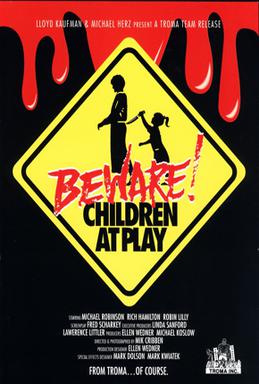
The TSL Horror Grindhouse: Beware! Children At Play (dir by Mik Cribben)


1989’s Beware!  Children At Play opens with a son and his father on a camping trip.  They’re having a great time, up until the minute the father steps on a bear trap and ends up trapped on the ground.  His son fails to open up the bear trap and, over the course of three days, his father slowly dies.  With his dying breath, the father tells his son to cannibalize his body after he passes.

Ten years later, a small town in New Jersey has a problem.  People, most of whom are children, are mysteriously vanishing.  Sheriff Carr (Rich Hamilton) has no idea what’s happening, which is especially frustrating as his daughter Amy is among the missing.  Sherriff Carr’s old friend, novelist John DeWolfe (Michael Robertson), comes to town for a visit and he discovers that the townspeople are being killed by their own children.  The children have been brainwashed by a feral teenager who lives in the woods, a teenager who calls himself Grendel.

Even as John tries to track down Grendel’s compound, the townspeople prepare to go to war against the children who are living in the woods.  Early on, an ill-destined traveling bible salesman refers to the town as being a part of the “New Jersey Bible Belt,” and it turns out that, just as the children are following Grendel, the adults are obsessed with their own idea of divine retribution.  Can John save the children from both Grendel and the townspeople?

No, he cannot.

Beware!  Children At Play opens with the Troma title card, which should be enough to frighten even the most resilient of audiences.  Like most Troma films, it’s violent and, at times, surprisingly mean-spirited.  The budget is low but the gore is grotesquely memorable, with characters getting chopped in half and used as scarecrows and every other horrible thing that you might expect to happen to someone on a farm.  As for the performances, it’s a typical Troma film, with everyone either overacting or underacting.  The townspeople shake with rage as they prepare to enter the woods in search of the children.  Michael Robertson attempts to change their minds by shouting random insults at them.  There’s a moment, at the start of the film, where John and his wife (Lori Romero) debates the merits of John’s books and the pedantic dialogue was so stiffly delivered that I nearly yelled at the screen.

That said, I don’t think anyone who sees this film will remember much about anything that happens before the film’s final ten minutes.  At the end of the film, the adults finally find their children and set out to get their revenge.  Those final ten minuets are considered to be some of the most controversial in the history of Troma, with Lloyd Kaufman claiming that they caused a mass walkout when the trailer for the film played at Cannes.  One could argue that the finale is meant to suggest that the children learned their evil from their parents but, more realistically, this is a Troma film and Troma has always understood the power of controversy to sell tickets.  The final ten minutes would be incredibly disturbing, if the actors were more convincing and if the special effects weren’t so cheap looking, particularly when compared to the gore effects seen earlier in the film.

Killer kids will always been creepy and they are certainly creepy in this film.  In the end, though, this is still a Troma film and never as disturbing as a film about a cult of killer children should be.  In the end, I could only ask myself, “Why does this stuff always happen in New Jersey?”

Icarus File No. 12: Birdemic (dir by James Nguyen)


First released in 2010, Birdemic: Shock and Terror is a film that has a very specific reputation.

Chances are that, even if you haven’t watched the entire film, you’ve come across clips from Birdemic online.  It’s the film where the birds attack humanity because of global warming.  When the birds attack, they dive bomb the buildings below, exploding when they make contact.  Whenever a bird attacks, it sounds like an airplane.  Though the majority of the birds are described as being Eagles, they all sound like sea gulls.  The birds themselves are all the result of cartoonish CGI, which leads to several scenes of the birds hovering in the air while the actors vainly shoot at them or try to wave them away with a clothes hanger.

Birdemic is famous for its bad acting.  It’s famous for the conference room scene where a bunch of engineers and salespeople are told that they’ve all earned their stock options and they proceed to spend the next ten minutes or so applauding.  Birdemic is famous for the scene where Damien Carter performs “Hanging With My Family” while the film’s stars dance in such a way that indicates that they couldn’t hear the song while they were filming.  Birdemic is famous for director James Nguyen’s attempts to pay homage to Alfred Hitchcock, from the birds to the Vertigo-inspired scenes of people in San Francisco.  Tippi Hedren is listed in the end credits, even though she only appears on television at one point.

Whenever I watch Birdemic, I’m struck by just how boring it is.  Seriously, it takes forever to get to all of the stuff that the film is famous for.  The birds don’t start attacking until nearly an hour into the film.  Instead, the first part of the film is made up of awkward scenes of salesman Rod (Alan Bagh) dating aspiring model, Nathalie (Whitney Moore, giving the only adequate performance in the film).  (In a typical example of their sparkling dialogue, Nathalie informs Rod that she’s just been hired by Victoria’s Secret.  “I’m sure you’ll look great in their lingerie,” Rod replies.)  We watch as Rod meets Nathalie’s mother and takes her to the movies and goes out to eat with her and eventually, they perform their infamous dance to Hanging With My Family.  They also go to see An Inconvenient Truth, which really inspires Rod to think about what humanity is doing to the planet.  Rod announces that he’s getting a hybrid.

The main thing that distinguishes Birdemic from other bad movies is just how seriously it takes itself.  With all of its talk about the environment and how the birds are angry over what humans are doing to their planet, it becomes very obvious the Birdemic is a film with a message and James Nguyen sincerely believed that the solution to climate change was to get people to watch his movie.  Birdemic was a film made to make people think, in much the same way that An Inconvenient Truth inspired Rod to think about getting a hybrid someday.  Al Gore may have used a power point presentation to win an Oscar for himself.  James Nguyen used some bad CGI birds and he didn’t win anything, other than the hearts of viewers.

It’s true that Birdemic is a film that caused people to think.  Of course, few of those thoughts had to do with protecting the environment.  Birdemic may have been too ambitious for its own good but it has still established a place for itself in our culture.  Birdemic will never be forgotten.

Previous Icarus Files:

  1. Cloud Atlas
  2. Maximum Overdrive
  3. Glass
  4. Captive State
  5. Mother!
  6. The Man Who Killed Don Quixote
  7. Last Days
  8. Plan 9 From Outer Space
  9. The Last Movie
  10. 88
  11. The Bonfire of the Vanities

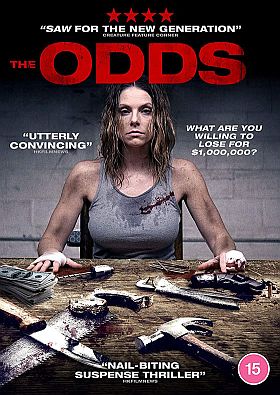
The Odds (2018, directed by Bob Giordano)


In a nearly bare room, The Player (Abbi Butler) sits at a table.  The Player is taking part in what she had been told is an international challenge.  The Game Master (James J. Fuertes) tells her what task she is expected to do.  If The Player accepts the task and is not the first person to drop out of doing the task, she’ll move on to the next round.  If The Player refuses the task or fails, she’ll be out and who knows if she will even be allowed to leave the room.

The challenges start out as simple things, like holding her hand over an open flame for as long as she can.  But as the game progresses, the challenges get more and more extreme.  Burning her hand is nothing compared to chopping off her fingers.

The Game Master remains in the room with the Player the entire time, occasionally encouraging her and sometimes taunting her.  With each challenge, he dares her to drop out of the competition.  But is The Game Master in charge of the competition or is he just another competitor?  The Player only has the Game Master’s word that there’s even a competition going on in the first place.  With each escalating round, the Player and the Game Master attempt to manipulate each other and psychologically break the other one down.

Featuring a small cast and only one location, The Odds is stagey and sometimes draggy but it is redeemed by the performances of James J. Fuertes and Abbi Butler.  Even though some of the dialogue feels overwritten, the movies does keep you guessing about what is actually happening in the room and what the Game Master is actually trying to accomplish by forcing The Player to torture herself.  The final exchange between The Game Master and The Player is an effective mind screw that makes you reconsider everything that has happened up until that point.  The Odds is uneven but it holds your attention and keeps you thinking.