The Films of 2025: Confessions of a Romance Narrator (dir by April Grace Lowe)


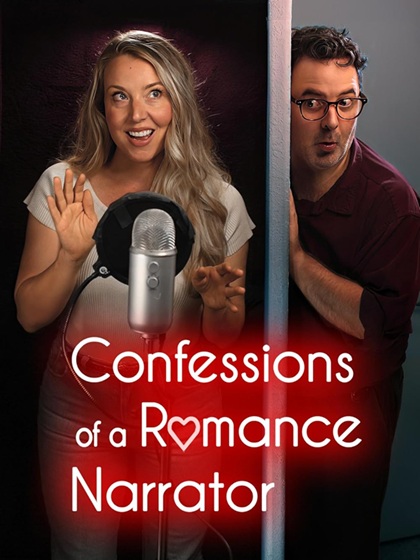
Confessions of a Romance Narrator introduces us to Jasalyn (played by the film’s director, April Grace Lowe).

Jasalyn is a romance audio book narrator, spending her time in her closet with a microphone and reading aloud the chapters of books that depict the type of romances that everyone dreams about but rarely experiences.  Jasalyn works hard, trying to make sure that each narration is perfect.  She comes up with a different voice for each character.  She video chats with her acting coach and, together, they practice the perfect “O” sound while her new upstairs neighbor listens with his pressed to the floor.  Jasalyn pines for a co-worker, an egotistical narrator named Richard (Cody Roberts) who doesn’t feel the need to do individual voices for each character because he has …. THE VOICE!  And you know what?  From the minute that Richard first appeared, I knew he wasn’t good enough for Jasalyn but I probably would have fallen for him too because damn, that man has a sexy voice.

The film’s a comedy so it’s not a surprise that things rarely seem to go Jasalyn’s way.  An attempt to leave a flirty message for Richard leads to an author thinking that Jasalyn isn’t professional enough to narrate her book.  (Richard, of course, didn’t listen to the message.)  Her attempts to look perfect for a facetime call with Richard only leads to Richard calling her back while she’s in the middle of eating a chocolate cake.  Her upstairs neighbor (Craig Jessen) is a bit noisy and plays the ukulele.  Convinced that Jasalyn is a sex worker, he’s thrilled when she comes up to his apartment to complain about the noise.  From the minute we see Jasalyn opening and closing her closet as she attempts to meet an all-important deadline, we know that there’s no way this movie is going to end without featuring her somehow getting trapped in the closet while only wearing a towel.  And the movie doesn’t let us down.  It’s a lot to happen to one person but, by the end of the movie, you’re convinced that it is something that could all happen to Jasalyn.  We’ve all had a friend like Jasalyn.  A lot of us have been her at some point in our lives.

Confessions of a Romance Narrator is a breezy and likable 78 minute film, one that examines the life of a romance narrator and includes enough small details that you’re left with no doubt that the film knows what it’s talking about.  There are two types of romance narrators, the film tells us in voice-over, those who stand and those who sit.  Jasalyn stands but her mom thinks that she sits and sends her a hemorrhoid pillow for her birthday.  And, from the minute we see it arrive, we know her loud neighbor is going to be the one to grab it and take it up to her apartment.  It’s a bit predictable but it’s cute, much like the film itself.  April Grace Lowe gives a likable performance as Jasalyn.  The film is, I believe, edited together from a series of 10-minute short films that Lowe made about the character.  It’s a likable movie.  Much like a good romance novel, it’s fun, quick, and satisfying.
The TSL Grindhouse: Mad Max (dir by George Miller)


I was a bit shocked to discover that I’ve neve actually sat down and written up a real review of 1979’s Mad Max for this site.  Considering how much I like this film and all the scenes and shots that I’ve share from Mad Max, you would think that I would have at least written about why I like this violent but intriguing film so much.  Today is George Miller’s birthday so let’s talk about the film that launched his career.

Mad Max is often described as being a post-apocalypse film but that’s not quite true.  It does take place in a “near future,” one in which there seems to be noticeably less people around.  The roads of Australia are dominated by crazed punks who have taken their obsession with their cars and motorcycles to the extreme.  (Director George Miller trained as a doctor and has said that this film was partially inspired by the auto crash victims who were brought into the emergency room on a nightly basis.)  Civilization is on the verge of collapsing but it is still hanging on by a thread.  For every Night Rider (Vincent Gil), ranting as he crashes into people, and for every psycho gang leader like Toecutter (Hugh Keays-Byrne), there are people just trying to survive day-to-day.  The nightly news is still televised though the news is always so bad that no one seems to pay it much mind anymore.  There are still cops, like Max Rockatansky (Mel Gibson) and Goose Rains (Steve Bisley), who patrol the roads in their cars and who do whatever is necessary to chase down the people who appear to be destined to inherit a world that they very much want to destroy.  Society still exists but it’s obviously on its last legs and the attempts to maintain some sort of normalcy — laws, news, vacation homes, sexy saxophone playing — can’t hide the fact that the world is coming to a violent end.  Max tries to deny that reality until, finally, he has no choice but to accept both the new world and his place in it.

Whenever I watch Mad Max, I’m always surprised by the fact that Mel Gibson almost seems like a supporting character for the majority of the movie.  When the movie starts, Max is tightly wound and in control and he doesn’t show much emotion while he’s on the job.  The flamboyant and always joking Goose seems like a much more likable protagonist.  He’s the guy that the viewer wants to spend time with and, when he ends up getting burned nearly to death by Toecutter and Toecutter’s protegee, Johnny the Boy (Tim Burns, cast as one of the most loathsome characters ever to appear in a film), it’s a shocking moment.  Goose had so much life to him.  The attention then shifts to Max’s wife, Jessie (Joanne Samuel).  When she finds herself being menaced by Toecutter and his gang, it’s alarming because she’s both a mother and she’s eventually isolated from both her family and from Max.  We don’t want to see anything bad happen to Jessie.  When something bad does happen, we’re more than ready for Max to step up and get some vengeance.  And that’s exactly what Max does.  One of the film’s most iconic images features Max not even flinching at the sound of an explosion in the distance.  He’s gotten his vengeance but at the price of his soul.  And, even as the film comes to an end, it’s obvious that nothing can be done to stop society’s collapse.  Max has accepted what neither Goose nor Jessie could.  There is no safety or society in the new world.  There is only the road and the battle to control the remains of the world.

What makes Mad Max such a thrilling film?  A lot of it has to do with the stuntwork, which remains truly spectacular to this day.  Made in the era before CGI, Mad Max features real cars that are being driven by real people who put themselves into real danger to capture some of the most stunning crashes captured on film.  As well, the cast truly brings their characters to life.  Tim Burns makes Johnny the Boy into a truly hateful character, one who manages to somehow be both whiny and dangerous at the same time.  Joanne Samuel and Steve Bisley are sympathetic as Jessie and Goose.  And then you’ve got Mel Gibson, young and on the verge of the superstardom that people now tend to pretend never happened, showing the intensity that would become his trademark as the increasingly unhinged Max.  (I love Tom Hardy but, as good as he was in Mad Max: Fury Road, he never came close to capturing the soul-shattering intensity of Gibson’s thousand-yard stare,)

That said, I think the main reason why Mad Max continues to resonate is because it all feels so plausible.  One looks at the world of Mad Max and it’s very easy to imagine finding yourself there.  Unlike other apocalypse films that often seem to be taking place in an entirely different universe, Mad Max feels like it could be playing out just a few miles away from the closet motorway.  For all of the spectacular stunts and flamboyant characters, Mad Max is a film that continues to feel very real.  For that, George Miller deserves a lot of credit.  Mad Max is a true classic of grindhouse filmmaking, featuring a story that feels more powerful with each passing year.

Your Mother Wears Combat Boots (1989, directed by Anson Williams)


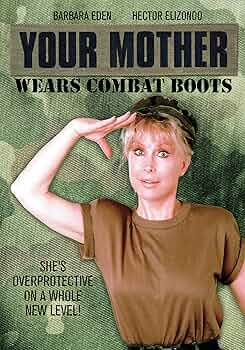
Jimmy Anderson (David Kaufman) drops out of college and enrolls in the Army without telling his mother.  He wants to go through basic training and then do Parachute airbone training at Fort Benning, just like his father did before he died in Vietnam.  When Barbara Anderson (Barbara Eden) finds out what her son has done, she rushes down to Georgia to try to stop him.  When she discovers that Jimmy has already entered Fort Benning, Barbara assumes the identity of an AWOL trainee so that she can enter the base.  All she wants to do is track down her son and convince him to leave.  However, Sgt. Charlie Burke (Hector Elizondo) fully expects Barbara to complete her training and, in a few weeks time, to jump out of an airplane.

Probably the most interesting thing about this made-for-TV comedy is that no one seems to find it strange that a 58 year-old woman claims to have just completed basic training.  Barbara Eden looked great in this movie and she put a good deal of energy to going through all the usual Private Benjamin routines but she was still clearly too old to have ever recently enlisted in the Army and, even if she wasn’t in her 50s, the fact that she doesn’t know how to salute nor does she understand any of the basic army terminology used by Sgt. Burke should have been dead giveaways that she wasn’t who she was claiming to be.  That could have been funny if the movie had acknowledged Barbara’s age or maybe even had her act shocked that she was somehow getting away with her ruse.  Instead, the movie itself doesn’t seem to understand how strange it would be for a 58 year-old woman to show up for Parachute training.  The movie never finds the right balance between comedy and sentimentality but Barbara Eden gives it her all and the dependable Conchata Ferrell scores some laughs as a specialist who “eats recruits for breakfast.”

This film was directed Anson Williams, a.k.a. Potise from Happy Days. Ron Howard and Henry Winkler weren’t the only directors to come out of that show.

The Films of 2025: Presence (dir by Steven Soderbergh)


Presence takes place in one very big house.  The Payne family — Rebekah (Lucy Liu) and Chris (Chris Sullivan) and their teenage children, Tyler (Eddy Maday) and Chloe (Callina Liang) — have moved into the house, little aware that it is already haunted by a poltergeist.  The entire film is seen through the eyes of the poltergeist, the Presence.

The Presence floats through the house, going from room to room and allowing us to hear snippets of conversation that help us to put the plot together.  The Paynes have moved to what they hope will be a better neighborhood and school district for their children.  Tyler is a swimmer and his new school will perhaps make it easier for him to get the attention of college scouts.  Chloe is still mourning the death of one of her friends.  Her friend died of a drug overdose and we hear enough conversations to learn that drugs were apparently a problem at Chloe’s old school.  More than one of Chloe’s classmates have died.  Chris keeps an eye on Chloe, looking for any signs of drug addiction.  Rebekah, meanwhile, is more concerned with the future of Tyler.  As for the Presence, it gets upset easily.  It’s not happy that Chloe seems to like Ryan (West Mulholland), a friend of Tyler’s who, at first, seems like almost a parody of sensitivity.  The Presence gets even more upset when Tyler circulates a nude photo of another student online.  What does the Presence want with the Paynes and will Rebekah and Chris’s already strained marriage survive the pressure of living with the mysterious spirit?

Written by David Koepp and directed by Steven Soderbergh, Presence is told with long takes and naturalistic lighting.  Following the film’s plot requires listening to snippets of conversations that sometimes drift in from a neighboring room.  It’s an interesting technique, or at least it is for the first half of the film.  Eventually, it becomes apparent that Soderbergh is more interested in the film as a technical experiment than as an actual story involving interesting characters or surprising twists.  At first, the long shots and the lack of close-ups seem to symbolize that the Presence is an outsider amongst the living family but eventually, they come to symbolize Soderbergh’s detachment from the story that he’s telling.  As with so many of Soderbergh’s genre exercises, it’s a film that’s easier to respect than enjoy.  Soderbergh sticks with his technique for the entire film, even when it would easier to abandon it.  I appreciate the dedication but sometimes, I wish Soderbergh could just make a genre film without continually trying to convince us that he’s actually too good for the material.

On the plus side, Soderbergh does get fairly effective performances from his cast.  There’s a twist involving Ryan’s character that isn’t really surprising but West Mulholland still does an excellent job selling it.  Callina Liang realistically portrays Chloe’s sadness and I could definitely relate to her need to rebel, as I would think anyone who has ever been a teenager would.  As so often happens with Soderbergh’s films, the extreme stylization gets in the way of the story but Liang still brings a bit humanity to Soderbergh’s chilly vision.

The Bad Man (1941, directed by Richard Thorpe)


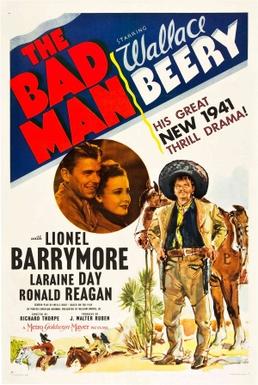
Gil Jones (Ronald Reagan) lives on a ranch with his cantankerous uncle, Henry (Lionel Barrymore).  After their cattle are stolen by the notorious bandit Pancho Lopez (Wallace Beery), Gil and Henry are faced with the prospect of losing their ranch.  Banker Jasper Hardy (Henry Travers) wants to foreclose on Henry and take over the ranch but a businessman named Morgan Pell (Tom Conway) shows up and offers to pay the then-huge sum of $20,000 for the land.  Accompanying Morgan is his wife, Lucia (Laraine Day).  Lucia was Gil’s childhood love and Morgan fears that Lucia still loves Gil more than him.  Also in the mix is Gil’s comic relief best friend (Chill Wills), who has a crush on Hardy’s daughter (Nydia Westman).  Negotiations are interrupted when the flamboyant Lopez and his men return to the ranch and take everyone, but Gil, hostage.

This sepia-toned film is based on a stage play, one that had already been filmed twice.  It was Ronald Reagan’s first film for MGM and, when Reagan was running for President, he quipped that if he could survive acting opposite Wallace Beery and Lionel Barrymore than he could survive negotiating with Leonid Brezhnev.  The role of Gil is a typical Ronald Reagan role.  He’s good-natured and dependable and a little boring.  Because he once saved Lopez’s life, Lopez is willing to help him out with his problems.  Reagan is not bad in the role but he is overshadowed by Barrymore and Beery, two veteran actors who chew the scenery with gusto here.  Berry speaks in an exaggerated and not at all convincing Mexican accent while Barrymore bellows all of his lines.  Gil has so many different people yelling at him that it’s impossible not to feel sorry for him.  Morgan has ulterior motives for offering to buy the land and Tom Conway is a convincing villain.  Lopez helps out Gil and her uncle, saving not only their land but also plotting to bring Gil and Lucia back together.  It’s a stage bound mix of drama and comedy that doesn’t really work, though Beery and Barrymore are amusing and Ronald Reagan shows why he was cast in so many best friend roles.

Whether you’ll enjoy it will probably depend on how you feel about the cast because they’re really the only reason to watch.  If you’re a fan of Barrymore, Beery, or Reagan the film might work for you.  If you’re not, this stagey 70-minute western is probably not for you.

Billy The Kid’s Range War (1941, directed by Sam Newfield)


Billy the Kid was a big damn hero.

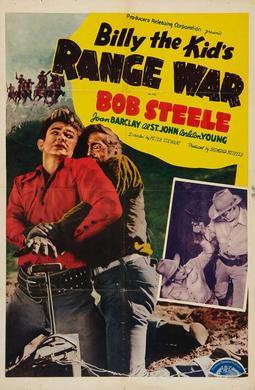
At least that’s the claim of Billy The Kid’s Range War, in which Billy (played by middle-aged Bob Steele) is a do-gooder with a comedic sidekick named Fuzzy (Al St. John) and a hankering to help Ellen Gorman (Joan Barclay) bring a new stagecoach line to town.  Williams (Karl Hackett) does want to the Gorman family to success so he hires Buck (Rex Lease) to dress up like Billy the Kid and ride a horse that looks like Billy the Kid’s and commit crimes, like killing Ellen’s father.  Framed for all those crimes that he didn’t commit and with his best friend (Carleton Young) ordered to arrest him, Billy decides to go under cover so that he can clear his good name.  Someone pretending to be Billy the Kid got him into this mess.  Now, Billy’s going to get out of it by pretending to be someone else.

The action is pretty standard for a B-western.  Mostly, it’s interesting to see a movie where Billy the Kid is actually a nice guy who gets framed.  No wonder a whole generation grew up with no idea about true history of the American frontier.  Sam Newfield directed a handful of Billy the Kid films and the capable Bob Steele starred in most of them but this is the only one that I’ve sat down and watched and it actually left me missing the production values of the Johnny Mack Brown films.  For fans of these type of westerns, there’s the promise of seeing familiar actors like George Cheseboro and Ted Adams doing there thing.  Even the outstanding character actor Milton Kibbee makes an appearance.  For those who do not like westerns, this film is not going to change their minds.

Despite the promise of the title, there is no range war in this movie.  There’s just Billy the Kid, trying to clear his good name.

Quickie Review: The Monkey (dir. by Osgood Perkins)


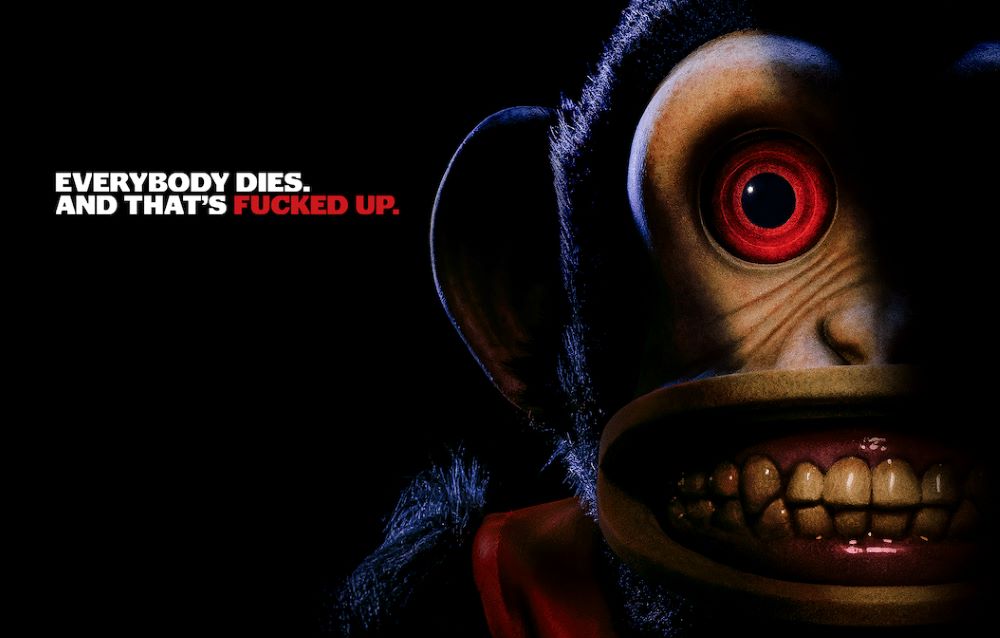
Yes, dying is quite fucked up and Osgood Perkins follow-up to his 2024 horror cult-hit Longlegs points and shows this to the audience in spades (and buckets of blood).

The Monkey, based on the Stephen King short story of the same name, tells the story of a drum-playing toy monkey which happens to cause the the deaths of random individuals when it stops playing the drums. Right from the start we see that The Monkey veers away from Perkins usual moody and atmospheric horror language and goes for the absurdist take on the genre.

Anyone who has seen the supernatural horror series Final Destination will recognize the Rube Goldberg-esque ways each kills in that series has become its signature will appreciate how truly absurd some of the kills in The Monkey turns out. To say more would be too much of a spoiler and should be experience by anyone willing to watch this film.

Osgood Perkins still brings to the table his own brand of horror comedy by exploring the ideas and themes of death’s inevitability and randomness, but also childhood trauma and how it impacts the lives of those children even to their adulthood. Where some films would be more subtle in exploring these themes, Perkins decides on drumming it on thickly which, at time, does come off as cringe.

Yet, despite the heavy-handedness of Perkins’ screenplay (he also wrote the screenplay adaptation of King’s tale), The Monkey still succeeds in delivering an early horror hit for 2025 that should be seen with a crowd. this is a film that is actually better when seen as part of a collective experience rather than with a small group.

Twice In A Lifetime (1985, dir by Bud Yorkin)


Today, for obvious and tragic reasons, people everywhere have been thinking about their favorite Gene Hackman performances.  Hackman was an actor who always brought his all, even when he was appearing in a lesser film.  I think you could ask five different people for their five favorite Hackman performances and they would all give five different answers.  His performance as Lex Luthor in Superman and Superman II has always been one of my favorites.  Others will undoubtedly cite his award-winning performance as Popeye Doyle in The French Connection or his great work as Norman Dale in Hoosiers or his work in classic neo-noirs like The Conversation and Night Moves.  Let’s not forget his most unexpectedly great turn, as the blind man in Young Frankenstein.  Hackman gave so many great performances that some of them were for films that are not even remembered today.

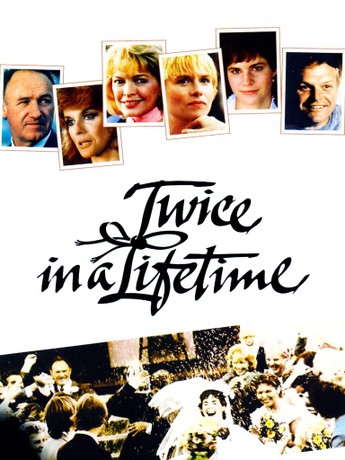
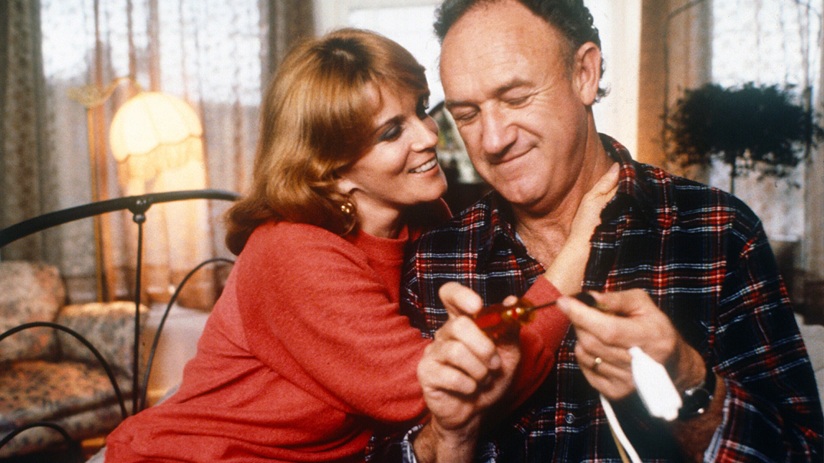
Twice In A Lifetime is one of those forgotten films but I think it features one of Hackman’s best performances.  He plays Harry Mackenzie, a steelworker who is married to Kate (Ellen Burstyn, made up to look frumpy) and who has two daughters (Amy Madigan and Ally Sheedy).  Harry is the type of everyman that Hackman excelled at playing.  He’s a hard worker, a good family man, and a good friend.  What no one, not even Harry realizes, is that he’s also having a midlife crisis.  On his 50th birthday, he goes out to the neighborhood bar with his buddies and falls for the new barmaid, Audrey (Ann-Margaret).  Harry ends up leaving his wife for Audrey, pursuing the spark that his marriage no longer gives him.  The movie follows Harry and Kate and their daughters as they adjust to their new lives and they plan for the younger daughter’s wedding.

Twice In A Lifetime was one of many 80s films that dealt with divorce and it has the same flaws that afflicted many of them.  These films, which were often made by middle-aged directors who had just gone through their own divorces, rarely played fair when it came to depicting why the marriage failed.  Twice In A Lifetime stacks the odds in Harry’s favor just by suggesting that Ann-Margaret would end up working at a bar frequented by steelworkers.  Harry has to choose between his plain and boring wife and Ann-Margaret.  That’s going to be a difficult choice!  The twist that Harry’s decision was ultimately the right thing for Kate doesn’t feel earned.

But damn if Gene Hackman isn’t great in this film.  Even though he was one of the most recognizable actors in the movie, Hackman is totally believable as both a steelworker and a man who worries that he’s destroyed his family.  It’s not just one moment or scene that makes this a great performance.  It’s the entire performance as a whole, with Hackman portraying all of Harry’s conflicted emotions both before and after leaving his family.  Hackman gives a performance that is more honest than the film’s script or direction.  The movie believes Harry did the right thing but Hackman shows us that Harry himself isn’t so sure.  Hackman captures the middle-aged malaise of a man wondering if his life is as good as it gets.  When the movie works, it is almost totally due to the emotional authenticity of Hackman’s performance.  Twice in a Lifetime may be a forgotten film but it’s also proof of how great an actor Gene Hackman really was.  There will never be another one like him.

Boothill Brigade (1937, directed by Sam Newfield)


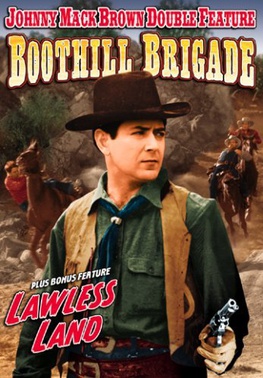
Rancher Jeff Reynolds (Frank LaRue) used to be one of the good guys on the frontier but he’s recently changed.  He fired all of his loyal ranch hands and instead hired a motely crew of outlaws.  He’s buying up land and evicting the squatters who have been living there.  About the only good thing he does is hire Lon Cardigan (Johnny Mack Brown) to be his new herd boss.  Lon is engaged to Reynolds’s daughter, Bobbie (Claire Rochelle).  With the help of Bobbie and comic relief cook Calico Haynes (Horace Murphy), Lon tries to figure out why Reynolds is now doing the bidding of the evil John Porter (Ed Cassidy).

The title is the most exciting thing about this movie, which is one of those old B-movies that puts the “creak” in creaky.  There’s surprisingly little gunplay but there is a lot of horse riding.  For a film that runs less than an hour, a surprising amount of it is just shots of people riding from one location to another.  The horses’ hooves sound impressive on the soundtrack but it’s not exactly exciting.  As always, Johnny Mack Brown is a convincing cowboy.  It’s a good thing he looks like he knows what he’s doing when he’s riding a horse!  The plot was standard B-western fluff.  Johnny Mack Brown appeared in a ton of westerns and almost all of them seemed to feature the same range war.  There are better Johnny Mack Brown movies out there.  This one is for completists only.

Emilia Pérez (dir by Jacques Audiard)


The Best Picture Winner at the Oscars usually is a film that either soared above the rest or had enough power in it’s story that you couldn’t help but be moved. James Cameron’s Titanic may not have had the tightest story in the world (I still argue that L.A. Confidential was worthy enough), but it was impressive for the time. We all know The Shawshank Redemption could have easily won Best Picture, but Forrest Gump did so some amazing things that year as well. I love All That Jazz, but can understand how Kramer vs. Kramer scooped Best Picture. Everything, Everywhere, All at Once may have been a strange winner, but it was moving enough (at least for me, anyway) to enjoy it and feel it was deserving. Then, of course, you get Crash, which still makes me scratch my head to this day.

Netflix’s Emilia Perez was a surprise hit at the Golden Globes. It’s also managed to pick up 13 Academy Award Nominations. As we’re covering the Oscar Nominated films, I decided to give it a run and went in blind. The most I knew about the film was Zoe Zaldana sang and danced, and that it was a something of a musical. It’s a mixed bag, though. On the one hand, you have great performances from Zaldana (who I’ve enjoyed since Drumline) and Karla Sofia Gascon, along with a solid tale. On the other hand, the musical elements of it are awkward. I think of all the songs featured, there may have been 2 or three that struck a chord for me (“Lady” – I loved how the Doctor and Rita share a counterpoint verse and “Papa”, left me misty eyed). I really felt like this could be a stronger film if they took the music out of it, but I also have to wonder if the decision to make this a musical was director Jacques Audiard’s way of dipping a hard to swallow pill for some – a sex change – in chocolate to make it taste better. If that’s the case, they should have hired better musicians, really. The music wasn’t helping, despite how well everyone’s participation was. 

Rita (Zaldana) is a lawyer in Mexico, unhappy with a system that forces her to defend people who are clearly breaking the law (if not slightly bending it). She is kidnapped and introduced to an extremely wealthy cartel boss named Manitas (Gascon), who has undergone the hormone prerequisites for gender transition surgery. Manitas hires Rita to find a doctor who will perform the surgery, while at the same time, secures a safe place and new life for Manitas’ wife, Jessi (Selena Gomez, Hulu’s Only Murders in the Building) and their two children. Rita’s reluctant at first, but does the due diligence, securing a doctor and brushing up on medical terms. She meets the goals and is paid incredibly well for it. 

Moving ahead roughly 4 to 5 years later, Rita finds herself in familiar circles when she meets Emilia Perez. After some introductions, Emilia has another job for Rita – to help reunite Emilia with her children. This seems easy at first, with Perez’s near limitless funds, but some complications arise in the form of Jessi’s new boyfriend, Gustavo (Edgar Ramirez, Bright). Can Emilia find a way to live her new life while still holding on to elements of the past? How far will Rita go to keep things running smoothly?

Historically, transexual characters in cinema isn’t anything new. We’ve had Chris Sarandon’s Leon in 1975’s Dog Day Afternoon, Hillary Swank in 1999’s Boys Don’t Cry, Jaye Davidson in 1992’s The Crying Game. Emilia Perez is a bit different in having a transgender actor play a transgender character. Was it any more effective to cast the film this way? I’d argue that it was. In some ways, it’s like watching Joel Grey’s Chiun in Remo Williams: The Adventure Begins or Peter Sellers’ Sidney Wang in 1976’s Murder by Death. Were their performances bad? I don’t think so. Could someone Mongolian or Chinese have done a better job? Possibly, but Hollywood just didn’t cast that way back then. Between Manitas’ darkness and Emilia’s kindness (and the moments in between that showcase that darkness when Emilia gets angry), Karla Sofía Gascon gives a great performance. Her chances of winning an Oscar may be damaged by some recently discovered tweets that show her going on a racially fueled tirade. Had that not happened, there’s a chance she could’ve plucked the Oscar right out of Demi Moore’s, Mickey Madison’s or maybe even Cynthia Erivo’s hands.

Zaldana is equally as good here, putting both her dancing and singing chops to work. It’s a very different role, compared to what she’s done in the Guardians of the Galaxy and Avatar films. Again, while the music isn’t particularly great or memorable, she does her best with what she’d given and her character moves through a number of emotional states. I think the only person who might have made an impact (for me, anyway) was Selena Gomez. She was okay, but I’ve seen her do better in Only Murders in the Building. The role of Jessi is also different from other ones she’s played, but it felt awkward. Not terrible, just a bit different. I could see a few actresses easily handling that role. 

From a filming standpoint, there’s a lot of nice lighting effects, particularly when the film moves into the various dance numbers. Cinematographer Paul Guilhaume makes some cool magic in various scenes. If Emilia Pérez does win a number of awards, it’ll be for the acting and the production. While I don’t really see myself running back to it, it’s worth a watch at least for the Awards curiosity.