Thoughts On The Culture — 3/2/26


Jeff and I spent most of the second half of February up at Lake Texoma. In the past, taking two weeks off wouldn’t have been that big a deal but two weeks in 2026 is the equivalent of two years in any other news cycle. During our vacation, there were a lot of things that I heard about that I wanted to comment on. This is a culture and entertainment blog and we’re living in a moment of enormous cultural upheaval. In the future, historians will try to figure out the enigma of the 2020s. Who knows? Maybe they’re reading this typo-filled post right now.

Below are a few thoughts.  They are my thoughts so don’t get mad at any other contributor on here if you disagree.

It’s Lent!

I gave up cursing for Lent. Not that I ever really curse to begin with….

What’s funny is that, as I soon as I gave up cursing, I suddenly found myself wanting to curse.

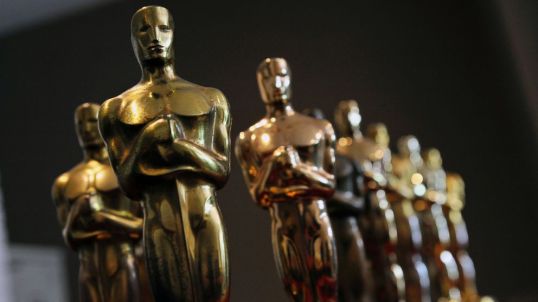
How irrelevant are the Oscars?

In the past, movies were definitely a part of our shared culture. Whenever there was a huge national news story, it was common to hear it compared to a recent film. Often times, movies would be cited as a way to learn about whatever was happening in the world.

But today, in a time of economic uncertainty, no one is talking about Nomadland. In a time when the press claimed to be under attack, no one is recommending Spotlight. With everything that has happened in Iran, no one has mentioned Argo. These were all films that won Best Picture and they are also all films that have left absolutely no cultural footprint.  (Don’t even get me started on Green Book….)

That’s not say the Oscars are totally irrelevant. Oppenheimer definitely left a cultural footprint, though I think that has more to do with Christopher Nolan than anything else. The days of a film being relevant solely because it won an Oscar are pretty much over with.

The Case of James Talarico

I’m not one of those people who feels that Stephen Colbert or Jimmy Kimmel should be shamed for having political guests. It seems like every time there’s another controversy about Colbert or Kimmel, a hundred people tweet that Johnny Carson was never overly partisan. That may be true but neither Colbert nor Kimmel are Johnny Carson and, for that matter, neither has really said that they aspired to be him. That Colbert’s show would be political shouldn’t come as a surprise to anyone. Colbert has always been political and, even when he would joke about running for President while hosting The Colbert Report, there was a gleam in his eye that leaves little doubt that he’ll be running for something as soon as he’s done with CBS. As for Kimmel, I do feel that he was more effective when he was a blue collar, anti-establishment goofball as opposed to a partisan commentator. But again, times have changed and the old argument for late night television — that it was the only way that celebrities could advertise their projects and reach the public — has pretty much been negated by social media, YouTube, TikTok, and all the rest. Late night programming on network television is dying but I imagine that would be the case regardless of who hosted.

That said, I have always wondered how both Colbert and Kimmel have managed to avoid the equal time rule. This is the rule that states that, if a show features a candidate in an upcoming election, it also has to give equal time to the candidate’s opponent. (In 2024, when Saturday Night Live featured Kamala Harris in a skit, NBC had to give Donald Trump some time during NASCAR.) Kimmel and especially Colbert have become a part of every up-and-coming Democrat’s itinerary.  Their shows have become a place for politicians to go and pretend to have some sort of personality.

That brings us to James Talarico. Talarico is a youngish and religious state representative who is running in the Democratic nomination for the U.S. Senate in my home state of Texas. Democrats outside of Texas have fallen in love with him and are convinced that Talarico can turn Texas blue because he’s a white guy who quotes the Bible. (A friend of mine in Ireland even contacted me to tell me how much he liked Talarico.) To win the primary, he’s going to have to defeat U.S. Rep. Jasmine Crockett, who has a national following and who is a very liberal black woman. The Democratic establishment has made it clear that they feel Crockett cannot win a statewide election in Texas, specifically because she is a liberal black woman. For that reason, they’ve been promoting the heck out of James Talarico.  (This is similar to what we saw in 2020, when the DNC essentially ordered people to support MJ Hegar over Royce West.)

On February 16th, Stephen Colbert announced that CBS had forbidden him for airing an interview with James Talarico because the interview might violate the equal time rule. Colbert put the interview on YouTube and Talarico announced that it was “the interview that Donald Trump doesn’t want you to see.” A lot of people took the bait, spent fifteen minutes watching Colbert trying to make the bland Talarico interesting, and then sent money to Talarico’s campaign. Talarico got his moment in the spotlight.

Of course, later it was revealed that all CBS did was inform Colbert that he might be required to interview Jasmine Crockett if the Talarico interview aired on primetime television. The interview was pulled not because of a conspiracy to silence James Talarico but instead because Colbert didn’t want to have Crockett on the show. Crockett is currently leading Talarico in most polls. Talarico is not a particularly interesting person so there was really no point to interviewing him — and only him — beyond to boost him over Crockett.

In the end, all of this has been a reminder of how politics and entertainment, for better or worse, have collided. The DNC has made clear that it prefers Talarico over Crockett. Colbert was on hand to help out. And the equal time rule, which was first proposed by FDR, became a convenient mechanism to make Talarico seem more dangerous than he is.

You may have guessed that I’m not a huge James Talarico fan. It’s true, I’m not. I don’t trust politicians who brag about how religious they are. If you’re that religious, why are you involved in a dirty business like politics? Why are you lying about why your interview got pulled? Despite all of this, most polls still have Crockett winning the Democratic Primary on Tuesday. I’m not a huge Crockett fan but I’m hoping she pulls it off because I don’t know if I can handle 8 months of James Talarico telling me what God wants me to do.

Suddenly, I love hockey!

On February 22nd, I was one of the many people who watched the U.S. Men’s Hockey Team defeat Canada at the Winter Olympics. That, along with the earlier victory of the U.S. Women’s Hockey Team, made me at least temporarily into a hockey fan.

Why was I so happy? Some of that was because both teams were considered to be underdogs to Canada.  America — a country that rest of the world loves to whine about — stepped up and defied the so-called experts.  That’s something we’ve been doing for 250 years.  That a lot of Canadian commentators proved themselves to be very sore losers only made the victory feel all the more sweet.  The insistence that Canada had won despite losing only added luster to those gold medals.

I was also happy because I’m an American. I love this country. I may not always love our government and I may not always be happy with who wins our elections but I love America and I love my fellow Americans. We are 250 years old this year and to me, there was no better symbol of everything that I love about the American spirt than Jack Hughes, hitting the winning goal despite having lost two teeth just an hour or so earlier. This was a victory that America needed.

And you know what? I’m still proud of Jack Hughes. I’m still proud of our two hockey teams. And I’m still thrilled we won the gold. The media has been insisting that the Men’s Hockey Team is controversial because they accepted a phone call from the President, they attended that State of the Union, and none of them have been outspoken when it comes to politics. My personal feeling is that a lot of people were hoping America wouldn’t do well at the Winter Games so that they could write stories about how our poor Olympic performance was a metaphor for our supposed national decline. There are people who simply do not know how to handle the fact that the majority of Americans love their country.

Some day, a movie will be made about this hockey team. A critic will complain that the movie doesn’t address “the controversy.” No one will care.

The Case of John Davidson

Up until last week, I had never heard of John Davidson. The same is true for most Americans. However, he’s a bit of an institution in the UK. John Davidson has Tourette’s Syndrome. Along with the tics that people usually associate with the condition, he also has Coprolalia, which leads to swearing, slurs, socially inappropriate remarks, and derogatory comments, none of which Davidson can control. In 1989, when Davidson was 16, he was the subject of a BBC documentary. He’s appeared in several follow-up documentaries and his life was dramatized in a BAFTA-nominated film called I Swear. In the UK, people have watched him grow up and they know that, in the past, he has come close to suicide as a result of his condition. In America, we’ve never really had a figure like John Davidson and, as such, Tourette’s is still seen as a disorder that is often played for laughs on television and in the movies.

Because I Swear was nominated for several BAFTAS, Davidson attended the ceremony. Because Sinners was also nominated, Michael B. Jordan and Delroy Lindo were brought on as presenters. While Jordan and Lindo were on stage, Davidson yelled the word, the N-word.

Myself, I had sympathy for both sides of this particular incident. I am not an expert on Tourette’s but I do know enough to know that Davidson cannot control his tics. At the same time, I’ve never had a racial slur shouted at me so I can’t have any idea what it was like for Delroy Lindo and Michael B. Jordan to step out onstage and have that word echo through the theater.

As soon as it happened, a thousand people automatically decided that they were experts on Tourette’s. Jamie Foxx declared that Davidson “meant that.” On twitter, many claimed that Davidson could somehow control his tics or that his use of the word showed that it was what he actually wanted to say, two claims that showed a complete ignorance of the reality of Tourette’s.  There were many — far too many — who claimed that Davidson should never leave his home if he couldn’t control his impulse.  One woman even claimed that Davidson intentionally shouted his slur to try to keep the members of the Academy from voting for Sinners.  (It was remarkable how many of these experts were apparently under the impression that I Swear was also an Oscar nominee, despite the film not having been released in the U.S.)  Meanwhile, Davidson’s defenders did a good job of explaining the reality of Davidson’s condition but too often, they resorted to the popular European argument of “This proves that Americans are all stupid!,” as if a bunch of blowhards on twitter spoke for a nation of 300 million.

Once people finally started to accept that Davidson couldn’t control his tics, they decided that he was still a racist because, while he said he was “mortified,” Davidson did not due the usual public apology thing. Personally, I think Davidson said more than enough. Asking a disabled man to apologize for a disability that he cannot control shows a remarkable lack of grace. As well, our current culture sees apologizing as being a sign of weakness. Any apology that Davidson gave would be followed by demands for another apology. If anything, people’s anger should be with the BBC, who has two hours to edit out the slur but who left it in.

For about a week, people fought about this online. Now, they’re fighting about Iran. As I said, the news cycle moves very quickly. I Swear, the film about Davidson’s life, will be released in America later this year. I love forward to seeing it.

My Poor Ankle

On Saturday, I visited with my niece. She loves ballet so I decided to show her some pointe work. You should understand that it has been years since I last did pointe work. On Sunday, I could barely walk. Fortunately, I woke up feeling better this morning but still, aging is no joke!

Iran So Far Away

I know our readers probably have a lot of different feelings about what’s happening in Iran right now. As I mentioned earlier, no one is talking about Argo, despite the fact that it’s a relatively recent best picture winner about Iran. Personally, I would recommend Jafar Panahi’s It Was Just An Accident, a film that probably would have been a Best Picture nominee if the Academy actually had the guts that it often claims to have.

One Final Thought

Happy Purim!  Every year, I look forward to attending my best friend Evelyn’s Purim party.  That’s especially true this year.

And those are my thoughts on the culture.
Frontier Fractured: Taylor Sheridan’s Neo-Western Reckoning


“The characters are fiction, but the landscape and the lives the characters are navigating are real.” — Taylor Sheridan

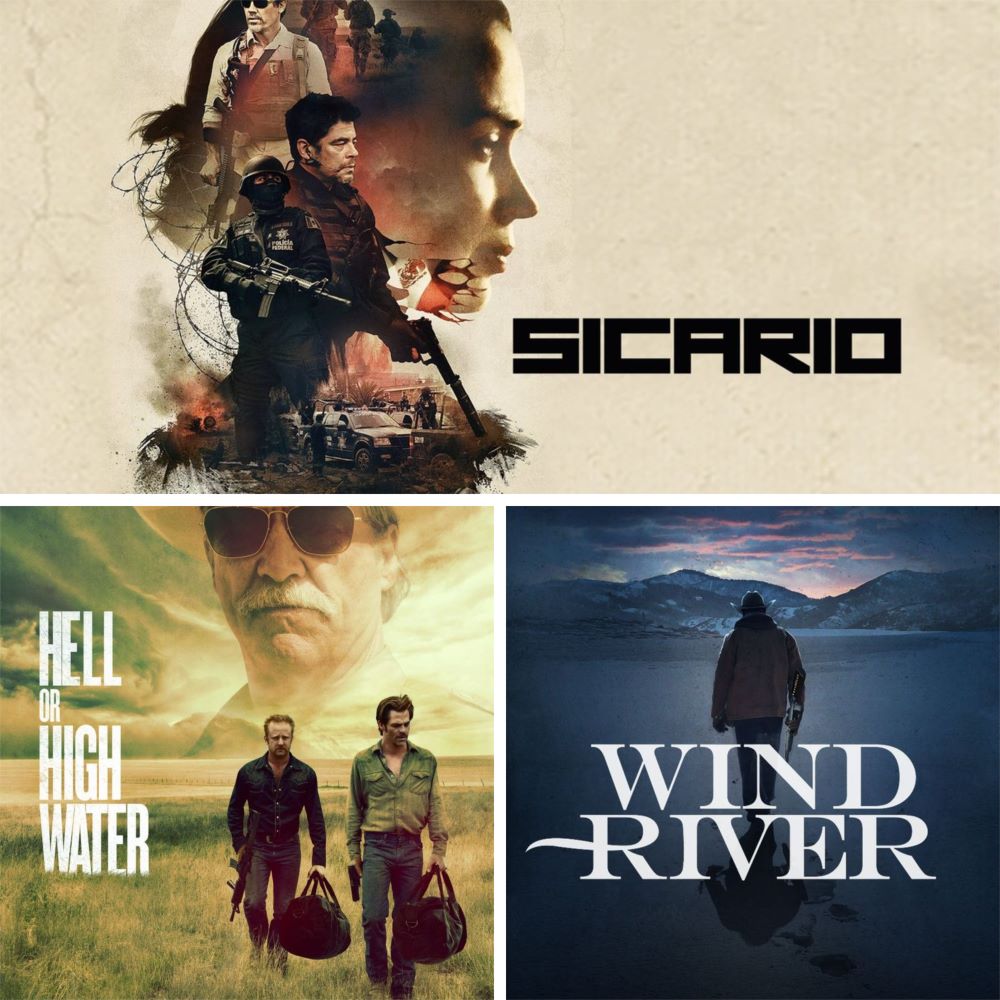
Taylor Sheridan’s American Frontier Trilogy—Sicario (2015), Hell or High Water (2016), and Wind River (2017)—stands as a landmark in modern neo-Western cinema, a tightly crafted exploration of America’s frayed edges penned by the screenwriter who would later dominate television with Yellowstone. These films, while not narratively linked, form a thematic triptych that dissects the moral decay of the contemporary frontier, where law buckles under the weight of systemic injustice, economic despair, and cultural erasure. This retrospective examines Sheridan’s screenplays as a cohesive vision of a nation haunted by its own myths of manifest destiny, blending pulse-pounding tension with unflinching social critique.

Defining the Trilogy’s Core

Sheridan’s “American Frontier” trilogy emerged from his own observations of overlooked American landscapes, as he described in interviews around Wind River‘s release. Sicario, directed by Denis Villeneuve, plunges into the U.S.-Mexico border war on drugs, following idealistic FBI agent Kate Macer (Emily Blunt) as she’s drawn into a shadowy CIA operation led by the enigmatic Matt Graver (Josh Brolin) and the ruthless Alejandro (Benicio del Toro). The film boasts breakneck pacing and claustrophobic tension, transforming a procedural thriller into a meditation on moral compromise, where the line between hunter and hunted dissolves in Juarez’s blood-soaked streets.

Hell or High Water, helmed by David Mackenzie, shifts to West Texas, chronicling brothers Toby (Chris Pine) and Tanner Howard (Ben Foster) as they rob branches of the Texas Midlands Bank—the same institution foreclosing on their mother’s ranch. It delivers a lean, character-driven drama, with an ear for authentic dialogue that captures rural Texan fatalism: lines like “You’re free now” underscore a cycle of poverty where crime becomes an act of reclamation. Ranger Marcus Hamilton (Jeff Bridges), pursuing them, embodies the law’s weary inefficiency.

Wind River, which Sheridan also directed, unfolds on Wyoming’s Wind River Indian Reservation, where U.S. Fish and Wildlife officer Cory Lambert (Jeremy Renner) aids rookie FBI agent Jane Banner (Elizabeth Olsen) in investigating a young Native woman’s death in the snow. It lands as a gut-punch of grief and rage, spotlighting the epidemic of missing and murdered Indigenous women (MMIW), with Cory’s personal loss fueling a vigilante justice that indicts federal neglect.

What unites them? Remote, unforgiving terrains—the border deserts, dusty plains, frozen reservations—mirror the characters’ isolation. Protagonists skirt legality not from villainy but necessity, exposing institutions (CIA, banks, FBI) as complicit oppressors. The “United States legal system” emerges as the trilogy’s true antagonist, wreaking havoc on the marginalized.

Thematic Pillars: Justice Beyond the Badge

At the trilogy’s heart lies a profound distrust of official justice, a motif each film escalates. In Sicario, Kate’s arc is one of disillusionment; she clings to warrants amid Graver’s extralegal raids, only to realize the “war” thrives on endless escalation. Sheridan’s script masterfully builds dread through escalating set-pieces—like the night-vision tunnel assault—while Alejandro’s backstory reveals the human cost of cartel savagery, blurring good and evil. It’s a film where victory feels pyrrhic, the frontier’s violence spilling northward unchecked.

Hell or High Water flips the script to economic predation. The Howards aren’t greedy outlaws but desperate everymen funding their family’s future against predatory lending. Sheridan’s sardonic humor amid despair shines in banter between Marcus and his partner Alberto (Gil Birmingham), laced with casual racism that humanizes their bond. The film’s climax, a bank standoff turned shootout, affirms the brothers’ twisted righteousness, critiquing how banks “won the West” anew through debt. It’s Sheridan’s most optimistic entry, suggesting personal agency can pierce systemic greed.

Wind River delivers the rawest indictment, weaving personal trauma into institutional failure. Cory tracks predators—animal and human—across a landscape where Native lives vanish without trace; statistics cited in the film (96% of reservation rapes unreported) hit like bullets. Its poetic minimalism—from snow-dusted crime scenes to Cory’s haunting promise to a grieving father: “I wish I could take that pain away”—underscores how the reservation embodies America’s forgotten frontier. Here, justice is vengeance, meted quietly in the mountains.

Across the trilogy, Sheridan updates Western archetypes: the principled lawman (Kate, Marcus, Jane) yields to the lone avenger (Alejandro, Toby, Cory). This serves as a modernization of classic Western struggles, swapping cattle barons for cartels and banks.

Stylistic Mastery and Sheridan’s Voice

Sheridan’s prose is economical yet evocative, favoring sparse dialogue that reveals worlds. His authentic regionalism comes through in Texan drawls in Hell or High Water, Arapaho stoicism in Wind River, and border Spanglish in Sicario. Directors amplify this: Villeneuve’s Sicario is visceral, with Roger Deakins’ cinematography turning borders into hellscapes; Mackenzie’s Hell or High Water feels expansive yet intimate, Giles Nuttgens capturing Texas’s soul-crushing vastness; Sheridan’s Wind River is austere, Nick Cave’s score amplifying isolation.

Performances elevate the scripts. Del Toro’s coiled fury in Sicario earned Oscar nods; Bridges’ folksy gravitas anchors Hell or High Water; Renner and Olsen ground Wind River‘s procedural in raw emotion. Yet Sheridan’s writing shines brightest in quiet beats: Kate’s post-raid breakdown, Toby’s motel confession, Cory’s frozen vigil.

The films were critically acclaimed for their sharp writing and thematic depth, earning Sheridan Oscar nominations for Hell or High Water and Wind River, while resonating widely with general audiences through gripping narratives and relatable human struggles that packed theaters and sparked enduring discussions. This neo-Western revival took audiences to unseen locales, from Juarez slums to Wind River snows.

Cultural Impact and Legacy

Released amid the turbulent 2010s—marked by escalating border crises, the lingering financial fallout from the 2008 recession, and rising awareness of the #MMIW epidemic—the trilogy presciently tapped into deep-seated national anxieties, reshaping conversations around justice, identity, and power in America. Sicario arrived as tensions over immigration and the drug war boiled over, humanizing the futility of America’s “war on drugs” just before the 2016 presidential debates on border walls and cartel violence. Its portrayal of shadowy U.S. operations crossing ethical lines sparked debates on real-world CIA tactics and the moral cost of security, influencing discourse in policy circles and popular media alike. The film’s raw depiction of Juarez’s carnage forced viewers to confront overlooked atrocities, bridging Hollywood thrillers with journalistic urgency and priming audiences for later works like Narcos.

Hell or High Water struck a populist chord amid post-recession rage, echoing Occupy Wall Street’s anti-bank fervor and the foreclosure crisis that ravaged rural America. By framing bank robbers as sympathetic everymen fighting predatory lending, Sheridan tapped into widespread resentment toward financial institutions, a sentiment that fueled political movements from Tea Party economics to progressive wealth taxes. The film’s Texas setting amplified its authenticity, resonating in heartland theaters and inspiring think pieces on economic despair as a driver of crime. Its legacy endures in modern “eat the rich” narratives, from The Gentlemen to economic thrillers, while proving indie sensibilities could deliver blockbuster emotional punches.

Wind River ignited a cultural firestorm by centering the MMIW crisis, a long-ignored epidemic where Native women face violence at rates exponentially higher than the national average. The film’s stark statistics and harrowing story propelled #MMIW into mainstream consciousness, directly contributing to legislative momentum like Savanna’s Act (passed in 2020), which improved federal responses to cases on tribal lands. Sheridan consulted with Native communities for accuracy, amplifying Indigenous voices through actors like Gil Birmingham and Julia Jones, though it faced critiques for “white savior” elements. Nonetheless, it opened doors for Native-led stories in films like Reservation Dogs and heightened Hollywood’s focus on underrepresented frontiers.

Collectively, the trilogy’s impact reverberates profoundly. Lionsgate’s 2022 Blu-ray collection formalized its status as a cinematic canon, while Sheridan’s scripts birthed his TV empire—Yellowstone1883Lioness—exporting frontier grit to streaming billions. Yet the films surpass his serialized work in laser-focused purity, influencing a neo-Western renaissance seen in No Country for Old Men echoes, The Power of the Dog, and series like Longmire. In policy realms, Sicario informed border security debates under both Biden and now-President Trump’s 2025 reelection; Hell or High Water prefigured rural economic populism in Trump-era politics; Wind River bolstered tribal advocacy amid ongoing land rights battles.

By 2026, amid Sheridan’s Yellowstone spinoffs dominating Paramount+ and renewed border rhetoric in a second Trump administration, the trilogy feels more vital than ever. It birthed a cinematic language for America’s internal fractures—geographic, economic, racial—challenging viewers to question who truly governs the forgotten edges. Academic panels dissect its archetypes; fan communities on Reddit and Letterboxd binge it as essential viewing. Flaws persist—Sicario 2‘s dilution without Sheridan, Wind River‘s debated optics—but its triumph lies in tension and truth, proving standalone stories can outlast franchises. Sheridan’s evolution from struggling actor to scribe magnate underscores a rare feat: films that entertain viscerally while indicting society, ensuring the frontier’s ghosts haunt us still.

Individual Breakdowns

Sicario: Border Inferno

Villeneuve’s adaptation turns Sheridan’s outrage at Juarez carnage—ignored by U.S. media—into a descent narrative. Kate’s naivety crumbles amid moral voids; Alejandro’s vendetta personalizes cartel horrors. Its operatic violence peaks in the stadium raid, where justice devolves to assassination. At 121 minutes, it’s taut prophecy.

Hell or High Water: Desperate Heist

Sheridan’s personal favorite channels his Texas roots, pitting family against finance. Pine’s everyman resolve contrasts Foster’s volatility; Bridges steals scenes with wry wisdom. The thrilling cat-and-mouse culminates in redemption through sacrifice, a neo-Bonnie and Clyde for foreclosure America. 102 minutes of populist fire.

Wind River: Frozen Requiem

Sheridan’s directorial bow personalizes loss—his script grew from real MMIW stats. Renner’s haunted tracker partners uneasily with Olsen’s fish-out-of-water fed; subplots flesh reservation despair. Its heartbreaking intimacy ends not in triumph but resolve amid endless winter. 107 minutes of unflinching truth.

Why It Endures

Sheridan’s trilogy isn’t mere genre exercise; it’s elegy for eroded American dreams. By bucking plot contrivances for lived-in despair, it forces reckoning with borders, banks, and buried bodies. These thrillers bleed social conscience—unadulterated, unflagging. In a franchise-saturated era, these standalone gems reclaim cinema’s frontier spirit.

Happy Valentine’s Day From The Shattered Lens!


Happy Valentine’s Day!

I know this holiday isn’t for everyone but it’s always been one of my favorites.  Love is in the air!  If you’re single, though, this can be a difficult day.  If you’ve just broken up with someone, this is the day when you just want to stay in bed.  Everyone’s been there!

If you’re celebrating today, I hope you have a wonderful Valentine’s Day!  And, if you’re not celebrating, I hope you enjoy your Presidents Day weekend!

You’ve got this!

Lisa Marie’s Week In Review: 2/2/26 — 2/8/26


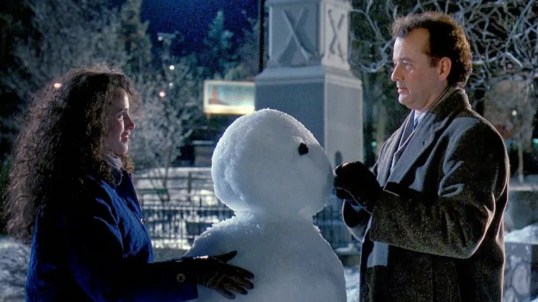
Groundhog Day (1993, Dir. by Harold Ramis)

I hope everyone had a good Groundhog Day and a good Super Bowl Sunday.  I’m exhausted.

Here’s what I watched, read, and listened to this week!

Films I Watched:

  1. American Anthem (1986)
  2. The Blues Brothers (1980)
  3. Cherry 2000 (1987)
  4. Choices (1981)
  5. Deadly Cheer Mom (2022)
  6. Ella McCay (2025)
  7. Friday Night Sext Scandal (2024)
  8. Hard Rock Zombies (1985)
  9. Groundhog Day (1993)
  10. Millennium (1989)
  11. Planet of Dinosaurs (1977)
  12. Over the Top (1987)
  13. Rush (1991)
  14. Shoot to Kill (1947)
  15. Webcam Cheerleaders (2021)
  16. The Wrong Stepmother (2019)

Television Shows I Watched:

  1. Bar Rescue
  2. Baywatch
  3. CHiPs
  4. Decoy
  5. Degrassi: The Next Generation
  6. 1st & Ten
  7. Freddy’s Nightmares
  8. Highway to Heaven
  9. Hill Street Blues
  10. Homicide: Life On The Street
  11. King of the Hill
  12. The Love Boat
  13. Miami Vice
  14. Pacific Blue
  15. St. Elsewhere
  16. Saved By The Bell
  17. Saved By The Bell: The New Class
  18. Super Bowl LX
  19. The Winter Olympics

Books I Read:

  1. Backstage Pass: Decades of Sex, Drugs, Tragedy and the Darker Side of Rock & Roll (2025) by JD DeCosta
  2. Last Night at the Viper Room (2013) by Gavin Edwards

Music To Which I Listened:

  1. Above & Beyond
  2. Amy Winehouse
  3. Ashlee Simpson
  4. Avicii
  5. Bad Bunny
  6. Britney Spears
  7. The Chambers Brothers
  8. The Chemical Brothers
  9. Fatboy Slim
  10. Geri Halliwell
  11. Gerry Rafferty
  12. Jennifer Love Hewitt
  13. Kid Rock
  14. O-Town
  15. Ramones
  16. Saint Motel
  17. Spice Girls

Awards Season

  1. Society of Composers of Lyricists
  2. Directors Guild of America

Super Bowl Teasers:

  1. Hoppers
  2. Scream 7
  3. Disclosure Day
  4. The Mandalorian and Grogu
  5. Minions and Monsters
  6. The Adventures of Cliff Booth
  7. Project Hail Mary

Live Tweets:

  1. Millennium
  2. The Wrong Stepmother
  3. Cherry 2000
  4. Planet of Dinosaurs

News and Links From Last Week:

  1. Three Dog Night’s Chuck Negron Dies At 83
  2. 3 Doors Down Singer Brad Arnold Dies at 47
  3. Bassist Fred Smith Dies At 77
  4. So Long To Cheap Books That You Could Fit In Your Pocket
  5. RIP Singer Chuck Negron…His Riveting Memoir Documented A Rock Band’s “Three Dog Nightmare”!
  6. February 2, 2026

Links From The Site:

  1. Arleigh reviewed Send Help, Kate & Leopold, Private Lessons, and Fallout!
  2. Arleigh shared songs from Mint Condition, Keith Sweat, Johnny Gill, Journey, Kenny Rogers, and Jeffrey Osborne!
  3. Brad reviewed You’ve Got Mail and wrote about past Super Bowls!
  4. Jeff shared his Super Bowl predictions, reviewed the Blues Brothers, and congratulated the Seahawks!
  5. Erin shared Against the Clock, Falling In Love, Streets of Sin, Our Love Story, Girls’ Love Stories, My Love, and Groundhog Day!
  6. Erin shared the Covers of Football Stories!
  7. Erin shared scenes from Groundhog Day and You’re A Good Man, Charlie Brown!
  8. Erin reviewed WebCam Cheerleaders and Choices!
  9. I shared music videos from Britney Spears, Avicii, Jennifer Love Hewitt, Above & Beyond, O-Town, Tim Beveridge, and the Ramones!
  10. I shared a song from Sonny and Cher and my favorite Super Commercial!
  11. I paid tribute to King Vidor, Greydon Clark, Francois Truffaut, Michael Mann, George Romero, Michael Cimino, and Bill Murray!
  12. I shared scenes from The Forbidden Dance, Kings Row, Fallen Angel, Dawn of the Dead, and Heaven’s Gate!
  13. I reviewed Degrassi!

Have a great week!

Scenes That I Love: Once Upon A Time In America


(SPOILERS BELOW)

The final moments of Sergio Leone’s epic 1984 gangster film, Once Upon A Time in America, are filled with questions and mysteries.

The final moments of Sergio Leone’s epic 1984 gangster film, Once Upon A Time in America, are filed with questions and mysteries.

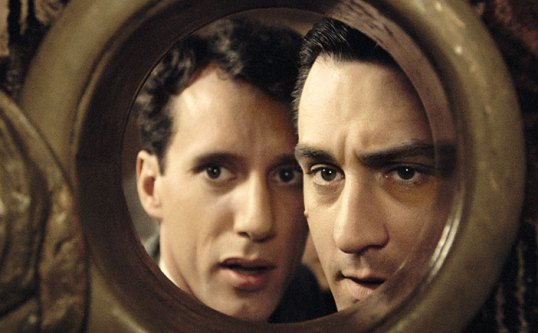
In 1968, who did Noodles (played by Robert De Niro) see standing outside of Max’s mansion?  When the garbage truck pulled up, did the mysterious man get in the truck or was he thrown in by some unseen force?

Why, in 1968, did Noodles see a car from the 1920s, one that was full of people who appeared to be celebrating the end of prohibition?  Was the car really there, in 1968, or was it an element of Noodles’s past as a gangster suddenly popping into his mind?

Once Upon A Time In America (1984, dir by Sergio Leone, DP: Tonino Delli Colli)

When we then see a young Noodles in an opium den, are we flashing back to the 1920s?  Is Noodles remembering the past or is it possible that we’ve been in the 20s the whole time and all of the scenes set in 1968 were actually only a drug-induced dream?

Why, with men looking to kill him and all of his friends apparently dead, does Noodles suddenly smile at the end of the film?  Is that sudden smile a result of the drugs or is there something else going on?

Once Upon A Time In America was Sergio Leone’s final film.  It’s one that he spent decades trying to get made and, once it was finally produced, it was butchered and re-edited by a studio hacks who demanded that the film tell its story in a linear style.  Leone was reportedly heart-broken by how his film was treated.  Some have speculated that his disappointment may have even contributed to the heart attack that eventually killed him.  It was only after Leone passed that his version of Once Upon A Time In America became widely available in the U.S.  This enigmatic epic continues to spark debate.  One thing that can’t be denied is that it’s a brilliant film.

As today is Leone’s birthday, it only seems appropriate to share a pair of scenes that I love, from the ending of Once Upon A Time In America.

The Oscars Are Moving To YouTube….


….in 2029!

To be honest, I’m not really surprised by this move.  It’s been a long time since the Oscar ceremony brought in monster ratings.  Movies themselves have moved from being something that bring people together to instead becoming something of a niche interest.  The movies that win awards are now often very different from the movies that people are paying to see.  As well, we’re now in a culture where we see celebrities almost 24 hours a day.  The enigmatic glamour that once went along with celebrity culture is gone and with it, the excitement that made the Oscars a television mainstay.

So, it makes sense.  Moving the Oscars to YouTube will mean no longer having to deal with ABC demanding that the Academy give out awards like Oscar Cheers Moment or that Best Popular Film Oscar that they tried to get the Academy to include a few years ago.  One presumes the Academy will now control the show, though apparently commercials will still air during the broadcast.

That said, I don’t think this movie is going to make the Oscars relevant again.  It’s too late for that.  The Oscars will be 101 years old by the time they move to YouTube and the ceremony is still going to face the task of holding viewer’s attention for 3+ hours.  The Academy will no longer have to go through the humiliating post-show ritual of trying to make the bad ratings look good.  But they will have to deal with the trolls in the comments.

My prediction is that the other awards shows will also be exclusively streaming by 2029.  The Oscars are opening the dam.  Why would a network waste money broadcasting the Golden Globes and the Critics Choice Awards if the Oscars aren’t even going to be on ABC?  Eventually, everyone will have a different awards show to choose from.  The sequel to Sound of Freedom will win Best Picture at one ceremony while the prequel to One Battle After Another wins at another and, at another ceremony, the latest Marvel film will compete with the latest DC film.

The Oscars had a good run as an American institution.

But nothing lasts forever.

Lisa Marie’s Editorial Corner: 10 Things For Which I Am Thankful In 2025


Well, it’s that time.

Every Thanksgiving, I come up with an even-numbered list of things for which I’m thankful.  I know some people are saying that we shouldn’t be thankful for anything this year.  There are people who say that, because they’re miserable, it’s somehow offensive that everyone else isn’t miserable.

But you know what?

Screw that.

Never be ashamed of being happy.  Never feel like you can’t be thankful.

1) I’m thankful for our readers.  2025 has been the most successful and busy year that Through the Shattered Lens has had in a very long time.  In both October and November, we have set records for the number of site views we’ve received.  Thank you to all of you.  I hope you’ve enjoyed what you’ve found on this site and I hope you’ll continue to read in 2026!

2) I’m thankful for our contributors!  Arleigh, Erin, Jeff, Leonard, Brad, Case, and the music lover by the name of Necromoonyeti, thank you so much for your contributions this year.  Thank you for making this a site of not just one opinion but of many opinions.  Thank you for inspiring me to keep writing, if just to keep up with the great work that all of you are doing!

3) I’m thankful to once again be an American!  A few weeks ago, twitter (or X or whatever the Hell you want to call it) made public where everyone’s account was located.  It was a needed action.  A lot of accounts that have been at the forefront of spreading disinformation and brewing conflict in the United States were revealed to be located in Russia and the Middle East.  However, the process wasn’t perfect.  For four days, due to a VPN that I was definitely not using to watch movies that weren’t available in the U.S., my account was listed as being based in Ireland.  While I am of Irish descent, I am definitely based in Texas.  I’m glad to say that twitter has fixed the error and I can now say “Happy Thanksgiving!” without having to worry about someone saying, “Aren’t you in Ireland?”

4) I haven’t watched a lot of television this year but I will say that I am thankful that the King of the Hill reboot was wonderful and more than worthy continuation.  The show managed to keep up with the changing times while retaining the humor and outlook that made it a classic to begin with.  All reboots should be this good!  I’m thankful for Mike Judge.  (I’m also thankful for Greg Daniels, despite what happened with The Paper.)

5) I’m thankful that I stopped watching All’s Fair after the first episode.  Sometimes, a bad show is just a bad show and there’s nothing wrong with admitting that.  Not everything is camp.  Sometimes, it’s just crap.

6) I’m thankful that the horror genre — thanks to films like Sinners, Weapons, and Frankenstein this year and Nosferatu last year — is finally getting some respect.  I’m less thankful that some of the genre’s new fans still look down on the horror films of the past.

7) I’m thankful for my family. Last year was not an easy one for us.  This year, we dealt with even more loss.  But we were there for each other and we always will be.  I’m happy to be spending this Thanksgiving with them.

8) I’m thankful for American Anthem!  Seriously, I’ve watched that stupid movie seven times this year.  Steve Tevere has thrown a tripus!

9) I don’t care what anyone says.  I liked Happy Gilmore 2.

10) Most importantly, I’m thankful that we’re all still here and we’re all still moving forward.

Happy Thanksgiving!

Happy Birthday, Arleigh!


Today is not just Thanksgiving!  Today is also the birthday of the co-founder and the editor-in-chief of Through the Shattered Lens, Arleigh Sandoc!

Sing it, Marilyn!

Next month, it will have been 15 years since Arleigh asked me if I wanted to collaborate on this wonderful site.  Wow — FIFTEEN YEARS!  In a world where most entertainment-related blogs tend to close up shop after their third entry, we’ve been going for fifteen years and we’re just getting better and better.

So today, while I give thanks for so much, I will definitely be giving thanks for Arleigh and his friendship and also, for the trust that he’s put in me over the years.  I love TSL.  It gave me some direction at a time when I desperately needed it and it built up my confidence at a time when I was at my most fragile.

Happy birthday, Arleigh!  Here come the cats!

No, not that cat!  These cats!