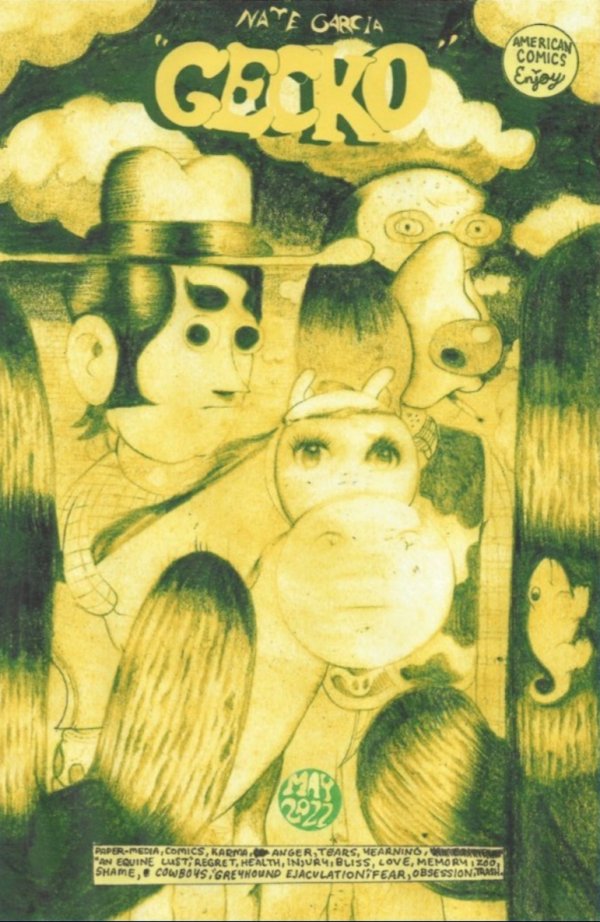
How The West Was Fun : Nate Garcia’s “Gecko”


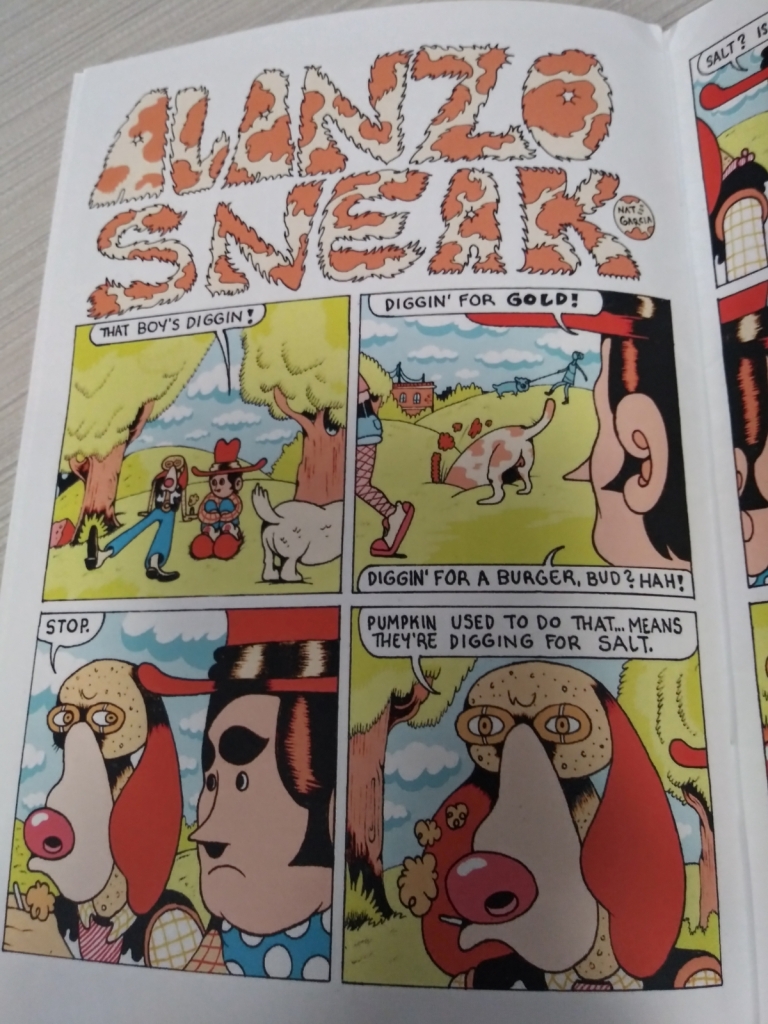
It may not be today, and it may not be tomorrow, but the law of averages dictates that one of these days, Nate Garcia is just gonna take this whole thing too far. His comics about tennis-shoes-wearing cowboy Alanzo Sneak, his horse Sheena for whom he harbors an unhealthy longing and/or obsession, and their anthropomorphic dog pal Huff Deely have consistently straddled the fence between humorously cheesy and downright queasy (with generous side helpings of sleazy and uneasy for good measure), but he’s got this uncanny ability to take you right to the edge and then reel you — and his characters — back in. There’s a frisson of real tension that undercuts these intentionally lame (and, therefore, hilarious) humor strips, but he’s managed to keep the darker impulses of both himself and his coterie of less-than-lovable losers in check. Still, he’s only 21 years old or something — give him time.

And I have to admit, speaking for myself, that I’m curious to see what his iteration of “too far” is going to look like. The overtly “cartoony” nature of his — well, of his cartooning — more or less guarantees that sharp edges are blunted upon delivery, but in a weird way that makes his shit seem even more amoral : like, this is a guy who probably could show a man and a horse making the old beast with two backs (or should that be bestiality with two backs?) and somehow find a way to make the whole thing seem as hysterical as it would be nauseating.

Still, why worry about future eventualities when the present offers such damn good strange fun? And Garcia’s latest, Gecko, certainly is that — not a whole lot happens story-wise, it’s true, but that’s entirely beside the point. Garcia (with a one-page assist at the back of this one from Goiter‘s Josh Pettinger) is more about atmospherics and tonality than narrative ambition, more about the cohesive experience than its reductive elements. The whole has always been greater than the sum of its parts with this Philly-based enfant terrible, and that’s as true as ever here — although those parts deserve special mention.

Specifically, with this new comic Garcia has thrown off the yoke of the magazine format (not that we object to said format around these parts, mind you, but it’s nice to see a self-publishing cartoonist venture out of their comfort zone sometimes) in favor of the old-school A5 (I think, at any rate) ‘zine, and this time he’s opted for a riso-printed cover and full-color interiors. Purely as a physical object, then, this both looks great and feels good to flip through — which rather belies its decidedly modern origins as an Instagram “swipe-though” comic. In fact, petty as it makes me sound, I sorta hope this thing looked like shit on Instagram (I didn’t see it since I don’t have an account on there), because this feels like exactly the right “delivery method” for this material.

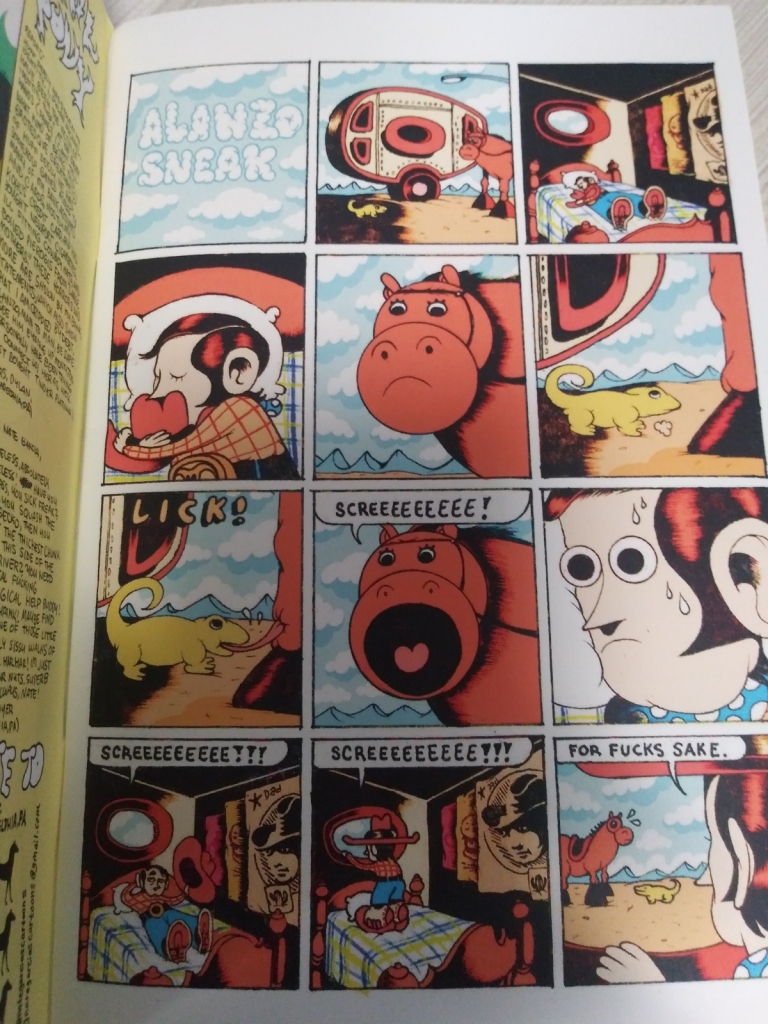
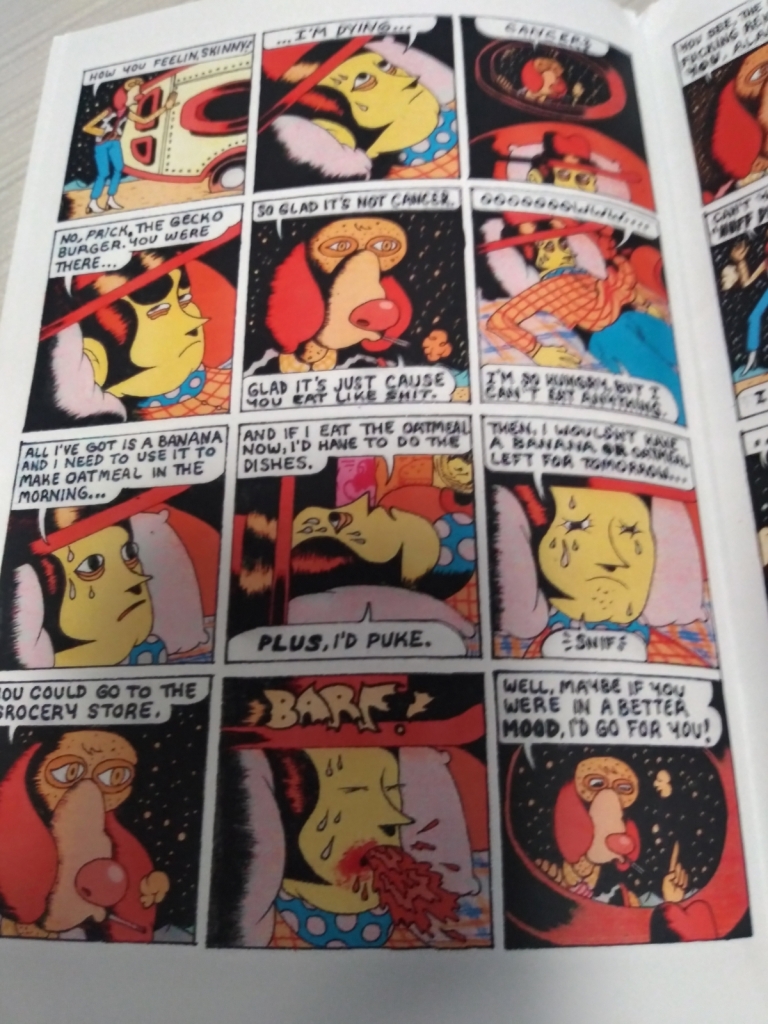
As far as what that material consists of, in short : Alanzo stomps on a Gecko, an anthropomorphic Gecko who works at a hamburger stand takes exception to this act of brutality against one of its brethren and — ya know what, I don’t want to give away the fucked-up “joke” that comes after that, so let’s just say Alanzo ends up sicker than hell and leave it at that. And if all that sounds like flimsy grounds to extrapolate a 20-plus-page story from, well — technically speaking you’re absolutely right, but Garcia’s led an extremely charmed life up to now in his still-nascent cartooning career, and that pattern holds true here. There are a couple of punchy little backup strips, as well, so all in all it’s gotta be said that reading this — and oohing and aahing at the art — is a great time.

So go on, pick it up and have precisely that. Nate Garcia is one of our weirder and more wonderful comics auteurs of the moment, and there’s no reason to feel the least bit guilty about liking his impeccably-drawn, curiously folksy bizarre surrealist humor. Not yet, at least.

***************************************************************************************

Gecko is available for $10.00 from Nate Garcia’s Bigcartel site at https://nategarcia.bigcartel.com/product/gecko

Also, this review is “brought to you” by my Patreon site, where I serve up exclusive thrice-weekly rants and ramblings on the worlds of comics, films, television, literature, and politics for as little as a dollar a month. Subscribing is the best way to support my continuing work, so I’d be very appreciative if you’d give it a look by directing your kind attention to https://www.patreon.com/fourcolorapocalypse

An Atypical Wreck : Steven Arnold’s “Perry Midlife”


Speaking as someone who’s been there, done that, and is still doing it, trust me when I say that the existential dread that comes with aging is as serious as a fucking heart attack. Certainly, it has to qualify as a “first world problem” — there are any number of countries in the process of being ground under economically, militarily, or both where simply living to see another day is reason enough to be grateful regardless of how many ticks of the calendar one has endured — but that doesn’t mean those of us who have the privilege of even being able to worry about such things aren’t terrified by our own mortality once we hit the point where logic dictates we likely have more yesterdays than we do tomorrows.

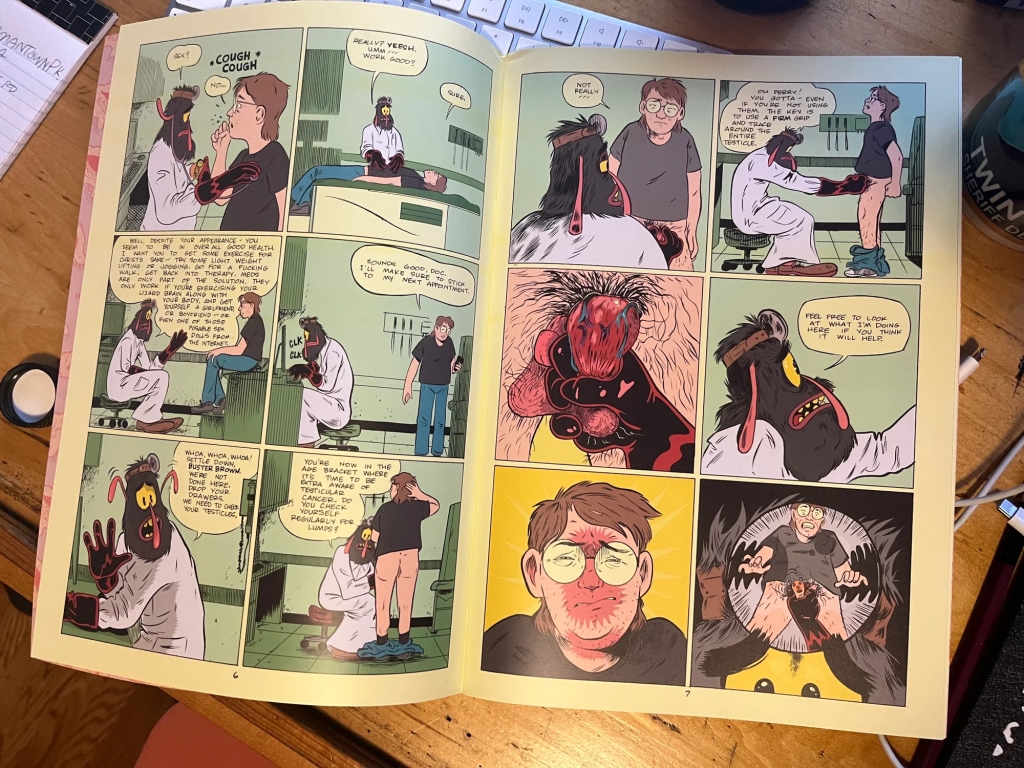
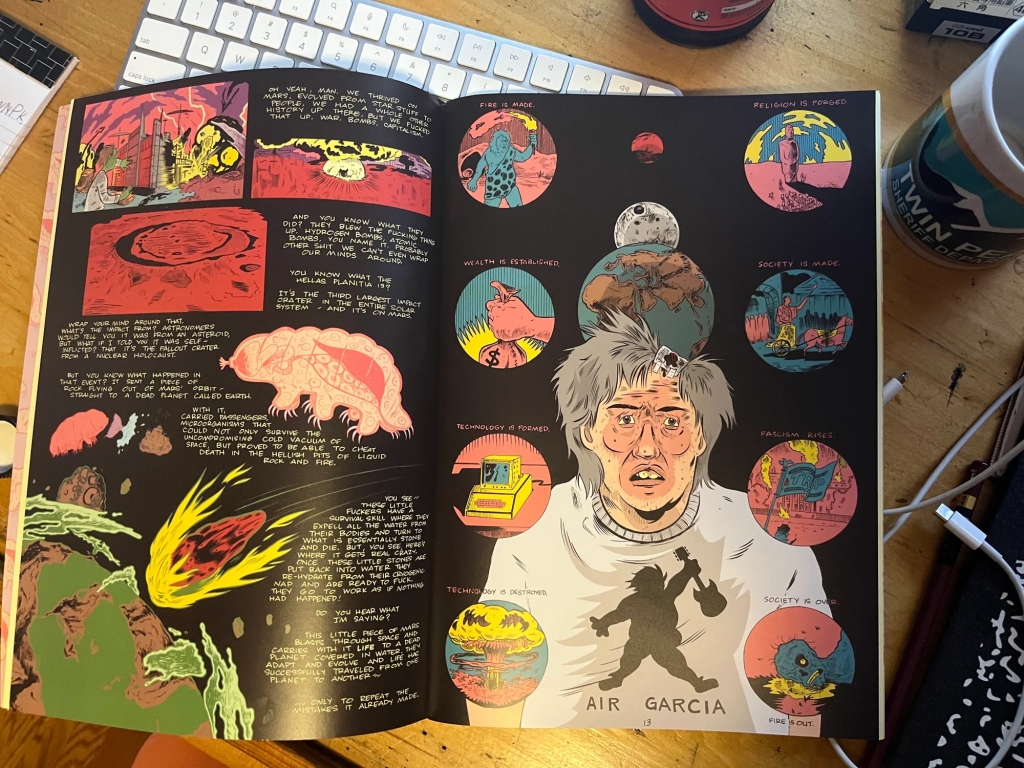
Steven Arnold — or, as he credits himself in the work we’re here to look at, S.R. Arnold — gets it. He knows the slow-burn sense of impending doom that the middle-aged person feels is equal parts well-placed and ridiculous, justifiable and self-indulgent, and in the handsomely-formatted pages of the magazine-sized Perry Midlife (the sixth release from his Philly-based H.O.T. Press Comics imprint, and as far as I know his first “solo” work, in that it was done without the assistance of writing partner Michael Kamison), he regales us with the tale of a typically hapless underachiever having anything but a typical time of things — even if, again, this is a decidedly typical set-up on its face.

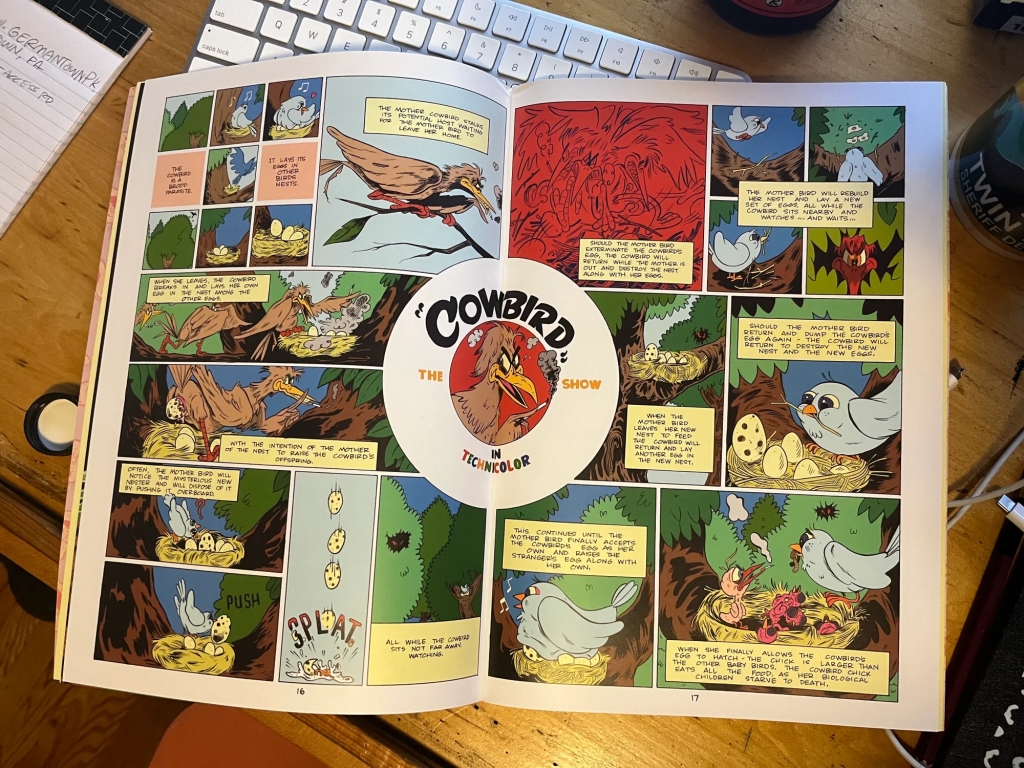
Anyway, how much of what’s happening on the lavishly-colored pages here is “real” or not is beside the point, I suppose, what’s of greater import is the overall relatability of both our titular Perry and his befuddled mindset, and Arnold absolutely nails that. Admittedly, there’s a bit of “high weirdness for its own sake” on offer here — check out our man’s doctor, pictured above, for instance — but if you can’t wrap your head around the concept of a perpetually-annoying fake ornithological species called a cowbird, what can I say? This ain’t the comic for you — but it’s only yourself that you’ll be depriving.

Okay, fair enough, “depriving of what?” is the natural enough follow-up question here, and the answer is a complicated one. Of enjoyment? To a degree, absolutely — I mean, this is a funny comic. But it’s not necessarily an easy one to enjoy, depending on one’s internal wiring. Mine is hopelessly skewed, so I did have a fair amount of fun with this, but there are times when Arnold’s personal flights of fancy can fairly be said to blunt the impact of otherwise-strong narrative “beats” and where he gets the delicate real/surreal balance he’s playing with throughout just a bit wrong — these instances are notable, though, which is as good an indicator as any that most of the time, at any rate, he’s getting things exactly right.

It helps, of course, that Arnold is such a great fucking cartoonist — his compositions are crisp and imaginative, his figure drawing is technically near-flawless, and his layouts run the gamut from standard-issue to pretty damn far-out with gusto and aplomb. He’s not afraid to challenge himself either conceptually or concretely, and the results speak for themselves : the guy is in full command of some fairly considerable creative powers, and stands out as one of the bright lights in what is arguably America’s most vibrant local cartooning scene. You pass on his stuff at your peril.

What’s not to like, then? Well, not much, if we’re being totally honest here — and we always are. Tonally, Arnold might be struggling to break free from the Clowes/Ware paradigm, at least to an extent, but his outlook and approach are unique unto himself, even if his overall set of concerns here isn’t. I’m anxious to see where he goes next, absolutely — but for purposes of this review, I’ve gotta say I’m quite impressed with where he is right here and right now.

********************************************************************

Perry Midlife is available for $12.00 from the H.O.T. Press Comics website at https://hotpresscomics.bigcartel.com/product/perry-midlife

Also, this review is “brought to you” by my Patreon site, where I serve up exclusive thrice-weekly rants and ramblings on the worlds of comics, films, television, literature, and politics for as little as a dollar a month. Subscribing is the best way to support my continuing work, so I’d be very appreciative if you’d take a moment to give it a look by directing your kind attention to https://www.patreon.com/fourcolorapocalypse

There’s No Such Thing As Ordinary : Alex Nall’s “Town & County” #1


If you’ll cast your mind back to the admittedly dark later days of 2016, you’ll recall that there were two common reactions from the so-called “coastal elites” with regard to the electoral college victory of a certain syphilitic game show host who is now, according to his closest former aides, living in some kind of thick bubble of reality denial (as if he wasn’t back then) : one was to give his voters in the so-called “heartland” the old fly-under-a-magnifying glass treatment, thereby subjecting readers of the New York Times and other outlets to one interminable series of profiles after another, ostensibly designed to provide “insight” into the lives of “the forgotten men and women of middle America,” while the other was to quickly glom onto this supposedly-ascendant subset of Americans and portray Trump’s rather flukey (if we’re being completely honest) win as “the revenge of flyover country.”

Both entirely-manufactured points of view did the REAL men and women of small town and rural America a disservice, of course, in that they forced them to be either curious holdovers of a bygone era or hard-working “salt of the Earth” types fed up with supposedly being talked down to by their self-appointed social “betters,” but they also both had the curious effect of letting the real culprits for the rise of neo-fascism off the hook, in that neither editorially-dictated point of view bothered to look at the simple, oft-repeated precedent of history, to wit : people who have been screwed over by the rich have always been easy prey to do the bidding of those selfsame rich folks as long as you can direct their anger somewhere other than where it belongs. Don’t blame the billionaire class for raising your health insurance premiums astronomically, looting your formerly-secure pension fund, shuttering the factory you used to work at and opening one in Mexico the following week, or gouging you at the grocery store checkout line. Blame, uh — well, whoever else you can, from transgender athletes to starving migrants fleeing war-torn countries to gay school teachers to supposedly “violent” inner-city youths. Yeah, there you go — your problems are their fault.

Lost in the sudden urge to either attack this so-called “real” America, embrace it, or manipulate it for political gain, however, is the simple fact that “these people” are still real people, and not all of them are easily reduced to the role of pawns in a game. Hell, even those who are still have hopes, dreams, and aspirations like anyone else, and while none of this — I repeat, absolutely none of it — excuses the petty prejudices at the heart of Trumpism (to say nothing of the whopping prejudices that animate its virulent offshoot movements such as QAnon, The Proud Boys, The Oath Keepers, and the Three Percenters), there is, I think, a real danger in focusing only on prejudice when talking about how “middle America” came to find itself in the state it’s in.

Is it really that hard to blame greedy rich bastards for the mess they’ve left in their wake? In America, apparently, it is. But I digress —

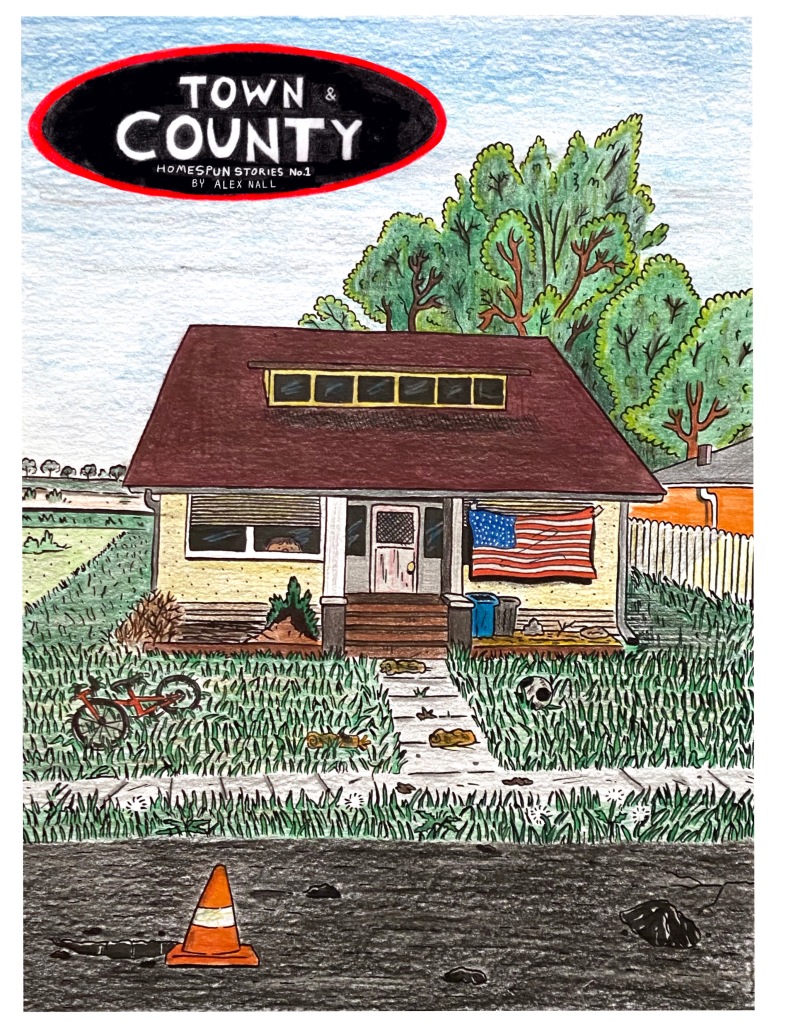
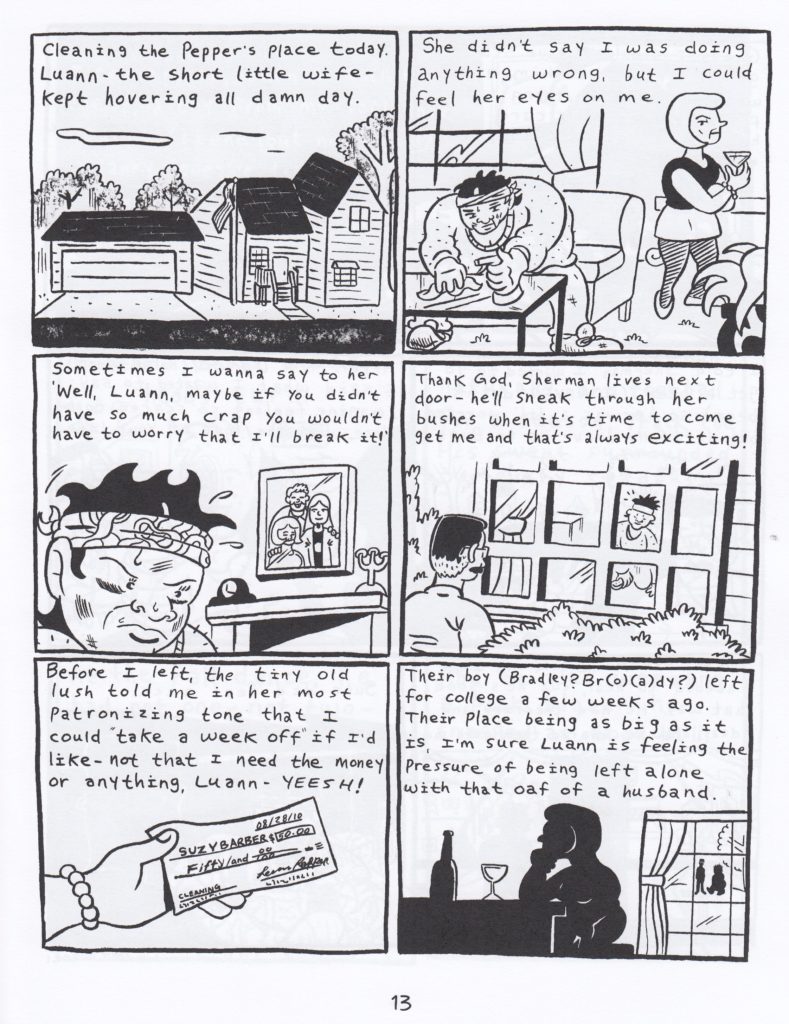
Still, while the journalistic class may have lost sight of much of the richness of small-town life, our cartoonists have not : Sean Knickerbocker and his coterie of contributors are delineating its highs, lows, and in-betweens in the fine Rust Belt Review anthology series, for instance, and Alex Nall has shown an uncanny ability to communicate its quiet idiosyncrasies in the pages of LawnsKids With Guns, and the first magazine-sized issue of his new ongoing project, Town & County — which liberally drops references to, and even borrows concepts from, the pair of earlier comics just mentioned, while crafting something new and substantial that requires no intimate knowledge of either of them. In other words, if this is your first step into what we’ll call, with apologies to the author, the “Nall-verse,” you needn’t worry : the welcome mat is rolled out for you.

Which rather strikes me as apropos of the general attitude of the citizenry of the fictitious-in-name-only Clydesdale, Illinois, the “everyday America” setting of the four interconnected vignettes that comprise this debut issue. Longing for something better — or at least for something else — is something all of our protagonists (a lonely widower, a nosey housecleaner, a tortured insomniac, and a low-rent drug dealer) have in common, and while I have no practical experience with “rural Americana” myself, being a lifelong (and, for the record, damn proud) inner city resident, I found all these folks easy to identify with because that tug that exists in the space between wishing for a return to the familiar and yearning for even modestly new vistas of experience is pretty well universal in nature.

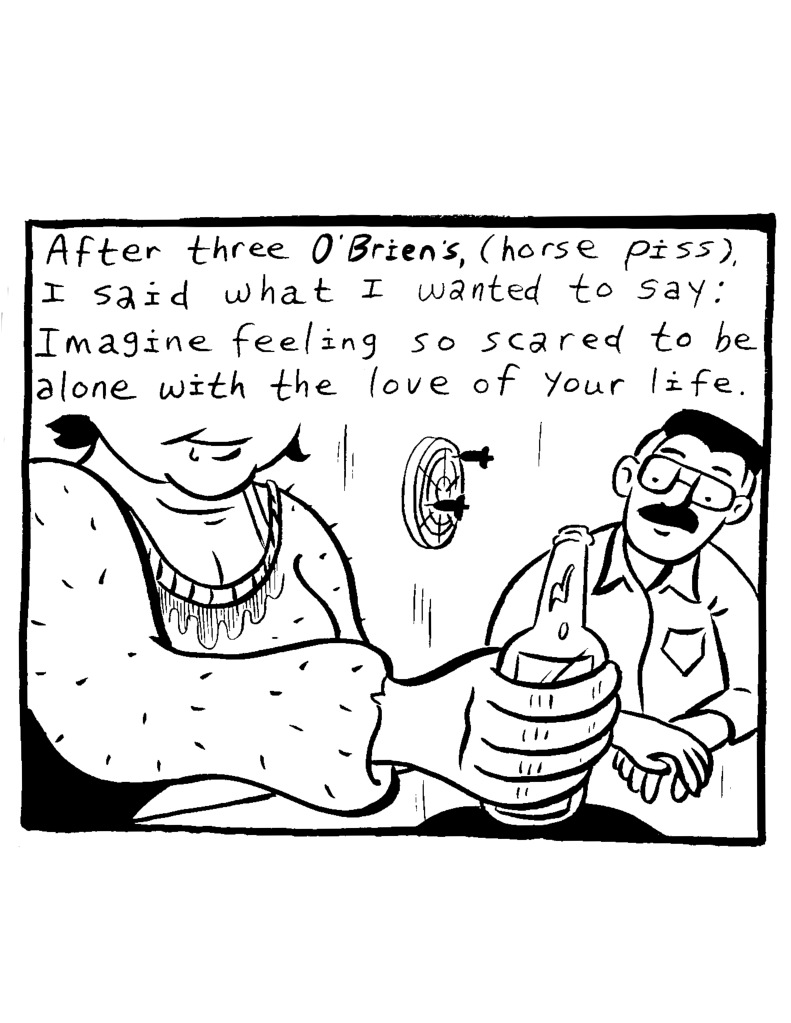
Nall, for his part, just so happens to be able to put that dichotomy into words and images better than most — hell, better than almost any of his contemporaries, and he’s got a project here that plays to all his strengths : authentic dialogue paired with rich inner monologue, clean expressive figure lines paired with rough-hewn, entirely unglamorous backgrounds/locales. There’s a push and pull sub rosa tension that animates both writing and art here, and why the hell wouldn’t there be? That pretty much sums up the lives of his characters in a nutshell, whether they consciously realize it or not.

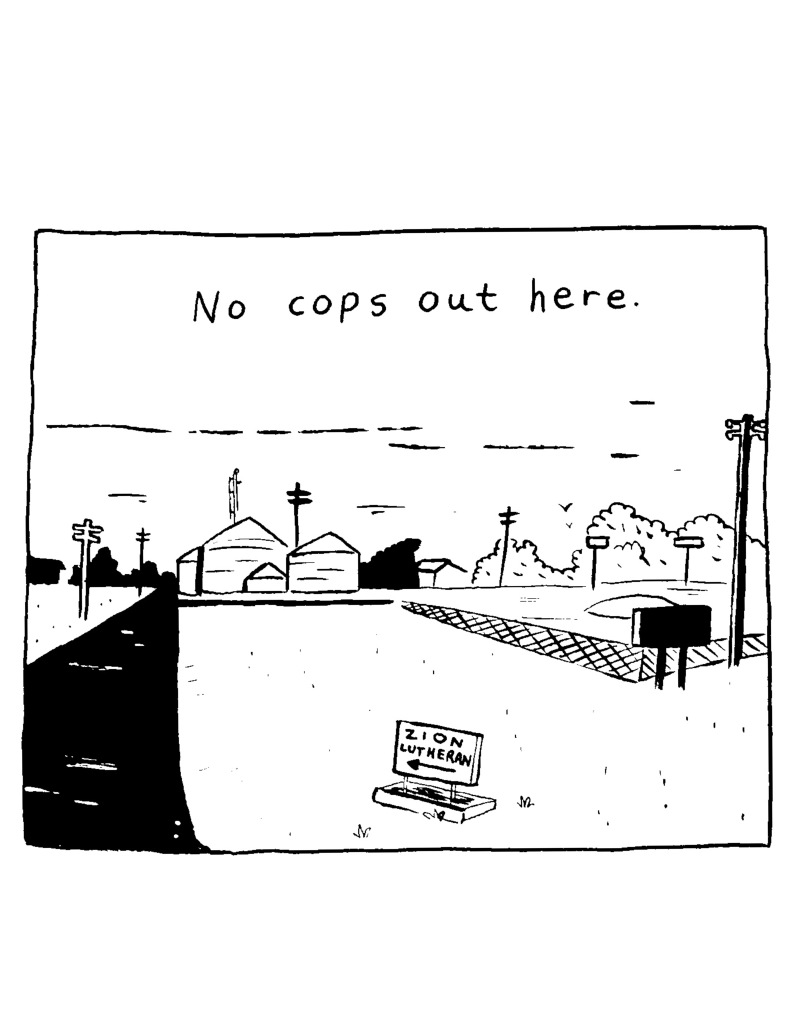
This, then, really is what you think it is going in : a comic about a town and its people — one that eschews the easy trappings of both Norman Rockwell cliche and anti-Rockwell “darkness on the edge of town.” This is a place where bathtub meth slingers and broken-hearted oldsters coexist while inhabiting entirely different personal realities. Where 2nd Amendment militia nuts fill their gas tanks at the same place as frightened mothers who would do anything to protect their kids from the next school shooter. Where the John Deere plant that was the source of everyone’s employment, either directly or indirectly, has shut its doors and left whatever survivors stuck around scrambling to find a new way forward. Where the end of the world has already happened and any promise — no matter how ephemeral and/or fraudulent — to bring back the “good old days” is better than nothing. It’s a place like thousands of others, sure — but that doesn’t mean it’s anything other than utterly unique.

***********************************************************************

Town & County #1 is self-published by Alex Nall under the auspices of his Ivy Terrace Press imprint and is available for $8.00 from his Storenvy site at https://alexnallcomics.storenvy.com/products/35138617-town-county-no-1

Also, this review is “brought to you” by my Patreon site, where I serve up exclusive thrice-weekly rants and ramblings on the worlds of comics, films, television, literature, and politics for as little as a dollar a month. Subscribing is the best way to support my continuing work, so I’d be very appreciative if you’d take a moment to give it a look by directing your kind attention to https://www.patreon.com/fourcolorapocalypse

Great Moments In Comic Book History #23: J. Jonah Jameson Is Elected Mayor of New York City


In 2009, the crusading newspaper publisher, J. Jonah Jameson, was elected Mayor of New York City. At least, that’s what happened in Amazing Spider-Man #591.

It didn’t turn out well, of course.  Mayor Jameson spent too much time obsession on Spider-Man and not enough time fixing the subways. He was bombastic, stubborn, and refused to admit when he was wrong.  That shouldn’t have taken anyone by surprise.  New Yorkers knew what they were getting when they voted for him but they elected him anyway. Of course, in 2009, the idea of a buffoon like J. Jonah Jameson ever holding a major political office seemed like a fantasy. Today, Jonah would fit right in with the majority of the people in Washington.

As mayor, Jameson ended up getting manipulated by both Doctor Octopus and the Green Goblin.  It’s no wonder that Mayor Jameson failed to even finish his first term before having to resign.

He was still better than De Blasio, though.

Previous Great Moments In Comic Book History:

  1. Winchester Before Winchester: Swamp Thing Vol. 2 #45 “Ghost Dance” 
  2. The Avengers Appear on David Letterman
  3. Crisis on Campus
  4. “Even in Death”
  5. The Debut of Man-Wolf in Amazing Spider-Man
  6. Spider-Man Meets The Monster Maker
  7. Conan The Barbarian Visits Times Square
  8. Dracula Joins The Marvel Universe
  9. The Death of Dr. Druid
  10. To All A Good Night
  11. Zombie!
  12. The First Appearance of Ghost Rider
  13. The First Appearance of Werewolf By Night
  14. Captain America Punches Hitler
  15. Spider-Man No More!
  16. Alex Ross Captures Galactus
  17. Spider-Man And The Dallas Cowboys Battle The Circus of Crime
  18. Goliath Towers Over New York
  19. NFL SuperPro is Here!
  20. Kickers Inc. Comes To The World Outside Your Window
  21. Captain America For President
  22. Alex Ross Captures Spider-Man

Neal Adams, Rest In Peace


I was sorry to hear that Neal Adams, the great comic book artist who revitalized Batman and who was a tireless advocate for creator’s rights, passed away yesterday at the age of 80.

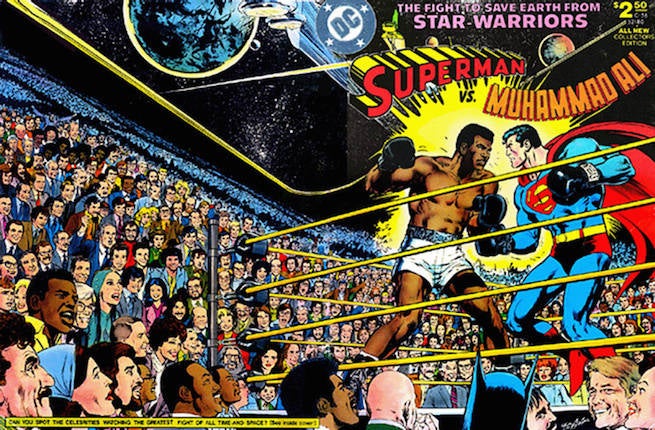
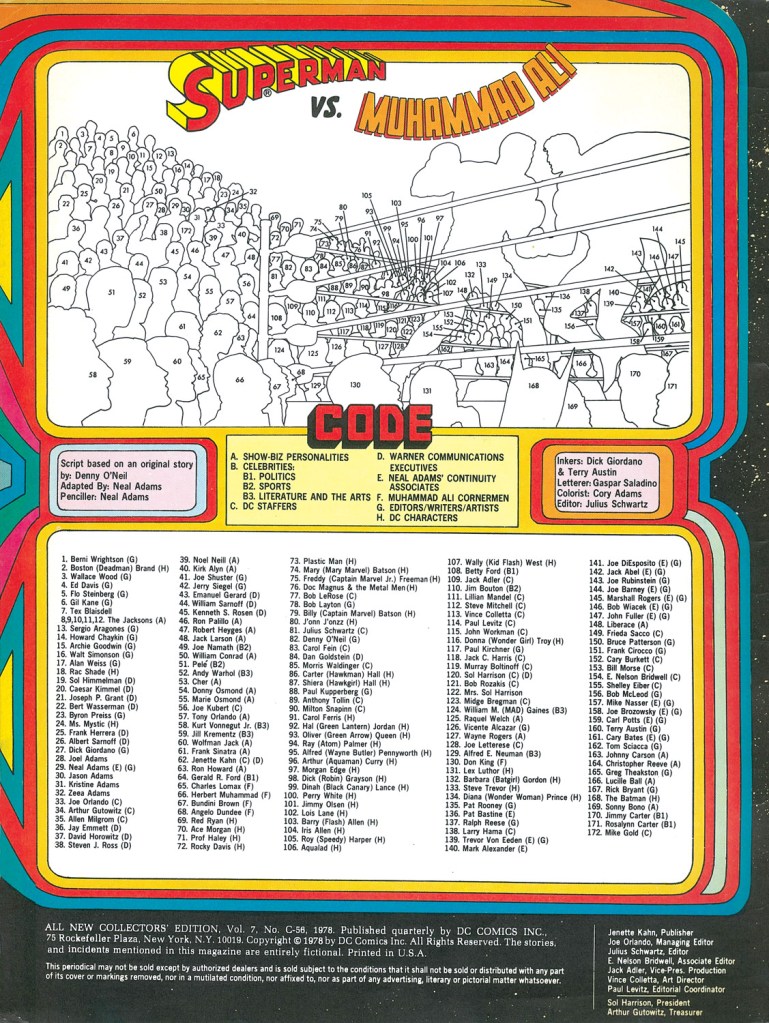
This is my favorite Neal Adams cover and I know I’m not alone. From 1978, here is Superman vs. Muhammad Ali.

Though Superman vs Ali is the main attraction, the cover features everyone from Batman to Telly Savalas to Sonny Bono to Jackie Onassis to just about everyone else was somebody in the 1970s.

Neal Adams, RIP.

The Other Side Of The Fold : Robb Mirsky’s “The Lemonade Brigade”


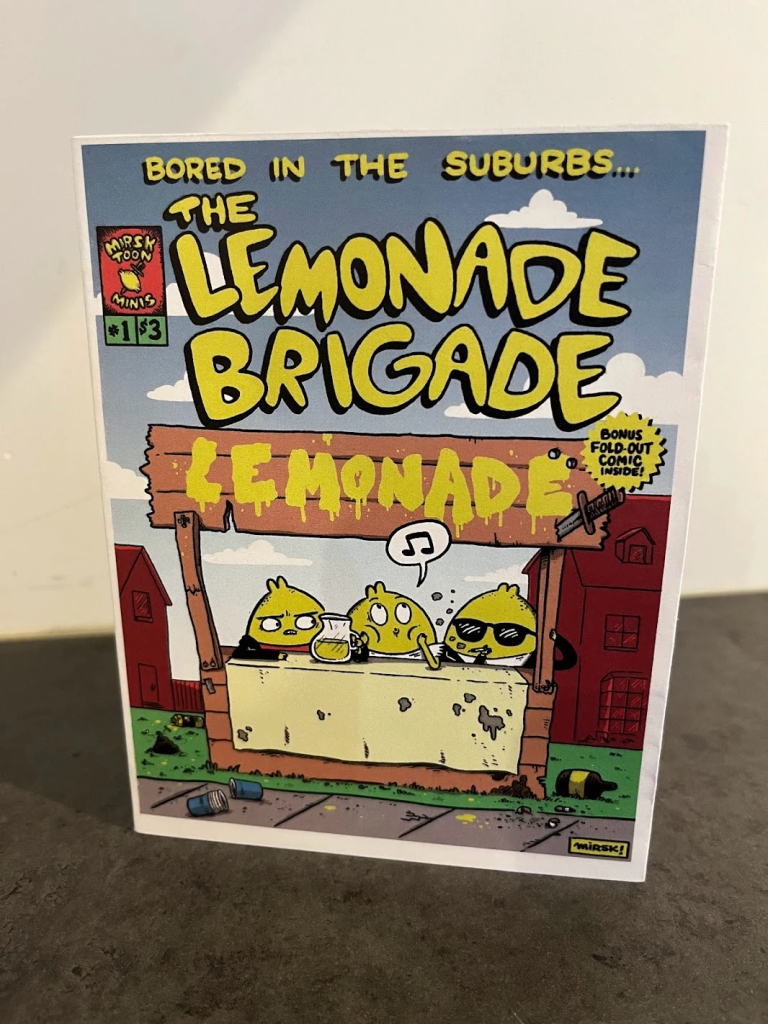
The “tag line” above the title of Robb Mirsky’s new self-published mini The Lemonade Brigade tells you right away that he gets it : why do kids in the suburbs tend to get themselves into any kind of trouble they can find? Because they’re bored — and they damn well should be! When you’re surrounded by people (or, in this case, lemons) who have traded in happiness for the single-dullest approximation of security one can imagine, people who are literally running out the clock on their own lives, you’ll do anything to relieve the tedium. Especially, I suppose, if those people are your own parents.

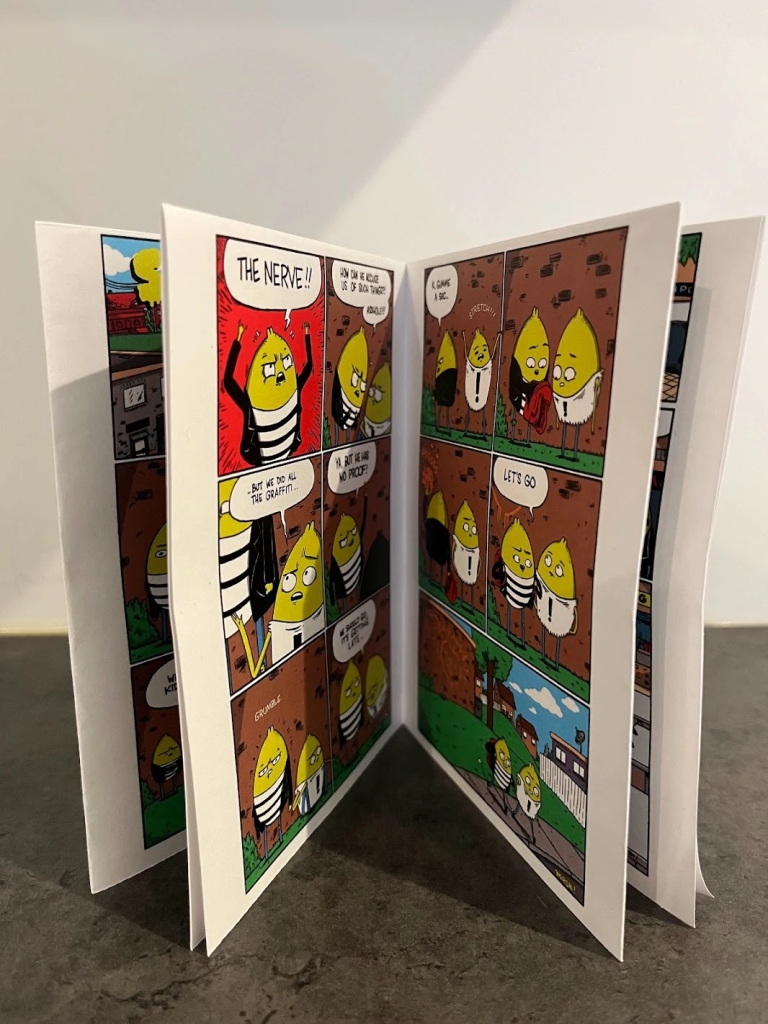
To that end, most of the juvenile delinquency on offer in these pages is as utterly pointless as such acts of quasi-rebellion tend to be in real life : nobody’s got the brains or ambition to really throw a spanner in the works of the system, so they just “tag” the same walls with graffiti over and over again (among other ultimately pointless endeavors), not so much actively hoping to get caught as they are not really giving a fuck either way. After all, the question of “Why did you do it, son?” is one that only has one answer in suburbia : “Because it was something to do.”

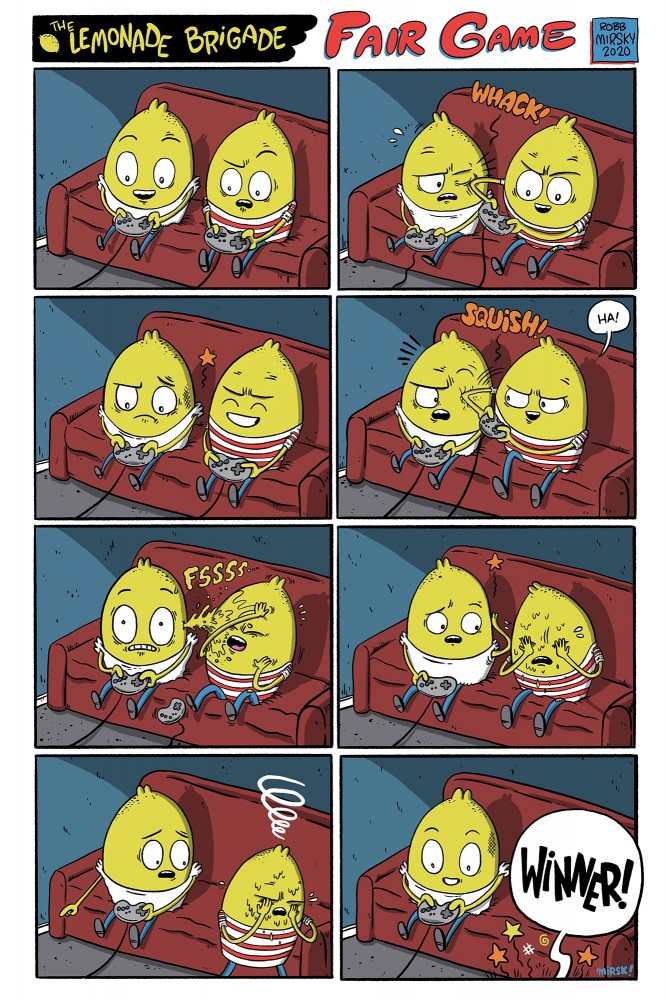
So, yeah, apart from the fact that these comics feature citrus-based life forms, they’re eminently relatable to anyone who either had or is having a standardized, routine upbringing in a consumer-driven community centered around the principle of protracted soul-death on the installment plan. I laughed at something on every page, and that’s basically a Mirsky staple — even if this comic, for entirely practical (yet no less innovative for that fact) reasons actually has no staples. Ya see, what it has instead is something much better : a “B”-side comic of the following strip presented in fold-out form :

Okay, fair enough, it’s a gimmicky idea — but that doesn’t preclude it from being a cool one. Which is also a feature common to all things Mirsky : he has a habit of reminding you why you like certain things simply because he does them so damn well. “Old hat” ideas like muck monsters and anthropomorphic stands-ins for human beings seem fresh, new, and fun again when he’s doing them because he has an uncanny knack both for zeroing in on why these sorts of gimmicks (there’s that word again) were both fun and effective in the first place , and for tossing aside the extraneous baggage that they’ve been saddled with over the years that’s sapped all that fun and effectiveness out of them. They say that everything old is new again, and I suppose that’s true or they wouldn’t keep saying it, but it takes a special talent to make a reader glad that it’s new again. I humbly submit that Mirsky is, indeed, a special talent of precisely that sort.

Looking at things more broadly, it’s fair to say that slapstick gets a bad rap in these pseudo-sophisticated and painfully self-aware times we live in, but when it’s done smartly, and has a point? It’s not only still funny and salient in equal measure, it’s also fiendishly clever, especially when it’s of the painfully obvious “I wish I’d thought of that — in fact, why didn’t I?” variety. All of which is to say that the observations at the beating heart of these gag strips well and truly don’t require any sort of special level of insight — but they most certainly do require skilled comedic timing and a mastery of “Comics 101” visual storytelling basics in order to land properly. If, then, you’re the sort of person who values and appreciates sheer old-school cartooning skill, you’ll find this charmingly unassuming mini to be one that you derive a fair amount of honest-to-goodness joy from.

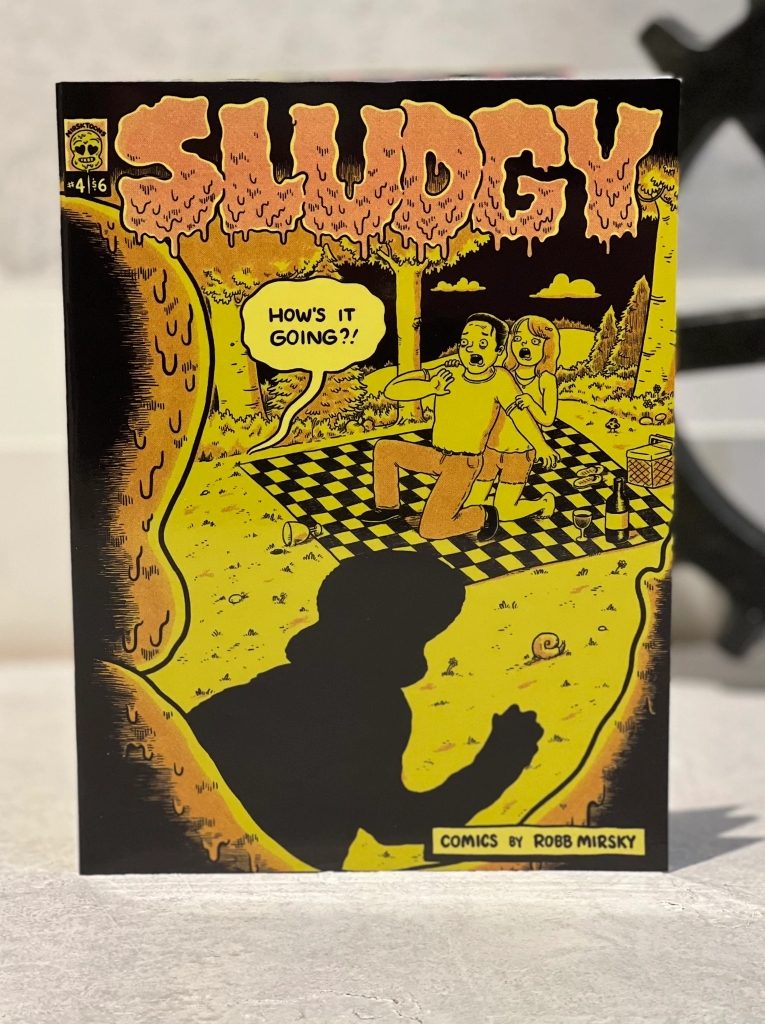
And speaking (again) of muck monsters, Mirsky has also just released the latest and greatest issue of his infectiously likable series Sludgy, which is #4 to be precise, and you don’t want to pass on that, either. I have, however, talked about that title plenty in the past, so I made it my goal this time out to demonstrate to you, dear reader, that this guy is much more than some one-trick pony. He’s the real deal, and he’s making some real good comics.

***************************************************************

The Lemonade Brigade is available for $3.00 from Robb Mirsky’s website, My Moving Parts, at https://mymovingparts.com/collections/comics/products/lemonade-brigade-mini-comic

Also, this review is “brought to you” by my Patreon site, where I serve up exclusive thrice-weekly rants and ramblings on the worlds of comics, films, television, literature, and politics for as little as a dollar a month. Subscribing is the best way to support my continuing work, so I’d be very appreciative if you’d take a moment to give it a look by directing your kind attention to https://www.patreon.com/fourcolorapocalypse

Share this:

The World Behind The Curtain : Austin MacDonald’s “The Emperor’s Chamber”


Modestly billing itself as a “12-page three color risograph scifi comic,” Brooklyn-based cartoonist Austin MacDonald’s self-published mini The Emperor’s Chamber certainly is all of those things, but it sells itself short by not, at the very least, calling itself “charming” or “trippy” or “charmingly trippy” or something along those lines. It’s also more than a tad innovative in its transition from traditional line artwork to Claymation-styled digital (I’m assuming, at any rate) stuff and back again. But I suppose I’m getting a bit ahead of myself.

Still, that’s a good sign that I have a fair degree of enthusiasm for this gorgeously-produced little comic (all rich riso tones that absolutely sing on the parchment-style paper stock MacDonald uses), and so I do : it’s simple, sure, but agreeably so, and utilizes what I’ll call for lack of a better term “Peow Studio-style art” much more effectively than many a publication from Peow Studio itself, so yeah — I was impressed. Certainly MacDonald demonstrates a slid grasp of visual storytelling principles and is making real progress from one project to the next — Finger Flip! was fun, his contribution to the Weird Futures anthology was even better, and with this he continues to up the ante, as well as find his footing and a unique authorial voice.

Which isn’t to say this story about an understandably disgruntled member of the palace guard who follows our titular emperor behind a curtain into his equally-titular chamber and discovers a mystical realm beyond his imaginings (as well as the reason the kingdom’s ruler appears so utterly zonked-out half the time) is in any way original, but that’s okay — MacDonald’s approach to the material is, and more often than not that’s plenty sufficient when one is plying their trade in a shop-worn genre such as fantasy.

In a pinch, then, what I’m saying — or at least attempting to — is that MacDonald’s eye-catchingly cool multi-media art really does imbue these proceedings with a sense of the fantastic and that his wry, understated wit grounds them in relatability. It’s the best of both worlds in a tidy, concise, carefully-crafted little package that literally doesn’t waste a line — of art or dialogue.

One could be forgiven, I suppose, for thinking this all sounds a bit “old wine in new bottles,” and maybe it is, but shit — it’s still wine, and that stuff’s pretty good. The same can be said for a well-constructed genre story, and if I’m being completely honest here (hell, it’s my blog, so there’s no reason not to be), I’m actually more than a bit tempted to call this an impeccably-constructed genre story. Or perhaps I just did. What matters even more, though, is that I think you, dear reader, are likely to feel the same once you’ve read it.

So read it you should, and I earnestly hope that you will. MacDonald is an interesting and exciting emerging talent well worth keeping an eye on, as well as somebody who knows how to make a comic that is both marvelous to look at and fun to read. If there’s a long-form epic of some sort percolating away in his mind, that’s terrific and I’ll be more than game to check it out, but if he wants to continue honing and developing his skills with more short-form works, there’s certainly no shame in that. The world needs more comics like this one, and I think this cartoonist has more of them in him.

************************************************

The Emperor’s Chamber is available for $6.00 from Austin MacDonald’s Storenvy site at https://austinmacdonald.storenvy.com/products/34665784-the-emperor-s-chamber

Also, this review is “brought to you” by my Patreon site, where I serve up exclusive thrice-weekly rants and ramblings on the worlds of comics, films, television, literature, and politics for as little as a dollar a month. Subscribing is the best way to support my continuing work, so I’d be very appreciative if you’d take a moment to give it a look by directing your kind attention to https://www.patreon.com/fourcolorapocalypse

The Color (And Black And White) Out Of Space : Henry Crane’s “Late In The Years”


Like a bolt out of the blue, multimedia artist Henry Crane’s first (and, to his credit, first self-published) comic, the generously and gorgeously oversized Late In The Years, hit toward the tail end of 2021 — and proceeded to sit on my monstrously-proportioned “to be read” pile until just a couple of weeks ago. Which is my loss, really, because this isn’t just a good comic, or a great comic — it’s a fucking tour de force, which is not a term I invoke lightly or, for that matter, particularly often. To my (admittedly dubious) credit, however, I’ve since made up for my tardiness by reading the thing six times.

All of which, I suppose, is my way of saying don’t be like me — when you get this comic, read it right away. But then, uhhm, go ahead and be like me and read it a whole lot, over and over (and over) again.


What Crane has created here is, at its core, essentially a Lovecraftian horror tale about a couple that becomes understandably (at first) obsessed with a dark plume of smoke that appears overhead in the sky, but it diverges significantly from HPL in that explores relationship dynamics to a significant degree as things go from plenty goddamn bad to a whole lot worse. Curiosity is one thing, after all, but there’s more than one way to lose your life to it, and as this cautionary fable amply demonstrates, a quick and accidental kill is probably preferable to the slow-burn process of becoming subsumed by one’s own unhealthy fixation.

Still, that’s only the barest of bare-bones synopses, but given that this comic only clocks in at 16 pages it’s entirely fair to say that saying more would, by definition, be saying too much. What I will give away, though, is the general character of the story, which is one of intense foreboding narratively and visually, with Crane succeeding wildly at creating a hermetically-sealed and woodcut-styled world where perils both seen and less so aren’t just lurking around every corner, but literally surrounding our protagonists in all ways at all times. The near-painfully intricate detail he brings to every panel is something to behold and then some, and reflects perfectly the tonal atmosphere of seductively dark immersion that permeates all we see, read and, most crucially, feel in these pages. Which would give the book plenty of reason to recommend it if Crane stopped right there, but then he pulls a maneuver that is just downright gutsy — and absolutely makes his “make or break” moment.

Again, I’m loathe to say too much — or even to say much of anything — but insofar as a short-form (but, again, physically huge) comic can be said to have “acts,” Crane’s third rips things right open as he transitions into color artwork and delivers and accompanying narrative shift that not only complements, but magnifies, the visual one. By the time you’re done, you’ll be in an entirely different mental space than you were when you started out, and your first instinct will probably be to go right back to the beginning just to make sure you really did experience what you just experienced.

You did, of course. But you can be forgiven for needing confirmation simply because this, while echoing the work of others to a certain degree (I’m thinking not only of HPL here but of Charles Burns, Jess Johnson, Penny Moran Van Horn, and certainly Thomas Ott), is quite unlike anything you’ve experienced before. A powerful new voice in cartooning has arrived, fully-formed, at 25 years old. Where Crane goes next is anyone’s guess, but you can bet your bottom dollar that I’ll be along for the ride.

***********************************************

Late In The Years is available for $20 from Austin English’s Domino Books distro at http://dominobooks.org/lateintheyears.html

Also, this review is “brought to you” by my Patreon site, where I serve up exclusive thrice-weekly rants and ramblings on the worlds of comics, films, television, literature, and politics for as little as a dollar a month. Subscribing is the best way to support my continuing work, so I’d be very appreciative if you’d take a moment to give it a look by directing your kind attention to https://www.patreon.com/fourcolorapocalypse

Heart To Heartless : Vickie Smalls’ “Queen Of Knives”


It’s not too terribly often that I come across a comic that I don’t necessarily feel all that qualified to opine on, but I may have found one here — or, rather, one my have found me, given that cartoonist Vickie Smalls submitted the new nightmarish (a term I use with precision) horror mini Queen Of Knives, released under the auspices of his own Nowhere Comix imprint, himself, probably knowing full well that it falls well outside my usual stylistic wheelhouse. Points, then, for bravery on Smalls’ part on the one hand, and for giving this critic a good, solid nudge outside the old comfort zone on the other. They do say, don’t they, that steps outside the nest are good for a person from time to time? With that in mind, then, let’s get down to brass tacks as I attempt to define what’s different about this book —

If forced to put my finger on it, I’d say it all boils down to methodology : I’m a bit of a relic, stuck in the old pencil/brush/pen way of doing things, while Smalls is very much an artist of the here and the now, utilizing things like computerized lettering fonts and digitally-inserted background patterning that, if I’m being honest, tend to take me out of a comic to one degree or another. Which doesn’t mean this is a poorly-done example of the type of comic it is by any means, only that the type of comic it is really doesn’t conform to my individual sensibilities as a reader. Not that it’s obligated to, mind you — it’s not art’s job to meet you on your level, but to sufficiently light a fire under your ass so that you feel compelled to meet it on its level. And in that respect, this is a work that makes some of the necessary moves in that direction.

Transcribed both narratively and visually from one of Smalls’ recurring nightmares, which sees him assume the role of a little girl stuck in a haunted castle whose heart is about to be eaten by a Cruella De Ville-esque wicked queen (of knives), the requisite otherworldly quality necessary to pull something such as this off is certainly present and accounted for — events proceed in vaguely linear fashion, and are “easy” (if that’s the term we want to use) enough to follow, but nothing on offer is at all logical, despite the fact that it makes plenty of internally-coherent “sense.” It seems to me that this is a pretty fair approximation of how dreams — both good and bad — operate, and certainly no one would argue that this is a “dull” comic. Hell, it’s downright interesting in the way that being exposed to the flotsam and jetsam of another person’s subconscious frequently is : far-out place to visit, wouldn’t want to stay and all that. Throw in a pleasing middle-finger-to-conformity vibe that runs throughout, and all in all I can’t you you won’t have a pleasant enough time being exposed to all this unrepentant unpleasantness.

But it does look and feel more than a bit inorganic, mechanical, and for me that’s just a hump I have a tough time getting over/beyond/past/whatever. Again, this really isn’t a reflection on the work itself, which for all I know could be a top-notch representation of this particular type of comics creation — it’s just a matter of personal preference and, since this is my blog, a point of personal privilege. What I do feel confident enough to say is that if this kind of “new school” approach is to your liking, then this is a comic that you’ll probably like quite a bit.

And the story, in case I’m not being clear enough about this, grabbed me just fine. The bones I have to pick (maybe not the best choice of words when it comes to a comic that flirts with cannibalistic themes and imagery?) here are purely aesthetic and, of course, entirely subjective. The art samples included with this review should be more than enough to let you form an opinion as to whether or not this looks like your kind of thing, and if it is, then I really can’t think of any reason why you shouldn’t buy it. A fair amount of heart went into making it, that much is obvious, even if our erstwhile heroine is without one by the time all is said and done.

Anyway, what the hell do I know? I guess the answer to that depends on who you ask. I’m glad Smalls asked me for my opinion — I just wish that I had a firmer grasp on what that opinion was after I finished reading this comic.

*******************************************************

Queen Of Knives is available for $5.00 from the Nowhere Comix Etsy shop at https://www.etsy.com/shop/Nowherecomix?ref=simple-shop-header-name&listing_id=1192067017

Also, this review is “brought to you” by my Patreon site, where I serve up exclusive thrice-weekly rants and ramblings on the worlds of comics, films, television, literature, and politics for as little as a dollar a month. Subscribing is the best way to support my continuing work, so I’d be very appreciative indeed if you’d take a moment to give it a look by directing your kind attention to https://www.patreon.com/fourcolorapocalypse

The Stars We Are : Charles Glaubitz’ “Once Upon A Time In Tijuana” #1


There’s a very certain thing that Charles Glaubitz does that’s utterly unique to his work, which is to say : he picks up the “New Seed” or “Children Of The Monolith” concept introduced by Jack Kirby in the pages of his 2001 : A Space Odyssey series, filters it through a decidedly Mexican cultural lens, adds in plenty of inspired touches of his own creation, then goes all-out to make sure it’s printed and presented in the highest quality manner possible. The end result? Comics that are — quite literally — out of this world.

If there’s one potential “knock” against Glaubitz, though, I suppose it could be that his work tends to tread fairly similar thematic and conceptual ground, but sheesh — who are we kidding? The cosmos is this guy’s playground, and last I checked, that’s a pretty big place that contains within it any number of stories to be told, and one of those stories — perhaps the most remarkable in Glaubitz’ ouevre to date — is currently playing out in the pages of his self-published series Once Upon A Time In Tijuana. And it’s my distinct pleasure to report to you that this is both a more personal take on the artist’s well-established concerns/concepts and the culmination of everything he’s been working toward these past several years all in one go.

Admittedly, I’ve only read the first issue, and apparently three of them are now available, so I don’t have a full “sample size” to base my review/reaction upon, but holy shit if #1 didn’t blow me away sufficiently to sit down and write about it just on its own merits. Needless to say it’s gorgeous, with each generously-proportioned page filled to bursting and beyond with art that is by turns hyper-realistic, intuitively literate, and altogether visionary in both approach and execution — calling it “neo-psychedelic” seems fair enough in a pinch, but at the same time still far too limited. This is a Cinco De Mayo celebration splashed out across the heavens as seen and recorded by somebody who’s ingested a downright heroic quantity of hallucinogens before doing their best to commemorate their impressions on paper. Birth, death, rebirth — even absent words, the art in this comic alone would be enough to tell you that we’re grappling with the entire spectrum of all of existence (and non-existence) here.

So, like, what’s it really about — as in, specifically? Well, again we have to start with the “New Seed” or “Star Seed” premise, only this one’s time may have come and gone — or could very well be in the process of starting over. As a child falls from the sky ( keep in mind, please, that up and down are more metaphorical than physical in this comic) he reflects back on his life, even his embryonic pre-life, in somewhat linear fashion, but given that linearity is out the window (I mean, how do you explain a kid who’s apparently led a lengthy existence?), I’m probably just equating the idea of a reasonably straight line with the concept of chronological “order” because I’m a simple, three-dimensional being and Glaubitz’ imagination extends at least into the fourth dimension, but anyway — yeah, this is a reminiscence, rooted in visual metaphor borrowed from the animal kingdom, the end result being “realistic” text and “surrealistic” imagery working in juxtaposition to create something both undeniably true and altogether fantastic. And it’s a journey that takes us, by issue’s end, to Tijuana. Almost.

Don’t anchor yourself too firmly to dull consensus “reality” if you want to get the most from this book, obviously, but hey — that’s just good advice in general, is it not? In the same way that “don’t pass on a Charles Glaubitz” comic is, I suppose. After all, where else are you really gonna find stuff like this? Scale and scope usually go hand in hand, to the point that the intellectually lazy use the terms interchangeably, but here we have an individual story that’s small in scale with a scope that’s nearly infinite — and, at the risk of sounding too grandiose for my own good, that strikes me as a pretty accurate representation of human life in general. I mean, each of us does contain universes within ourselves, right?

Wiser minds than I have certainly said that for ages now, so who am I to argue? I don’t know a ton about matters metaphysical, anyway — but I like to think that I do know comics. And this is an inarguably inspired one indeed.

******************************************************

All three issues of Once Upon A Time In Tijuana are available for $15.00 each from Rat Nest Sticker Co. at https://www.ratneststickerco.com/shop

Also, this review is “brought to you” by my Patreon site, where I serve up exclusive thrice-weekly rants and ramblings on the worlds of comics, films, television, literature, and politics for as little as a dollar a month. Subscribing is the best way to support my continuing work, so I’d be very appreciative if you’d take a moment to give it a look by directing your kind attention to https://www.patreon.com/fourcolorapocalypse