“We make up horrors to help us cope with the real ones.” — Stephen King
Last week we saw the release of the Carrie remake starring Chloe Grace Moretz and directed by Kimberly Peirce. This got me to thinking that of all the writers I grew up reading it was Stephen King whose novels, novellas and short stories made for easy film adaptations. His stories may be supernatural, horror scifi or dark fantasy but they all share that common denominator of having some basis in the real world.
They’re stories of how the real world and it’s seemingly normal inhabitants will react to something just beyond the norm, the pale and the real. In one story we pretty much have a Peyton Place-like setting having to deal with a arrival of a Dracula-like figure. On another we see the isolated work of hotel sitting during the winter turn into something both supernatural and a look into the mind of someone cracking under the pressure of issues both personal and professional.
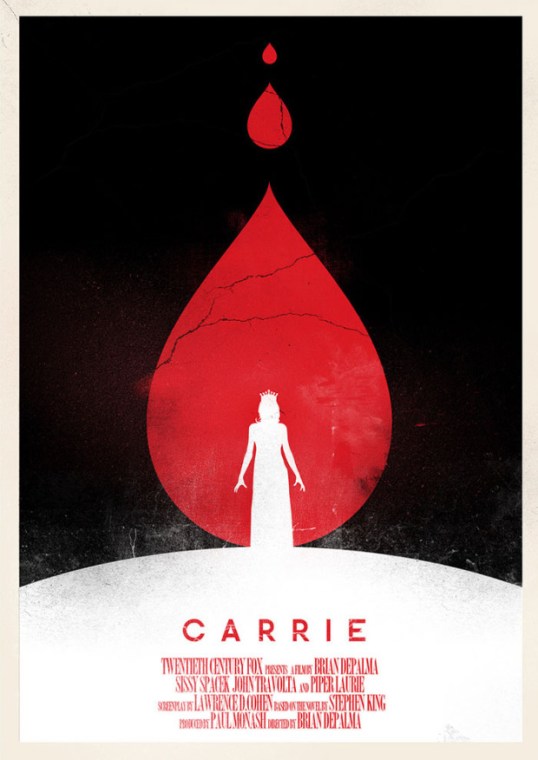
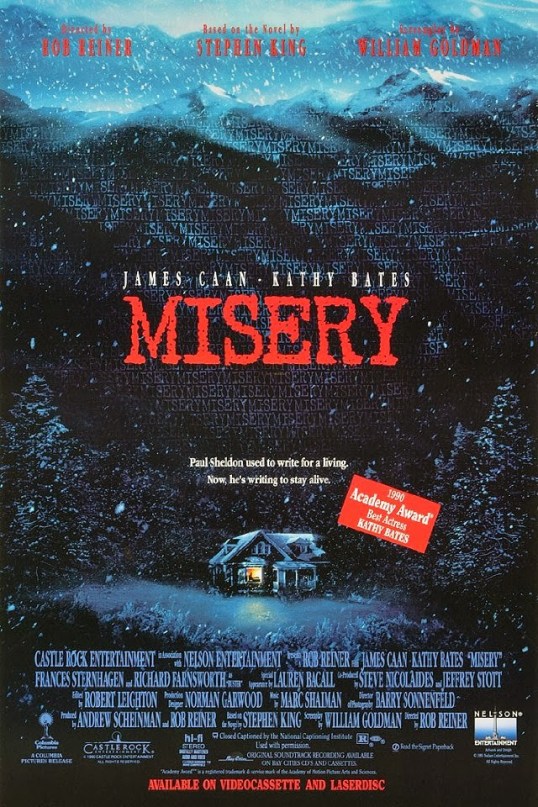
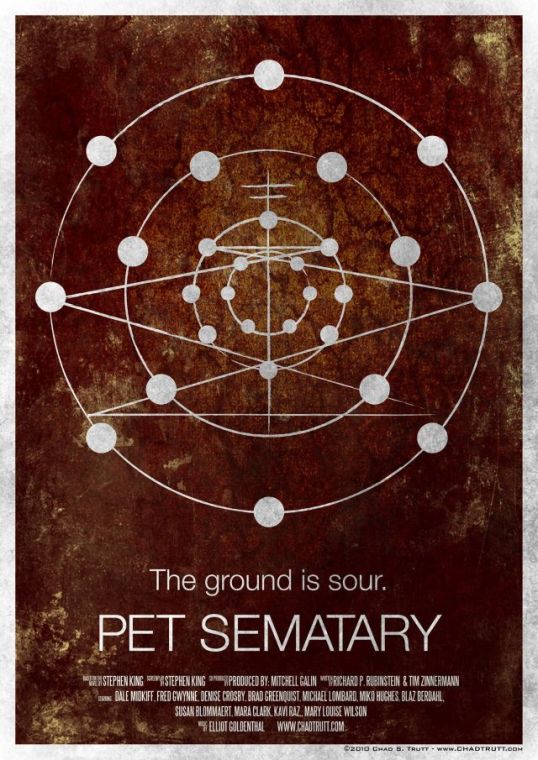
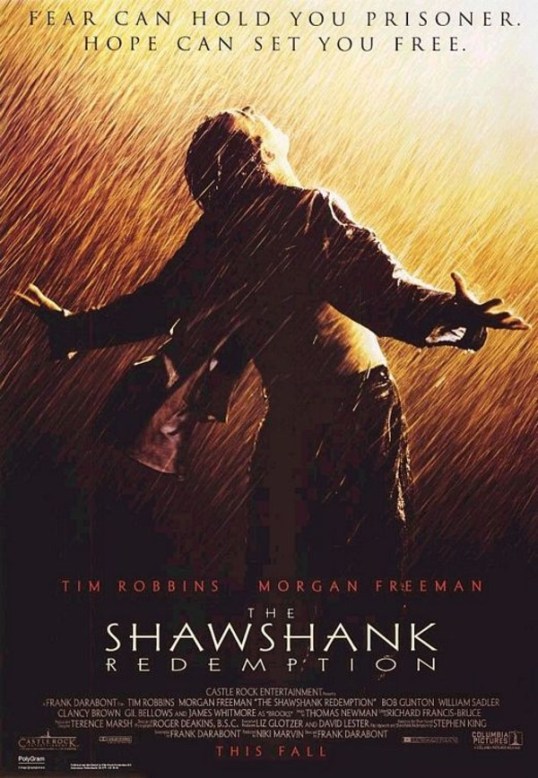
With all the Stephen King film adaptations since the original Carrie I know I have seen them all and can honestly say that I’ve become an expert on the topic. So, here’s what amounts to what I think would be my top 10 best and bottom 5 worst film/tv adaptations from Stephen King stories.
Here are the winners of the 11th Annual Rondo Hatton Classic Horror Awards, honoring the best of 2012. You can find out more about the Rondos by clicking here.
– BEST MOVIE: CABIN IN THE WOODS
— BEST TV: WALKING DEAD
— CLASSIC DVD: A&C MEET FRANKENSTEIN
— CLASSIC COLLECTION: UNIVERSAL MONSTERS ON BLU RAY
— RESTORATION: DRACULA (1931)
— COMMENTARY: David Kalat on Criterion GOJIRA/GODZILLA
— DVD EXTRA: Universal Monsters ORIGINAL HOUSE OF HORRORS booklet
— INDEPENDENT FILM: HOUSE OF GHOSTS
— SHORT FILM: FALL OF HOUSE OF USHER (animated)
— DOCUMENTARY: BEAST WISHES
— BOOK OF YEAR: RAY HARRYHAUSEN’S FANTASY SCRAPBOOK
— BEST MAGAZINE MODERN: RUE MORGUE
— BEST MAGAZINE CLASSIC: SCARY MONSTERS
— BEST ARTICLE: Christopher Lee: A Career retrospective, by Aaron Christensen, HORROR HOUND #34
— BEST INTERVIEW: Michael Culhane talks with original DARK SHADOWS cast, including Jonathan Frid’s last interview, FAMOUS MONSTERS #261
— BEST COLUMN: It Came from Bowen’s Basement (John Bowen), RUE MORGUE
— BEST THEME ISSUE: Tie, MONSTERS FROM THE VAULT #30 (Vincent Price); VIDEO WATCHDOG #169 (Dark Shadows)
— COVER: Jeff Preston’s Phibes cover for LITTLE SHOPPE OF HORRORS #29
— WEBSITE: DREAD CENTRAL
— BLOG: COLLINSPORT HISTORICAL SOCIETY
— CONVENTION: MONSTERPALOOZA
— FAN EVENT: Rick Baker gets star on hollywood Walk of Fame
— HORROR HOST: Svengoolie
— HORROR COMIC: WALKING DEAD
— MULTIMEDIA (Audio/video): FRIGHT BYTES
— SOUNDTRACK/HORROR CD: ROSEMARY’S BABY
— TOY, MODEL OR COLLECTIBLE: Jeff Yagher’s BRIDE OF FRANKENSTEIN scene
— WRITER OF YEAR: Tim Lucas
— REVIEWER OF YEAR: David-Elijah Nahmod
— ARTIST: DANIEL HORNE
— FAN ARTIST: MARK OWEN
— HENRY ALVAREZ AWARD FOR ARTISTIC DESIGN: RAY SANTOLERI
— INTERNATIONAL MONSTER FAN: Rhonda Steerer (operates Boris Karloff ‘More Than a Monster’ site from Germany)
— MONSTER KID OF THE YEAR: SIMON ROWSON (for work in Japan unearthing lost footage in HORROR OF DRACULA)
— HALL OF FAME INDUCTEES:
— J.D. LEES — Editor/publisher who helped popularize kaiju scholarship with G-FAN, now a giant-sized100 issues old.
— COUNT GORE DE VOL: Still going strong in multimedia, 40 years later.
— TED NEWSOM: Opinionated but with good reason — he was there researching and interviewing long before most others.
— STEVE BISSETTE — Writer’s love of the genre has spread across all genres, from comic books to deep research.
— JESSIE LILLEY: From Scarlet Street to Famous Monsters and Mondo Cult, she has expanded the outlook of fandom.
— And the late GARY DORST: One of fandom’s founding forces, gone far too soon.
Continuing my series on the best of 2012, I now present my 10 favorite novels of the previous year. For a lot of reasons, I didn’t get to read quite as much as I wanted to over the past year. My New Year’s resolution — well, one of them — is to do better in 2013.
Without further ado, here’s my list. All 10 of the novels provided an entertaining, thought-provoking read over the past year and you should read them all.
1) The Great Escape by Susan Elizabeth Phillips
2) Gone Girl by Gillian Flynn
3) Bring Up The Bodies by Hilary Mantel
4) Into the Darkest Corner by Elizabeth Haynes
5) This Is How You Lose Her by Junot Diaz
6) The Book of Summers by Emylia Hall
7) The Fault In Our Stars by John Green
8) Odd Apocalypse by Dean Koontz
9) Blue Moon Bay by Lisa Wingate
10) On Demon Wings by Karina Halle
Coming up tomorrow, it’s the list that we’ve all been waiting for — my favorite 26 films of 2012!
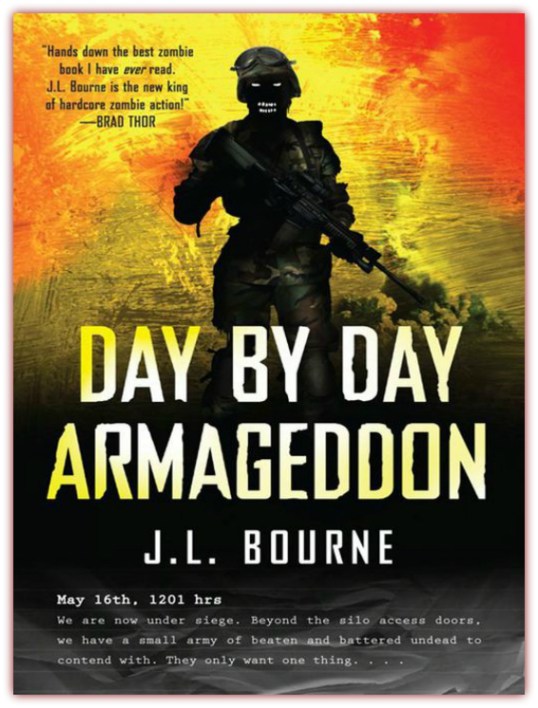
The last decade or so has been a sort of renaissance for all things zombies. Zombies have become the “monster of the moment” in the entertainment industry. These shambling undead (or Olympic sprinters for some of the more modern take on the genre) have permeated film, video games, comic books and novels. Even tv has been invaded by the recently ambulatory dead. J.L. Bourne debuts with a fast-paced and exciting first novel that takes the well-known conventions of the zombie tale and gives it a nice personal touch to set it apart from the many other zombie novels flooding the market.
Day by Day Armageddon doesn’t go the usual straight narrative of most novels. The novel’s written in the point-of-view of an anonymous narrator, but told through an epistolary-style Ssmilar to Bram Stoker’s Dracula. Bourne’s novel tells the story of this one man’s struggles to survive the gradual collapse of civilization and then the days in a post-apocalyptic undead world around him through journal entries he has taken up to keep himself sane and focused. Bourne’s choice of writing style lends a bit of a personal touch to the proceedings as it imbues the tale with less hyperbole and flowery language. The journal entries gives the reader just the right amount of look into this man’s life instead of bombarding the reader with everything. Not everything’s explained in these journal entries, but enough clues were hinted at to keep the reader interested in reading more. From the beginning of the crisis (which has a timely feel of today’s current events) to the confusion of the situation spiralling out of control with our narrator as confused as the people in charge seem to be.
Day by Day Armageddon doesn’t lack for action and gory detail, but they seem to be more of affectations to the rest of the tale. Bourne concentrates more on the thoughts of his anonymous narrator. From how to plan for a siege to finding a way to distract the growing undead in his first refuge in order to rescue a neighbor who might be the only living person left the area. When the novel does finally have the narrator and the other survivors place themselves in danger in order to find more supplies or a better refuge, Bourne does a great job of keeping the pace of the story fast and tight. There’s not a lot of overly descriptive passages of the environment and its new undead in habitants. This minimalist style also lends itself to keeping the characters real. They behave with a rational and logical mind in trying to cope and deal with the worsening situation outside their refuge. Plans are thought out in advance and every precaution and angles factored in whatever decision they make in regards to their survival. In fact, Bourne’s characters seem to have either read Max Brook’s Zombie Survival Guide or at least something similar since they behaved and acted just how Brook’s guide said people need to if they’re to survive a coming zombie apocalypse.
If there’s a bone to pick with Day by Day Armageddon it would be the ending. To say that it ends in a cliffhanger would be an understatement. The last couple of journal entries became so action-packed that it succeeded in raising the adrenaline and making this reader want more of the same. But just when things really got cooking the book ends suddenly and with no resolution. The novel’s suppose to be just the first book in a larger series. Other than that little complaint, I thoroughly enjoyed this debut zombie novel from a new writer who seems to enjoy the zombie subgenre and knows how to handle it well. No running zombies for Mr. Bourne, though he’s hinted at radioactive zombies with abit more oomph than their less glowing undead brothers. Here’s to hoping Bourne keeps the sprinting undead to a minimum. Now where’s that second volume to this series.
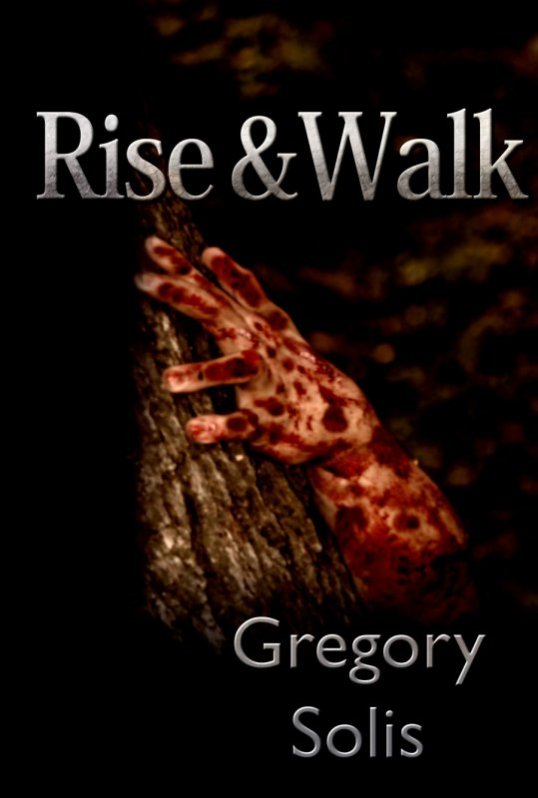
Gregory Solis’ Rise & Walkis the kind of zombie tale many fans of the genre think of writing day in and day out, but never get a chance either through lack of talent or just lack of motivation. Gregory Solis got to write his and on the surface it’s a decent first novel, albeit with some flaws that keeps it from being good. He has also written a very action-packed zombie story which steps on the gas from the prologue and doesn’t let up until the very end.
The story is a very simple one which many zombie genre fans have played, imagined and replayed it over and over in their minds. Instead of beginning the zombie story during the aftermath of the devastation an outbreak will cause, Solis instead goes right for the beginning. Call it the Z-Hour of the zombie genre. He writes about how it all begins and how quickly the contagion and its reanimated victims quickly multiply at a geometric rate to engulf a small, Northern California community. Unlike George Romero’s films which never fully explained the cause and origin of the zombie pandemic, Rise & Walk uses space debris from a meteor storm and the contents within as the cause of the zombification and the need of its victims to attack and devour the living.
Right from the get-go the action comes in fast and comes in furious. Solis doesn’t skimp on the gore and bloodletting. He describes every zombie attack on a living human with a near-pornographic detail. This splatterpunk style of writing my not be for everyone, but if one was a zombie fan then this should suit them just fine. The chaos caused by the geometrically increasing and advancing horde of zombies was one of the things Solis’ does quite well and something fans of the genre would recognize. People make dumb mistakes as they try to figure out what in the world is going on. Some make the right decisions and live while others do not and become zombies themselves or are just complete devoured.
Where Solis got the action and atmosphere down perfect for a zombie story, the main characters and their development could’ve been done much better. The main leads of Rise & Walk panic just like the rest of the humans, but they seem to recover from the shock of the situation rather too quickly and at times matter-of-factly. As the story progresses there’s really no tension or fear that the four leads (two male and two female) would come to any serious harm. Only those in the periphery of the leads seem fair game for a gruesome end (kids are not given a free pass in this book). The diminished sense of mortal danger in regards to the main leads keeps this book from rising from just being decent.
In the end, despite the flaws in how the main characters are written I will say that Rise & Walk by Gregory Solis is one good first novel from a first-time writer. It shows the writer has a modicum of talent for storytelling and he sure tells a fast-paced and mean zombie story. Fans of the genre should enjoy this book for what it is and hope that it won’t be the last from Gregory Solis.
Mark Hayes is a comedian, a DJ, a writer, and, as you can probably guess from the book’s title, he’s also an Irish guy who has found himself living in one of the most uniquely American cities around, Los Angeles. In RanDumb-er, we follow Mark as he looks at American culture with occasionally hungover eyes and an often biting (but never cruel) wit. Whether he’s dealing with a B-list celebrity who is busy predicting the end of the world, bravely trying to survive a date with a girl who insists on howling like a wildebeest, or experiencing a fake snowfall at the Grove, Hayes is never less than entertaining and sometimes even rather poignant.
He also realizes, early on, that all American girls love an Irish accent. And it’s true! Whenever I hear an Irish accent, I get all girly and giggly and one of the things that I loved about RanDumb-er is that, even though it takes place in Los Angeles, it is ultimately an Irish story. I think that the Irish have a special ability to appreciate the small absurdities of existence (and I’m not just saying that because I’m a fourth Irish myself!) and that’s what truly makes RanDumb-er stand out as a work of non-fiction comedic literature. Any writer can capture the obvious weirdness of living day-to-day. What makes Hayes so special as writer is that he picks up on the small oddities of life that we don’t always notice and he makes us consider them in a new light.
Consider the moment, early on in the book, in which Hayes has a panic attack when he realizes that he managed to accidentally leave his scissors behind in Ireland when he left for L.A. In just a few pages, Hayes manages to perfectly capture the anxiety that comes with travelling. Once you get over the initial excitement, you suddenly realize that you’re somewhere new and that you can no longer claim to be able to completely control your surroundings. It’s at moments like these that you truly realize how vulnerable you are and just how false your assumption of control is in environments both new and old. Hayes captures all of this without ever failing to make us laugh as we recognize our own individual neurosis in his story.
(I have to admit that one reason why I related to Hayes’ panic over his scissors was because, when I was in 17, I went with my family to Hawaii and it wasn’t until we were all walking along the beautiful beaches of Honolulu that I realized that I had left my St. Vitus medal back in Texas and I proceeded, under the most brilliant blue sky and surrounded by beautiful people frolicking half-undressed on the beach, to have one of the biggest panic attacks ever. Eventually, I recovered but trust me — not a day went by that I didn’t think about that medal.)
As a writer, Hayes has a very interesting and compulsively readable style, one that goes beyond the fact that he happens to be a very funny guy. Hayes writes in a stream-of-consciousness type of style and the end result is that, after a few pages, you feel that you truly are inside of his head and you are experiencing Los Angeles — and all the weirdness that goes with it — with him. If you cross James Joyce with Jack Kerouac and then add in a little Terry Southern and Tom Wolfe with a slightly less drug addled Hunter Thompson, you’ll have Mark Hayes.
Here’s the trailer for the film that will probably end up dominated my twitter timeline when it’s eventually released. I follow a lot of big Kerouac fans (and I think Big Sur is one of the great American novels) and I’ll be interested to see what they think of the long-delayed film version of On The Road. For now, I’ll just say that it’s rarely a good sign when the film version of an iconic novel is full of star cameos and I have a hard time imagining the dependably dull Garrett Hedlund as Dean Moriarty.
(Already, I can hear people complaining about the prominence of Kristen Stewart in the film’s trailer….)
My taste in entertainment tends to be on the darker, violent and existential side of things. Horror, action and sci-fi tend to perk up my attention when looking for something to read, watch and/or play. This particular guilty pleasure I came across by accident. I think most people’s guilty pleasure were discovered by accident or happenstance. I would be the first to admit that romance novels would be the last thing I would consider my type of entertainment. Not saying romance novels have no place, but it definitely doesn’t fill the criteria of what I like and listed above.
Ten or so years ago I would never have picked up these books, but I have since found them to be much to my liking. I’m still not sold on a majority of romance-themed novels, but I have been sold on the one’s written by that queen of the romance novels: Nora Roberts (and to a larger degree the one’s she writes under the pseudonym J.D Robb). The novels which sold me on her type of writing was her Three Sisters Island Trilogy.
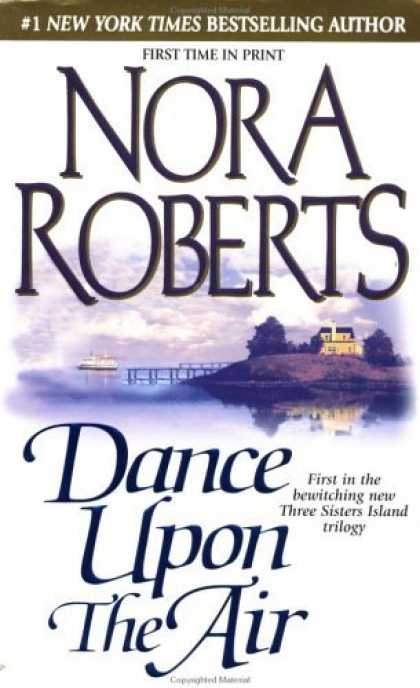
1. Dance Upon the Air
Dance Upon the Air was a surprise find for me as a reader. My initial introduction to Nora Roberts’ writing was through a mystery-romance series of hers written by her under the pseudonym, J.D. Robb. Her In Death series had just the right balance of mystery, police procedural, humor and romance to make this male not feel all weird reading was really was a romance novel. On the prodding of a friend who is a voracious reader of all things Nora Roberts, I picked up Dance Upon the Air. From the moment I began to read the exciting introduction of the Three Sisters Island being born, I was hooked line and sinker on this book.
The Three Sisters Island is a small and quaint little island community off the coast of Massachusetts whose origins, legend has it, was due to a powerful spell weaved by three sister witches. Their spell ripped a portion of the Massachusetts coastline from the earth and floated off to just off the coast to form a sort of haven for their descendants. A haven from the puritanical witchhunts which have taken the lives of both real witches and those falsely accused as one. It’s through the later generations and their descendants that the story for this trilogy is played out through.
Dance Upon the Air deals with one of the descendants of the Three Sisters. The books tale concentrates on the trials and tribulations of one Nell Channing whose a direct descendant of the Sister whose powers were of the element of Air. A delicate woman whose life has been a living hell due to a very abusive and powerfully connected husband, Nell finally escapes her abusive relationship through guile and trickery, but as the story progresses its not long before the husband she left behind finds out the truth about his wife’s apparent “death”. Nell makes it to Three Sisters Island and upon setting foot on its soil feels as if she’s returned home. Whether by fate or providence, Nell soon meets two other women on the island whose destinies have been preordained to entwine with hers.
Dance Upon the Air sounds a bit like the Julia Roberts thriller Sleeping with the Enemy. The similarities are pretty close, but Roberts’ tale of magic, fate and self-reliance was the better of the two. Nell’s experiences as she learns to live and love again on Three Sisters Island has a sense of hope and self-reawakening which the Julia Roberts film lacked. This book shares some of the thriller aspect of the film, but doesn’t rely on it to weave a beautiful tale. Instead, Dance Upon the Air reads more like the journey of a damaged woman whose realization that the place she has now decided to call home and those friends and lovers she’s met will be the anchor in finally realizing the life she’s always thought she should have lived.
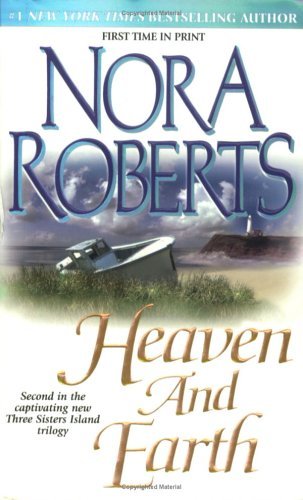
2. Heaven and Earth
Heaven and Earth marks the middle installment in Nora Roberts’ Three Sisters Island Trilogy. The first book in the series, Dance Upon the Air, started off the trilogy on a magical note with Ms. Roberts deftly combining romance, abit of the supernatural, and a nice thriller into an exciting tale of intertwined destinies and pasts, strong female characters, and passionate romance.
Heaven and Earth starts with the wedding and honeymoon of Nell Channing and Zack Todd (island town’s sheriff). This helps cement Nell’s full acceptance into the island town’s fabric. Her trials and tribulations which led her to Three Sisters Island and the test she had to pass to finally begin her life anew seem less of a coincidence and more fate and predestiny. Nell is very open to such a possibility and helps explain to her just why she felt so at home upon her arrival on the island. She thinks its the magic in her past and blood that she now has learned she has. Her new sister-in-law and fellow “sister witch” Ripley Todd thinks its all crapola and would rather not dwell on such things. Ripley Todd knows of the island’s magical history and her own role in it, but her fear and stubborn reluctance to accept her magical heritage makes up the meat of the novel.
Ripley’s attitude towards the magic that permeates the island and the two other women supposedly tied to her, Nell Channing and Mia Devlin (the resident island witch and seemingly its most desired woman on the island), run from tolerance to outright restrained hostility. Ripley’s willing to tolerate her new sister-in-law’s acceptance of her magical heritage. Mia Devlin on the other hand she avoids and ridicules in equal amount. Mia takes it all in stride but at the same time drops comments in an attempt to remind Ripley of her past and future. Ripley doesn’t like this at all and does all she can to avoid the fire-haired Mia. But soon a new factor drops into her life which would lead to her finally confronting her fear of her heritage and her role in what could be the survival of Three Sisters Island.
This factor comes in the guise of Dr. MacAllister Brooke. Mac, as he likes to be called, is a professor whose main call in life is the hunt of the so-called supernatural. His travels and research leads him to the island. He plans on researching the island and determining as to the veracity of the island’s supernatural past and origins. For some reason he and Ripley are set on a course to deal with each other. Mac sees Ripley as a challenge and an attraction forms. Ripley on the other hand sees Mac’s research and choice of profession as being something close to being worthless, but as they continue to stay in close proximity she too cannot deny the growing attraction between them.
As the story moves along, Ripley and Mac must contend not just with each other’s prickly and stubborn natures, but an outside force threatens to destroy the peaceful lives of the original Three Sisters’ descendants and the idyllic island home they and the other townspeople call home. Ripley will have to decide in the end whether to accept that which she has feared for so long, or close herself off from it forever and thus dooming her and everyone close to her. In the end, Ripley will not be alone in her own confrontation with the darkness looming over the Three Sisters Island, Mac, Nell, Mia, Zack and many others will be there to help and support her.
All in all, Heaven and Earth is a great continuation of the epic tale began with Dance Upon the Air. Ripley and Mac’s relationship is a source of both humor and heat. It’s amusing to see polar opposites, yet with so much in common personality-wise, fight tooth and nail not to give in to what is definitely two halves of the same coin finally finding each other.
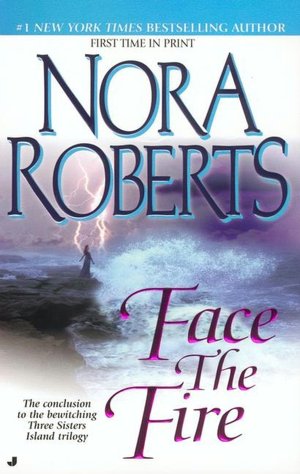
3. Face the Fire
Face the Fire is the third and climactic installment to Nora Roberts’ entertaining and fun Three Sisters Island Trilogy. The first two books dealt with the first two “sisters” whose powers were tied with the elements of Air and Earth. In this third book, Mia Devlin, the third so-called sister of the title takes her power from the element of Fire. Like the element itself, Mia mirrors it in her stunning look, with her flowing fiery-red hair and even fiery demeanor. In the previous two books in the trilogy it was always Mia who guided and helped both Nell and Ripley to finding their true path in life and in finally accepting their magical heritage.
Face the Fire now has Mia becoming the center of all the magical happenings on the titular Three Sisters Island. The previous two books gradually gave its readers more and more information concerning the original Three Sisters and the prophecy/curse which befall them and which still hangs over their descendants and the island refuge their created. Nell and Ripley have done their part in trying to prevent the darkness about to descend on their island home, but its all up to Mia and her own intertwined destiny with a man who broke her heart many years past that must find a way to head off disaster and break the curse that has plagued their line through the generations. Will Mia succeed in breaking the chain of heartache which started with her ancestor? No matter what, Mia has her two “sisters” to help and assist her in her own trials.
Of the three books in the trilogy this one would lean heaviest on the supernatural aspect of the series. We learn even more of the back story of the Three Sisters Island which Mia has called home all her life and one she’s protected by herself against the evil her ancestors (also Nell’s and Ripley’s). Of all the three “sisters” who form the core of the trilogy it’s Mia who has fully embraced her heritage and her story also show’s that she is the most powerful of the three but no less damaged by a past relationship that she must acknowledge and repair if she, Nell and Ripley will succeed in preventing the age’s-old evil from returning to Three Sisters Island and finishing what it was preventing from doing so by the original three sisters.
In the end, Face the Fire is a worthy conclusion to what has been a magical trilogy. The novel continues where Dance Upon the Air and Heaven and Earth left off. It was nice to have Mia becoming the center of the story. In the previous two books she’s always been like the omnipresent powerful white witch who knew all. This time around we got to see her human side and know that she’s as damaged as her other sisters. Ms. Roberts did a great job with this trilogy and as great as the three books has been and why it continues to be a guilty pleasure of mine.
Continuing my series on the best of 2011, I now present my 10 favorite novels of the previous year. For a lot of reasons, I didn’t get to read quite as much as I wanted to over the past year. My New Year’s resolution — well, one of them — is to do better in 2012.
Without further ado, here’s my list. All 10 of the novels provided an entertaining, thought-provoking read over the past year and you should read them all.
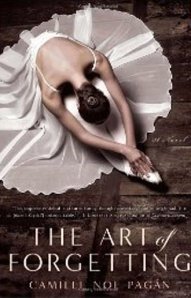
1) The Art of Forgetting by Camille Noe Pagan
2) Swamplandia! by Karen Russell
3) Bumped by Megan McCaffrey
4) The Marriage Plot by Jeffrey Eugenides
5) There is No Year by Blake Butler
6) Girls in White Dresses by Jennifer Close
7) Skipping a Beat by Sarah Pekkanen
8) The Forgotten Waltz by Ann Enright
9) Best Kept Secret by Amy Hatvany
10) The Pale King by David Foster Wallace
Coming up tomorrow: The list we’ve all be waiting for — my top 26 films of 2011.
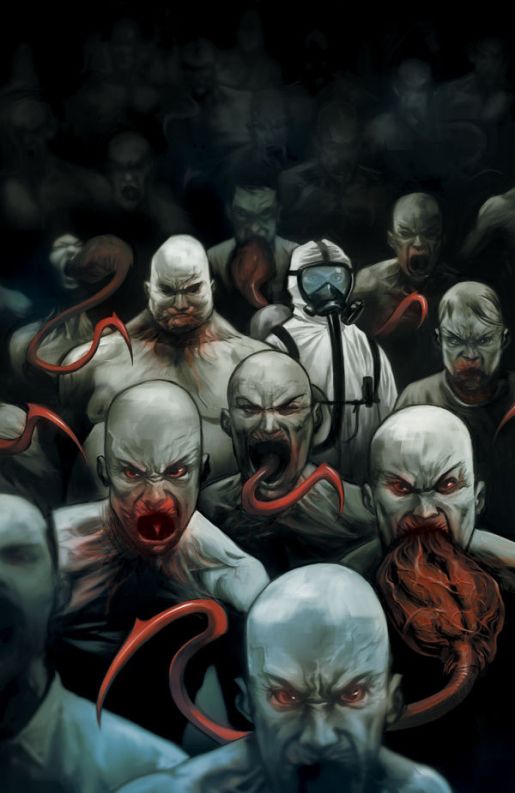
The vampires of The Strain appear to be the next step of the Reapers, Del Toro introduced in Blade II. These creatures far removed from the handsome angst filled vampires of True Blood, Twilight, etc and more in the line with the apex predators that caused nightmares.
Below is the breakdown of the hemophagic corpses (via the wiki page) Vampire Biology
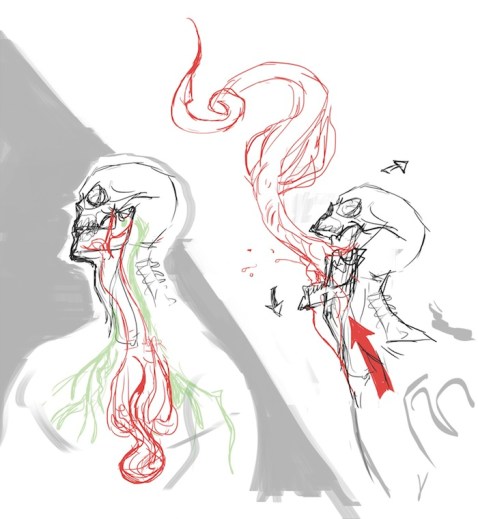
The vector for vampirism is a capillary worm, which, once introduced into the human host’s bloodstream (either through a vampire’s feeding or direct invasion by the worm through a wound or orifice), introduces an incurable and fast-acting virus. By manipulating the host’s genes, the virus causes a human to undergo numerous radical physical changes.
Vampire Physicality
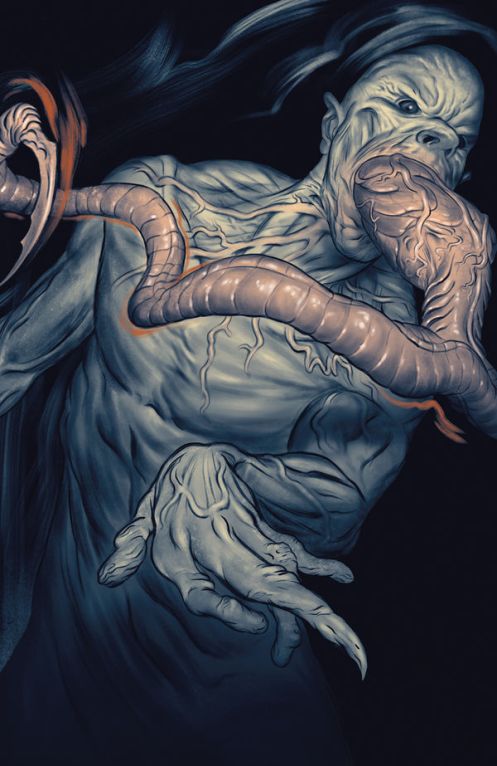
The first and most distinct vampire adaptation is the development of a long, retractile proboscis beneath the host’s tongue, which is able to extend up to six feet from the mouth. This “stinger” is both the vampire’s feeding and reproductive mechanism, shooting forth to latch onto human prey’s throat or thigh, both draining the victim’s blood for nutrition and infecting the human with capillary worms. The vampire’s jaw is set at a lower hinge than a human, the mouth gaping like a snake’s when the stinger is deployed. As the structure of the stinger is actually modified tissue from the human lungs and throat, vampires are incapable of physical speech.
A vampire’s physical appearance is governed mainly by the host body shedding those human traits that are obsolete to its new life cycle. Hair and fingernails are gradually lost, while the external nose and ears atrophy, leaving a fully matured vampire’s skin as smooth and featureless as marble. The vampire’s complexion is extremely pale between feedings, but appears a flushed red after a recent blood-meal. Eye coloration is a black pupil surrounded by a red sclera, with a white nictitating membrane sliding across for protection. The middle fingers of both hands grow and strengthen, and a thick talon develops in place of the lost fingernail. As vampire reproduction is achieved through viral infection of hosts and not through any sexual mechanism, the human genitalia also atrophy, leaving a mature vampire with no discernible gender.
The digestive and circulatory systems of a vampire are simplified and fused, the vampire’s interior organs most resembling a series of connected sacs. Nutrition from a blood feeding is transported throughout this system via a thick, viscous white fluid that forms the vampire equivalent of blood. The capillary worms are present in this fluid, swimming throughout the circulatory system and often visible beneath the vampire’s thin skin. Like rodents, a vampire is unable to vomit, its suction-based digestive process functioning only one way. All bodily waste is excreted from a single rectal orifice in the form of a pungent ammonia-based spray; a vampire will excrete for the entire duration of a feeding, purging old food as it consumes new blood.
The vampire’s body temperature runs extremely high, at 120 degrees Fahrenheit, and a human is able to feel their ambient heat from several feet away.
Many of the physical changes from human to vampire occur gradually following the initial worm infection, and are accompanied by great pain. A newly “turned” human will lie in a state of suspended animation for an entire day, rising the next night as a nascent vampire. The stinger is present for the vampire’s first foray, in order to facilitate feeding, but other traits (hairlessness, talons on the mid-digit, lack of distinct internal organs) will develop within the first seven nights following infection. The vampire’s mental state will also be confused at first, and its movements will be clumsy and awkward. As it matures, however, the vampire will become supremely agile, able to leap great distances and climb sheer surfaces with the aid of its talons. Full maturity, physically and mentally, occurs within the first thirty nights.
In spite of the vampire’s morbid biology stripping legend of most of its romance, the most famously admired trait of the undead remains intact: immortality. Unless slain by violence or sunlight, a vampire’s parasitic body structure will neither fade nor weaken with the passage of time, giving them an effectively endless “life”-span. Even in those cases where the host body is damaged beyond repair, a vampire of sufficient power can transfer their consciousness (via a torrential capillary worm transfer) from one human form to another.
Vampire Senses
The sensory apparatus of the vampire is highly adapted for their nocturnal life cycle. Color vision is replaced with the ability to sense heat signatures, and the world is perceived in a monochrome brightened by sources of warmth (such as human prey). Hearing is greatly enhanced, in spite of the loss of external ears.
The vampires’ greatest sensory asset, however, is the “hive mind” that all new vampires share with the Ancient that propagated them. Each vampire, through some undefined telepathic link, is able to send and receive thought and sensory information to and from their Ancient progenitor. In this manner, the Ancient vampires direct the actions of their individual spawn through mental communication, regardless of distance. Perhaps akin to its radiation shielding properties, the element lead has the effect of blocking this mental connection.
In spite of their biological inability to speak, vampires can communicate with humans through telepathy, transmitting thoughts directly into a person’s internal monologue. Those vampires seeking to pose as human can train themselves to move their lips in a pantomime of speech, but the actual communication is still via thought-transference.
An Ancient vampire is also able to use this telepathic ability as a weapon; known as the “murmur”, this mental shock-wave has the ability to completely overwhelm the minds of surrounding human beings, rendering them unconscious.
Vampires also experience an overwhelming compulsion to infect family members and those they cared about as humans (their “dear ones”). They possess a unique ability to locate such targets, this sense being likened to a pigeon’s homing instinct.
Vampire Weaknesses
Many of the traditional vampire “weaknesses” of common folklore remain effective, although their potency is explained in terms of specific effects on vampire biology.
Sunlight is the vampire’s ultimate destroyer, specifically ultraviolet light in the UVC range. This is due to the germicidal properties of the wavelength, as it breaks down the virus-laden tissues of the vampire’s body. A localized source of UVC light, such as a fluorescent lamp, can be used to repel a vampire, much as a burning torch can repel an animal. Complete exposure, either to direct sunlight or a powerful UVC source, will result in complete desiccation of the vampire’s body, leaving behind nothing but ashes.
Silver, whether in the form of a metal weapon or even a fine chemical mist, can also wound or kill a vampire. Much like sunlight, this is due to the disinfecting properties of the element damaging the vampire’s viral biology. While conventional weapons (lead bullets, steel blades) can cause physical damage, they will not repel a vampire. Silver causes vampires both debilitating pain and a certain amount of fear, and binding a vampire in silver will completely incapacitate them.
Severing the spinal column through any method is another effective way to destroy a vampire. While the vampire’s simplified internal organ structure makes them difficult to harm with attacks to the body, decapitation will result in the vampire’s death.
Although there appears to be no biological imperative behind it, vampires cannot cross running water. This is alluded to as having something to do with the origin of the Ancients, but no further explanation is given. This aversion to water can be overcome, however, if the vampire is assisted (or “invited”) by a human.
Traditional religious protections against vampires, such as a crucifix or holy water, display no practical effect. The prevalence of this lore is explained as having been the product of Bram Stoker’s “fevered Irish imagination”.
Garlic, another common folk defense, has no noticeable use in repelling vampires.
Silver-backed mirrors, while they will not harm a vampire, will reveal their presence. While vampires do indeed cast a reflection, it is blurred and distorted, akin to an image vibrating at an impossible speed. Modern chrome-backed mirrors, however, will not have this effect, and the vampire will appear normally in such a looking-glass.

 2.
2.  3.
3.  4.
4.  5.
5.  6.
6.  7.
7.  8.
8.  9.
9.  10.
10. 
 2.
2.  3.
3.  4.
4.  5.
5. 




 Through the Shattered Lens