Horror Book Review: Into the Dark by R.L. Stine


First published in 1997, Into the Dark tells the story of Paulette Fox.  Paulette has been blind since birth but she hasn’t let that stand in her away.  She’s one of the most popular students at Shadyside High.  She has two best friends, Jonathan and Cindy, who are devoted to her.  She enjoys eating the pizza at Pete’s Pizza, watching silly slasher films with her friends, and taking piano lessons at the Music Academy.  And, assuming that she can get her overprotective parents to sign off on it, she’s looking forward to taking self-defense classes.

Best of all, she’s got a boyfriend!  Brad has just moved to Shadyside.  Like Paulette, Brad loves music and wants to make it his life.  Unfortunately, Brad does not come from a rich family so he has to work as a janitor at the Music Academy.  Brad seems to be sweet and considerate and he treats Paulette like an adult.  Paulette touches his face and discovers that not only is he very handsome but he also a scar on his eyebrow.  Scars are sexy!

However, no sooner has Paulette started hanging out with Brad than strange things start to happen to her.  Twice, she is nearly run over by a car despite the fact that Paulette is always careful while crossing the street.  (The second time, Paulette is convinced that someone pushed her, even though everyone tells her that they didn’t see it happen.)  She starts to get weird phone calls.  According to Cindy, someone has broken into Paulette’s bedroom and painted all sorts of threatening messages on the wall.  Even worse, Brad starts to act strange.  Sometimes, he’s the considerate and nice Brad that she wants to date.  Other times, he acts possessive and creepy.  Her friends tell her that she needs to stay away from Brad, especially after he’s accused of robbing Pete’s Pizza!  But Paulette remains convinced that only she can figure out what is truly happening with Brad….

This is an R.L Stine novel so there’s really no way that you won’t guess what the big twist is.  In fact, if I remember correctly, it’s a twist that Stine has used in quite a few of his other books.  Because I’m a nice reviewer, I will not spoil what the twist is but …. I mean, seriously, you figured it out while reading the previous paragraph, right?

Obviously, Into The Dark won’t win any points for originality but still, as far as the Fear Street books are concerned, Into the Dark is an entertaining and quick read and Paulette is a likable and relatable heroine.  Indeed, Stine actually appears to have done some research for this book and the passages where he describes how Paulette navigates every-day life without being able to see ring true.  Paulette may be blind but she’s also a typical teenager.  It’s easy to roll your eyes when she repeatedly refuses to call the police despite the number of weird things that happen to her but seriously, what teenager wants to call the police for anything?  When I was 17, I was woken up by what I thought was the sound of someone breaking into my house and, even though I had a phone and could have easily called the police, I instead grabbed a golf club and walked around the house in my t-shirt and underwear, searching for the thieves.  When you’re 17, you think you’re immortal and, even more importantly, you don’t want to have to deal with any authority figures.

(Incidentally, there were no thieves and it was all just my imagination.  Yay!)

Finally, who couldn’t relate to Paulette’s confusion about Brad?  Sometimes, Brad is extremely nice and caring.  Sometimes, Brad is cold and kind of a jerk.  That sounds like every guy I knew when I was in high school.  Like the best of Stine’s book, Into the Dark works because the reader can relate to it, even if they’ve never lived on Fear Street or been threatened by …. well, I won’t spoil it.  But you already figured it out, right?
Novel Review: The Bonfire of the Vanities by Tom Wolfe


When it comes to The Bonfire of Vanities, after watching the movie and then reading the book about the making of the movie, you might as well order a copy of the original 1987 novel by Tom Wolfe and see where it all started.

At nearly 700 pages, The Bonfire of the Vanities is a big book about New York City in the mid-80s.  It’s a book about economics, racism, municipal politics, high society, and what happens when one very privileged person loses everything that he felt defined him.  As a writer and a satirist, Wolfe’s described the foibles and the mistakes of the book’s large cast of characters with a definite delight.  The reader may end up feeling sorry for stockbroker Sherman McCoy after he is arrested and put on trial for the hit-and-run of a young black teenager but, at no point, does Sherman ever become a truly sympathetic character.  As a character, Sherman never has the self-awareness necessary to truly confront his own mistakes and attitudes.  Reading the original novel, one realizes just how miscast Tom Hanks was when he was cast in the lead role for the film adaptation.  There are many ways to describe the aristocratic, arrogant, and ultimately hapless Sherman McCoy, but he is definitely not Tom Hanks.

Of course, Sherman is not the only character to lack self-awareness.  There’s really not a shred of self-awareness to found amongst any of the characters.  Both Sherman’s mistress and his wife are more concerned with how the trial is going to effect their social lives.  District Attorney Abe Weiss sees the prosecution of McCoy as a way to further his own political career.  Assistant District Attorney Jed Kramer finds himself obsessed with one the jurors.  Sleazy British journalist Peter Fallow amplifies the more sordid aspects of the story and blithely turns Sherman McCoy into the epitome of everything that everyone hates about the wealthy, with the great irony being that Sherman and his social set have patterned their own social style after their idealized view of the British.  The Mayor of New York obsesses over every little slight while a collection of detectives and attorneys do their job with blue collar efficiency and a cast of activists and grifters go out of their way to make headlines and to keep New York on the verge of exploding.  In the end, there’s only one truly heroic character in the novel and that’s Judge Myron Kovitsky, a loud and profane New Yorker who rules his courtroom like a benign tyrant but who is the only character who truly cares about seeing justice done.  In the end, the book suggests that the price of Kovitsky’s honorable stand will be the loss of his career.

(Kovitsky, the most vividly characterized of the many characters in the novel, was also one of the many characters to be changed for the film, becoming Judge Leonard White, the voice-of-God judge played by Morgan Freeman.)

In the end, the main character of the book really is New York City and Wolfe’s mix of love and disdain for the city comes through in every passage, from the detectives casually cursing around the station house to the waiters who efficiently handle the sudden death of a diner in restaurant to the politicians who hate and fear their own constituents.  Reportedly, Wolfe said that the novel was about capturing what New York City was like in the 80s and it’s definitely a novel of that era.  At the same time, when I read it in 2021, the story still felt relevant.  If anything, it was easy for me to picture Sherman McCoy as one of those people who brags about how they would have voted for Obama a third time while, at the same time, protesting the idea of any sort of affordable housing units being built in his neighborhood.  It was easy to imagine Fox and MSNBC and CNN all covering every moment of Sherman McCoy’s trial.  It was easy to imagine Peter Fallow showing up on TMZ and it was just as easy to imagine all of Fallow’s articles being breathlessly shared on social media.  Reading the novel, it was easy to see that the bonfire is still burning.

Book Review: The Devil’s Candy: The Anatomy of a Hollywood Fiasco by Julia Salomon


I was tempted to start this review by saying that, if you’ve seen The Bonfire of The Vanities and you wanted to know how such a film filled with so much talent could have been such a misfire, you need to read Julie Salomon’s The Devil’s Candy.  First published in 1992, the book follows the making of The Bonfire of Vanities, from casting to pre-production to filming to post-production to box office failure.  The Devil’s Candy is considered to be a classic of behind-the-scenes Hollywood reporting.

But you know what?  If you watched The Bonfire of the Vanities recently, you probably did so because you read Salomon’s book.  This is a good example where the making-of book has actually had a longer pop cultural shelf life than the movie itself.  As a movie, The Bonfire of the Vanities is one of those things that you start to forget even while you’re watching it.  But I can guarantee that anyone who has read The Devil’s Candy can remember the moment when Bruce Willis felt that a scene was moving too slowly and he proceeded to usurp Brian De Palma’s role as director.

If you’ve read the book, you undoubtedly remembering everyone feeling that Uma Thurman was the perfect choice for the role of Maria, with the exception of Tom Hanks who felt their chemistry at the audition was off.  For that matter, you probably also remember that Hanks read with Lena Olin and Lolita Davidovich before Melanie Griffith was given the role.

If you’ve read the book, you remember how frustrated Brian De Palma got with having to try to keep both the studios and the neighborhood activists happy.  You remember costume designer Ann Roth’s frustration with extras who didn’t show up properly dressed.  You remember the streetwise New York Judge Burton Roberts auditioning for the role of a character that was based on him, just for the character to then be so massively rewritten that the role ended up going to Morgan Freeman.  You remember Geraldo Rivera showing up to shoot a cameo and acting like a diva.  You remember the studio execs showing up on set and getting in the way.  You remember the struggle to get the perfect shot of an airplane landing.  You remember poor Beth Broderick, dating De Palma and trying to retain some semblance of dignity while doing take-after-take of the film’s most gratuitous scene.  You remember Steven Spielberg showing up and worrying that De Palma’s film is too sharp in its satire….

(Of course, in the end, the main problem with the film version of The Bonfire of the Vanities is that the satire isn’t sharp at all.)

Indeed, the book is full of famous people, few of whom come across particularly well.  Bruce Willis, in particular, is portrayed as being full of himself and Salomon’s comments about him do occasionally feel as if they’ve crossed the line from reporting to some sort of personal animosity.  (That said, it should be noted that Salomon does point out that a lot of Willis’s attitude was the result of suddenly becoming a star and no longer knowing who he could trust.)  Tom Hanks comes across as being genuinely nice but also genuinely in over his head.  The book’s most tragic figure is Brian De Palma, the natural-born rebel who found himself suddenly working for a studio that feared even the least bit of subversion.  De Palma starts the book needing a hit and, regardless of the many mistakes that De Palma makes while directing The Bonfire of the Vanities, it’s hard not to feel bad that the book ended with De Palma not getting that hit.  If De Palma other flops were at least films that stayed true to his vision, De Palma’s most infamous flop was the one in which he allowed the studio too much control.

Reading the book, one gets the feeling that everyone understood that they were making a fatally compromised film from the beginning.  If you’ve ever wondered how a bad film can be made by talented people, this is the book to read.

2022 In Review: Lisa Marie’s Favorite Novels


Again, as with my non-fiction list, I just wish I had read more last year.  Fortunately, this year, I plan to do just that!

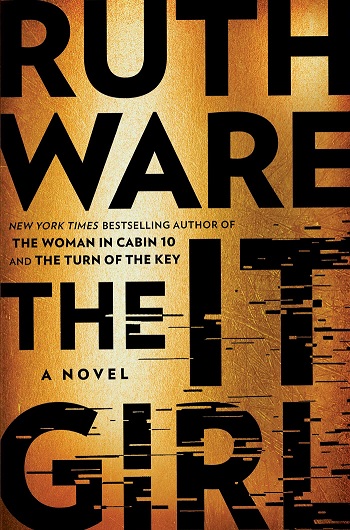
  1. The It Girl by Ruth Ware
  2. The Paris Apartment by Lucy Foley
  3. Tracy Flick Can’t Win by Tom Perotta
  4. The Maid by Nita Prose
  5. The Hacienda by Isabel Canas
  6. Heat 2 by Meg Gardiner and Michael Mann
  7. A Flicker in the Dark by Stacy Willingham
  8. House of Hunger by Alexis Henderson
  9. Electric Idol by Katee Robert
  10. It Starts With Us by Colleen Hoover

Be sure to check out my picks for 2021, 202020192018201720162015201420132012, and 2011!

Lisa Marie’s 2022 In Review:

  1. 16 Worst Movies
  2. 10 Favorite Songs
  3. 10 Top Non-Fiction Books

2022 In Review: Lisa Marie’s Top 10 Non-Fiction Books


As always, I wish I had read more.  Hopefully, that’s something that I’ll accomplish in 2023!

Be sure to check out my previous picks for 2021, 2020201920182017201620152014, and 2013

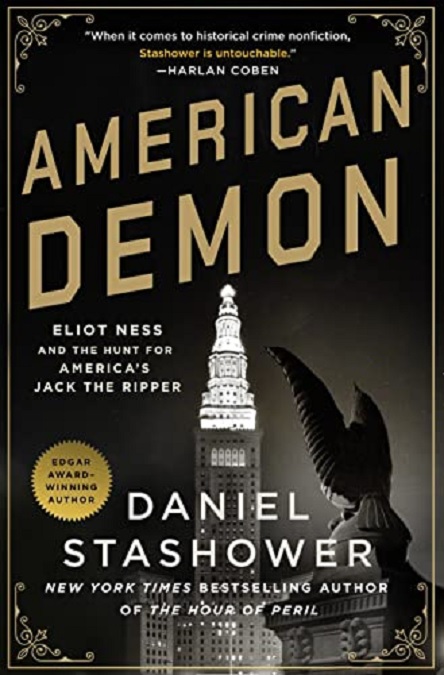
  1. American Demon: Eliot Ness and the Hunt for America’s Jack the Ripper by Daniel Stashower
  2. Gangsters vs Nazis by Michael Benson
  3. Welcome to Dunder Mifflin by Brian Baumgartner and Ben Silverman
  4. Blood, Sweat & Chrome: The Wild and True Story of Mad Max: Fury Road by Kyle Buchanan
  5. Mean Baby by Selma Blair
  6. Cimino: The Deer Hunter, Heaven’s Gate, and the Price of Ambition by Charles Elton
  7. The Book of Broadway Musical Debates, Disputes, and Disagreements by Peter Filichia
  8. The Office BFFs: Tales of the Office From Two Best Friends Who Were There by Jenna Fischer and Angela Kinsey
  9. Everybody Thought We Were Crazy by Mark Rozzo
  10. Godzilla: The Official Guide to the King of the Monsters by Graham Skipper

Lisa Marie’s 2022 In Review:

  1. 16 Worst Movies
  2. 10 Favorite Songs

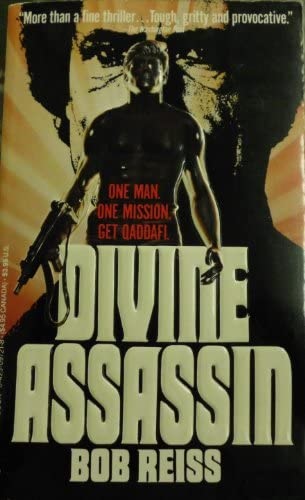
Novel Review: Divine Assassin by Bob Reiss


After terrorists kill his fiancée for being in the wrong place at the wrong time, Tim Currie is determined to get justice.  Unfortunately, the police can offer him little support and the U.S. intelligence community doesn’t seem to be interested in helping him either.  The problem is that the attack that led to the death of Currie’s fiancée was ordered by someone who doesn’t live in the United States and who doesn’t have the slightest concern about the innocent people who have died as a result of his actions.  Realizing that he is going to have to get justice on his own, Currie turns to the only man that he feels that he can trust.

Long before his fiancée was murdered, Tim Currie was one of the many Americans held hostage in Iran.  During that time, he had two friends, a mouse who was callously killed by a brutal guard and a cellmate who was frequently tortured for being a spy.  His cellmate may have used the name Charles Murphy but he was actually a mercenary named Zarek.  The amoral Zarek owes Currie a favor and Currie intends to collect.  He wants Zarek to train him to be an assassin so that Currie can kill the man that he holds responsible for his fiancée’s death, Libyan dictator Muammar Quaddafi!

As you probably already guessed, this book was written long before the Libyan Civil War and the real-life Qaddafi’s very public execution in 2011.  Indeed, Divine Assassin was originally published in 1985!  Reading it today, it’s interesting to see that, nearly 40 years ago, people were just as concerned with and confused by Middle Eastern politics as they are today.  Other than the fact that the Qaddafi on the book is described as being in his 40s, what we read about the fictional Qaddafi pretty much mirrors what was said of the real Qaddafi in the days before his death.  Of course, needless to say, there’s more going on in this book than just Tim Currie’s search for vengeance and Qaddafi’s amazing arrogance.  It quickly turns out that there’s quite a few people and nations looking to use the instability in the Middle East to their advantage and again, it’s interesting to see that the discussion around the Middle East really hasn’t changed that much over the past few decades.

As for the book itself, it’s an entertaining and relentlessly paced thriller, one that features a sympathetic protagonist and several memorable supporting characters.  The cynical Zarek (who also happens to be terminally ill) gets all of the best lines while two other Americans, a police inspector and Currie’s ex-wife, try (and often fail) to serve as a voice of reason to Currie’s obsessive attempts to get revenge.  The villains are memorably evil, with a German assassin especially making himself so loathsome that the reader will eagerly look forward to his comeuppance.  The dialogue is often sharp and there are moments of unexpected wit to be found throughout the book.  All in all, this a good and quick read.  It would have made a good movie.  Actually, it still could.  It’s not like Qaddafi was ever the only terrorist-supporting dictator in the world.

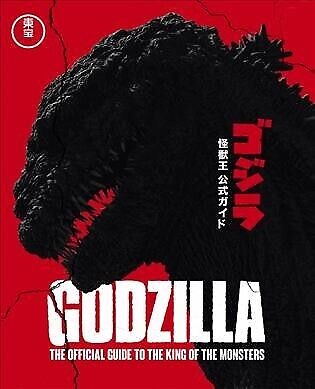
Book Review: Godzilla: The Official Guide To The King Of The Monsters by Graham Skipper


Do you like Godzilla?

You better!  Seriously, for over 60 years, Godzilla has been the rightful king of the monsters and not even a few less-than-perfect films have been able to knock him off of his throne.  He started out as a symbol of the nuclear age, a prehistoric monster brought back to life by man’s arrogance and war-like nature.  He eventually became mankind’s protector but then deciding that he no longer cared for mankind. And then, like many international stars, he ended up making movies for the American studios.  It’s an epic story and it’s hard not to like the big monster at the center of it.  If, for some reason, you don’t like Godzilla, maybe Graham Skipper’s new book, Godzilla: The Official Guide To The King of the Monsters, will change your mind.

Godzilla: The Official Guide To The King of the Monsters is exactly what the title says.  It’s a guide to all of Godzilla’s adventures, from his first appearance in the 50s all the way through his animated films and the current American version.  (Perhaps not surprisingly, the 1998 version of Godzilla is only afforded a few paragraphs.)  Helpfully, Skipper divides his overview into ears, so you can see how Godzilla changed as he moved from studio to studio.  Skipper also takes a look at Godzilla’s existence outside of the movies, as a comic book mainstay and an occasional television guest star.  The book is written with a lot of obvious affection for Godzilla in all of his incarnations and reading it will remind you of why Godzilla’s films — yes, even Son of Godzilla — are so much fun to begin with.  Skipper includes a lot of trivia, some of which was new to even me.  Such as, did you know that Luigi Cozzi re-edited and colorized the original 1954 Gojira for a 1970s release in Italy?

The book is also heavily-illustrated, featuring a lot of shots from the films and behind-the-scenes pictures of Godzilla and all of his colleagues.  As I read the book, it occurred to me that, as goofy as Jet Jaguar was, it’s still nice that Godzilla had a friend.  As well, as I looked at the pictures, it occurred to me that, even in the later films when Godzilla had been transformed from a truly fearsome symbol of the nuclear age to a somewhat goofy rubber monster, there was still an undeniable majesty to him as a creation.  Even at his worse, Godzilla still looks like a king.

I picked up a copy of this book on the day after Christmas and I’m glad I did.  Not only does it celebrate Godzilla but it also provides me with a guide because, over the next 12 months, I hope to watch every Godzilla film that’s ever been made.  (I’ve seen the majority but, as this book reminded me, there’s still a few that I missed.)  For the record, I still think that Godzilla vs Destoroyah is the best of the Godzilla films but who knows?  Maybe my mind will have been changed by December.

Humanity has survived a lot over the past few years and I’m happy to say that Godzilla has survived with us.  Graham Skipper’s Godzilla helps to explain why.

Book Review: Runaway by R.L. Stine


Tired of being used as a test subject by a mad scientist and feeling guilty about an accident that caused the death of two of her friends, telekinetic Felicia Fletcher has run away!  After using her powers to escape from the pervy dude who gave her a ride, Felecia ends up in Shadyside.  She not only get a job as a house sitter on Fear Street but she also enrolls in high school and gets a job at the Burger Basket…

Wait, what?

Now, the whole telekinetic thing is pretty cool and I cheered a little when she caused the pervy guy’s car to crash.  I mean, if you’ve got the power to do that, why not?  But who runs away from home just so they can enroll in high school and get a job working at a fast food restaurant?  I mean, it just seems like there’s more that she could do, especially considering that she has super powers.  Along with going to school and finding a low-paying job, Felecia also develops a crush on her classmate and co-worker, Nick.  Unfortunately, Nick is dating Zan.  Zan doesn’t appreciate the new girl trying to move in on her man.  Felecia’s main concern, though, is making sure that no one discovers that she’s a runaway.  SO WHY DID YOU ENROLL IN HIGH SCHOOL AND GET A JOB UNDER YOUR REAL NAME, FELECIA!?

Seriously, Felecia might have telekinesis but she obviously has no common sense.

Soo, Felecia is getting strange letters from someone who claims to know who she is.  Someone also breaks into her house, a crime that Felecia can’t report without running the risk of being discovered.  Felecia tries to control her powers while also discovering who is stalking her.

Even by the standards of R.L. Stine, the plot is fairly incoherent but the fact that Felecia has psychic powers (and, with the exception of Nick, pretty much zero friends) adds a new wrinkle to all of the usual Stine melodrama.  Felecia has a lot to deal with, from avoiding the police to avoiding her crush’s girlfriend to avoiding the people searching for her to avoiding her Fear Street stalker.  In fact, Felecia has so much to deal with that it’s impossible not to like and root for her.  I might not have telekinesis but I could still relate to Felecia’s desire to just have one normal, relaxing day in her life.  I liked that Felecia was trying to regain control of her life and there’s a pretty cool scene where The Burger Basket basically explodes.  This was definitely one of the better Stine books that I’ve read this month.

Book Review: The Fire Game by R.L. Stine


Jill, Andrea, Diane, Max, and Nick want get out of taking a superhard Geography test.  What can they possibly do, since apparently into not an option to study or to track down someone who has a copy of the test from last year?

If you said accidentally start a fire in the school library so that the test gets cancelled, congratulations!  You could be the star of an R.L. Stine novel!

The day after the fire, school is still a bore.  Our group of friends, who are all gymnasts for some reason, want to get out of class so that they can hang out with Gabe, the supercool new kid who has an odd fascination with burning things.  What’s the best way to get out of school?  How about blowing up the boy’s bathroom?  Not only does that cause classes to get canceled but everyone now gets to hang out on Fear Island!

R.L. Stine’s 1991 book, The Fire Game, is all about people like to set fires.  Admittedly, the book doesn’t really go into the reasons why these people are so obsessed with fire.  For the most part, it’s just something that they do because they’re not imaginative to come up with any other way to skip school.  (Has no one ever heard of faking not feeling well?  When I was in high school, all I had to do was say the word “cramps” and the gym teacher would practically escort me off campus and tell me not to come back for a week.  It’s not that difficult.)  Anyway, eventually a house burns down on Fear Street and all the members of the Fire Club are like, “Wait!  We didn’t do that!”  It looks like someone is trying to frame the arsonists!

The main problem with this book is found in the last sentence of this paragraph.  Yes, the Fire Club is, more or less, innocent of burning down that house and killing the homeless man who was living inside.  But, they’re still a group of people who DELIBERATELY SET FIRES!  It’s like, “Okay, it sucks you’re being framed for that one fire but how about all the ones you actually started?”  Not a single lesson is learned and usually, I’m in favor of that but in this case, our heroes are actually doing something that could kill someone or something.

Still, even if there’s absolutely no one to really root for in this book, it’s hard not to be a little impressed by the fact that R.L. Stine felt that gymnastics and pyromania would be a natural combination.  Though the majority of the book is Stine on autopilot, arsonist gymnasts is at least an interesting concept.  Plus, Arsonist Gymnasts sounds like it would be a great band name.

Book Review: Truth or Dare by R.L. Stine


In this 1995 book from R.L. Stine, a group of wealthy teenagers decide to take a vacation from Fear Street and Shadyside High.  They decide to spend the weekend skiing but, once they reach their mountain lodge, they end up getting hit by a blizzard.  They’re going to be trapped inside for a day or two.  Because the storm took out all the phone lines (and since this book is from the age when everyone was dependent on a landline), they are cut off from the world.  If anything bad happens in the cabin, there will be no way to get help.  If anyone is driven to kill someone else, there will be no way to call the police.

Now, if I was in that situation, I would probably try to pass the time in the safest and least dramatic way possible.  I mean, if you’re going to be stuck with a group of people for a day or two, you should probably try not to do anything that could cause anyone to lose their temper.  The best thing to do is try to have fun and not obsess on the situation.  However, since this is an R.L. Stine book, everyone decides to play Truth or Dare.

Great idea!  Nothing bad has ever happened as a result of playing Truth or Dare!

Though I played it a few times and I always managed to survive, Truth or Dare is still a strange game to me.  First off, why wouldn’t you just automatically take the dare?  But, beyond that, there’s this weird assumption that everyone is just automatically obligated to follow the rules of Truth or Dare, even if it means hurting someone.  Inevitably, anyone playing Truth or Dare is going to have at least one deep dark secret that they are going to get asked about, something like: “Did you cheat on your partner?”  And instead of just saying, “No,” even if the answer is “Yes,” they always reply, “I’ll take a dare instead.”  Well, just the fact that you took a dare at that point is pretty much the same thing as answering yes.  There’s really no way to win this game, other than to lie whenever you’re asked a question that could potentially lead to you being murdered.  But that would mean breaking the rules of Truth or Dare!  It would apparently be better to die.  I guess it’s all about ethics.

Anyway, not surprisingly, the game of Truth or  Dare does lead to someone being murdered.  They get a hatchet in the back and the killer leaves it there to be discovered by the rest of the group.  AGCK!  This killer isn’t messing around.  Anyway, you can probably guess where all this leads.  The initial suspect looks guilty but is actually innocent.  The killer is the person that most people would least expect.  Stine mentions that chair lift enough times that you just know it’s going to be the setting for the climax of the story.  It’s a typical R.L. Stine novel but it is one that teaches an important lesson.  For the love of all things good and decent, do not play Truth or Dare!