While Mastodon wasn’t one of the five bands of 2009 which I fell in love with they are the 6th. I have the site’s resident music guru, necromoonyeti, to thank for recommending this band. It wasn’t just the band he recommended but their latest album, Crack the Skye, which he insisted I check out. I had no choice but to listen to the album since he insisted and he hasn’t failed me with his recommendations in the past.
The one song in the album which has become one of my current favorite songs and a recurring one in my playlist is Oblivion. The song starts very ominously with deep chords from guitar duo Brent Hinds and Bill Kelliher before being joined by bassist Troy Sanders. Brann Dailor soon joins in on drums. The song is pretty much about a paraplegic boy learning how to use astral projection in conjunction with being set in Czarist Russia. Yeah, the song’s themes are quite a lot to wrap one’s mind around, but the music and the melodic vocals between Dailor on verses, Sanders bridging things in the center before moving onto hinds on chorus makes for a badass production.
Oblivion showed me that the specific sounds of sludge and progressive metal do not have to be mutually exclusive from each other. In an album that’s full of great songs, Oblivion in Crack the Skye is Mastodon pushing the boundaries of what they’re capable of musically beyond what their fans are used to. This is both a good and bad thing. Good in that new fans will easily gravitate to this particular track while hardcore fans may see it as a softening of the band’s style. Call it the “Bob Rock Syndrome” but I’d rather think that particular insult doesn’t belong with Oblivion and used more by some hardcore Mastodon fans as a last-ditch attempt to keep the band to themselves and not share with a new crop of fans.
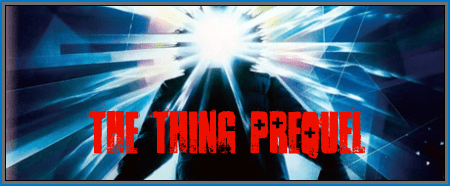
The Hollywood Reporter blog has reported that Mary Elizabeth Winstead has been cast in the lead role of the soon-to-be filming prequel of the classic scifi/horror The Thing. Slashfilm has picked up on this story and I have confirmed with someone involved in the casting process that she has been cast who I trust explicitly.
She will play the role of Kate Lloyd, the paleontologist chosen to travel to Antarctica to help the research team in the Norwegian camp which has found something buried in the Antarctic ice. The casting of Joel Edgerton in the male lead role of Sam Carter, the American helicopter pilot tasked with bringing the character Kate Lloyd to the Norwegian base, rounds out the news on lead casting.
Ms. Winstead has had her share of being part of a genre production (Final Destination 3 and Grindhouse) so she will not be out of place in such a production. She has enough acting skills to balance out her good looks. With the relatively young look of both leads there’s a chance that writer Eric Heisserer may include a romantic subplot between the two characters. I sure hope that is not the case since this film doesn’t really need it to appeal to the audience. Would I be averse to having some sort mutual attraction, even if just hinted at, between the two character? Not at all, but a fullblown romance just for the sake of having it in the story would be the wrong way to go about it.
A special treat for fans of hotties everywhere. The latest to wear the mantle of hottie of the day is the very kawaii Nishida Mai.
Ms. Nishida Mai is one of the newest gravure idols to create a sensation in Japan. She was born in 1989 in the city of Kyoto and now appears in gravure photbooks and videos all over Japan. Her petite but very curvaceous figure has made her legions of fans both in her homeland and overseas. Ms. Nishida has begun appearing on Japanese tv as her career continues to gain traction. Nishida Main truly captures the meaning of being a hottie and well-deserving to be chosen as one.
Manga (Japanese comic books) has become a major form of entertainment for me. This wasn’t too surprising being that I have been a huge fan and reader of comic books both American and European. While my own collection of comic books have waned in the last decade my appetite for manga has increased in its place. I find them to be actually cheaper to buy and collect than American comics nowadays.
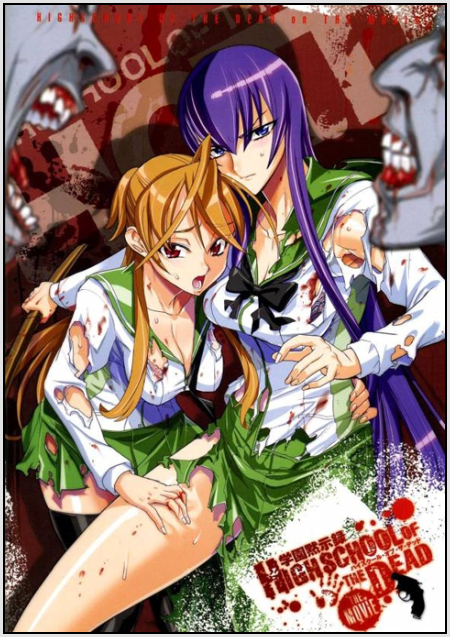
One of the current manga titles (unfortunately not licensed to be translated and sold in the US…yet) is the very popular zombie apocalypse title from Monthly Dragon Age (a monthly manga magazine similar to the Western comic magazine Heavy Metal). This zombie apocalypse manga is known quite appropriately as Highschool of the Dead. The series (was on hiatus for a little over a year, but has started up once more) was started in September 2006 by mangaka Daisuke Sato and Shouji Sato (the former doing writing duties while the latter the illustrations).
The manga takes the usual zombie conventions begun by George A. Romero and expanded by many others since and wraps it with a heavy dose of ecchi. For the uninitiated the Japanese term ecchi is commonly used for manga and anime which contains very sexualized (though not to mean full nudity and explicit sex) imagery and characterization. Let’s just say that the artists of manga and anime with ecchi themes will liberally use panty shots, huge bouncy breasts and scantily clad women in almost every other scene.
Highschool of the Dead can almost be the manga version of the cheesy Troma zombie films which combined horror with scantily-clad women running and bouncing every which way. While the manga is quite violent and gory the black and white illustrations keep it from becoming gratuitious. I can’t say the same for the boobs and panty shots. The fact that the manga is published through a manga magazine aimed at teenage boys and young adult males wasn’t an accident. The author and illustrator really know who their readers are and more than glad to give them what they want.
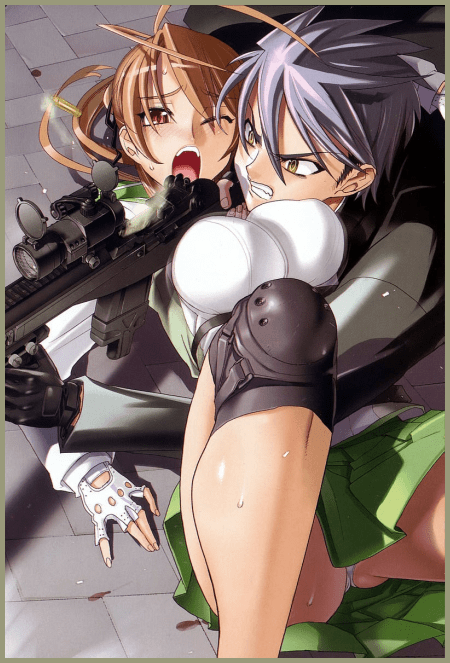
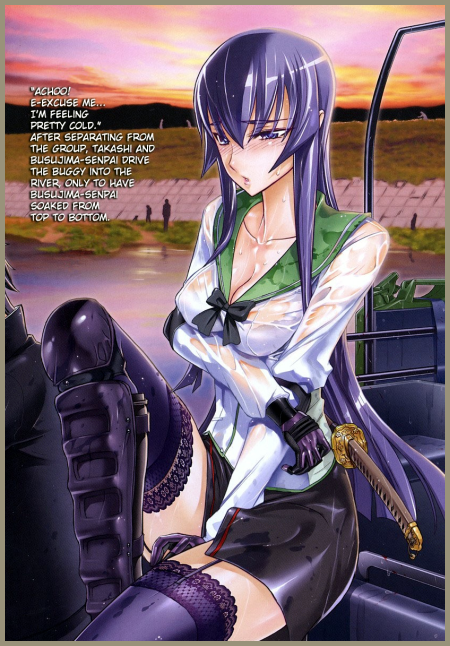
Some of the sample full-color pin-up illustrations should really emphasize my point.
News was made just recently that the manga was going to be adapted into an anime series. The anime was to make it’s premiere episode available to Japanese tv around early February of 2010. Here’s to hoping that the anime doesn’t abandon what made the manga series so popular. I am also hoping and confident that one of the licensing companies who brings over manga and anime to the US shores will do the same for Highschool of the Dead. Until that happens the only way to experience this series is to buy the original manga magazine issues each chapter of the series has shown up in and read it in Japanese. Or one can read unofficial scanlated versions (the last resort since it is not actually kosher to do so). If one was to settle on the latter then only one site really do the series justice with its translation and that is the site [XLG].
So, I highly recommend this manga. For those who will be interested enough to check it out I hope you enjoy it as much as I have. I mean what’s not to like: zombies, guns, boobs and even more boobs.
Werewolf films have always felt like they’ve been given the short end of the stick when it comes to quality and artistry. In horror cinema, vampires tend to be the ones treated with glamour—getting richly developed lore, elegant aesthetics, and narratives that weave romance with menace. Werewolves, by contrast, are too often relegated to playing second fiddle, treated more as brutish monsters than complex characters. This isn’t to say there haven’t been standout entries in the genre—classics such as An American Werewolf in London, The Howling, and Wolfen proved that werewolf tales could be inventive, atmospheric, and even poignant. Unfortunately, many modern werewolf films still feel stuck emulating the aesthetics and narrative beats of the 1940s Universal Wolf Man formula, unwilling to evolve past its roots.
That’s why Dog Soldiers, Neil Marshall’s 2002 action-horror film, came as a breath of fresh air. Marshall, then an up-and-coming director from the UK, took the basic premise of a werewolf story and infused it with the pacing, intensity, and tone of military survival thrillers. In doing so, he leaned into genre hybridity, crafting something closer to Aliens meets Zulu, peppered with elements from siege films like Assault on Precinct 13 and even hints of Night of the Living Dead. This fusion not only differentiates Dog Soldiers from typical werewolf fare, it also helps the film sidestep some of the genre’s usual narrative pitfalls.
The plot is refreshingly straightforward and tightly executed. A squad of British soldiers is dispatched to the Scottish Highlands on what appears to be a routine training exercise. However, the mission is actually part of a covert operation led by Captain Ryan (Liam Cunningham) from British special operations. The higher-ups believe there is an unidentified creature prowling the remote wilderness—something worth capturing and experimenting on. Naturally, plans unravel almost immediately when the soldiers stumble upon the very real threat: a pack of predatory werewolves. In quick order, both the military squad and Ryan’s covert team suffer heavy casualties, forcing the handful of remaining survivors to retreat to the relative safety of an isolated country cottage.
At this point, Dog Soldiers shifts from a creature-hunt narrative to a tense siege story. The soldiers, along with Megan (Emma Cleasby), a young anthropologist who happens upon them while driving along a desolate road, barricade themselves inside the cottage. It’s a familiar setup to horror fans—a small, heavily outnumbered group defending themselves against a monstrous threat—but Marshall handles it with sharp pacing and escalating stakes. The werewolves never attack in full force right away; instead, they probe the survivors’ defenses, testing weaknesses, thinning numbers, and forcing improvisation. The incremental nature of these assaults keeps the tension high and recalls the strategic pacing of Aliens and Zulu. By the final act, the film’s momentum surges into a frenetic, revelation-laden climax, where buried secrets between the survivors come to light, confirming that the encounter in the Highlands was anything but accidental.
The performances are one of the film’s strongest assets. Kevin McKidd anchors the story as Private Cooper, a grounded, quick-thinking soldier with a contentious past involving Captain Ryan. McKidd brings a combination of sharp competence and understated emotional weight, keeping the film from tipping into camp even when the gore and action turn exuberant. Liam Cunningham’s Ryan complements this dynamic by embodying the archetype of the cold, mission-focused officer—aloof, calculating, and ultimately morally questionable.
Sean Pertwee’s Sergeant Wells deserves special mention for his portrayal of a gruff but paternal squad leader. Despite being wounded early on, Wells remains a symbol of resilience, offering the squad guidance and resolve amid desperate circumstances. Emma Cleasby’s Megan strikes a balance between being a narrative catalyst and a functional participant in the group’s survival. As the siege wears on, she lets slip fragments of information about the nature of their attackers, deepening the mystery and tension without leaning on clumsy exposition.
Then there’s Darren Morfitt as Private “Spoon.” His performance injects the film with a lively combat bravado that stands out from the rest of the ensemble. Spoon isn’t just a trigger-happy soldier—he revels in the absurdity and extremity of their plight, seeing it as an ultimate test of British military skill against impossible odds. His confidence and gallows humor recall Bill Paxton’s Hudson in Aliens, but with less overt panic and more disciplined enthusiasm. Spoon references historic battles like Rorke’s Drift—famously depicted in Zulu—as touchstones of courage, further cementing Marshall’s homage to siege war films.
For a production with limited resources, the effects work is impressively convincing. With a budget far below that of major Hollywood horror films, Marshall and his crew leaned into practical effects and selective creature reveals. Some critics have accused the werewolf suits of looking like men in costumes, but in execution the designs work well within the film’s framework. The creatures are tall, lean, and menacing without relying on heavy CGI. Importantly, Marshall applies a “less is more” philosophy reminiscent of Spielberg’s handling of the shark in Jaws. Full, lingering views of the werewolves are reserved for the final act, allowing the audience’s imagination to do much of the work until the climax. This restraint helps sustain suspense while ensuring that, when the creatures finally take center stage, viewers are already fully invested in the world of the film.
When the action does explode, Marshall doesn’t shy away from gore. Dog Soldiers takes a hard-R approach, delivering violent set pieces that are as visceral as they are functional to the narrative. Bodies are torn apart, entrails spill onto floors, and dismembered remains are devoured on-screen—a rare choice for werewolf films, which often cut away from feeding scenes. Yet the gore never overshadows the horror elements; rather, it complements them, reinforcing the brutality of the attackers and the hopelessness of the situation.
At its core, what makes Dog Soldiers so memorable and effective is its clever blend of genre DNA, drawing inspiration and structure from both Aliens and Zulu. Much like James Cameron’s Aliens, Marshall’s ensemble of soldiers must depend on each other to survive, facing off against an external threat in an environment where resources and options dwindle by the hour. The tension is ramped up through a progressive siege, with monsters probing at the group’s defenses, forcing rapid adaptation—an approach that maintains the audience’s suspense and empathy. The way the squad’s camaraderie is tested amid escalating shock and violence feels akin to the Colonial Marines in Aliens, with Spoon and Wells providing flashes of humor and heroism reminiscent of Paxton’s Hudson and Biehn’s Hicks.
Meanwhile, the homage to Zulu manifests in the setting and the sense of a last stand. The cottage becomes not just a shelter, but a makeshift fortress, echoing Rorke’s Drift in Zulu, where British defenders held out against overwhelming odds. Spoon’s direct references to the historic battle, coupled with strategic use of terrain and improvisational defense, strengthen the film’s identity as a genre junction—a supernatural thriller rooted in military siege drama. The sense of camaraderie, tactical ingenuity, and resilience facing certain death is palpable throughout, elevating the intensity far above ordinary monster fare.
By fusing these influences, Dog Soldiers revitalizes the werewolf genre and offers a reminder that horror doesn’t have to retreat into soft scares or ironic pastiche. Its hybrid approach creates a kinetic, emotionally resonant narrative, where supernatural terror and military heroism collide. The suspense not only builds from the threat outside, but also from the evolving relationships and secrets inside, giving the film depth and dimension.
In summary, Dog Soldiers succeeds not only as a visceral werewolf film but also as a smart genre blend, marrying elements of action-horror and siege war drama to make something memorable and genuinely thrilling. For fans of both horror and action cinema—especially those that crave suspense, teamwork, and practical effects—it’s an exemplary demonstration of how fresh vision can rejuvenate even the most familiar legends. Neil Marshall proves with his debut that he understands exactly what makes horror gripping, and with Dog Soldiers, he gives audiences a wild, unrelenting ride they won’t soon forget.
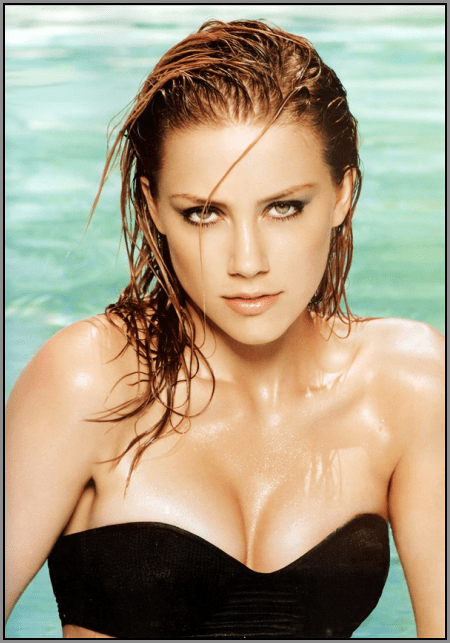
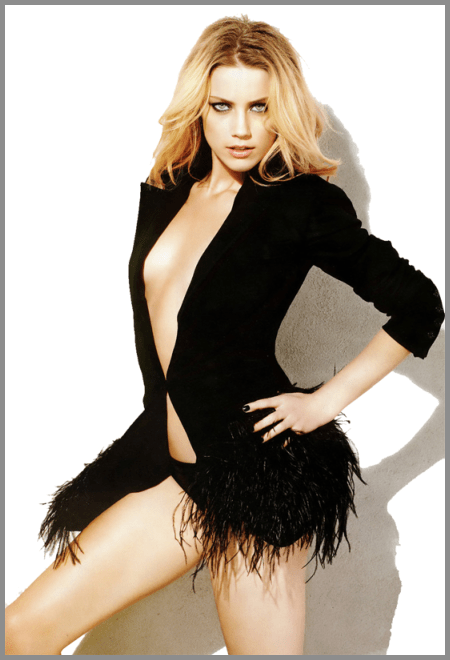
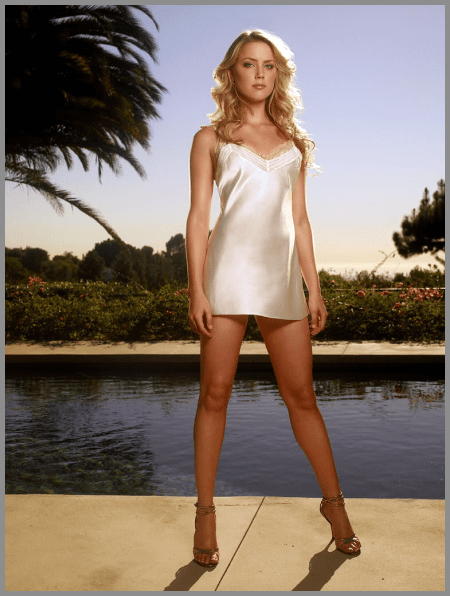
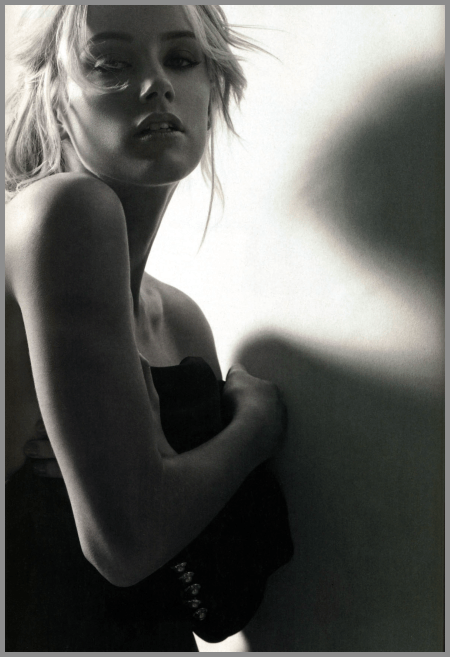
Texas born and raised Amber Heard is the latest hottie of the day.
The young model and actress had her first major role in the 2004 sports drama, Friday Night Lights. Other small roles in TV shows like Jack & Bobby, The Mountain and The O.C. soon followed. Ms. Heard’s career would continue on a gradual trajectory as she takes on roles in other TV shows such as Hidden Palms and Californication. But her career seem to be set for her as a film star as roles in major films such as The Pineapple Express, Never Back Down and, the soon to be released Johnny Depp drama, The Rum Diary.
Fans of Amber Heard last saw her in a small role in Zombieland as the college girl whom Jesse Eisenberg’s character falls for only to see her turn into a zombie. This turn as a potential horror babe must’ve been impressive enough that horror maestro John Carpenter himself has cast her in the lead role of his next feature-lenght film, The Ward.
This is one flash game I just came across this morning and felt it necessary to share with all my fellow future zombie apocalypse survivors. It’s a simple little flash game from the guys over at Binary Space Games making use of Google Maps. It’s still in early development but from the look of it the game is already pretty cool. There are settings to make the game easier or harder. The game pretty much has less to do about surviving til the end but how long the section of the city will hold out before all it’s inhabitants have been devoured and/or turned into zombies themselves.
I like the accompanying sounds of zombies moaning, the gunfire and the screams of people as they die. It’s pretty fun and quite addictive. There is a creepy aspect to it in that the small map shows the zombies as red dots. Seeing the mass of red dots slowly move forward until it fills the whole map can creep even a hardcore horror and zombie like myself.
So, just click the title above or the source link below to start your own outbreak and see how long you last before you finally go down with the rest.
On February 9th we shall the see the release of the well-anticipated sequel to the critical hit and fan-favorite FPS game from Take-Two’s 2K Studios. I am speaking of BioShock. The brainchild of game developer Ken Levine, BioShock was a FPS game which combined fast-paced action with a thoroughly engaging story of Objectivism and the philosophy born out of Ayn Rand’s writings. I would say that this is the game which EA’s upcoming Dante’s Inferno owes it’s existence on.
BioShock 2 continues the the series where it left off at the end of the first game. The setting will be an even more dilapidated and run-down Rapture with Splicers having turned even more mutant-like through abuse of gene-theraphy and ADAM use. This time around the game will have the player play as a Big Daddy who will either rescue and save or harvest the Little Sisters from the first game. A Big Sister will be the one who will pose the biggest threat to this Big Daddy and the player.
One other additional change from the first game for this sequel will be the inclusion of multiplayer gameplay over Xbox Live and PSN. While some have been excited by this inclusion of an online mutiplayer to the game I feel that it doesn’t really fit the series. I see the BioShock franchise in almost the same vein as BioWare’s own Mass Effect series. A game franchise which stand on great storytelling with some very good to great gameplay mechanics built around said storytelling. In the end, I’m still going to be buying this game even if I don’t try the multiplayer option.
Our hottie for the day is the impossibly cute Sasaki Nozomi.
Ms. Sasaki is one of the most popular Japanese models who was born in the Akita Prefecture in Japan and now lives in Tokyo. While fans of her work in the West know her mostly from her work as a gravure model she is quite the multi-talented lass who is also one of Japan’s top Idols and also an up-and-coming actress both live-action and voice-acting. Her looks has been compared to those of porcelain dolls and her modeling photobooks attest to that fact.
Ms. Sasaski is another reason why it must be good to live in Japan.
In what may well be John Carpenter’s finest film—greater even than Halloween and Escape from New York—the director boldly remakes Howard Hawks’ 1950s sci‑fi classic The Thing from Another World and, incredibly, surpasses the original. Unlike Hawks’ version, steeped in Cold War anxiety, Carpenter draws more directly from John W. Campbell Jr.’s short story Who Goes There?, shifting the focus to paranoia festering within an isolated group of men. His setting, an American scientific station buried deep in the frozen desolation of Antarctica, becomes the perfect pressure cooker for suspicion, distrust, and barely contained madness.
Carpenter’s vision announces itself immediately. The film begins with an overhead shot of jagged, snow‑capped mountains—an endless expanse of icy barrenness. This stark imagery is paired with Ennio Morricone’s minimalist score, a low, pulsating bass throb that mimics a heartbeat. In just these opening moments, Carpenter and Morricone establish the film’s defining tone: desolation, unease, and a creeping inevitability. Carpenter never lets this sense of dread relent; the unease initiated in the opening frames lingers throughout, until the final note of the end credits.
Where the 1951 film wasted no time showing an alien in the flesh, Carpenter follows Campbell’s original concept more faithfully: the creature hides, assimilates, and imitates. It kills and replicates members of the Antarctic crew, transforming everyday interactions into moments of terror. This conceit allows Carpenter to stage his film not just as a monster movie, but as a psychological exercise in tension. Each man is a potential threat. Each argument, however trivial, is laced with suspicion. The audience feels trapped alongside the crew, caught in their spiral of mistrust. At its core, the film is less about the monster’s abilities than about what happens when trust is stripped away from a community forced to live in isolation. The most chilling moments often occur not during the creature’s violent reveals, but in quiet exchanges where fear and doubt spread faster than the Antarctic cold.
The special effects remain legendary, an enduring benchmark even decades later. In the early 1980s, CGI was not a viable option, so Carpenter entrusted Rob Bottin, then in his early 20s, with designing the creature effects. Puppetry, animatronics, latex, and rivers of stage blood combined to create some of the most grotesque and imaginative transformations ever put on film. The kennel scene—when the alien first erupts from the body of a sled dog—remains a horrifying pinnacle of practical effects, unsettling in its creativity and biological plausibility. Bottin’s work is still studied in film schools as a triumph of practical ingenuity. The tactile, slimy, unpredictable reality of these effects would be nearly impossible to replicate with CGI. If any film demonstrates why computer graphics can feel cold and weightless compared to visceral practical effects, The Thing is it.
Anchoring the film is Kurt Russell as helicopter pilot R.J. MacReady, equal parts rugged pragmatist and reluctant leader. Russell’s performance gives the film its center of gravity, portraying a man forced into command when order collapses. Keith David brings an equally commanding presence as Childs, his wary, confrontational energy making him a perfect foil to Russell. The ensemble cast is one of Carpenter’s great strengths here. Each character is distinct, each performance meaningful; there are no throwaway roles. Even smaller parts resonate, as every man crumbles at his own pace under the weight of fear. One of the film’s most unsettling turns comes from Wilford Brimley, whose genial, trustworthy persona makes his gradual descent into paranoia and violence all the more disturbing.
The music deserves as much recognition as the visuals. Rather than scoring the film himself, as he had done in his earlier works, Carpenter handed the task to legendary composer Ennio Morricone. The gamble paid off. Morricone’s spare, throbbing motifs mesh seamlessly with Carpenter’s minimalist style, complementing the stark visuals rather than overwhelming them. The score is skeletal, almost primal—music that feels less composed than unearthed, vibrating with dread. It remains one of the finest examples of how sound can serve as a force multiplier for tension.
The Thing is not for the squeamish. The violence is graphic, the gore extreme, and the imagery deeply unsettling. Yet for those who admire masterful filmmaking, it stands as essential viewing: a perfect marriage of vision, execution, and atmosphere. For students of cinema, it offers a lesson in how genre filmmaking can transcend cliché and attain something close to pure, operatic terror. In the end, Carpenter’s The Thing is more than a remake—it is a redefinition. It strips away the veneer of mid‑century optimism and replaces it with a stark meditation on distrust, survival, and the alien within us all. Few horror films hold up this well or manage to stay this scary for fans old and new.













 Through the Shattered Lens