We miss you, Avicii!
This is a fun video. This one has dancing, fighting, and romance.
Enjoy!
We miss you, Avicii!
This is a fun video. This one has dancing, fighting, and romance.
Enjoy!
Welcome to Late Night Retro Television Reviews, a feature where we review some of our favorite and least favorite shows of the past! On Fridays, I will be reviewing Freddy’s Nightmares, a horror anthology show which ran in syndication from 1988 to 1990. The entire series can be found on Tubi!
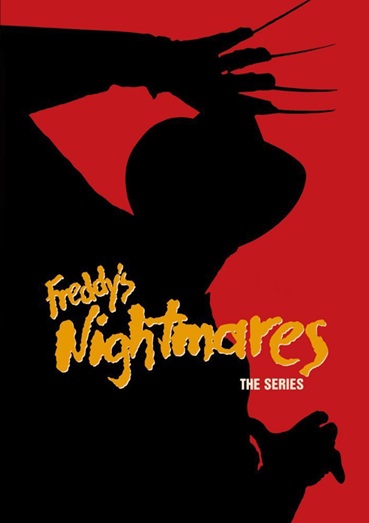
This week, we begin the second season! Welcome back to Springwood!
Season 2.1 “Dream Come True”
(Dir by George Kaczender, originally aired on October 8th, 1989)
The second season of Freddy’s Nightmares features Freddy getting involved in the action.
The first story features Freddy haunting the nightmares of teenager Randy Jennings (David Kaufman), who has only recently moved to Springwood with his mother, Cathy (Linda Miller). Randy is having nightmares about Freddy so his mother buys tickets to attend a talk show hosted by Stan Brooks (Jay Thomas). Stan’s guest is therapist Dr. Brandon Kefler (Scott Marlowe), who has written a book about nightmares. Cathy begs Brandon to see Randy and, after being pressured by Stan, Brandon agrees. Stan arranges for cameraman Garry Heath (Gerard Prendergrast) to film the session.
At the Jennings home, Brandon talks to Randy about his nightmares. Brandon’s therapy seems to work as, afterwards, Randy is able to sleep peacefully and without having any nightmares. However, it turns out that Freddy just jumped from Randy’s mind to Brandon’s! (Hey, didn’t almost the same thing happen in a movie, something about an exorcism….) Soon, Brandon is the one who is having nightmares and being driven mad by visions….
As for the second story, it deals with Garry the cameraman and his belief that Freddy Kruger is real. One reason why Garry believes that Freddy is real is because Freddy keeps showing up in footage that he’s filmed. Unfortunately, no one else can see Freddy, certainly not Garry’s boss (Charles Cyphers). Even more unfortunately, the body of Garry’s girlfriend is found in a dumpster and the police aren’t buying Garry’s story that Freddy did it….
This episode actually wasn’t that bad, especially compared to some of the episodes that aired during the show’s first season. Perhaps it’s because this episode was the first of the season and the production budget hadn’t gone dry yet but Dream Come True actually features some adequate production values. The house looks like a real house. The television studio looks like a place where something would actually be filmed. The abandoned warehouse with Garry tries to confront Freddy is actually an atmospheric location and the episode even manages to generate a little suspense, even if neither plot is particularly original. Both Scott Marlowe and Gerard Pendergrast give decent performances in their stories and, as always, Robert Englund is a properly evil Freddy.
(That said, the show did manage to misspell Charles Cyphers’s name in the opening credits, despite the fact that he was this episode’s big guest star. I did a double take when I saw “Charles Syphers,” on my screen. Seriously, the man was Sherriff Brackett!)
Despite getting Charles Cypher’s name wrong, this was still a good start to the final season. It’ll be interesting to see if the remaining episodes live up to it.
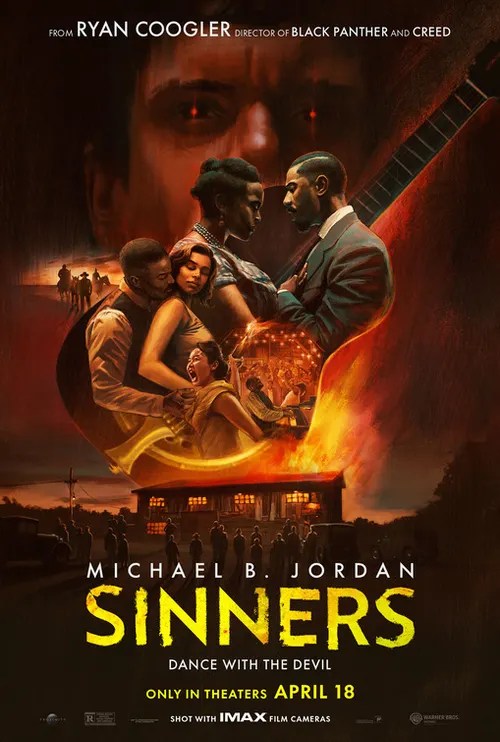
The Society of Composers and Lyricists has announced its picks for the best of 2025. The winners are listed in bold.
Outstanding Original Score for a Studio Film
LUDWIG GÖRANSSON – Sinners
ALEXANDRE DESPLAT – Frankenstein
JONNY GREENWOOD – One Battle After Another
STEPHEN SCHWARTZ & JOHN POWELL – Wicked: For Good
MAX RICHTER – Hamnet
JERSKIN FENDRIX – Bugonia
Outstanding Original Score for an Independent Film
DARA TAYLOR – Straw
BRYCE DESSNER – Train Dreams
DAVID FLEMING – Eternity
FABRIZIO MANCINELLI – Out of the Nest
JÓNSI & ALEX SOMMERS – Rental Family
SARA BARONE & FOREST CHRISTENSON – To Kill a Wolf
Outstanding Original Song for a Dramatic or Documentary Visual Media Production
DIANE WARREN – “Dear Me” from Diane Warren: Relentless
ALICE SMITH, MILES CATON & LUDWIG GÖRANSSON – “Last Time (I Seen the Sun)” from Sinners
RAPHAEL SAADIQ & LUDWIG GÖRANSSON – “I Lied to You” from Sinners
SARA BAREILLES – “Salt Then Sour Then Sweet” from Come See Me in the Good Light
NIKHIL KOPARKAR & RAMMY PARK – “The Hills of Tanchico” from The Wheel of Time
ED SHEERAN, BLAKE SLATKIN & JOHN MAYER – “Drive” from F1
Outstanding Original Song for a Comedy or Musical Visual Media Production
EJAE & MARK SONNENBLICK – “Golden” from KPop Demon Hunters
STEPHEN SCHWARTZ – “No Place Like Home” from Wicked: For Good
STEPHEN SCHWARTZ – “The Girl in the Bubble” from Wicked: For Good
JACK BLACK & JARED HESS – “Steve’s Lava Chicken” from A Minecraft Movie
MARK RONSON, ANDREW WYATT & JACK BLACK – “I Feel Alive” from A Minecraft Movie
BLAKE SLATKIN, SHAKIRA & ED SHEERAN – “Zoo” from Zootopia 2
Welcome to Retro Television Reviews, a feature where we review some of our favorite and least favorite shows of the past! On Fridays, I will be reviewing St. Elsewhere, a medical show which ran on NBC from 1982 to 1988. The show can be found on Daily Motion.
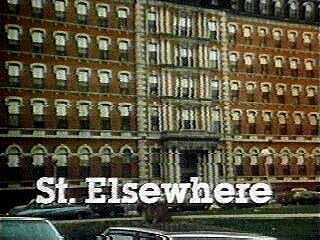
I miss when this show on Hulu and available to rent on Prime. The Daily Motion uploads are not the best (especially where sound quality is concerned) but, for now at least, that’s what I’m having to go with.
Episode 3.8 “Sweet Dreams”
(Dir by Mark Tinker, originally aired on November 14th, 1984)
This week’s episode was all about sleep and the dreams that might come with sleep.
Westphall, as usual, gets the most depressing storyline. He can’t sleep. He has insomnia. Of course, he does. Anything depressing that doesn’t happen to Dr. Morrison will inevitably happen to Dr. Westphall instead.
Dr. Craig tries to figure out why one of his patients died in his sleep with a terrified look on his face. Can a nightmare cause someone to have a heart attack?
Dr. Cavanero diagnoses a man with sleep apnea.
Meanwhile, we get a peek at the dreams of three members of the St. Elsewhere staff.
Luther dreams of being kicked out of the hospital by two security guards. Fortunately, ZZ Top is standing outside of the hospital and they order three women to kidnap Luther in a big red car and turn him into a sharp-dressed man. Luther and his new friends invade the hospital, toss out the security guards, and invite Warren Coolidge to come hang out with them. ZZ Top performs Legs, which seems odd since the song is about a woman who has legs and knows how to use them but Luther is the one getting the makeover. Well, whatever. It’s a cute dream and a nice break from Dr. Westphall looking depressed.
Both Victor and Jack agree to take part in a sleep study. Victor is yanked out of the study by Dr. Craig but, before that happens, we do get to see Victor’s dream of washing up on an island that is ruled by Amazons.
As for Jack Morrison’s recurring dream, it’s just about as dark as you would expect when it comes to the only character who has suffered more heartache than Dr. Westphall. In Morrison’s dream, he finds himself wandering around the deserted hospital. He hears someone playing Led Zeppelin in the morgue. He goes down there and discovers Peter White waiting for him.
Morrison and White speak. Even in death, White is whiny and defensive. Morrison repeatedly asks whether or not White was the ski mask rapist and, every time, White refuses to give a direct answer. However, when Morrison is about to leave the morgue, White is suddenly wearing a blue ski mask. Morrison wakes up from each dream with a jolt, terrified to face the truth about the man who he defended against his better judgment.
(I have to admit that, if I was a nurse or a doctor at St. Eligius, I would have mixed feelings about Morrison. Yes, he seems to be well-meaning and he’s suffered his share of tragedy. But the fact that he continued to be a friend — albeit with a certain ambivalence — to Dr. White would make me very uncomfortable. I know that Morrison would probably point out that Dr. White was acquitted but everyone at the hospital knew he was guilty. Everyone but Morrison, apparently.)
This was a good episode and a bit of a reset after all the drama of the Peter White storyline. Well-directed, well-acted, and very atmospheric, this was St. Elsewhere at its best.
4 Shots From 4 Films is just what it says it is, 4 shots from 4 of our favorite films. As opposed to the reviews and recaps that we usually post, 4 Shots From 4 Films lets the visuals do the talking!
Today, on what would have been his 94th birthday, TSL pays tribute to the great Francois Truffaut. No one captured the act of falling in love in life, people, and cinema with the skill, sensitivity, and humor of Francois Truffaut. It’s time for….
4 Shots From 4 Francois Truffaut Films
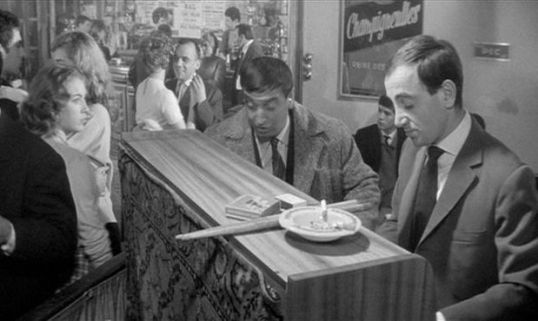
Shoot the Piano Player (1960, dir by Francois Truffaut, DP: Raoul Coutard)
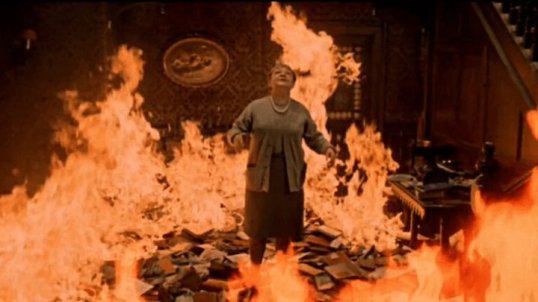
Fahrenheit 451 (1966, dir by François Truffaut, DP: Nicolas Roeg)

Day For Night (1973, dir by François Truffaut, DP: Pierre-William Glenn)

The Story of Adele H. (1975, dir by Francois Truffaut, DP: Nestor Almendros)
As some of our regular readers undoubtedly know, I am involved in a few weekly watch parties. On Twitter, I host #FridayNightFlix every Friday and I co-host #ScarySocial on Saturday. On Mastodon, I am one of the five hosts of #MondayActionMovie! Every week, we get together. We watch a movie. We tweet our way through it.
Tonight, at 10 pm et, I will be hosting #FridayNightFlix! The movie? 1988’s Cherry 2000
If you want to join us this Friday, just hop onto twitter, find Cherry 2000 on Prime, start the movie at 10 pm et, and use the #FridayNightFlix hashtag! I’ll be there happily tweeting. It’s a friendly group and welcoming of newcomers so don’t be shy.
See you there!
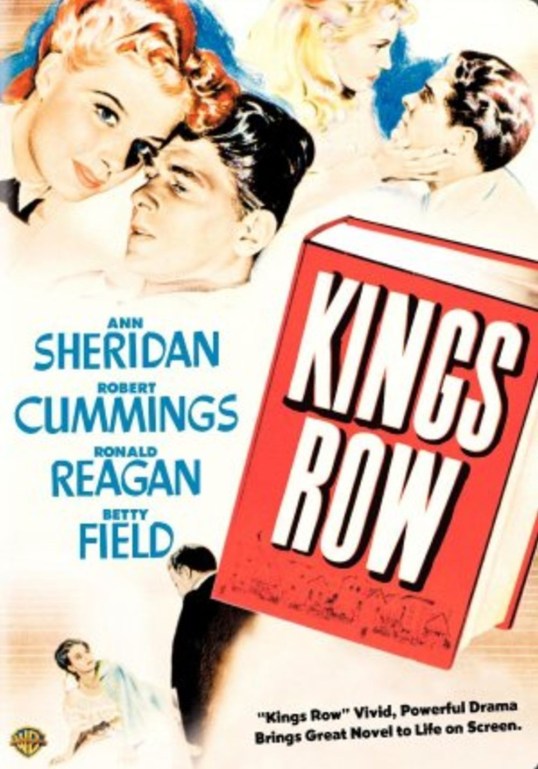
Today’s scene that I love features future President Ronald Reagan, giving what he considered to be his best performance in 1942’s Kings Row. He liked one of the lines in this scene so much that he used it as the title for autobiography.
On what would have been Ronald Reagan’s 115th birthday, here is today’s scene that I love. 38 years after this scene, Reagan would be elected to his first term, saving the country from the twin scourge of the incompetent Jimmy Carter and the pompous John Anderson. Ronald Reagan would go on to save the world from communism, at least temporarily. Not bad for a self-described “B-actor!”
Don’t mess with Jennifer Love Hewitt!
I’ve always liked Jennifer Love Hewitt, largely because we’re both Texas girls, we both have what others seem to consider to be an unusual sense of humor, and I imagine that we both share the same struggle when it comes to having to remind men that our eyes are up here. Of course, for all that we have in common, a huge difference between the two of us is that Jennifer Love Hewitt can actually sing whereas I can barely carry a tune.
Can I Go Now? was the second single to be released from her 2003 album, BareNaked. In the video, Jennifer fights with her boyfriend, she leaves her boyfriend, she returns to her boyfriend, she leaves her boyfriend …. it’s a never-ending cycle of coming and going so I guess the answer to the question is that you can really never leave. At one point, she joins her boyfriend in the shower and he kind of gets weird about it. I’m not really sure what to make of this guy. I would definitely leave and not return until he found a place that had a wall between the kitchen and the living room.
Enjoy!
Welcome to Late Night Retro Television Reviews, a feature where we review some of our favorite and least favorite shows of the past! On Thursdays, I will be reviewing Highway to Heaven, which aired on NBC from 1984 to 1989. The entire show is currently streaming on Tubi and several other services!
This week, Jonathan and Mark are once again teaching high school.
Episode 5.6 “The Source”
(Dir by Michael Landon, originally aired on June 9th, 1989)
This week, Jonathan and Mark are back in high school …. again!
This time, Mark is teaching sex ed. (Ha ha, the Boss sure does love embarrassing Mark!) Meanwhile, Jonathan is the faculty advisor to the school newspaper. When a school bus crashes, two enterprising student journalists — Doug (Scott Fults) and Colin (Andy Lauer) — decide that they’re going to get to the bottom of what happened. All the evidence shows that it was just a freak accident and that bus driver Larry Nichols (Dack Rambo) is not to blame. However, a student on the bus named Ellen (Kim Walker) tells Doug and Colin that, before the crash, Larry was flirting with her and not watching the road. After Doug and Colin agree to protect Ellen’s identity, they write a story about Larry, the adult bus driver who was too busy flirting with an underage girl to take that curve.
Doug and Colin think that they’re going to win a Pulitzer but Jonathan says, “Hold on, we can’t publish this!” However, the school’s principal (Alan Fudge) disagrees because Colin just happens to be his son. The story is published and Larry loses his job. Doug and Colin are feeling pretty proud of themselves but then they just happen to come across Ellen’s notebook in the school’s copy room. (Jonathan, using “the Stuff,” switched out his notebook for Ellen’s.) Doug and Colin read the notebook and discover that Ellen has a crush on Larry and that Ellen lied about him flirting with her.
Doug and Colin retract the story and learn a lesson about journalistic responsibility. Ellen, even though Colin and Doug continue to protect her identity, leaves with Jonathan so that she can apologize to Larry face-to-face. (We don’t actually see the apology. I have a feeling that it probably didn’t go well.) As the episode ends, two women look at the newspaper and agree that, retraction or no retraction, Larry was definitely guilty. We then hear Jonathan’s voice telling us that the first amendment is too important to be abused.
That’s an important message and a timely one. Watching this episode, it was hard not to consider that, for the past few weeks, people in this country have been arguing about whether or not the first amendment applies more to a self-employed YouTuber who stormed a church service or the people in the church who were worshipping at the time. There’s a lot of earnest sincerity to be found in this episode of Highway to Heaven but, that said, the execution is pretty heavy-handed. Even by the standards of this show, there’s not much subtlety to be found here.
An even bigger problem is that this episode can’t seem to decide whether Ellen is meant to be a shy teenager who made a mistake or a full-blown sociopath. I think this episode would have worked better if Colin and Doug heard rumors that they reported as fact as opposed to Ellen just flat-out lying to them. Once Ellen lies, it’s hard not to feel that the focus should be less on Colin and Doug learning a lesson and more on Ellen getting some sort of psychiatric help.
This episode was typical of season 5. It was sincere but just a bit too on-the-nose.
Because today is the birthday of the great actress Jennifer Jason Leigh, I decided to rewatch the 1991 film, Rush.
Loosely based on a true story, Rush takes place on the outskirts of Houston, Texas in the 70s. Jack Raynor (Jason Patric) is a veteran undercover narcotics officer who is determined to take down a local drug lord named Gaines (Gregg Allman). Raynor takes his new partner, Kristen Cates (Jennifer Jason Leigh), under his wing and trains her on how to work undercover. He tests her joint-rolling abilities. He has her fire a gun at cans out by the quarry. He teaches her how to shoot-up drugs. As he explains it, if she is going to get the local drug dealers to trust her, she is going to have to shoot up drugs in front of them. Raynor and Cates work well together, quickly becoming lovers in real life as well as undercover life. They manage to force one dealer, a likable but unlucky clod named Walker (Max Perlich), to turn informant. However, their efforts to get to Gaines are threatened by their own growing addictions and Raynor’s erratic behavior. Chief Nettle (Tony Frank) and Captain Dodd (Sam Elliott) want results but will the results be worth the cost?
(Are they ever?)
I’ve watched Rush a few times. I have to admit that I always remember it as being better than it actually is. Rush was the only feature film to be directed by producer Lili Fini Zanuck and it definitely has its problems. The pace, especially during the film’s second half, is often too slow. Visually, there a few good location shots but the film often feels rather static. As Jack Raynor, Jason Patric gives a performance that is all method intensity with little actual depth. Patric looks good with his long hair, his beard, and his intense eyes but there’s not much depth overall to Jack Raynor.
And yet, when the film works, it really does work. Whatever other flaws might be present in her direction, Zanuck does capture the anything-goes, slightly ominous atmosphere that one often finds in the small towns on the carcinogenic coast. While there’s nothing about his performance here that suggests he was a particularly talented actor, Gregg Allman is still very convincing as the menacing Gaines. (One sign of Gaines’s power is that he never speaks unless absolutely necessary.) Character actor Max Perlich gives a strong and poignant performance as Walker, a well-meaning goof who finds himself being manipulated by both sides in the war on drugs. Though the soundtrack is probably best-known for its use of Eric Clapton’s Tears In Heaven, the rest of it is full of classic Southern rock. Some of the choices are a bit obvious. Free Bird coming on the radio just as Raynor explains that he does things his way? That’s a lucky coincidence! It works, though. It’s a cool song.
Ultimately, what truly makes the film work is the performance of Jennifer Jason Leigh, who always manages to find the truth of her character even when the film sometimes seems to be determined to let her down. While Patric gets to have the showy breakdowns, Leigh shows the audience what it’s like for someone to be trapped by not only her job but also her relationship. The scenes between her and Walker are the strongest in the film because even though Walker is a criminal and Cates is a cop, they’re both stuck in a situation that they didn’t create. Gaines wants the money and the power that comes from being a drug lord. Chief Nettle wants the publicity and acclaim that comes from busting a major dealer. If they have to sacrifice Walker and Cates to get what they want, that’s what they’re going to do. Walker, Cates, and Raynor ultimately become pawns in a game where the victor ultimately wins very little. If Gaines escapes justice, someone else will just come after him. If Gaines goes down, someone else will inevitably replace him.
Rush is not a perfect film but it is a film that shows just how great a talent Jennifer Jason Leigh was and is.
 Through the Shattered Lens