Made-For-Television Movie Review: Skokie (dir by Herbert Wise)


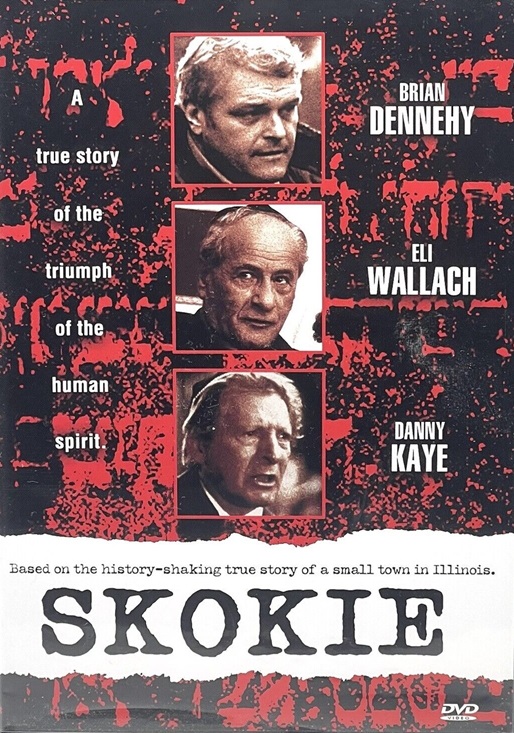
Skokie, a 1981 made-for-television movies, opens in a shabby Chicago office.

A group of men, all wearing brownshirts and swastika armbands, listen to their leader, Frank Collin (George Dzundza).  Collin says that they will be holding their next rally in the town of Skokie.  Collin explains that Skokie has a large Jewish population, many of whom came to the United States after World War II.  Collin wants to march through their town on Hitler’s birthday.

If not for the swastika and the brownshirt, the overweight Collin could easily pass for a middle-aged insurance salesman, someone with a nice house in the suburbs and an office job in the city.  However, Frank Collin is the head of the American National Socialist Party. a small but very loud group of Nazis who specialize in marching through towns with large Jewish populations and getting fee media attention as a result of people confronting them.  Making Frank Collin all the more disturbing is that he isn’t just a character in a made-for-television movie.  Frank Collin is a real person and Skokie is based on a true story.

The Mayor (Ed Flanders) and the police chief (Brian Dennehy) of Skokie are, needless to say, not happy about the idea of modern-day Nazis marching through their city.  Though they inform Collin that he will have to pay for insurance before he and his people will be allowed to hold their rally, they know that the courts have been striking down the insurance requirement as being a violation of the First Amendment.  While the mayor and the police chief worry about the political fallout of the rally, the Jewish citizens of Skokie debate amongst themselves how to deal with the Nazis.  Bert Silverman (Eli Wallach) and Abbot Rosen (Carl Reiner) argue that the best way to deal with Collin and his Nazis is to refuse to acknowledge them, to “quarantine” them.  As Rosen explains it, Collin is only marching to get the free publicity that comes with being confronted.  If he’s not confronted, he won’t make the evening news and his rally will have been for nothing.  However, many citizens of Skokie — including Holocaust survivor Max Feldman (Danny Kaye) — are tired to turning their back on and ignoring the Nazis.  They demand that the Nazis be kept out and that, if they do enter the city, they be confronted.

With the support of the ACLU, Collin sues for his right to march through Skokie.  The ACLU is represented by Herb Lewishon (John Rubinstein), a Jewish attorney who hates Collin and everything that he stands for but who also feels that the First Amendment must be respected no matter what.  When Lewishon is asked how he, as a Jew, can accept a Nazi as a client, Lewishon relies that his client is the U.S. Constitution.

Skokie is a thought-provoking film, all the more so today when there’s so much debate about who should and should not be allowed a platform online.  (Indeed, Collin and his Nazis would have loved social media.)  Lewishon argues that taking away any group’s First Amendment rights, regardless of how terrible that group may be, will lead to slippery slope and soon everyone’s First Amendment rights will be at risk.  Max Feldman, and others argue that the issue isn’t free speech.  Instead, the issue is standing up to and defeating evil.  The film gives both sides their say while, at the same time, making it clear that Frank Collin and his Nazis are a bunch of fascist losers.  It’s a well-acted and intelligently written movie, one that rejects easy answers.  Needless to say, at a time when so many people feel free to be openly anti-Semitic, it’s a film that’s still very relevant.

As for the real Frank Collin, he would eventually be charged with and convicted of child molestation.  After three years in prison, he changed his name to Frank Joseph and became a writer a New Age literature.  He’s looking for Atlantis but I doubt they’d want him either.
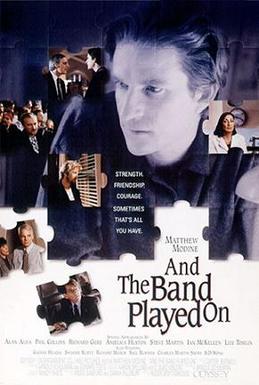
Film Review: And The Band Played On (dir by Roger Spottiswoode)


I live in a very cynical time.

That was one of my main thoughts as I watched 1993’s And The Band Played On.

Directed by Roger Spottiswoode and featuring an all-star cast, And The Band Played On deals with the early days of the AIDS epidemic.  It’s a film that features many different characters and storylines but holding it all together is the character of Dr. Don Francis (Matthew Modine), an epidemiologist who is haunted by what he witnessed during the Ebola epidemic in Africa and who fears that the same thing is going to happen in America unless the government gets serious about the mysterious ailment that is initially called “gay cancer” before then being known as “GRID” before finally being named AIDS.  Dr. Francis is outspoken and passionate about fighting disease.  He’s the type who has no fear of yelling if he feels that people aren’t taking his words seriously enough.  In his office, he keeps a track of the number of HIV infections on a whiteboard.  “Butchers’ Bill” is written across the top of the board.

Throughout the film, quite a few people are dismissive of Dr. Francis and his warnings.  But we, the audience, know that he’s right.  We know this because we know about AIDS and but the film also expects us to trust Dr. Francis because it’s specifically stated that he worked for the World Health Organization before joining the Center For Disease Control in Atlanta, Georgia.  As far as the film is concerned, that’s enough to establish his credentials.  Of course, today, after living through the excesses of the COVID pandemic and the attempts to censor anyone who suggested that it may have begun due to a lab leak as opposed to some random guy eating a bat, many people tend to view both the WHO and the CDC with a lot more distrust than they did when this film was made.  As I said, we live in a cynical time and people are now a lot less inclined to “trust” the experts.  To a large extent, the experts have only themselves to blame for that.  I consider myself to be a fairly pragmatic person but even I now find myself rolling my eyes whenever a new health advisory is issued.

This new sense of automatic distrust is, in many ways, unfortunate.  Because, as And The Band Played On demonstrates, the experts occasionally know what they’re talking about.  Throughout the film, people refuse to listen to the warnings coming from the experts and, as a result, many lives are lost.  The government refuses to take action while the search for a possible cure is hindered by a rivalry between international researchers.  Alan Alda gives one of the best performances in the film, playing a biomedical researcher who throws a fit when he discovers that Dr. Francis has been sharing information with French scientists.

It’s a big, sprawling film.  While Dr. Francis and his fellow researchers (played by Saul Rubinek, Glenne Headly, Richard Masur, Charles Martin Smith, Lily Tomlin, and Christian Clemenson) try to determine how exactly the disease is spread, gay activists like Bobbi Campbell (Donal Logue) and Bill Kraus (Ian McKellen) struggle to get the government and the media to take AIDS seriously.  Famous faces pop up in small rolls, occasionally to the film’s detriment.  Richard Gere, Steve Martin, Anjelica Huston, and even Phil Collins all give good performances but their fame also distracts the viewer from the film’s story.  There’s a sense of noblesse oblige to the celebrity cameos that detracts from their effectiveness.  All of them are out-acted by actor Lawrence Monoson, who may not have been a huge star (his two best-known films are The Last American Virgin and Friday the 13 — The Final Chapter) but who is still heart-breakingly effective as a young man who is dying of AIDS.

Based on a 600-page, non-fiction book by Randy Shilts, And The Band Played On is a flawed film but still undeniably effective and a valuable piece of history.  Director Roger Spottiswoode does a good job of bringing and holding the many different elements of the narrative together and Carter Burwell’s haunting score is appropriately mournful.  The film ends on a somber but touching note.  At its best, it’s a moving portrait of the end of one era and the beginning of another.

Film Review: Shoot to Kill (dir by Roger Spottiswoode)


I am not one for camping.

I’m actually kind of alone amongst my family as far as that’s concerned.  All three of my sisters enjoy spending the night outdoors, listening to sounds of nature and looking up at the stars.  They know how to set up tents and make campfires and they enjoy hiking and rafting and exploring the great outdoors.  Myself, I do enjoy occasionally spending the weekend up at Lake Texoma and I like the fact that, even though we live in the city, we still occasionally get to see wildlife running around.  I think possums are cute.  A few days ago, I squealed with delight when I saw that there was a raccoon hanging out in one of our backyard trees.  (“Don’t go near that thing, Lisa Marie!” Erin snapped as I reached for the den door.)  Growing up, I spent time in both the country and the city.  While I love living in the city, there’s still a part of me that’s still a country girl.  That said, I definitely prefer sleeping inside to outside.  The inside is safe.  The inside is comfortable.  The inside is free of creepy bugs that crawl on the ground.

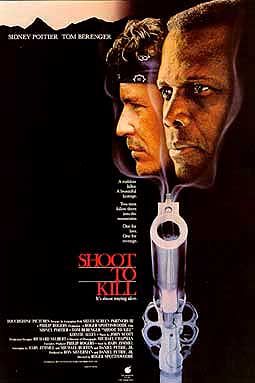
Watching 1988’s Shoot to Kill definitely did not do much to change my opinion about camping.  In this thriller from director Roger Spottiswoode, Sidney Poitier plays Warren Stantin, an FBI agent who is obsessed with capturing a sadistic criminal who blackmails people into doing his work for him.  At the start of the film, the extortionist has forced a jeweler to break into his own jewelry store by taking the jeweler’s wife hostage.  Stantin’s attempt to capture the extortionist leads to the jeweler’s wife taking a bullet in the eye.  (AGCK!  Seriously, this guy is mean!)  Stantin traces the man to Washington State, where he discovers that the extortionist has committed another murder and stolen the victim’s identity.  The extortionist is now a member of a five-man fishing party that is being led by a local guide, Sarah Renell (Kirstie Alley).  Stantin teams up with Sarah’s partner, Jonathan Knox (Tom Berenger), and the two of them attempts to track down the group before the murderer among them makes his move.

The action cuts back-and-forth, between Sarah’s party and Knox and Stantin.  Most viewers will probably be able to quickly figure out which member of Sarah’s party is the killer but director Spottiswoode still creates a little suspense by casting actors like Richard Masur, Andrew Robinson, and Clancy Brown as the suspects.  All three of the actors have played their share of sinister characters.  (Andrew Robinson was the Scorpio Killer, for God’s sake!)  While Sarah leads the murderer though the wilderness, Knox teaches Stantin how to survive in the great outdoors.  As is typical with films like this, Knox and Stantin go from disliking each other to depending on each other.  Have you ever wanted to see Sidney Poitier get into a verbal altercation with a bear?  This is the film for you!

Shoot to Kill is a superior genre film.  The story’s predictable but it’s told so well that it doesn’t matter.  Kirstie Alley, Tom Berenger, and Sidney Poitier all give good performances as sympathetic characters.  As for the actor who turns out to be the killer, he gives a performance that is, at times, absolutely terrifying.  Shoot to Kill is an entertaining thriller.  Just don’t watch it if you’re going camping the next day.

Film Review: The Last Innocent Man (dir by Roger Spottiswoode)


In 1987’s The Last Innocent Man, Ed Harris plays Harry Nash.

Harry is a criminal defense attorney, one who specializes in defending people who have been charged with committing murder.  He’s good at his job but he’s not sure that he’s happy with his life.  He went into the law to save people from Death Row but years of getting acquittals for guilty people have taken their toll on Harry’s psyche.  His most recent client was Jonathan Gault (David Suchet), a man accused of having killed his wife.  The verdict was “not guilty” but Harry suspects that Gault may have been guilty of both what he was charged with and also countless crimes for which he hasn’t been charged.  It doesn’t help that Gault confronts Harry in a parking lot and says he wants Harry to co-write a book about how he got Gault acquitted.  Gault proceeds to tell Harry that he did kill his wife, before suddenly laughing and saying that he’s only joking.

Despite all of the money and the fame, Harry needs a break from dealing with guilty people.  He tells his shocked partner that he will be temporarily stepping back from their practice.  Along with being burned out, Harry is also interested in pursuing a romantic relationship with Jenny Stafford (Roxanne Hart).  Jenny is married but she assures Harry that she is in the process of getting a divorce from her husband, Philip (Darrell Larson).

However, when Philip is arrested and accused of murdering a policewoman who was working undercover as a prostitute, Harry finds himself defending Philip in court.  Philip swears that he’s innocent of the crime and that he’s never even been with a prostitute.  He claims that, when the murdered occurred, he was at home with his wife.  Jenny is willing to collaborate Philip’s alibi, even though Harry suspects that she’s lying.

As you can probably guess, there are plenty of twists and turns to the plot of The Last Innocent Man.  Unfortunately, they’re not exactly shocking twists and turns.  The Last Innocent Man is a courtroom drama and it pretty much sticks to the rules of the genre, which means a lot of snarky comments between Harry and the prosecutor and also plenty of scenes of various lawyers snapping “Objection!” and demanding a recess.  This is the type of film where people fall apart on the witness stand and the audience in the courtroom murmurs whenever something shocking happens.  The Judge can’t pound that gavel hard enough to make The Last Innocent Man anything more than a standard courtroom drama.

That said, director Roger Spottiswoode keeps the action moving at a quick-enough pace and Ed Harris is ideally cast in the role of the morally conflicted Harry Nash.  As well, there’s an entertaining supporting performance from Clarence Williams III, cast here as a cocky pimp, and David Suchet is chillingly evil as the worst of Harry’s clients.  The Last Innocent Man doesn’t quite reach the Hitchcockian heights that it was reaching for but, still, fans of courtroom dramas will enjoy it or, at the very least, show a little leniency in their judgment.

Film Review: Noriega God’s Favorite (dir by Roger Spottiswoode)


Everyone’s an expert on the Panama Canal nowadays.

Largely, that’s a result of President-elect Donald Trump openly musing about taking the canal back from Panama.  As soon as Trump uttered those words, every self-appointed pundit on every social media site in existence immediately jumped over to Wikipedia and skimmed over the articles on Panama, the Panama Canal, and Teddy Roosevelt.  Then, after Jimmy Carter died, those same people jumped onto Wikipedia and skimmed articles about Carter selling the canal to Panama for a dollar and the controversy that followed.  For weeks, it has been impossible to look at Twitter or Bluesky or even Mastodon without seeing someone giving their opinion on the canal, the 1989 American invasion of Panama, and the connection between the CIA and Manuel Noriega, the man who served as Panama’s military dictator for most of the 80s before being deposed and tossed into prison for being a drug smuggler.

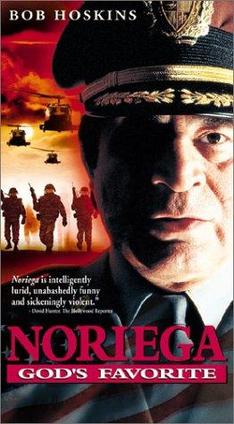
Myself, I know better than to get my information from Wikipedia.  Instead, I get my information from movies.  For that reason, I attempted to educate myself on Panama and the canal by watching 2000’s Noriega: God’s Favorite.

Directed by Roger Spottiswoode, Noriega: God’s Favorite opens with a title card informing us of the story so far.  Manuel Noriega was born in the slums of Panama.  He grew up in poverty and was shunned because his mother was not married to his father.  Noriega spent his youth doing whatever he had to do in order to survive.  He was clever and ruthless but it wasn’t until he entered the Panamanian National Guard that he was able to really use those skills to his advantage.  Noriega became a CIA asset and worked his way through the ranks.  In 1983, with the support of American intelligence, Noriega became the de facto dictator of Panama, even though he never officially held any sort of title or executive position.

The film follows Manuel Noriega (Bob Hoskins) over the course of his final years as Panama’s dictator.  He’s portrayed as being a ruthless man who often pretends to be a buffoon in order to get his enemies to underestimate him.  He works with the CIA but still passes along intelligence to Fidel Castro (Michael Sorich), who is seen hitting on Noriega’s wife (Denise Blasor) during a visit to Cuba.  Noriega presents himself as a family man while having a number of mistresses.  He claims to an ally in the United States’s War on Drugs while attending cocaine-fueled parties.  He presents himself as being a pragmatist while actually being very superstitious.  A CIA agent (Edward Ellis) wins Noriega’s trust by manipulatively interpreting Bible verses for him.  When an army officer (played by Nestor Carbonell) tries to lead a coup against Noriega, he can only watch helplessly as Noriega personally executed all of his co-conspirators, going so far as to even chop off one man’s hands.  By the end of the scene, Noriega is drenched in blood but he’s undeniably happy.  Everyone knows that Noriega is an impulsive and dangerous dictator but the CIA allows him to stay in power until he starts to become an inconvenience.  Once Noriega’s notoriety starts to overshadow his usefulness, the U.S. promptly invades and Noriega’s power crumbles around him.

Bob Hoskins might seem like a strange choice to play a South American dictator but he does a good job in Noriega, playing the title character as being both a charismatic dictator and also an overgrown child who has never gotten over the struggles of his youth.  (Early on in the film, he is seen getting treatments to smooth his pockmarked skin, an indication that all the power in the world can’t cure lifelong insecurity.)  In the end, Noriega has much in common with the gangster that Hoskins played in The Long Good Friday.  Noriega is ruthless enough to become powerful but he ultimately falls victim to his own hubris.  When you’re in charge of something as valuable as the Panama Canal, the last thing you should do is anger the country that built it.

Scenes That I Love: James Bond Does His Thing In Tomorrow Never Dies


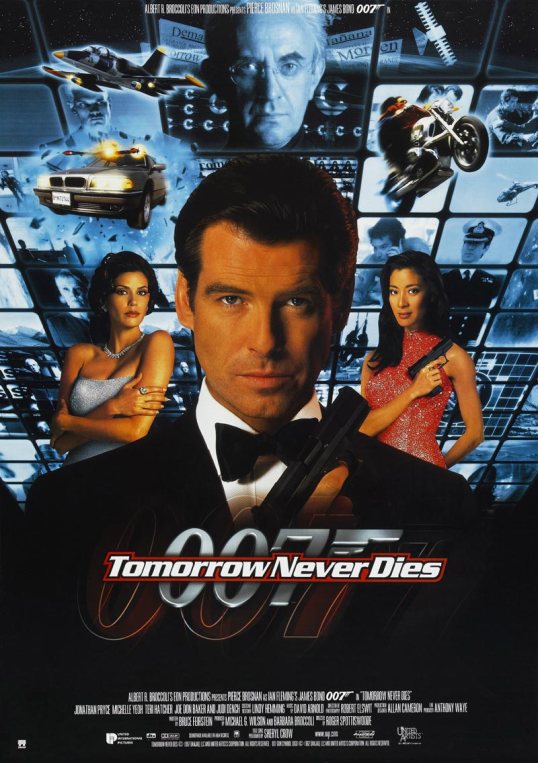
1997’s Tomorrow Never Dies, which was directed by Roger Spottiswoode, was one of the most underrated of the Bond films.  Perhaps not coincidentally, it also starred the most underrated Bond, Pierce Brosnan.

In this pre-credits opening scene, Brosnan shows us exactly who James Bond is meant to be.  He’s the best at his job but he still knows how to enjoy himself.  After the recent Daniel Craig films, it can be somewhat surprising to go back see how enjoyable James Bond was when he was angst-free.

Where does the admiral want his bombs delivered?


4 Shots From 4 Films: Special Roger Spottiswoode Edition


4 Shots From 4 Films is just what it says it is, 4 shots from 4 of our favorite films. As opposed to the reviews and recaps that we usually post, 4 Shots From 4 Films lets the visuals do the talking.

Today, the Shattered Lens wishes a happy 80th birthday to Roger Spottiswoode.  After starting his career as Sam Peckinpah’s editor and co-writing the script for Walter Hill’s 48 Hours, Spottiswoode went on to become a dependable director who effortlessly moved from genre to genre.  He may not be a household name but he’s a director who has been responsible for some truly memorable films.

It’s time for….

4 Shots From 4 Roger Spottiswoode Films

Terror Train (1980, dir by Roger Spottiswoode, DP: John Alcott)

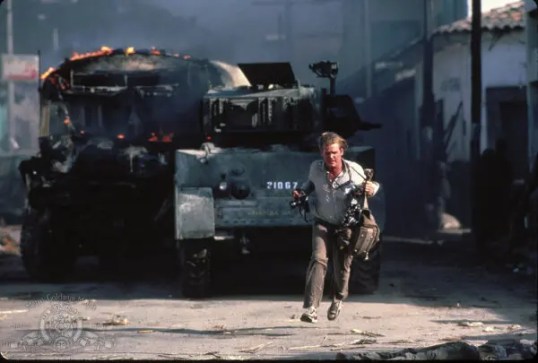
Under Fire (1983, dir by Roger Spottiswoode, DP: John Alcott)

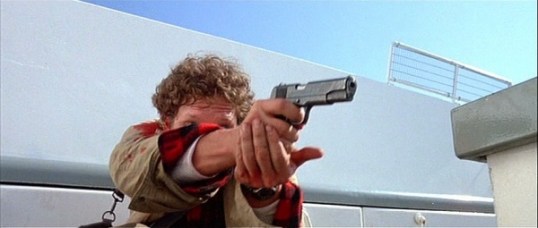
Shoot to Kill (1988, dir by Roger Spottiswoode, DP: Michael Chapman)

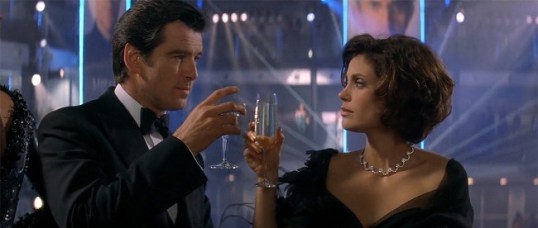
Tomorrow Never Dies (1997, dir by Roger Spottiswoode, DP: Robert Elswit)

Film Review: The Shoes of The Fisherman (dir by Michael Anderson)


The 1968 film, The Shoes of The Fisherman, opens in a snowy Siberian labor camp.  For the past twenty years, this camp has been the home of Kiril Pavlovich Lakota (Anthony Quinn), the Ukrainian archbishop of Liviv.  Kiril is unexpectedly released by Russia’s new leader, Piotr Ilyich Kamenev (a very British Laurence Olivier).  After explaining to Kiril that Russia and China are on the verge of nuclear war due to a famine that has been instigated by U.S. sanctions, Kamenev tells Kiril that he is being released on the condition that he tell no one about the conditions at the Russian labor camp.  Kiril starts to protest just for Father Telemond (Oskar Werner), the Vatican’s representative, to say that the conditions have already been agreed to.

In Rome, Kiril meets the Pope (John Gielgud), who makes the humble Kiril a cardinal, over Kiril’s objections that he just a “simple man.”  Later, when the aged Pope suddenly dies, Kiril is unexpectedly elected, as a compromise candidate, to succeed him.  Still humble and considering himself to be a simple man with a simple mission, Kiril suddenly finds himself as one of the most revered and powerful men on the planet.  With Father Telemond as his secretary, Kiril tries to make the Vatican responsive to the needs of the people and sets out to bring peace between the Russians and the Chinese. That turns out to be easier said than done, especially when Telemond himself is eventually accused of heresy for his progressive views.

(And yes, Telemond is a Jesuit….)

The Shoes of the Fisherman is a type of film that should be familiar to anyone who has any knowledge of the Hollywood studios in the 60s.  It’s the type of big and self-serious film that was meant to tell audiences, “You won’t find anything this opulent and important on television!”  The cast is designed to appeal to everyone.  Anthony Quinn and Laurence Olivier are there for the older viewers (especially the older viewers who made up the majority of the Oscar voters in 1968) while, for the younger voters, there’s handsome Oskar Werner as a Jesuit who interpretation of the Gospels is so radical that even Pope Francis would probably tell him to step back a little.  For the older, anti-communist viewers, there are scenes that portray the harsh conditions at a Siberian labor camp.  The commies put Kiril in prison so he must be one of the good guys.  And for the younger, more liberal viewers, there was the suggestion that the threat of World War III was largely due to the actions of the American government.  And, just in case there was still anyone who thought that television was preferable to a prestige picture, TV star David Janssen shows up as a cynical reporter whose wife (played by Barbara Jefford) is a doctor who Kiril helps to get some medicine for one of her dying patients.  Director Michael Anderson includes enough sudden zoom shots to let younger viewers know that he’s with them while still directing in a stately enough manner to appeal to the older viewers.

The end result is a film that is big and grand but also rather slow.  The film gets bogged down in subplots that don’t really add much to the overall story.  We spend way too much time with the reporter and his wife.  Anthony Quinn does a good enough job as Kiril, giving a rather subdued performance by Quinn standards.  (A scene where Kiril recites a Jewish prayer for a dying man is wonderfully acted by Quinn, who seems to truly be emotionally invested in the film’s message of togetherness.)  Laurence Olivier is not at all convincing as a Russian but still, he has the stately bearing of a man used to being in power.  Like many of the studio productions of the late 60s, The Shoes of The Fisherman tries a bit too hard to strike a balance between old school Hollywood and the counterculture and the film ultimately feels rather wishy-washy as a result.  It’s a noble film with good intentions but it’s not particularly memorable.

Film Review: The Pursuit of D.B. Cooper (dir by Roger Spottiswoode and Buzz Kulik)


The story of D.B. Cooper has always fascinated me.

D.B. Cooper is the name assigned to a man who, in 1971, hijacked an airplane, demanded $200,000, and then jumped off the plane after he got the money.  Reportedly, he was well-dressed and unfailingly polite during the entire hijacking.  When he jumped off the plane, he was about 10,000 feet over the Washington wilderness.  After he jumped, no further trace was found of him.  Over 50 years after the incident, the identity and the location of D.B. Cooper remains a mystery.

It’s been said that, even though Cooper had a parachute with him when he jumped, there’s no way that he could have survived the jump.  And yet, no body has ever been found.  (Of course, finding a body in the wilderness is not as easy as some people assume.)  Nine years after the the skyjacking, some of the money that Cooper received was found on the banks of the Columbia River, which was several miles away from the area that Cooper jumped over.  Did Cooper survive the jump and lose the money?  No one can say for sure.

Over the years, many people have come forward to say that they know the identity of D.B. Cooper.  Many distant fathers and secretive boyfriends and long lost friends have been accused of being D.B. Cooper.  Some of those suspects are more likely than others.  Even John List, the murderer who inspired the Stepfather films, was suspected at one point.

D.B. Cooper remains a fascinating character precisely because he’s never been captured and the mystery itself will probably never be solved.  Because he remains an enigma, it’s easy to project your own pet obsessions on him and his story.  Myself, I always imagine D.B. Cooper as being some sort of clever, fun-loving international rogue, even though there’s not really any evidence to back that up.  But, the fact of the matter is that I have a weakness for clever, fun-loving international rogues so, of course, that’s who I’m going to imagine D.B. to be.

I certainly would never imagine him to be like the character at the center of 1981’s The Pursuit of D.B. Cooper.

In this film, D.B. Cooper turns out to be Jim Meade (Treat Williams), a Vietnam vet and all around jackass who steals the money so that he can get back together with his estranged wife, Hannah (Kathryn Harrold).  Hannah does take him back because, seriously, who is going to say no to that much money?  Jim and Hannah spend the entire film running from one wilderness location to another.  They steal cars.  They steal trucks.  Meade steals an airplane at one point.  Hannah gets worried often and Jim tends to yell, “Woo hoo!” whenever he gets excited about anything.  At one point, Jim and Hannah are chased across some white water rapids.  When Hannah and Jim reach dry land, Jim gives the finger to the river.  I will say that, as someone who grew up in the South, Jim is a type of character who seems very familiar to me.  I’ve known a lot of Jim Meades and Treat Williams doesn’t do bad job playing Meade as being an impulsive, loud-mouthed good old boy.  The only problem is that, at no point, does Jim Meade come across like someone who could have pulled off what D.B. Cooper pulled off.

Jim is being pursued by two old army buddies.  The scruffier of the two is Remson (Paul Gleason), who somehow manages to keep popping up like a cartoon character at the most inopportune of times.  No matter what bad thing happens to Remson, he still shows up good-as-new a few minutes later.  Paul Gleason gives an energetic performance as Remson, a character who has little in common with the uptight authority figures that Gleason later played in The Breakfast Club and Die Hard.

The other person chasing Jim is Bill Gruen (Robert Duvall), who served with Meade in Vietnam but who is now working as an insurance investigator.  Gruen says that he knew Meade had to be D.B. Cooper because only Meade could survive jumping out of a plane over wilderness terrain.  Gruen wants some of the money for himself.  Despite his greed, it’s hard not to like Gruen because he’s played by Robert Duvall.  The best scene in the film is one where Duvall and Williams, exhausted from chasing each other, have a weary but friendly conversation.  It’s the one moment where Williams actually calms down and provides some hint that there’s actually something going on underneath Meade’s manic exterior.  Acting opposite Duvall brings out the best in him.

The Pursuit of D.B. Cooper had a notoriously troubled production and apparently, there was never a completed script during shooting.  Reportedly, bits of the film were directed by Robert Mulligan, John Frankenheimer, and Buzz Kulik before Roger Spottiswoode took over.  It’s a film that was obviously inspired by 70s chase films like Smokey and the Bandit but it also somehow managed to attract actors like Robert Duvall, who does his best to class up the joint.  The action quickly gets repetitive and the movie never seems to know if it wants to be a comedy or a drama.  On the plus side, Treat Williams and Kathryn Harrold make for a cute couple.

When this picture first came out, Universal Pictures offered a million dollar reward for any information that would lead to the capture and arrest of the real D.B. Cooper.  No one collected.

Music Video Of The Day: I’ll Never Love Again by Lady Gaga (2019, dir by Bradley Cooper)


Today, the Shattered Lens wishes a happy 50th birthday to the one and only Bradley Cooper!  Today’s music video of the day comes from Cooper’s Oscar-nominated version of A Star Is Born.  The chemistry between Cooper and Lady Gaga is still amazing to behold.

Personally, I hope Cooper wins his Oscar soon.

Enjoy!